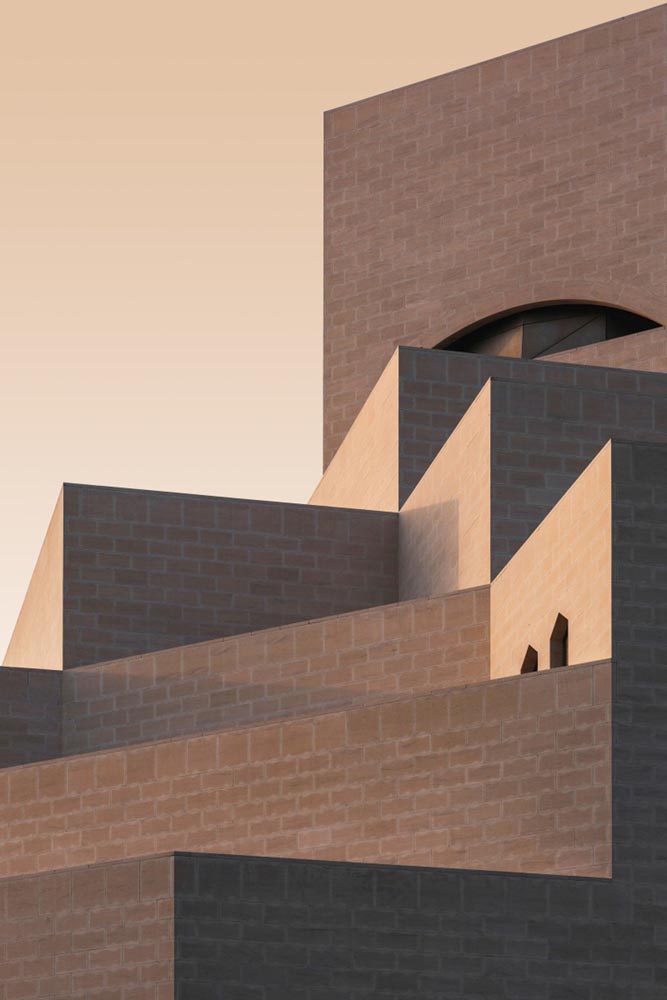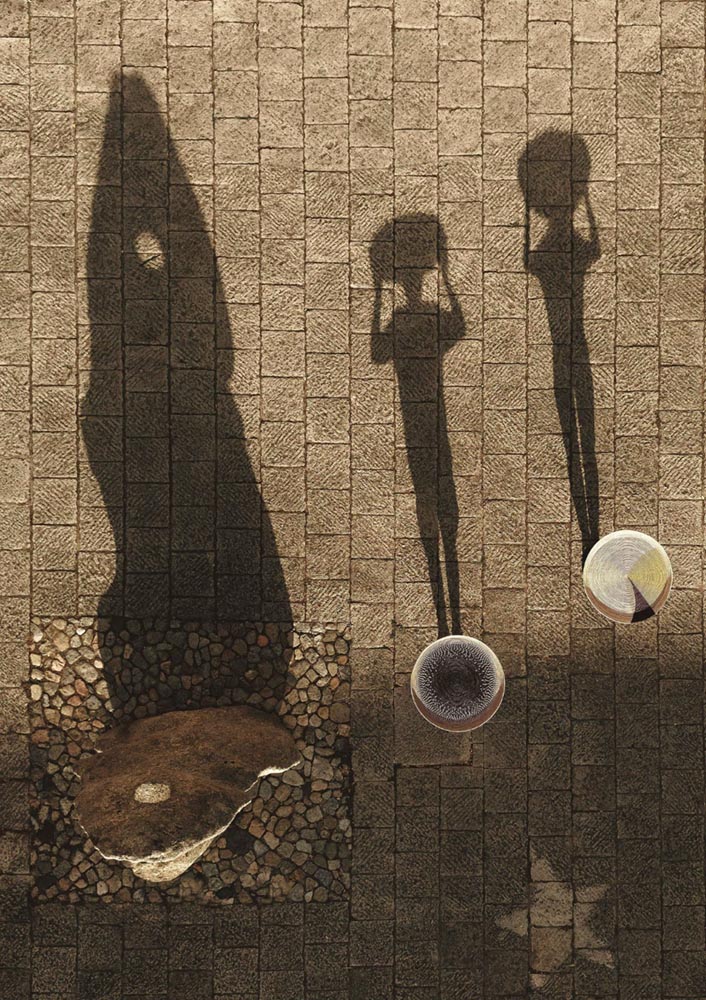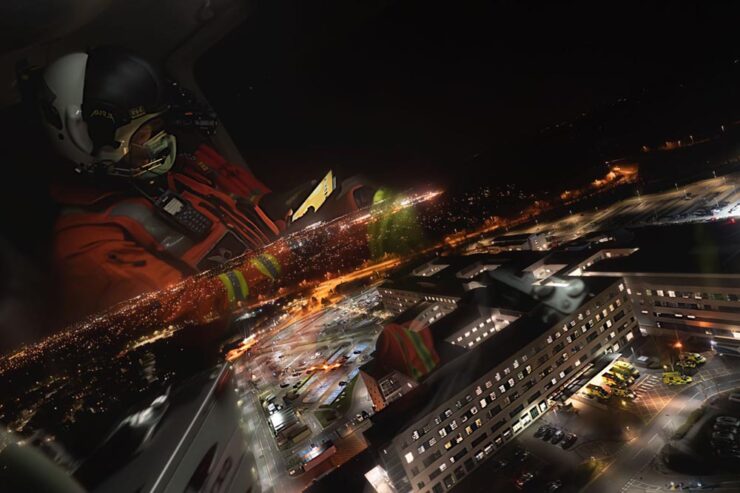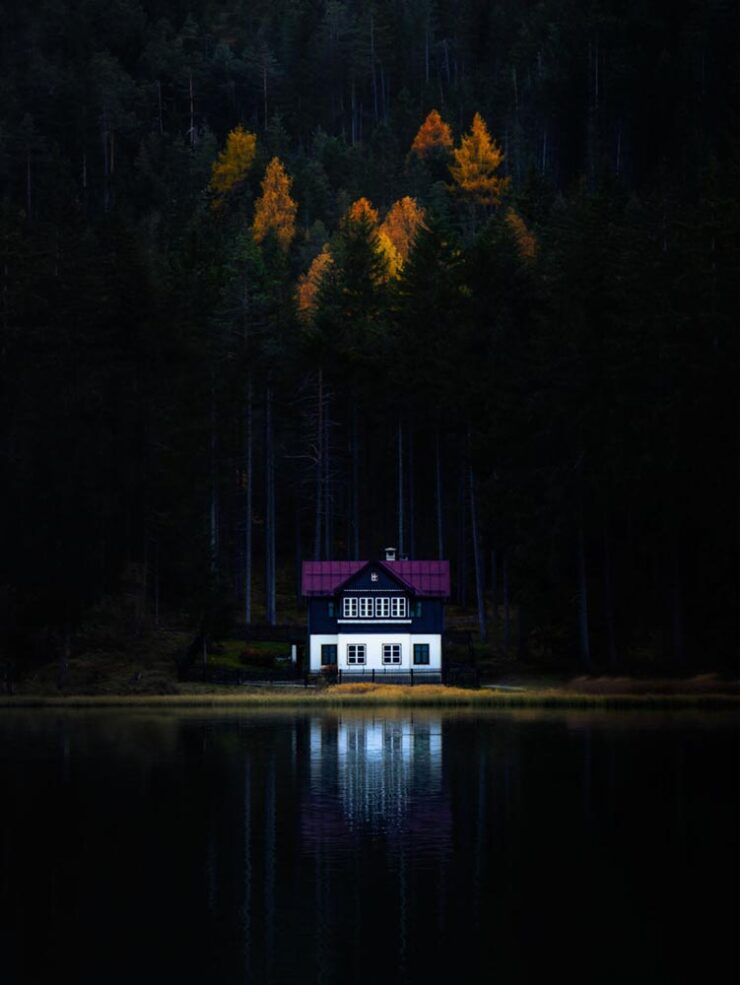
Author: Giles Hoover

  • Beautifully Briefed 26.3: The Ides of Equal Madness

    Beautifully Briefed 26.3: The Ides of Equal Madness

    This month, some optimism, some interesting books, some creative fonts, and some fantastic photos, and somepositivity — plus a smidgen of pessimism — in the form of Adobe.

    On the whole, it’s mostly optimism, promise. And there’s butter. And a sleeping fox. And duck.

    This Month’s Spine
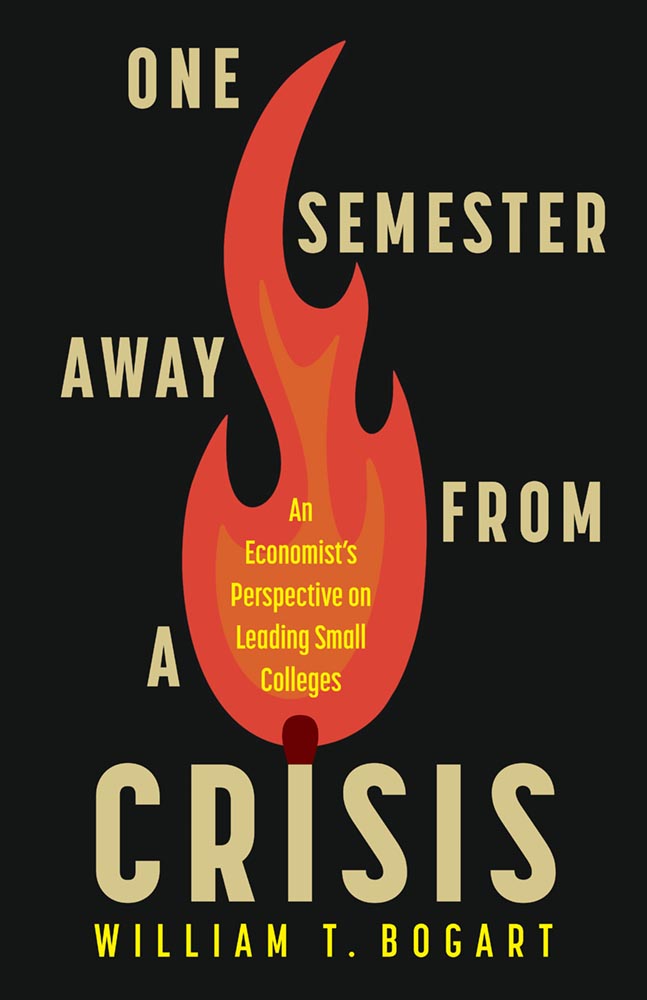
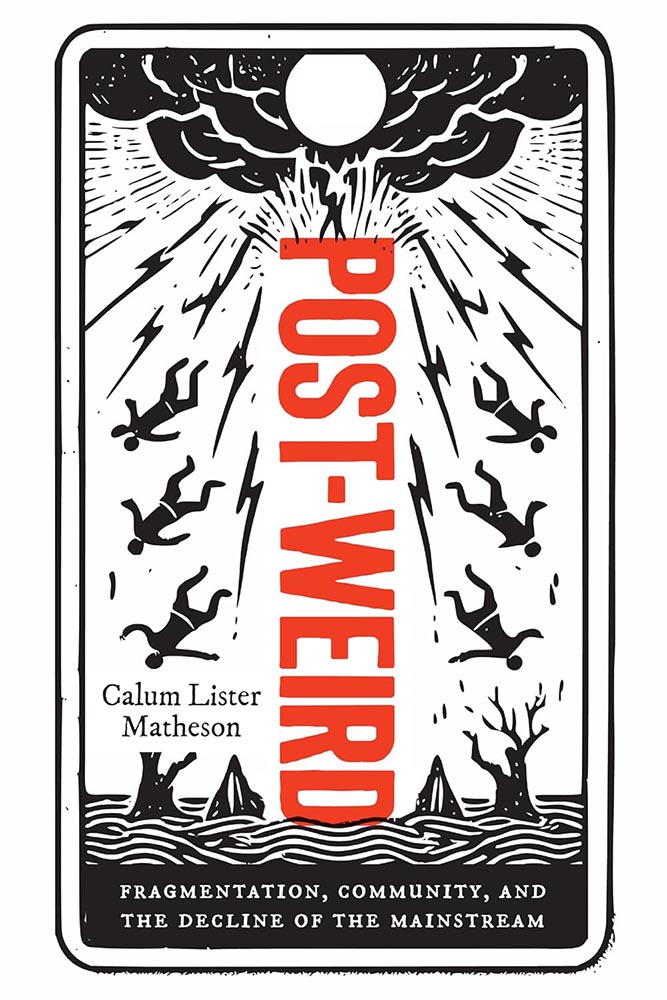
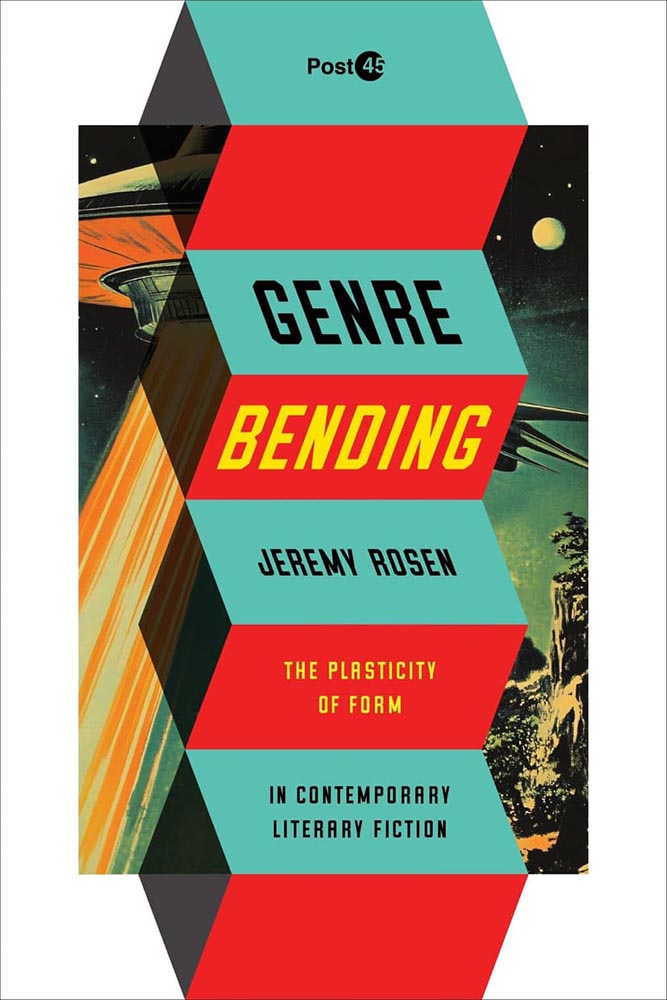
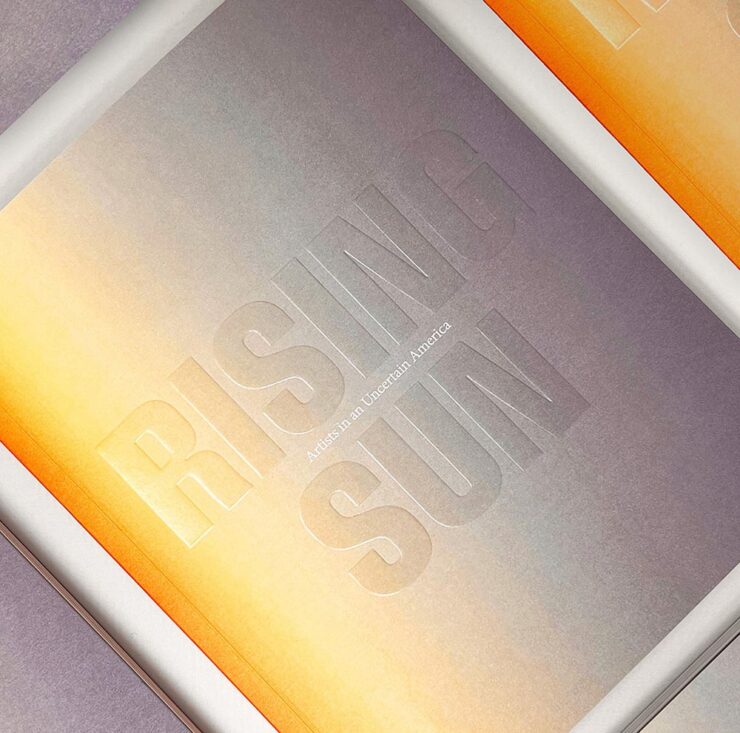
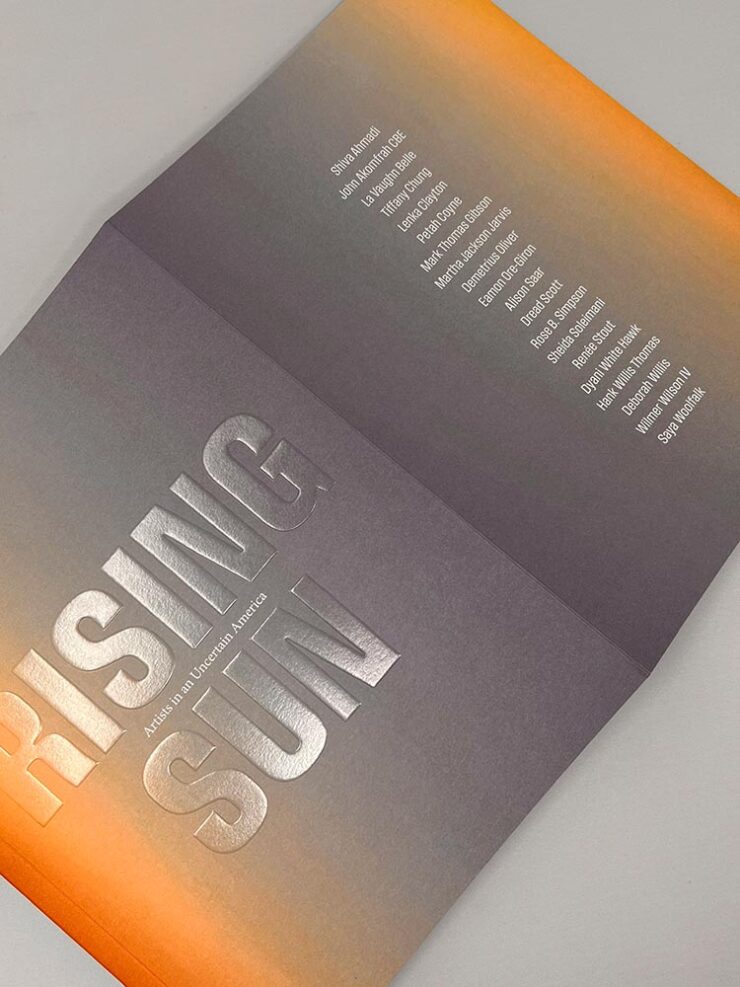
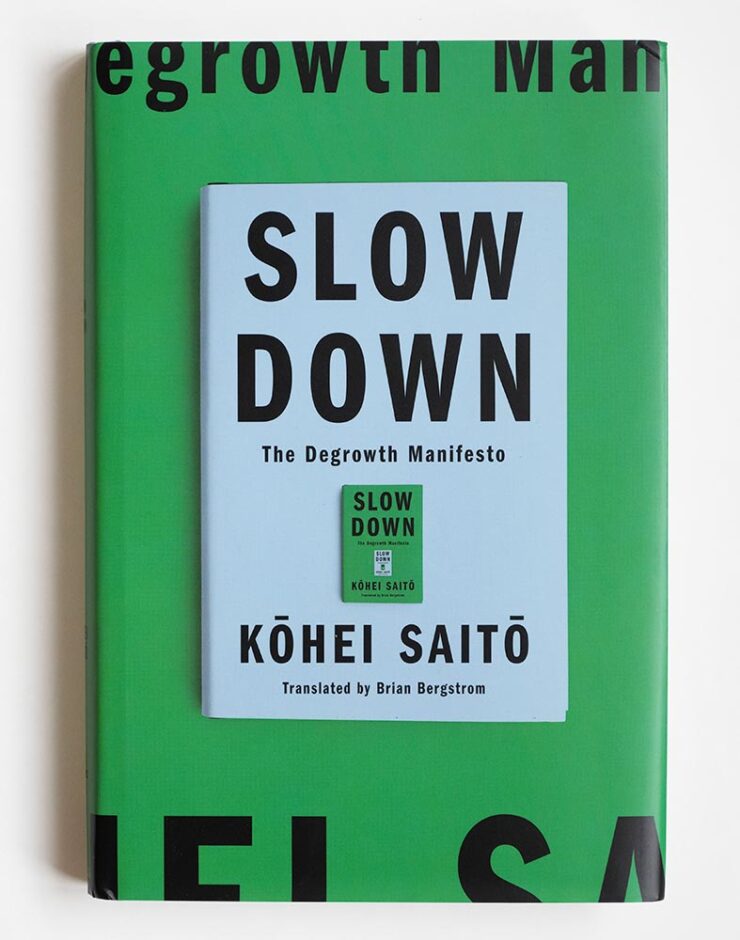
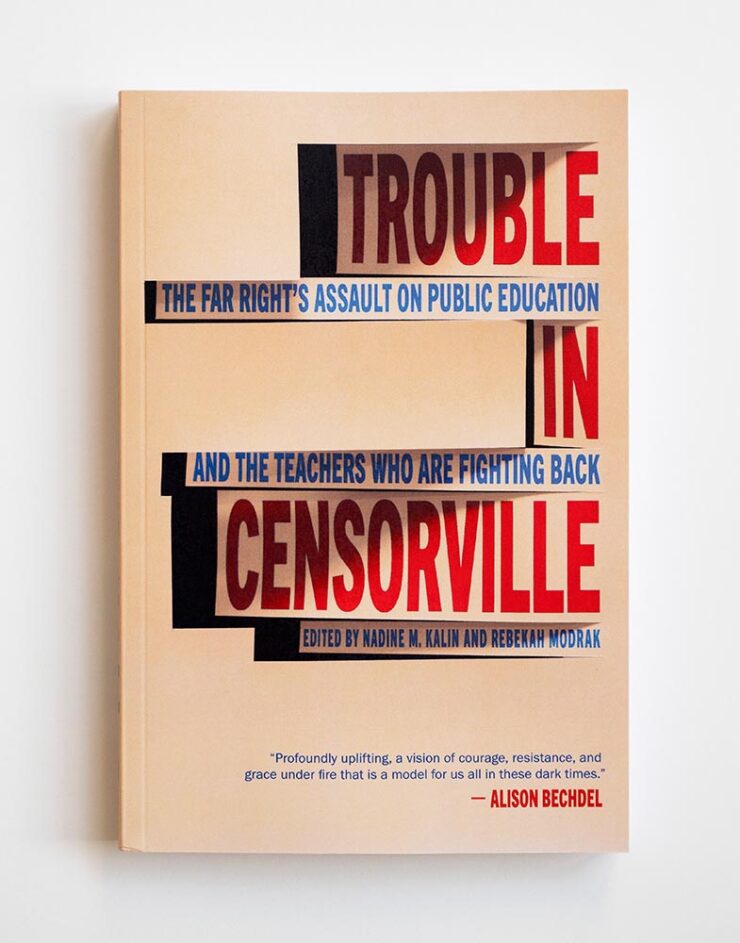
    Rutgers University Press. Cover design by Ashley Muehlbauer; production editor, Vincent Nordhaus.

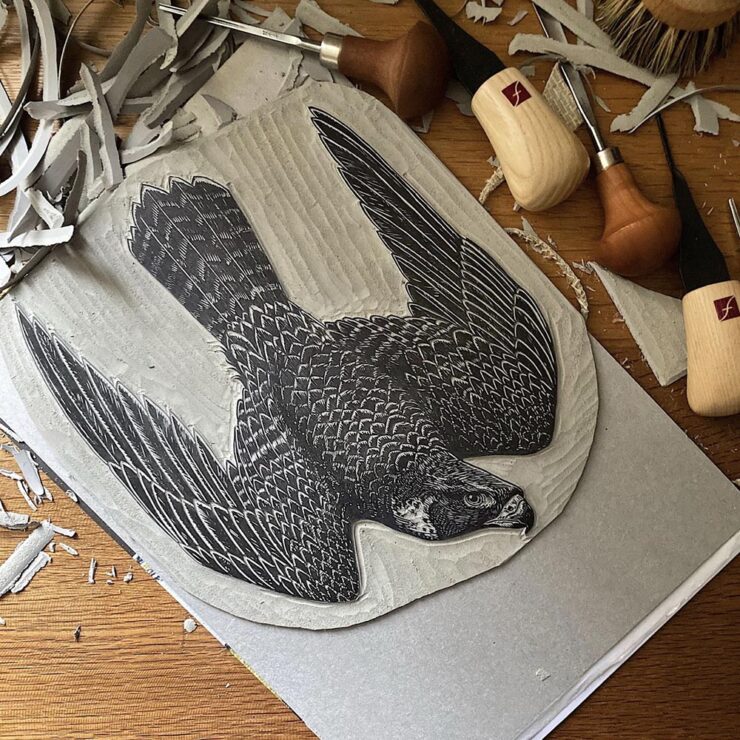
    “Our initial direction for [the designer] was to create a clean, simple text design that conveyed crisis, dread, or the element of threat,” this title’s production editor said in response to my request for information.

    “To say that someone lit a fire under those directions is an understatement,” I wrote in this title’s commentary. “In today’s American academic reality, where every day could indeed be … shall we say, fraught, this cover takes the brief and runs straight onto the dean’s list.”

    See the rest of this month’s University Press Coverage at Spine.

    Why She’s an Optimist 
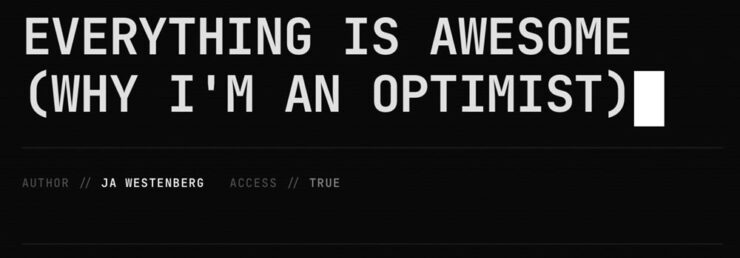
    Joan Westenberg (previously) has another great essay up about the AI doom loop — why it’s easy to believe that the downward spiral is tightening, to roughly paraphrase — and why she believes it just isn’t true:

    In 1810, 81% of the American workforce was employed in agriculture. Two hundred years later, it’s about 1%. If you had shown someone in 1810 a chart of agricultural employment decline and asked them to model the economic consequences, the only rational projection would have been apocalypse. Where would 80% of the population find work? What would they do? How would anyone eat if the farmers were all displaced by machines?

    The answer, of course, is that entirely new categories of work were created that no one in 1810 could have conceived of, and these new jobs paid dramatically more than subsistence farming. Factory work, office work, services, knowledge work, the entire apparatus of modernity: none of it was visible from the vantage point of the pre-industrial economy.
    — Joan Westenberg, “Everything is Awesome”

    “The transition was brutal and uneven. [People] suffered,” she writes. “But the trajectory was real, and the people projecting permanent immiseration […] were, in the fullest sense, catastrophically wrong.”

    The essay isn’t perfect; it’s too long, and the editor failed to catch a few typos (he said, hypocritically). But … it scales. Zoomed out, it applies to more than AI.

    “The doomers may have the best stories. I believe the optimists have the best evidence,” she concludes. I agree. Or, at least, I’d like to. 

    Go read it and see whether you do.

    Great Web Moments X2
    Kottke.org 

    Kottke Turns 28. There are few websites I nod along with as often as this gem from the late ’90s, still going strong.
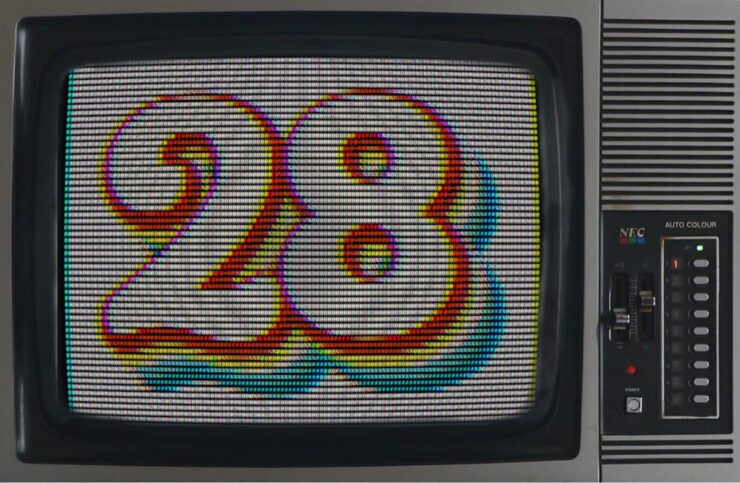
    Kottke.org: 47,300 posts and counting.
    Scripting.com

    Dave Winer shoots for the stars:

    We’re going to try to reboot the web.
    Doing what the social networks do, but only using the web.
    Every part replaceable. 
    — Dave Winer, scripting.com, “Mission Statement”

    Scripting News has been around since ’94 and if you’re even a little interested in a free web, his site is a fine place to start learning how you can contribute to keeping it free.

    Note: scripting.com is, famously, still non-https — which means that if you click on either of the above links you’re likely to get a warning that the site isn’t secure. It’s very much a safe link.

    Book Notes X3
    Oliver Munday, Head of Household
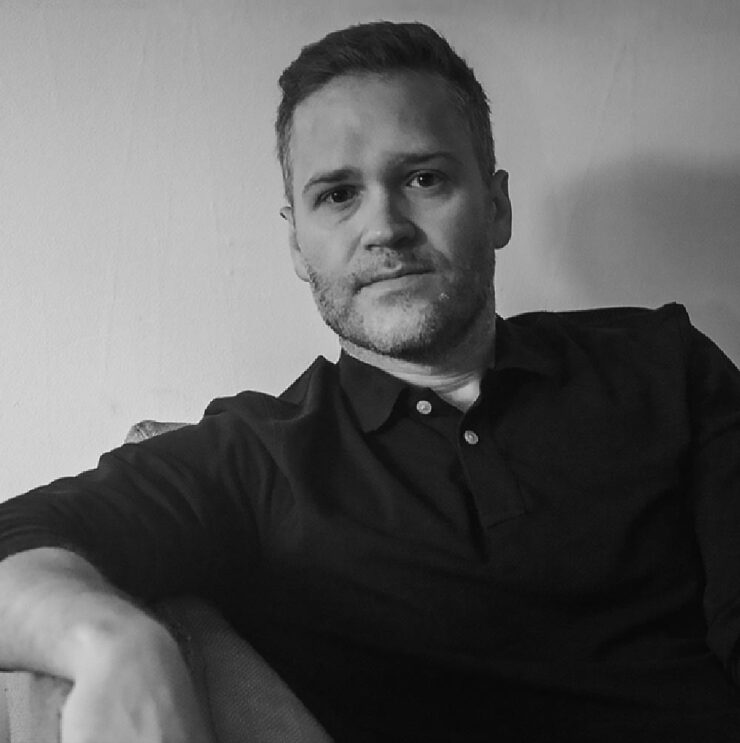
    Somehow, I expected someone older. (Courtesy of Debutful.)

    Nearly every one of his book cover designs could be called an instant favorite. He has a wry, brief expression that often delights.

    So, when he wrote a book, did he do the cover? Well … no, as it turns out — and he preferred it that way.
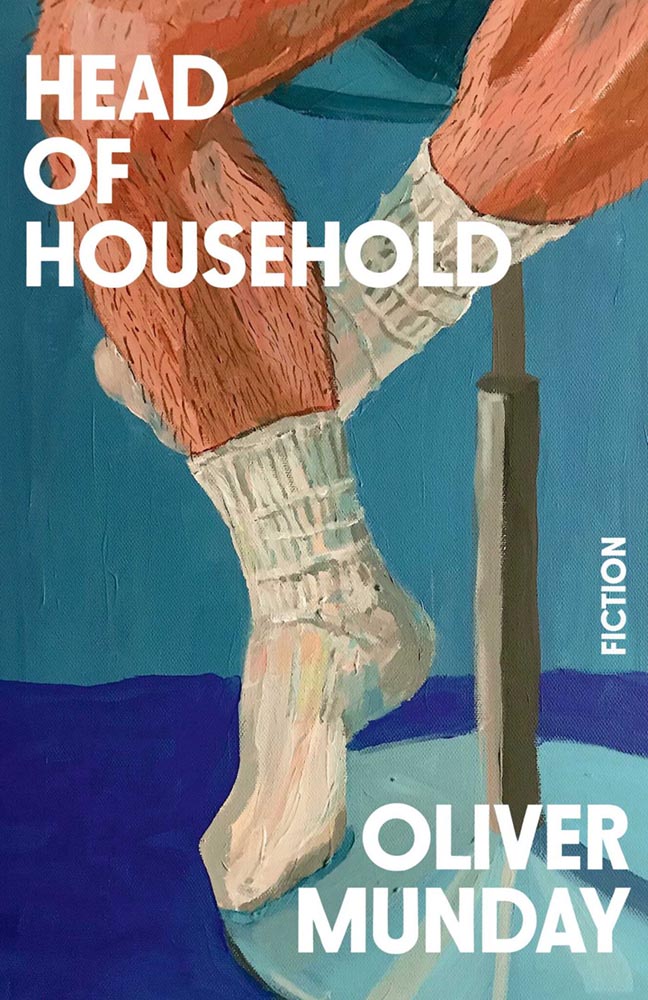
    Cover design by Chris Brand.

    Munday’s collection of stories has an interesting cover by industry veteran Chris Brand, and I like it — although some of the alternatives seem to me like better fits for Munday’s take on life. 

    But, of course, that’s the point: it’s not about him, it’s about his book.

    See the other book cover design drafts Brand designed for Head of Household at LitHub. (And a short Q&A.) Enjoy also this interview with the author/designer at Debutful.

    The Butter Book
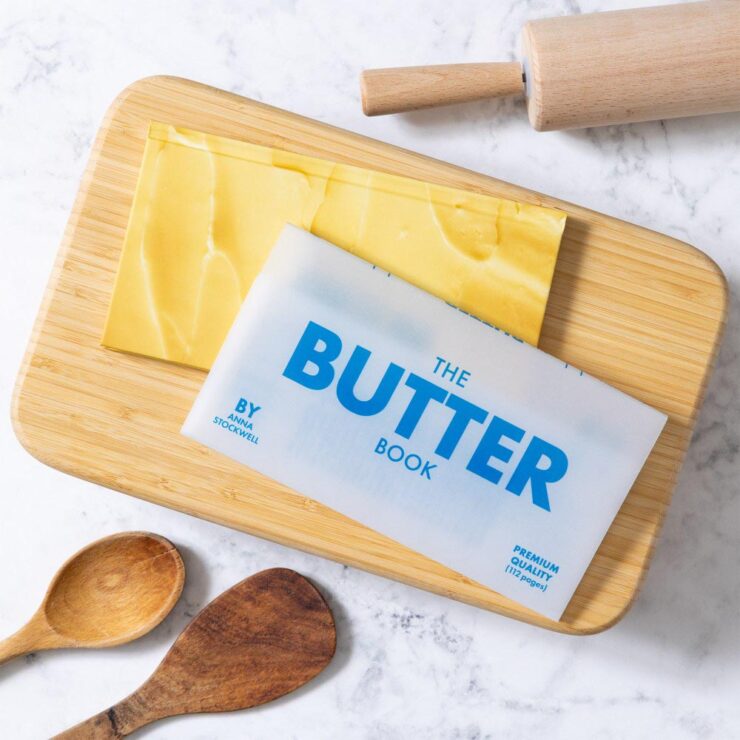
    Book design by Lizzie Vaughan.

    No, it doesn’t soften when left out — or spread any larger meaning. It’s just a great book cover (and jacket).

    Chronicle gets a kick out of “things that look like other things.” We made a notepad called Pad of Butter that has been selling steadily since 2015. So, imaginations did not need to stretch when a butter-focused cookbook with a vellum jacket was proposed. It’s our “bread and butter,” so to speak.— Q&A with author Anna Stockwell and designer Lizzie Vaughan, PRINT

    “It’s important to find joy wherever you can these days and it’s hard to hate on butter,” the article says. Read the rest at PRINT.

    “Naïve” Design
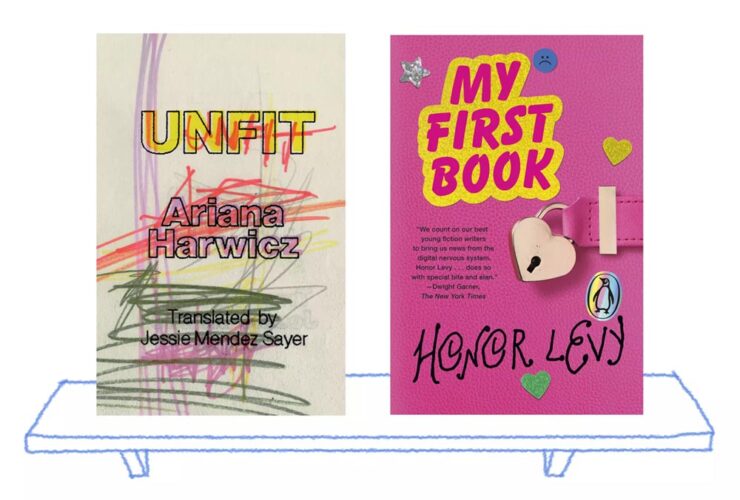
    Image courtesy of the LA Times.

    The LA Times examines the latest book design trend: naïve design. (Yes, I pretentiously style that like the New Yorker does. The LA Times does not.) It’s where serious subjects wear … nostalgic cover designs, to use a phrase. Find out why.

    Parenthetically, of the covers mentioned in that article, only one — by design legend Na Kim — has found its way into my 2026 Favorite Covers folder. It’ll be a minute, but stay tuned to find out which.

    Special Bonus #1: “You’ll need a magnifying glass to read these,” says This is Colossal:
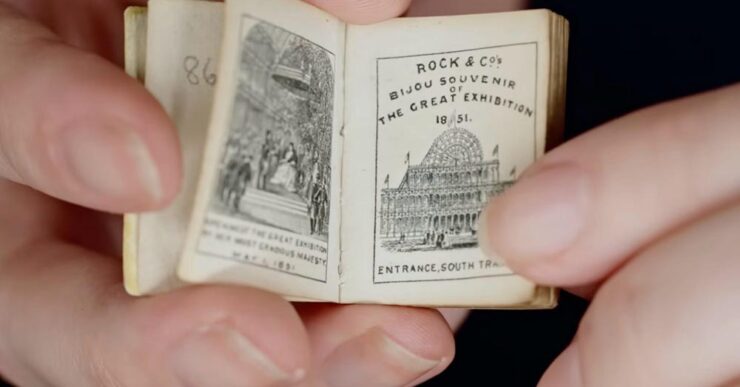
    Courtesy of the V&A Museum.

    Special Bonus #2: A favorite collectible (and slight tangent), these books “keep a lost design legacy alight,” says It’s Nice That:
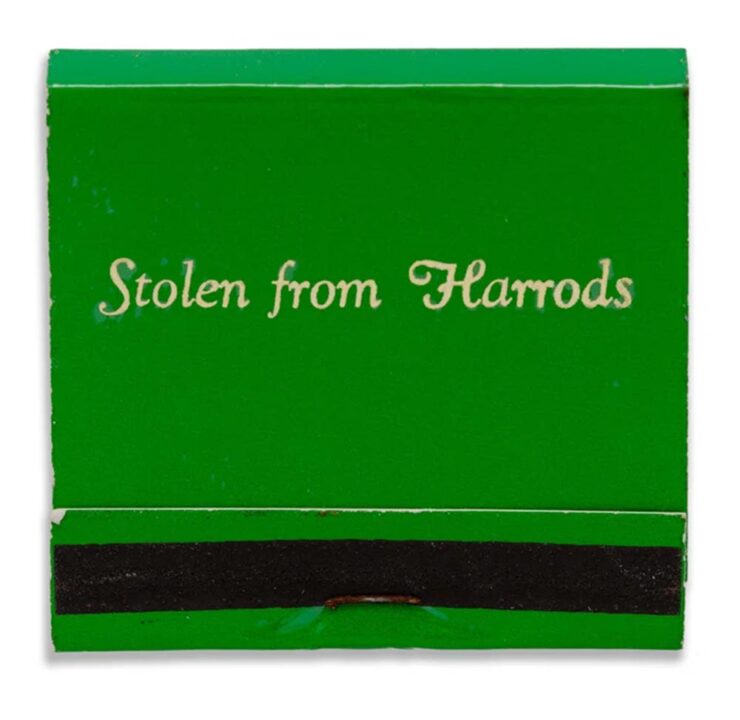
    A sample from The Matchbook Book by CentreCentre. 

    Update, 1 April: CreativeBoom has a nice feature on this title as well, with additional images. Check the slipcover:
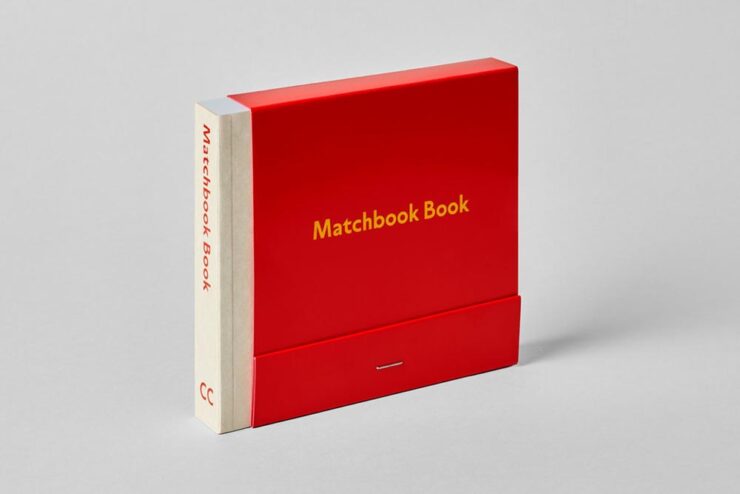
    Awesomeness courtesy of CreativeBoom.
    Fonts March Foreword
    CreativeBoom’s March Faves

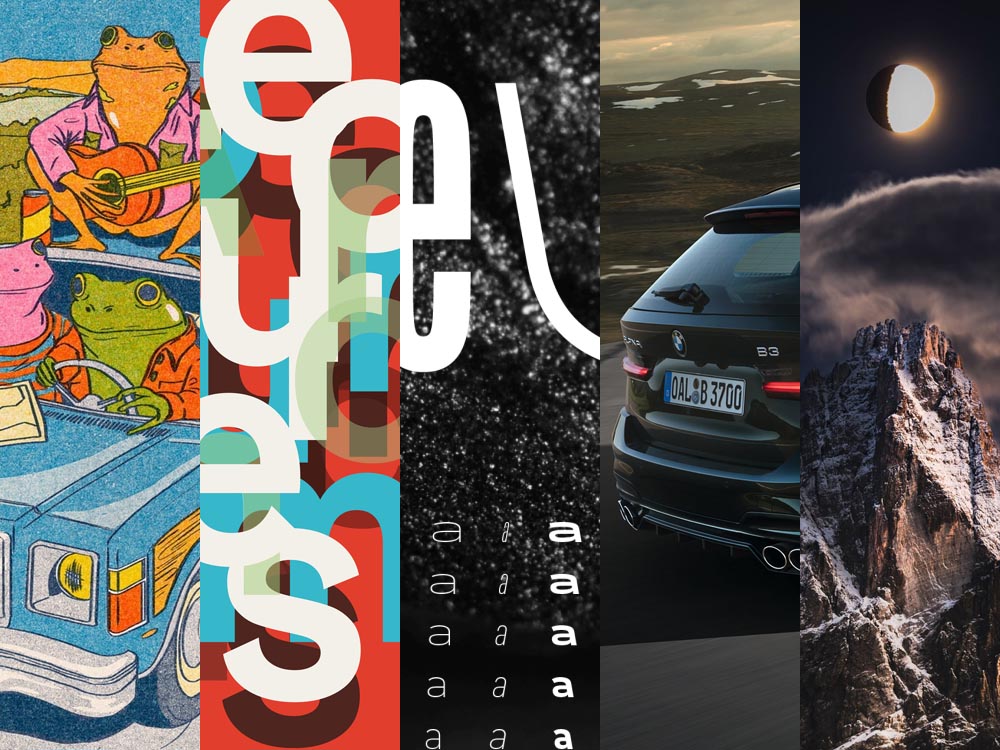
    CreativeBoom‘s regular feature contains sixteen choices this month — awesome! — but I’d like to just highlight my three favorites: 
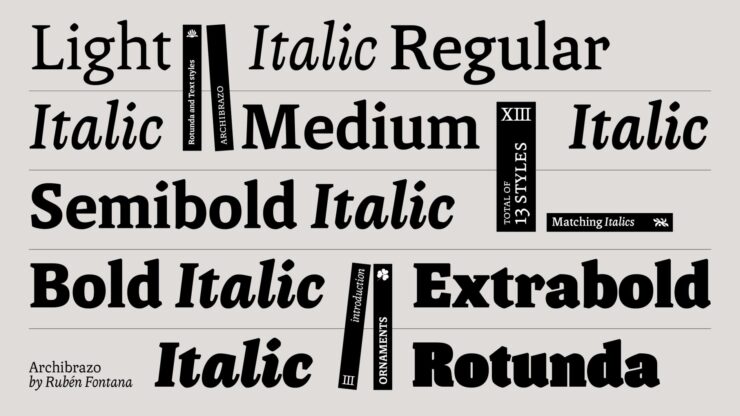
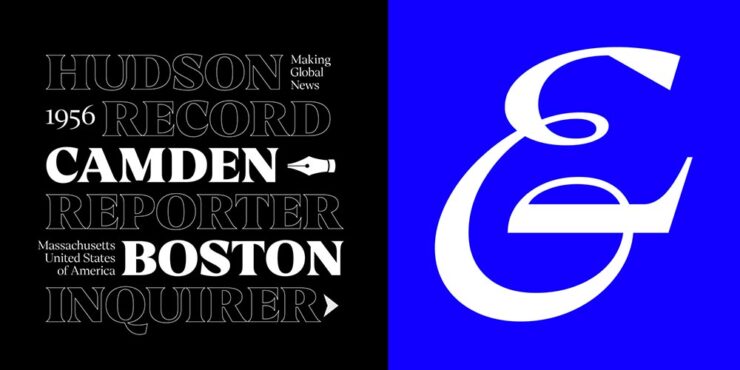
    Archibrazo by Rubén Fontana.

    “Rubén Fontana is one of the most respected figures in Latin American type design, and Archibrazo, released through TypeTogether earlier this year, represents a characteristically considered piece of work. The typeface brings together two traditions that might seem at odds: the fluidity of calligraphic practice and the hardness of sculptural form. The result is a serif family that wears its sources with confidence, without collapsing into historicism or affectation.”
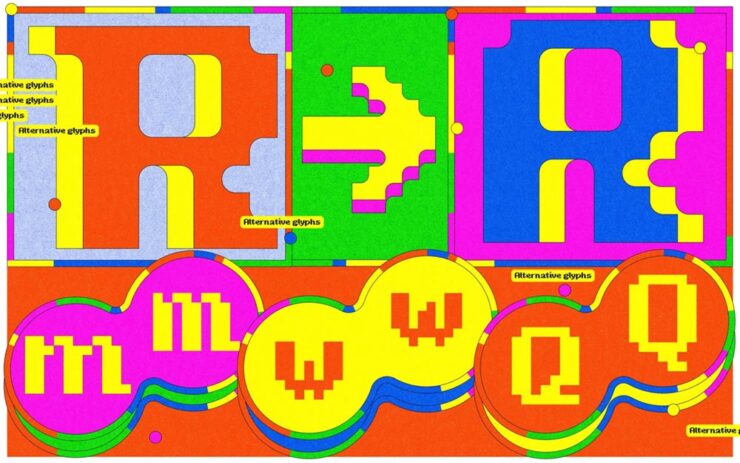
    See more at TypeTogether.

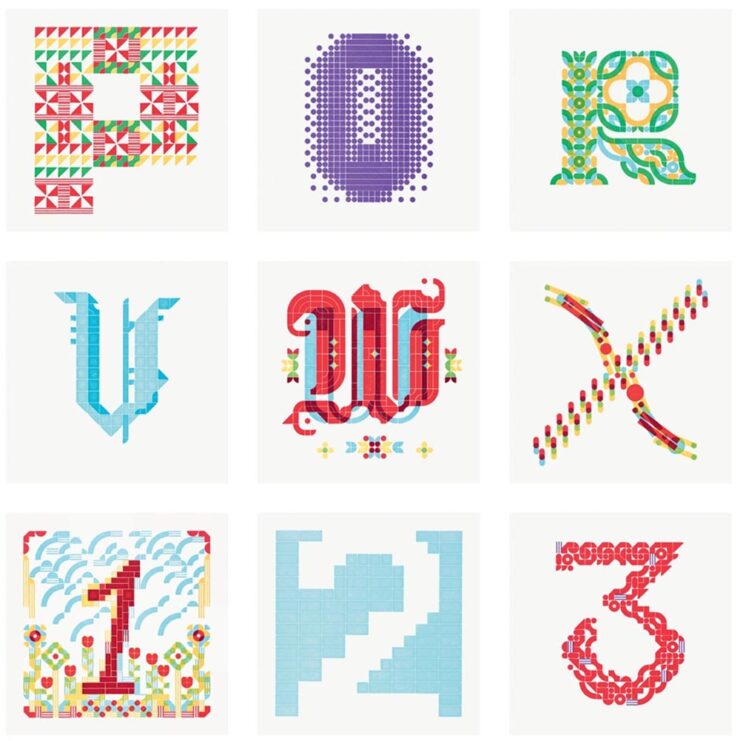
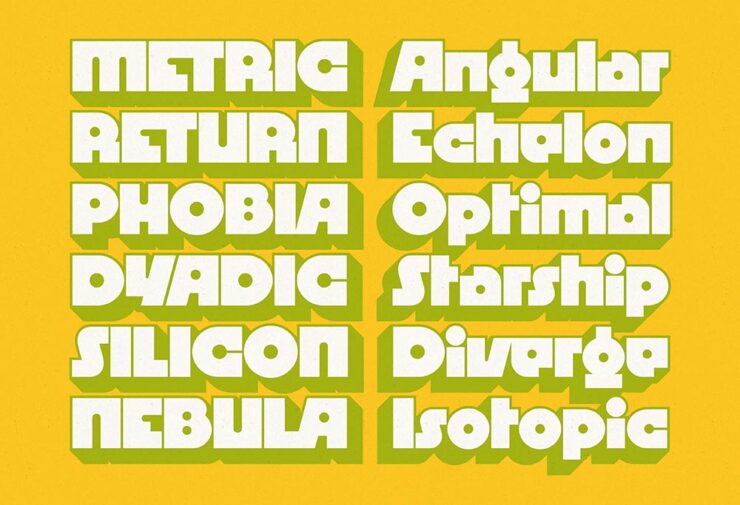
    Djaggety by Alessia Mazzaarella.

    “Djaggety began in a classroom. Alessia Mazzarella of Typeland, who teaches type design to BA Graphic Design students, uses an 8×8 grid exercise as a standard introduction to letterform construction. The constraint, she explains, strips away the paralysis of infinite choice and forces students to focus on what makes a character recognisable within a tightly defined system. During one iteration of the exercise, she found herself drawn into the process rather than simply demonstrating it. […] Overall, it’s a good lesson in how constraint can generate, rather than foreclose, creative possibilities.”
    See more at Typeland.

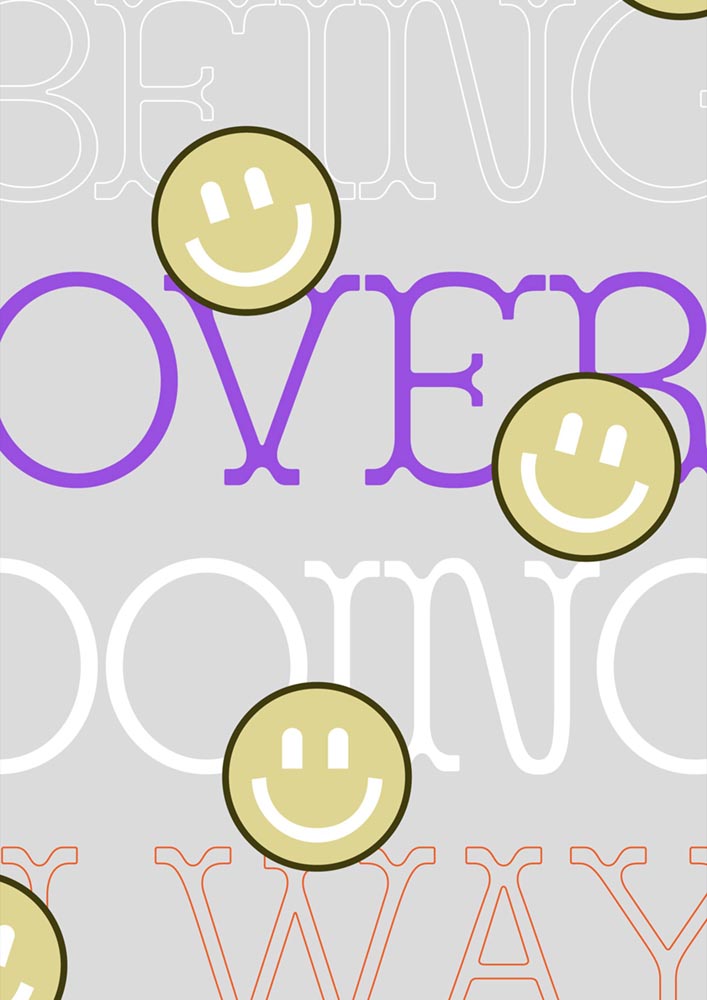
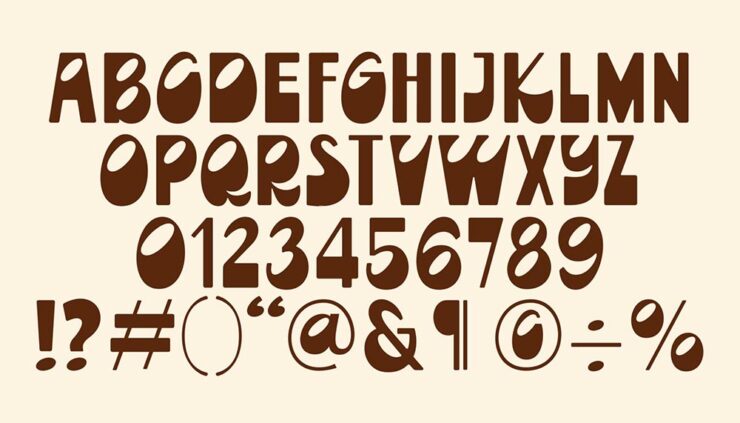
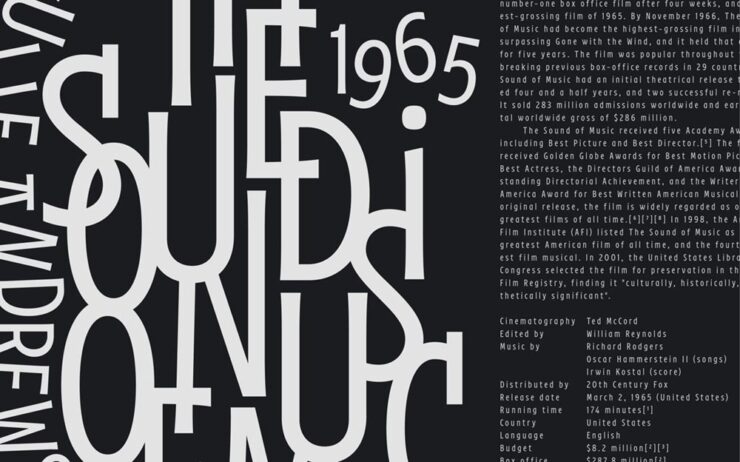
    Musikal by Fred’s Fonts.

    “After three years in development on Future Fonts, Fred Wiltshire’s Musikal has reached v1.0: a significant milestone for a typeface that began with a conscious act of divergence. Herman Ihlenburg’s Obelisk (1880s) served as the starting point: a high-contrast, ornamental display face of considerable geometric rigour and decorative confidence. Rather than reviving Obelisk directly, Wiltshire took its ‘playful nature’ as a conceptual springboard and built something clearly of the present.”

    See more at Future Fonts.

    Letterform Archives’ New Celebration of Hand-Painted Type
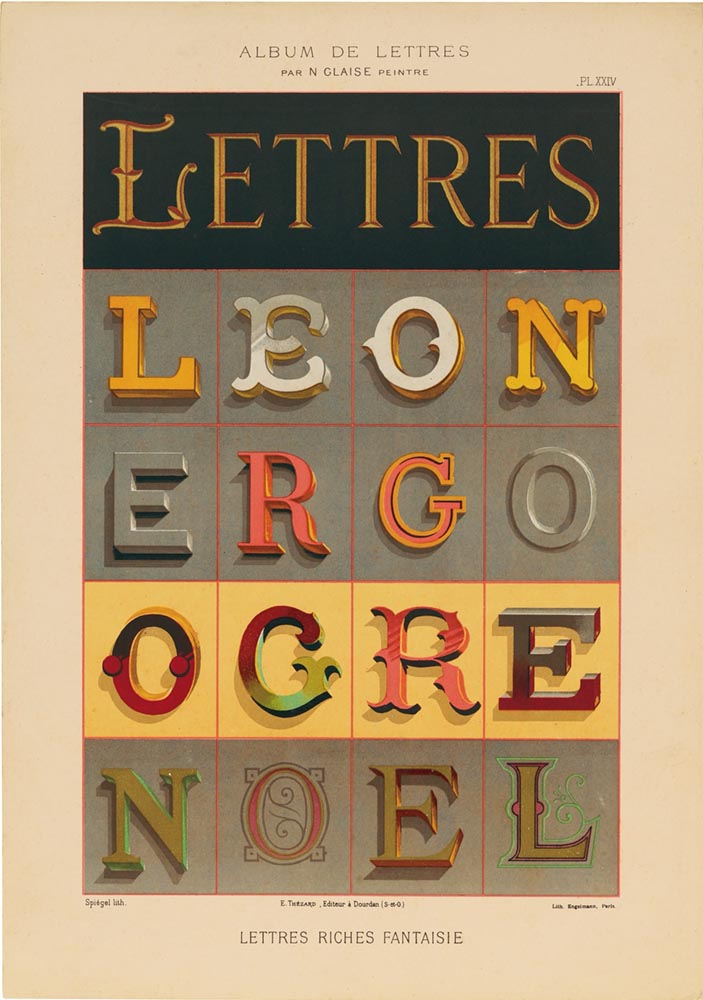
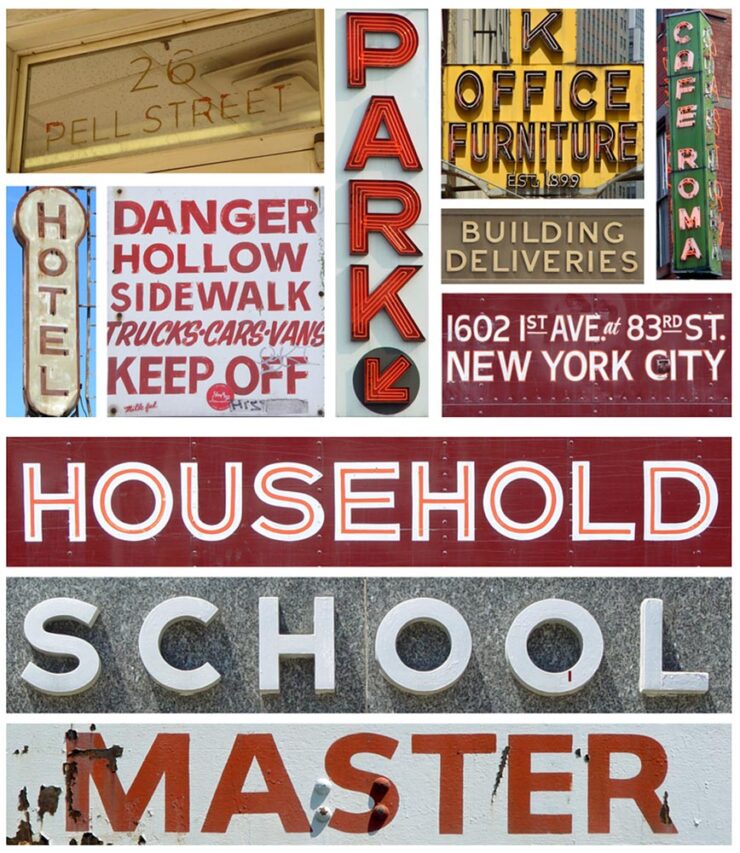
    One example — I mean, who can argue with “Lettres Riches Fantaisie“?

    “A new book published by Letterform ArchiveLettres Décoratives: A Century of French Sign Painters’ Alphabets, celebrates the vivacity and timelessness of French sign painting from the 19th and early 20th centuriesCompiled from lithograph portfolios, which range from 1875 to around 1932, the volume includes more than 150 full-color reproductions of these bold lettering samples. These portfolios once served as catalogue-like albums, providing inspiration for styles and motifs that could be translated onto large billboards and small signage alike.”

    Read more about this great new book at This is Colossal or PRINT.

    Cambridge’s Old Baskerville Punches

    Heavy metal for the type crowd:
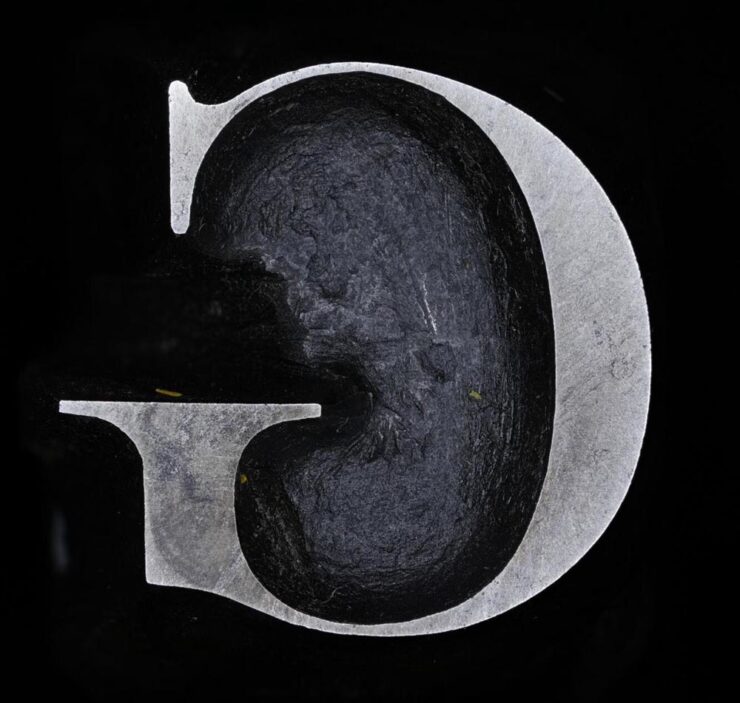
    Image courtesy of Cambridge University.

    “John Baskerville was an influential 18th-century printer and type designer; you’ve probably used (or at least heard of) the Baskerville typeface. Cambridge University has the original punches used to create his signature typeface and has made high-res digital photos of them available online,” Kottke writes. “[S]eeing close-ups of the actual cut & shaped metal from 1757 is something else.”

    In case you’re not familiar:

    The typographic punch is the initial design for the letterform and one of the first of three stages in the manufacturing of metal type: short lengths of steel onto which his letters were cut in reverse and in relief. The punch was ‘tempered’ to increase its toughness and enable its use as a tool. Secondly, the punch was struck into the surface of a softer piece of metal (copper), leaving an impression of the ‘right-reading’ character to be cast. This was called the matrix. Finally, type was manufactured when the matrix was passed to the type-caster and inserted into a mould, into which molten lead-alloy was poured. This produced a cast of the type in relief and in reverse which were then arranged to create a text block and once inked, paper could be pressed against it.

    Not just hi-res photos of punches for various sizes of type, either: some have 3D versions. Very cool.

    Special Bonus #3: The menu that never was:
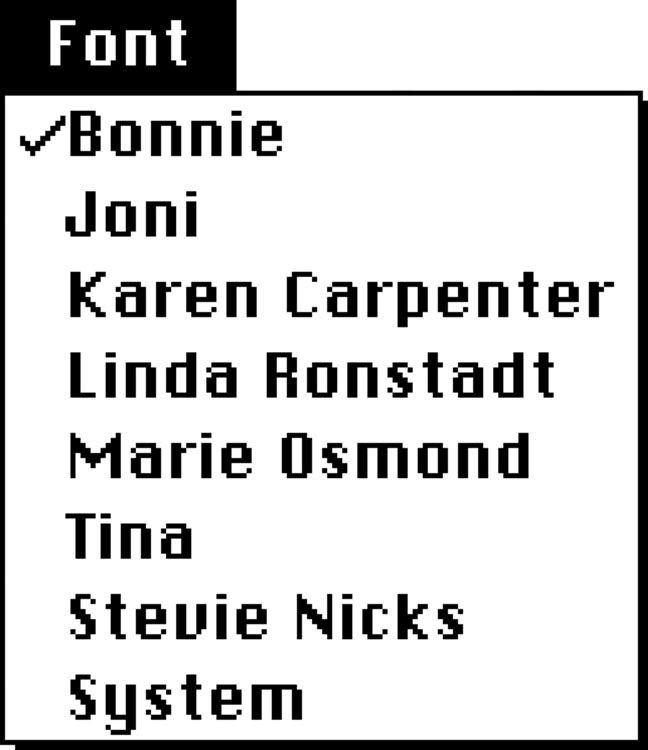
    World Class Female Singers.

    Okay, okay, that’s not actually an unused menu from before Apple’s Macintosh was released in 1984, but how it came about isn’t something I’m going to quote. Instead, I’m just going to ask you to read it in full — it’s fantastic.

    Courtesy of Unsung, Marcin Wichary’s awesome blog. (Yes, he of Shift Happens fame.)

    Great Graphic Items X2
    The Tenth Muse
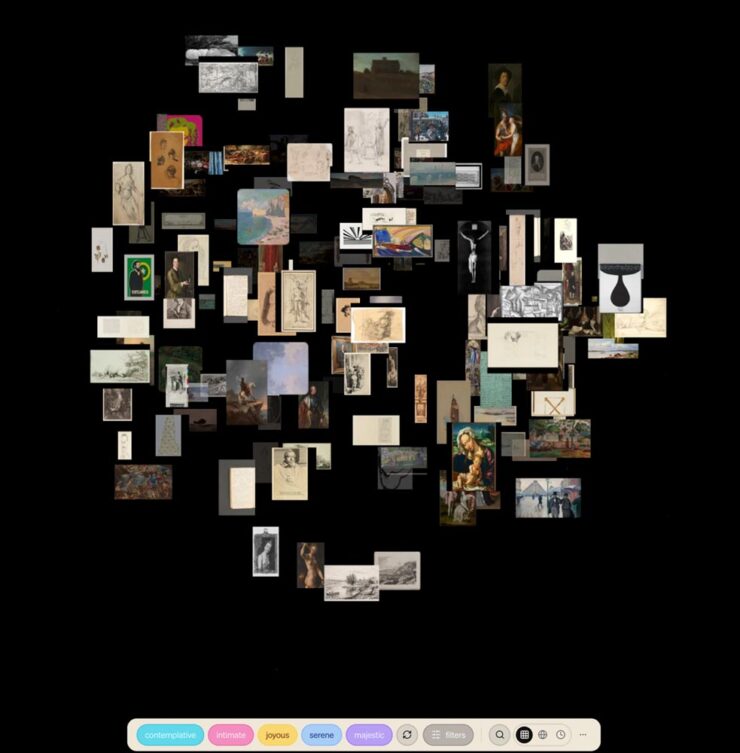
    Screenshot of the Tenth Muse home page.

    The Tenth Muse is an art discovery engine. Over 120,000 artworks from museums and institutions — searchable by feeling, mood, atmosphere, era, and medium.”

    (Via Kottke.)

    AIGA NY: 50 Years of Posters
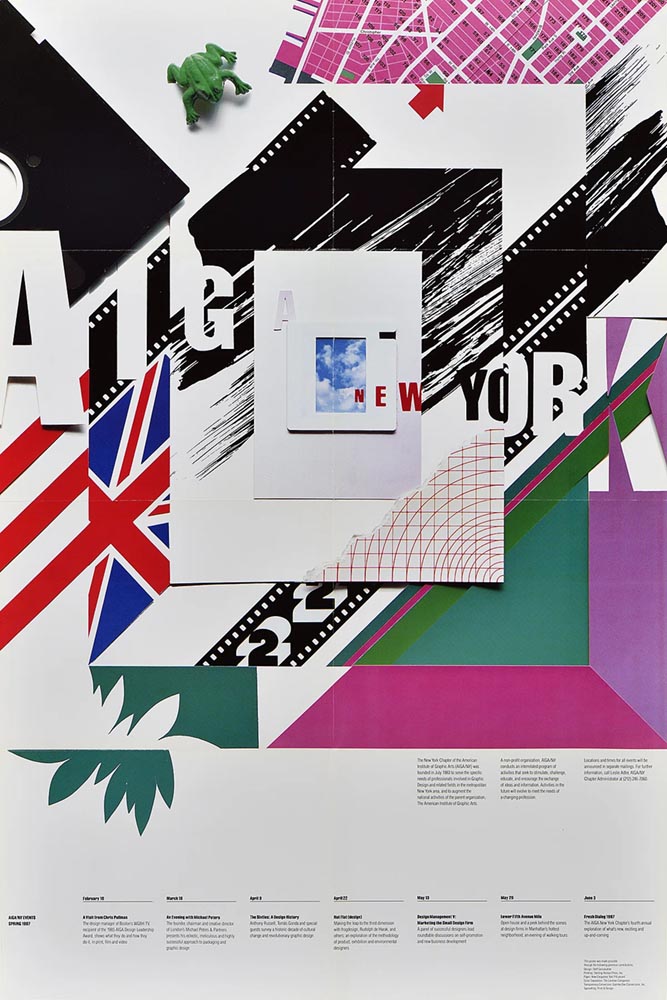
    Just one example of the many posters now available for your persual.

    “A 50-year goldmine of design: AIGA New York unveils its poster archive to the public,” It’s Nice That reports. “A newly opened window into its design archive, this unique visual library provides the public with an inside view of the design, art and activism that’s emerged from the city’s recent history. AIGA NY has ambitions for the collection to become physically accessible with an accompanying book that will showcase the posters in more depth.”

    Adobe, Yet Again
    DNG Now Standard

    Let’s start with the positive:
    “In March 2004, Australian photographer Robert Edwards asked a simple but meaningful question on Rob Galbraith’s now-defunct photography forums: ‘Could Adobe make a RAW format?’ The answer was very much ‘yes,’ and Adobe announced the DNG format, or Digital Negative, later that same year. Now, more than two decades later, DNG is now the official standard under the International Organization for Standardization (ISO),” PetaPixel writes.
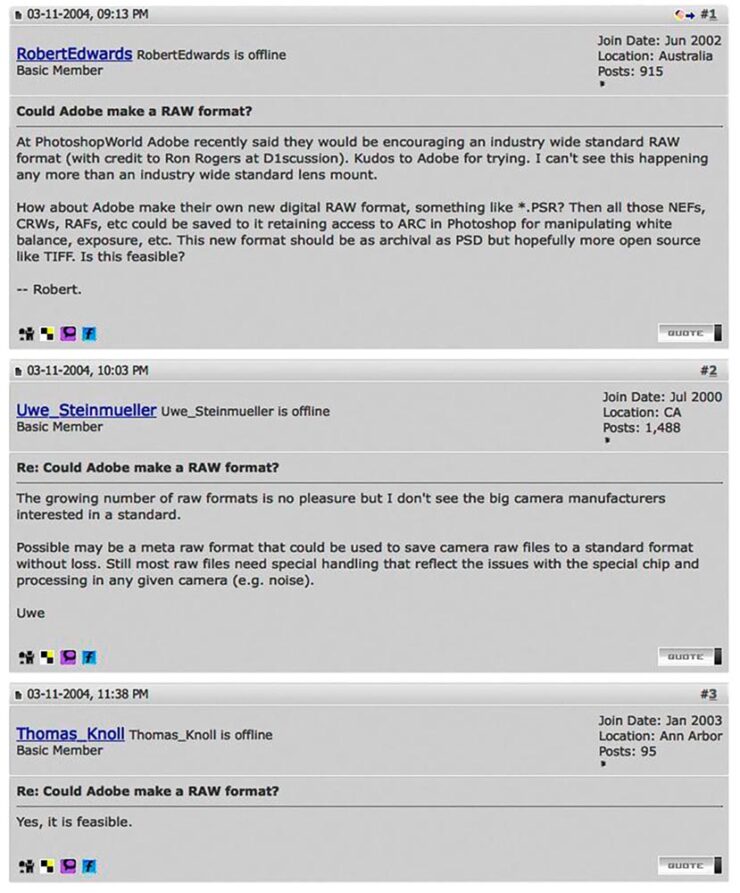
    From back in the day.

    I remember lurking on Rob Galbraith site. Such were the importance of his forums — and, for that matter, the overall size and condition of the ’net in the early Aughties — that Thomas Knoll himself, one of the creators of Photoshop, would post there.

    In case you’re not familiar, a camera’s RAW file is what the sensor sees at the moment of exposure, stored in a format for later editing. It’s completely different from a JPG file, which has all the camera’s choices baked in to the final image. Sports or journalism photographers usually shoot JPG, due to the need to post immediately; social media photography is, of course, its own animal.

    Most fine photographers — that is, folks who shoot for art or pleasure, including your author — only shoot RAW, because it gives you maximum flexibility in “look.”

    I’m honestly not sure how much of a difference this will make, but it’s nice to see DNG accepted as a standard — and it’s an example of Adobe meaningfully contributing to the bigger picture. 

    Train Adobe’s AI on Your Style

    From the “mixed” department:
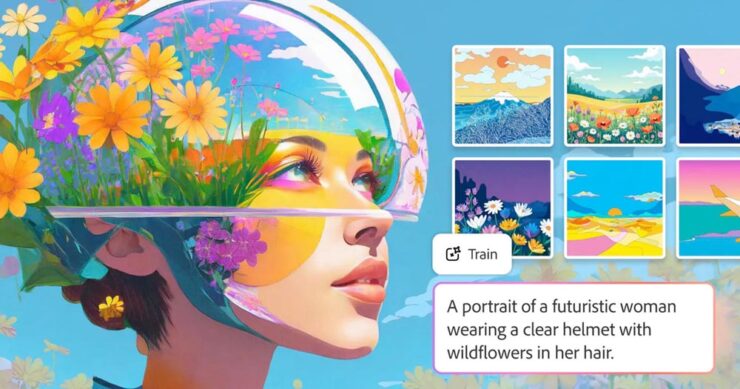
    It’s not tin foil.

    Adobe has launched Firefly Custom Models, “allowing artists to generate image variations that ‘more consistently reflect’ their own style, subject, or characters. 

    Adobe’s Deepa Subramaniam says, “Today, we’re expanding access to Firefly custom models, which let you turn your creative style into a reusable model trained on your own images. In this public beta release, custom models are optimized for ideation in character, illustration and photographic style.” 

    The goal of Custom Models, according to PetaPixel, is to “allow artists to train Adobe’s Firefly AI specifically to unique workflows so that when it generates content, it is more aligned with their specific style.”

    Hmmm. How ’bout practical effects? Seriously, this might turn out to be useful. Time will tell. Helmet of tin flowers and all.

    CEO Retires. Stock … Down?

    Here’s where the attitude sneaks in: most of us, present company included, are sick of Adobe’s attitude towards its customers.

    “Adobe’s longtime CEO, Shantanu Narayen, announced this week that he is stepping down after 18 years as CEO and nearly 30 years at the company. If you ask shareholders, Narayen was, for a long time, among the very best in the biz. If you ask Adobe’s core customers, the artists who were once indispensable to the company’s success, it’s a different story,” writes Jeremy Gray in an opinion piece for PetaPixel.

    Adobe made more than $7 billion in net profit last year, a clear win for shareholders. This is due to their choice to treat creatives as a profit center. But their stock is down because their AI efforts have fallen flat — Firefly is way behind Midjourney or Gemini — and the planned additional profit center has failed to materialize. 

    And by “down,” I mean significantly. During Narayen’s tenure, Adobe’s share price increased from around $40 in late 2007 when he took over to an all-time high of $688.37 in 2021. But as of this writing, it’s $243. “Although Adobe and Narayen are painting his departure as entirely the outgoing CEO’s decision,” Gray continues, “it’s easy to wonder whether tumbling share prices had something to do with the transition, or at least sped up existing plans.

    “I respect the sheer scale of what he achieved. I admire that he grew Adobe so that it could hire more great workers to build better software. But for me, Narayen’s legacy is ultimately one of treating [creatives] like an afterthought […] using our passion and love for art to boost his brand.”

    I understand that Adobe has become one the Internet’s favorite punching bags of late, and I try to distance myself from that sport (no matter the subject). But I can’t help but agree with many of the things expressed in that piece.

    Let’s hope that the future bring change, one way or another. For many professionals, Adobe essentially holds a monopoly. 

    But then, so did Microsoft.

    Special Bonus #4: Unsung asks, “Why wouldn’t everyone deserve the gift of focus?” He’s talking about the tragically-short-lived focus mode in Photoshop, wherein the user isn’t automatically shown pop-ups or blaring (bleating?) buttons regarding new features.

    I mention this because I just uninstalled Acrobat, Adobe’s PDF management program, because I couldn’t turn off the pop-ups, sharing invitations, or requests to add comments. All I wanted was to proof documents, but what I was gifted with was frustration — even anger, on days where a deadline was involved. 

    Special Bonus #5: “A slap on the wrist” is understatement writ large:

    “Canceling a software subscription is supposed to be easy — that’s what US law dictates. Adobe, however, has played fast and loose with its Creative Cloud subscriptions in the past. The company was sued by the Department of Justice in 2024 due to its practice of hiding hefty termination fees when customers signed up. The case has now been settled, with Adobe agreeing to a $75 million fine and matching free services to users of its products,” Ars Technica writes.

    The company doesn’t admit to violating the law. “While we disagree ⁠with the government’s claims and deny any wrongdoing, we are pleased to resolve this matter,” Adobe said in a statement.

    March Photo Round-Up

    Okay, let’s switch gear and end with inspiration — even happiness.

    International Garden Photographer of the Year 2026

    Yes, you read that right: there’s an international contest for the best garden photograph. (If you want hard-hitting stuff, see Sony’s awards. There’s enough “news” in the world, so….)

    Grange Fell Last Light. Overall Winner. Photograph by Mark Hetherington.

    Soothing. The image also earned first place in the Breathing Spaces — more soothing —category, and was captured in Borrowdale in England’s Lake District; the “photograph shows heather, silver birch trees, and the warm light of sunset viewed from Grange Fell,” PetaPixel writes.

    See all the winning photographs at the contest website.

    British Wildlife

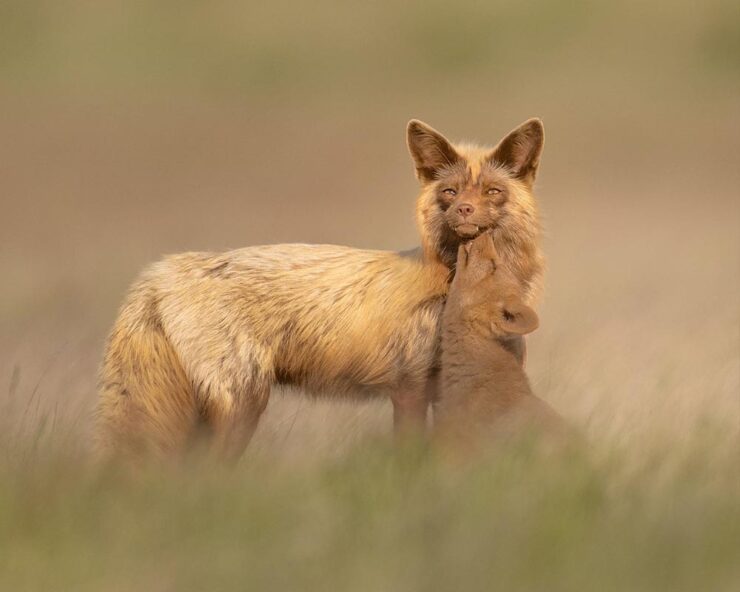
    Asleep at the Wheel. Winner, Urban Wildlife. Photograph by Simon Withyman.

    It’s a shame these are still photographs. Hearing a red fox bark in a British accent is a hoot.
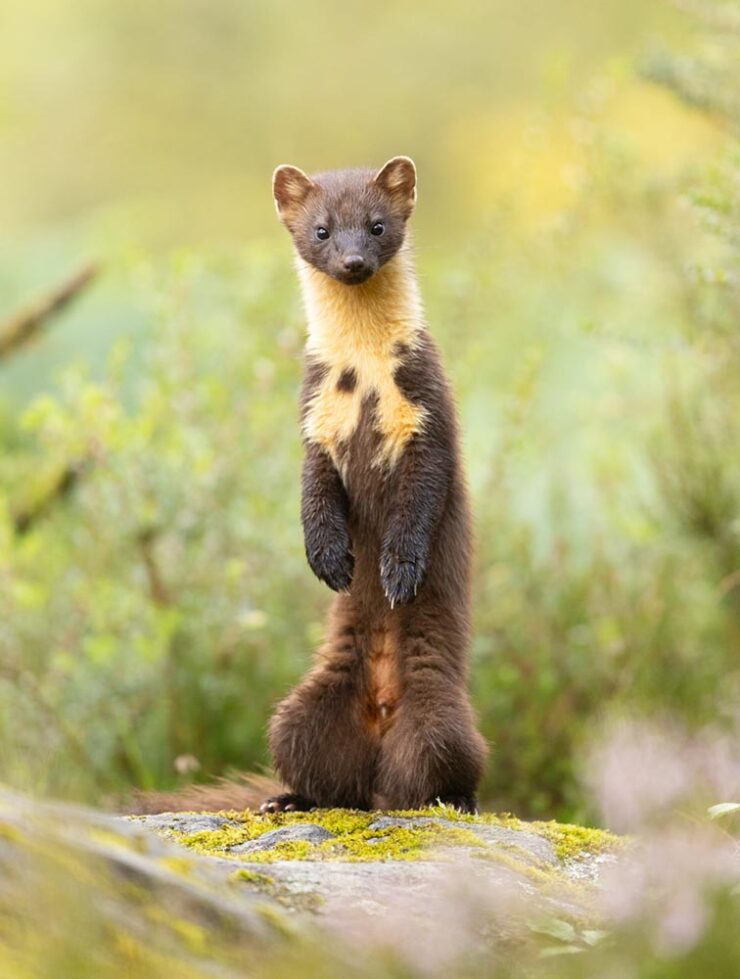
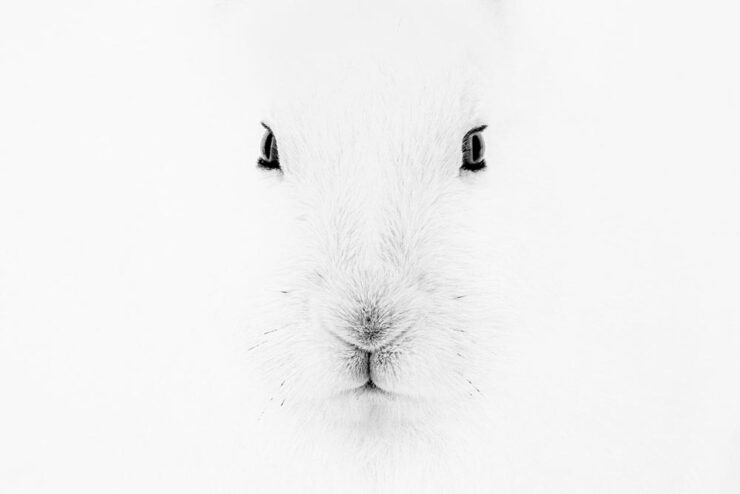
    Standing Tall. Winner, Animal Portrait. Photograph by Alastair Marsh.

    Proof that excellence in photography extends to all parts of the realm. See all twenty-one winners at This is Colossal or PetaPixel.

    London Camera Exchange Photographer of the Year 2026

    Last of the items originating in the UK this month, although the excellent photographs within aren’t limited to just those countries. Some examples:

    Crossing the Curves. Winner, Street. Photograph by Helen Trust.

    “A lone cyclist moves through sweeping arcs of light and shadow at the City of Arts and Sciences. Reflections echo the architecture’s rhythm, momentarily aligning human motion with structure, symmetry, and space.”

    Saving Lives at Sea. Winner, Action. Photograph by David Lyon.

    “Captured from the shore, during a regular Newhaven training exercise.”
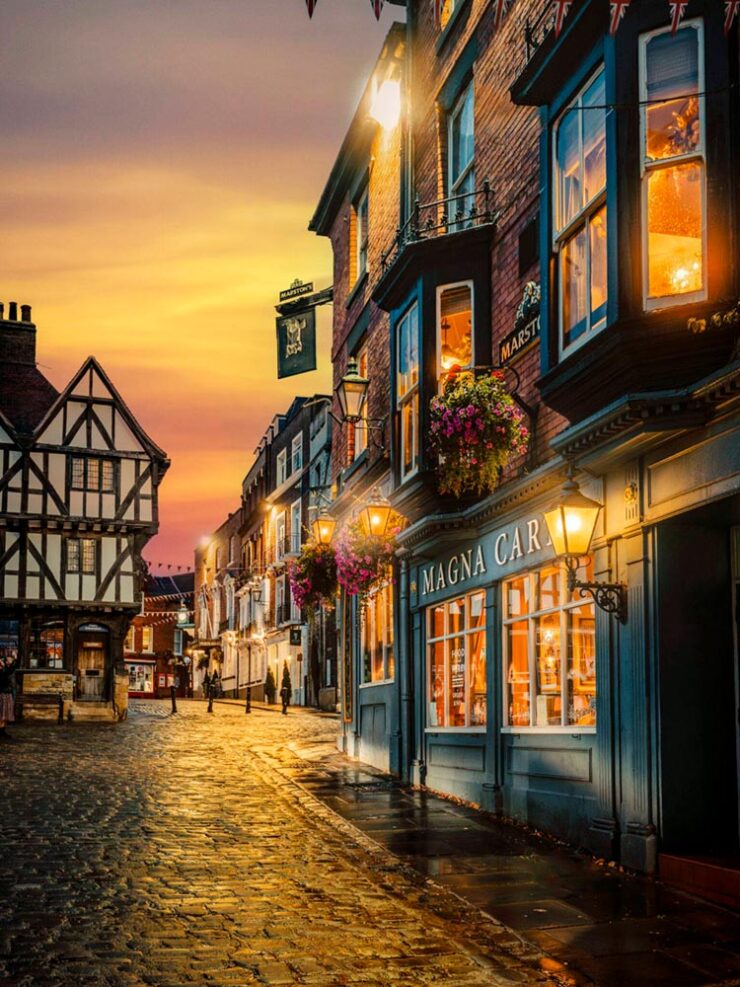
    Magical Uphill Lincoln. Winner, People’s Choice. Photograph by Andrew Scott.

    “This image was taken during golden hour in Lincoln. The image captures the historic streets and architecture of Lincoln as a golden sunset sets in. […] The golden glow of the sky, cobbles and light from the window add that extra dimension in terms of how the overall image works as a result.” (The description somehow missed “soothing.”)

    See all the winners at the London Camera Exchange website. Via Macfilos.

    Andrew Moore: Theater

    “Known for his atmospheric photographs of landscapes, interiors, and urban centers that feel mysteriously locked in a not-so-distant past, Andrew Moore’s enigmatic images invite us into a slippage of time,” This is Colossal writes.
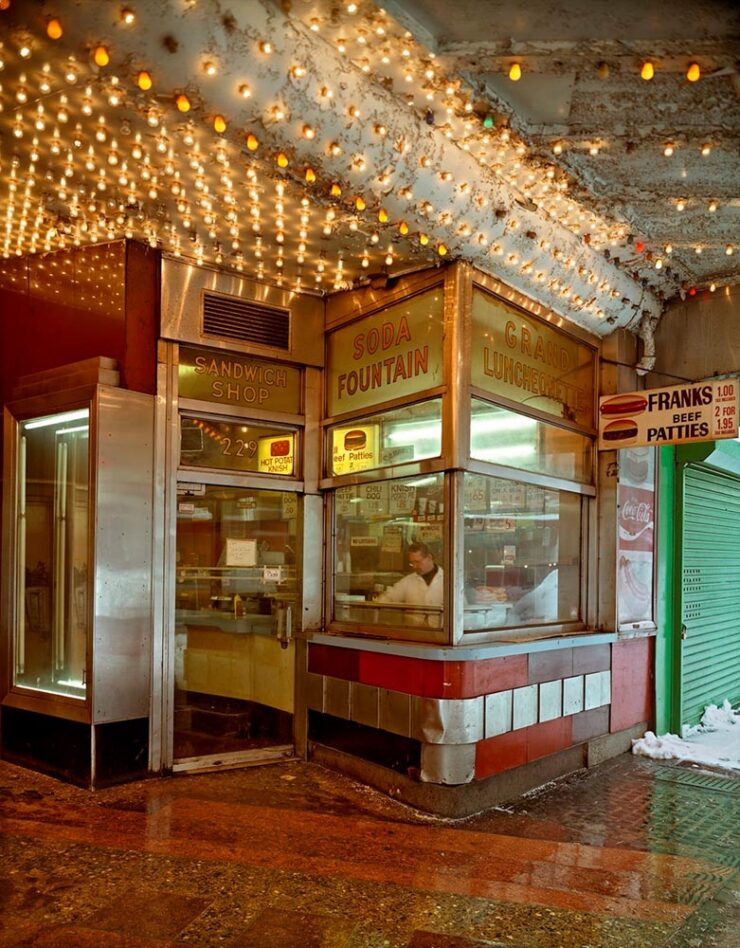
    Grand Luncheonette, New York, 1996. Photograph by Andrew Moore.

    Not only great, but currently on display: Moore has a solo show running at Atlanta’s Jackson Fine Art. (Update: The show ended March 21st, darned it. I’d have gone if I’d read that properly.)

    Cinematic Plastic

    No, not current events — something better:
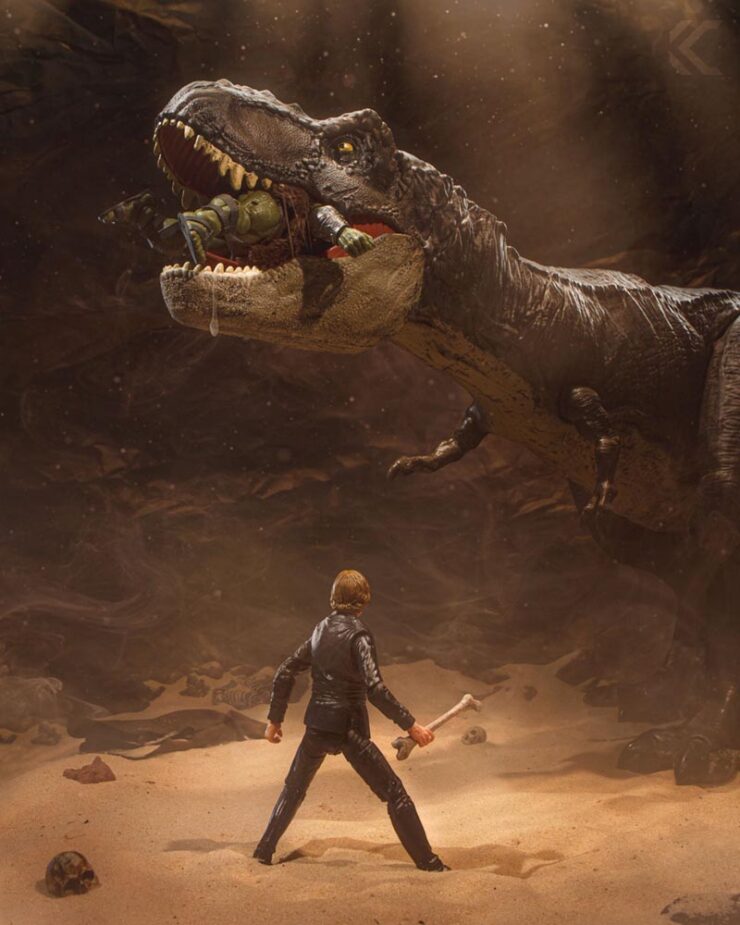
    Jurassic Pit. Photograph by Chuck Eiler.

    “Chicago-based photographer Chuck Eiler transforms action figures into cinematic, story-driven miniature worlds that blur the line between toy photography and film. Through meticulously crafted sets, practical effects, and careful lighting, he creates immersive scenes that bring nostalgia and storytelling to life,” PetaPixel writes.
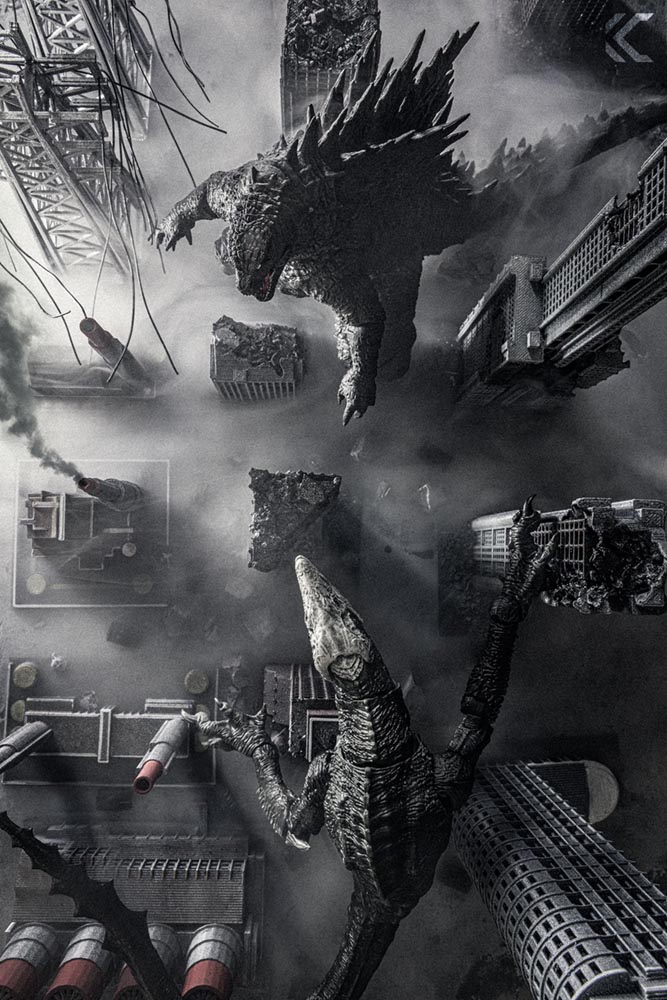
    Apex Predators. Photograph by Chuck Eiler.

    Awesome. (And available as prints, in case you want for your sandbox walls.)

    Finally: Duck This

    Last month saw the incredible fresh pasta camera. Well, in case you think I only recommend a vegetarian lifestyle, there’s…:
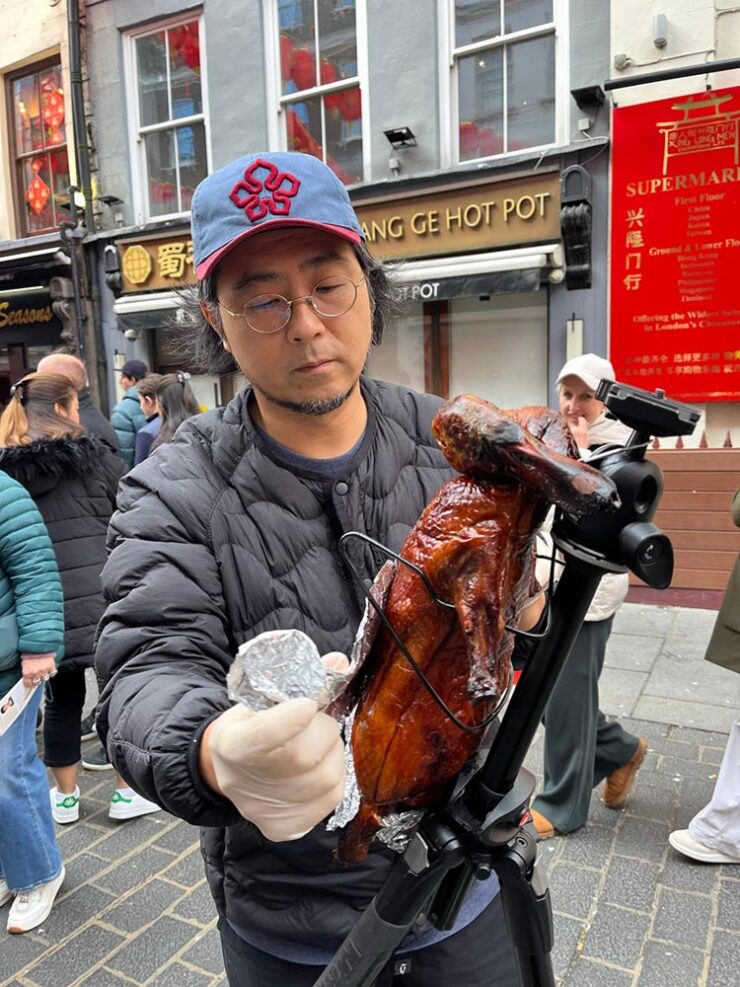
    Four Minutes in London.

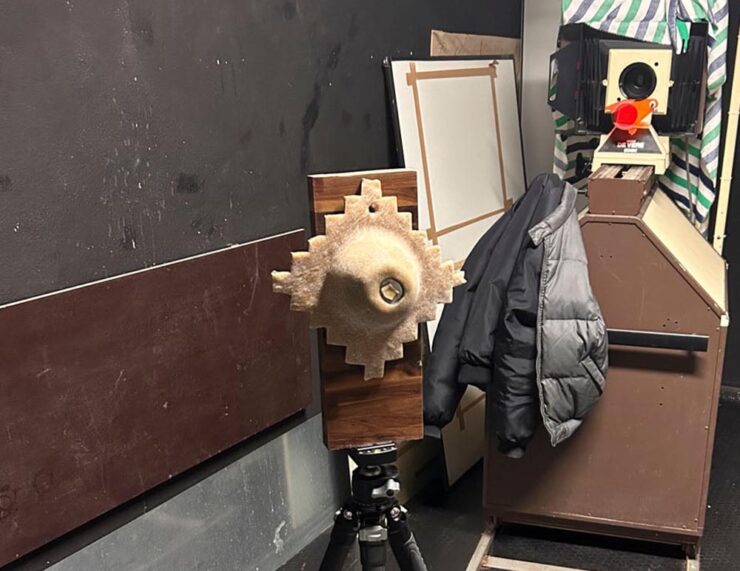
    Martin Cheung’s Chinese roast duckcam

    Presumably, he throws a fresh camera into the oven every time he needs one: “I will continue making Duckcam while I travel, so next time when you see a person with a roasted duck on a tripod, please say hello to me.”

    Enjoy your spring, everyone!
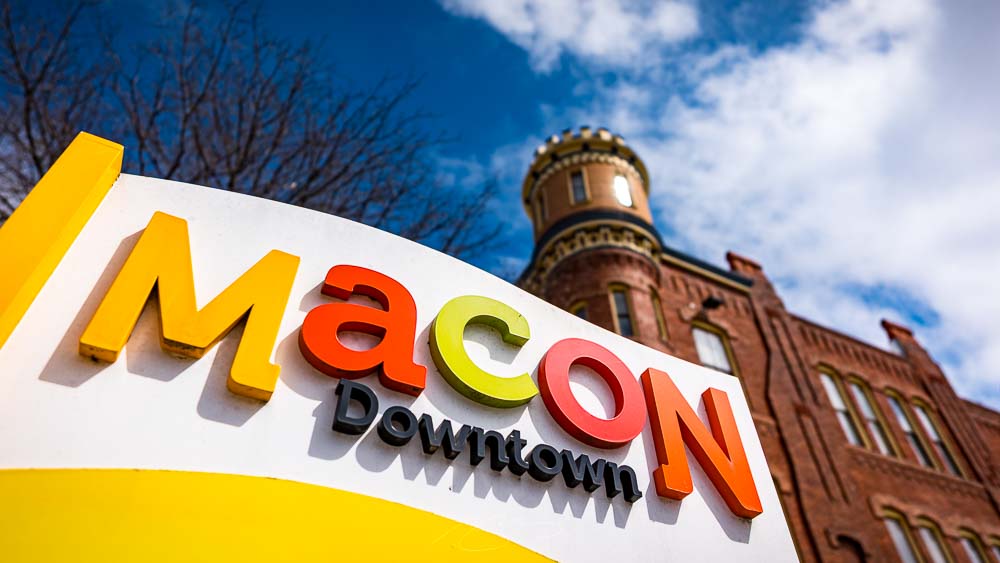
  • Updated Gallery: Downtown Macon, Georgia

    Updated Gallery: Downtown Macon, Georgia

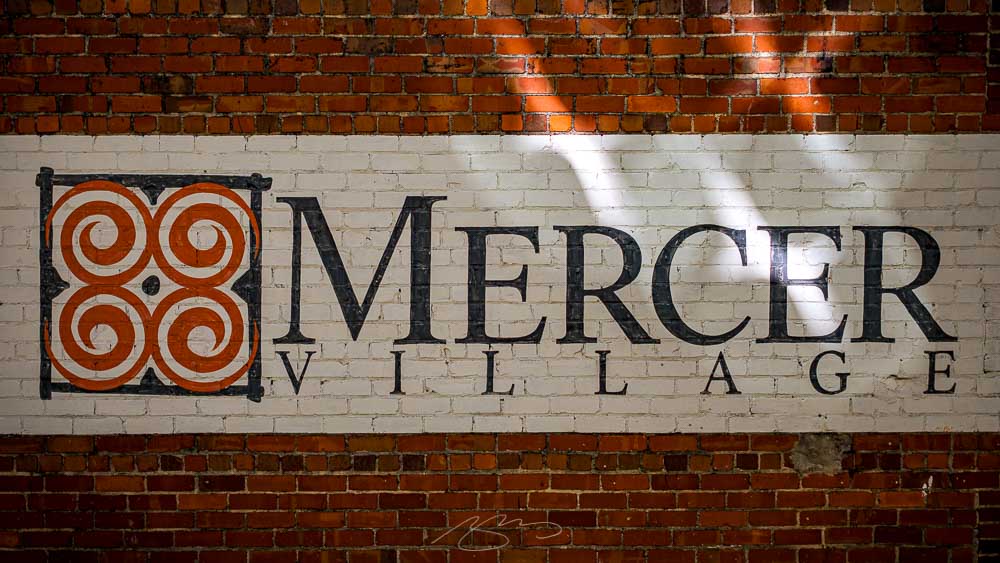
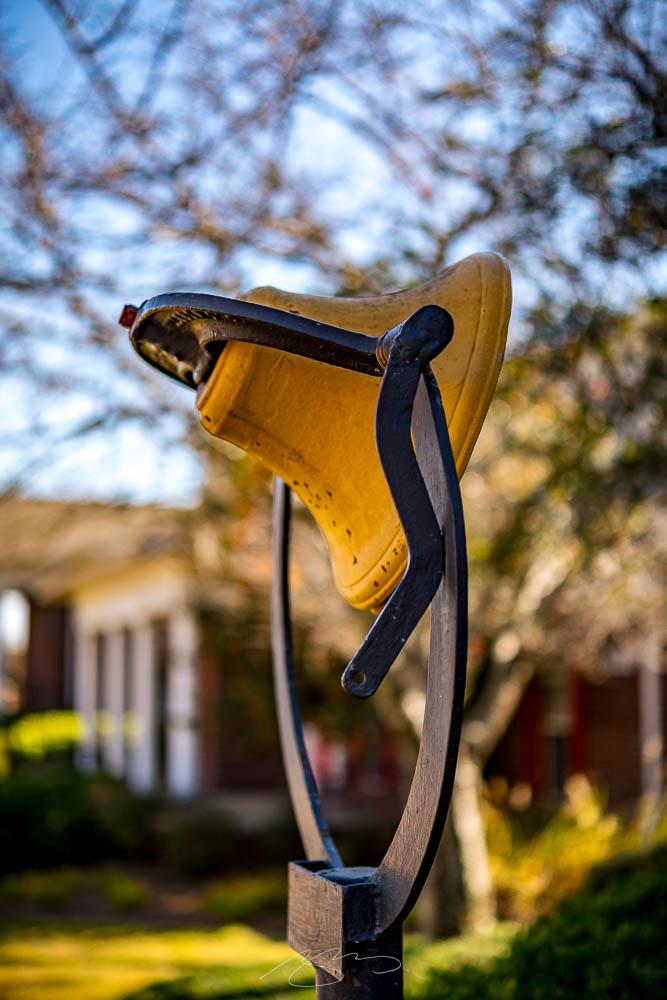
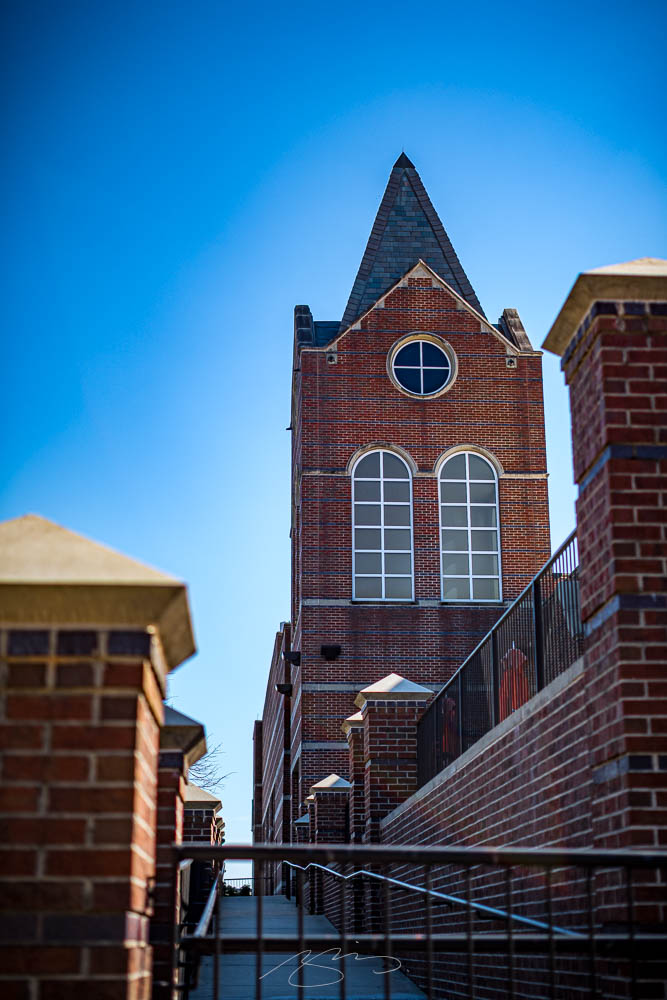
    The first photostroll downtown this year involved some new gear, an extremely sharp and astonishingly compact wide-angle zoom from Sigma. I’ve wanted something wider that the 35mm-equivalent that is my daily driver for a minute now, and this absolutely fits the bill.

    It also gave me an excuse to see a couple of new and updated spots in Macon: 

    Rosa Parks Square (Memorials and Seating), Poplar and First Sts.

    First up is the refreshed completely redone Rosa Parks Square, now with extensive hardscaping, seating and more — a much needed change to one of the most important areas in the city, right next to the City Auditorium and downtown’s Hotel 45:

    Rosa Parks Square (Circle), Poplar and First Sts.

    Also completely new is the Otis Redding Center for the Arts, a refreshingly contemporary building with its own new landscaping and gardens:

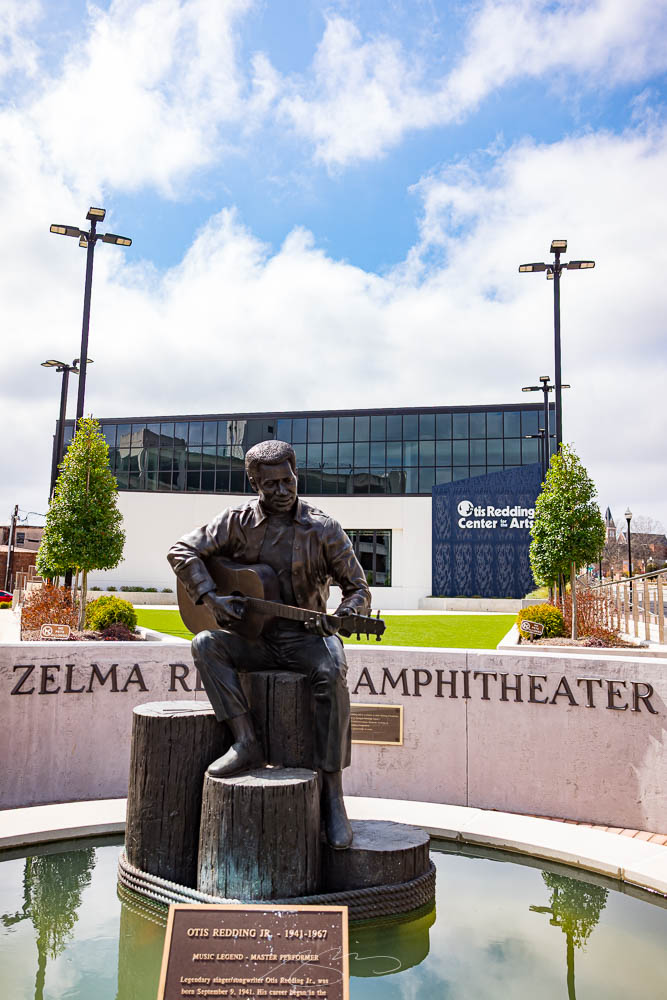
    Zelma Redding Amphitheater (with Statue), Cherry St. and First St. Ln.

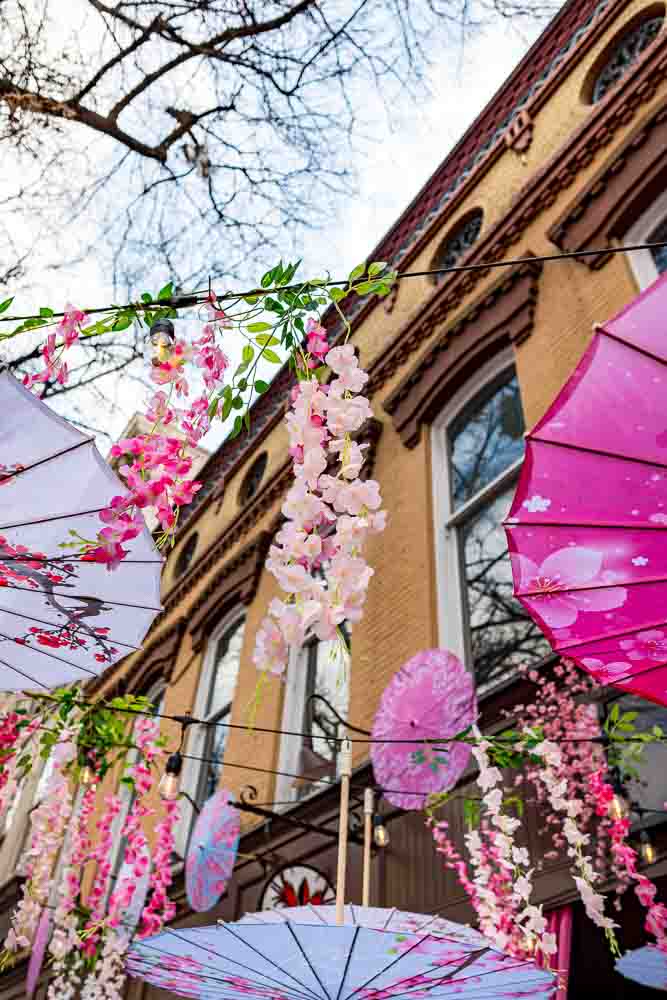
    It’s a pleasure to be able to get a huge amount of detail, landscape, and space into a single photograph; the wide-angle itch is well and truly sated. Better still, when asked to focus on details, it shines very brightly indeed:

    Cherry Blossom Festival Decor (#1), Parish Seafood, 580 Cherry St.

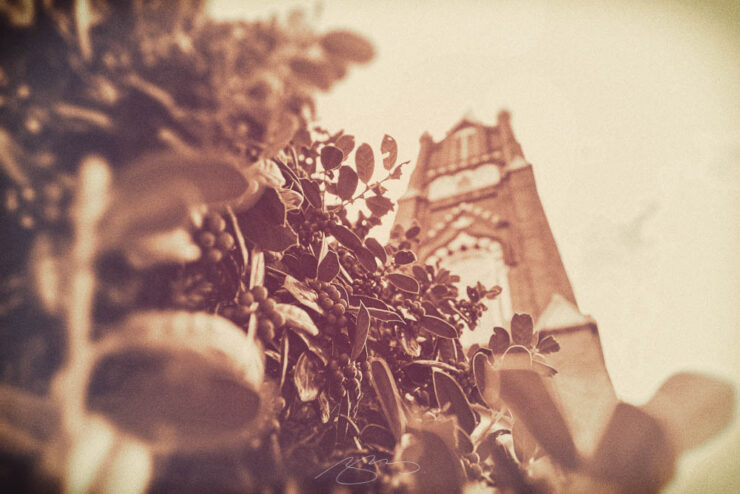
    It does retro well, too:

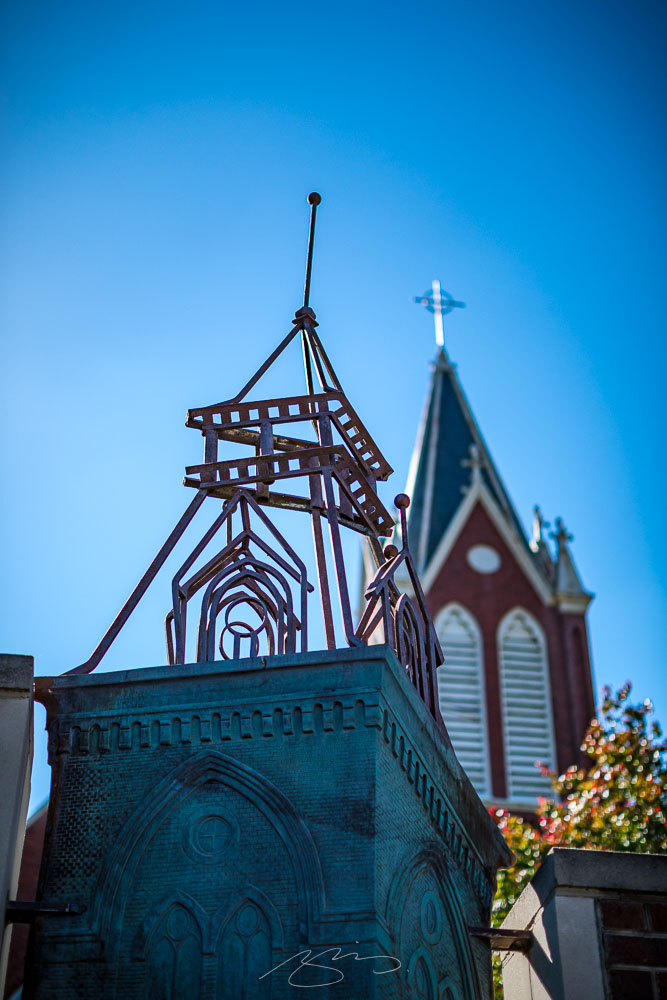
    St. Joseph’s Catholic Church (Spire), 830 Poplar St.

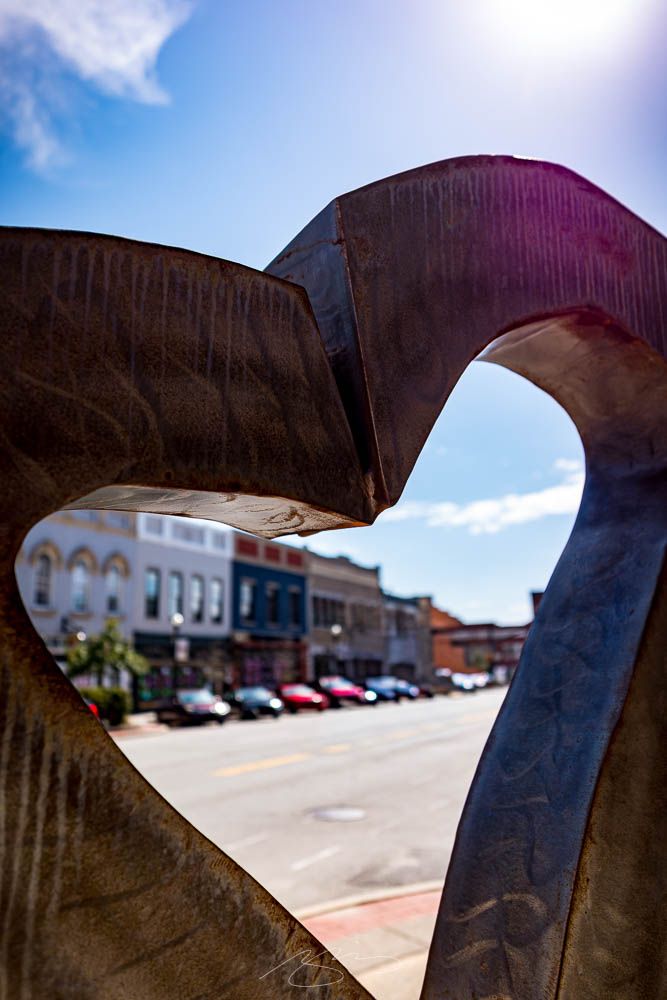
    So, ask me how I feel about this upgrade. Well, how ’bout this:

    I Heart Downtown (Sculpture), Second St.

    Sigma got this lens just right. Including the seven posted here, a total of 30 new photographs have been added to the Downtown Macon (2022-2026) gallery.

    Note: Once you’re in the photo gallery, the new items are near the middle of the stack — look for the retro photo from this post and it’s the photos that follow. Remember that you can click on any photo to enlarge to a single photo with locations/titles and next/back controls (or run a slideshow). If you’re in a downtown Macon mood, don’t forget the 2008–2018 and 2020–2021 galleries as well. Thank you!

  • Beautifully Briefed 26.1: Finding What’s Needed

    Beautifully Briefed 26.1: Finding What’s Needed

    We’re setting into our third snow of the season here in Georgia, an extraordinary event even in a world where “normal” doesn’t seem to happen all that often any more. Thankfully, there are still gems, waiting to be discovered. Hopefully you’ll find several in the links below.

    Note: The site was offline for several hours mid-month due entirely to my mismanaging an update; the backups took a minute and didn’t restore the plug-ins, so it wound up being rough around the edges for a couple of days. If you visited — or tried to — during that time, apologies.

    FAVORITE BOOK COVERS OF 2025, AND MORE

    If you’ve not seen, set aside a few minutes to enjoy:

    This image has an empty alt attribute; its file name is 25fave_slip-the_jack-smyth.jpg
    Cover design by Jack Smyth.

    More than a hundred examples of book design greatness, with commentary, for the fifth year in a row. Bring a beverage.

    But wait, there’s more:

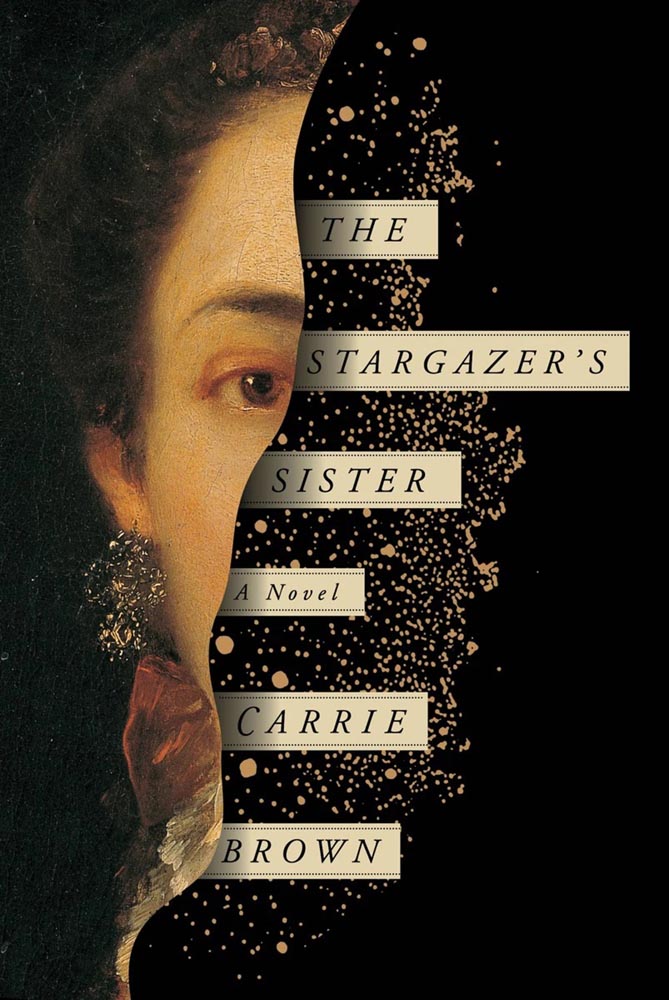
    This image has an empty alt attribute; its file name is books_the-stargazers-sister_2016_oliver-munday_lithub.jpg
    Cover design by Oliver Munday.

    LitHub has posted a summary of the last decade of their favorites, too. Whew!

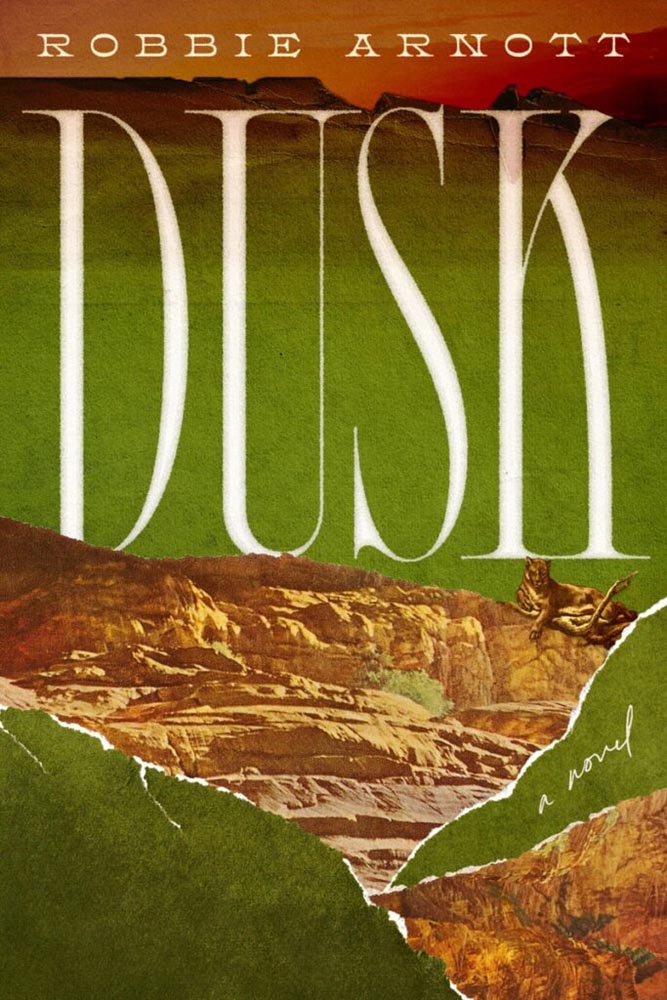
    This image has an empty alt attribute; its file name is books_dusk_alica-tatone_ourculturemag.jpg
    Cover design by Alicia Tatone.

    Special Bonus #1: Our Culture has a feature on seven book designers to watch in 2026. None will be a surprise to regular readers, although Alicia Tatone hasn’t been highlighted here as much as she deserves (she had three cover designs, including Dusk, in the runners-up folder for my ’25 favorites, but didn’t appear in the final list).

    THIS MONTH’S SPINE

    Meanwhile, over at Spine, my monthly column on University Press goodness has been posted, including this:

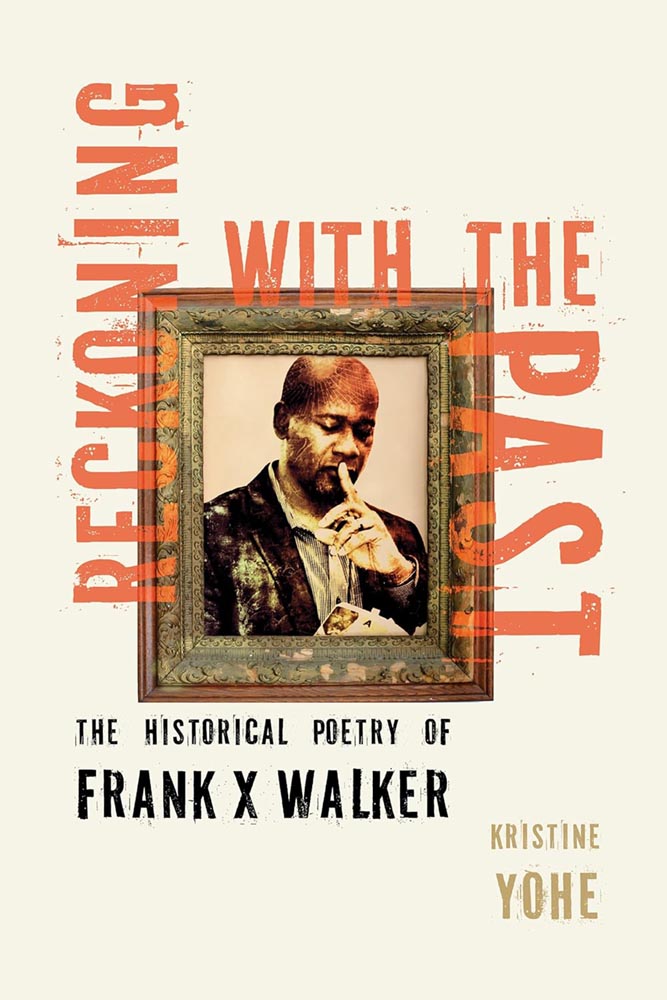
    This image has an empty alt attribute; its file name is spine_kentucky_reckoning-with-the-past_jan26_kat-lynch.jpg
    Cover design by Kat Lynch for the University Press of Kentucky.

    Walker, FYI, was the first Black person to be named Kentucky Poet Laureate and coined the term, “Affrilachia.”

    MORE FROM THE DESIGN DEPARTMENT
    Heller on Roy Kuhlman

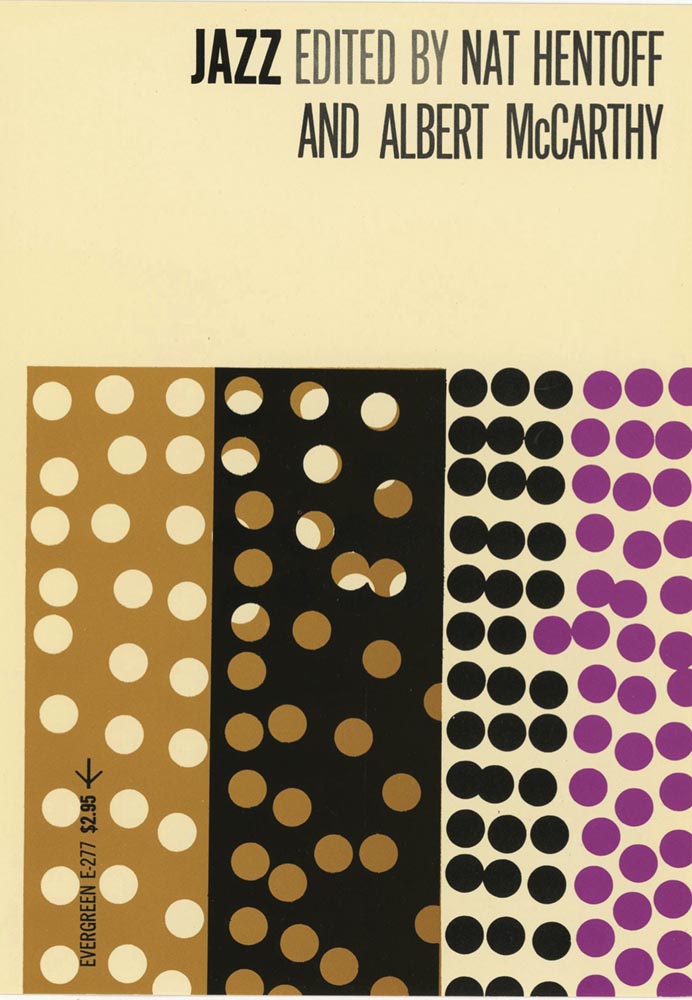
    Steven Heller’s column in PRINT is always fantastic, but some introduce designers more of us should know by name — this time, Roy Kuhlman:

    This image has an empty alt attribute; its file name is books_jazz_roy-kuhlman_print.jpg
    Cover design by Roy Kulhman.

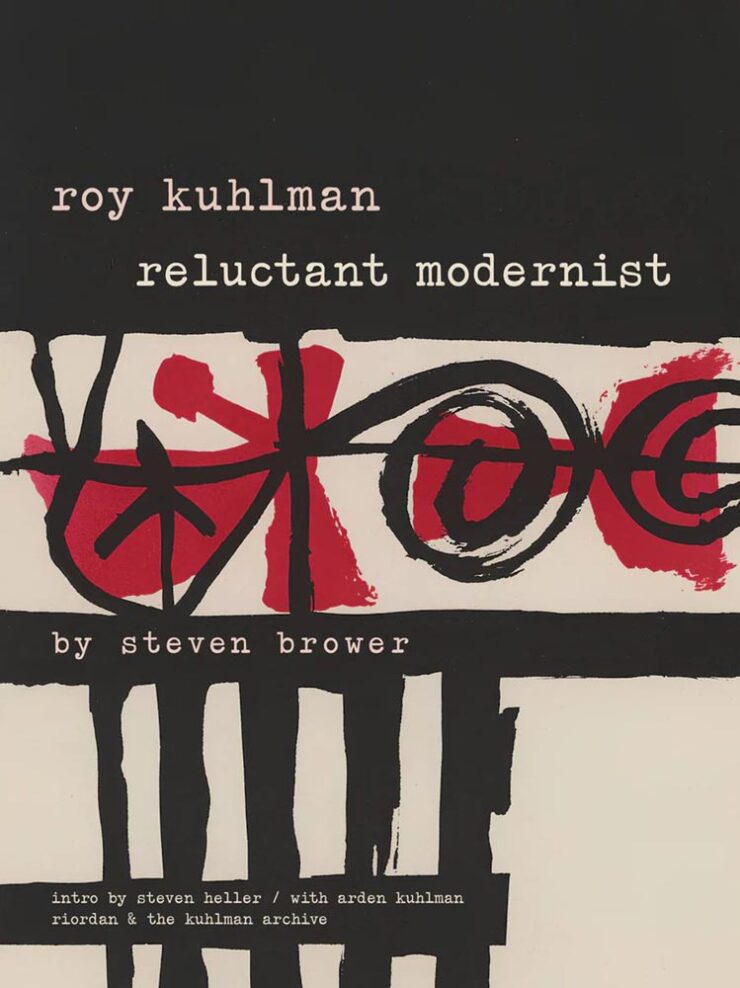
    “He designed almost exclusively for the edgy indie Grove Press, defining its list of literary, critical, philosophical and politically radical nonfiction titles,” Heller writes, discussing a new retrospective (that he wrote the introduction for):

    This image has an empty alt attribute; its file name is books_roy-kulman-reluctant-modernist_print-740x988.jpg

    Many of his abstractions tested the reader’s perception. His lexicon of kinetic, morphing shapes was usually rendered in flat colors with painterly and collage randomness. They could stand on their own. But usually, to make them functional, he used simple sans serif or elegant classic serif typefaces; fitting the abstract nature of his manner, he’d frequently draw or paint hand-scrawled titles and subsidiary texts. Much of his work employed two or three colors, as opposed to four-color process — and he was more than adept with limitations.— Steven Heller, PRINT

    Very cool. See the rest.

    January Typeface Favorites

    Speaking of CreativeBoom, their regular feature on new typefaces has several that I like. Let’s start with the elegant Appeal, by new foundry We Type:

    This image has an empty alt attribute; its file name is fonts_appeal_creativeboom-740x400.jpg

    Next up, the old-style, almost-evokes-needlepoint Bárur, by MNDT Type:

    This image has an empty alt attribute; its file name is fonts_barur_creativeboom.jpg

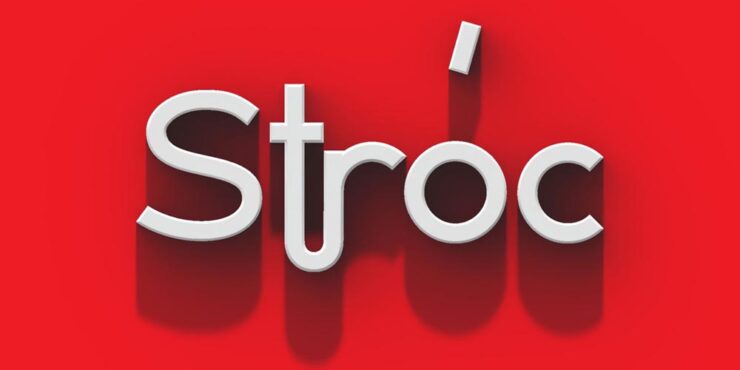
    Another new foundry, Designomatt, brings us the neat and “unpretentiously functional” Stróc:

    This image has an empty alt attribute; its file name is fonts_stroc_creativeboom-740x370.jpg

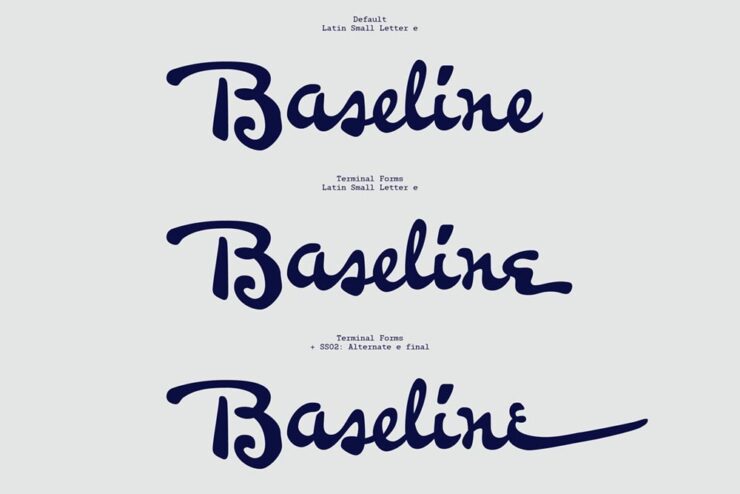
    The last to highlight is probably my favorite of the bunch, this cool and well-executed script called Pennline, from The Northern Block. It’s a “meticulous resurrection of Bulletin — a script first cast in 1899 by Philadelphia’s Keystone Type Foundry — demonstrat[ing] how historical preservation and contemporary utility can coexist when approached with respect and imagination.”

    This image has an empty alt attribute; its file name is fonts_pennline_creativeboom-740x494.jpg

    See ’em all — type joke intended — at CreativeBoom.

    Faber Editions: Just My Type

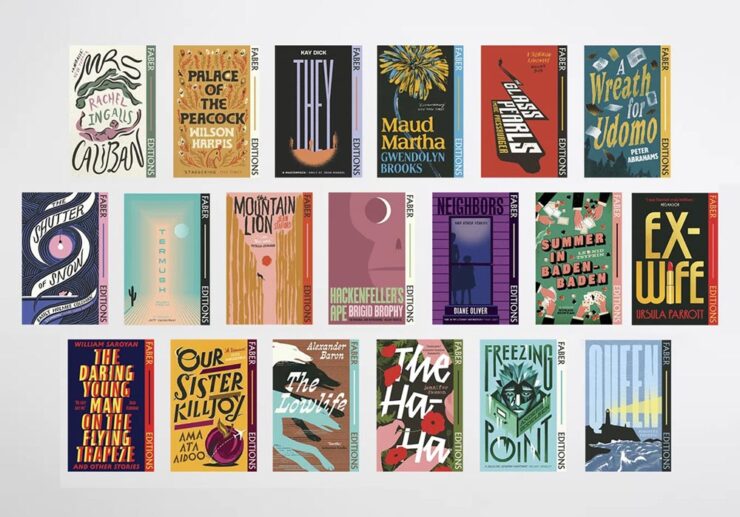
    It’s Nice That has a great feature on the new — actually, newly-revisited — Faber Edition titles, with their primarily type-driven cover designs:

    This image has an empty alt attribute; its file name is books_collected-faber-editions_various_its-nice-that-740x517.jpg

    “In an industry that can often be focused on newness, Faber Editions is a great reminder of the groundbreaking literature that’s come before us, and a clear indicator of the importance of the artwork the words sit within,” writes Olivia Hingley.

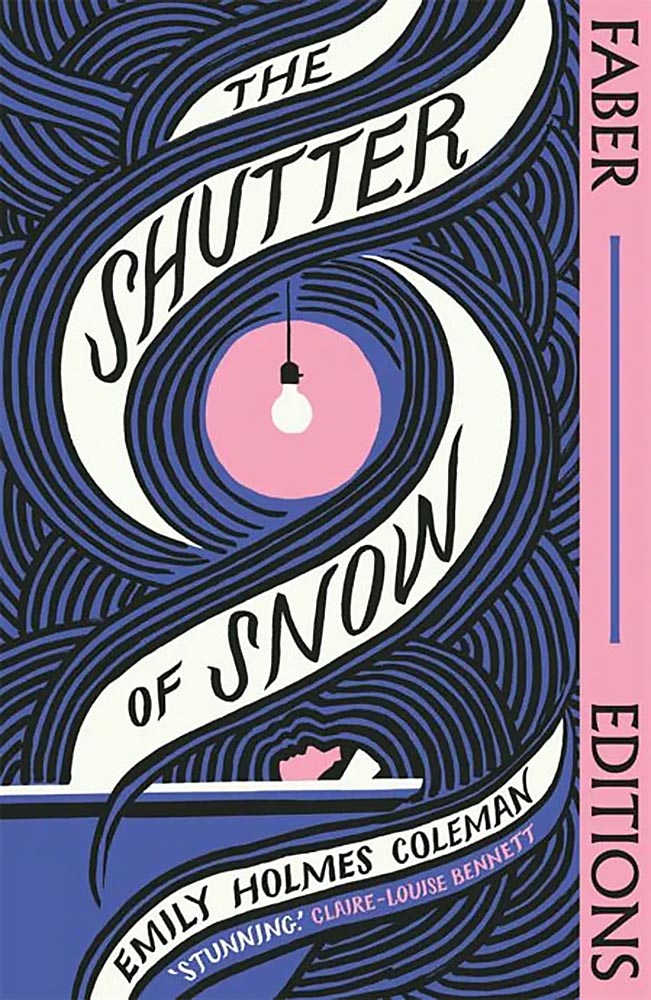
    This image has an empty alt attribute; its file name is books_the-shutter-of-snow_bill-bragg_its-nice-that.jpg
    Cover design by Bill Bragg.

    Faber is a UK publisher, so while these covers could be excellent because they’re British — see several examples of the US vs. UK titles in the favorites post — I’m just going to call the style interesting, the “look” of the complete series compelling, and the resulting work excellent. Read on.

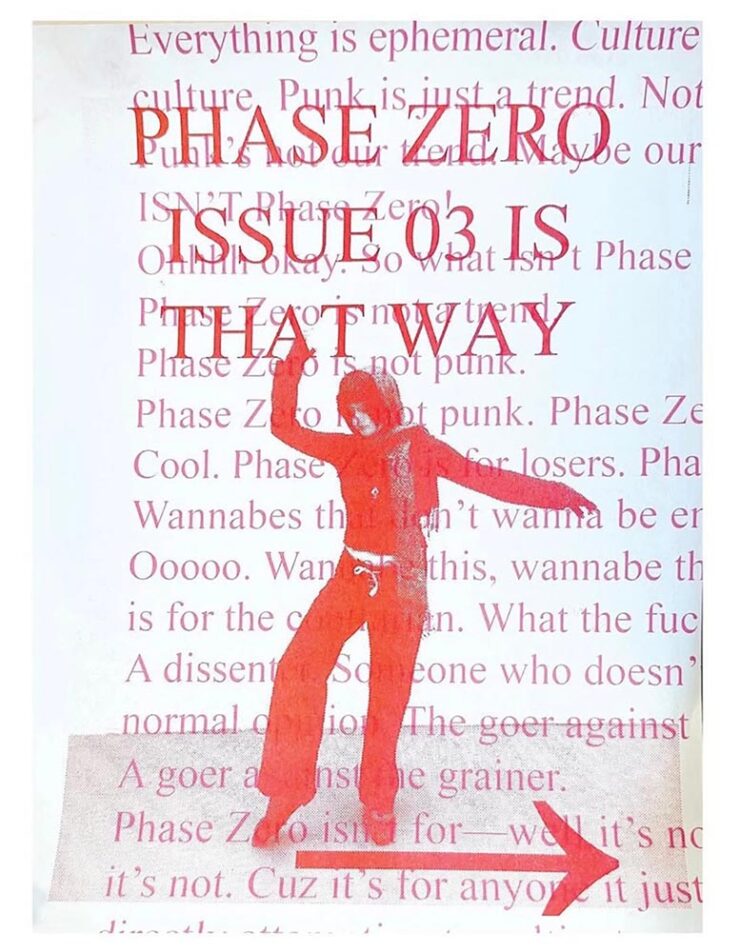
    Special Bonus #2: “The graphic trends you’ll want to bookmark for 2026,” also from It’s Nice That. In short: lo-fi, anti-trends continue:

    This image has an empty alt attribute; its file name is design_phase-zero-flyer_its-nice-that-740x952.jpg
    © Maya Valencia & Sydney Maggin, Phase Zero NYC, via It’s Nice That.

    In other words, if AI struggles with it — if it’s authentic — it could be a winner. See the specifics.

    Special Bonus #3: “AI isn’t the enemy. Our lack of nuance is,” Liz Seabrook writes at CreativeBoom. “The most powerful response is being more human.”

    LIFE IN ’26: DDOS? OR JUST VELOCITY?
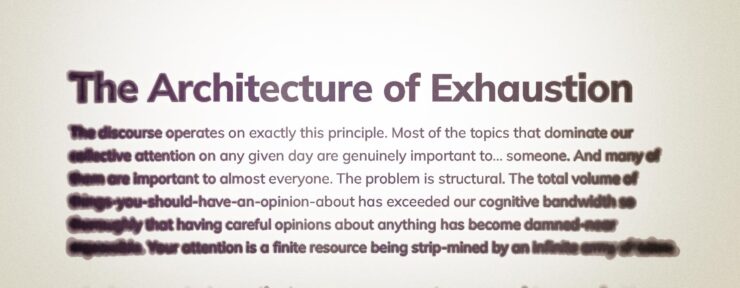
    This image has an empty alt attribute; its file name is discussion_discourse-is-a-ddos_westernberg-740x288.jpg

    A few days apart, two new essays caught my attention and wound up feeling relevant enough — significant enough — that I wanted to share. They’re new takes on where we’re at, or, the specifics of “how.”

    The first is from new-to-me author Joan Westenberg, discussing a computer term called the Distributed Denial of Service (DDOS) attack:

    [The] attack works by exhausting resources. It doesn’t need to be clever. It just needs to be overwhelming. The target’s defenses are simply overrun. The server can’t distinguish between legitimate requests and attack traffic because, in a sense, all the traffic is legitimate. The attack succeeds when the system has spent so much energy processing requests that it can no longer serve its actual function.— Joan Westenberg, “The Discourse is a DDOS”

    Does that sound like it might apply to life in the ’Twenties? Yeah.

    The old media ecosystem had gatekeepers, and those gatekeepers were often stupid or corrupt, but at least the stupidity and corruption were bounded. There were only so many column inches in the New York Times, only so many minutes of evening news. A finite supply of attention-worthy items existed, and someone had to decide which ones made the cut. That selection process was biased and imperfect, but it performed an important function: it told you, implicitly, that you didn’t have to have an opinion about everything. Most things that happened in the world weren’t important enough to make it into your awareness at all. Local political disputes in New South Wales? Nobody in Washington DC gave a [crap], and vice-versa. This was as close to optimal as we’ve ever got.

    But the gatekeeping function has now been distributed across millions of individual users, each of whom can boost any piece of content into viral prominence if it happens to resonate with the right combination of tribal anxieties and engagement incentives. The feed is infinite, and every slot in the feed is optimized to make you feel something strongly enough that you’ll engage with it. Outrage works, and so does fear. Disgust works, and righteousness
    really[…] works. Nuance and careful reasoning don’t work at all, because by the time you’ve finished a thought that begins with “Well, it’s complicated…” someone else has already posted a much simpler take that makes people feel validated, and the algorithm has moved on.— Joan Westenberg, “The Discourse is a DDOS”

    Om Malik, long-time in-the-trenches tech nerd (and fellow Leica enthusiast), completely agrees:

    Authority used to be the organizing principle of information, and thus the media. You earned attention by being right, by being first in discovery, or by being big enough to be the default. That world is gone. The new and current organizing principle of information is velocity.

    What matters now is how fast something moves through the network: how quickly it is clicked, shared, quoted, replied to, remixed, and replaced. In a system tuned for speed, authority is ornamental. The network rewards motion first and judgment later, if ever. Perhaps that’s why you feel you can’t discern between truths, half-truths, and lies.
    — Om Malik, “Velocity Is the New Authority. Here’s Why.”

    Westenberg has a suggestion I wholeheartedly recommend:

    What I do know is that the feeling of being overwhelmed, of never being able to keep up, of having strong opinions about everything and confident understanding of nothing, is not a personal failing. It’s a predictable response to an impossible situation. Your brain is being DDoS’d, and the fact that you’re struggling to think clearly under that onslaught is evidence that your brain is working normally. The servers aren’t broken. They’re overloaded. And until we figure out how to reduce the load or increase the bandwidth, the best any of us can do is recognize what’s happening and try, when possible, to step away from the flood long enough to do some actual thinking.— Joan Westenberg, “The Discourse is a DDOS”

    “Find one topic,” she says, and start there. Get with experts, get evidence, get uncomfortable, actually get into it … but just get into that one.

    And stay true to the idea that it shouldn’t — can’t — get away from you.

    I get some feedback for my lack of participation in social media. I don’t hate social media; if anything, the past few weeks of mayhem organized resistance in Minneapolis proves it has a place. But I long ago heeded advice to narrow my focus. Instead of burying my head in the sand — tempting though it may be at times — I choose to concentrate on those things that a) really hold interest and b) things I actually want to be part of my life.

    Both of these essays summarize the situation well, and both offer insights on how we got here. Westenberg’s offers good advice. When you have a spare few minutes, read both.

    (DDOS article via Doc Searls, whom I don’t link to often enough. Om’s article via Daring Fireball.)

    WIKIPEDIA TURNS 25

    Let’s please turn to something that the Internet does right.

    Whenever I worry about where the Internet is headed, I remember that this example of the collective generosity and goodness of people still exists. There are so many folks just working away, every day, to make something good and valuable for strangers out there, simply from the goodness of their hearts. They have no way of ever knowing who they’ve helped. But they believe in the simple power of doing a little bit of good using some of the most basic technologies of the internet.— Anil Dash, “Wikipedia At 25: What The Web Can Be”

    “When Wikipedia launched 25 years ago today, I heard about it almost immediately, because the Internet was small back then, and I thought ‘Well… good luck to those guys,’” Dash writes.1I, too, remember those days of a small Internet — not a young person anymore. While I miss the community it felt like, the resources available today, of which Wiki might be at the fore, are without parallel. But it’s grown into something something amazing: the encyclopedia that’s free in every sense of the word.

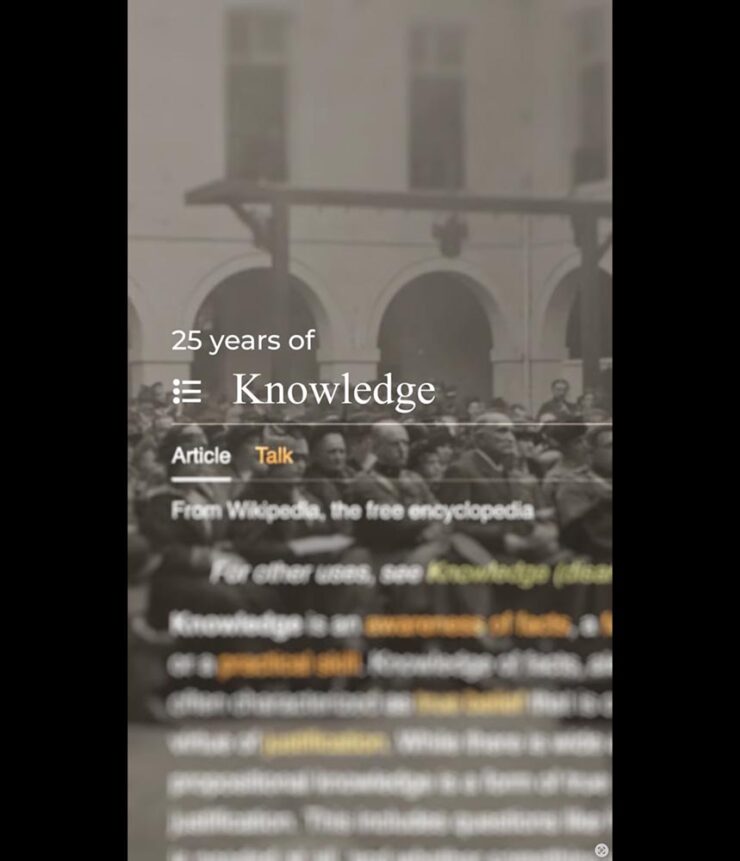
    This image has an empty alt attribute; its file name is wiki25_youtube-740x861.jpg
    One of the YouTube shorts published by Wikimedia Foundation.

    Like countless others, I value being a contributor, in an incredibly small way, to the collective effort that is Wikipedia. Indeed, editors “span continents, professions and motivations,” a CreativeBoom article writes. “Together, their stories underline that, even in an age of AI, knowledge is still human and it still needs humans.”

    “The site is still amongst the most popular sites on the web,” Dash agrees. “[B]igger than almost every commercial website or app that has ever existed. There’s never been a single ad promoting it. It has unlocked trillions of dollars in value for the business world, and unmeasurable educational value for multiple generations of children.”

    Of course, all is not perfect. Like Universities, DEI, and whatever else, Wikipedia has become a target; Grokipedia, for instance, exists specifically to undermine Wiki’s centrality and success. (And, it’s important to note, Groki used Wiki as a basis … because it’s open and freely available. No hypocrisy.)

    In fact, so many rely on Wikipedia that access has become a thing. Luckily, some large enterprise users of the site have recognized that the trillions they’ve earned as a result of having access to Wiki’s collective knowledge is worth paying for:

    [T]he Wikimedia Foundation announced API access deals with Microsoft, Meta, Amazon, Perplexity, and Mistral AI, expanding its effort to get major tech companies to pay for high-volume API access to Wikipedia content, which these companies use to train AI models like Microsoft Copilot and ChatGPT. […] In April 2025, the foundation reported that bandwidth used for downloading multimedia content had grown 50 percent since January 2024, with bots accounting for 65 percent of the most expensive requests to core infrastructure despite making up just 35 percent of total pageviews.— Benj Edwards, Ars Technica (15 Jan 2026)

    Anil Dash best finishes up: “Twenty-five years later, all of the evidence has shown that they really have changed the world.” I couldn’t agree more.

    Happy 25 to Wikipedia. May there be countless more.

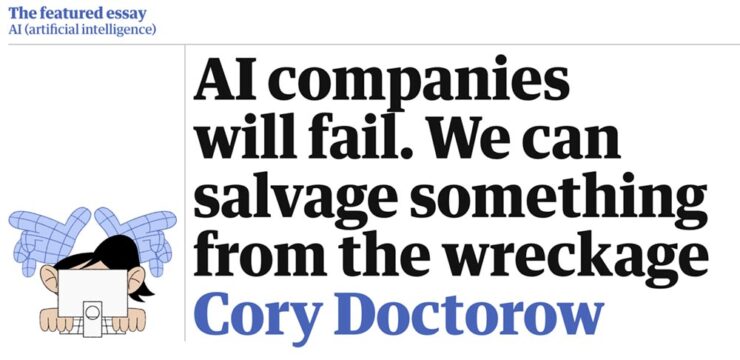
    Special Bonus #4: In an excellent article, Ars calls 2025 “the year AI came back down to Earth.” And while we’re on the subject of excellence, Cory Doctorow’s essay for The Guardian applies.

    This image has an empty alt attribute; its file name is ai_ai-companies-will-fail_guardian-740x360.jpg
    Cory Doctorow in The Guardian.
    FOLLOW-UP: BMW ALPINA AND HONDA FORMALIZE LOGOS

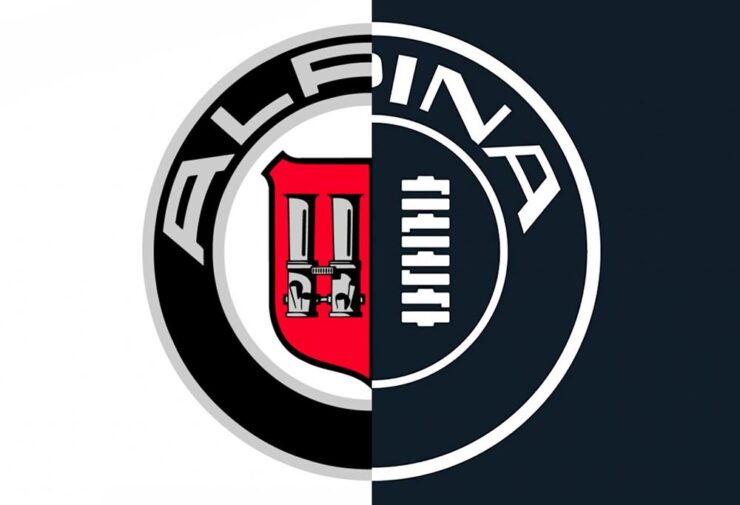
    Alpina, for formerly-independent tuner of BMW cars (and SUVs), has, as of the first of this year, officially become a division of BMW, akin to MINI or Rolls-Royce. With it comes a new logo — well, at least, this:

    This image has an empty alt attribute; its file name is cars_new-bmw-alpina-logo_dezeen-740x416.jpg
    Conservative, cool, collected. Definitely part of a bigger corporation now.

    That’s slightly different that what I covered back in June of 2023; the “A” is less dramatic, probably for the better. BMW calls the new logo “calm and confident,” saying the upcoming models will “master performance and comfort.”

    [Alpina] recently entered into an agreement to be purchased by BMW itself, not unlike AMG becoming part of Mercedes-Benz; starting in 2026, they are scheduled to represent the middle ground between BMW and Rolls-Royce — hopefully continuing the comfort, power, and style. It seems that the new ground will be the upmarket models only (that is, no 3-series-based items, and possibly even no 5-series), so think of items $200,000 and up.— Beautifully Briefed, June 2023

    Here’s the old logo, for reference:

    This image has an empty alt attribute; its file name is alpina-1962-20220-logo-740x524.png
    Alpina’s now-old logo: exhaust and crankshaft, sir. Nuthin’ like it.

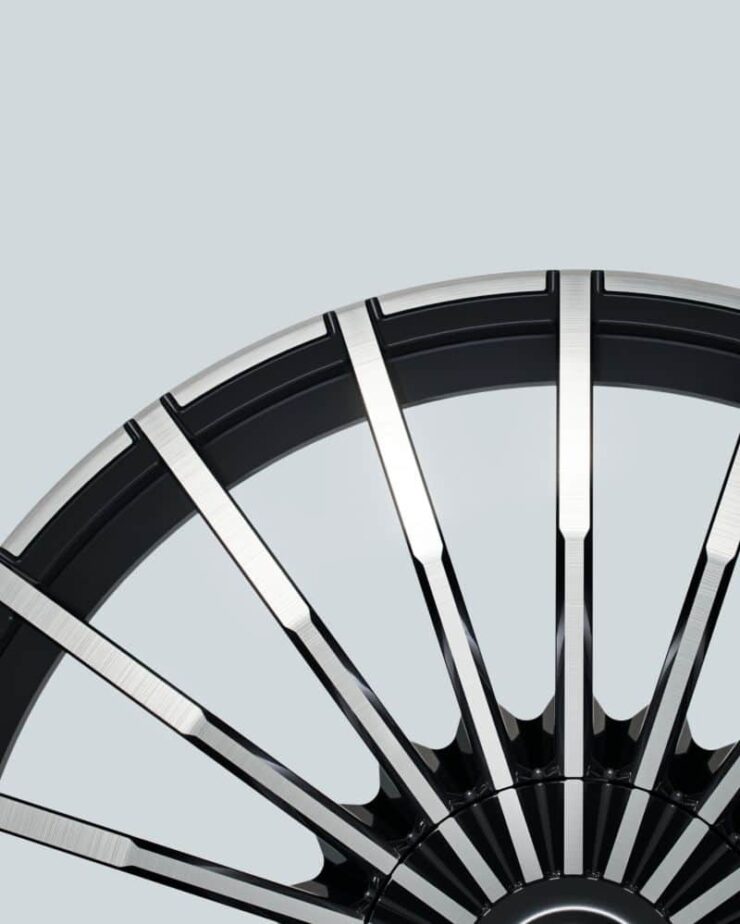
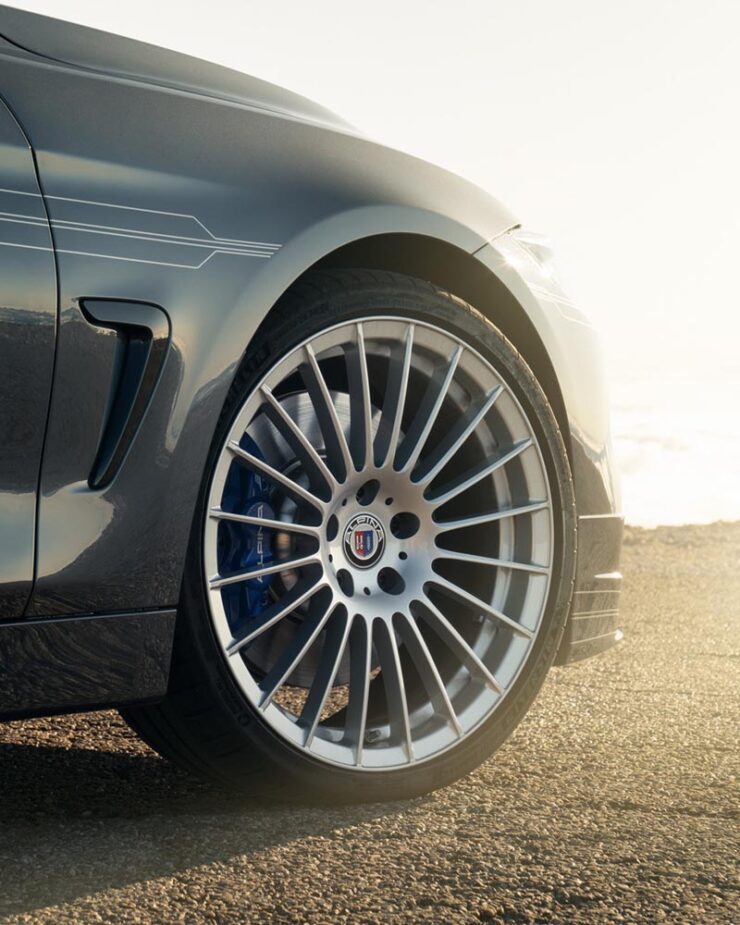
    And: they’re going to update the wheels!

    This image has an empty alt attribute; its file name is cars_new-20-spoke-alpina_bmwblog-1-740x924.jpg
    Photo via BMW Blog.

    As someone who’s become much more familiar with Alpina in the ten years I’ve owned BMWs, these wheels are iconic. Here’s the existing version, on one of my favorite pieces of unobtainium:

    This image has an empty alt attribute; its file name is cars_old-20-spoke-alpina_bmwblog-740x925.jpg
    Photo via BMW Blog.

    That’s a 2016 Aplina B4 BiTurbo Coupé, by the way. Not quite my favorite B3 Touring, but in either case, “drool” doesn’t quite cover it. (Neither were available in the States.)

    Curious to see whether this is successful. Expectations are high.

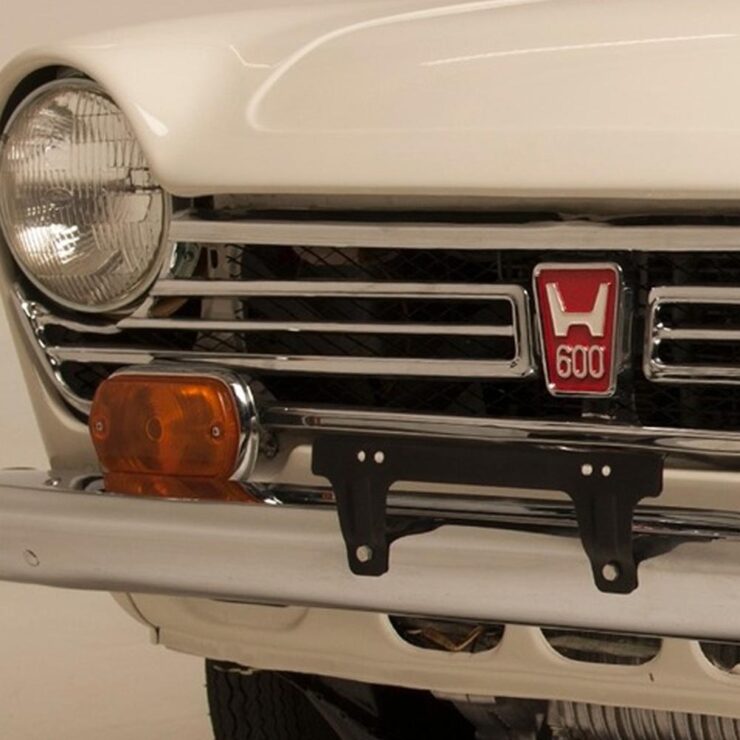
    This image has an empty alt attribute; its file name is cars_honda600-badge_autopian-740x740.jpg
    The “old” H logo, shown on a 1971 600. (See wiki for more info.)

    Meanwhile, Honda initially said — and I reported, two years ago — that their new, slightly-retro “H” logo would be limited to electric cars. Of course, electric as a strategy has changed; they decided this month to make it official for all their cars.

    This image has an empty alt attribute; its file name is cars_honda-new-logo_the-drive-740x523.jpg

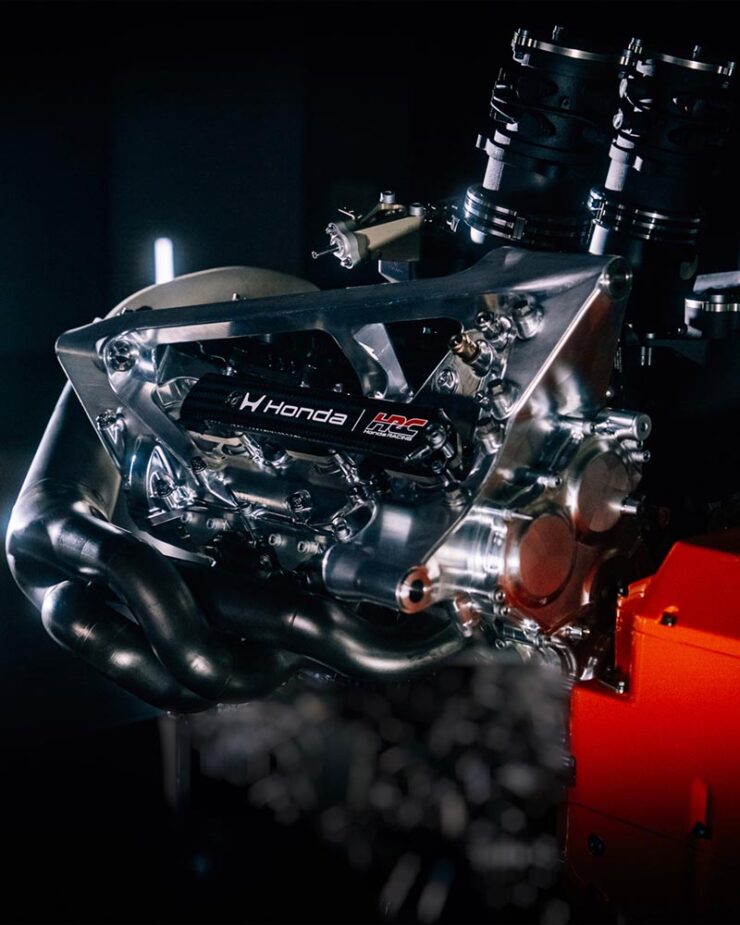
    Motorsports, too. Here’s their F1 engine with the new logo:

    This image has an empty alt attribute; its file name is cars_honda-logo-f1_the-drive-740x925.jpg
    Photo via The Drive.

    I love that both Honda and BMW are, at their heart, engineering companies.

    Get the full story on BMW Alpina at Dezeen or BMW Blog (logo, wheels). Honda’s details are available at The Drive (logo, F1) or The Autopian, where you can enjoy some sharp commentary on Honda’s press release.

    JANUARY PHOTOGRAPHY ROUND-UP
    2025 Architecture Master Prize
    This image has an empty alt attribute; its file name is photo_arch-arbour-by-younes-bounhar_archinect.jpg
    “Arbour House.” Photograph by Younes Bounhar (Interior Architecture).

    I suppose it’s no surprise that an architectural photography selection tops this round-up, but the annual Architecture Photography MasterPrize highlights “compelling perspectives on buildings, cities, landscapes, and interior spaces, revealing the rich visual language of the built environment.”

    In other words, “catnip.”

    This image has an empty alt attribute; its file name is photo_arch-details-by-guanhong-chen_petapixel.jpg
    “Details (Series).” Photograph by Guanhong Chen (Other Architecture).
    This image has an empty alt attribute; its file name is photo_arch-details2-by-guanhong-chen_petapixel.jpg
    “Details (Series).” Photograph by Guanhong Chen (Other Architecture).

    There’s a huge variety of winning photographs, from professionals, amateurs, and students alike — all excellent. (They have awards for designs, firms, and products, as well.)

    This image has an empty alt attribute; its file name is photo_arch-sardinia-by-barbara-corsico_archinect.jpg
    “Mustras,” Sardinia. Photograph by Barbara Corsico (Exterior Architecture).

    I can’t possibly cover them all, but can provide links: photography winners, honorable mentions, student winners, and winners by country. Both Archinect and PetaPixel have stories. Enjoy!

    Two Photographers, Highlighted
    This image has an empty alt attribute; its file name is photo_greenland-lehtonen-by-dennis-lehtonen_colossal-740x494.jpg
    Photography by Dennis Lehtonen.

    Neither drone images nor folks who primarily post to social media usually get featured here, but these images of Greenland are both timely and excellent. This is Colossal has a great selection of items from photographer Dennis Lehtonen.

    This image has an empty alt attribute; its file name is photo_alps-to-andromeda_tom-rae_petapixel-740x437.jpg
    “From Alps to Andromeda.” Photograph by Tom Rae.

    “My photography style is rooted in landscape and night photography, with an emphasis on atmosphere, scale, and a strong sense of place. I’m drawn to environments that feel raw, remote, and otherworldly,” Tom Rae relates to PetaPixel. Otherworldly feels just right: good stuff.

    Society of Photographers’ Photographer of the Year 2025
    This image has an empty alt attribute; its file name is photo_soc-of-photographers_documentary-by-terry-donnelly_petapixel-740x493.jpg
    Photograph by Terry Donnelly.

    I also usually don’t cover documentary-style photography — see narrow focus, discussed above — but there were several documentary-style photographs in this set of award winners that were excellent, including this Medivac flight from the UK.

    However — thankfully — there were more categories:

    This image has an empty alt attribute; its file name is photo_soc-of-photographers_travel-by-mark-scicluna_petapixel-740x985.jpg
    Photograph by Mark Scicluna.

    It’s the winner in the “travel” category, because apparently they don’t have one called “dramatically soothing.” No matter the labelling, see the rest of the winners at PetaPixel or head over to the Society’s website for more.

    Finally: Some Cats

    Speaking of catnip, let’s close out with something that purrs — in soprano:

    This image has an empty alt attribute; its file name is photo_phaidon-cat2_colossal-740x972.jpg

    Let’s not go ’round and ’round: that deserves framing. Or at least publication. Thankfully, Phiadon has you covered:

    This image has an empty alt attribute; its file name is photo_phaidon-cat_colossal-740x423.jpg

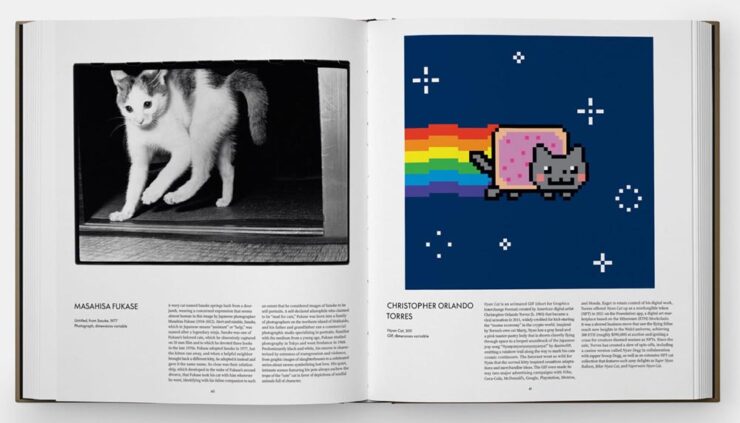
    A “whimsical visual survey of the house cat in art and popular culture, exploring humanity’s enduring connection to one of our most loved animal companions.” Awesome. (Via This is Colossal.)

    Have a great February, everyone!
    • 1
      I, too, remember those days of a small Internet — not a young person anymore. While I miss the community it felt like, the resources available today, of which Wiki might be at the fore, are without parallel.
  • My Favorite Book Covers of 2025

    My Favorite Book Covers of 2025

    When it comes to describing 2025, “tumultuous” is probably an understatement.

    So it’s probably not a surprise that, when looking at the hundred covers that make up this list, there’s a definite direction: favoring quality over quantity. Which is to say, consciously or not, I’ve tended to prefer designs where more is said with less.

    Perhaps I’m striving for calm in a world that just … isn’t. Perhaps it’s my choice not to participate in social media and its race for likes, loves, and “latests.”1Publishers need to remember that not all of their customers select what to read based on influencers, what they see on Facebook, or by doomscrolling Instagram. Some of us are lifelong learners, have hundred or thousands of books, and discover by … reading. Real articles, by real people, on websites with those people’s real names on them. (Or even, occasionally, this thing called paper.) Perhaps it’s my advancing age — closing in on 60 now — and thus “old-fashioned” standards.

    In fact, it could be said that I value not keeping up: I don’t want to highlight the trendy. I want to celebrate great talent, design that’s standout in its day but will still be great as time passes.

    However, it’s appropriate to emphasize that these are my favorites. Others might say “best,” but I’ve been in this business long enough to know that there’s always another title you haven’t seen or read about, and I don’t want to disrespect any of the talented book designers whose work I didn’t see, and consequently didn’t feature. I’ve tried to include design credit where I could — many thanks to the folks who answered requests for that information — and wish to stress that any mistakes in the list below are mine.

    Note: By request, titles starting with “The” are alphabetized correctly. Also, if you’re on Foreword’s main page, please click on the post title, above, to read this list. You’ll get larger covers for your viewing pleasure.

    • • •
    My Favorite Book Cover of 2025
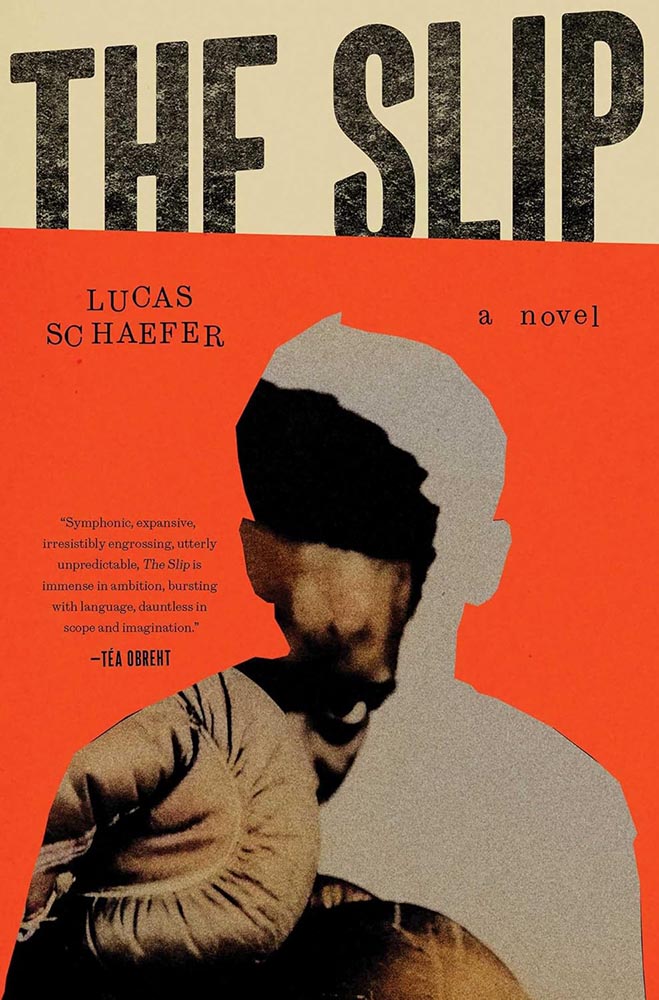
    Cover design by Jack Smyth.

    There was no question which of these hundred titles would take the title: this heavyweight, brought to us by Dublin-based Jack Smyth. Fellow cover designer Jaya Nicely, in LitHub‘s 2025 list, called it “tactile,” but it’s more than that — it’s downright visceral.

    In fact, and indeed in direct contradiction to what I said in the intro, I’m celebrating something trendy: silhouettes are “in” — even overused — but I love this cover because I don’t recall ever seeing one more effectively implemented. Simultaneously hiding around the edge and using it to an advantage, our boxer (presumably the book’s subject, Nathaniel) looks poised to strike.

    When combined with type and lines slightly off kilter, use of a fantastic orange, and aging and grain that ice the cake, this cover has it down.

    2025’s Runners-Up
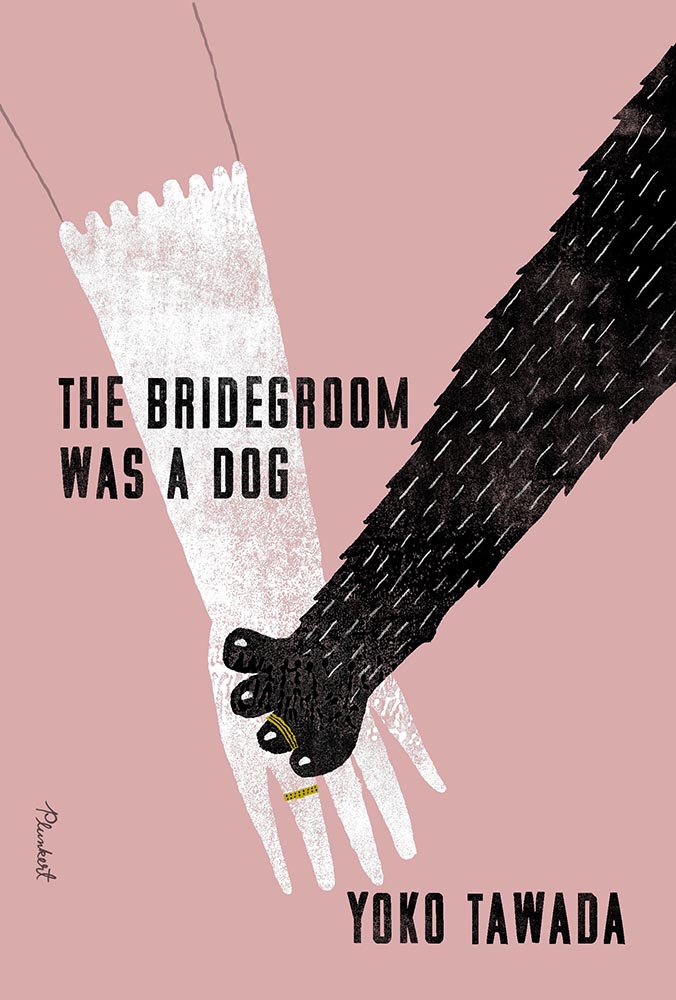
    Cover design by Paul Sahre, with illustration by David Plunkert.

    A triumph of less-is-more illustration, with color and a title treatment that knows how compliment. The pressed or sprayed, aged-but-not, white and black are magnificent, while the rings stand out as the only use of “gold.” I love that the arm above the glove is just an outline.

    Cover design by Kris Potter; photography by Laurent Tixador.

    Photography seems almost passé these days, so its use requires something extra — here served up in spades. On the one hand, I want the boats on the horizon to have been removed, but on the other, it highlights the fraud within in a subtle, realize-after-the-fact way that’s awesome.

    I have to say, too: this is about fifteen light years beyond the woman-folded-into-the-chair edition, one of those trends that needs to just stop.

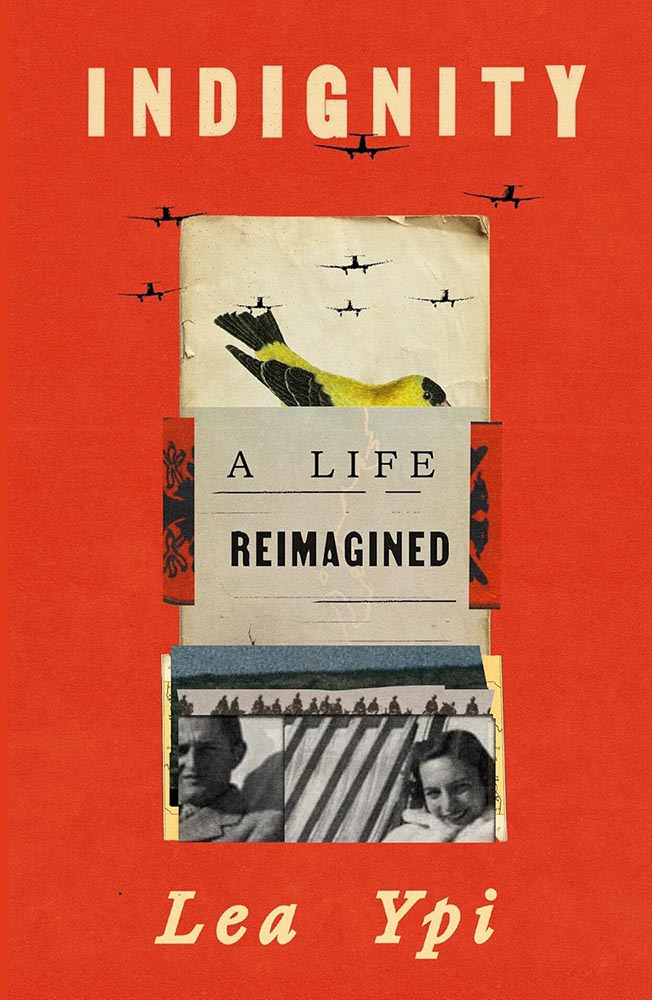
    Cover design by Arsh Raziuddin.

    While it compliments Free, from 2022’s list, it’s more: more sophisticated, more of a story, and leaves you with more questions — and more likely that you’ll pick it up to get those answers.

    Bonus points for the folded papers, the Albanian coat of arms, and planes “outside” the collage.

    • • •
    Other 2025 Favorites, in Alphabetical Order
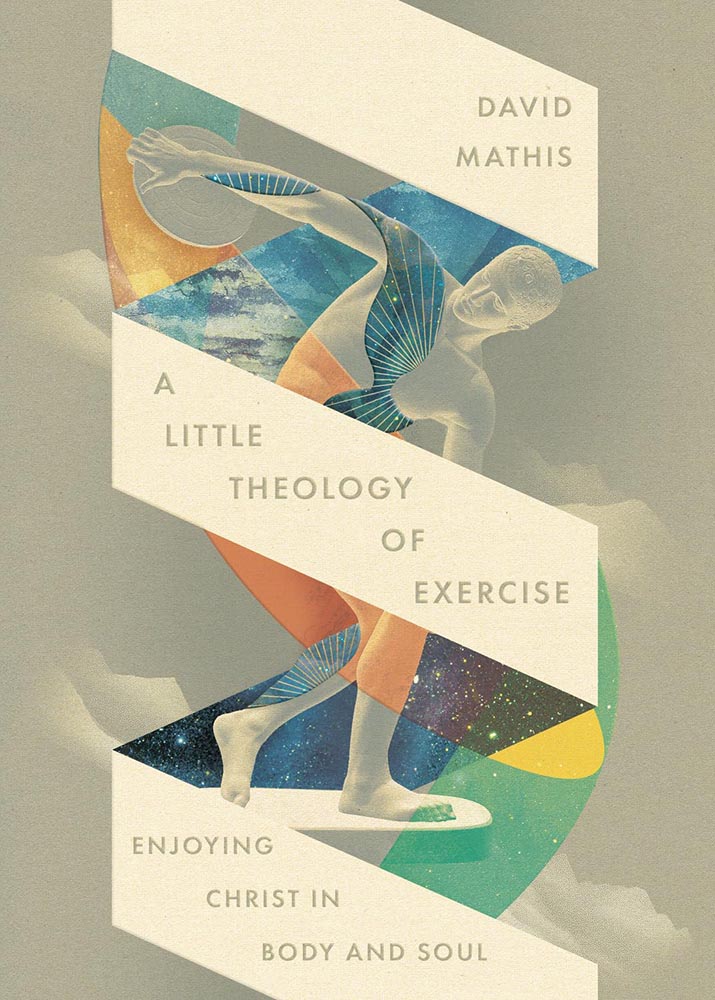
    Cover design by David Fassett.

    Christian titles so often reach for stereotype — something easily pigeonholed, almost like romance (for instance, unless of course I’m the one stereotyping). It’s often to the detriment of the subject: prematurely dooming the worthy, as it were.

    This one very much rises above: the mountain/clouds, the spiral, the mixed and colored illustrations, and titles stacked at an angle (with slight em- or debossing?) are all exceptionally well done.

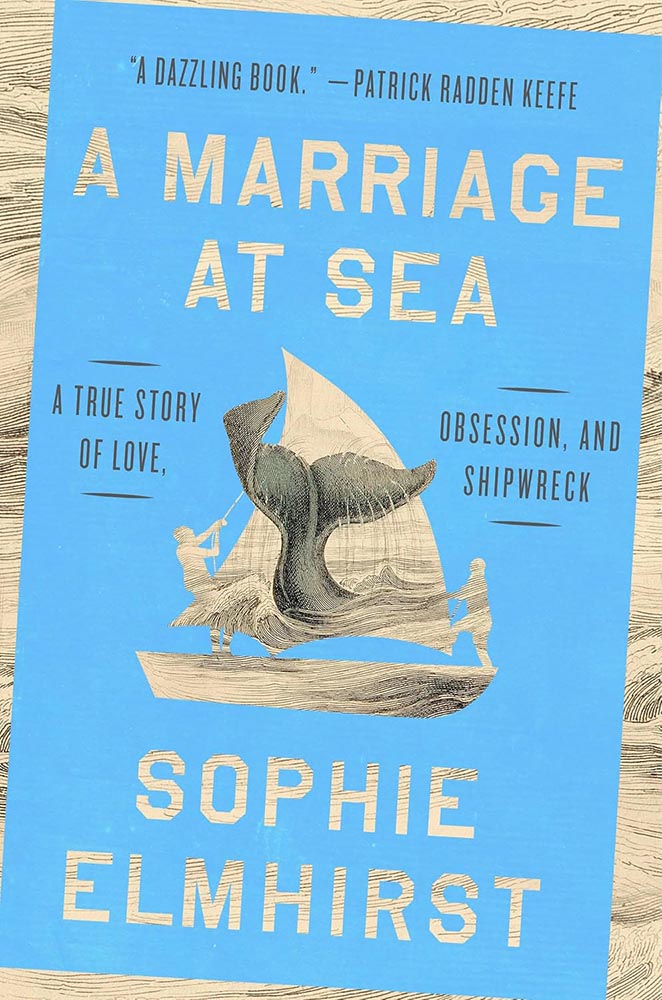
    Riverhead/Penguin didn’t return a request for cover design info. Apologies.

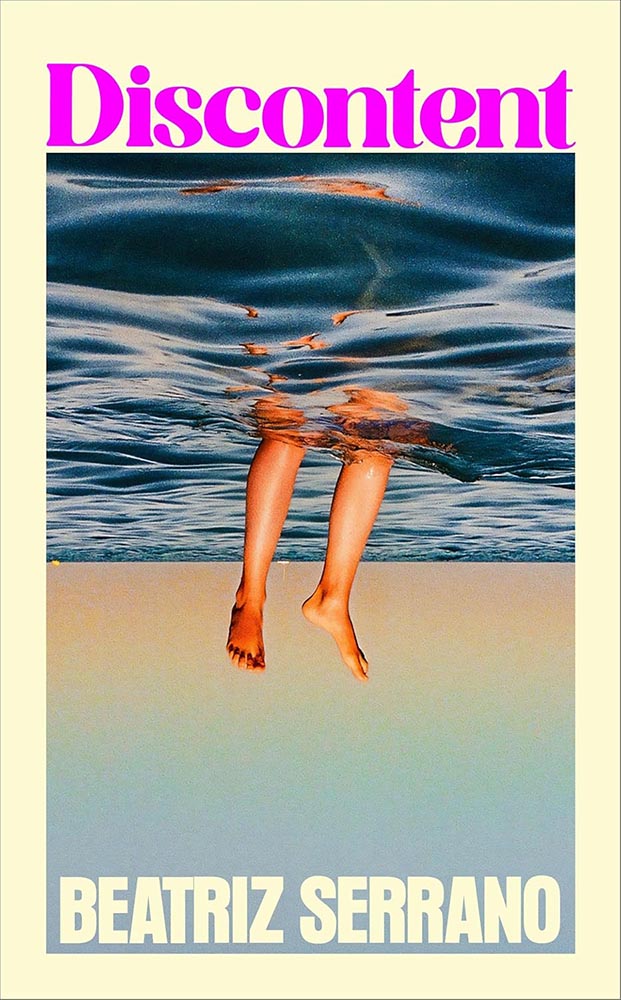
    The opposite of sinking beneath the waves: a beautiful pen-and-ink illustration, a color block of sea — or sky — heeling over at just the right angle, with the wonderful knock outs. Then there’s the hint-of-blue tail, the design equivalent of a spinnaker, standing out at the fore of a crowded race. Unmistakably awesome.

    Cover design by Beth Steidle.

    Simple without being simplistic, quiet while not quite, this one deserves that satisfying “thunk” that goes with a stamp of approval. (No cancellations allowed.)

    Cover design by Tom Etherington.

    Eye-catching is a cliché too far — but it’s definitely more than just a collection of shapes artfully arranged. Bonus points for the edge between red and star, the color choices, and title spacing.

    Special bonus — continues the family look:

    Cover design by Tom Etherington.

    Fantastic.

    Cover design by Arsh Raziuddin.

    Neither a zig nor zag: the combo of pink, alligator skin, and “tears” is nigh-on perfect.

    Algonquin Books didn’t return an inquiry for the cover design info — sorry. (If you know….)

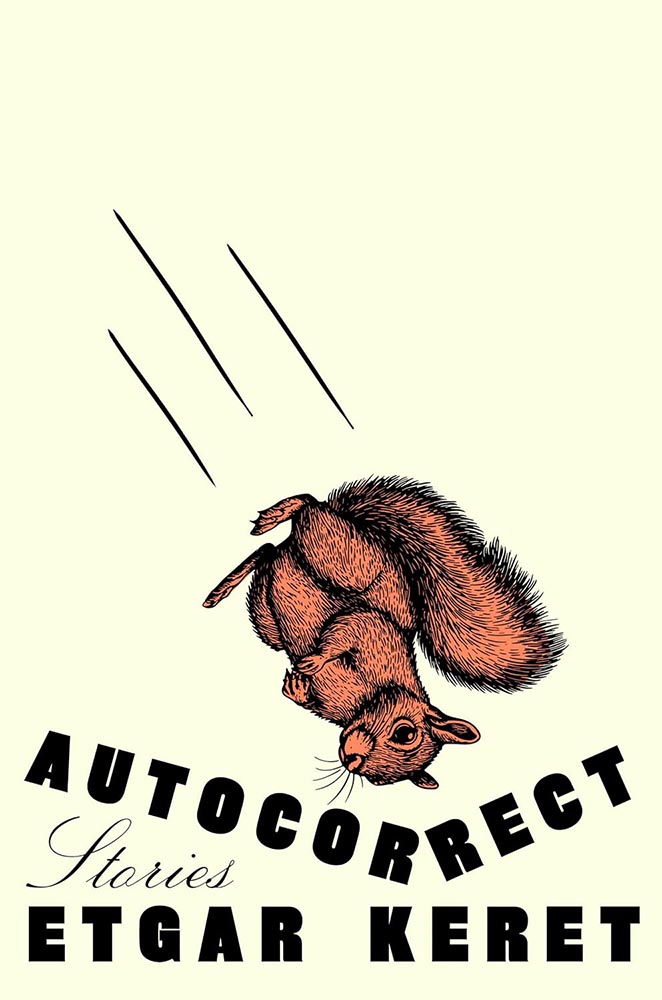
    The part-human-part-animal design tool is another of those overused items — except when it’s handled as well as it is here. The eyes are brilliant, the title treatment fun, and the colors standout. The subject, superficially, is not dissimilar to Alligator Tears, above, but the details, the design — and most certainly the text within — celebrate being different.

    Cover design by Beth Steidle.

    The cover-in-two-parts is another of those items potentially overused, but the repetition and title treatment — the r-l tie-up is fab — take this one to the next level. Bonus points for “a novel,” both less and so much more.

    Cover design by Elena Giavaldi.

    Another where the pressed/stamped ink works well — but the black on top of the almost-overstyled photo is the winner here, a photo that doesn’t say “South Dakota” in all the right ways.

    Cover design and illustration by Elizabeth Story.

    Never mind the awesome type, layout, and color — that illustration, or perhaps just the expression, does everything. A winner at first sight.

    Cover design by Lauren Peters-Collaer.

    Sometimes, it’s possible to be knocked askew awed by a simple idea.

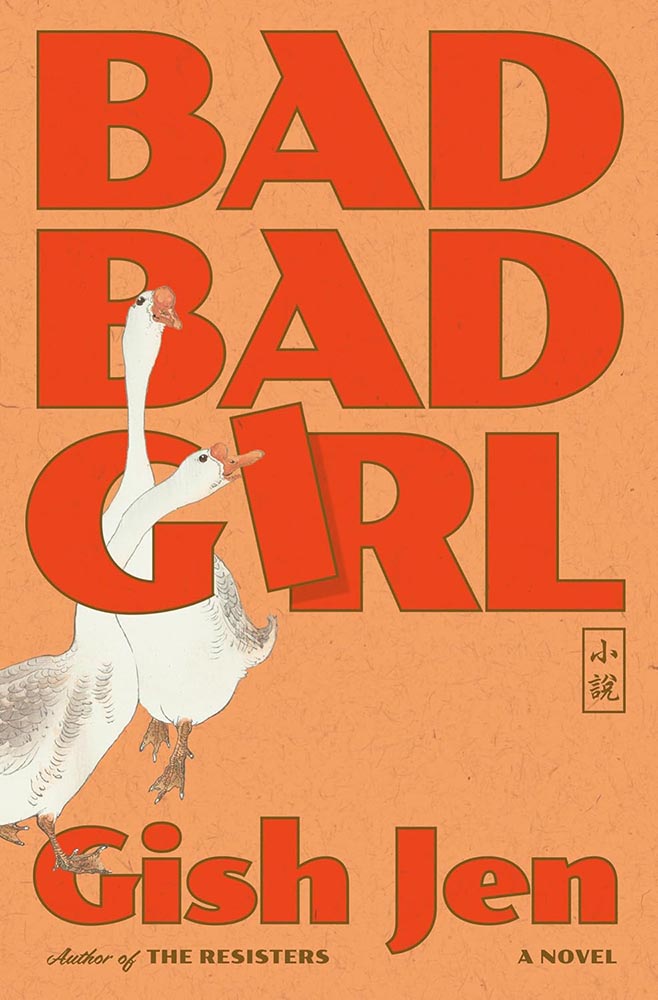
    Cover design by Linda Huang.

    “My aye!”

    (Yeah, yeah, the paper pattern and color, aged red and great brown outlines, type choices, and inclusion of Asian name seal, not to mention the geese, are all awesome too.)

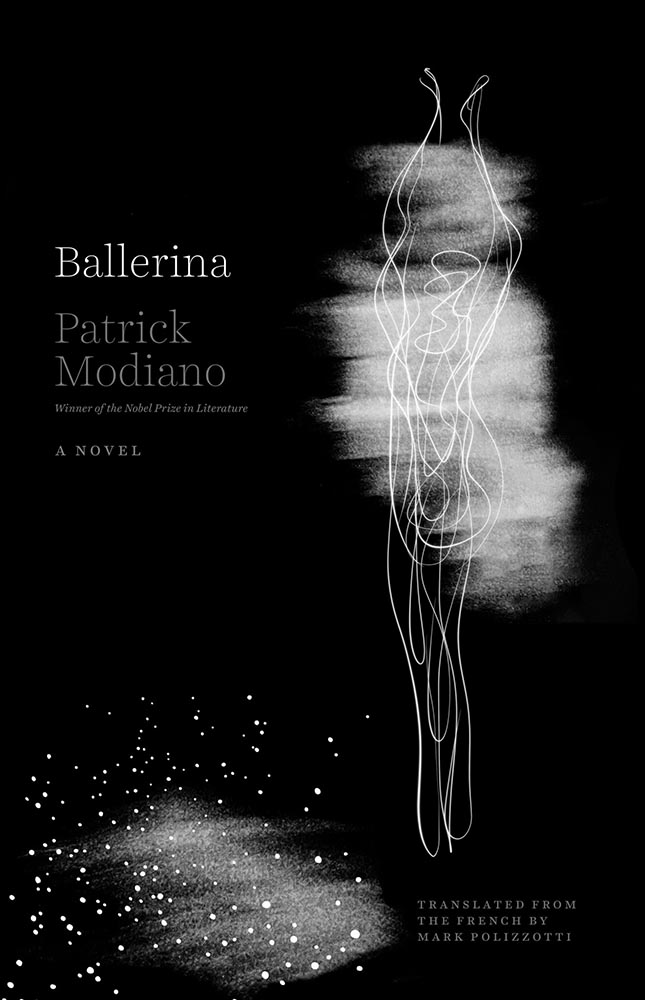
    Cover design by Monograph.

    One is more — one-color, that is, with a perfect combination of blur and line, “shadow” and light, simplicity and complexity.

    Not the only one-color item on this list, I’m happy to see.

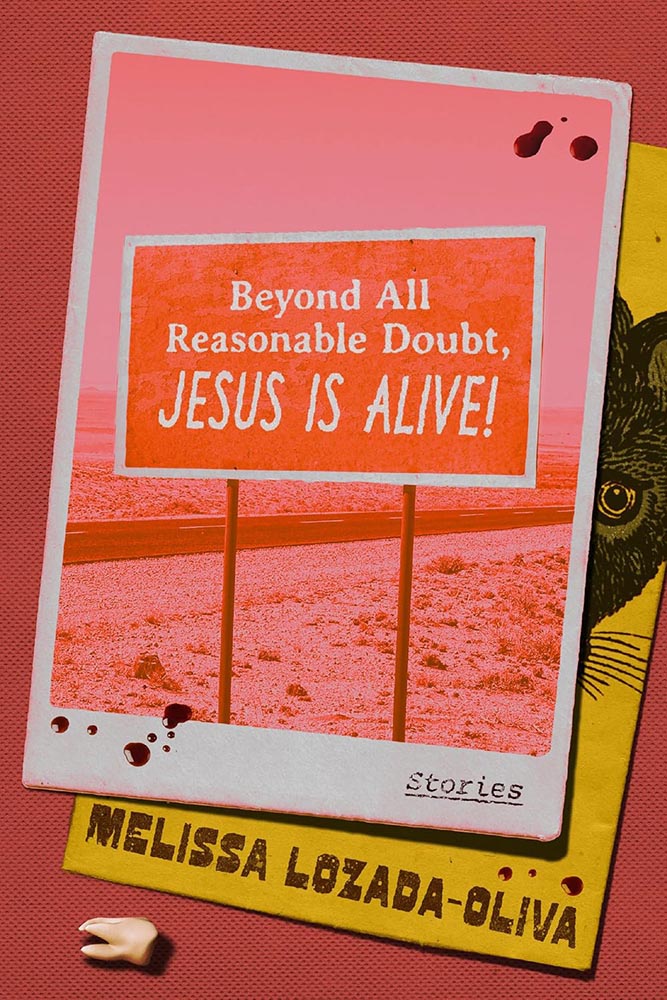
    Cover design by Luisa Dias.

    From texture to type, photo to illustration, this is a cover that keeps giving the more the viewer keeps looking.

    Cover design by Stephanie Ross, with art by Maria Guimaraes.

    Cool illustration, cool idea — but it’s the use of color that earns this cover a spot here. The bright pink and various greens delight, as does the unusual-but-perfect background box for the title.

    Cover design by Robin Bilardello.

    “Guaranteed to augment your … life,” Vi thought.

    Cover design by Rodrigo Corral Studio.

    This is based on the Korean edition; the art came with the title. That said, this version uses that ah-ha moment that is title’s holding area, combined with infinitely better type — and gets serious compliments as a result.

    Bonus points to the original designer for a painting that’s anything but postmodern.

    Cover design and art by Na Kim.

    Speaking of paintings, Na Kim’s often take center stage in her cover designs. Here, however, it’s everything. Fantastic!

    Cover design by Thoman Colligan.

    The two-pane cover gets overdone, no question, but like others on this list that rise above a trend, this cover triumphs in complimentary colors, type treatments, and spacing. Somehow soothing and attention-getting — an accomplishment.

    Cover art by Scott Mescudi.

    Every time one zoomed out to look at the collected — every single time — this persevered. Survived. Stayed. And then became incredibly successful.

    (The cover, too.)

    Cover design by Josh Durham.

    Pictures running in time, complimented by the vertical title. (Rare and attention-demanding use of duotone here, too — nice.) Bonus points for the title and other text being subtly different colors.

    Cover design by Adriana Tonello and Frances Digiovanni, Rodrigo Corral Studio. Illustration by Sophy Hollington.

    Letterpress or inkblot? When it’s as much eye candy as this, do you care?

    Cover design by Na Kim.

    The contrast to Na’s Brother Brontë cover, above, couldn’t be more stark — yet this one, in its … well, stark simplicity, is no less accomplished.

    Work that stands out, from one of the standouts.

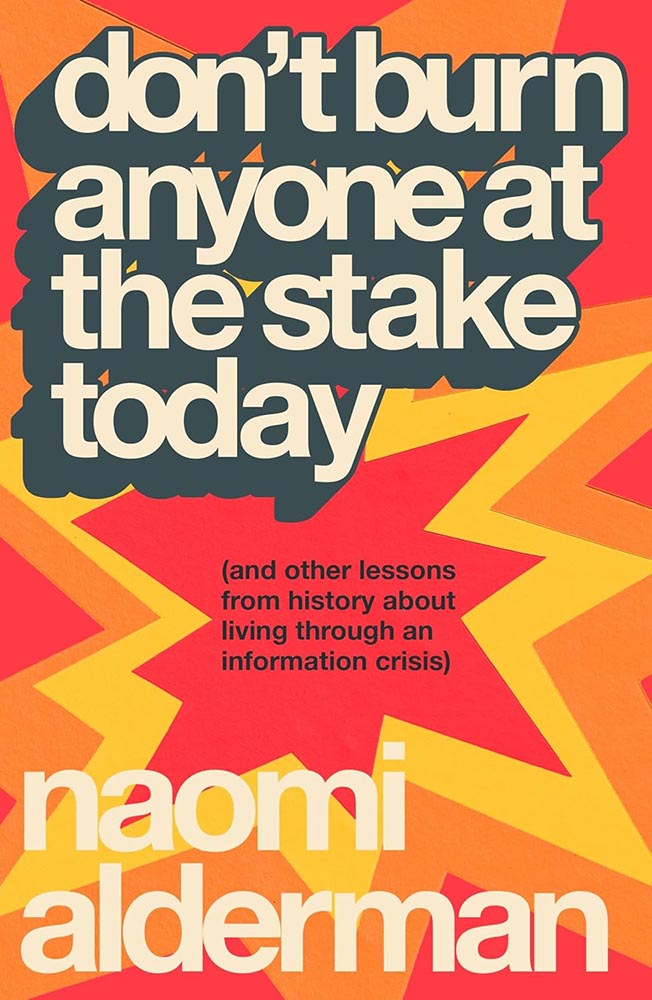
    Cover design by Chris Bentham.

    Retro-tastic burst of style that takes something ostensibly text-only to another level.

    Parenthetically, the author argues that we’re in the third “information crisis,” the first being invention of writing and the second the invention of the printing press. We survived those, maybe we can survive this…. A UK title I wish were readily available in the States. (The Brit Amazon wants you to buy it together with Cory Doctorow’s Enshittification, by the way. There‘s an afternoon’s reading.)

    Cover design by Matt Dorfman.

    Old-fashioned illustration, type arranged in a way that’s anything but old-fashioned, and great color choices: successful in a way that suggests simple in one of those “effortless ease” ways. (“Yo-Yo Ma just saws on a big fiddle” kind of thing.)

    Cover design by Eli Mock.

    “Missile Command meets The New York Times,” you say, in an effort to describe this design to someone who hasn’t seen it — something guaranteed to get a laugh. But here it is, in all its glory.

    Cover design by Jaya Miceli, with art by Anna Brones.

    Cookbooks are such a well-trod genre that it’s nearly impossible to break out of the pack and generate something not only truly original but truly excellent: a feast indeed.

    Cover design by Jared Oriel.

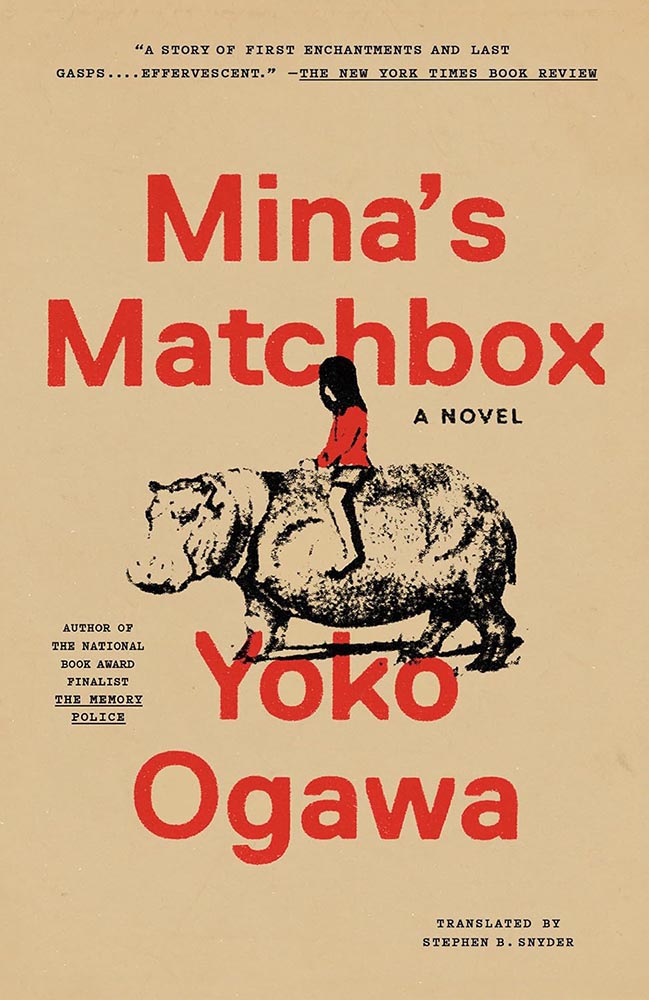
    Burnt matches have never made such sweet music.

    Cover design by Darren Haggar; illustration by Cecilia Caristedt.

    Poppy? Or a view into something deeper?

    Cover design by June Park.

    “What happens when your world goes sideways?” this cover — and book — ask. From illustration to style, basically … perfect.

    Cover design by Janet Hansen.

    Simple, practical, awesome. (“Chef’s kiss” is probably tacky, so I’ll avoid saying that.)

    The author’s previous title, Lucky Dogs, was in my 2023 Favorites.

    Cover design by Rodrigo Corral and Adriana Tonello.

    At first glance, something we see all the time, from image to typestyle.

    But then it goes on to ring the bell.

    Cover design by Frances Digiovanni, Rodrigo Corral Studios.

    The case where something like “a two-color triumph” feels not only cliché but a genuine undersell. The illustration, the color choices, the exquisitely shaky hand lettering — all beyond perfect, and that’s before we start talking about those strings. And the power that’s pulling on them.

    Cover design by Jared Bartman.

    The bear feels like something generated by bad AI, or even a suit; as it turns out, we don’t care. Bright, funny, and fun in just the right way. (I do wish they’d kept the single quotes proper English uses.)

    Cover design by Adriana Tonello.

    On the one hand, the opposite of “bright, funny and fun” — and yet, one the other, somehow, not.

    Cover design by Maddy Angstreich.

    I swore, possibly in public, that cropped classical paintings is something we should move on from in book design.

    Clearly, I was wrong.

    Cover design and illustration by Micaela Alcaino.

    One of the few times in recent memory that something so original was so funny, so satisfying, and such a standout design … on any shelf.

    (One of those covers that would work well as a print, I think.)

    Cover design by Anna Morrison.

    The triumph of the simple.

    Cover design by Keith Kayes, with art by Jose David Morales.

    “Sometimes a new author will sidle up and whisper in your ear, and sometimes she’ll grab you by the neck,” one of this book’s blurbs reads. The design of Immemorial, above, is the former. This design is very much the latter — completely and delightfully.

    Ballantine’s contact page is a 404 error — I kid you not — so the designer remains anonymous.

    Power, grace, and color — and, of course, the title treatment. A cover that was never in danger of losing its groove. (Bonus points for the pink “earring.”)

    Cover design by Matt Dorfman.

    Simplicity can mask death depth.

    Special bonus — related brilliance, from 2022:

    Cover design by Matt Dorfman.
    Cover design by Nick Misani.

    Illustration and lettering triumph for this classic title, slightly reminiscent of the Farmer’s Almanac I remember from my youth (in the most complimentary way), with appropriately-English “characters” for the UK edition.

    Cover design by Katy Homans.

    I mentioned above that for photographs to work today, they have to have that something that grabs and won’t let go. This one does.

    Cover design by Arsh Raziuddin.

    Next-level collection of long views both together with and simultaneously separated by brilliant use color. Bonus points for the repetition in author and subtitle.

    Cover design by La Boca.

    Gets the award for “most zany,” in the best possible way: “a scream,” indeed.

    Cover design by Stephen Brayda.

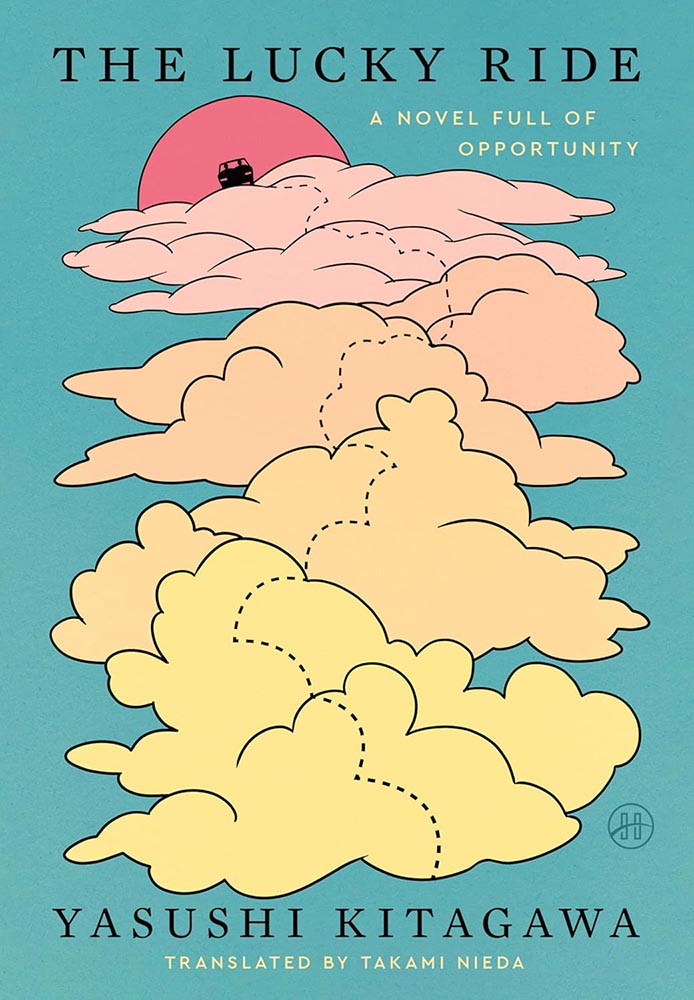
    Speaking of awards, let’s have one for “soothing.” The dotted path is brilliant and colors awesome. (And while it’s not part of the design, it’s impossible not to appreciate that subtitle.)

    Cover design and art by Alex Merto.

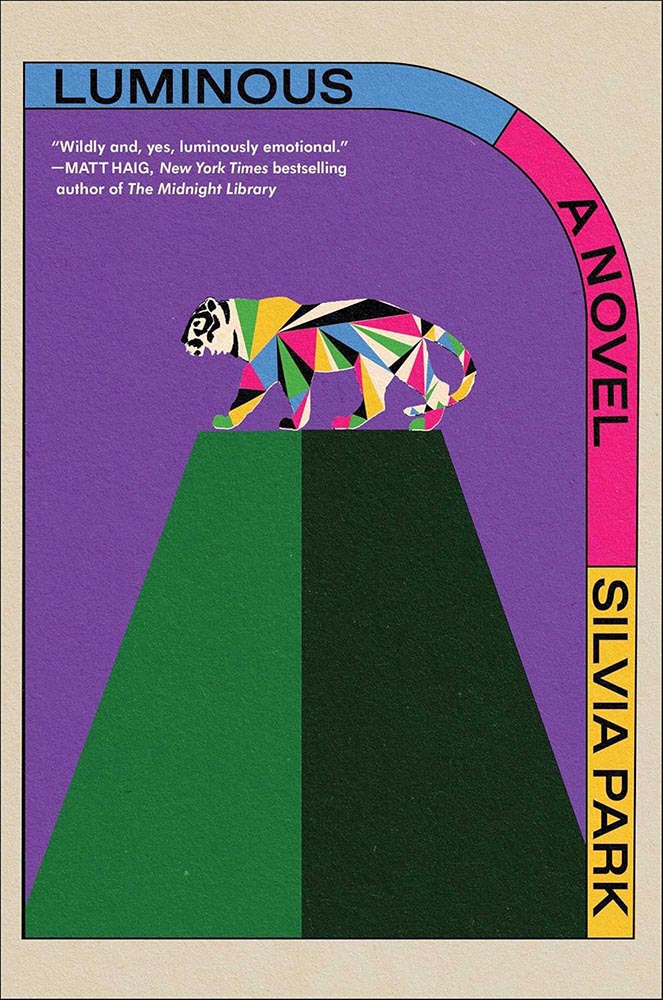
    Colorful, original, retro-yet-not — with that tiger. I want to make jokes about how this cover so very well illuminates, but really, I just want to go read it. Awesome.

    Cover design by Beth Steidle, with art by Uzo Njoku.

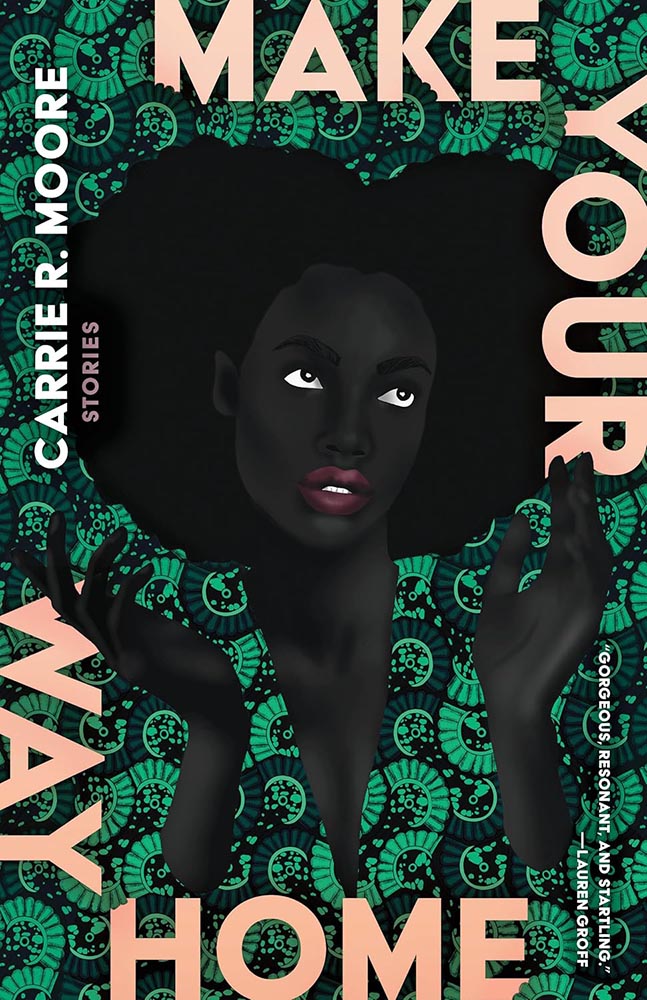
    I’m not a fan of the text-around-the-edge trend — I get it, it’s a framing device, but, suddenly it was everywhere, too much, all at once.

    Once in a while, however, it’s done so well that greatness must be acknowledged. Weaving the title text into the pattern helps, as does, of course, the fantastic art.

    Cover design by Tyler Comrie.

    I had the UK version of this in last year’s list — but the paperback, out this year, gives me an excuse to not only highlight the US version, but the associated redesigned back titles:

    Cover designs by Tyler Comrie.

    I do not believe “brilliant” is resorting to cliché.

    Cover design by Grace Han.

    The second one-color cover on this list, whose simplicity belies the story within. (Lauren Peters-Collaer, on LitHub‘s “best of” list, describes it as “fractured,” which I love — along with the “minor Black artist” being named Wyeth.)

    Cover design by Jaya Miceli.

    “I forgot the blueprints parsley!”

    Awesome stuff: the lips being the only thing on her face, the dog’s expression, the rough sketch style, the way the title stands out, um … okay, everything.

    Cover design by Matt Broughton, with art by Katrien de Blauwer.

    As mentioned, the two-pane cover has become a thing; this one breaks out not only with the black-and-white photos (possibly a subtle duotone) and a bright title in a great typeface (Herbus, by OTT) but cropping on the bottom photo that causes a double-take, and that hint — just a hint — of just-sank in the top photo. Good stuff.

    Much stronger without the quotes fouling the water, by the way. The tug-of-war between design and marketing sometimes gets makes ugly.

    Cover design by Jenny Volvovski.

    Brilliantly simple stand-out: nest and enjoy.

    Cover design by Arsh Raziuddin.

    A fantastic example of a photograph plus — that illustration, those lines, that green, those stars. (And, of course, the eyes.)

    Cover design by Chris Bentham.

    This UK cover expresses the arrogance — the cockiness — while bringing forth all of the disjointedness and even kleptocracy. Timely and compelling.

    Cover design by Matt Dorfman.

    I like the design of this series — the title holding area (literally) is unusual enough to catch attention on today’s shelves socials — but the colors and treatment on this title, specifically, are the most pleasing.

    Cover design by Erik Carter.

    A brilliant idea, perfectly fulfilling the idea of communicating everything needed with one simple concept. (Alas, since putting this aside — the candidates for this list are gathered throughout the year — it’s gained splashy “ketchup” and what can only be described as “cheese.” Boo.)

    Special bonus — the UK version:

    Cover design by Jack Smyth.

    No less brilliant — yet, as covers from the “right” side of the pond often are, more sophisticated.

    Cover design by Janet Hansen, with art by Ahmad Sabbagh.

    Okay, let’s revisit the text describing the previous title.

    To quote Jason Kottke: “The US cover, like many American things, is somewhat less subtle & elegant.” In this specific instance, however, I have to disagree: sometimes, more is more.

    Here, the US version brings a power to the table that US versions often struggle with; a “a few strokes of the pen” can wield enormous strength — often too much — and thought, talent, and consideration are appreciated. This is all of those.

    Cover design by Claire Sullivan, with art by Alex Eckman Lawn.

    “Not for the faint of heart,” one of the blurbs for this title reads — and applies equally well to the cover, which communicates “lovely” and “grotesque” in equal measure. (The UK version trendily plays up the lighter approach.)

    Cover design by Jaya Nicely, with art by Rokas Aleliunas.

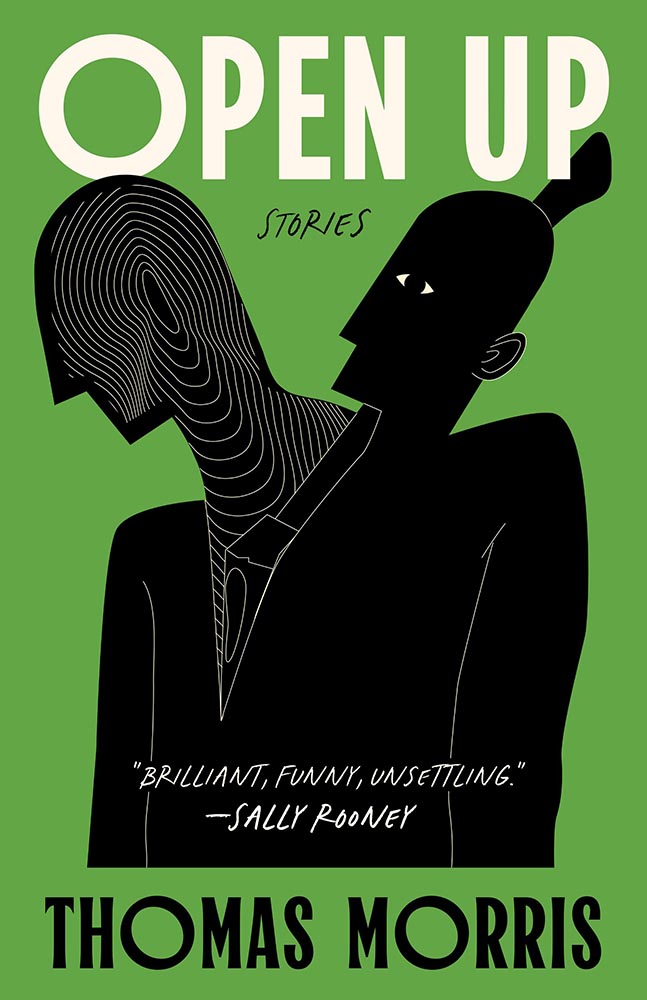
    A “brilliant, funny, unsettling” illustration, too. (Love the green, by the way.)

    Cover design by Devon Manney.

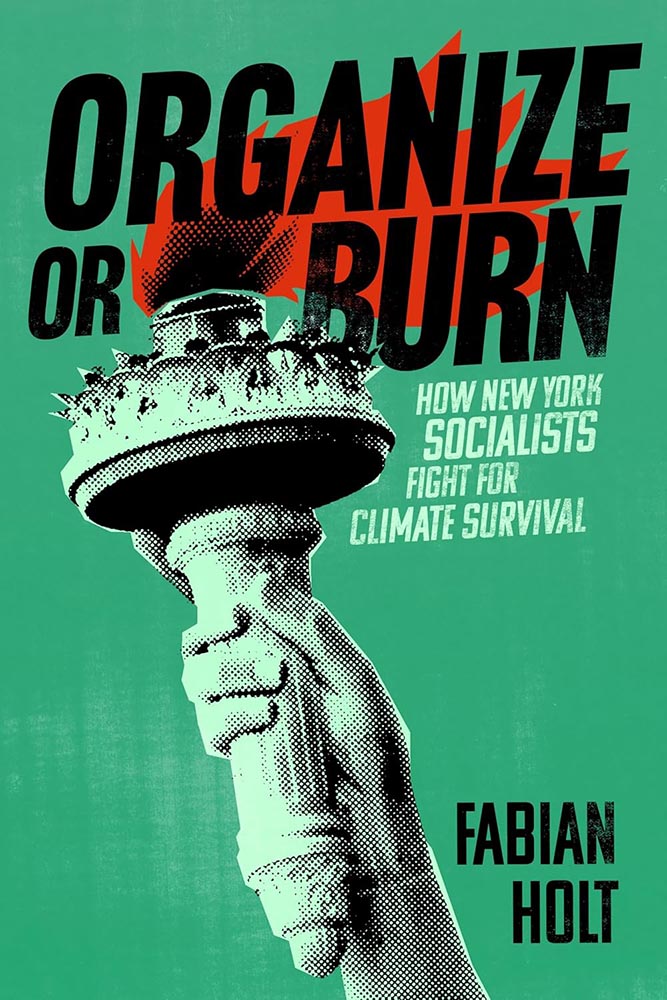
    “From screening to aging, suggestion to content, color to style, this one, put simply, gets everything right,” I said on Spine in October’s University Press Coverage column — but when it was highlighted in October’s Beautifully Briefed, here on Foreword, I added, “One could argue that this cover — and title — could work well even if the word “climate” was removed.”

    Cover design by David Eckersall.

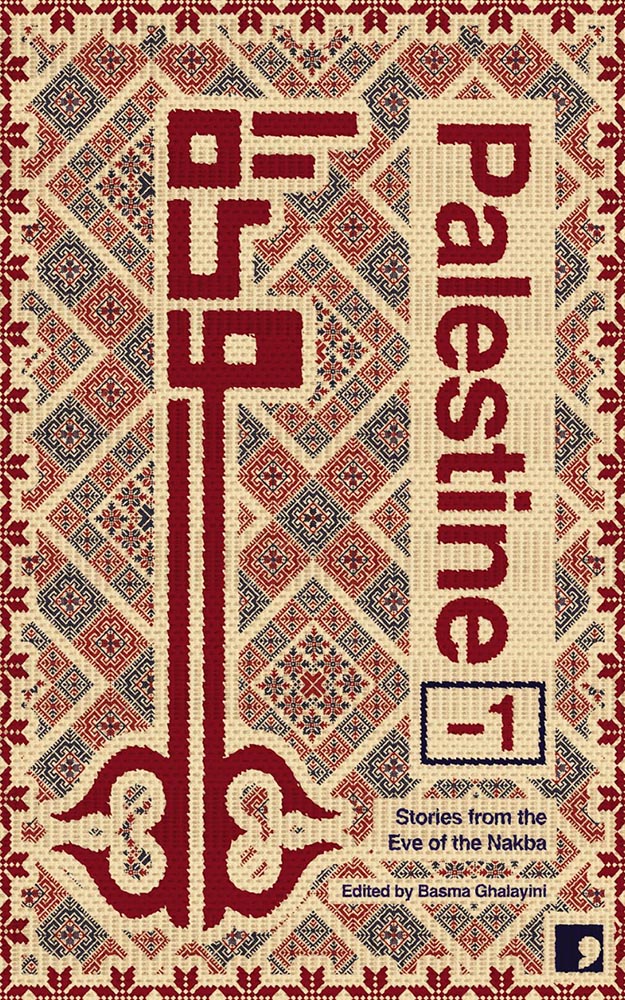
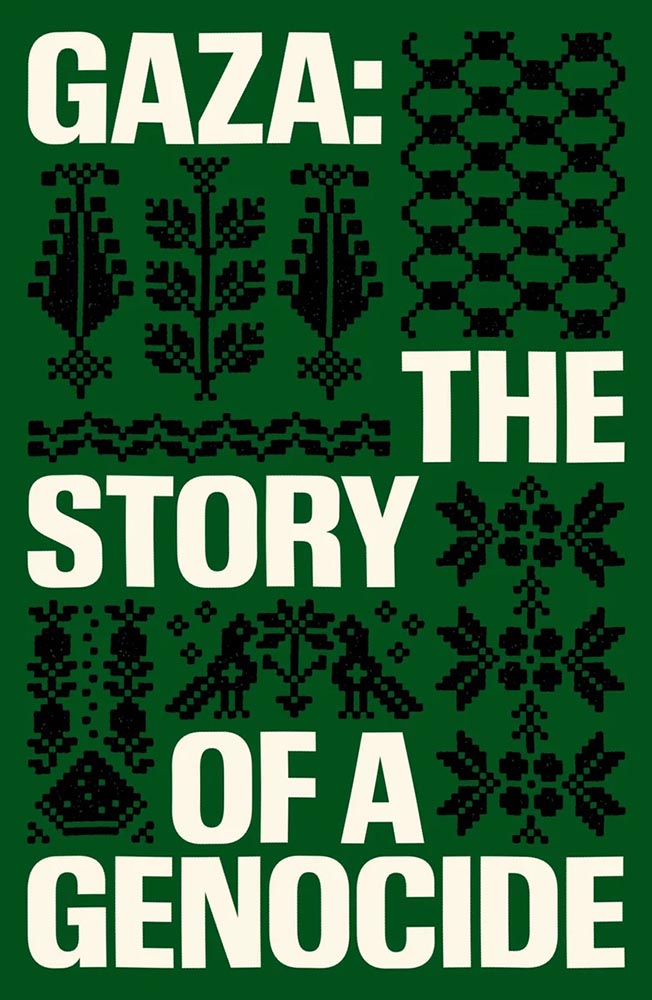
    “Tatreez, meaning ‘embroidery’ in Arabic, is used to refer to the traditional style of embroidery practiced in Palestine and Palestinian diaspora communities. The contemporary form of tatreez is often dated back to the 19th century. The style of cross-stitch embroidery called fallaḥi has been practiced amongst Arab communities in the Mediterranean for centuries,” Wikipedia notes. (NY’s Met Museum has more.)

    Beautifully applied.

    Special bonus — see also:

    Cover design by Chantal Jahchan.

    Yeah.

    Cover design by Janet Hansen.

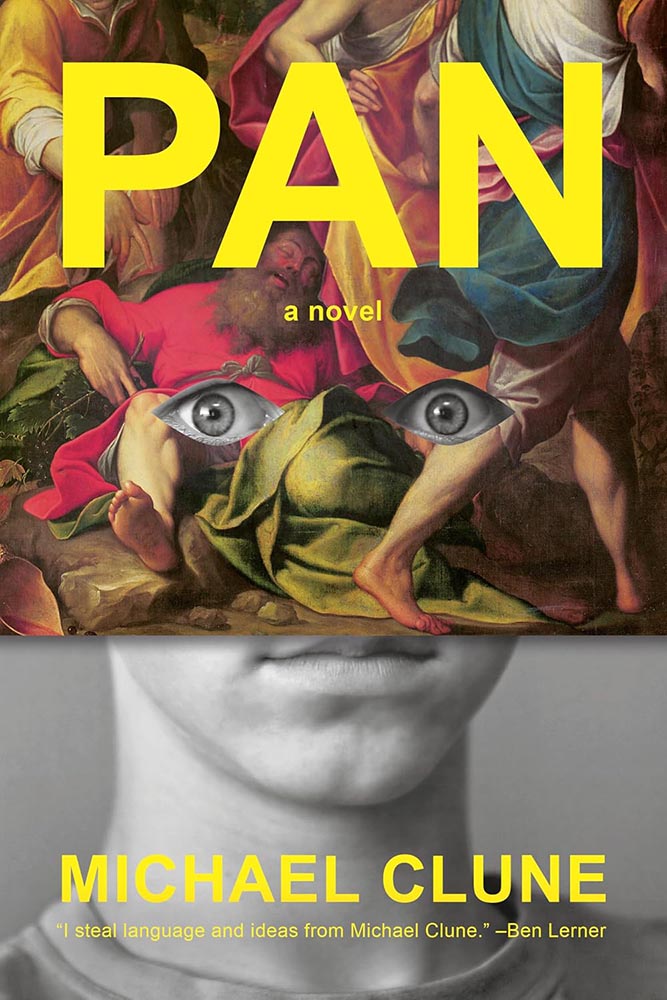
    Pan, panic, or just surprise? No matter the expression, a delightful way to break all of the rules. (Bonus points for the knee to the nose.)

    With apologies, I don’t know the designer for this cover.

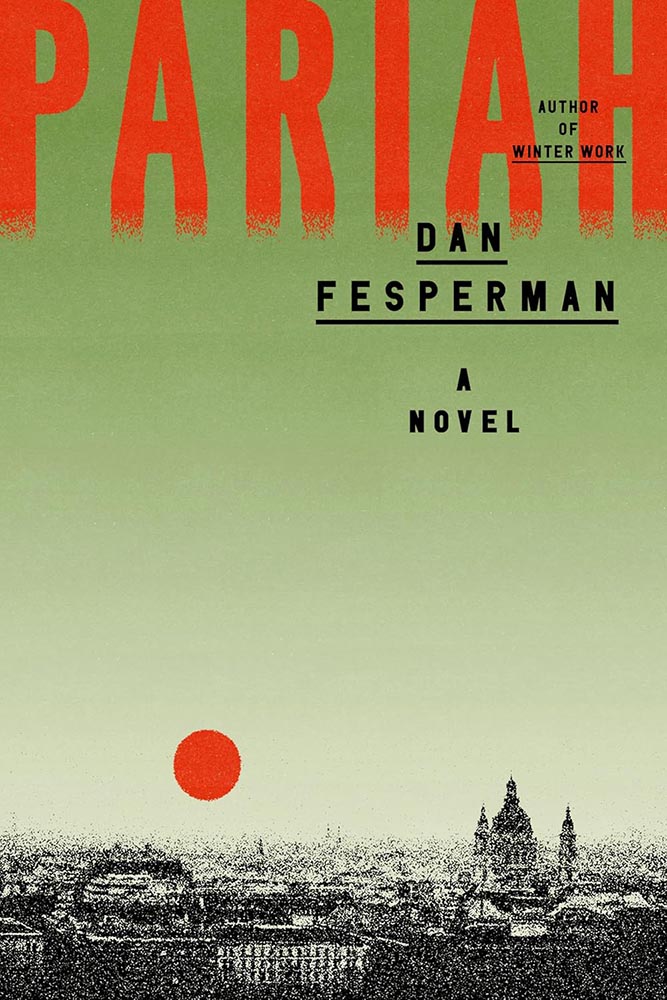
    A disgraced comedian-turned-politician is recruited by the CIA — a grainy prospect that you wouldn’t expect to look like this.

    Um, yes.

    (“This title is absolutely about Bolrovia,” he added.)

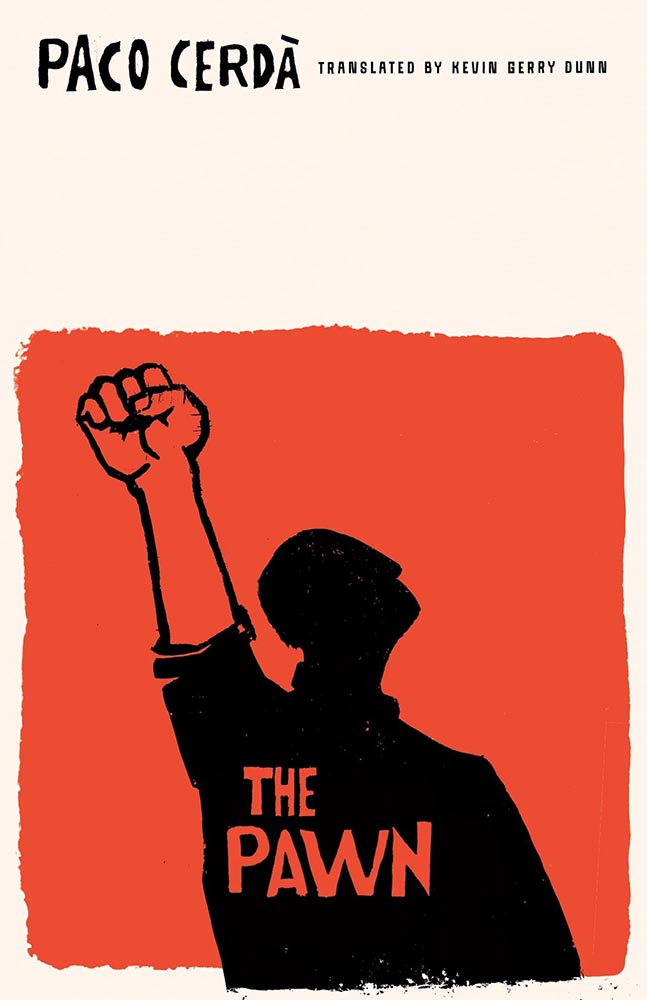
    Cover design by Emily Mahon.

    Less chess and more Cold War, another where a powerful, simple idea triumphs. The orange and the hand-lettering deserve special praise, as well.

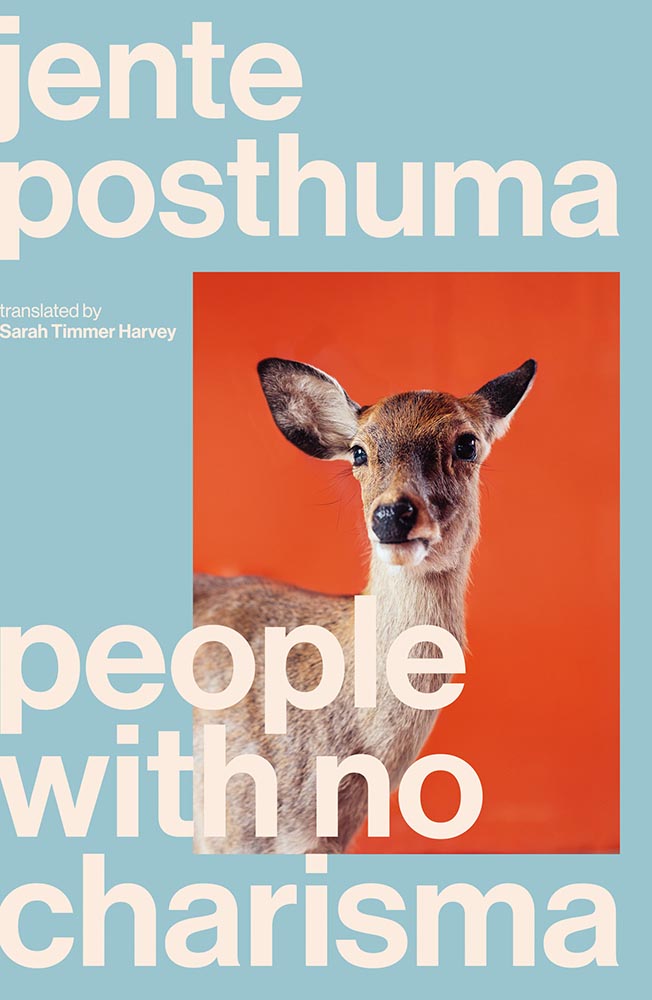
    Cover design by Luke Bird.

    From expression to ears, brings new delight to deer-in-the … highlights.

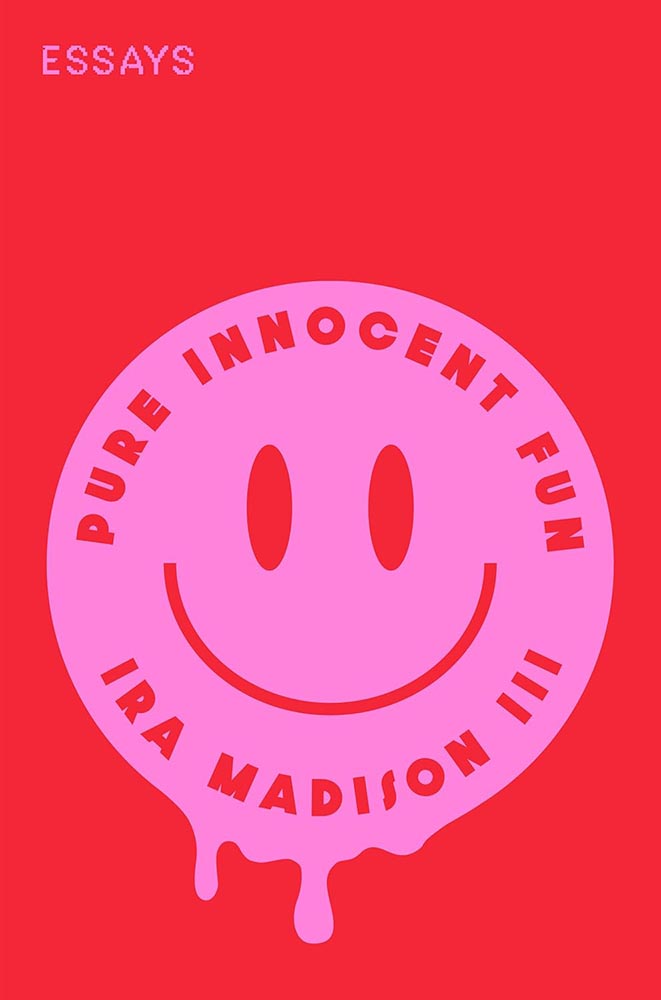
    Rutgers University Press did not return a request for cover design information.

    “From the woodcut hall of fame, we have this,” I wrote in Spine‘s November column.

    (I’m sad Rutgers never returns emails, because this artist deserves named credit. If you know….)

    Cover design by Ella Laytham.

    That “Essays” is printed in little tiny pink stamps is merely the kicker: awesomeness, defined.

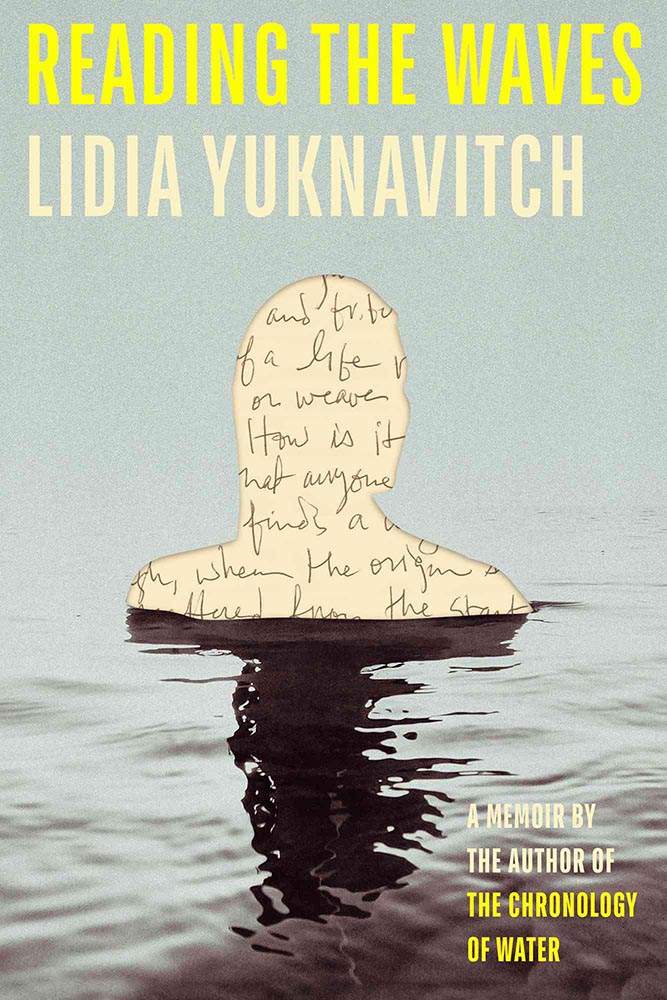
    Cover design by Lauren Peters-Collaer.

    Might I have mentioned that silhouettes are overused, even trendy? And that photographs are passé? Not here.

    Like The Slip, this title goes out of its way to do something different, something appreciated, with the cutout. Combined with a great photo and grainy sky, it steps out of line and requires your attention.

    Cover design by Lauren Peters-Collaer.

    “Deadpan wit” could be used to describe more than the contents: simultaneously simple and simply brilliant.

    A cheat here: the green version is the hardcover from 2024; the paperback, from November ’25, is orange with a pink chair — and not quite as good.

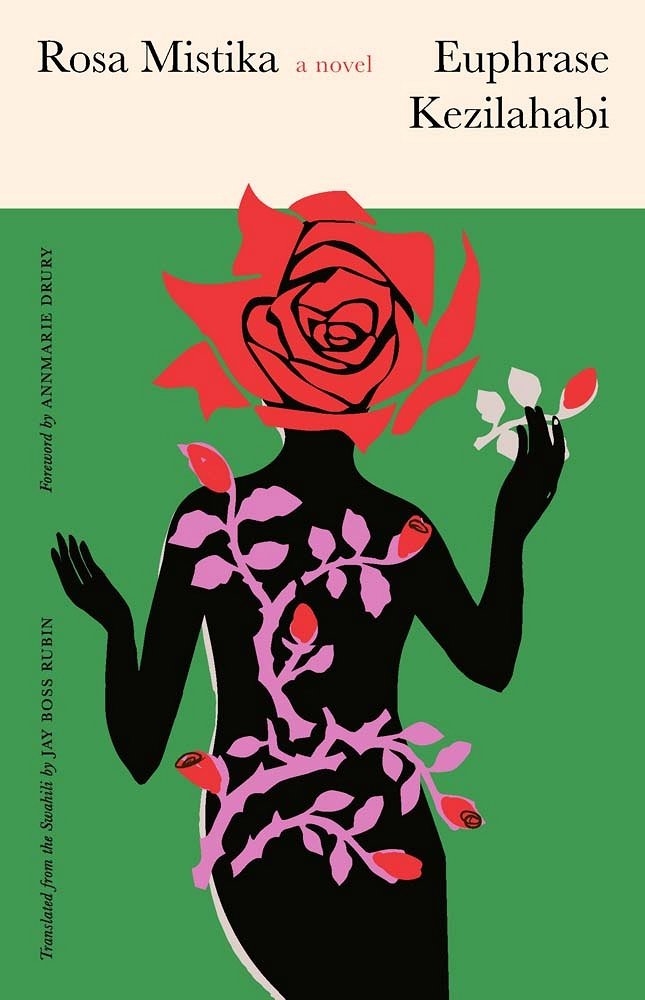
    Cover design by Sarah Schulte.

    “A controversial Swahili classic — banned on publication — translated into English, published by Yale, and represented with a cover best described as a gift. A design that belongs in every ‘best of’ list,” I said in the inaugural column for Spine.

    So added.

    Cover design by Josh Durham.

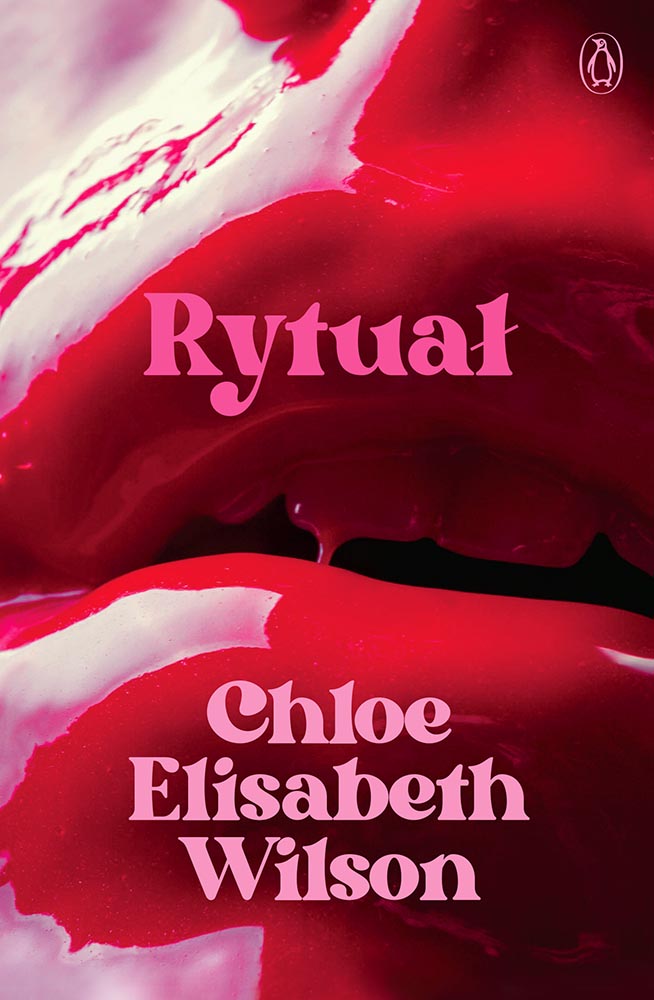
    Close-ups of women’s lips is another trend I’ve been avoiding — except when it positively drips with photographic brilliance: millennial pink, taken to the next level. (Once again, a cover measurably better without the detritus rytuałły added by the publicity department.)

    Cover design by Beth Steidle.

    I don’t know whether Beth did the art for this — presumably — but that art, together with the title treatment, add up to one of those “wow” covers instantly added to the list of year’s best.

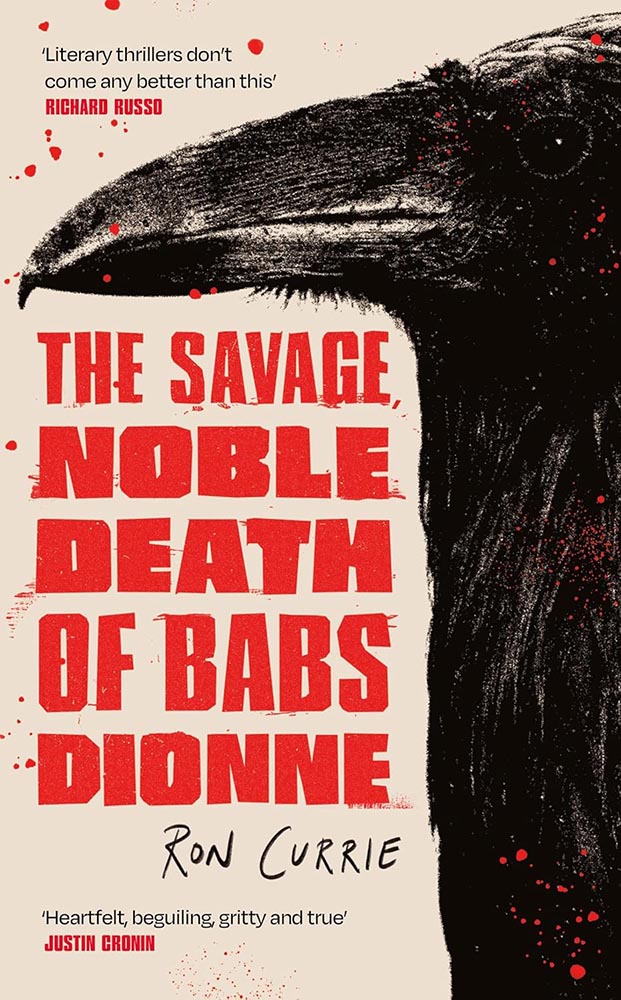
    Cover design by Holly Battle.

    A “doting grandmother and vicious crime matriarch”: raven mad. This UK cover gets points for illustration style, type style, and, of course, just the right dose of splatter.

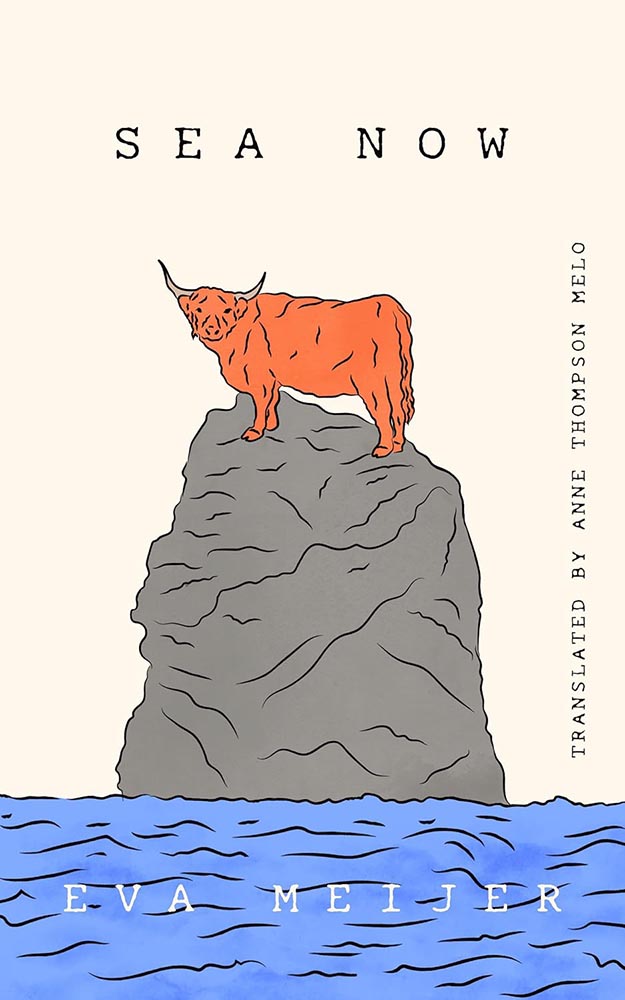
    Cover design by Jared Bartman.

    “The bull’s expression,” he said.

    “The no bulls*** expression of nature,” she retorted.

    Cover design by Jamie Keener.

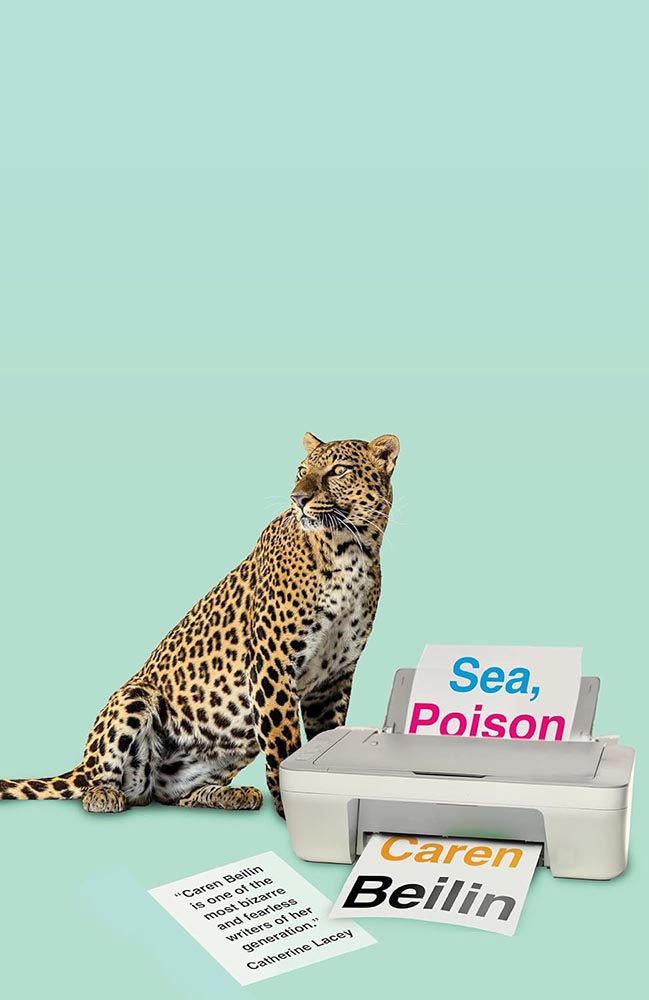
    Never mind the huge negative space: it’s the eyes. (Okay, it’s also the unlikely collection — collision? — of leopard and printer. Plus the loose page/quote. Plus the background color. But still.)

    Cover design by Rodrigo Corral.

    Heroin addiction, AIDS, French doctors, family drama: how do you weave that together into a compelling cover? Well, this.

    Cover design by Gabriele Wilson; collage by Arsh Raziuddin.

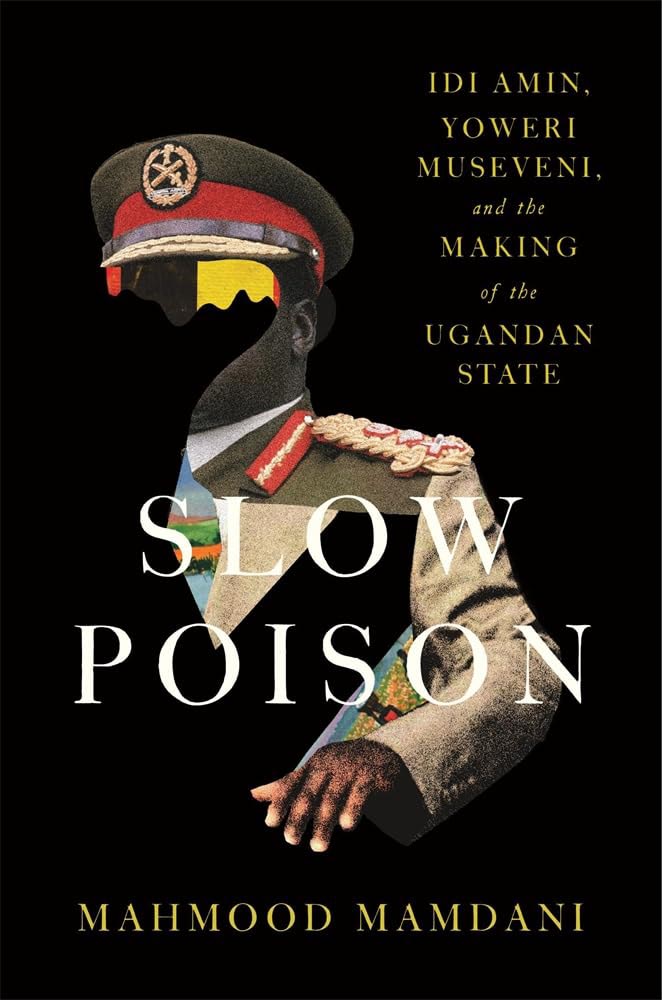
    “Fragmented colonialism in Africa, illustrated incredibly well,” I said in October’s Spine column — then went on to do both designers a disservice by failing to include the appropriate credit. Sheesh. (Apologies.)

    Cover design by Farina Yasmin.

    The US vs. UK “style” has been mentioned, well, possibly too much. Sorry.

    But.

    Here’s a great example of two great covers — both where all eyes are very much on the performer’s … uh, performance — yet in remarkably different ways.

    Cover design by Julia Connolly; photograph by Sandra Casado.

    Even though this kicks serious a**, in this case (and to continue the back-and-forth), I don’t think the US version is any less sophisticated.

    Cover design by Nicole Caputo.

    Beautiful illustration, beautiful type treatment; it’s something that could almost be described as “soothing.”

    (With the possible exception of the text within.)

    Cover design by Steve Attardo.

    An awesome illustration against one of the year’s creamiest backgrounds, yes, but absolutely one of the year’s best title type treatments.

    Cover design by Jaya Miceli.

    From Spine‘s University Press Week special coverage, November 10–14, brought to you in honor of the event help by the Association of University Presses:

    “‘Ebullient’ is used in the description of this title, and quite frankly I can’t think of a better word to describe this text-only treatment: superlative work.

    “(In Miceli’s library, this would be shelved with Milk Fed and Joy of Consent instead of Big Swiss and Victorian Psycho — but it’s telling that she’s great at both styles.)”

    Special bonus — another from that post:

    Cover design by Issac Morris.

    “The ayes have it,” I quipped. “Also, both the title type and color choices are out of this world. (Not sorry.)”

    Cover design by Jack Smyth.

    The word “acerbic” is used several times to describe this tile, but the UK cover just isn’t — the type and treatment are wonderful, and the surrogate egg is perfect.

    Special bonus — the US version, which received a good deal of praise:

    Cover design by Tyler Comrie.
    Cover design by Dana Li.

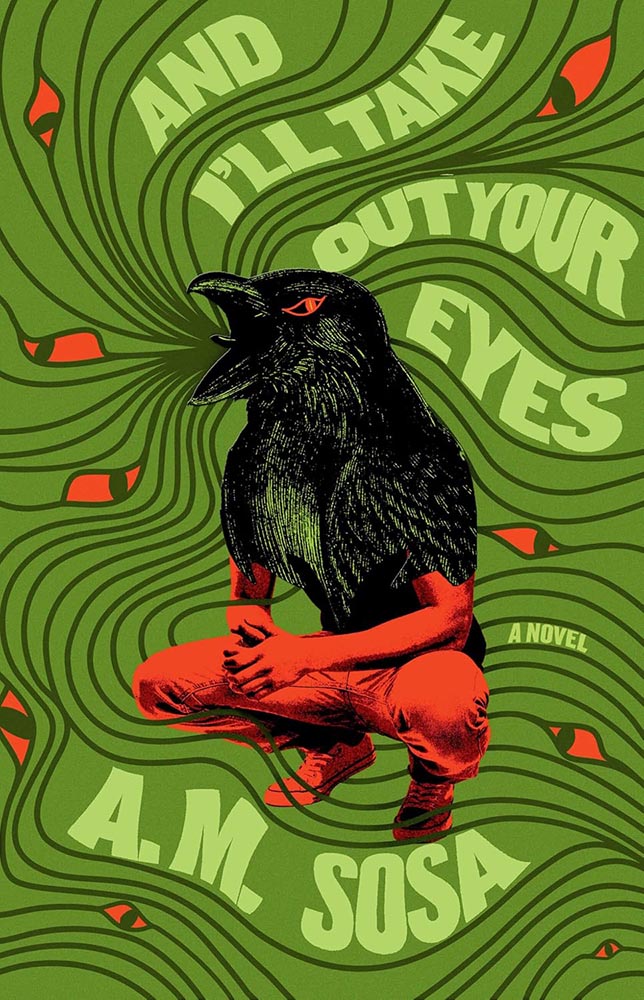
    As mentioned on And I’ll Take Out Your Eyes, the part-human, part animal thing could possibly be described as “overdone.”

    Here, though, it’s a home run wrapped in a night out: from colors to drips, pose to poise. Awesome.

    Cover design by Michel Vrana.

    A “decades-long earthquake,” indeed: layered, hopeful, wonderful.

    Cover design by Sarah Schulte.

    Another text-in-a-square exception to the rule: framing rarely works so well. (Besides, there’s that illustration.)

    Cover design by Daisy Bates; photograph by Vanessa McKeown.

    Cover photograph of the year, foot hands down.

    Cover design and illustration by Kimberly Glyder.

    “A risqué cross-dressing interpretation of a Shakespeare classic”: I can’t decide if it’s a crown, horns, or teeth. (“Yes,” someone said.)

    But it’s the red overprint that steals the show. Fantastic.

    Parenthetically, the author is “a founding artistic director of The Semitic Root, a collective that supports innovative theatre co-created by Arab and Jewish Americans.” How awesome is that?

    Cover design by Kelly Hill.

    “Canadian text soothes,” some belligerent American said.

    (Another one of those illustrations I’d happily hang on my office wall, by the way.)

    Cover design by Kimberly Glyder.

    Never mind anything else: it’s the scribble. (The title font’s beautiful, too, honestly.)

    I try to reserve “perfect” for occasions that warrant it — this does.

    Cover design by Luke Bird.

    A geometric, simple triumph of illustration: I suppose if anyone can do a bird well….

    (Sorry.)

    As an aside, this title is not to be confused with Under the Eye of Big Bird, which is in a whole ’nuther category.

    Cover design by Jamie Keenan.

    Entangled in wonder. (Also, the background color is super, and the font — Celtic Hand by Dieter Steffmann — is proof that freebies sometimes work beautifully.)

    2023’s Sublunar was a interesting design, too.

    Cover design by Grace Han.

    Open the window to yeokmasal: awesomeness awaits.

    Cover design by Thomas Colligan.

    A book about a professional weeper, [whose] “services are sorely needed these days, as the town, the region, the country as a whole has become more or less numb.”

    Ummmm….

    (The cover’s fantastic, too.)

    Cover design by Maddy Angstreich; photograph by Bobby Doherty.

    Dang, that’s not raw meat being squeezed there. (Nor a fruit, for that matter.)

    Cover design by Pablo Delcan.

    From June’s Spine column: “19th-century hair styles: the absolutely fantastic world of university press cover design briefs … absolutely nailed here, with pen-and-ink illustrations and aged type handled perfectly. (Great title, too.)”

    Cover design by Na Kim.

    To close out, another painting by Na Kim, as visually arresting as Brother Brontë, above, but 180 degrees in the other direction. (Bonus points for the pointillist lettering.)

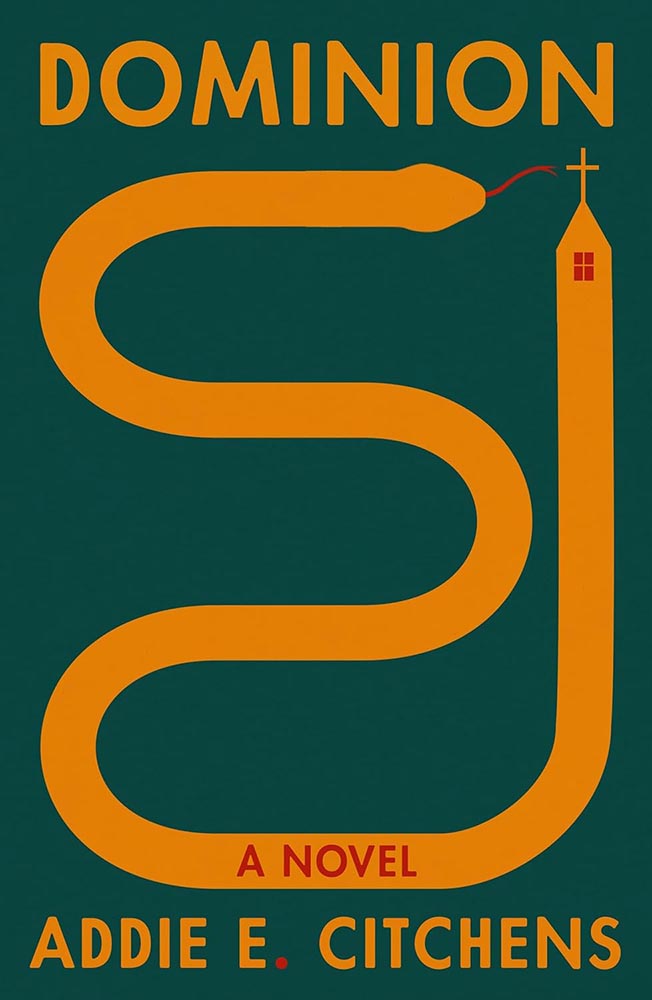
    Come to think of it, it’s 180 degrees from Dominion, too. Is it possible to have a 540-degree compass? Na apparently does — awesome.

    • • •

    2025’s favorites folder contained more than four hundred examples by the end of the year — a hundred more than 2024 — and represented a huge variety of titles, publishers, and design styles. (Significantly different from last year, too — interesting.)

    It was a huge task to whittle the selections down; 400 to 300 was relatively easy, 300 to 200 more difficult, and those last hundred involved making hard choices between covers I really liked.

    One thing helped: as mentioned in the intro, I worried less this year about highlighting every style, every designer, in every category — given the drama that was 2025, there was, in fact, a smidgen of comfort food involved.

    But oh, that comfort food. Michelin starred.

    Another help: my column at Spine.2Vyki Hendy, Spine‘s publisher, deserves a special thank you for that opportunity. It’s reminded me of the gems that exist in an area that doesn’t get enough attention — outstanding, often great, book covers I’m more than happy to find the time to celebrate. While I enjoyed casually perusing University Press designs in the past, they didn’t live under the same microscope that they did starting last June (and will continue to). Adding more University titles is an ongoing bonus, and several of those titles made it into this list; perhaps egotistically, I’d like to think that the exposure those titles received allowed them to make others’ lists, as well, a benefit for all. Nice.

    Thank you for taking the time to spend a few minutes here today. I wish you a wonderful, successful, and above all, peaceful 2026. See you soon.

    How This List was Compiled

    There were fewer sources for titles in 2025 than in years past; the BBC disappeared behind a paywall, the quality of mainstream publishers continues to decline, and those articles I did read seemed to stress trends and “what’s hot” rather than actual quality. Thankfully, there’s still PRINT, Spine, LitHub, The Casual Optimist, and NPR’s Books We Love. There’s also The Guardian, which does pretty well with books; the New Yorker‘s book reviews are outstanding (although rarely centered on their design); and, of course, there’s the New York Times Book Review (likewise, although Matt Dorfman’s best designs article deserves note). If you haven’t already, when you have a moment, please enjoy some of those links— a great many more outstanding examples of book cover creativity await.

    • 1
      Publishers need to remember that not all of their customers select what to read based on influencers, what they see on Facebook, or by doomscrolling Instagram. Some of us are lifelong learners, have hundred or thousands of books, and discover by … reading. Real articles, by real people, on websites with those people’s real names on them. (Or even, occasionally, this thing called paper.)
    • 2
      Vyki Hendy, Spine‘s publisher, deserves a special thank you for that opportunity. It’s reminded me of the gems that exist in an area that doesn’t get enough attention — outstanding, often great, book covers I’m more than happy to find the time to celebrate.
  • Beautifully Briefed 25.12: Old and New

    Beautifully Briefed 25.12: Old and New

    To close out 2025, a bunch of disparate items for your edification and enjoyment: the usual categories plus some stuff imported from left-field. Get caffeinated, get comfy, and let’s get to it.

    Please note that the photography trip planned for mid-December had to be cancelled at the last minute — circumstances beyond my control — and hasn’t yet been rescheduled. Apologies.

    December’s Spine
    Stanford University Press. Cover design by Jan Šabach; art director, Michele Wetherbee.

    Fourteen great University Press book covers in December’s column, including the genre-bending example above. Check it out.

    December 25th: Designer Holiday Cards
    Charles and Ray Eames, 1940s. (Image credit: © 2025 Eames Office, LLC. All rights reserved. Via Wallpaper*.)

    “Long live the Christmas card — a ritual that feels increasingly endangered in our digital age. The simple act of putting pen to paper and sending wishes inked in black or blue is, in a word of instant messages, profoundly gratifying,” Wallpaper* writes. “In celebrating this venerable tradition, we found ourselves asking: what sort of Christmas card does an architect send?”

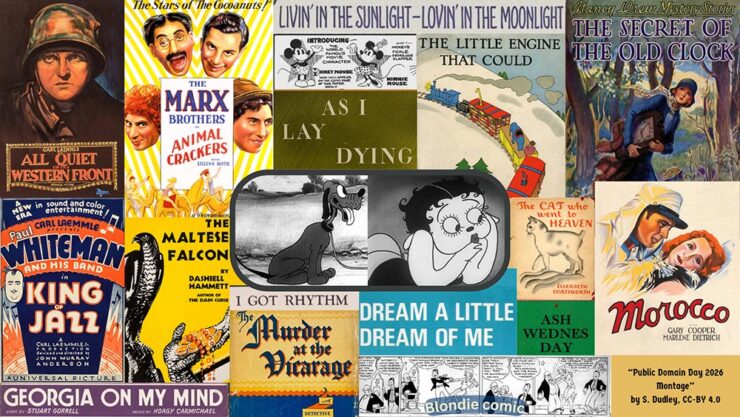
    January 1st: Public Domain Day
    Image courtesy of the Center for the Study of the Public Domain, Duke Law.

    On January 1, 2026, thousands of copyrighted works from 1930 enter the US public domain, along with sound recordings from 1925. They will be free for all to copy, share, and build upon. The literary highlights range from William Faulkner’s As I Lay Dying to Agatha Christie’s The Murder at the Vicarage and the first four Nancy Drew novels. From cartoons and comic strips, the characters Betty Boop, Pluto (originally named Rover), and Blondie and Dagwood made their first appearances. Films from the year featured Marlene Dietrich, Greta Garbo, the Marx Brothers, and John Wayne in his first leading role. Among the public domain compositions are I Got RhythmGeorgia on My Mind, and Dream a Little Dream of Me. We are also celebrating paintings from Piet Mondrian and Paul Klee. [In this post] you can find lists of some of the most notable books, characters, comics, and cartoons, films, songs, sound recordings, and art entering the public domain. After each of them, we have provided an analysis of their significance.

    — Jennifer Jenkins and James Boyle, Duke Law

    The annual list is, in every manner of speaking, a gift to society. (Via Pluralistic.)

    Has Judging a Book by its Cover Gone Too Far?
    Cover design by David Pearson.

    Excellent question from It’s Nice That, discussed in a post with book designers Na Kim and David Pearson. Book covers these days are driven by trends that are all-too-fleeting — what does that mean for what’s contained within? Is “salability” all that matters?

    Perhaps the question should be, “Where are we as a society, and is this it, in microcosm?”

    Special Bonus #1: 100 Notable Small Press Books of 2025, from LitHub:

    A reminder that press size and cover quality do not necessarily correlate — as noted in the above item, small presses might be willing to bend the “rules” more readily than the big players.

    “Our guiding principles were ‘read a lot, recommend a few’ and ‘seek out a diverse array of authors and publishers,’” they write. “We were especially interested in BIPOC and LGBTQ authors and publishers, who have an even steeper climb to mainstream recognition.” Enjoy.

    Special Bonus #2: Bar codes as design objects:

    This short piece from type foundry Pangram Pangram includes several book covers.

    CreativeBoom: Six Surprising Illustration Trends for 2026
    A linocut by Emily Robertson.

    Contrary to popular belief, illustration — like photography — is not on its deathbed. Despite the temptation for some companies (or budgets) to reach for generative AI, the consensus is that in order to stand out, bringing something unique to the table will be worth the effort. CreativeBoom talked to seven illustration agencies to get an idea what will work in 2026.

    Special Bonus #3: A repository of mid-20th-century illustration, for research or just enjoyment: “Illustrator Zara Picken has an incredible searchable archive of mid-century modern illustration from c.1950-1975. It’s a goldmine of graphic, type, color, and texture inspiration.”

    Smokey the Bear stamps from 1967.

    Zara’s illustrations are in a cut-paper style and awesome; link via SimpleBits Studio Notes #60. (The entire series of Notebook entries is cool when you have a few extra minutes.)

    Creative Review‘s Movie Posters of 2025
    Poster by Empire Design.

    Begonia was mentioned in October. A couple are by Empire Design, including the above — which is a master class in nested photographs. (“Claustrophobic,” CR says.) Great stuff.

    Typefaces, Pt. 1: Notes for December
    Snowee

    CreativeBoom‘s new font post for December includes Snowee, which is far and away my favorite: interesting, characterful (heh), and just fun — something lacking amongst the sea of Helvetica wannabes.

    It’s caps-only and not great at small sizes, but given a headline or poster or … whatever, it could be a pleasant, different choice. (I love that the O looks like an olive.)

    LEGO’s Letterforms

    Meanwhile, LEGO features in a new project called “A2Z,” an international effort to create letterforms highlighting strength found in limited systems:

    LEGO “offered an ideal blend of fixed constraints and room for playful exploration. Each brick’s scale and form could not be altered, but the grid’s size could be individually defined,” This is Colossal writes of this hand-printed awesomeness.

    Gotham

    From Tobias Frere-Jones, the story of how Gotham came to be:

    Tobias Frere-Jones‘ inspiration for Gotham.

    “In 2021, Monotype bought Hoefler & Co, and with it several families that I designed. As these families are now further removed from their origin, I want to ensure that their stories are accurately recorded,” Frere-Jones says. (Part of a series, in fact.)

    The Garamonds

    Lastly (for now), John Gruber’s Daring Fireball is among many who point out that condensed serifs are back in vogue, including — naturally, given the source — Apple Garamond:

    It’s TrueType, but now open source.

    Gruber also reminds us that Apple’s gone through more processor types than typefaces.

    Special Bonus #5: Gruber also has a quick item linking to a brilliant essay arguing that not all Garamonds are created equal — ITC’s version, especially. (Which Apple Garamond was based on, interestingly.)

    Special Bonus #6: Who doesn’t love a Pilcrow?

    Hoefler & Co’s brief item is worth it for the varied examples alone.
    Fonts, Pt. 2: The Calibri Flame-Out

    Let’s face it: type rarely generates headlines. But these aren’t “normal” times. Headlines were definitely made when the US State Department decided that its house style rules ditch Calibri, a font chosen to be more readable — more inclusive — and revert to Times New Roman. Because … tradition? Politics? Readability?

    Let’s stipulate for the moment that the memo’s drafters saw choices as limited to the defaults available in Microsoft Word. (Because … you saw that coming.)

    John Gruber was all over it, and argued thus:

    While neither is a good choice, between the two, Times New Roman is clearly better. […] I just think it’s stupid for an institution with the resources of the U.S. State Department to shrug its shoulders at the notion that they should license and install whatever fonts they want on all of their computers. Anyone making excuses that they “can’t” do that should be fired. […]

    Calibri does convey a sense of casualness — and more so, modernity — that is not appropriate for the U.S. State Department. And I do not buy the argument that Calibri is somehow more accessible for those with low vision or reading disabilities. People with actual accessibility needs should be catered to, but they need more than a sans serif typeface, and their needs should not primarily motivate the choice for the default typeface.

    — John Gruber, Daring Fireball

    But he didn’t stop there. He somehow got his hands on the complete memo written by Secretary of State Rubio, and it’s … surprisingly sober. Gruber comments:

    It drives me nuts when news sites in possession of a statement or original document do not make the full original text available, even if only in a link at the bottom, and choose only to quote short excerpts.

    With regard to today’s news regarding Marco Rubio’s directive re-establishing Times New Roman as the default font for U.S. State Department documents (rescinding the Biden administration’s 2023 change to Calibri), I very much wanted to read the original.
    The New York Times broke the news, stated that they had obtained the memo, and quoted phrases and words from it, but they did not provide a copy of the original. 

    The State Department has not made this document publicly available, and to my knowledge, no one else has published it. I have obtained a copy from a source, and have made it available here in plain text format. The only change I’ve made is to replace non-breaking spaces (U+00A0) with regular spaces.

    Please do read it yourself, and do so with an open mind.

    It seems clear to me that
    The New York Times did Rubio dirty in their characterization of the directive. The Times story, credited to reporters Michael Crowley and Hamed Aleaziz, ran under the headline “At State Dept., a Typeface Falls Victim in the War Against Woke.

    — John Gruber, Daring Fireball

    Engagement sells?

    Wallpaper*, a UK publication I generally enjoy (and cite elsewhere in this post), is one of many examples where a chosen narrative framed the piece. However, they did one thing to help: they introduced us to Calibri’s designer:

    Lucas de Groot, font designer.

    His comments, directly quoted (from HackerNews — sorry — but also via DF):

    The decision to abandon Calibri on the grounds of it being a so-called “wasteful diversity font” is both amusing and regrettable. Calibri was specifically designed to enhance readability on modern computer screens and was selected by Microsoft in 2007 to replace Times New Roman as the default font in the Office suite. There were sound reasons for moving away from Times: Calibri performs exceptionally well at small sizes and on standard office monitors, whereas serif fonts like Times New Roman tend to appear more distorted. While serif fonts are well-suited to high-resolution displays, such as those found on modern smartphones, on typical office screens the serifs introduce unnecessary visual noise and can be particularly problematic for users with impaired vision, such as older adults.

    Professional typography can be achieved with both serif and sans-serif fonts. However, Times New Roman—a typeface older than the current president—presents unique challenges. Originally crafted in Great Britain for newspaper printing, Times was optimised for paper, with each letterform meticulously cut and tested for specific sizes. In the digital era, larger size drawings were repurposed as models, resulting in a typeface that appears too thin and sharp when printed at high quality.

    Serif fonts are often perceived as more traditional, but they are also more demanding to use effectively. While a skilled typographer can, in theory, produce excellent results with Times, using it in its default digital form is not considered professional practice.

    — Lucan de Groot, LucasFonts

    I don’t know whether there’s much needed beyond that takedown. Okay, maybe this:

    [Y]ou can still make good typography with system fonts. But choose wisely. And never choose Times New Roman or Arial, as those fonts are favored only by the apathetic and sloppy. Not by typographers. Not by you.

    — Matthew Butterick, “Typography in Ten Minutes

    In case all you encountered were the headlines, now you know there was more to the story.

    See also: The Scourge of Arial, A Brief History of Times New Roman, and Typefaces for Dyslexia, all from Daring Fireball, and The Guardian‘s fun Calibri: Is this Really the World’s Wokest Font?

    While I’m at it: Word of the Year
    Getty stock image, made awesome with brown.

    Merriam-Webster announced that “slop” is its 2025 Word of the Year, reflecting how the term has become shorthand for the flood of low-quality AI-generated content that has spread across social media, search results, and the web at large. The dictionary defines slop as “digital content of low quality that is produced usually in quantity by means of artificial intelligence.”

    “It’s such an illustrative word,” Merriam-Webster President Greg Barlow told The Associated Press. “It’s part of a transformative technology, AI, and it’s something that people have found fascinating, annoying, and a little bit ridiculous.”

    To select its Word of the Year, Merriam-Webster’s editors review data on which words rose in search volume and usage, then reach consensus on which term best captures the year.

    Benj Edwards, Ars Technica

    I’d like to suggest an alternative: “brown.”

    Brown is the color you don’t want to be in the U.S. right now, lest you face legalized discrimination, illegal arrest — or worse. Brown is the color of the FUD the “Health Department” employs to prevent use of lifesaving treatments and vaccines. Brown is the substance, or lack thereof, the United States exports worldwide in the place of aid, education, fairness, or leadership. Brown is the color of the ink the Supreme Court uses to write opinions stripping people of their rights. Brown is the color of the flag a supine Congress continues to wave, surrendering its authority. Brown is the color of everything that comes from the stool-sample spectacular otherwise known as the U.S. Executive. And, of course, brown is today’s engagement-driven social media, a fecosystem of algorithms and AI built to exploit people for profit.

    Red Scare? Been there, done that. Welcome to the new.

    The Brown Scare.

    [/soapbox]

    Briefly: Jaguar

    On multiple occasions, I predicted that JLR might actually succeed at making something interesting out of Jaguar — in the face of, well, the Internet. They’re still working on it:

    The actual new Jaguar previewed by the Type 00 concept.

    Alas, the world has changed around them; EVs are no longer what they were, and basing a new, ultra-high-end product line exclusively around an EV platform might not work out quite the way they’d hoped.

    “Are we seeing the back of Jaguar?” Wallpaper* asks.

    Frankly, the pullback from EVs is beyond stupid — ask anyone who owns one — but then, “stupid” is something to be proud of these days. (I know: soapbox. Sorry.)

    What’s important regarding Jaguar at this moment in time is, supposedly, the company has pulled so far back that it fired its chief designer, Gerry McGovern.

    Or not. There are questions.

    Professor Gerry McGovern, OBE, in 2021.

    “It’s long been rumoured that McGovern was personally liked by Ratan Tata, who ran JRL’s parent company,” The Drive quotes. “Mr. Tata passed away last year, leaving Autocar India to speculate that ‘key support’ for Mr. McGovern may have waned in the corporate titan’s absence.”

    That was on December 2nd. On the 15th, rumors started circulating that the news stories weren’t correct: Jaguar has reportedly stated it’s “untrue” that McGovern was “terminated.”

    Time will tell.

    Special Bonus #7: How ’bout a mash-up? Cars and type: Volvo has a new corporate font, Centum, designed “with safety in mind.” (Naturally.) Dezeen has the story.

    December’s Photography Round-Up
    A Royal Competition
    Runner-up, “Between Auroras and Dawn — A South Pole Sunrise After the Longest Night on Earth.” Photograph by Aman Chokshi.

    See the winners of the Royal Society Publishing Photography Competition 2025, ten images that showcase “the best scientific photography worldwide across multiple categories, celebrating the overlap between compelling art and influential science.” (Via PetaPixel.)

    Nature’s Best Science Photos of 2025
    “Rings of Fire,” lenticular clouds, Villarrica volcano, Chile. Photography by Francisco Negroni.

    Nature’s annual picks for favorite science photography reflect a diverse range that’s always worth checking out. While it includes the skydiving image covered briefly last month without appropriate comment, the others delight (especially the sloth). Props, too, for the excellent web design on show here.

    International Landscape Photographer of the Year 2025

    Three examples among the twenty winning — and astonishing and inspiring — images:

    “Morning in Dolomites,” Italy. Photography by Martin Morávek.
    “Shiprock,” New Mexico. Photograph by Karol Nienartowicz.
    “Starry Night.” Photograph by Joyce Bealer.

    The rules of the competition state that all images must be taken by the photographer and AI-generated images of any kind are prohibited. Photographers are required to edit the images themselves as the competition “consider[s] this part of the art of landscape photography.” Nice.

    The competition’s website is unfortunately offline as of this writing (Dec 31st), but see more at PetaPixel or This is Colossal.

    Northern Lights Photographer of the Year 2025
    “Arctic Rain,” Tromso, Norway. Photograph by Vincent Beudez.

    Capture the Atlas has unveiled the winners of its eighth annual Northern Lights Photographer of the Year contest, and the 15 award-winning photos […] are as beautiful as they are inspiring,” PetaPixel writes.

    I remember lying on my back on the rocks by the Maine beach where I grew up, watching with wonder at the natural display. It’s a pleasure to revisit, however vicariously.

    Otherworldly Forest Photos
    Photograph by Michelle Blancke.
    Photograph by Michelle Blancke.

    “‘I’ve always been fascinated by the idea that our perceived reality is shaped by our minds and reflecting our inner world,’ says artist Michelle Blancke, whose ethereal photographs of trees, glens, and foliage invite us into a familiar yet uncanny world,” writes This is Colossal. Great stuff.

    Nikon Comedy Wildlife Awards 2025
    “Now Which Direction Is My Nest,” United Kingdom. Photograph by Alison Tuck.

    Have yourself a smile.

    The “AI-Inside” Camera

    At MacFilos, Andrew has a new piece of kit — an “unexpected trade deal benefit” — that’s capable of making all his images everything he’s ever dreamed of:

    AI image generated by Andrew Owen-Price.

    “May we all remain capable of laughing and smiling through these turbulent times,” he writes. Yes, please!
    Wishing you a safe and happy New Year.

  • 50 Books | 50 Covers (2024 Edition)

    50 Books | 50 Covers (2024 Edition)

    The AIGA’s book design competition has been around for 101 years now — and every year, it’s a pleasure to explore the great work featured within. This year, the jury “had the unique opportunity to view 523 entries from practitioners working in the book design field. It is encouraging that designers continue to be interested in this medium and are currently developing new ways of working with publishers and printers to push our discipline further,” said chair JP Haynie.

    In order to be eligible, submitted designs had to have been published and used in the marketplace in 2024. Like last year, the winners were announced in October.

    I’m sorry to be running late on this coverage, but as always with 50 Books | 50 Covers, it’s absolutely worth taking the time to go through the gallery and appreciate the dedication to craft shown within. (It just took a little longer than usual to share.)

    Twenty titles are highlighted below. Taking a page from my Spine column, I’m including links to each book’s page so you can explore further. The titles are in alphabetical order.

    Note: As with all posts here on Foreword, click the title to get to a dedicated page with a wider text column and, more importantly, bigger images.

    Cover design by Lauren Peters-Collaer.

    Many layers of Flattery deserved here.

    Unfortunately, several of the individual AIGA gallery pages contain nothing other than the book and some rudimentary information. This is one.

    Cover design by Pouya Ahmadi; art by Tanya Aguiñiga; photography by Gina Clyne.

    Two specific shout-outs here: this issue’s title, AlieNation, and those flaps. It’s not the first time I’ve seen those large reverse flaps, but here done oh-so-well; there’s useful text hidden in those areas and dynamic photography (art, really) on the “surface.”

    It’s fantastic to see journals in these awards, too — an underrepresented category, to be sure.

    See more about this title.

    Book design by John Key.
    Book design by John Key.
    Book design by John Key.

    One of the best things about the 50 Books competition is that it’s about the whole project, not just the cover. We get to see interior designs like this one, designs that are interesting and contributory to the mission of the title — which, when the title is about a designer, a high bar indeed.

    See more about this title.

    Cover design by Chris Allen.

    Wading into this minefield — even as a book designer — could be an issue, to put it mildly. This one’s got just the right character, leaning into the great (and perfectly cropped) image, simple-yet-effective use of color, and large text to, um, score a lot with a small input.

    See more about this title.

    Cover design by Lauren Peters-Collaer.

    Billed by The Washington Post as “riding a unicycle up and down a set of Escher staircases,” this novel deserves a cover design that’s not quite what’s expected.

    Delivered.

    See more about this title.

    Jacket design by Jennifer Griffiths.

    As I mentioned above regarding 50 Books, one of the great things about 50 Covers is that we often get to see not only the cover image but the jacket as a whole.

    Jacket design by Jennifer Griffiths.

    The cover is awesome, a juxtaposition in just the right way. But the jacket as a whole is more complete, more contextual, and in this case, calmly supportive of the more provocative front cover.

    See more about this title.

    Cover design by Mark Thomson.

    I’m surprised that this style of vignetting isn’t used more often, using both the light area to draw the viewer’s attention to the title and the dark areas as a holding area for other necessary text. Falls into what I like to call, “simply, elevated.”

    See more about this title.

    Cover design by Alexandra Folino.

    This title has an interesting cover, yes, but it’s the highly competent interior design that really caught my eye:

    Book design by Alexandra Folino.
    Book design by Alexandra Folino.

    With the wealth that is Glamour‘s history to pull from, the designer here has wisely used that content to elevate this title beyond simple spreads to something truly compelling. Well done.

    See more about this title.

    Cover design by Clay Smith.

    “The bag of sublime slowly unravels,” none of the reviews said.

    See more about this title.

    Cover design by Lynn Buckley.

    Another great cover — the textures rock, the colors hit hard, the title text just right — backed up with a complimentary jacket:

    Jacket design by Lynn Buckley.

    It was probably tempting to load up the design, possibly even with visual puns as bad as my descriptions, but instead it supports perfectly. Nice.

    There is a link for this title, but it’s another sadly lacking any description.

    Book design by Andy Baron, Robert Williams, and Sarah Moffat.

    The only title to get four images in this post. “Simply right,” taken to the next level.

    Book design by Andy Baron, Robert Williams, and Sarah Moffat.
    Book design by Andy Baron, Robert Williams, and Sarah Moffat.

    Oh, and the interior:

    Book design by Andy Baron, Robert Williams, and Sarah Moffat.

    Books on graphic design can miss the mark surprisingly often, either through trying to hard and thus overwhelming the content or by attempting to let the content be the star in such a hands-off way that the book design winds up detracting. Here, every part of this supports with respect, with style, and with a smile. A real highlight.

    See more about this title.

    Cover design by James Ihira.

    This cover is one of those multi-layer surprise-and-delight things. A closeup:

    Cover design by James Ihira.

    Halftone is the perfect way to handle that overprint. Excellent.

    See more about this title.

    Cover by Utku Lomlu.

    “Screw it, we’ll just make it awesome.” (The title is Chilean, by the way — and apparently awesomely-written, as it’s the first work to be awarded the three most prestigious Chilean literary awards.)

    See more about this title.

    Book design by Victor Mingovits.

    “‘Unexpected style,’ the Out-In-Left-Field department said. Overall pick, surely,” I said in a terribly-punny moment from my coverage of the 2025 Association of University Presses Show.

    See AIGA’s page on this title.

    Cover design by Leonardo Iaccarino.

    No, he doesn’t look like a New Yorker. Why do you ask?

    Jacket design by Leonardo Iaccarino.

    The secret revealed. Awesome in any language.

    See more about this title.

    Book design by Alison Forner. Typography by Andrew Footit.

    From another time, one of my four favorite cover designs of 2024 — and still fantastically transcendent.

    Another unfortunately-blank AIGA gallery page, but here’s a link in case it’s been temporally teleported somewhere important.

    Cover design by Mike Tully and Cat Wentworth.

    One of those photographs that doesn’t quite do justice. Exploring a little more yields rewards:

    Cover design by Mike Tully and Cat Wentworth.

    “Architecture is the perfect form on camouflage,” the description reads — and the book itself pulls a real varnishing act, inside and out.

    The second journal on this list, by the way. Nice to see.

    Cover design by Allan Espiritu, Kevin Kernan, and Jazel Panagsagan.

    Treating the title (blind embossing and clear matte foil stamping) as reflective of the rising sun background is … genius. It’s also another entry from the awesome-flaps department:

    Cover design by Allan Espiritu, Kevin Kernan, and Jazel Panagsagan.

    See more about this title.

    Cover design by Ben Demzer, Rodrigo Corral Studio.

    It’s not necessary to slow down to appreciate the alternating, repeating covers — even at today’s drive-by speeds, it’s easily appreciated.

    The becoming-familiar not-quite-blank gallery page at AIGA, but here’s a link anyway.

    Cover design by Ben Denzer.

    Two in a row for Ben, and in a completely different direction. Still, a simple concept done exceptionally well. (Rodrigo Corral Studio isn’t listed in the credits, by the way, hence the credit line here.)

    See more about this title.

    • • •

    All of the 2024 winners can be viewed through AIGA’s online gallery, and I’d like to congratulate all for another good year. The 2024 titles will also join the growing AIGA collection at the Rare Book and Manuscript Library at Columbia University’s Butler Library in New York, one of my favorite things about this competition.

    Thanks for taking a moment to share these with me!
  • Beautifully Briefed, 25.11: More than Turkey Here

    Beautifully Briefed, 25.11: More than Turkey Here

    This month, the usual fontastic newness and photographic excellence. and I veer into nostalgia — maybe, perhaps, soapboxing — for the web’s “old days.” Also, for those in the U.S., I hope you had a wonderful Thanksgiving holiday. Pack up your leftovers and settle in.

    University Press Coverage on Spine

    This month’s column has some good stuff — On Gaslighting has been a favorite for a minute, and Post-Weird is pretty much guaranteed to make an appearance in January — but I thought I’d give the first of two shout-outs to the University of Georgia:

    Cover design by Erin Kirk.

    Check out my regular column at Spine. Meanwhile, keep an eye out for the other UGA mention below.

    50, Mega: It’s all Auld Neue
    CreativeBoom: 50 Fonts for 2025
    Hatton by Pengram Pengram.

    In their annual feature (previously), CreativeBoom lists fifty fonts that “will be popular with designers in 2025.” Most are paid, a few are free, and several are awesome.

    Neue Machina by Pengram Pengram.

    It’s sometimes hard to see — yes, a new website is on the radar — but there are links in the captions if you’re interested. (Just to the website; I don’t do affiliate links, full stop.)

    RST Thermal by Reset.

    See the whole list.

    Megazoid
    DJR’s mega effort. The website is cool, too.

    Described by Kottke as having “Radio Shack vibes,” David Jonathan Ross — DJR — brings us this retro-futuristic fantastic-ness, to coin a term.

    Auld English
    A “playful experiment” that is, in fact, quite a bit more.

    In addition to the “Mock Tutor” long-s character (optional), it’ll even (temporarily) change your spelling to proper English, none of this American stuff. Oh, and it looks properly auld school. Free for personal use, with licensing for professional use.

    Special Bonus #1: 90 years of Penguin type, brought to you by CreativeBoom.

    I must be getting old, Part One: Griping
    Needy Software
    A detail of the advertisement in the print edition (!) of The Onion.

    The Onion is the world’s leading news publication, offering highly acclaimed, universally revered coverage of breaking national, international, and local news events. Rising from its humble beginnings as a print newspaper in 1756, The Onion now enjoys a daily readership of 4.3 trillion and has grown into the single most powerful and influential organization in human history.

    — About Us page, theonion.com

    “It is an incredibly competitive market for Creative Software. Adobe knows the best way to stay relevant in a space with so many options is to provide their customers with incremental adjustments and AI-powered conveniences to improve their birthday invitations on a monthly basis, all at a fluctuating yearly price point,” The Onion tells PetaPixel in an email. “This is the kind of ingenuity and integrity we are proud to advertise in America’s Finest News Source.”

    Meanwhile, Pixel Envy points us to a post by Nakita Prokopov — no, I’ve never heard of him either — with an incredibly salient point: that software has gone from something we need … to something that needs us.

    The company needs to announce a new feature and makes a popup window about it. Read this again: The company. Needs. It’s not even about the user. Never has been.

    Both of those are worth a read — but it’s the notation after the quote that makes the Pixel Envy post special: mention of Photoshop’s “Quiet Mode.”

    Wait. What?

    That’s right: Adobe actually recognizes that it’s gone so overboard with it’s notifications, blue dots, pop-ups, and helpful “feature introductions” that it’s invented a preference setting to reduce — not eliminate, ’cause — interruptions to your workflow.

    Now all they need to do is bring it to InDesign, Lightroom, Illustrator, ….

    Cracker Barrel: Falsehoods, Cheesy Falsehoods, and Statistics

    CreativeBoom usually works for me: more content than not, if you know what I mean. (The article on typography and Penguin linked above, for instance.) Alas, their recent article on Cracker Barrel — “The Cracker Barrel rebrand: a $100M masterclass in brand value” — so widely missed the mark that it’s shameful.

    All because the author is speaking to a fixed narrative instead of the facts.

    “When Cracker Barrel’s shiny new look caused its stock to drop by almost $200 million, the internet laughed. But buried in the chaos was a golden lesson: what happens when you forget that brand isn’t just visuals—it’s value, emotion, and culture, all rolled into one,” writes Cat How, a founder and executive creative director of How&How branding agency and, apparently, her real name. (“A former journalist and design critic, she leads climate and mentorship initiatives including GetSet and GetEven, and […] an Ambassador for UN Women,” her bio reads.)

    The thing is: her journalism is at issue here. But what gives me, basically a nobody, the right to say that? Well, thank Brand New.

    That website is subscription, so I’ll have to summarize their brief post. No, to heck with that, I’ll quote it in its entirety:

    Cyabra, which offers an AI platform that shields companies and governments by uncovering fake profiles, harmful narratives, GenAI content, deepfakes, and other digital misinformation, analyzed the Cracker Barrel backlash and found that 21% of profiles discussing its logo change were fake accounts orchestrating a coordinated disinformation campaign that, in turn, triggered thousands of direct engagements from real profiles, which is when things start to snowball. This, apparently, is a full-fledged business known as Rage Farms, deploying bots to purposely harm brands. 

    — Armin Vit, Brand New

    Those twenty-one percent of profiles discussing Cracker Barrel’s logo change were identified “as fake accounts orchestrating a coordinated disinformation campaign, whose […] content reached over 4.4 million potential views and thousands of authentic profiles’ engagements, [and that] manufactured outrage correlated with a 10.5% stock price drop,” and, viola, $100M in market value, Cyabra writes.

    “Disinformation-as-a-Service” has become a profitable, global criminal enterprise: low-cost, high-impact bot networks hired to attack and destroy businesses and individuals … like you. And the social media platforms that could stop them won’t, because chaos is profitable. Propelled by AI, these strikes are targeting brands big and small. And the financial consequences are real — sliding stock prices, damaged brand equity, ruined careers.

    — Mark Schaefer, businessgrow.com

    That second quote, a follow-up to Cyabra’s post, is worth reading.

    Now, to be clear: without complete information, Cat How’s post at CreativeBoom seems legit. But with that information, published almost a week before, it’s exactly what those fake profiles were after: justifying something when it shouldn’t be — and damaging reputations, including Cat How’s.

    “One wonders how often this occurs,” he said … without a trace of snark.

    Special Bonus #2: Investigating a Possible Scammer in Journalism’s AI Era. “This is likely not the first story you have read about a freelancer managing to land bylines in prestigious publications thanks to dependency on A.I. tools,” Pixel Envy‘s Nick Heer writes, “but it is one told very well.”

    Special Bonus #3: Things do not necessarily need to be an outright fake to contribute to the problem. Many of you might have seen this image:

    Accomplished, complicated, and … not quite what it seems.

    PetaPixel speaks glowingly of the process, the coordination, and laps up the marketing. But: it’s a composite. Interesting parts made with a good deal of effort — but made into something implied to be awesome when, in fact, it’s Photoshop.

    I must be getting old, Part Two: Those Were the Days

    Elizabeth Spiers, “Requiem for Early Blogging”:

    The growth of social media in particular has wiped out a particular kind of blogging that I sometimes miss: a text-based dialogue between bloggers that required more thought and care than dashing off 180 or 240 characters and calling it a day. In order to participate in the dialogue, you had to invest some effort in what media professionals now call “building an audience” and you couldn’t do that simply by shitposting or responding in facile ways to real arguments.

    There’s a part of me that hopes that the most toxic social media platforms will quietly implode because they’re not conducive to it, but that is wishcasting; as long as there are capitalist incentives behind them, they probably won’t. I still look for people with early blogger energy, though — people willing to make an effort to understand the world and engage in a way that isn’t a performance, or trolling, or outright grifting. Enough of them, collectively, can be agents of change.

    — Elizabeth Spiers

    A progressive columnist, Spiers makes the argument that it is possible to work against the rage that so dominates at the moment; if you’ve not heard of her, she says, “Whether I like it or not, the first line of my obituary will probably be that I was the founding editor of Gawker.com.”

    As a reminder, I don’t participate in social media. What I have to say is said here, on the record, under my own name, with all the consequences that entails. (Especially this month.) I’m old school enough — I’ve been blogging since the ’90s — to expect want any responses to be posted in a similar venue: a conversation between people rather than a fight between usernames.

    Special Bonus #4: Doc Searls, old school emeritus, suggests that it is, in fact, appropriate to capitalize: Internet and Web, even if there’s a “the” involved. On the other hand, Dave Winer, arguably the most emeritus of the old school, doesn’t. Section 7.85 of the Chicago Manual of Style says no — but Doc’s argument is a strong one.

    While We’re On the Subject of Social Media…

    Short-form video platforms such as TikTok, Instagram Reels, and YouTube Shorts are now a major part of daily life for many people. Our synthesis of 71 studies revealed that greater engagement with these platforms is associated with poorer cognitive and mental health in both youths and adults.

    — 2025 American Psychological Association study

    One fix? Art. According to The Guardian:

    The research clearly shows the stress-reducing properties of viewing original art and its ability to simultaneously excite, engage and arouse us. Stress hormones and inflammatory markers […] are linked to a wide range of health problems, from heart disease and diabetes to anxiety and depression. The fact that viewing original art lowered these markers suggests that cultural experiences may play a real role in protecting both mind and body.

    — Dr Tony Woods, researcher, King’s College London

    “It’s always a good time to look at art,” Kottke writes, pointing to Korean artist Lee Hyun-Joung’s work, Poetic Texture:

    Artwork by Lee Hyun-Joung.

    We all need museum breaks — make time whenever you can. Even if it’s from home.

    Special Bonus #5: I would argue that the average reader of this blog would suggest books, too; check out LitHub‘s interviews with National Book Awards Finalists for some worthwhile titles.

    November’s Photography Round-Up
    UGA: Rural Churches

    For a while, I had it on my list to do a photographic tour of rural and abandoned churches across Georgia. There are a ton, and some of them are quite photogenic.

    This one in Talbotton,1I took the opportunity to remaster these photographs to both correct an unnoticed error and for better consistency between the photographs taken in 2022 and those in 2025. for instance:

    Historic Zion Episcopal Church, Circa 1848, Talbotton, Georgia
    Zion Episcopal Church (Detail #3), Talbotton, Georgia

    Alas, that project faded in importance, partially because I learned of the first volume of … you guessed it, Historic Rural Churches of Georgia, from UGA Press.

    Now there’s a second volume — and a bundle — available. Check ’em out.

    Oregon’s Trail of Tears, Photographed

    While we’re on the subject of interesting photography projects, this one is worth notice: retracing one of America’s (all-too-many) Trail of Tears:

    Photography by Nolan Streitberger.

    By any measure, photographer Nolan Streitberger has built a practice that bridges art, history, and the profoundly personal. His work, particularly his acclaimed project Oregon’s Trail of Tears, transforms beautiful photography into both historical document and dialogue, a means of reclaiming memory and giving voice to stories long overlooked.

    — Kate Garibaldi, PetaPixel

    Done manually, using a wet-plate, Eastman No. 33A large-format camera from 1935, he’s done something extraordinary. Take a moment and explore this great work.

    Where George Orwell Wrote 1984

    Another large-format discovery:

    Jura Stream, Scotland. Photograph by Craig Easton.

    “Easton’s interior photographs of household items perfectly capture the simplicity of Orwell’s life[.] Collectively, they create an atmospheric vision of Orwell’s time on the island and the mood, desire and hope he experienced,” PetaPixel writes.

    Table Still Life, Scotland. Photograph by Craig Easton.

    Get the story.

    Close-Up Photographer of the Year Shortlist, 2025
    Fatal Jump. Photograph by Bence Mate.

    Some great stuff to peruse — admittedly, most long-list than shortlist — in multiple categories of natural subjects at the website. The winners will be announced in January.

    Farewell to Autumn. Photograph by Catherine Illsley.

    Via This is Colossal.

    Nature Photographer of the Year, 2025
    Overall Winner: Sundance. Photograph by Åsmund Keilen.

    Another in the “annual treat” category, this European contest features some incredibly accomplished work.

    Chamois. Photograph by Jakubowski Radomir.

    See a round-up at PetaPixel or visit the contest’s website.

    British Photography Awards, 2025

    Standard photography contest, perhaps, but I swear there’s a bit of that uniquely British humor showing.

    Bar Hair Day. Photograph by Jayne Bond.

    If you’ve ever been close up to a pelican, you’ll know that they’re neither small nor particularly friendly; this great shot ably demonstrates both.

    While we’re on the subject of neither small nor particulately (sic) friendly:

    Shadows of Industry. Photograph by Harvey Tomlinson.

    Imagine living there. No, don’t: go enjoy the other winners instead. (Via PetaPixel.)

    Royal Photographic Society Awards, 2025

    The Royal Photographic Society Awards began 147 years ago — the world’s oldest — celebrating photography as an art form.

    This shot, for instance, taken without a camera:

    Full Moon, Hawthorn. Artwork by Susan Derges.

    The RPS notes that Derges’ photographic work explores humanity’s relationship to the natural world, often by bringing natural phenomena to life in the photographic medium in new and exciting ways. For example, Derges has exposed the physical movement of rivers and oceans onto photosensitive materials at night using moonlight, carefully composing plants and other natural matter in front of photosensitive paper, and then exposing it to light, and exposing photosensitive materials to sound waves, letting the frequencies create the final prints.

    — Jeremy Gray, PetaPixel

    Plenty of other deserving artists, as well, but they use cameras:

    Artic Heroes, Ittoqqortoomiit Storm. Photograph by Ragnar Axelsson.

    See the website for all the honorees. (Via PetaPixel.)

    Best Nature Photography, 2026 Showcase

    No, you read that right: the first winners of next year, from the North American Nature Photography Association:

    Cormorant Diving. Photograph by Kevin Lohman.

    Most of these contain detail best seen at larger sizes. (See the website.) Well, okay, except maybe this one, which is cute at any size:

    Fox Kit with Helper. Photograph by Marcia Walters.
    Thank You for Visiting

    That’s it from here for November. I still owe you coverage of AIGA’s 50 Books|50 Covers (update: posted); weather permitting, there will be a new photography gallery mid-month; there will, of course, another Beautifully Briefed at the turn of 2026; and, don’t forget my annual Favorite Book Covers post mid-January. Please have a happy and healthy holiday season.

    • 1
      I took the opportunity to remaster these photographs to both correct an unnoticed error and for better consistency between the photographs taken in 2022 and those in 2025.
  • Gallery Update: Mercer University, 2025

    Gallery Update: Mercer University, 2025

    According to Google, at the corner of Coleman Avenue and Adams Street, in Macon, is home to Newton Hall — and more specifically, Mercer University Press.1Google is wrong: Mercer University Press isn’t actually on campus — they’re in a separate building nearer downtown. See this University Press Week blog tour post for more.

    Mercer University (Newton Entrance), 1400 Coleman Ave.

    Mercer one of more than 160 members of the Association of University Presses. I mention this because, a while back, I said regarding taking some photographs around the campus of Mercer University, “stay tuned.” In honor of AUP’s University Press Week, November 10–14, I’ve done just that.

    Pi Kappa Phi Bell, Perhaps Overrung, Winship St.
    University Center Entrance (from Adams St.)
    Hawkins Arena Entrance #2, Adams St.
    University Commons, Penfield Hall, Edgewood Ave.
    Mercer Softball (Bleachers), Sikes Field
    Jack Tarver Library #2, 1501 Mercer University Dr,.

    Taken during a number of visits over fifteen years, a total of 100 photographs now populate the Mercer University gallery. Enjoy.

    • 1
      Google is wrong: Mercer University Press isn’t actually on campus — they’re in a separate building nearer downtown. See this University Press Week blog tour post for more.
  • AUP – University Press Week

    AUP – University Press Week

    As promised, a special Spine post:

    Every year, the Association of University Presses (AUP) celebrates work from its member presses — and the wider academic publishing world — with University Press Week, this year from November 10–14. There are events, projects and more, all an official part of #TeamUP.

    What we’d like to be part of the official agenda is an emphasis on design, an essential part of any publishing project in this age of visuals.

    Our goal is to help highlight outstanding University press work. Since restarting the University Press Round-Up column this year, we’ve covered dozens of great designs; to contribute to University Press Week, we’re adding a special edition of 25 more great covers, all from 2025.

    Spine’s University Press Week post, 10 November, 2025.

    Check it out.