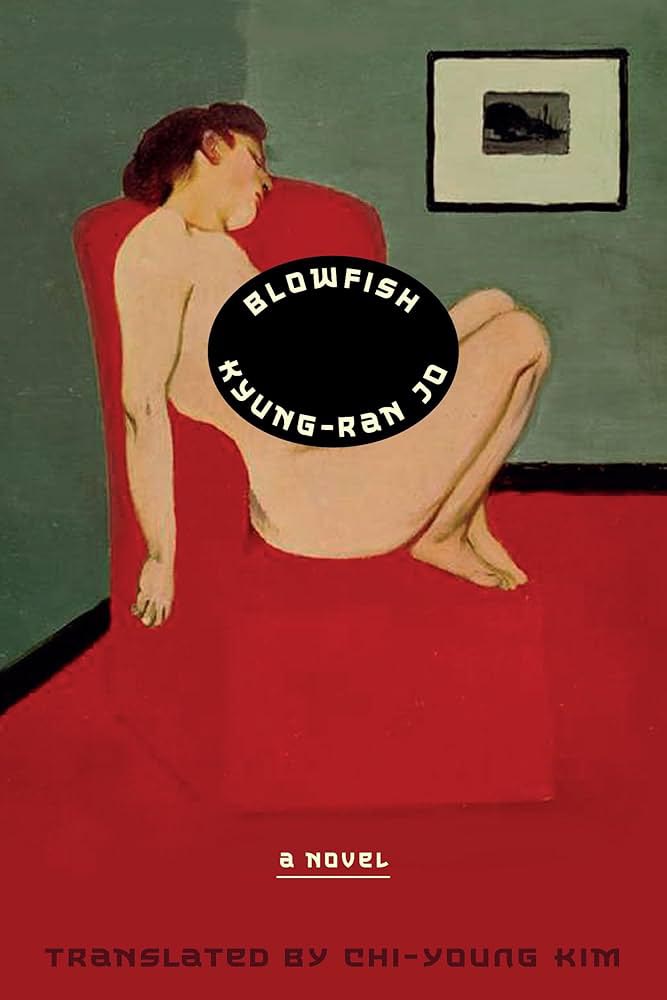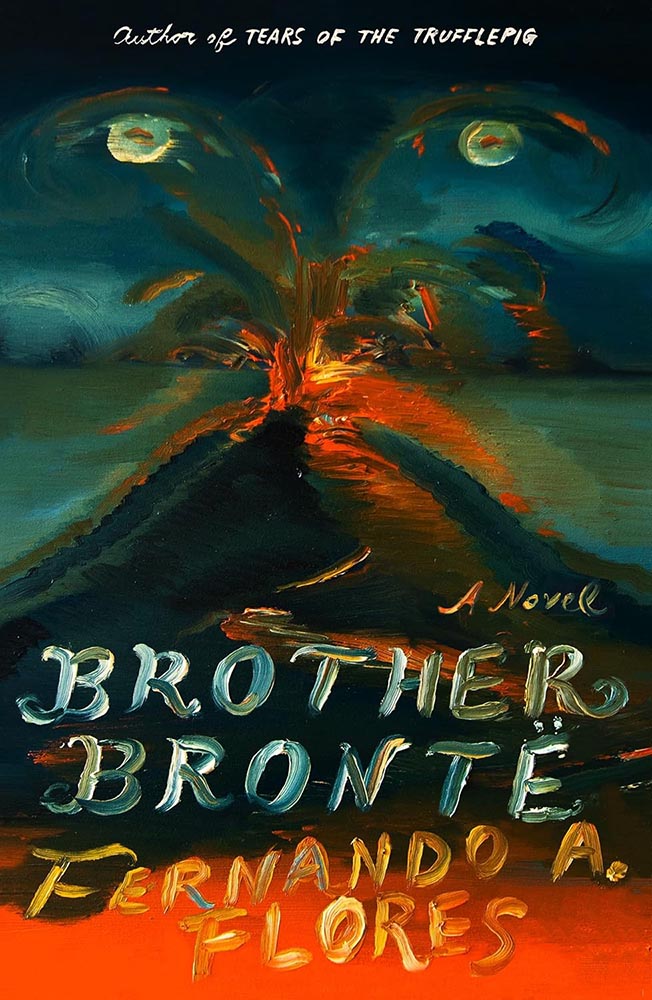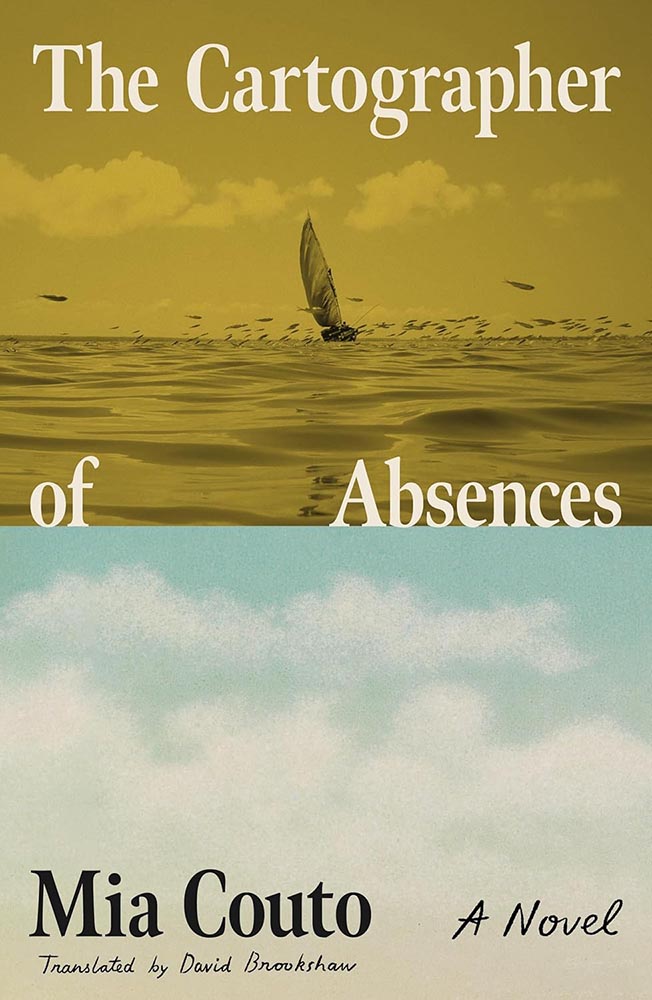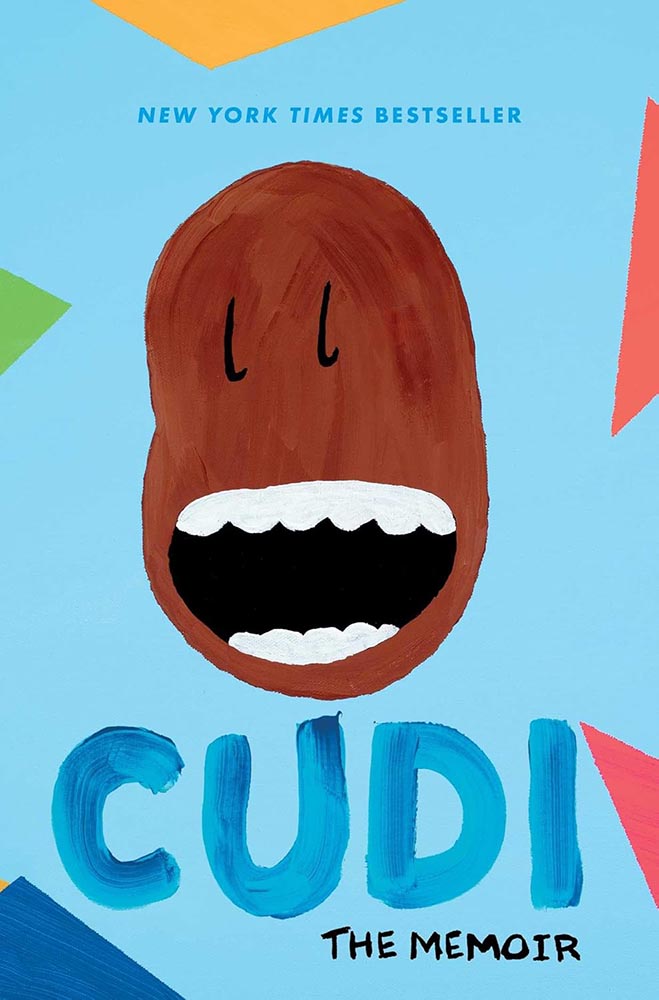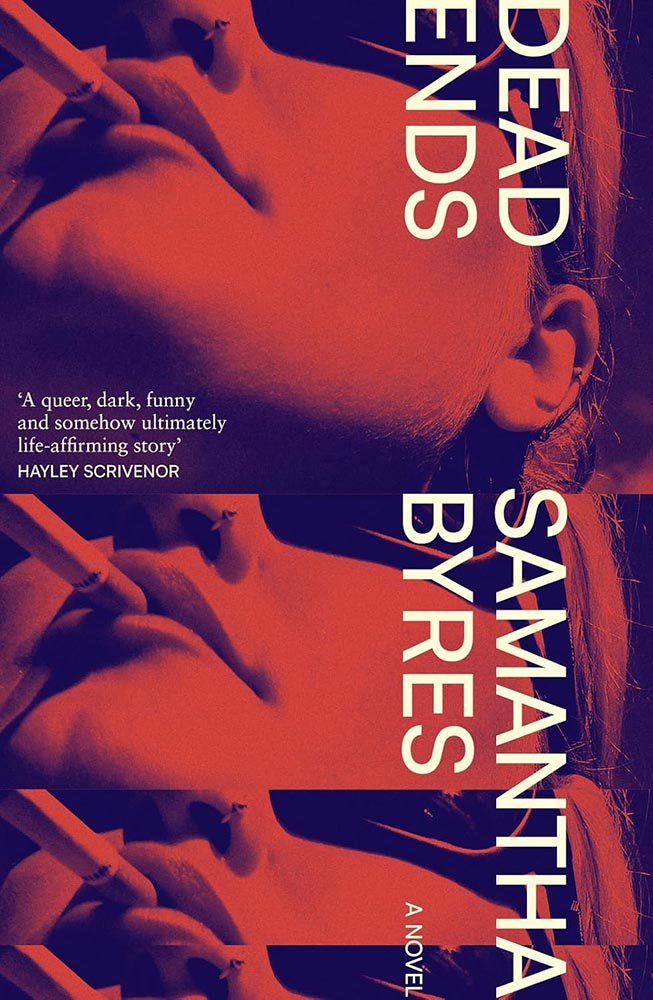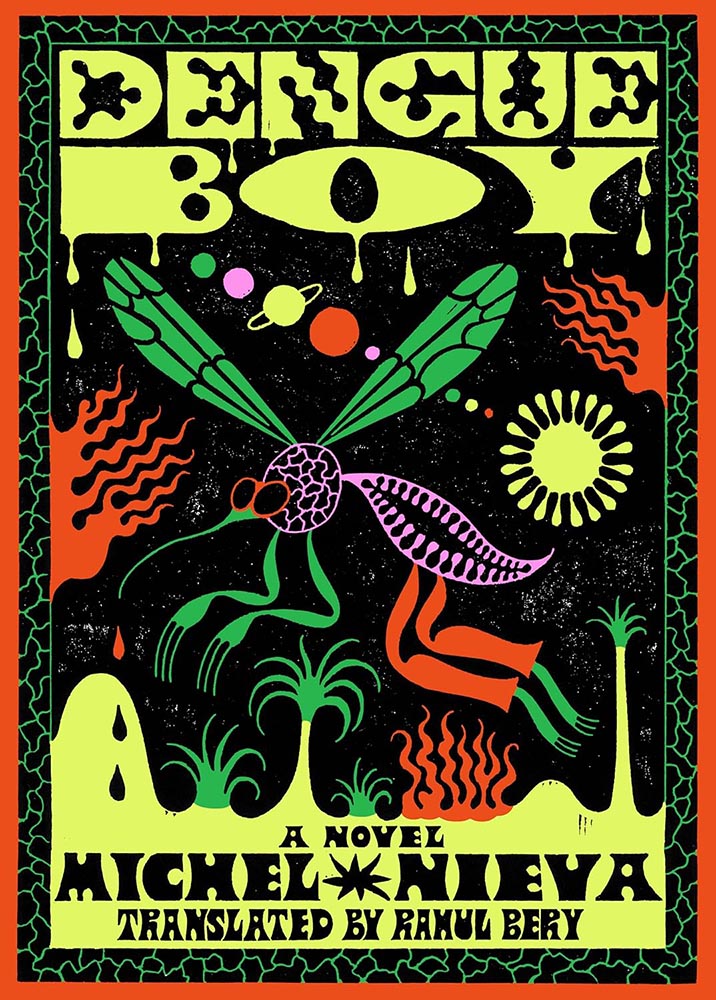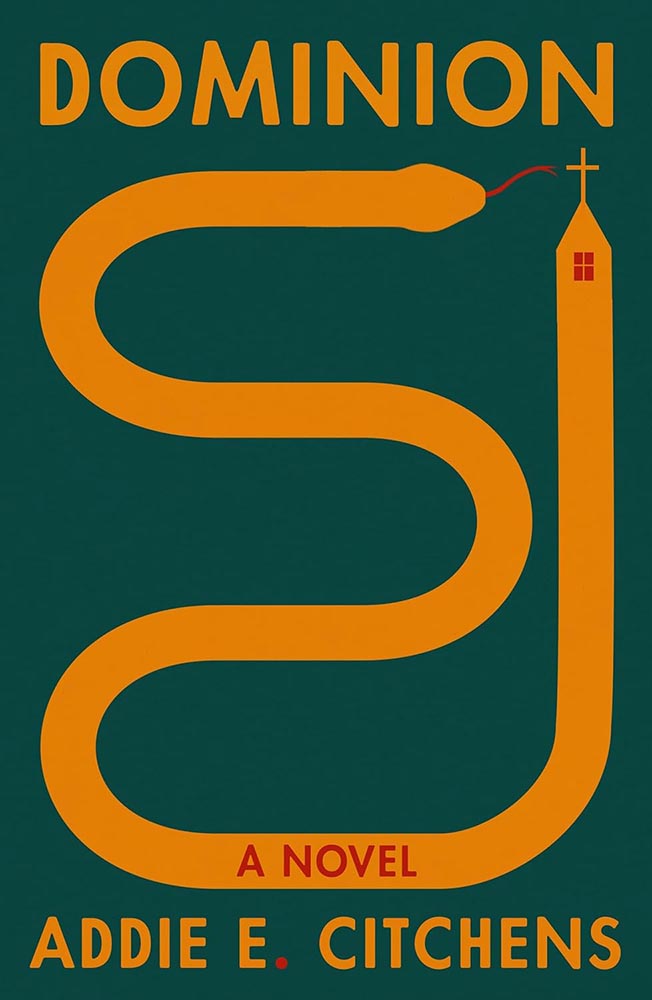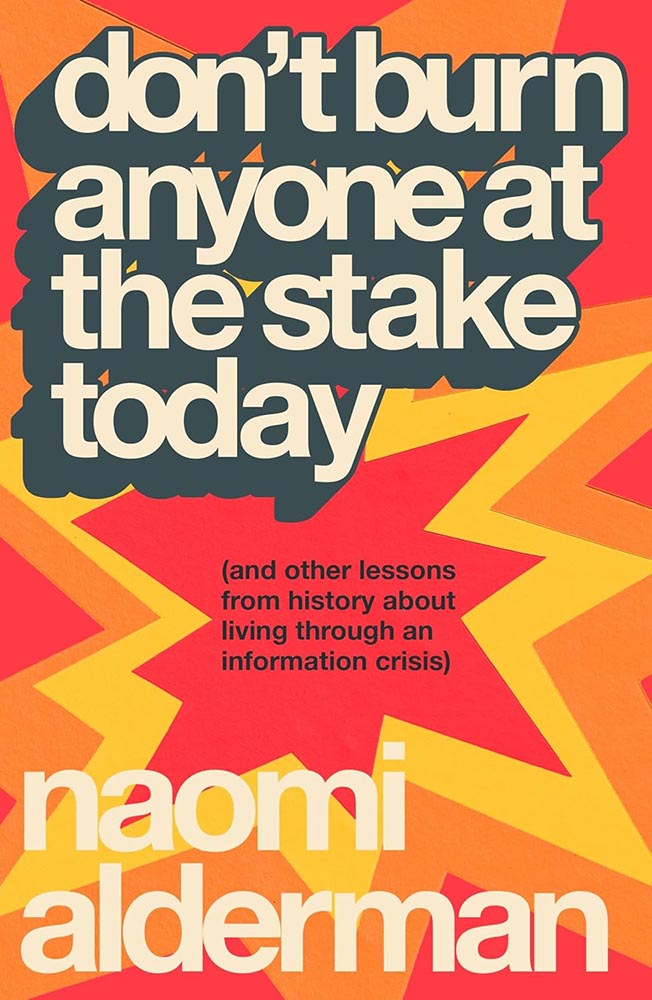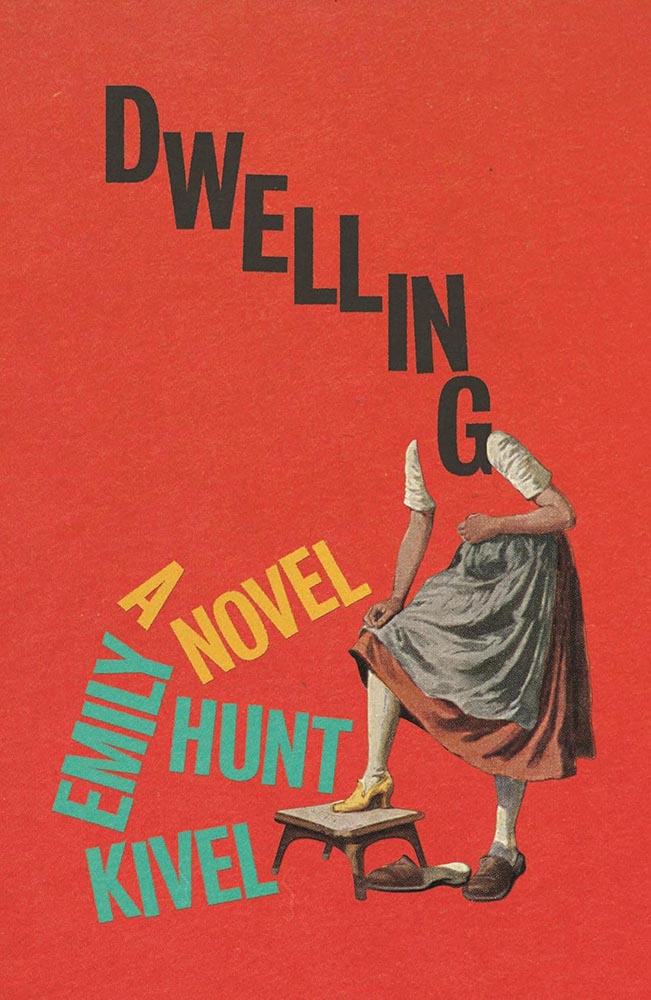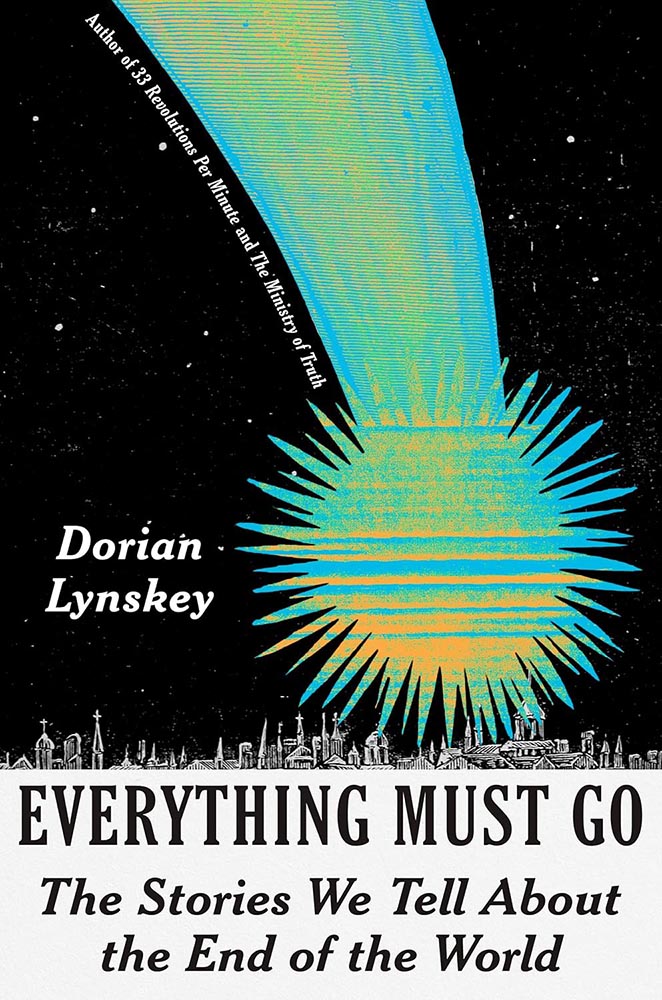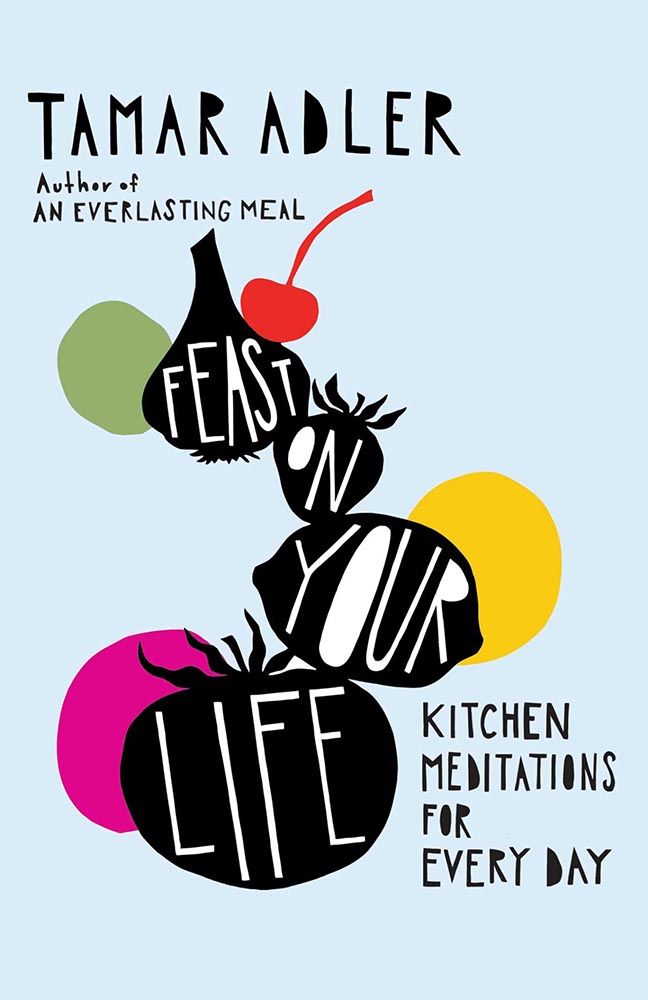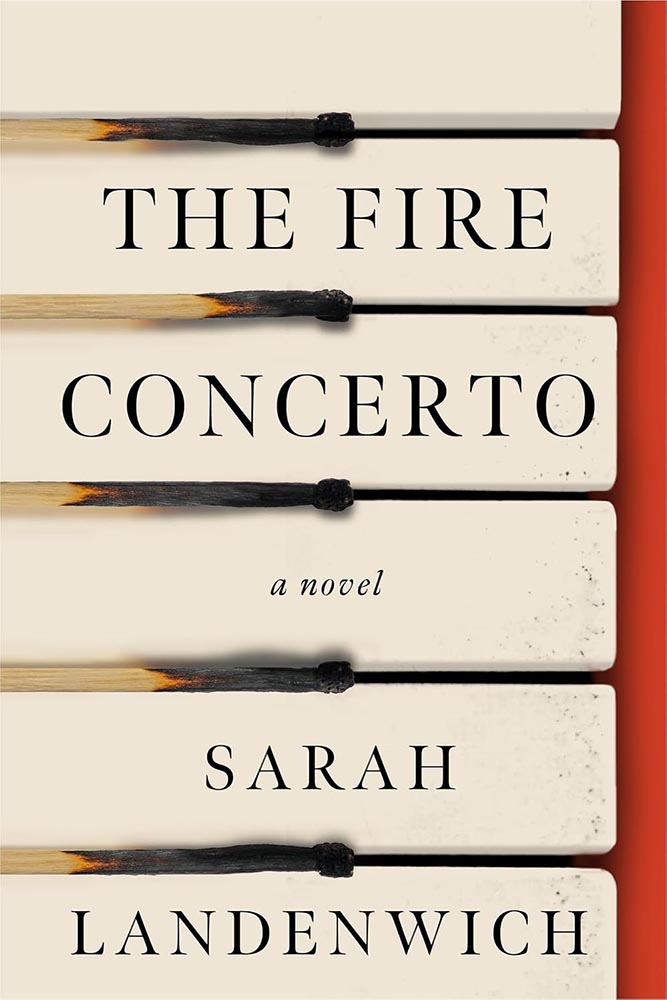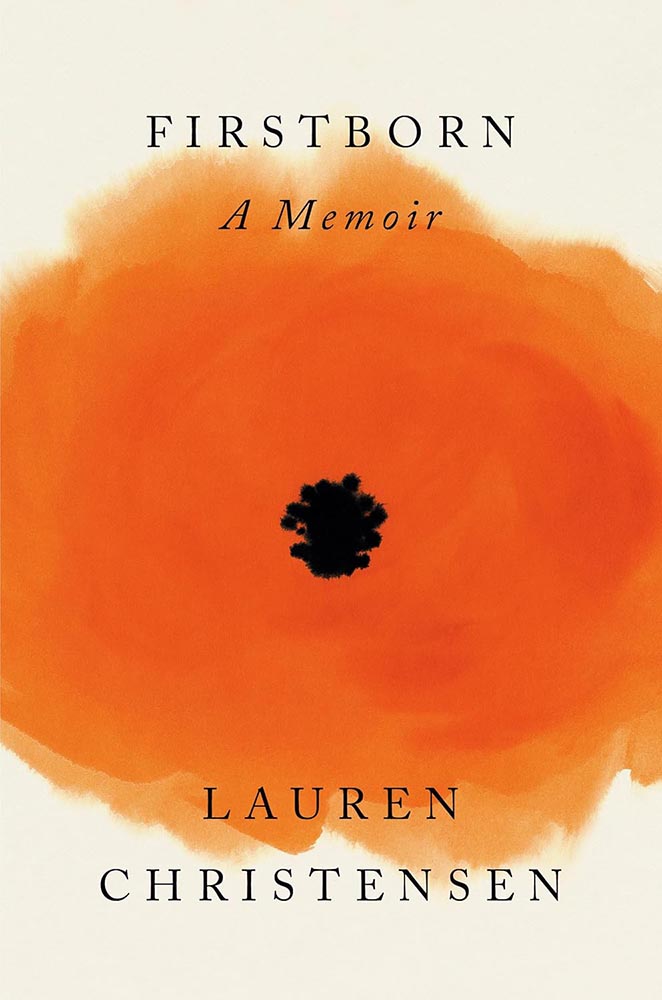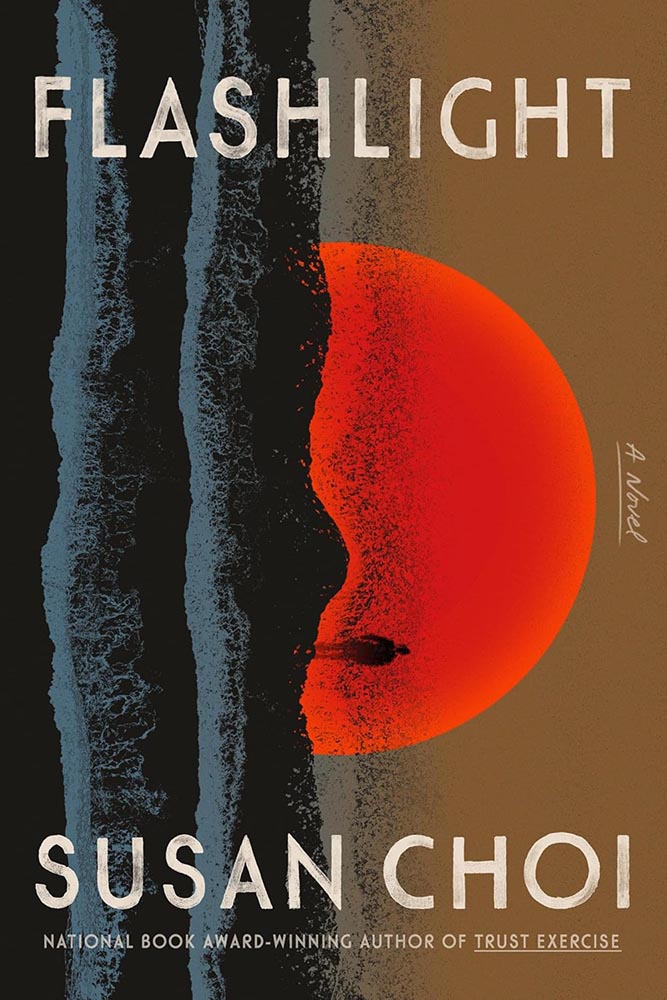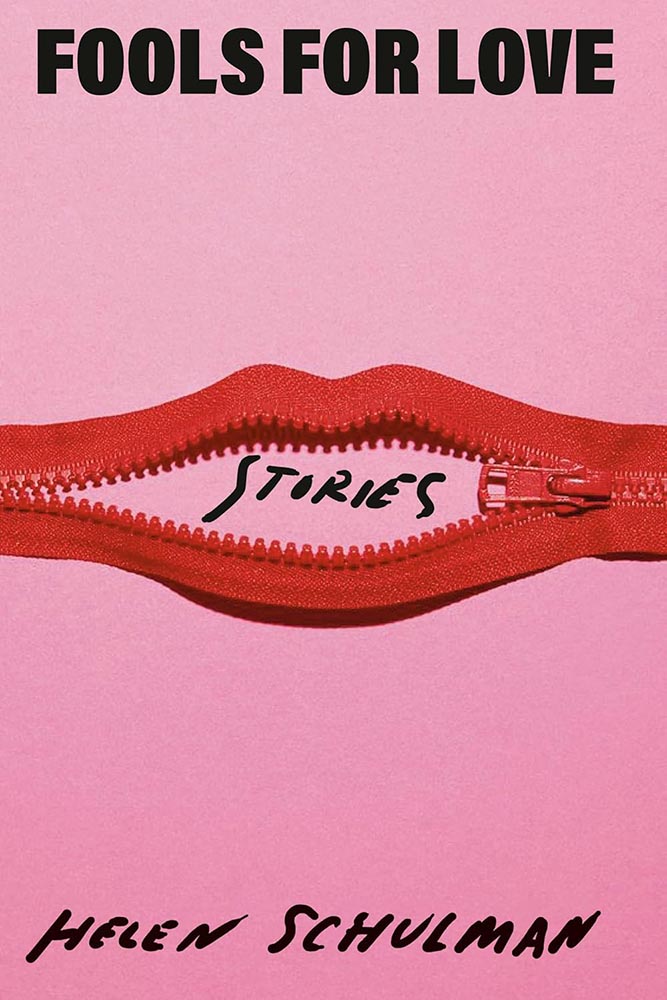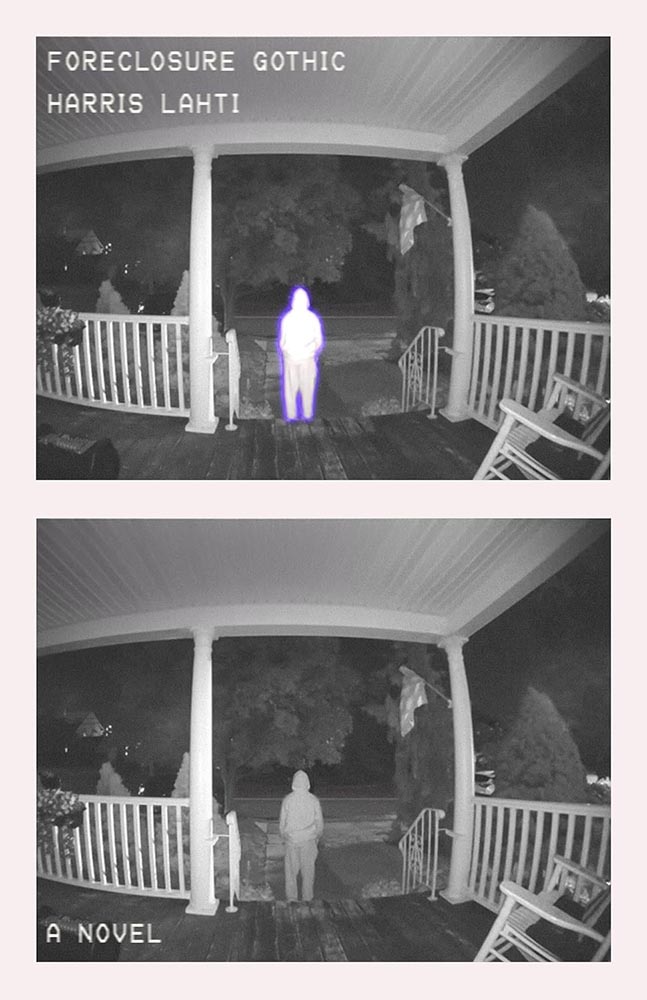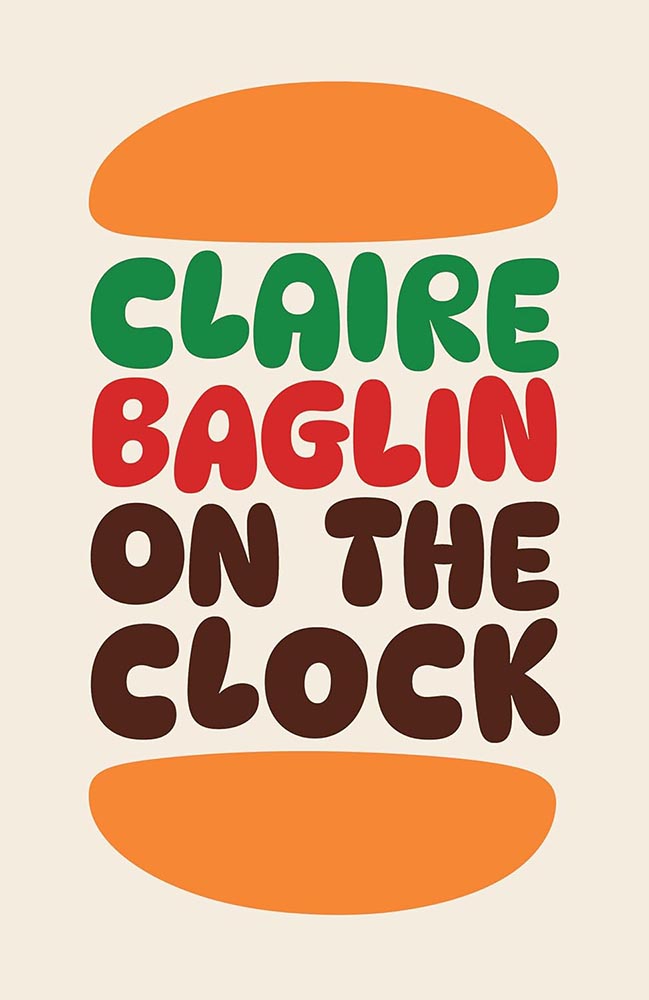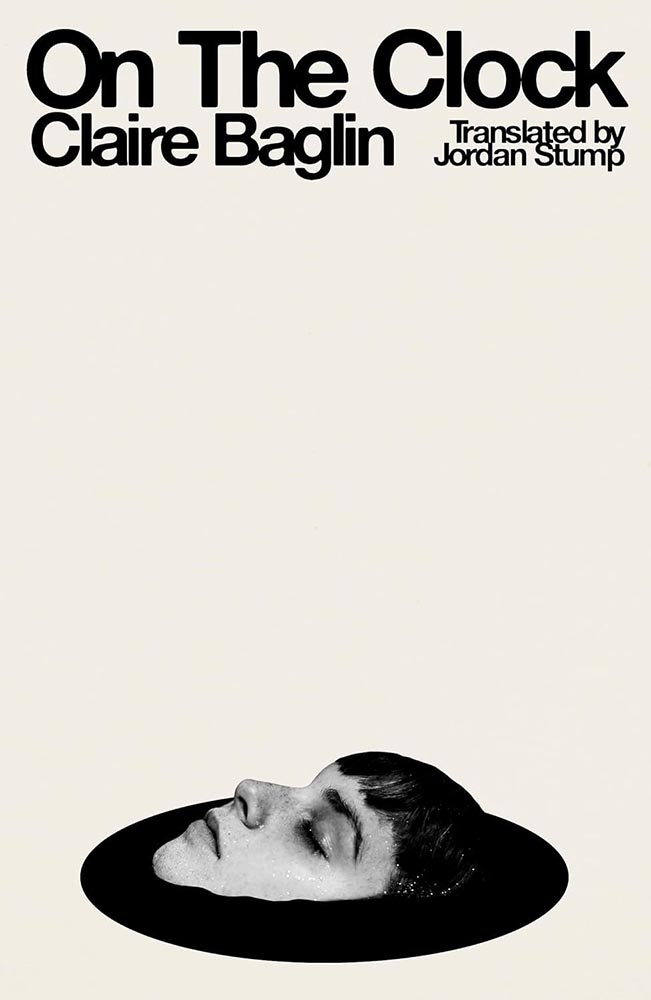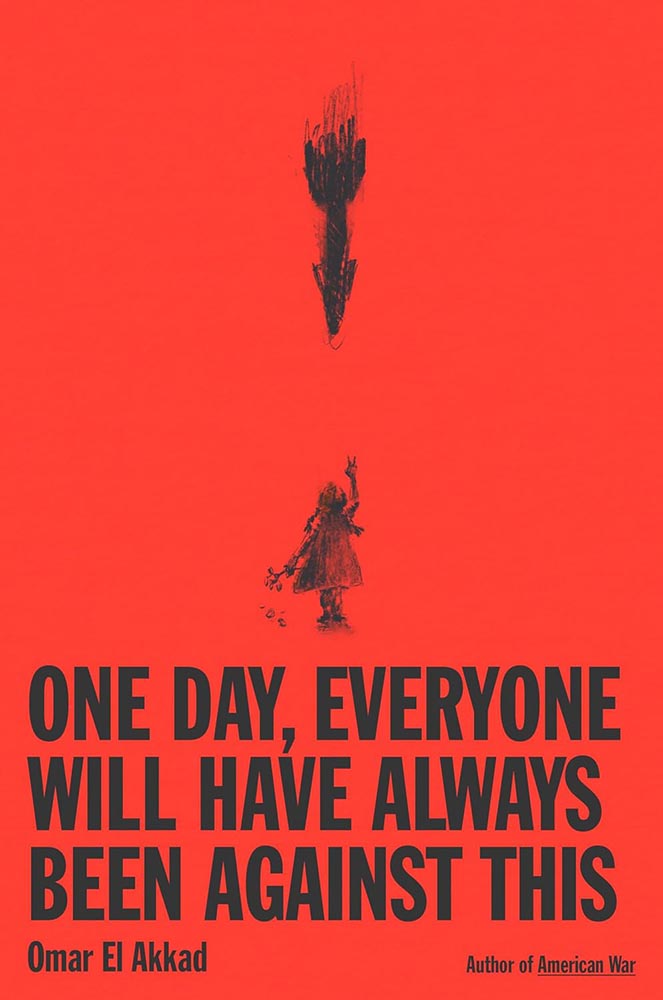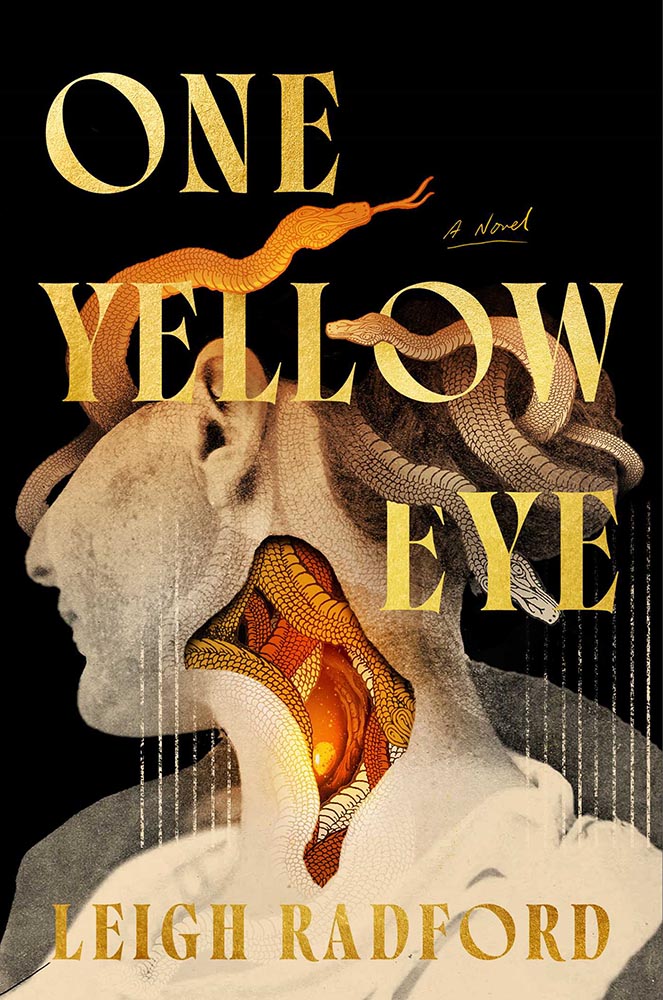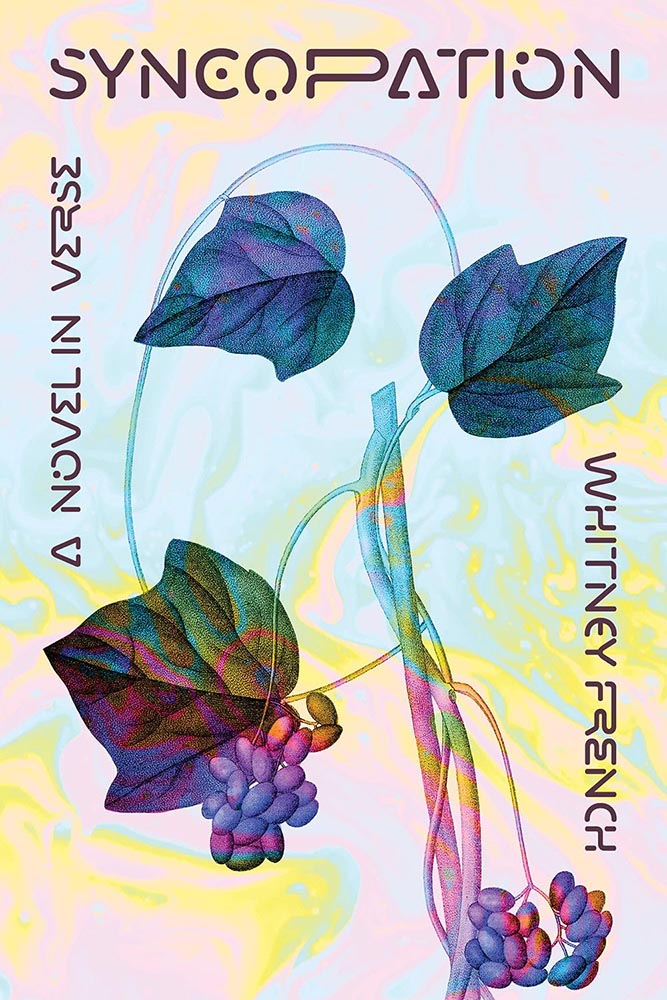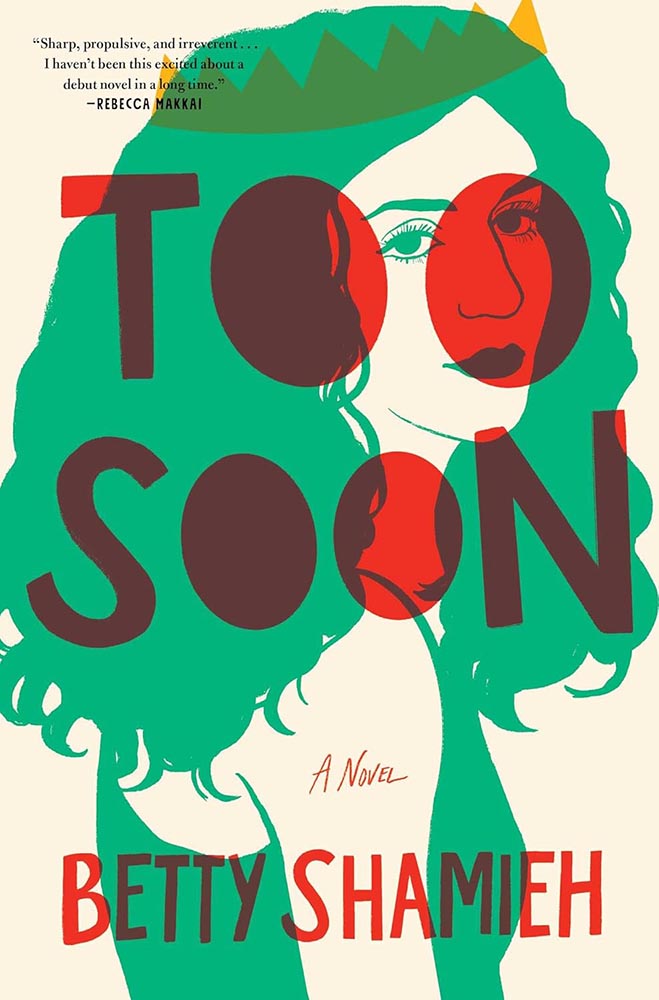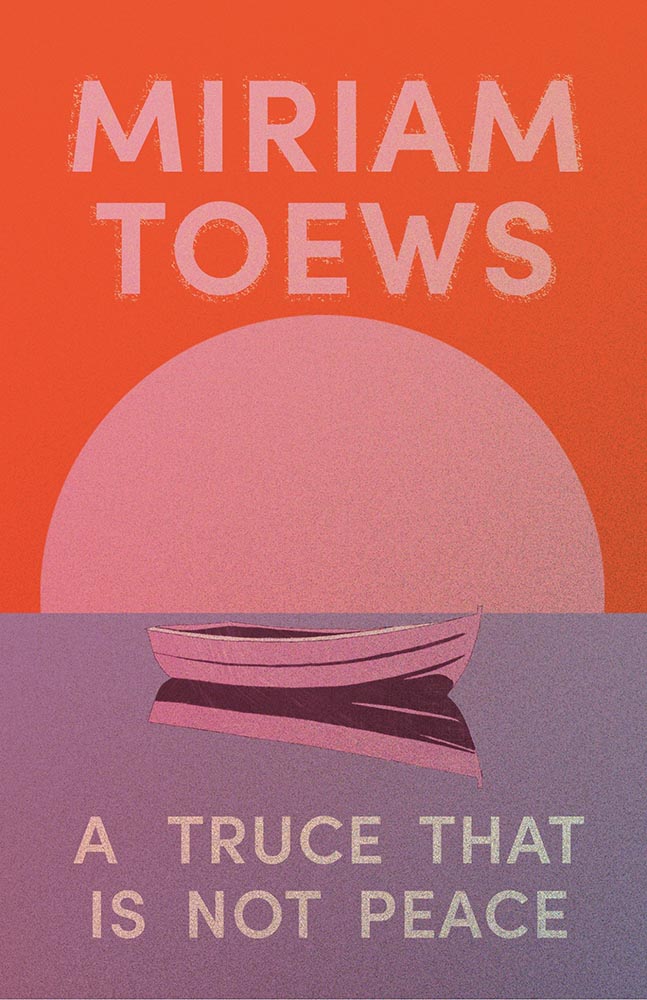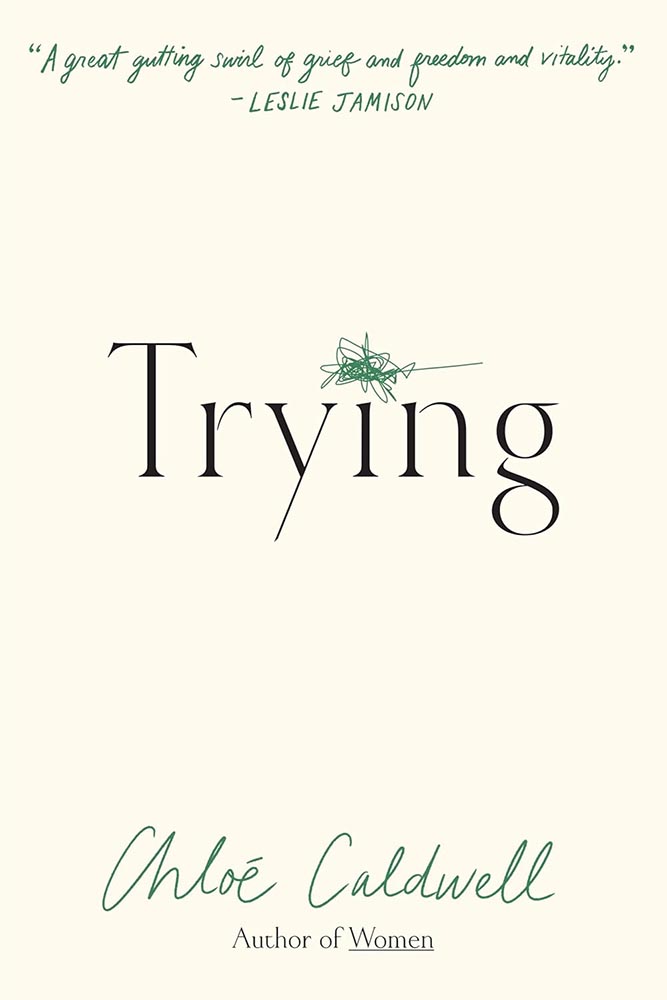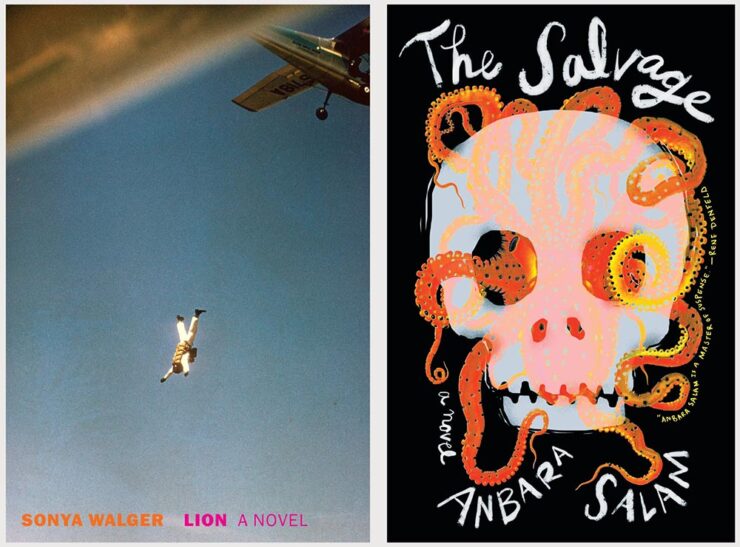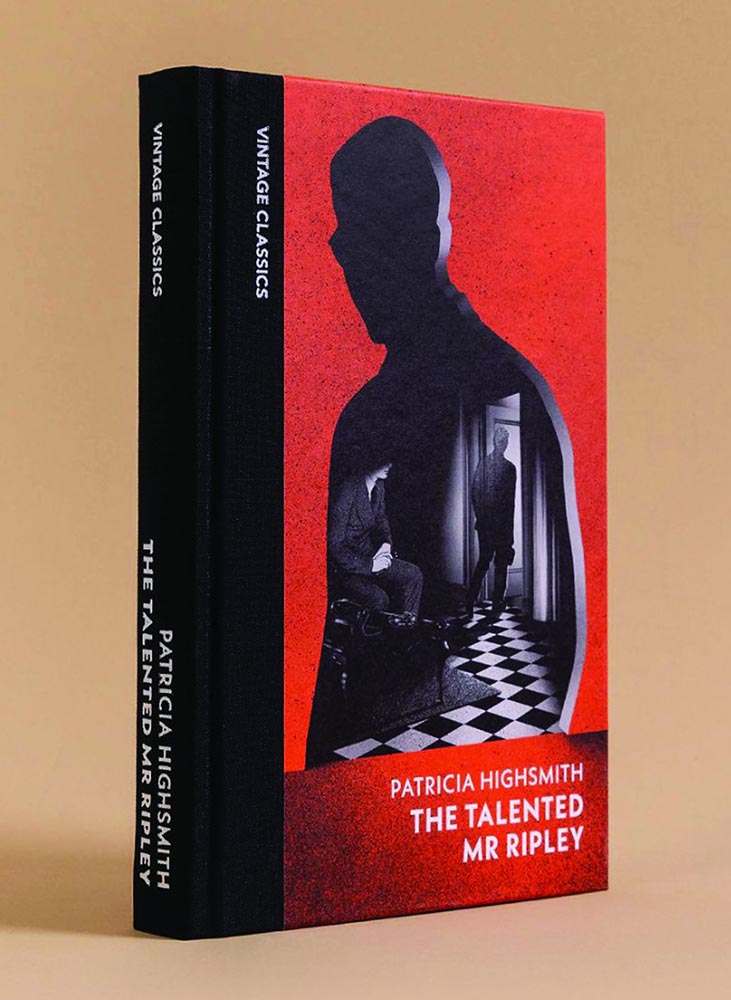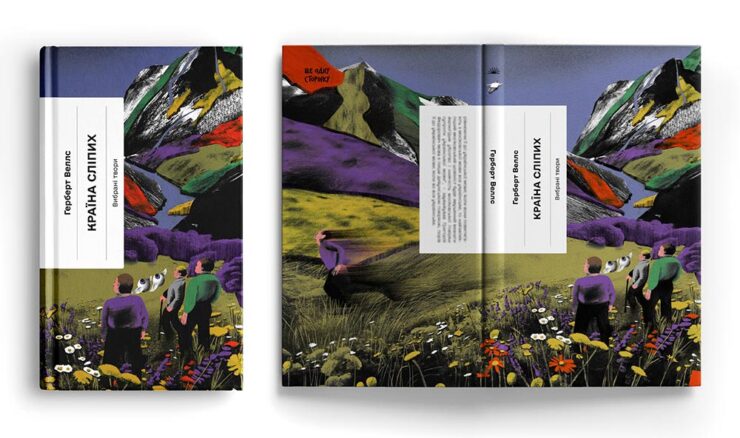
Tag: book covers

  • Beautifully Briefed 26.3: The Ides of Equal Madness

    Beautifully Briefed 26.3: The Ides of Equal Madness

    This month, some optimism, some interesting books, some creative fonts, and some fantastic photos, and somepositivity — plus a smidgen of pessimism — in the form of Adobe.

    On the whole, it’s mostly optimism, promise. And there’s butter. And a sleeping fox. And duck.

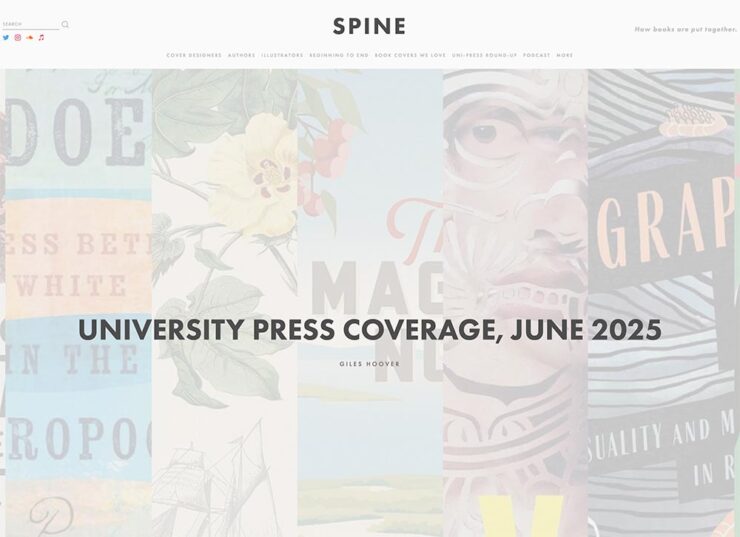
    This Month’s Spine
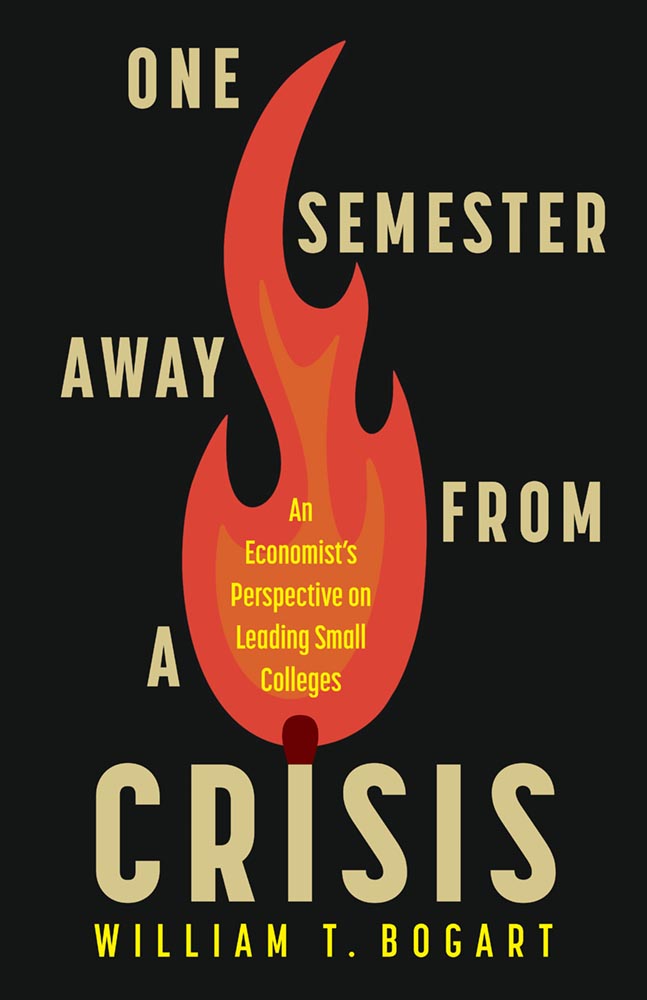
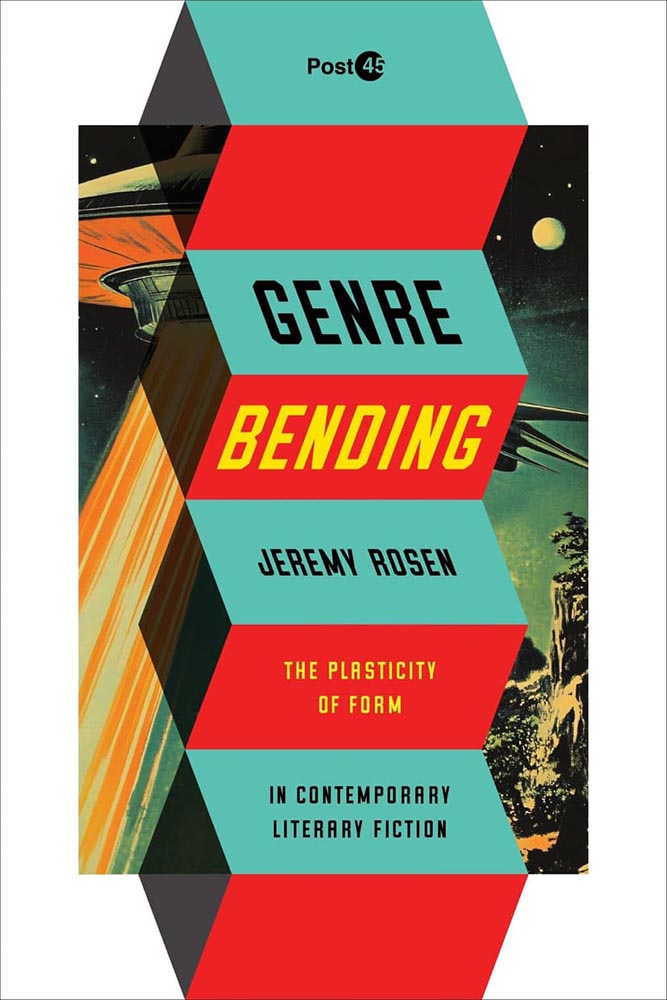
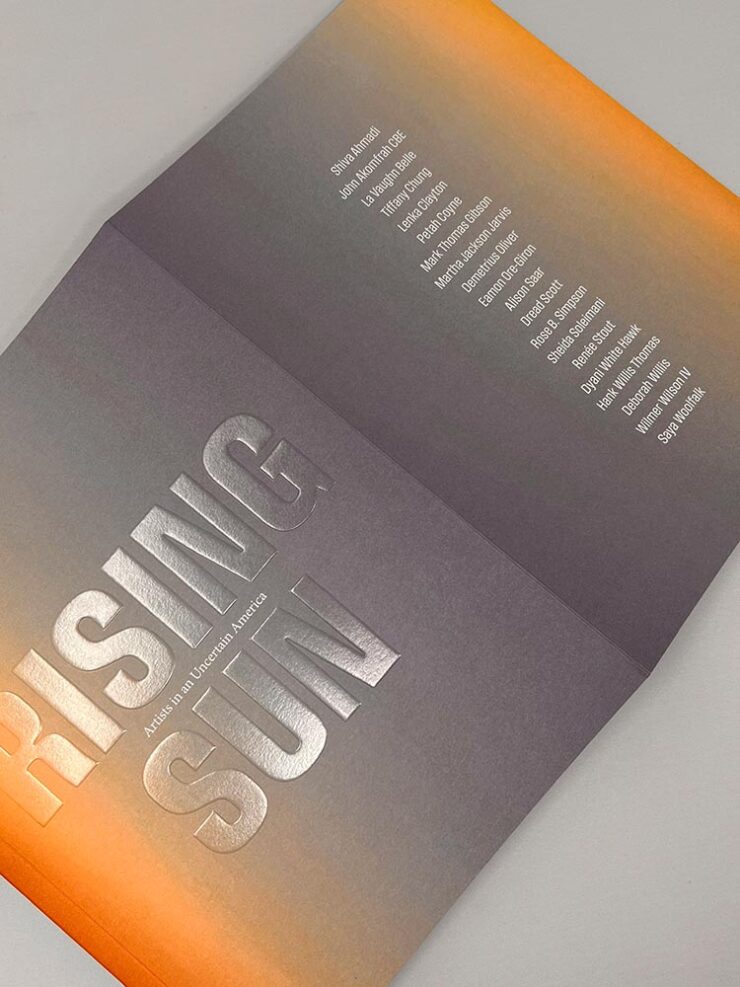
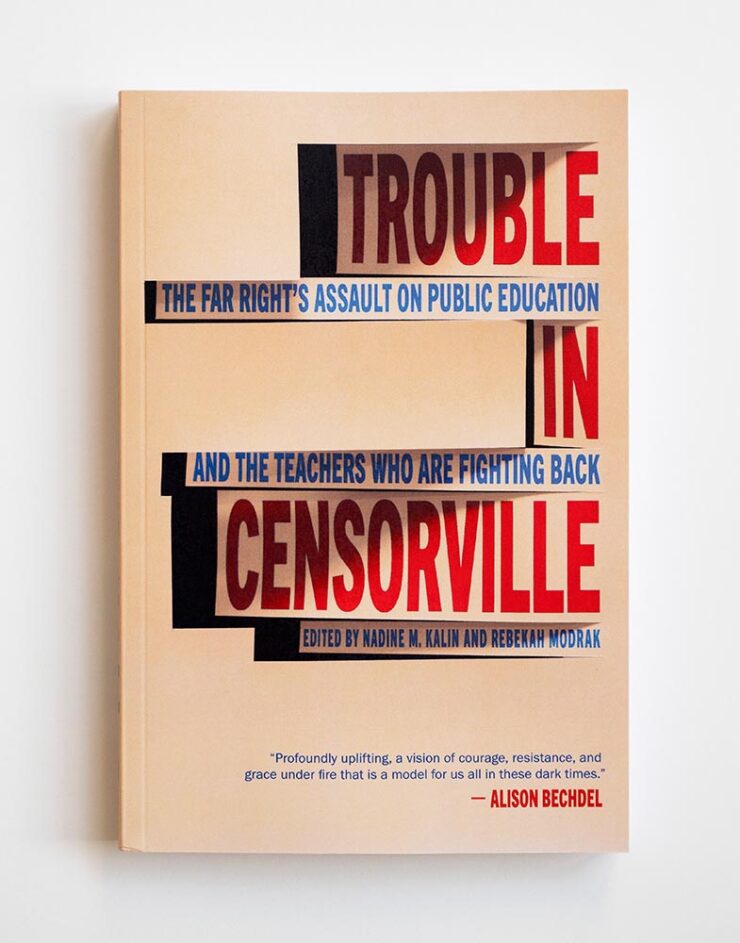
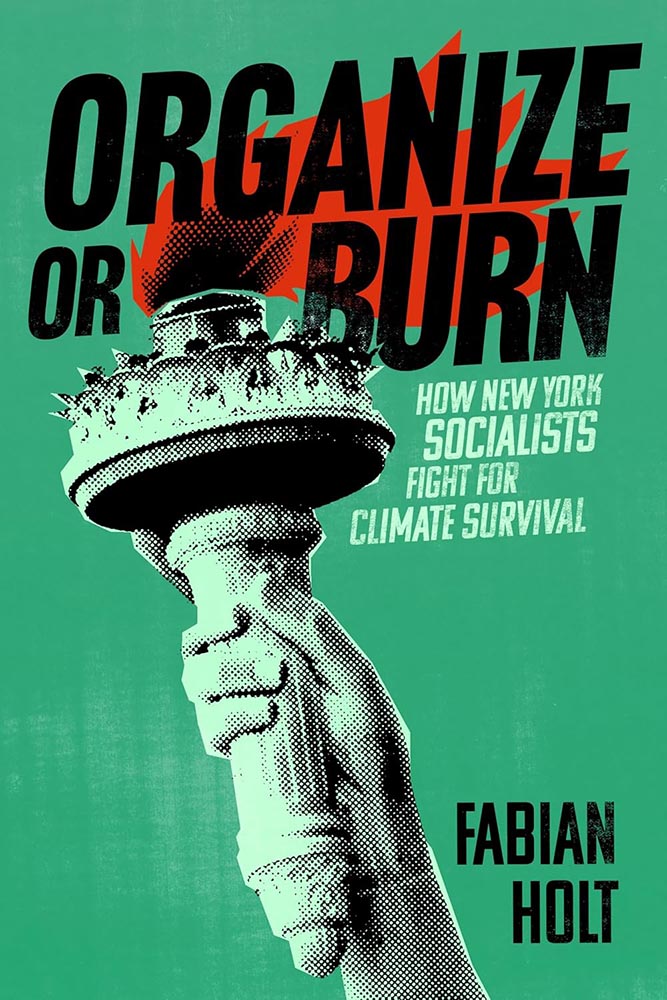
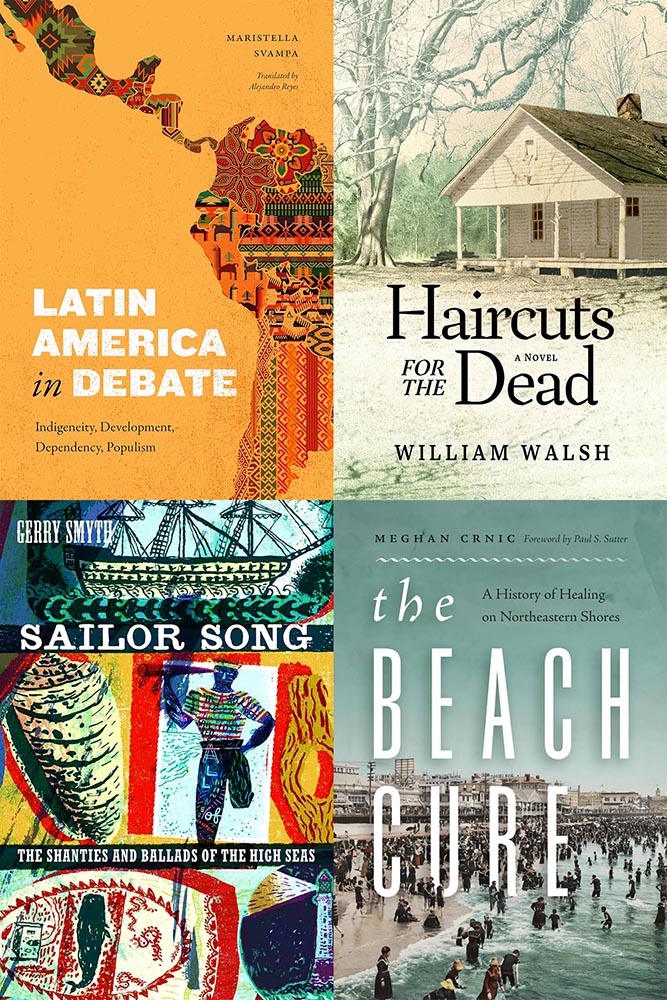
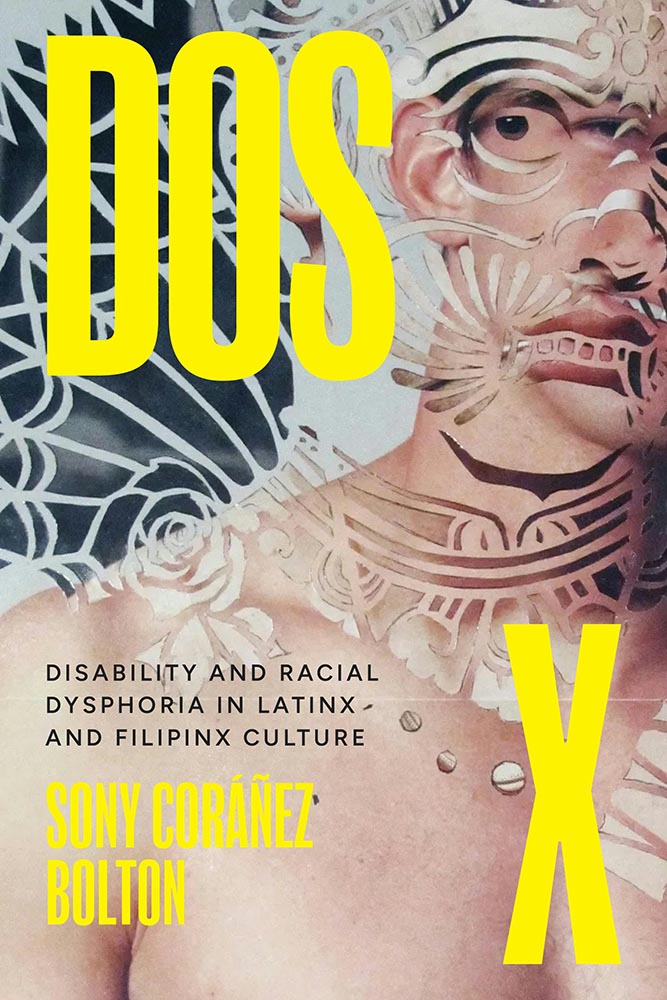
    Rutgers University Press. Cover design by Ashley Muehlbauer; production editor, Vincent Nordhaus.

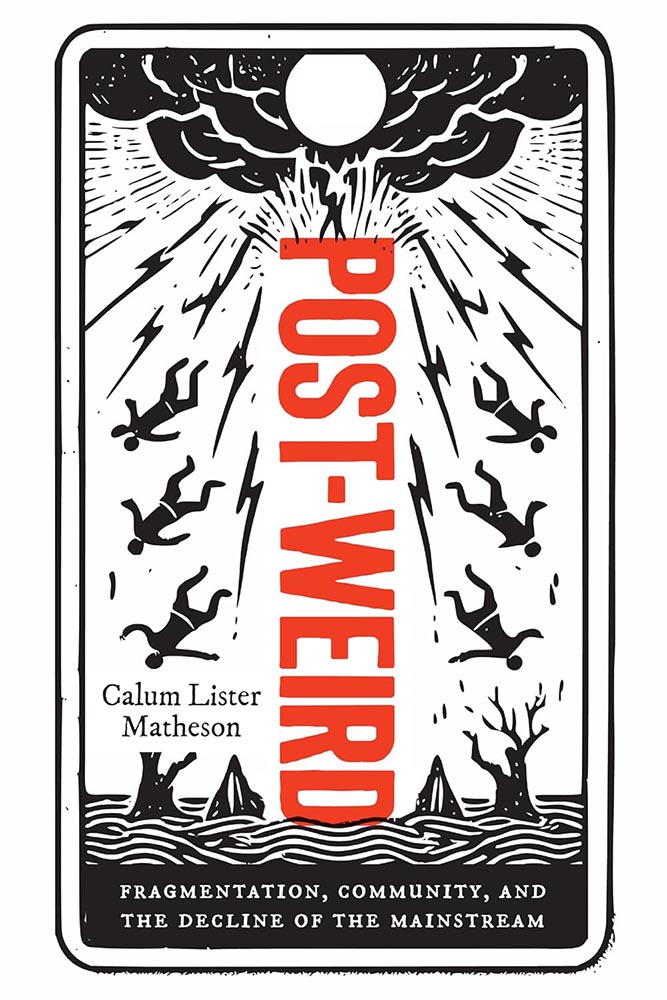
    “Our initial direction for [the designer] was to create a clean, simple text design that conveyed crisis, dread, or the element of threat,” this title’s production editor said in response to my request for information.

    “To say that someone lit a fire under those directions is an understatement,” I wrote in this title’s commentary. “In today’s American academic reality, where every day could indeed be … shall we say, fraught, this cover takes the brief and runs straight onto the dean’s list.”

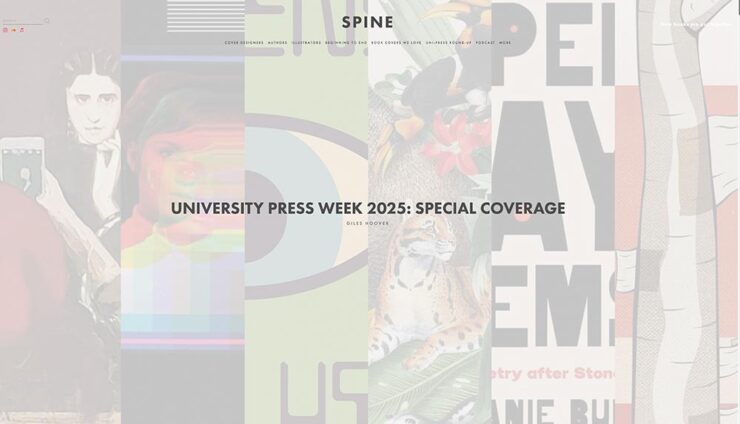
    See the rest of this month’s University Press Coverage at Spine.

    Why She’s an Optimist 
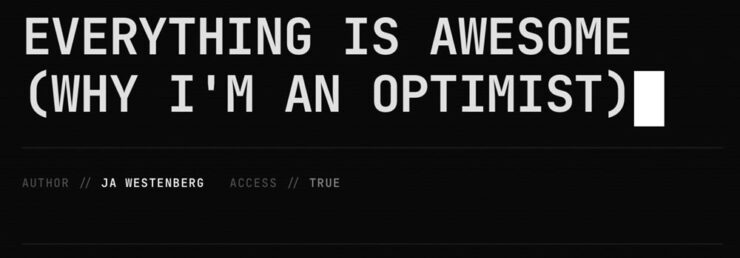
    Joan Westenberg (previously) has another great essay up about the AI doom loop — why it’s easy to believe that the downward spiral is tightening, to roughly paraphrase — and why she believes it just isn’t true:

    In 1810, 81% of the American workforce was employed in agriculture. Two hundred years later, it’s about 1%. If you had shown someone in 1810 a chart of agricultural employment decline and asked them to model the economic consequences, the only rational projection would have been apocalypse. Where would 80% of the population find work? What would they do? How would anyone eat if the farmers were all displaced by machines?

    The answer, of course, is that entirely new categories of work were created that no one in 1810 could have conceived of, and these new jobs paid dramatically more than subsistence farming. Factory work, office work, services, knowledge work, the entire apparatus of modernity: none of it was visible from the vantage point of the pre-industrial economy.
    — Joan Westenberg, “Everything is Awesome”

    “The transition was brutal and uneven. [People] suffered,” she writes. “But the trajectory was real, and the people projecting permanent immiseration […] were, in the fullest sense, catastrophically wrong.”

    The essay isn’t perfect; it’s too long, and the editor failed to catch a few typos (he said, hypocritically). But … it scales. Zoomed out, it applies to more than AI.

    “The doomers may have the best stories. I believe the optimists have the best evidence,” she concludes. I agree. Or, at least, I’d like to. 

    Go read it and see whether you do.

    Great Web Moments X2
    Kottke.org 

    Kottke Turns 28. There are few websites I nod along with as often as this gem from the late ’90s, still going strong.
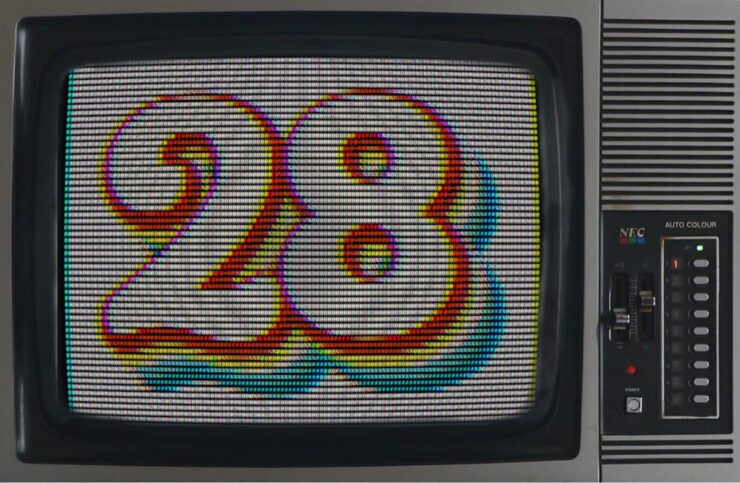
    Kottke.org: 47,300 posts and counting.
    Scripting.com

    Dave Winer shoots for the stars:

    We’re going to try to reboot the web.
    Doing what the social networks do, but only using the web.
    Every part replaceable. 
    — Dave Winer, scripting.com, “Mission Statement”

    Scripting News has been around since ’94 and if you’re even a little interested in a free web, his site is a fine place to start learning how you can contribute to keeping it free.

    Note: scripting.com is, famously, still non-https — which means that if you click on either of the above links you’re likely to get a warning that the site isn’t secure. It’s very much a safe link.

    Book Notes X3
    Oliver Munday, Head of Household
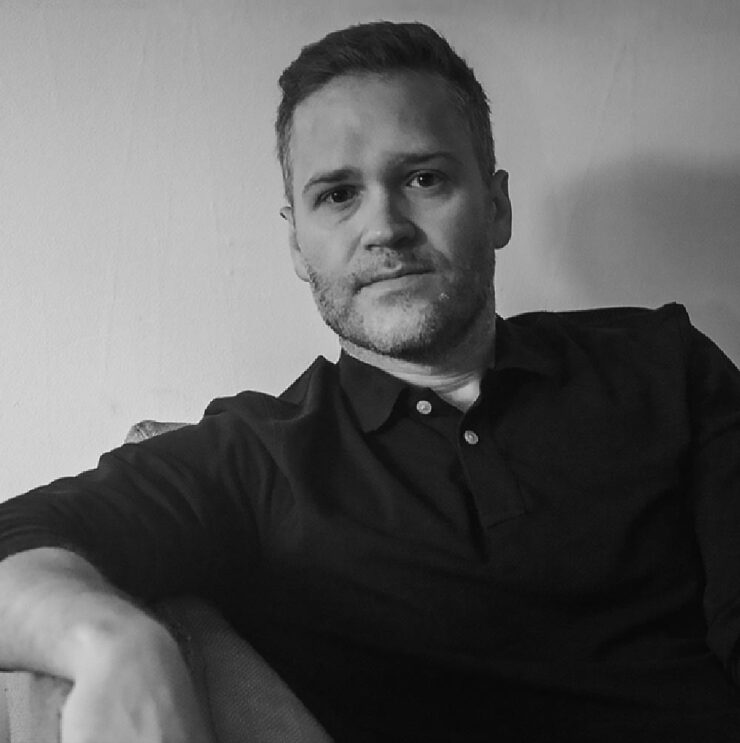
    Somehow, I expected someone older. (Courtesy of Debutful.)

    Nearly every one of his book cover designs could be called an instant favorite. He has a wry, brief expression that often delights.

    So, when he wrote a book, did he do the cover? Well … no, as it turns out — and he preferred it that way.
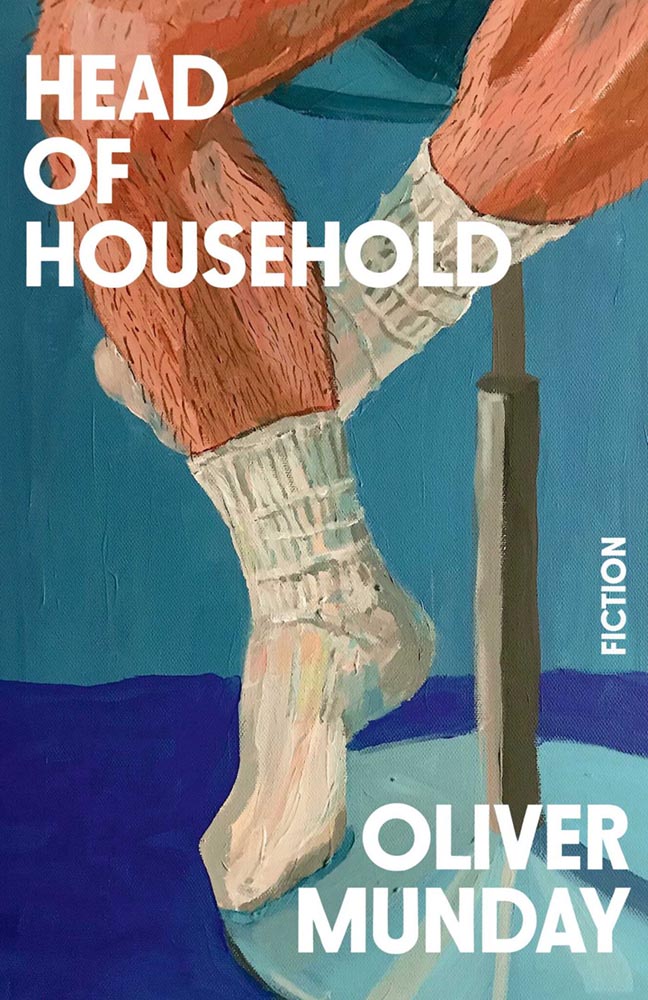
    Cover design by Chris Brand.

    Munday’s collection of stories has an interesting cover by industry veteran Chris Brand, and I like it — although some of the alternatives seem to me like better fits for Munday’s take on life. 

    But, of course, that’s the point: it’s not about him, it’s about his book.

    See the other book cover design drafts Brand designed for Head of Household at LitHub. (And a short Q&A.) Enjoy also this interview with the author/designer at Debutful.

    The Butter Book
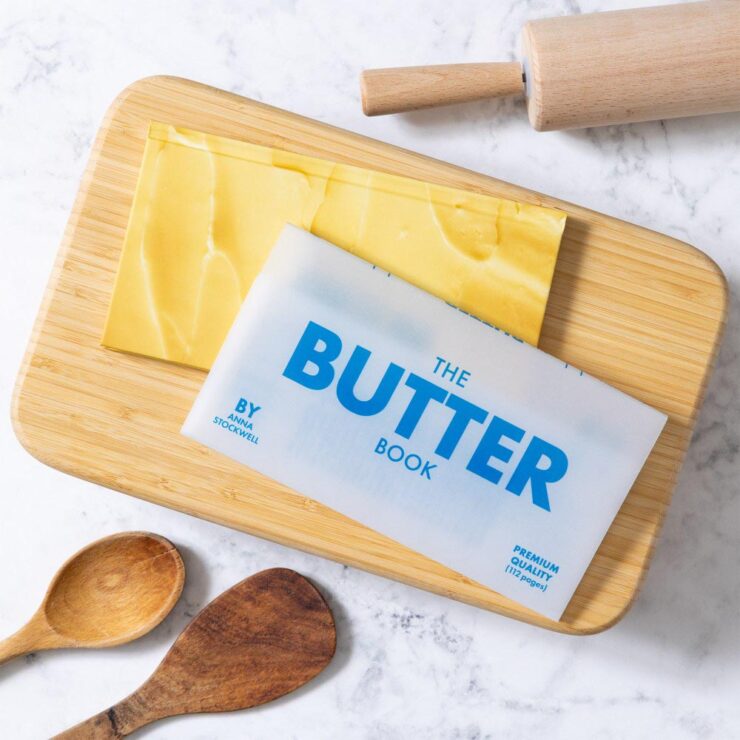
    Book design by Lizzie Vaughan.

    No, it doesn’t soften when left out — or spread any larger meaning. It’s just a great book cover (and jacket).

    Chronicle gets a kick out of “things that look like other things.” We made a notepad called Pad of Butter that has been selling steadily since 2015. So, imaginations did not need to stretch when a butter-focused cookbook with a vellum jacket was proposed. It’s our “bread and butter,” so to speak.— Q&A with author Anna Stockwell and designer Lizzie Vaughan, PRINT

    “It’s important to find joy wherever you can these days and it’s hard to hate on butter,” the article says. Read the rest at PRINT.

    “Naïve” Design
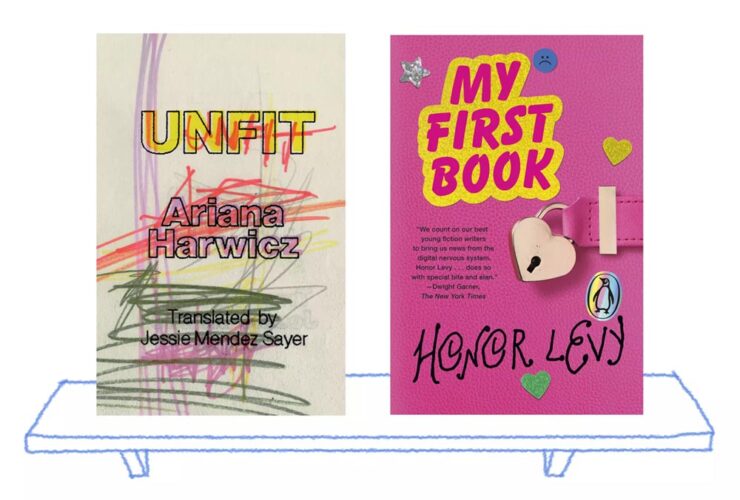
    Image courtesy of the LA Times.

    The LA Times examines the latest book design trend: naïve design. (Yes, I pretentiously style that like the New Yorker does. The LA Times does not.) It’s where serious subjects wear … nostalgic cover designs, to use a phrase. Find out why.

    Parenthetically, of the covers mentioned in that article, only one — by design legend Na Kim — has found its way into my 2026 Favorite Covers folder. It’ll be a minute, but stay tuned to find out which.

    Special Bonus #1: “You’ll need a magnifying glass to read these,” says This is Colossal:
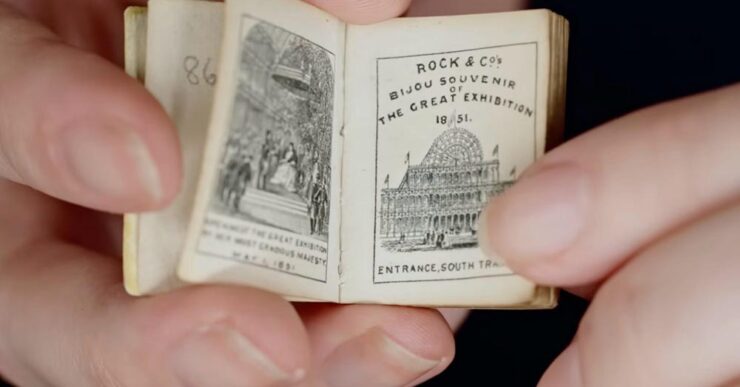
    Courtesy of the V&A Museum.

    Special Bonus #2: A favorite collectible (and slight tangent), these books “keep a lost design legacy alight,” says It’s Nice That:
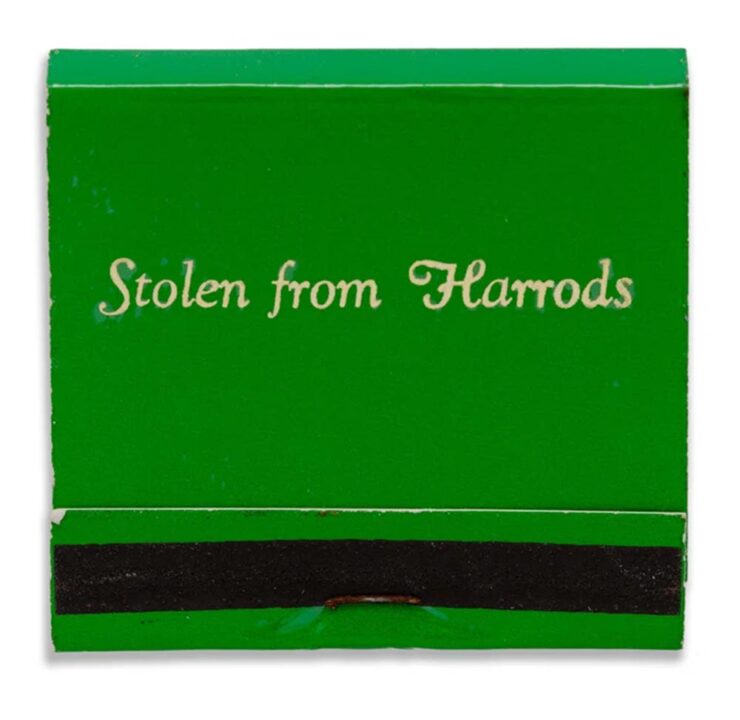
    A sample from The Matchbook Book by CentreCentre. 

    Update, 1 April: CreativeBoom has a nice feature on this title as well, with additional images. Check the slipcover:
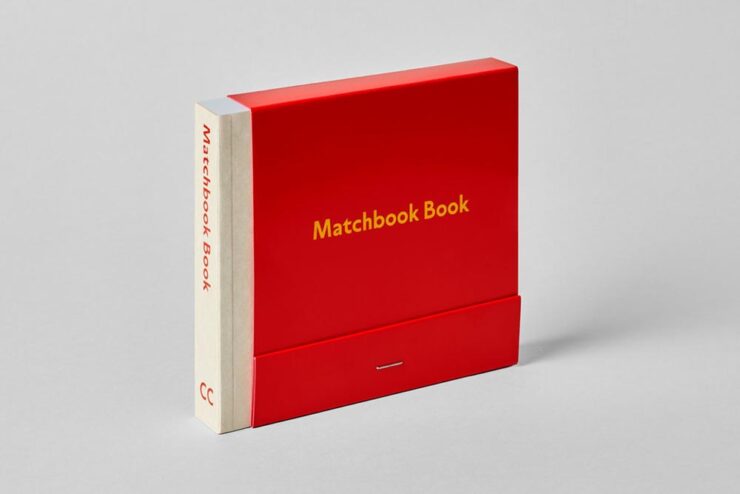
    Awesomeness courtesy of CreativeBoom.
    Fonts March Foreword
    CreativeBoom’s March Faves

    CreativeBoom‘s regular feature contains sixteen choices this month — awesome! — but I’d like to just highlight my three favorites: 
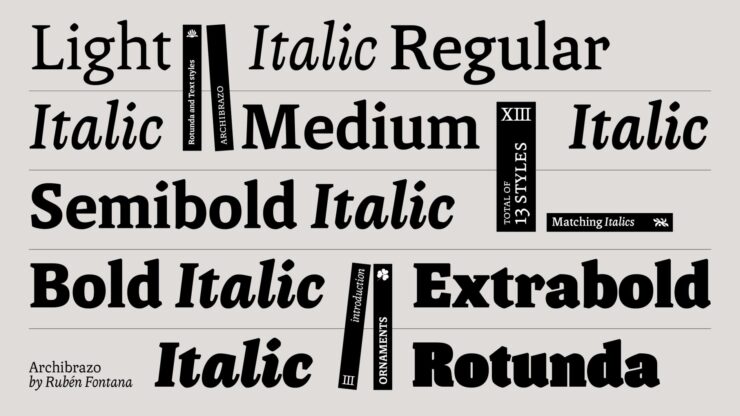
    Archibrazo by Rubén Fontana.

    “Rubén Fontana is one of the most respected figures in Latin American type design, and Archibrazo, released through TypeTogether earlier this year, represents a characteristically considered piece of work. The typeface brings together two traditions that might seem at odds: the fluidity of calligraphic practice and the hardness of sculptural form. The result is a serif family that wears its sources with confidence, without collapsing into historicism or affectation.”
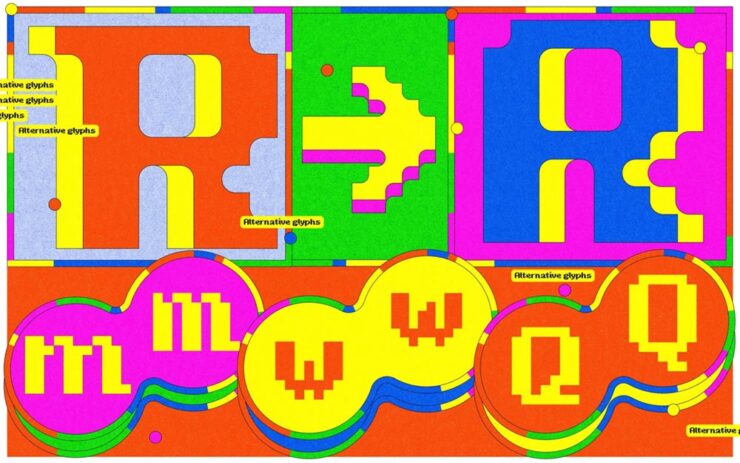
    See more at TypeTogether.

    Djaggety by Alessia Mazzaarella.

    “Djaggety began in a classroom. Alessia Mazzarella of Typeland, who teaches type design to BA Graphic Design students, uses an 8×8 grid exercise as a standard introduction to letterform construction. The constraint, she explains, strips away the paralysis of infinite choice and forces students to focus on what makes a character recognisable within a tightly defined system. During one iteration of the exercise, she found herself drawn into the process rather than simply demonstrating it. […] Overall, it’s a good lesson in how constraint can generate, rather than foreclose, creative possibilities.”
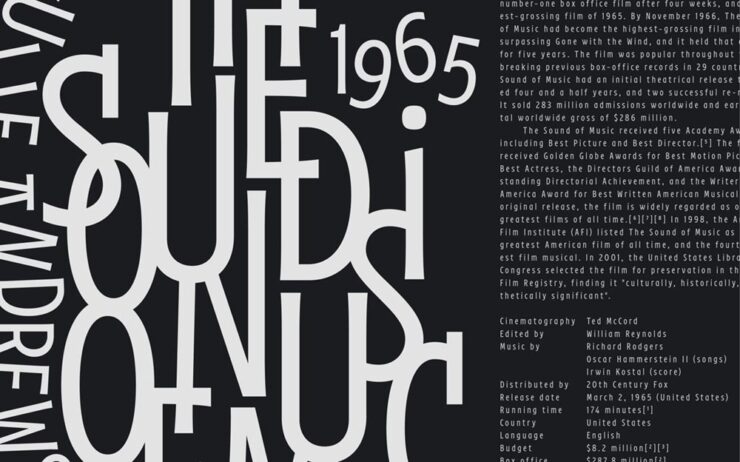
    See more at Typeland.

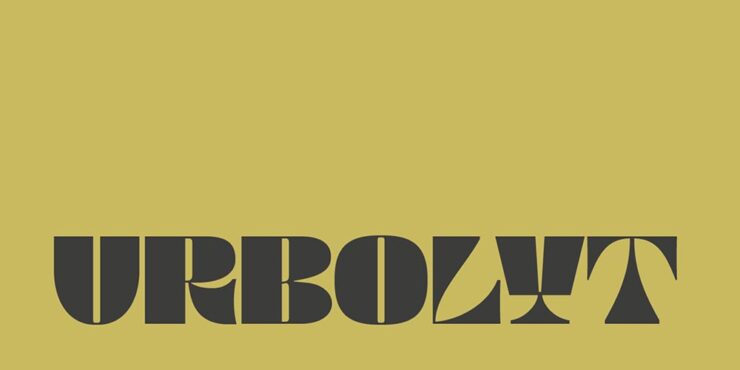
    Musikal by Fred’s Fonts.

    “After three years in development on Future Fonts, Fred Wiltshire’s Musikal has reached v1.0: a significant milestone for a typeface that began with a conscious act of divergence. Herman Ihlenburg’s Obelisk (1880s) served as the starting point: a high-contrast, ornamental display face of considerable geometric rigour and decorative confidence. Rather than reviving Obelisk directly, Wiltshire took its ‘playful nature’ as a conceptual springboard and built something clearly of the present.”

    See more at Future Fonts.

    Letterform Archives’ New Celebration of Hand-Painted Type
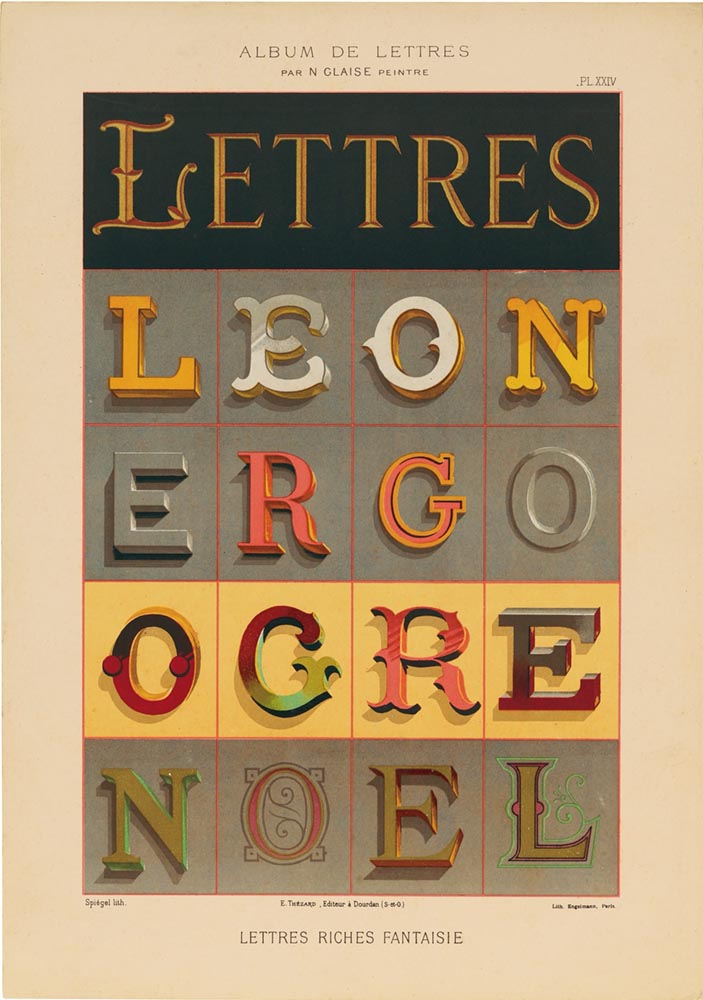
    One example — I mean, who can argue with “Lettres Riches Fantaisie“?

    “A new book published by Letterform ArchiveLettres Décoratives: A Century of French Sign Painters’ Alphabets, celebrates the vivacity and timelessness of French sign painting from the 19th and early 20th centuriesCompiled from lithograph portfolios, which range from 1875 to around 1932, the volume includes more than 150 full-color reproductions of these bold lettering samples. These portfolios once served as catalogue-like albums, providing inspiration for styles and motifs that could be translated onto large billboards and small signage alike.”

    Read more about this great new book at This is Colossal or PRINT.

    Cambridge’s Old Baskerville Punches

    Heavy metal for the type crowd:
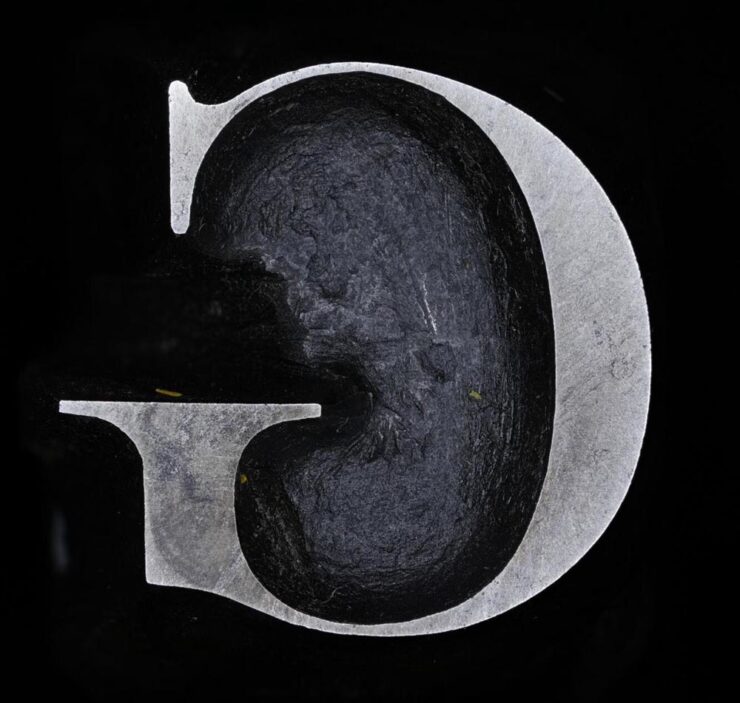
    Image courtesy of Cambridge University.

    “John Baskerville was an influential 18th-century printer and type designer; you’ve probably used (or at least heard of) the Baskerville typeface. Cambridge University has the original punches used to create his signature typeface and has made high-res digital photos of them available online,” Kottke writes. “[S]eeing close-ups of the actual cut & shaped metal from 1757 is something else.”

    In case you’re not familiar:

    The typographic punch is the initial design for the letterform and one of the first of three stages in the manufacturing of metal type: short lengths of steel onto which his letters were cut in reverse and in relief. The punch was ‘tempered’ to increase its toughness and enable its use as a tool. Secondly, the punch was struck into the surface of a softer piece of metal (copper), leaving an impression of the ‘right-reading’ character to be cast. This was called the matrix. Finally, type was manufactured when the matrix was passed to the type-caster and inserted into a mould, into which molten lead-alloy was poured. This produced a cast of the type in relief and in reverse which were then arranged to create a text block and once inked, paper could be pressed against it.

    Not just hi-res photos of punches for various sizes of type, either: some have 3D versions. Very cool.

    Special Bonus #3: The menu that never was:
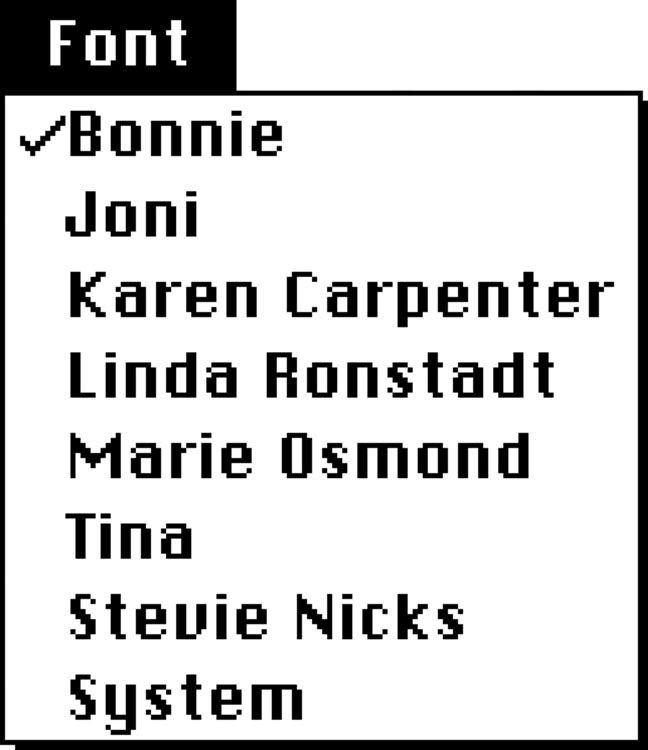
    World Class Female Singers.

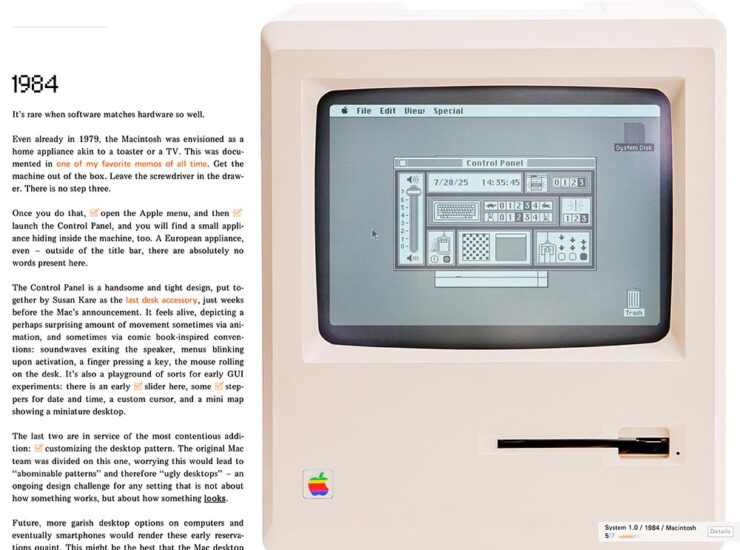
    Okay, okay, that’s not actually an unused menu from before Apple’s Macintosh was released in 1984, but how it came about isn’t something I’m going to quote. Instead, I’m just going to ask you to read it in full — it’s fantastic.

    Courtesy of Unsung, Marcin Wichary’s awesome blog. (Yes, he of Shift Happens fame.)

    Great Graphic Items X2
    The Tenth Muse
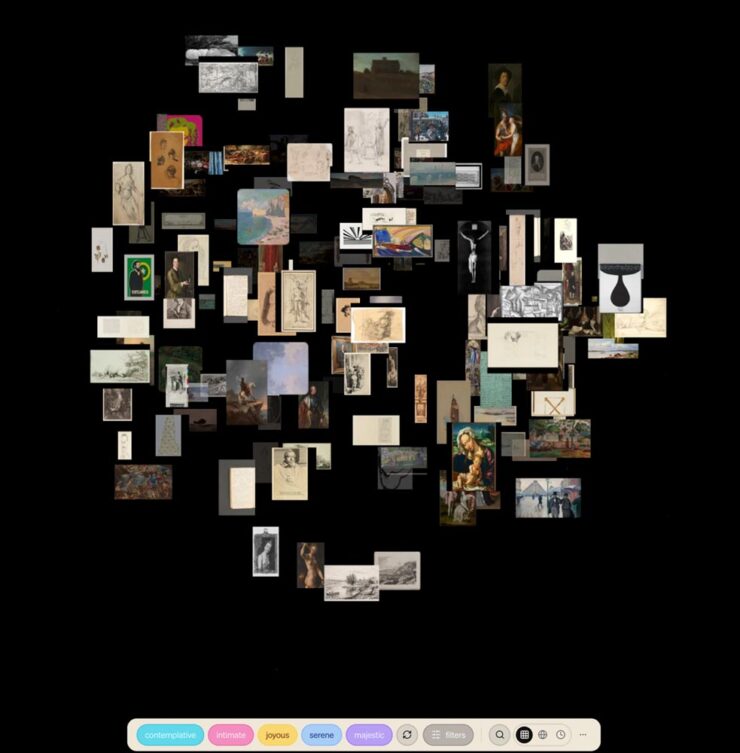
    Screenshot of the Tenth Muse home page.

    The Tenth Muse is an art discovery engine. Over 120,000 artworks from museums and institutions — searchable by feeling, mood, atmosphere, era, and medium.”

    (Via Kottke.)

    AIGA NY: 50 Years of Posters
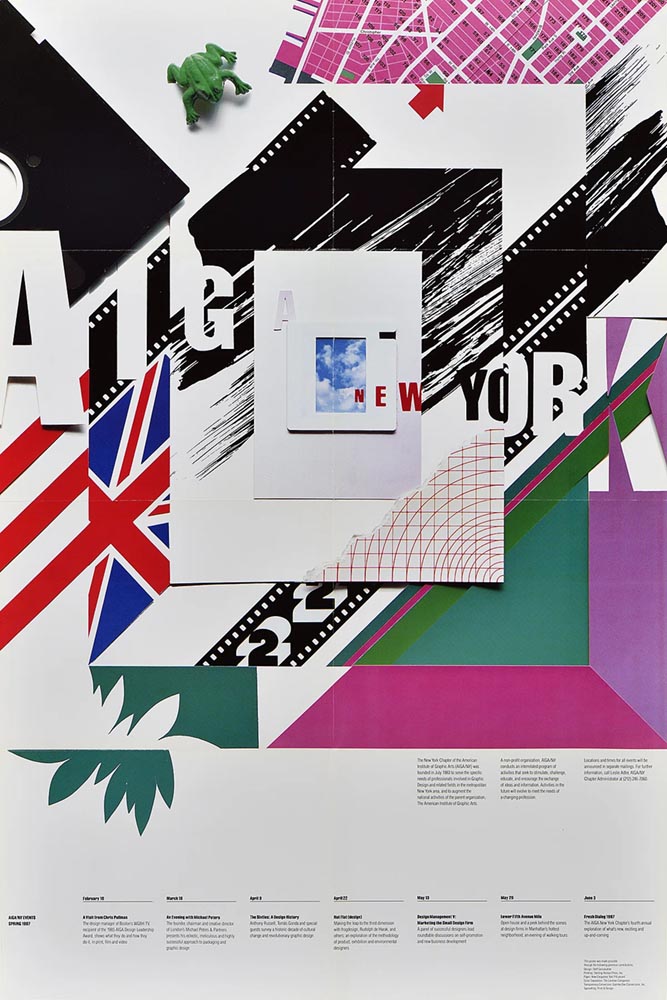
    Just one example of the many posters now available for your persual.

    “A 50-year goldmine of design: AIGA New York unveils its poster archive to the public,” It’s Nice That reports. “A newly opened window into its design archive, this unique visual library provides the public with an inside view of the design, art and activism that’s emerged from the city’s recent history. AIGA NY has ambitions for the collection to become physically accessible with an accompanying book that will showcase the posters in more depth.”

    Adobe, Yet Again
    DNG Now Standard

    Let’s start with the positive:
    “In March 2004, Australian photographer Robert Edwards asked a simple but meaningful question on Rob Galbraith’s now-defunct photography forums: ‘Could Adobe make a RAW format?’ The answer was very much ‘yes,’ and Adobe announced the DNG format, or Digital Negative, later that same year. Now, more than two decades later, DNG is now the official standard under the International Organization for Standardization (ISO),” PetaPixel writes.
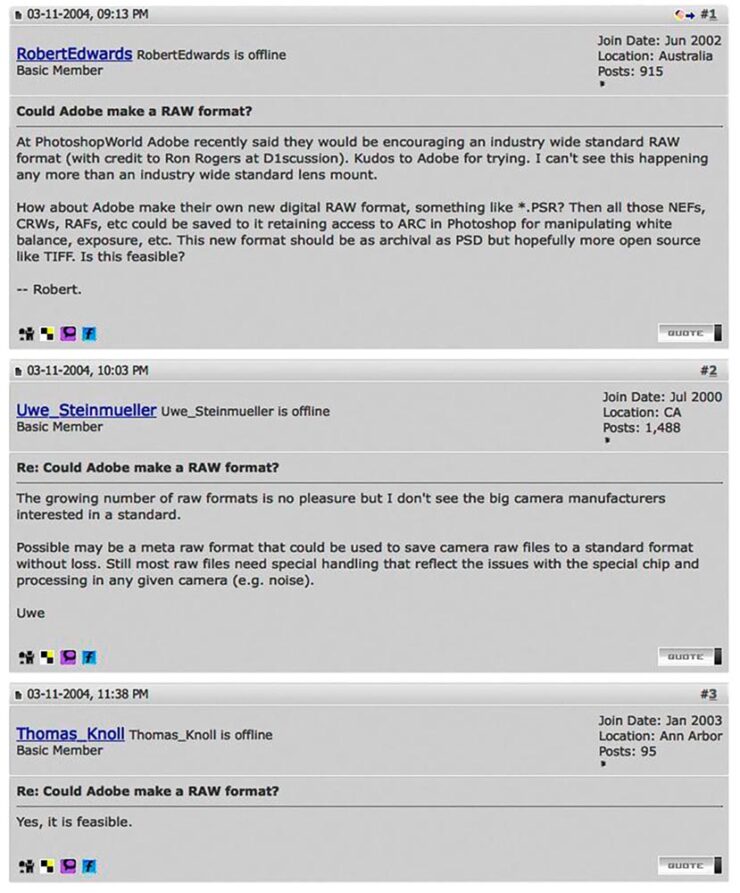
    From back in the day.

    I remember lurking on Rob Galbraith site. Such were the importance of his forums — and, for that matter, the overall size and condition of the ’net in the early Aughties — that Thomas Knoll himself, one of the creators of Photoshop, would post there.

    In case you’re not familiar, a camera’s RAW file is what the sensor sees at the moment of exposure, stored in a format for later editing. It’s completely different from a JPG file, which has all the camera’s choices baked in to the final image. Sports or journalism photographers usually shoot JPG, due to the need to post immediately; social media photography is, of course, its own animal.

    Most fine photographers — that is, folks who shoot for art or pleasure, including your author — only shoot RAW, because it gives you maximum flexibility in “look.”

    I’m honestly not sure how much of a difference this will make, but it’s nice to see DNG accepted as a standard — and it’s an example of Adobe meaningfully contributing to the bigger picture. 

    Train Adobe’s AI on Your Style

    From the “mixed” department:
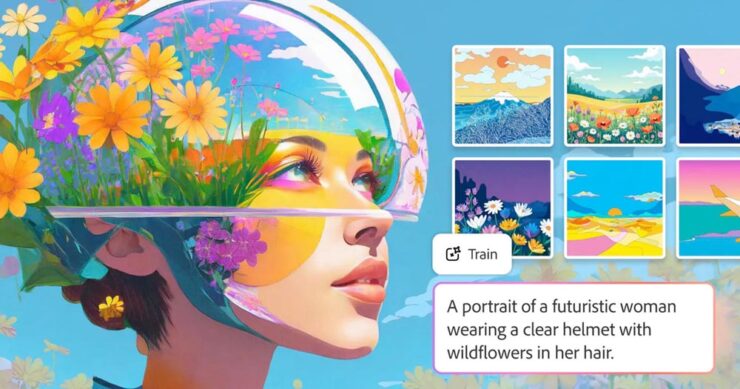
    It’s not tin foil.

    Adobe has launched Firefly Custom Models, “allowing artists to generate image variations that ‘more consistently reflect’ their own style, subject, or characters. 

    Adobe’s Deepa Subramaniam says, “Today, we’re expanding access to Firefly custom models, which let you turn your creative style into a reusable model trained on your own images. In this public beta release, custom models are optimized for ideation in character, illustration and photographic style.” 

    The goal of Custom Models, according to PetaPixel, is to “allow artists to train Adobe’s Firefly AI specifically to unique workflows so that when it generates content, it is more aligned with their specific style.”

    Hmmm. How ’bout practical effects? Seriously, this might turn out to be useful. Time will tell. Helmet of tin flowers and all.

    CEO Retires. Stock … Down?

    Here’s where the attitude sneaks in: most of us, present company included, are sick of Adobe’s attitude towards its customers.

    “Adobe’s longtime CEO, Shantanu Narayen, announced this week that he is stepping down after 18 years as CEO and nearly 30 years at the company. If you ask shareholders, Narayen was, for a long time, among the very best in the biz. If you ask Adobe’s core customers, the artists who were once indispensable to the company’s success, it’s a different story,” writes Jeremy Gray in an opinion piece for PetaPixel.

    Adobe made more than $7 billion in net profit last year, a clear win for shareholders. This is due to their choice to treat creatives as a profit center. But their stock is down because their AI efforts have fallen flat — Firefly is way behind Midjourney or Gemini — and the planned additional profit center has failed to materialize. 

    And by “down,” I mean significantly. During Narayen’s tenure, Adobe’s share price increased from around $40 in late 2007 when he took over to an all-time high of $688.37 in 2021. But as of this writing, it’s $243. “Although Adobe and Narayen are painting his departure as entirely the outgoing CEO’s decision,” Gray continues, “it’s easy to wonder whether tumbling share prices had something to do with the transition, or at least sped up existing plans.

    “I respect the sheer scale of what he achieved. I admire that he grew Adobe so that it could hire more great workers to build better software. But for me, Narayen’s legacy is ultimately one of treating [creatives] like an afterthought […] using our passion and love for art to boost his brand.”

    I understand that Adobe has become one the Internet’s favorite punching bags of late, and I try to distance myself from that sport (no matter the subject). But I can’t help but agree with many of the things expressed in that piece.

    Let’s hope that the future bring change, one way or another. For many professionals, Adobe essentially holds a monopoly. 

    But then, so did Microsoft.

    Special Bonus #4: Unsung asks, “Why wouldn’t everyone deserve the gift of focus?” He’s talking about the tragically-short-lived focus mode in Photoshop, wherein the user isn’t automatically shown pop-ups or blaring (bleating?) buttons regarding new features.

    I mention this because I just uninstalled Acrobat, Adobe’s PDF management program, because I couldn’t turn off the pop-ups, sharing invitations, or requests to add comments. All I wanted was to proof documents, but what I was gifted with was frustration — even anger, on days where a deadline was involved. 

    Special Bonus #5: “A slap on the wrist” is understatement writ large:

    “Canceling a software subscription is supposed to be easy — that’s what US law dictates. Adobe, however, has played fast and loose with its Creative Cloud subscriptions in the past. The company was sued by the Department of Justice in 2024 due to its practice of hiding hefty termination fees when customers signed up. The case has now been settled, with Adobe agreeing to a $75 million fine and matching free services to users of its products,” Ars Technica writes.

    The company doesn’t admit to violating the law. “While we disagree ⁠with the government’s claims and deny any wrongdoing, we are pleased to resolve this matter,” Adobe said in a statement.

    March Photo Round-Up

    Okay, let’s switch gear and end with inspiration — even happiness.

    International Garden Photographer of the Year 2026

    Yes, you read that right: there’s an international contest for the best garden photograph. (If you want hard-hitting stuff, see Sony’s awards. There’s enough “news” in the world, so….)

    Grange Fell Last Light. Overall Winner. Photograph by Mark Hetherington.

    Soothing. The image also earned first place in the Breathing Spaces — more soothing —category, and was captured in Borrowdale in England’s Lake District; the “photograph shows heather, silver birch trees, and the warm light of sunset viewed from Grange Fell,” PetaPixel writes.

    See all the winning photographs at the contest website.

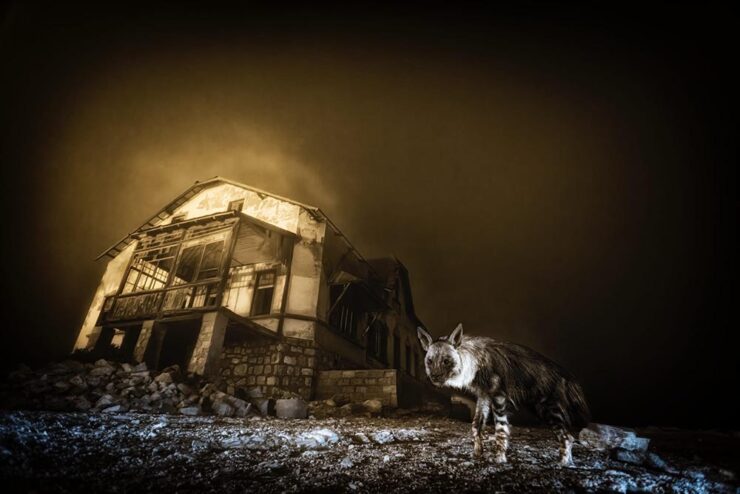
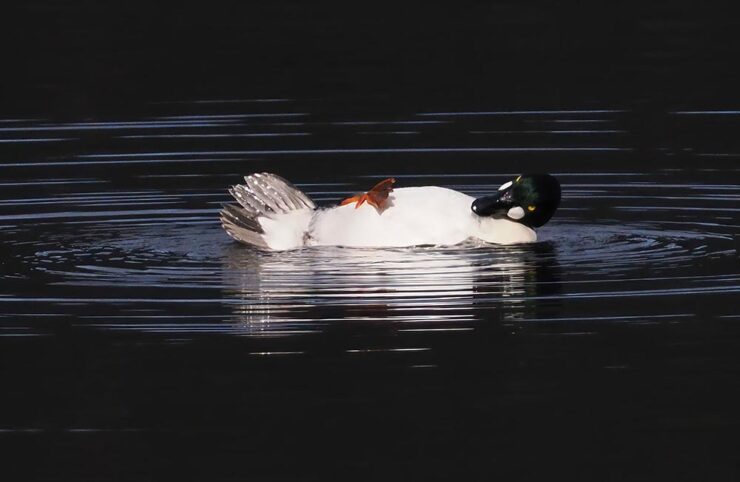
    British Wildlife

    Asleep at the Wheel. Winner, Urban Wildlife. Photograph by Simon Withyman.

    It’s a shame these are still photographs. Hearing a red fox bark in a British accent is a hoot.
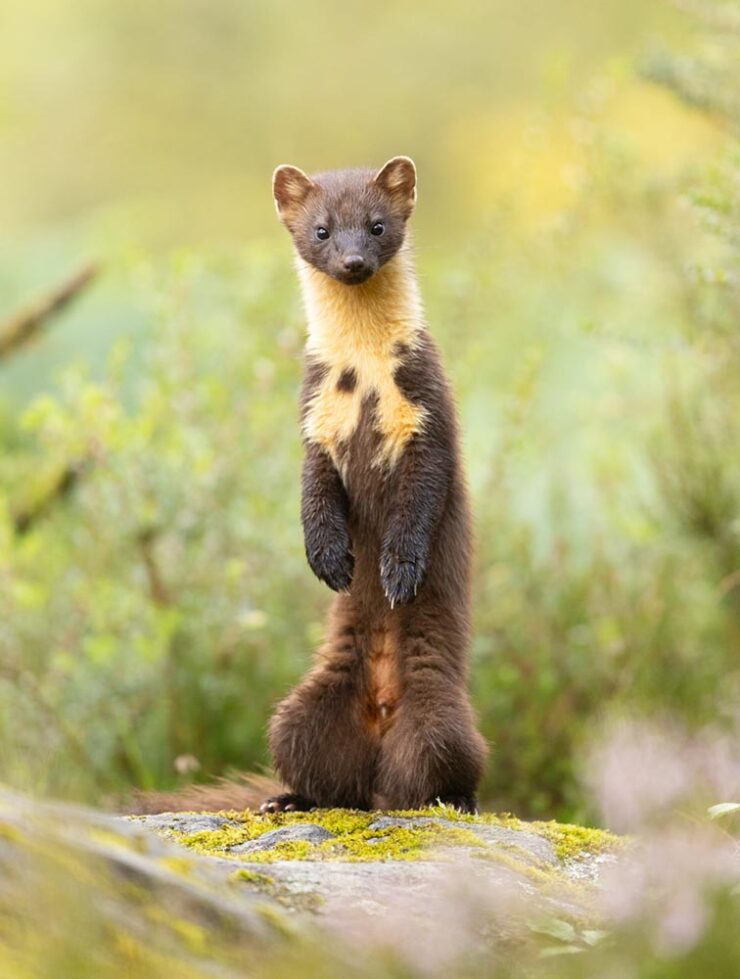
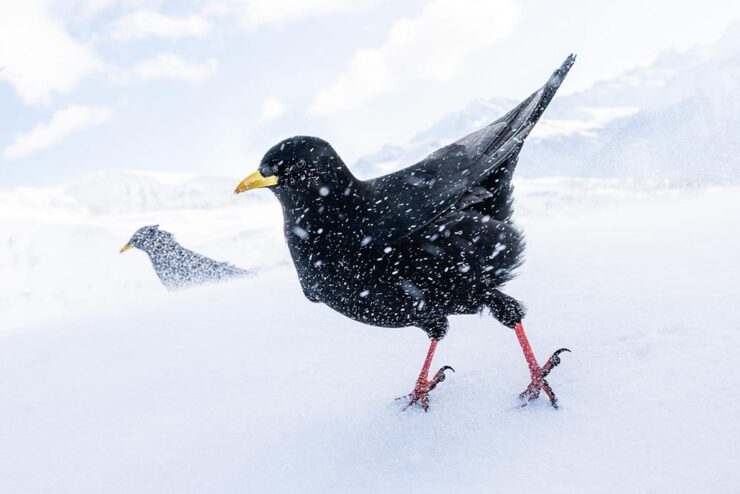
    Standing Tall. Winner, Animal Portrait. Photograph by Alastair Marsh.

    Proof that excellence in photography extends to all parts of the realm. See all twenty-one winners at This is Colossal or PetaPixel.

    London Camera Exchange Photographer of the Year 2026

    Last of the items originating in the UK this month, although the excellent photographs within aren’t limited to just those countries. Some examples:

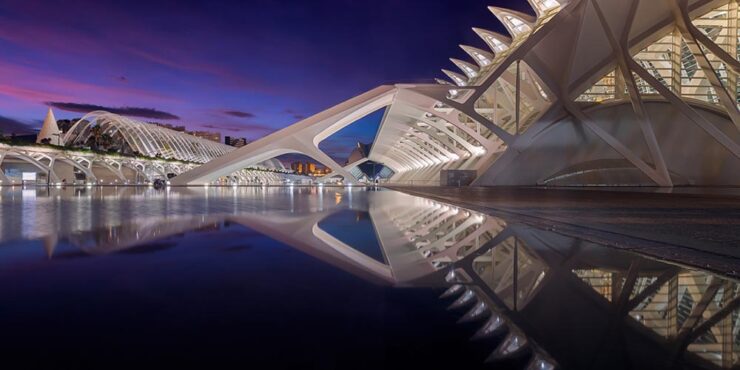
    Crossing the Curves. Winner, Street. Photograph by Helen Trust.

    “A lone cyclist moves through sweeping arcs of light and shadow at the City of Arts and Sciences. Reflections echo the architecture’s rhythm, momentarily aligning human motion with structure, symmetry, and space.”
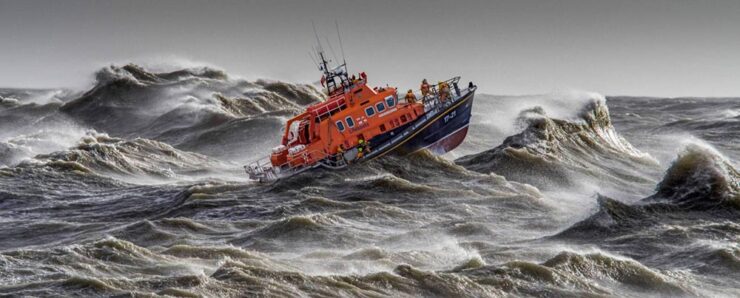
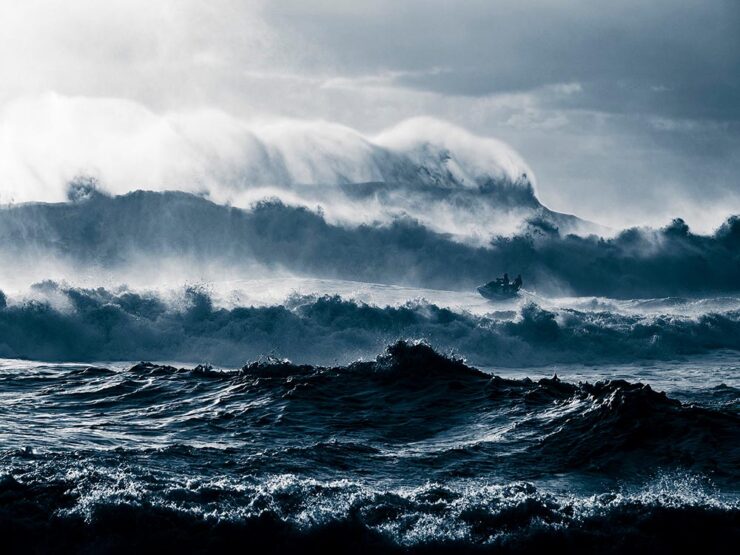
    Saving Lives at Sea. Winner, Action. Photograph by David Lyon.

    “Captured from the shore, during a regular Newhaven training exercise.”
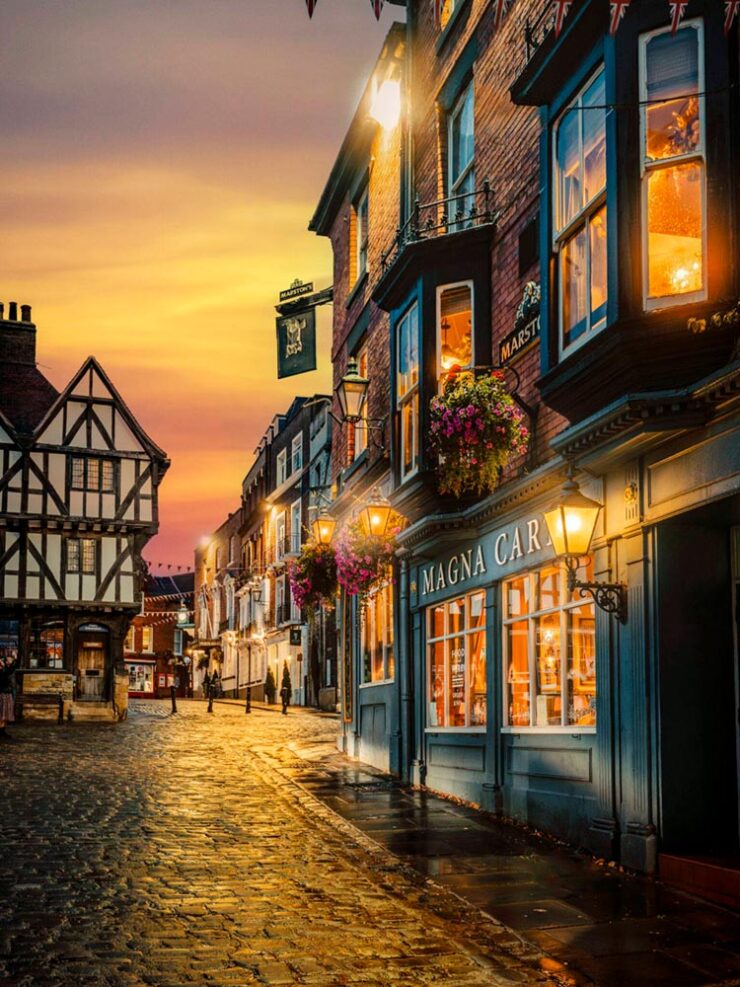
    Magical Uphill Lincoln. Winner, People’s Choice. Photograph by Andrew Scott.

    “This image was taken during golden hour in Lincoln. The image captures the historic streets and architecture of Lincoln as a golden sunset sets in. […] The golden glow of the sky, cobbles and light from the window add that extra dimension in terms of how the overall image works as a result.” (The description somehow missed “soothing.”)

    See all the winners at the London Camera Exchange website. Via Macfilos.

    Andrew Moore: Theater

    “Known for his atmospheric photographs of landscapes, interiors, and urban centers that feel mysteriously locked in a not-so-distant past, Andrew Moore’s enigmatic images invite us into a slippage of time,” This is Colossal writes.
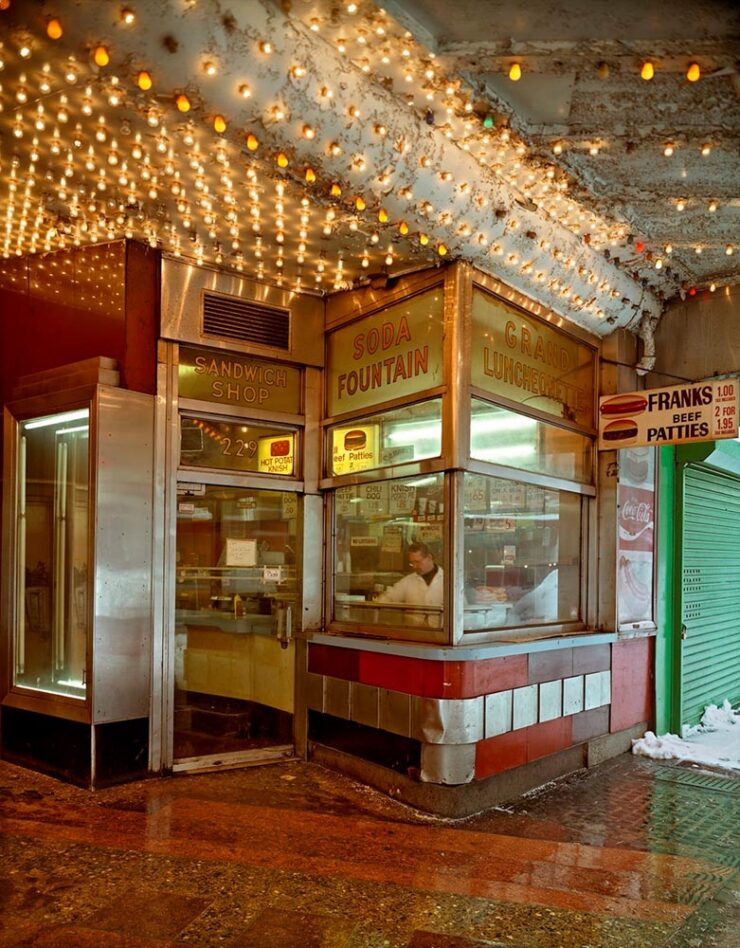
    Grand Luncheonette, New York, 1996. Photograph by Andrew Moore.

    Not only great, but currently on display: Moore has a solo show running at Atlanta’s Jackson Fine Art. (Update: The show ended March 21st, darned it. I’d have gone if I’d read that properly.)

    Cinematic Plastic

    No, not current events — something better:
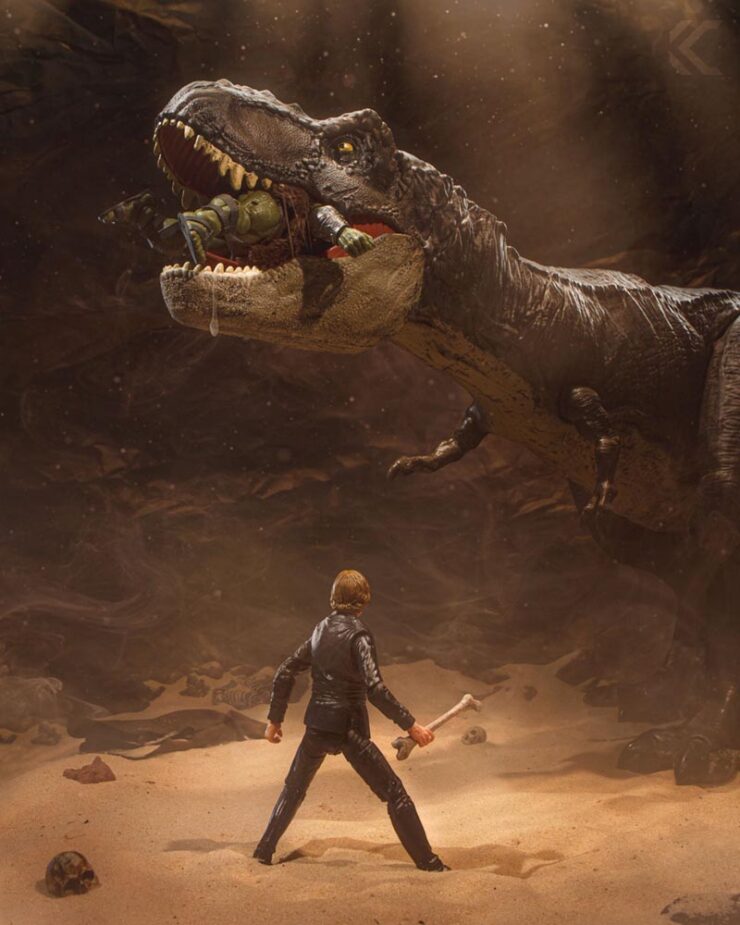
    Jurassic Pit. Photograph by Chuck Eiler.

    “Chicago-based photographer Chuck Eiler transforms action figures into cinematic, story-driven miniature worlds that blur the line between toy photography and film. Through meticulously crafted sets, practical effects, and careful lighting, he creates immersive scenes that bring nostalgia and storytelling to life,” PetaPixel writes.
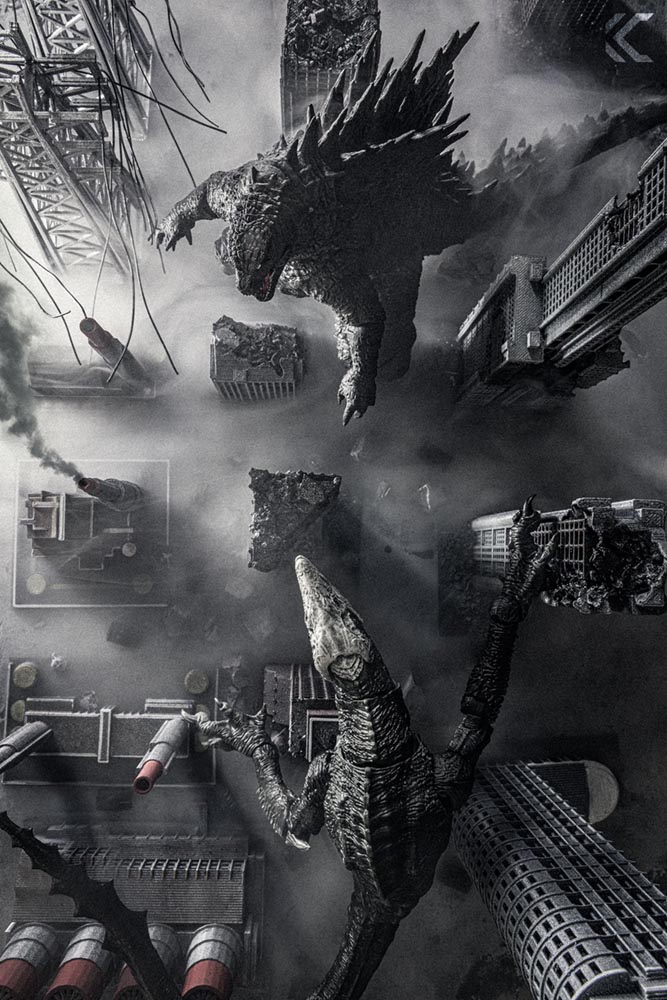
    Apex Predators. Photograph by Chuck Eiler.

    Awesome. (And available as prints, in case you want for your sandbox walls.)

    Finally: Duck This

    Last month saw the incredible fresh pasta camera. Well, in case you think I only recommend a vegetarian lifestyle, there’s…:
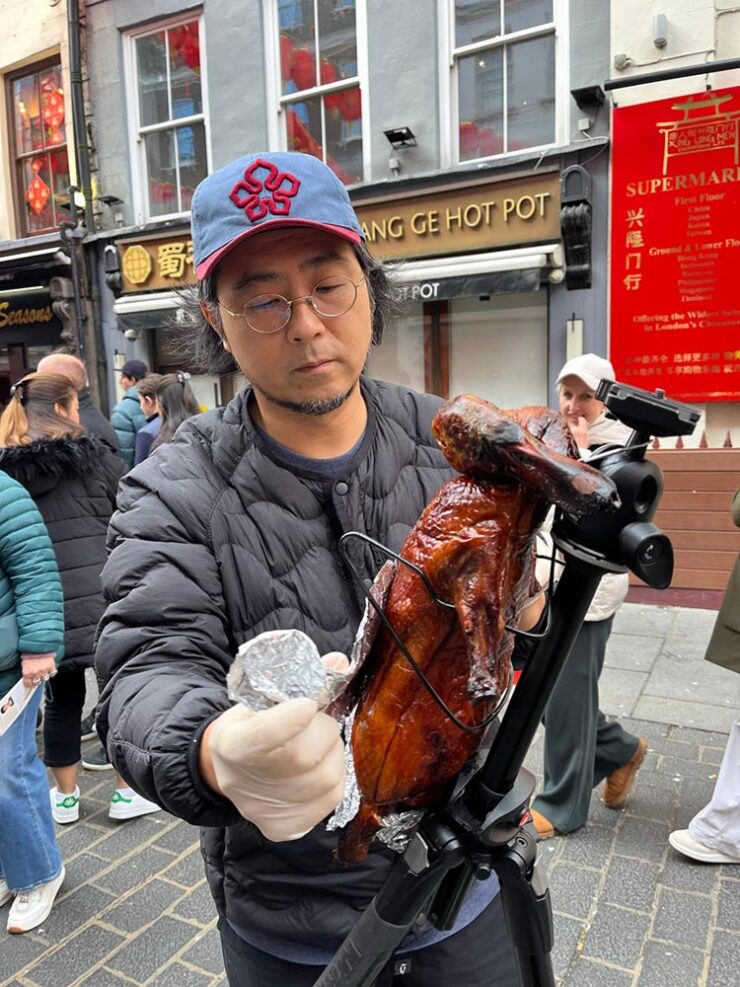
    Four Minutes in London.

    Martin Cheung’s Chinese roast duckcam

    Presumably, he throws a fresh camera into the oven every time he needs one: “I will continue making Duckcam while I travel, so next time when you see a person with a roasted duck on a tripod, please say hello to me.”

    Enjoy your spring, everyone!
  • My Favorite Book Covers of 2025

    My Favorite Book Covers of 2025

    When it comes to describing 2025, “tumultuous” is probably an understatement.

    So it’s probably not a surprise that, when looking at the hundred covers that make up this list, there’s a definite direction: favoring quality over quantity. Which is to say, consciously or not, I’ve tended to prefer designs where more is said with less.

    Perhaps I’m striving for calm in a world that just … isn’t. Perhaps it’s my choice not to participate in social media and its race for likes, loves, and “latests.”1Publishers need to remember that not all of their customers select what to read based on influencers, what they see on Facebook, or by doomscrolling Instagram. Some of us are lifelong learners, have hundred or thousands of books, and discover by … reading. Real articles, by real people, on websites with those people’s real names on them. (Or even, occasionally, this thing called paper.) Perhaps it’s my advancing age — closing in on 60 now — and thus “old-fashioned” standards.

    In fact, it could be said that I value not keeping up: I don’t want to highlight the trendy. I want to celebrate great talent, design that’s standout in its day but will still be great as time passes.

    However, it’s appropriate to emphasize that these are my favorites. Others might say “best,” but I’ve been in this business long enough to know that there’s always another title you haven’t seen or read about, and I don’t want to disrespect any of the talented book designers whose work I didn’t see, and consequently didn’t feature. I’ve tried to include design credit where I could — many thanks to the folks who answered requests for that information — and wish to stress that any mistakes in the list below are mine.

    Note: By request, titles starting with “The” are alphabetized correctly. Also, if you’re on Foreword’s main page, please click on the post title, above, to read this list. You’ll get larger covers for your viewing pleasure.

    • • •
    My Favorite Book Cover of 2025
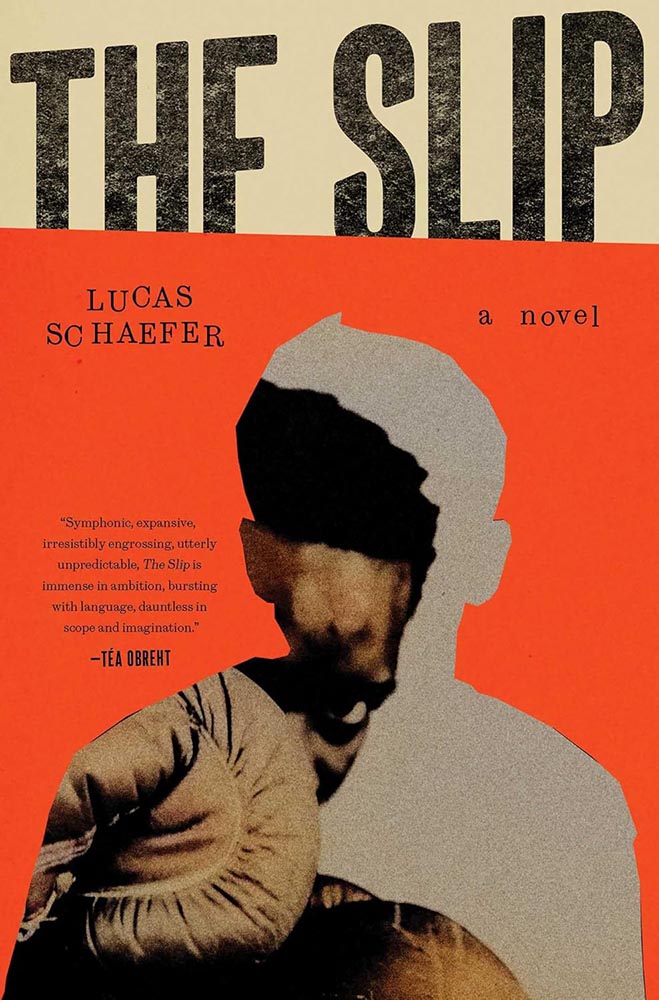
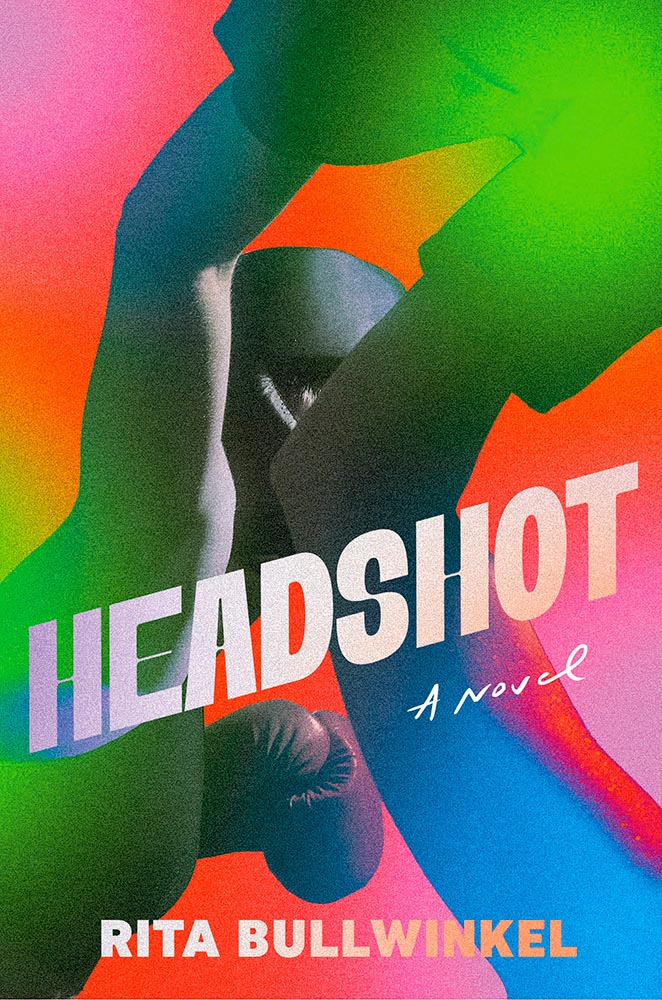
    Cover design by Jack Smyth.

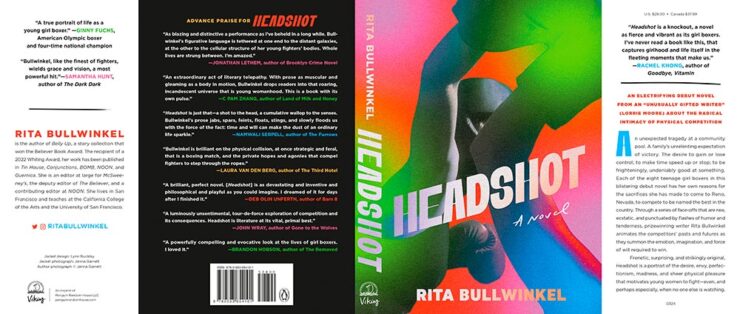
    There was no question which of these hundred titles would take the title: this heavyweight, brought to us by Dublin-based Jack Smyth. Fellow cover designer Jaya Nicely, in LitHub‘s 2025 list, called it “tactile,” but it’s more than that — it’s downright visceral.

    In fact, and indeed in direct contradiction to what I said in the intro, I’m celebrating something trendy: silhouettes are “in” — even overused — but I love this cover because I don’t recall ever seeing one more effectively implemented. Simultaneously hiding around the edge and using it to an advantage, our boxer (presumably the book’s subject, Nathaniel) looks poised to strike.

    When combined with type and lines slightly off kilter, use of a fantastic orange, and aging and grain that ice the cake, this cover has it down.

    2025’s Runners-Up
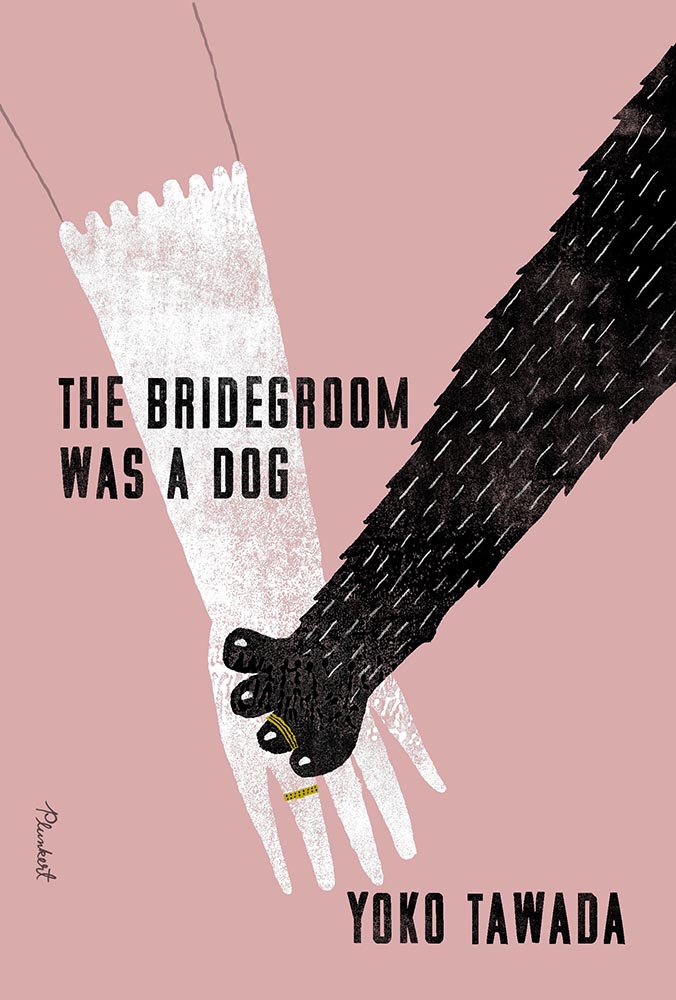
    Cover design by Paul Sahre, with illustration by David Plunkert.

    A triumph of less-is-more illustration, with color and a title treatment that knows how compliment. The pressed or sprayed, aged-but-not, white and black are magnificent, while the rings stand out as the only use of “gold.” I love that the arm above the glove is just an outline.

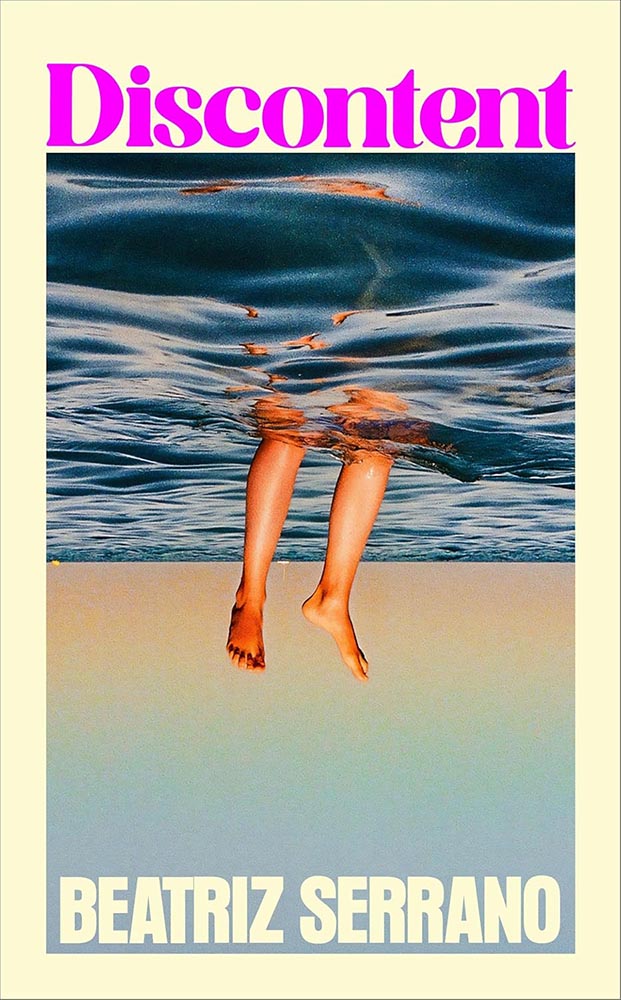
    Cover design by Kris Potter; photography by Laurent Tixador.

    Photography seems almost passé these days, so its use requires something extra — here served up in spades. On the one hand, I want the boats on the horizon to have been removed, but on the other, it highlights the fraud within in a subtle, realize-after-the-fact way that’s awesome.

    I have to say, too: this is about fifteen light years beyond the woman-folded-into-the-chair edition, one of those trends that needs to just stop.

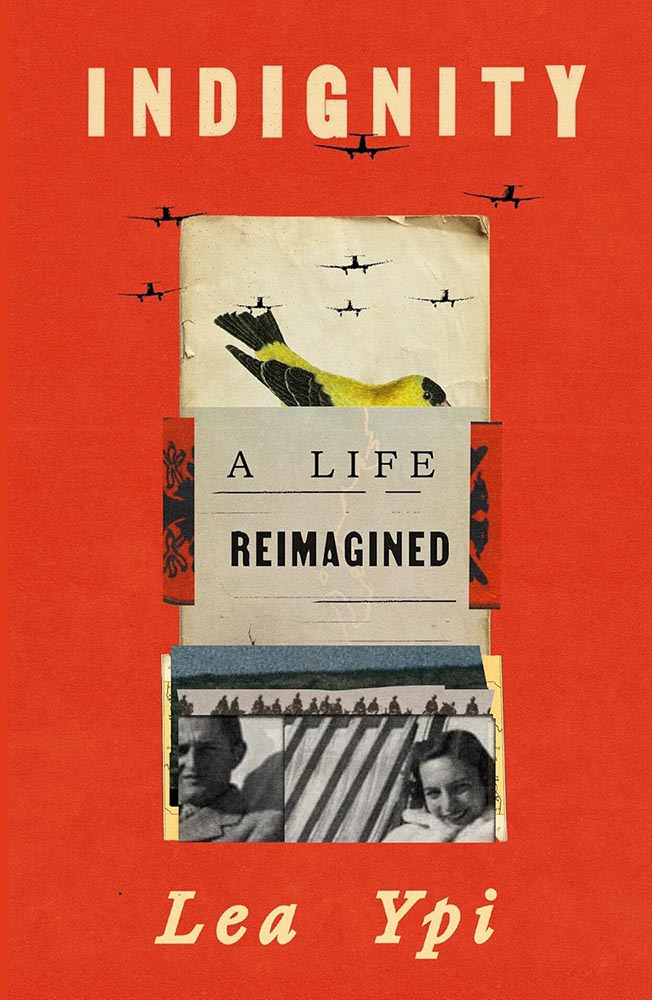
    Cover design by Arsh Raziuddin.

    While it compliments Free, from 2022’s list, it’s more: more sophisticated, more of a story, and leaves you with more questions — and more likely that you’ll pick it up to get those answers.

    Bonus points for the folded papers, the Albanian coat of arms, and planes “outside” the collage.

    • • •
    Other 2025 Favorites, in Alphabetical Order
    Cover design by David Fassett.

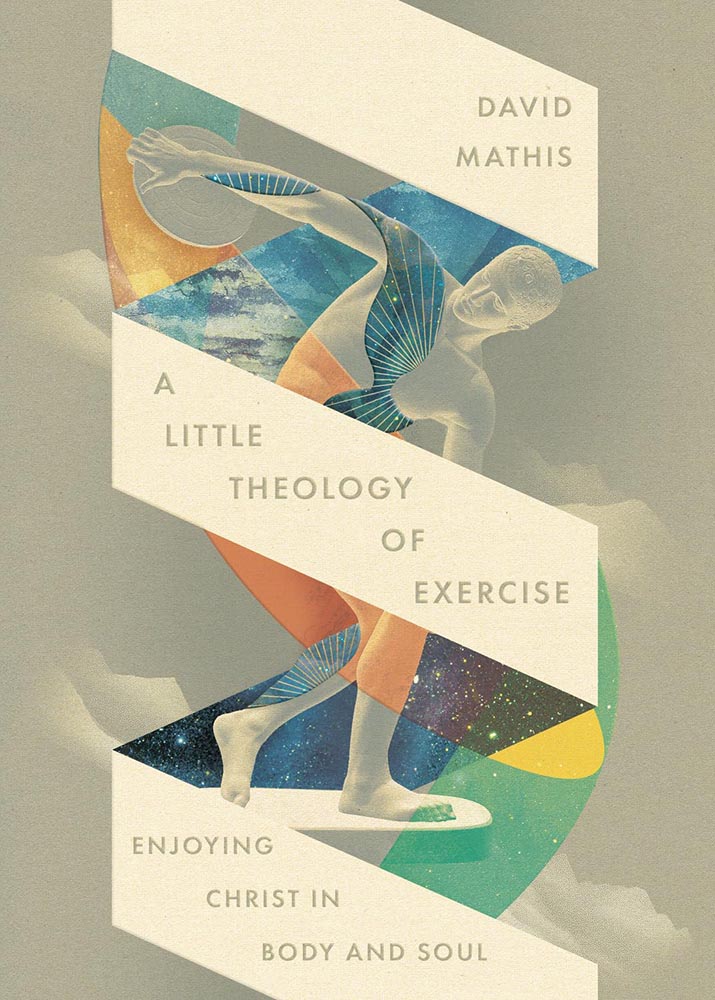
    Christian titles so often reach for stereotype — something easily pigeonholed, almost like romance (for instance, unless of course I’m the one stereotyping). It’s often to the detriment of the subject: prematurely dooming the worthy, as it were.

    This one very much rises above: the mountain/clouds, the spiral, the mixed and colored illustrations, and titles stacked at an angle (with slight em- or debossing?) are all exceptionally well done.

    Riverhead/Penguin didn’t return a request for cover design info. Apologies.

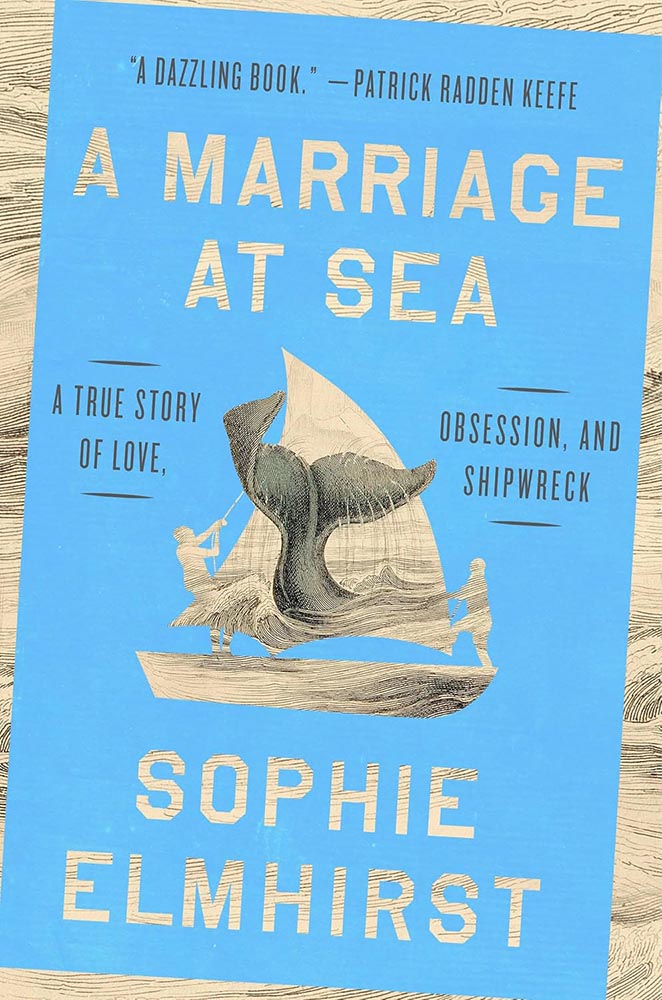
    The opposite of sinking beneath the waves: a beautiful pen-and-ink illustration, a color block of sea — or sky — heeling over at just the right angle, with the wonderful knock outs. Then there’s the hint-of-blue tail, the design equivalent of a spinnaker, standing out at the fore of a crowded race. Unmistakably awesome.

    Cover design by Beth Steidle.

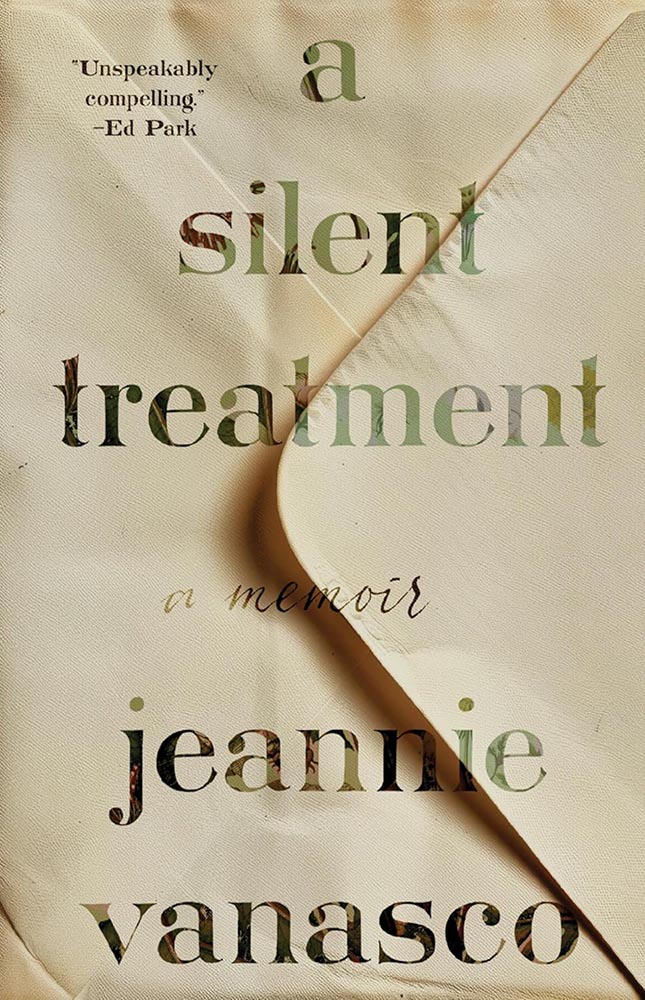
    Simple without being simplistic, quiet while not quite, this one deserves that satisfying “thunk” that goes with a stamp of approval. (No cancellations allowed.)

    Cover design by Tom Etherington.

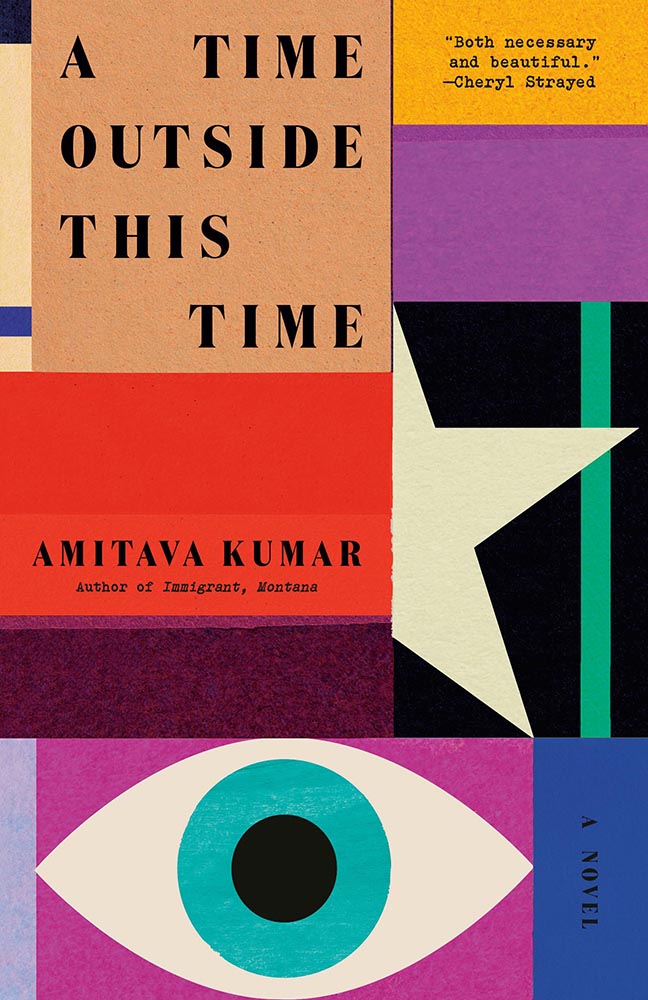
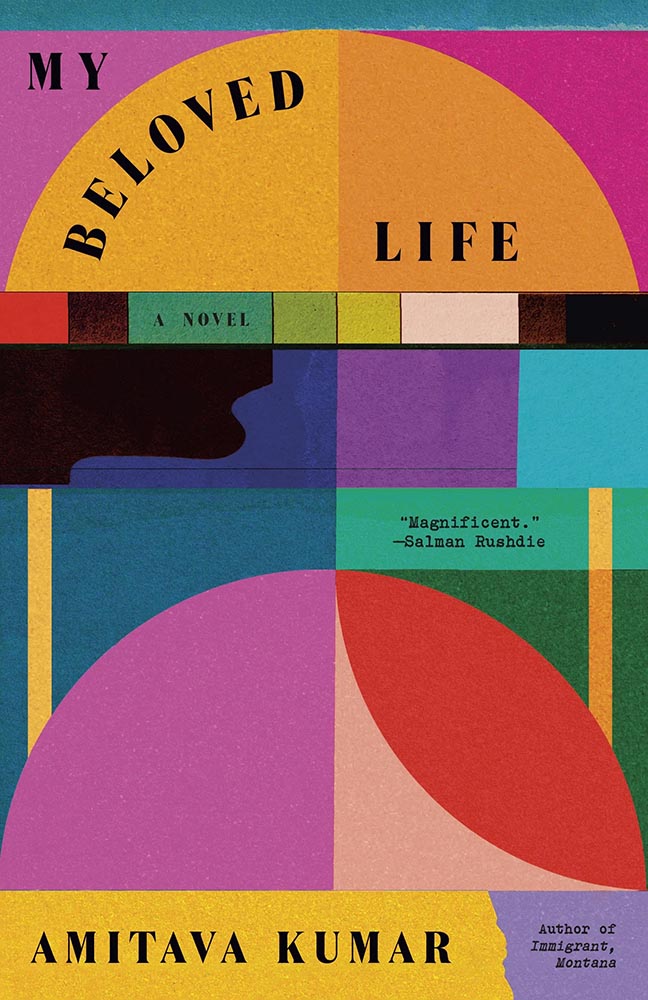
    Eye-catching is a cliché too far — but it’s definitely more than just a collection of shapes artfully arranged. Bonus points for the edge between red and star, the color choices, and title spacing.

    Special bonus — continues the family look:

    Cover design by Tom Etherington.

    Fantastic.

    Cover design by Arsh Raziuddin.

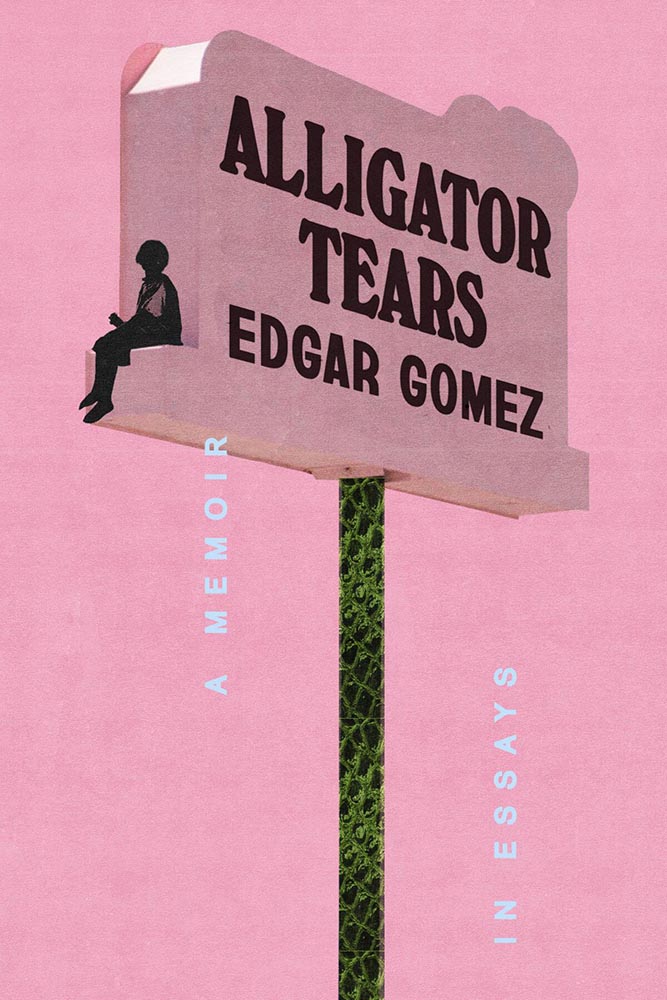
    Neither a zig nor zag: the combo of pink, alligator skin, and “tears” is nigh-on perfect.

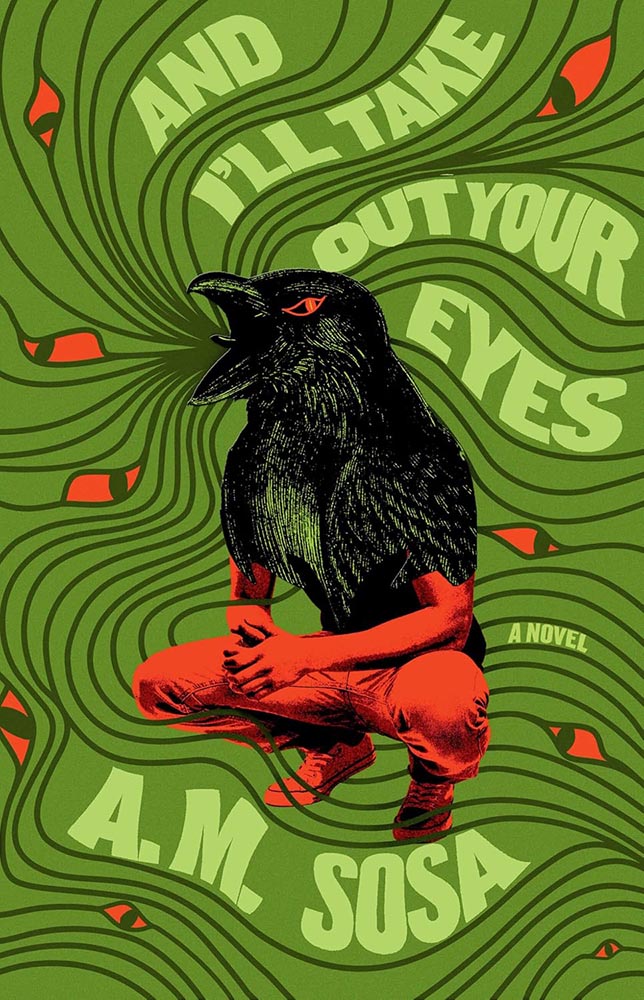
    Algonquin Books didn’t return an inquiry for the cover design info — sorry. (If you know….)

    The part-human-part-animal design tool is another of those overused items — except when it’s handled as well as it is here. The eyes are brilliant, the title treatment fun, and the colors standout. The subject, superficially, is not dissimilar to Alligator Tears, above, but the details, the design — and most certainly the text within — celebrate being different.

    Cover design by Beth Steidle.

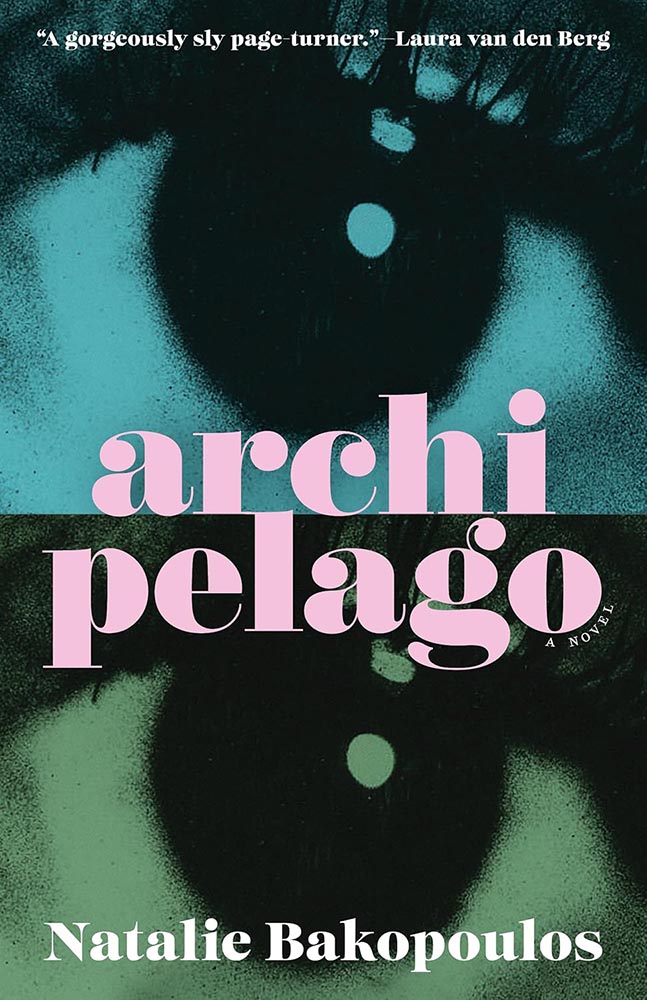
    The cover-in-two-parts is another of those items potentially overused, but the repetition and title treatment — the r-l tie-up is fab — take this one to the next level. Bonus points for “a novel,” both less and so much more.

    Cover design by Elena Giavaldi.

    Another where the pressed/stamped ink works well — but the black on top of the almost-overstyled photo is the winner here, a photo that doesn’t say “South Dakota” in all the right ways.

    Cover design and illustration by Elizabeth Story.

    Never mind the awesome type, layout, and color — that illustration, or perhaps just the expression, does everything. A winner at first sight.

    Cover design by Lauren Peters-Collaer.

    Sometimes, it’s possible to be knocked askew awed by a simple idea.

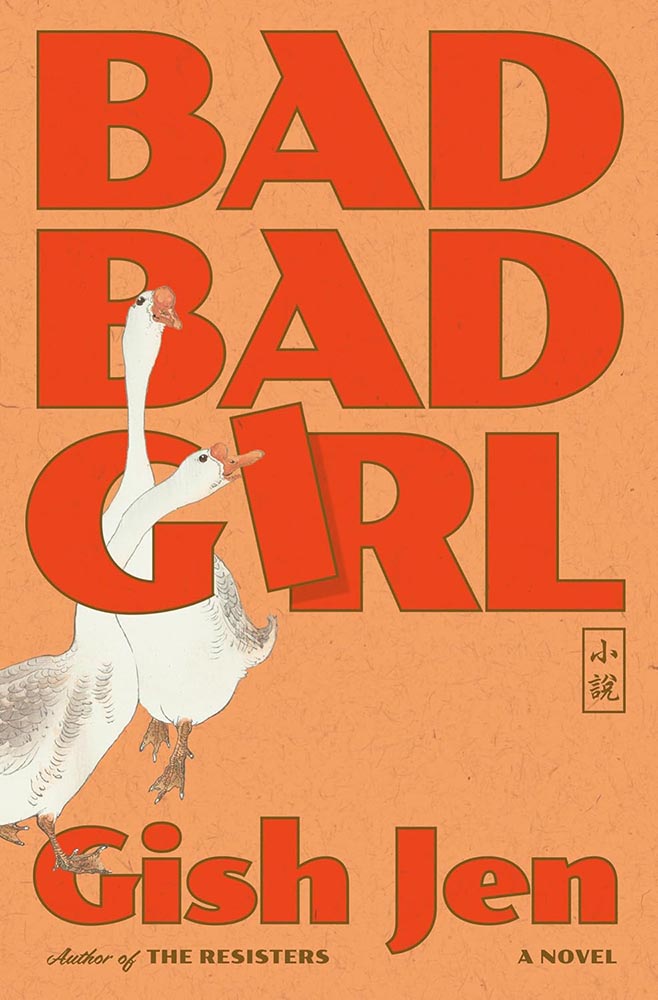
    Cover design by Linda Huang.

    “My aye!”

    (Yeah, yeah, the paper pattern and color, aged red and great brown outlines, type choices, and inclusion of Asian name seal, not to mention the geese, are all awesome too.)

    Cover design by Monograph.

    One is more — one-color, that is, with a perfect combination of blur and line, “shadow” and light, simplicity and complexity.

    Not the only one-color item on this list, I’m happy to see.

    Cover design by Luisa Dias.

    From texture to type, photo to illustration, this is a cover that keeps giving the more the viewer keeps looking.

    Cover design by Stephanie Ross, with art by Maria Guimaraes.

    Cool illustration, cool idea — but it’s the use of color that earns this cover a spot here. The bright pink and various greens delight, as does the unusual-but-perfect background box for the title.

    Cover design by Robin Bilardello.

    “Guaranteed to augment your … life,” Vi thought.

    Cover design by Rodrigo Corral Studio.

    This is based on the Korean edition; the art came with the title. That said, this version uses that ah-ha moment that is title’s holding area, combined with infinitely better type — and gets serious compliments as a result.

    Bonus points to the original designer for a painting that’s anything but postmodern.

    Cover design and art by Na Kim.

    Speaking of paintings, Na Kim’s often take center stage in her cover designs. Here, however, it’s everything. Fantastic!

    Cover design by Thoman Colligan.

    The two-pane cover gets overdone, no question, but like others on this list that rise above a trend, this cover triumphs in complimentary colors, type treatments, and spacing. Somehow soothing and attention-getting — an accomplishment.

    Cover art by Scott Mescudi.

    Every time one zoomed out to look at the collected — every single time — this persevered. Survived. Stayed. And then became incredibly successful.

    (The cover, too.)

    Cover design by Josh Durham.

    Pictures running in time, complimented by the vertical title. (Rare and attention-demanding use of duotone here, too — nice.) Bonus points for the title and other text being subtly different colors.

    Cover design by Adriana Tonello and Frances Digiovanni, Rodrigo Corral Studio. Illustration by Sophy Hollington.

    Letterpress or inkblot? When it’s as much eye candy as this, do you care?

    Cover design by Na Kim.

    The contrast to Na’s Brother Brontë cover, above, couldn’t be more stark — yet this one, in its … well, stark simplicity, is no less accomplished.

    Work that stands out, from one of the standouts.

    Cover design by Chris Bentham.

    Retro-tastic burst of style that takes something ostensibly text-only to another level.

    Parenthetically, the author argues that we’re in the third “information crisis,” the first being invention of writing and the second the invention of the printing press. We survived those, maybe we can survive this…. A UK title I wish were readily available in the States. (The Brit Amazon wants you to buy it together with Cory Doctorow’s Enshittification, by the way. There‘s an afternoon’s reading.)

    Cover design by Matt Dorfman.

    Old-fashioned illustration, type arranged in a way that’s anything but old-fashioned, and great color choices: successful in a way that suggests simple in one of those “effortless ease” ways. (“Yo-Yo Ma just saws on a big fiddle” kind of thing.)

    Cover design by Eli Mock.

    “Missile Command meets The New York Times,” you say, in an effort to describe this design to someone who hasn’t seen it — something guaranteed to get a laugh. But here it is, in all its glory.

    Cover design by Jaya Miceli, with art by Anna Brones.

    Cookbooks are such a well-trod genre that it’s nearly impossible to break out of the pack and generate something not only truly original but truly excellent: a feast indeed.

    Cover design by Jared Oriel.

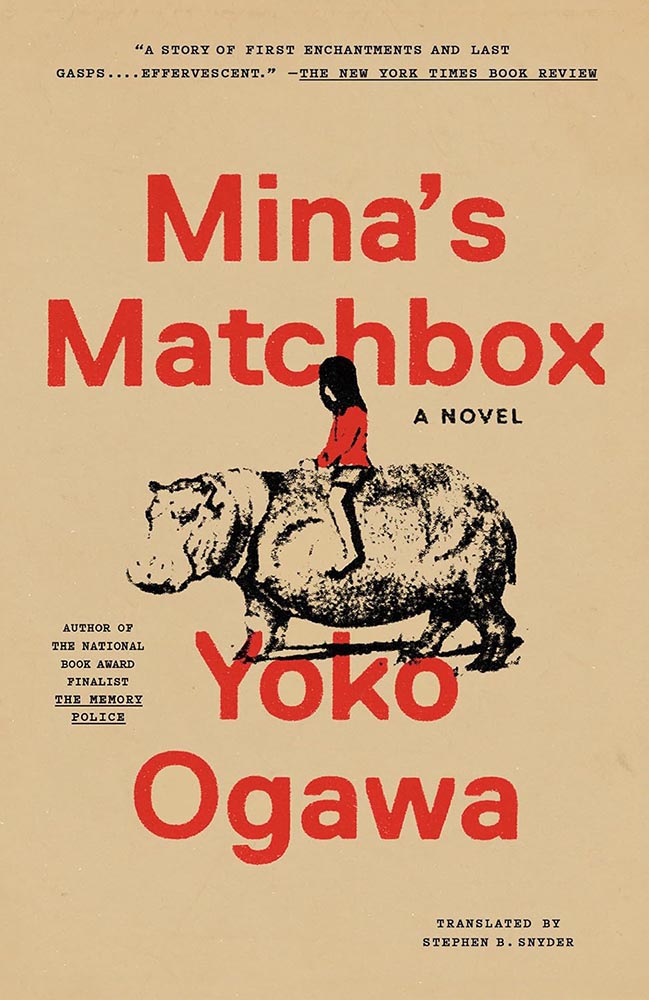
    Burnt matches have never made such sweet music.

    Cover design by Darren Haggar; illustration by Cecilia Caristedt.

    Poppy? Or a view into something deeper?

    Cover design by June Park.

    “What happens when your world goes sideways?” this cover — and book — ask. From illustration to style, basically … perfect.

    Cover design by Janet Hansen.

    Simple, practical, awesome. (“Chef’s kiss” is probably tacky, so I’ll avoid saying that.)

    The author’s previous title, Lucky Dogs, was in my 2023 Favorites.

    Cover design by Rodrigo Corral and Adriana Tonello.

    At first glance, something we see all the time, from image to typestyle.

    But then it goes on to ring the bell.

    Cover design by Frances Digiovanni, Rodrigo Corral Studios.

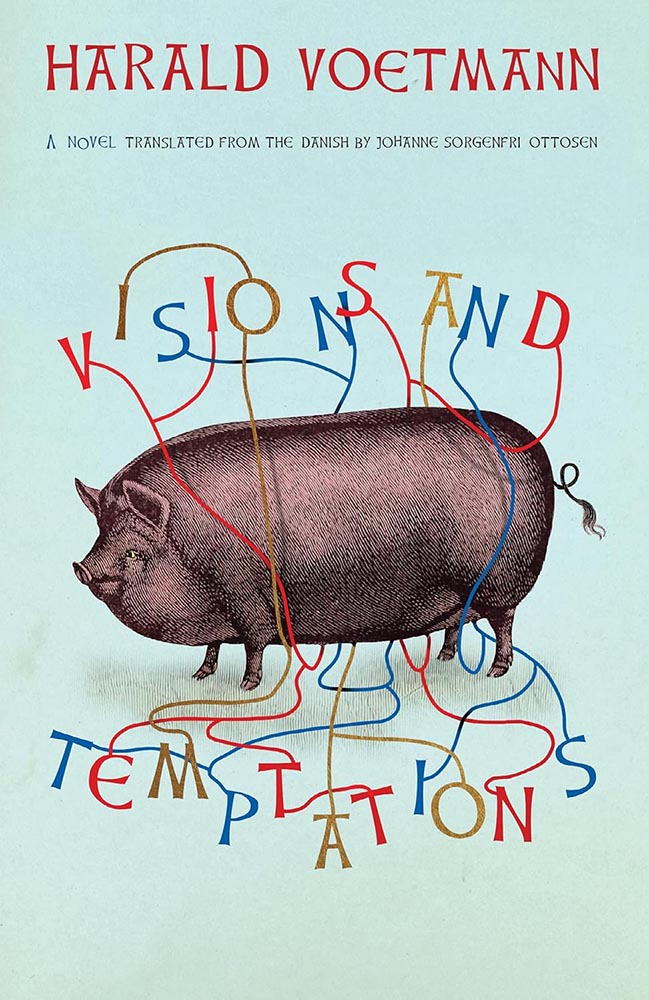
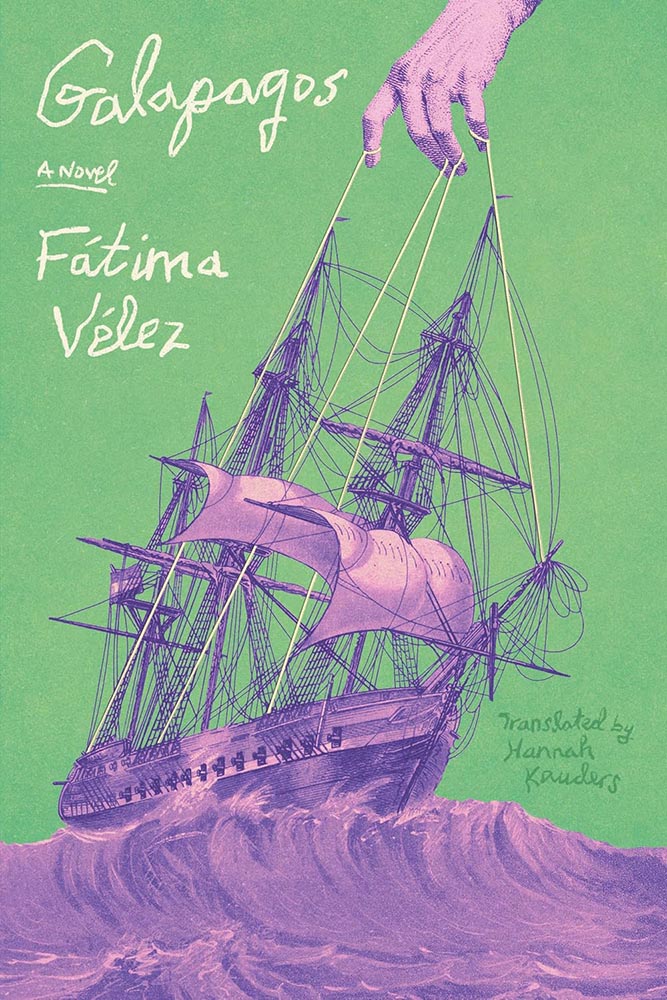
    The case where something like “a two-color triumph” feels not only cliché but a genuine undersell. The illustration, the color choices, the exquisitely shaky hand lettering — all beyond perfect, and that’s before we start talking about those strings. And the power that’s pulling on them.

    Cover design by Jared Bartman.

    The bear feels like something generated by bad AI, or even a suit; as it turns out, we don’t care. Bright, funny, and fun in just the right way. (I do wish they’d kept the single quotes proper English uses.)

    Cover design by Adriana Tonello.

    On the one hand, the opposite of “bright, funny and fun” — and yet, one the other, somehow, not.

    Cover design by Maddy Angstreich.

    I swore, possibly in public, that cropped classical paintings is something we should move on from in book design.

    Clearly, I was wrong.

    Cover design and illustration by Micaela Alcaino.

    One of the few times in recent memory that something so original was so funny, so satisfying, and such a standout design … on any shelf.

    (One of those covers that would work well as a print, I think.)

    Cover design by Anna Morrison.

    The triumph of the simple.

    Cover design by Keith Kayes, with art by Jose David Morales.

    “Sometimes a new author will sidle up and whisper in your ear, and sometimes she’ll grab you by the neck,” one of this book’s blurbs reads. The design of Immemorial, above, is the former. This design is very much the latter — completely and delightfully.

    Ballantine’s contact page is a 404 error — I kid you not — so the designer remains anonymous.

    Power, grace, and color — and, of course, the title treatment. A cover that was never in danger of losing its groove. (Bonus points for the pink “earring.”)

    Cover design by Matt Dorfman.

    Simplicity can mask death depth.

    Special bonus — related brilliance, from 2022:

    Cover design by Matt Dorfman.
    Cover design by Nick Misani.

    Illustration and lettering triumph for this classic title, slightly reminiscent of the Farmer’s Almanac I remember from my youth (in the most complimentary way), with appropriately-English “characters” for the UK edition.

    Cover design by Katy Homans.

    I mentioned above that for photographs to work today, they have to have that something that grabs and won’t let go. This one does.

    Cover design by Arsh Raziuddin.

    Next-level collection of long views both together with and simultaneously separated by brilliant use color. Bonus points for the repetition in author and subtitle.

    Cover design by La Boca.

    Gets the award for “most zany,” in the best possible way: “a scream,” indeed.

    Cover design by Stephen Brayda.

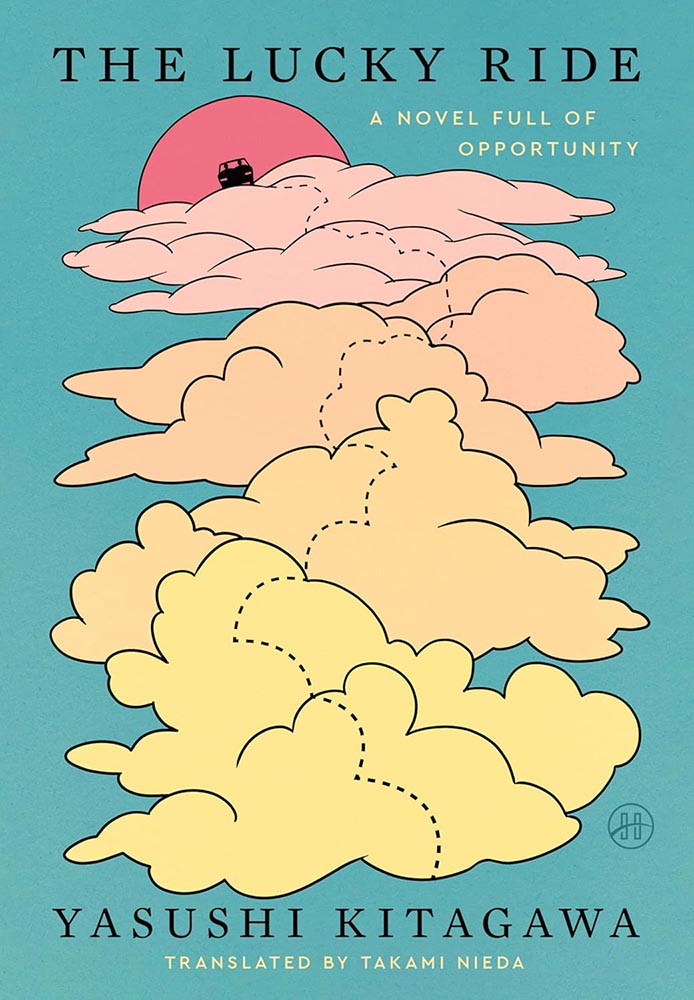
    Speaking of awards, let’s have one for “soothing.” The dotted path is brilliant and colors awesome. (And while it’s not part of the design, it’s impossible not to appreciate that subtitle.)

    Cover design and art by Alex Merto.

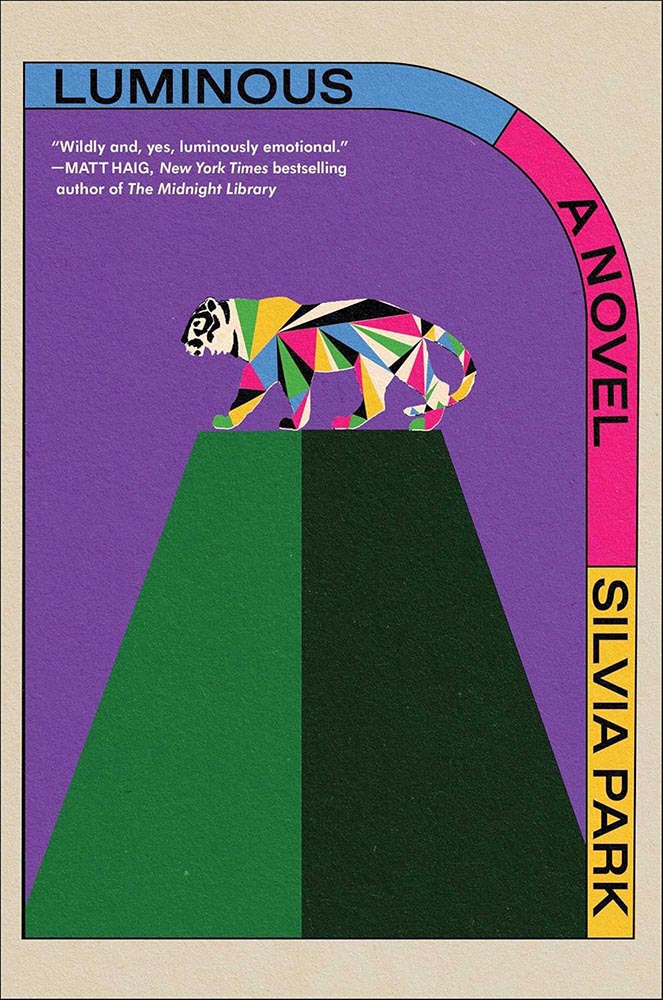
    Colorful, original, retro-yet-not — with that tiger. I want to make jokes about how this cover so very well illuminates, but really, I just want to go read it. Awesome.

    Cover design by Beth Steidle, with art by Uzo Njoku.

    I’m not a fan of the text-around-the-edge trend — I get it, it’s a framing device, but, suddenly it was everywhere, too much, all at once.

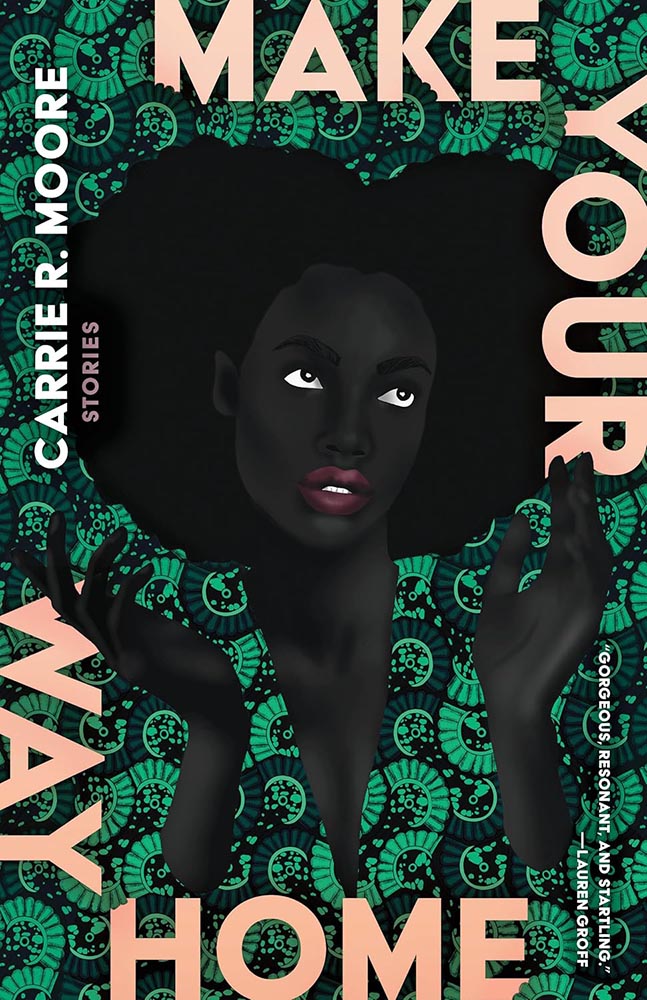
    Once in a while, however, it’s done so well that greatness must be acknowledged. Weaving the title text into the pattern helps, as does, of course, the fantastic art.

    Cover design by Tyler Comrie.

    I had the UK version of this in last year’s list — but the paperback, out this year, gives me an excuse to not only highlight the US version, but the associated redesigned back titles:

    Cover designs by Tyler Comrie.

    I do not believe “brilliant” is resorting to cliché.

    Cover design by Grace Han.

    The second one-color cover on this list, whose simplicity belies the story within. (Lauren Peters-Collaer, on LitHub‘s “best of” list, describes it as “fractured,” which I love — along with the “minor Black artist” being named Wyeth.)

    Cover design by Jaya Miceli.

    “I forgot the blueprints parsley!”

    Awesome stuff: the lips being the only thing on her face, the dog’s expression, the rough sketch style, the way the title stands out, um … okay, everything.

    Cover design by Matt Broughton, with art by Katrien de Blauwer.

    As mentioned, the two-pane cover has become a thing; this one breaks out not only with the black-and-white photos (possibly a subtle duotone) and a bright title in a great typeface (Herbus, by OTT) but cropping on the bottom photo that causes a double-take, and that hint — just a hint — of just-sank in the top photo. Good stuff.

    Much stronger without the quotes fouling the water, by the way. The tug-of-war between design and marketing sometimes gets makes ugly.

    Cover design by Jenny Volvovski.

    Brilliantly simple stand-out: nest and enjoy.

    Cover design by Arsh Raziuddin.

    A fantastic example of a photograph plus — that illustration, those lines, that green, those stars. (And, of course, the eyes.)

    Cover design by Chris Bentham.

    This UK cover expresses the arrogance — the cockiness — while bringing forth all of the disjointedness and even kleptocracy. Timely and compelling.

    Cover design by Matt Dorfman.

    I like the design of this series — the title holding area (literally) is unusual enough to catch attention on today’s shelves socials — but the colors and treatment on this title, specifically, are the most pleasing.

    Cover design by Erik Carter.

    A brilliant idea, perfectly fulfilling the idea of communicating everything needed with one simple concept. (Alas, since putting this aside — the candidates for this list are gathered throughout the year — it’s gained splashy “ketchup” and what can only be described as “cheese.” Boo.)

    Special bonus — the UK version:

    Cover design by Jack Smyth.

    No less brilliant — yet, as covers from the “right” side of the pond often are, more sophisticated.

    Cover design by Janet Hansen, with art by Ahmad Sabbagh.

    Okay, let’s revisit the text describing the previous title.

    To quote Jason Kottke: “The US cover, like many American things, is somewhat less subtle & elegant.” In this specific instance, however, I have to disagree: sometimes, more is more.

    Here, the US version brings a power to the table that US versions often struggle with; a “a few strokes of the pen” can wield enormous strength — often too much — and thought, talent, and consideration are appreciated. This is all of those.

    Cover design by Claire Sullivan, with art by Alex Eckman Lawn.

    “Not for the faint of heart,” one of the blurbs for this title reads — and applies equally well to the cover, which communicates “lovely” and “grotesque” in equal measure. (The UK version trendily plays up the lighter approach.)

    Cover design by Jaya Nicely, with art by Rokas Aleliunas.

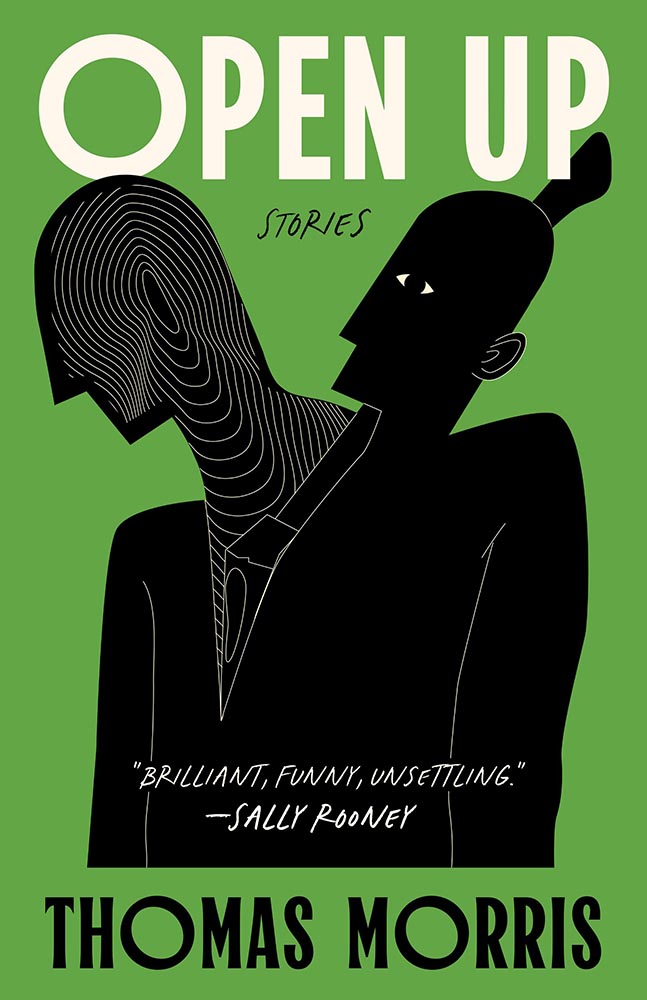
    A “brilliant, funny, unsettling” illustration, too. (Love the green, by the way.)

    Cover design by Devon Manney.

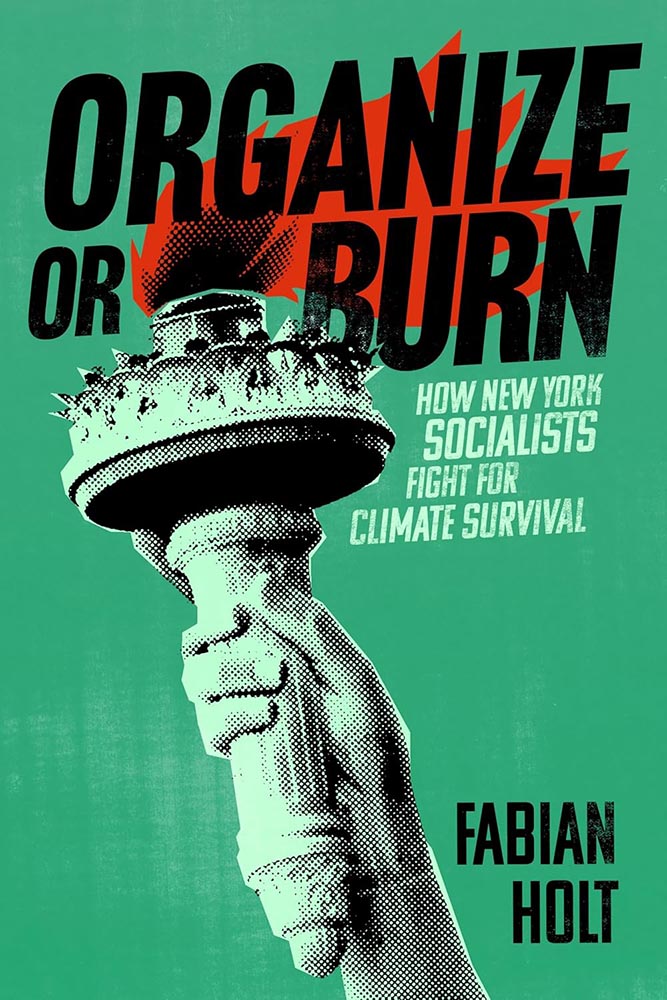
    “From screening to aging, suggestion to content, color to style, this one, put simply, gets everything right,” I said on Spine in October’s University Press Coverage column — but when it was highlighted in October’s Beautifully Briefed, here on Foreword, I added, “One could argue that this cover — and title — could work well even if the word “climate” was removed.”

    Cover design by David Eckersall.

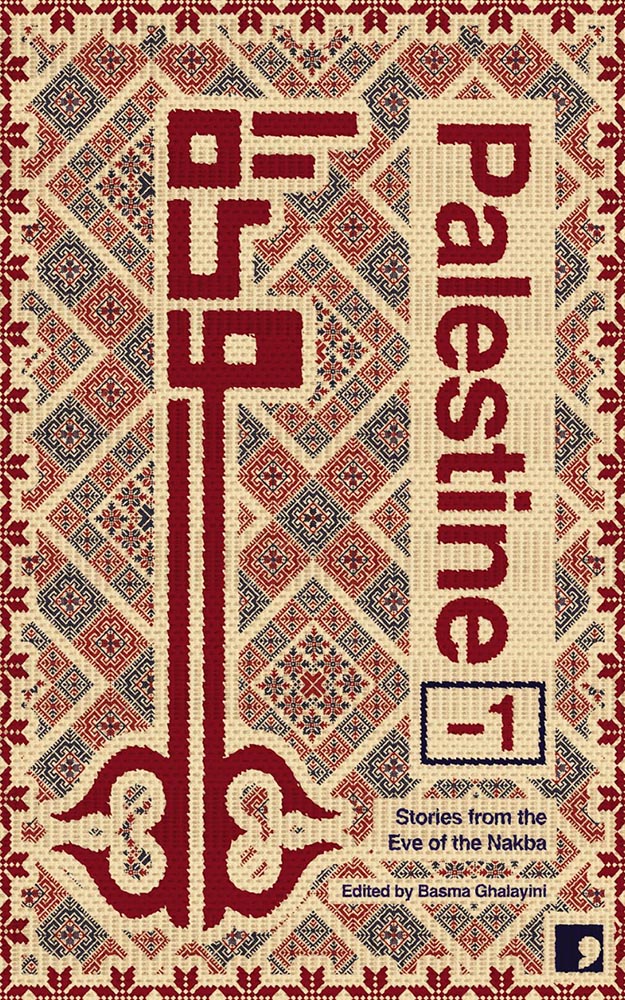
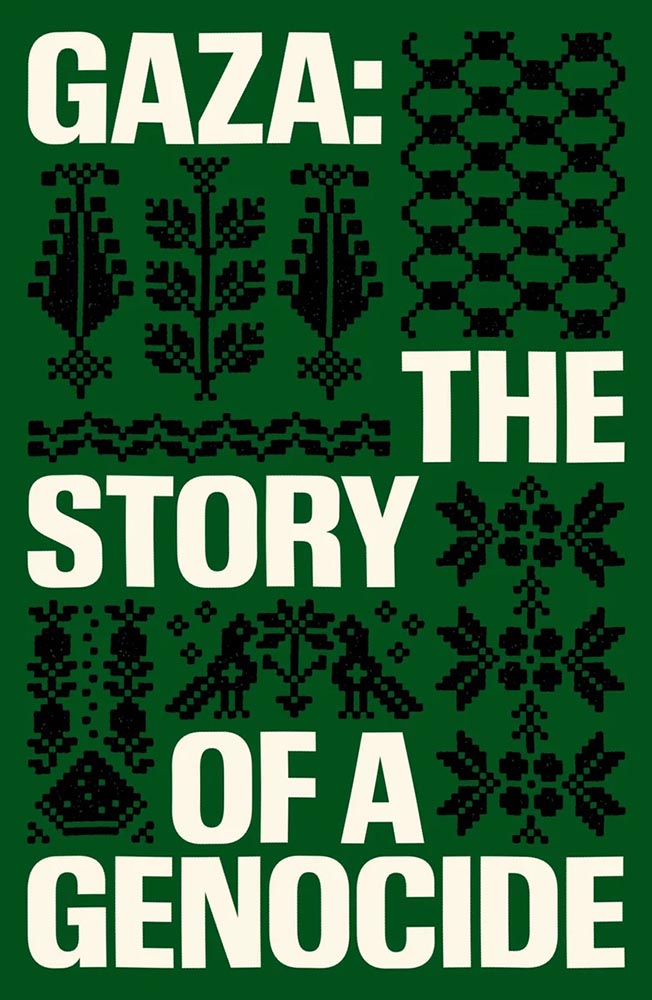
    “Tatreez, meaning ‘embroidery’ in Arabic, is used to refer to the traditional style of embroidery practiced in Palestine and Palestinian diaspora communities. The contemporary form of tatreez is often dated back to the 19th century. The style of cross-stitch embroidery called fallaḥi has been practiced amongst Arab communities in the Mediterranean for centuries,” Wikipedia notes. (NY’s Met Museum has more.)

    Beautifully applied.

    Special bonus — see also:

    Cover design by Chantal Jahchan.

    Yeah.

    Cover design by Janet Hansen.

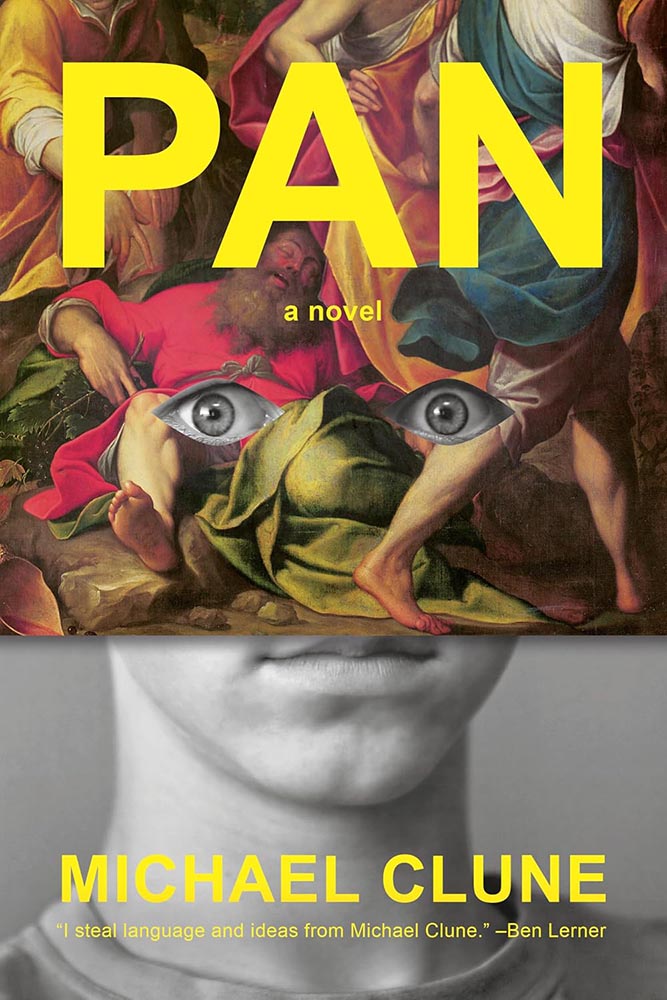
    Pan, panic, or just surprise? No matter the expression, a delightful way to break all of the rules. (Bonus points for the knee to the nose.)

    With apologies, I don’t know the designer for this cover.

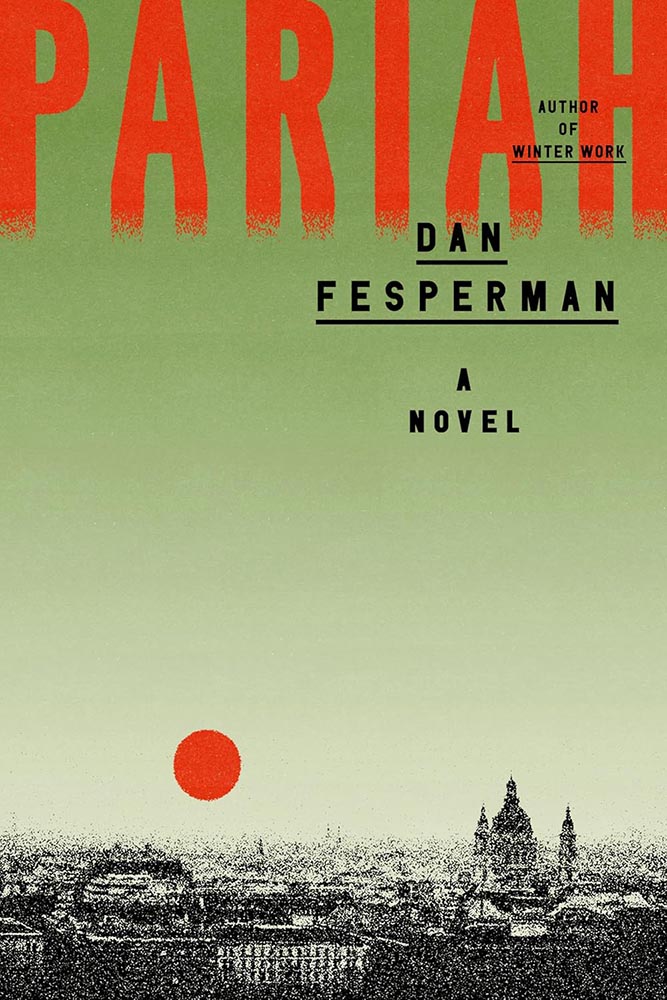
    A disgraced comedian-turned-politician is recruited by the CIA — a grainy prospect that you wouldn’t expect to look like this.

    Um, yes.

    (“This title is absolutely about Bolrovia,” he added.)

    Cover design by Emily Mahon.

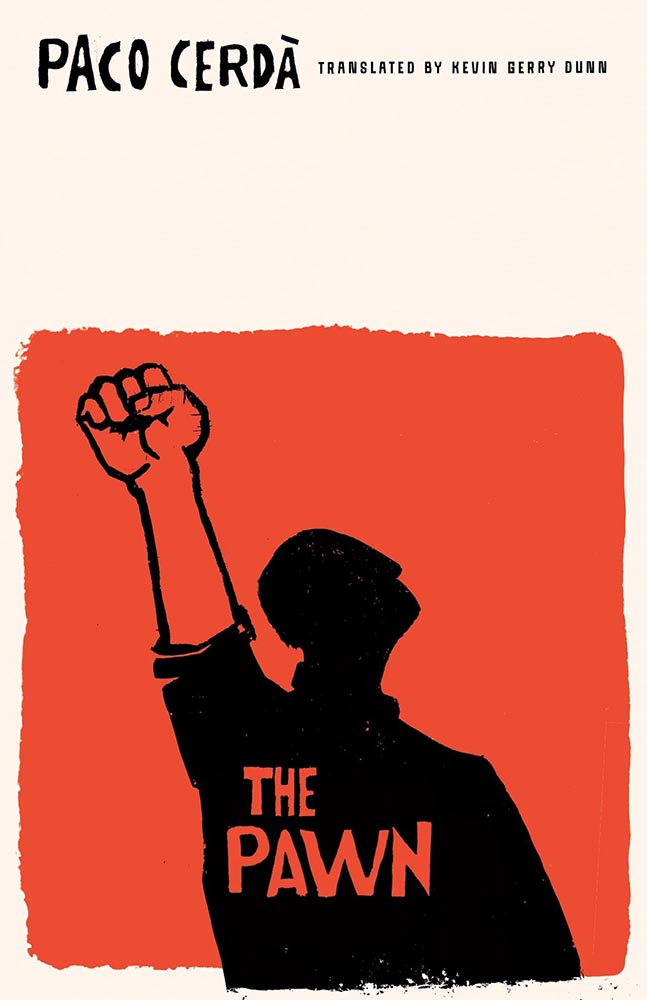
    Less chess and more Cold War, another where a powerful, simple idea triumphs. The orange and the hand-lettering deserve special praise, as well.

    Cover design by Luke Bird.

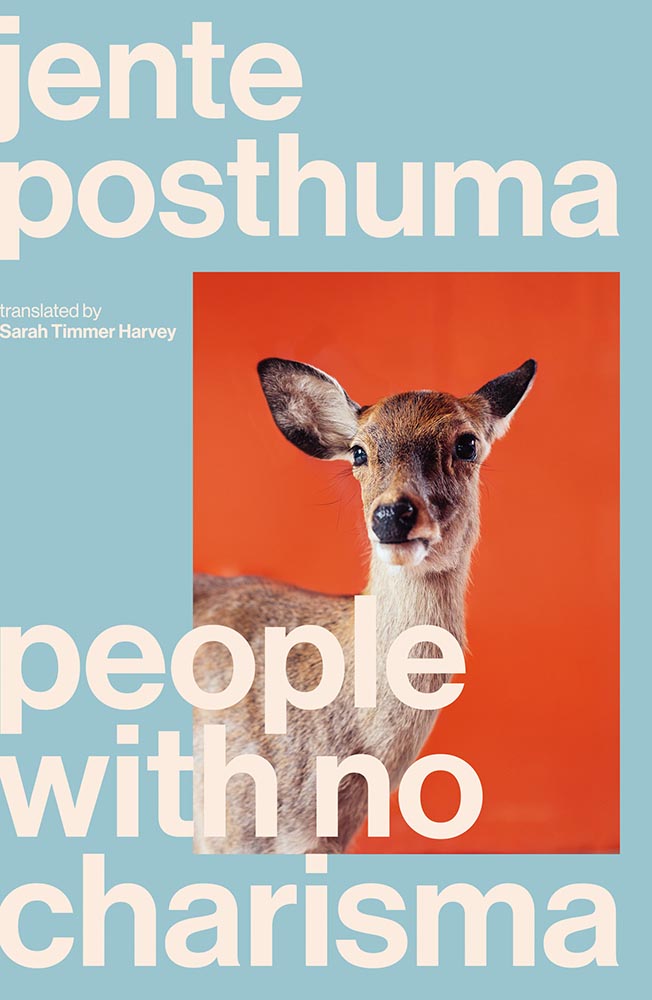
    From expression to ears, brings new delight to deer-in-the … highlights.

    Rutgers University Press did not return a request for cover design information.

    “From the woodcut hall of fame, we have this,” I wrote in Spine‘s November column.

    (I’m sad Rutgers never returns emails, because this artist deserves named credit. If you know….)

    Cover design by Ella Laytham.

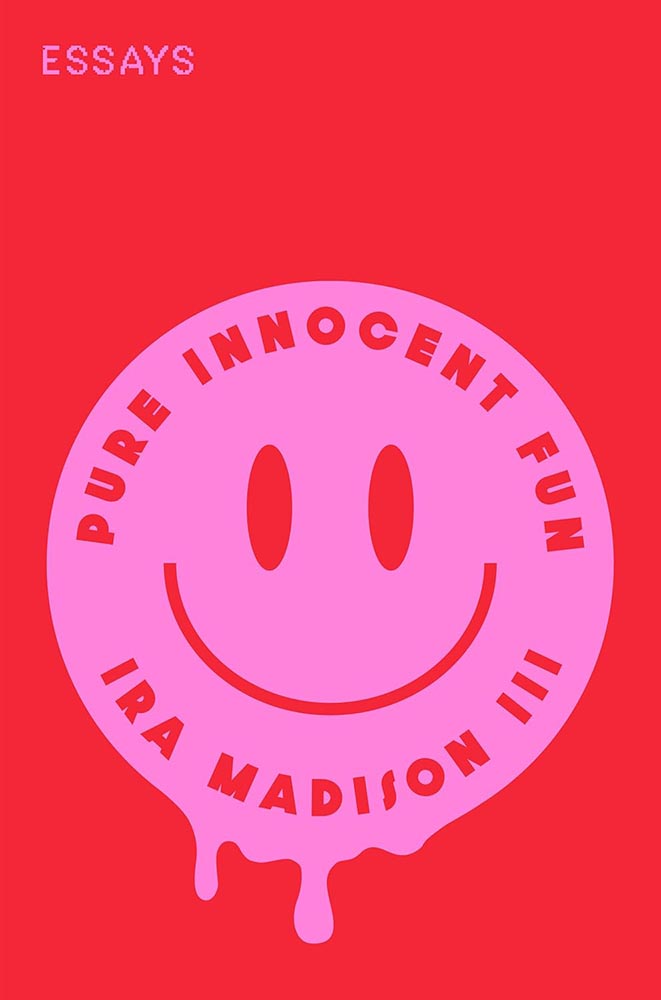
    That “Essays” is printed in little tiny pink stamps is merely the kicker: awesomeness, defined.

    Cover design by Lauren Peters-Collaer.

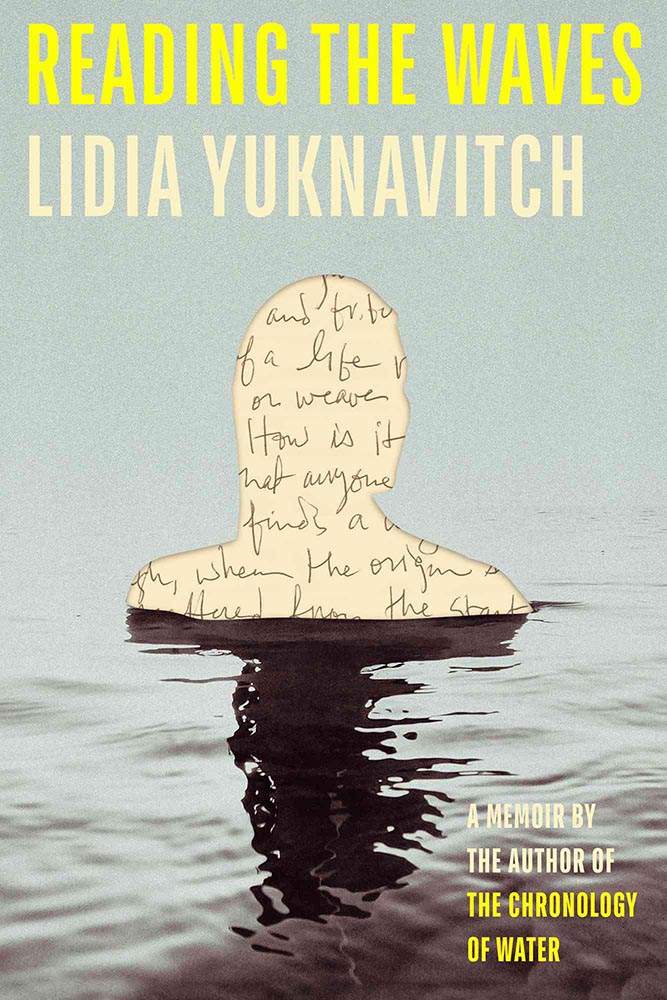
    Might I have mentioned that silhouettes are overused, even trendy? And that photographs are passé? Not here.

    Like The Slip, this title goes out of its way to do something different, something appreciated, with the cutout. Combined with a great photo and grainy sky, it steps out of line and requires your attention.

    Cover design by Lauren Peters-Collaer.

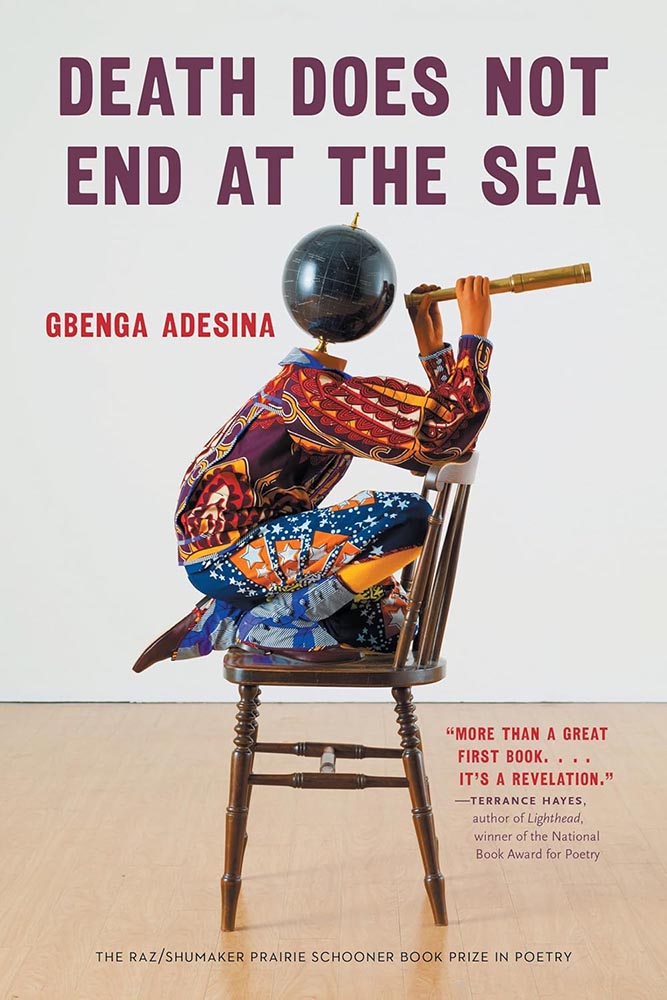
    “Deadpan wit” could be used to describe more than the contents: simultaneously simple and simply brilliant.

    A cheat here: the green version is the hardcover from 2024; the paperback, from November ’25, is orange with a pink chair — and not quite as good.

    Cover design by Sarah Schulte.

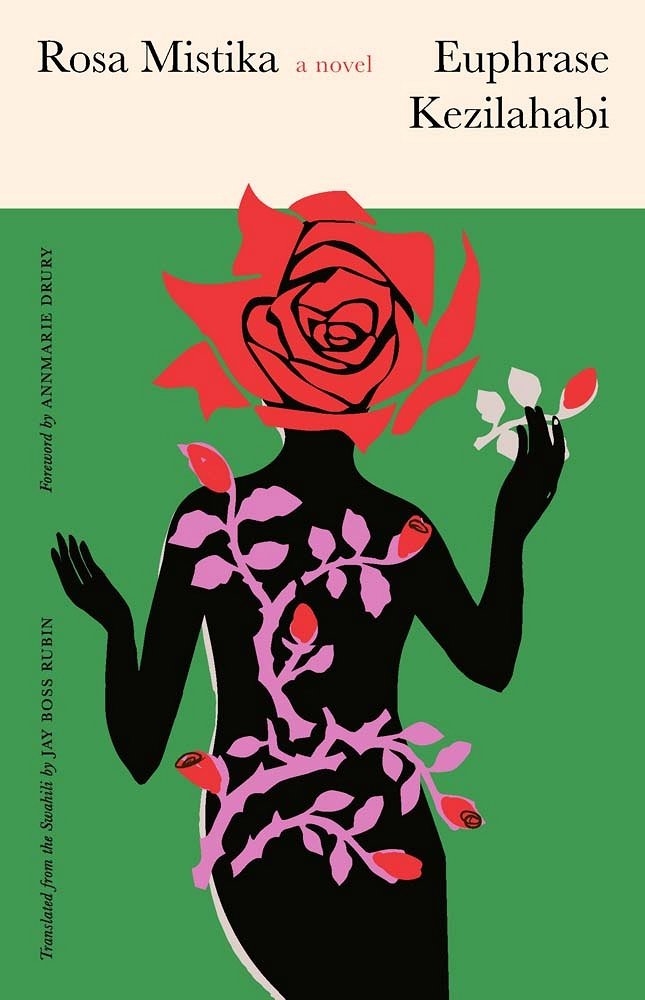
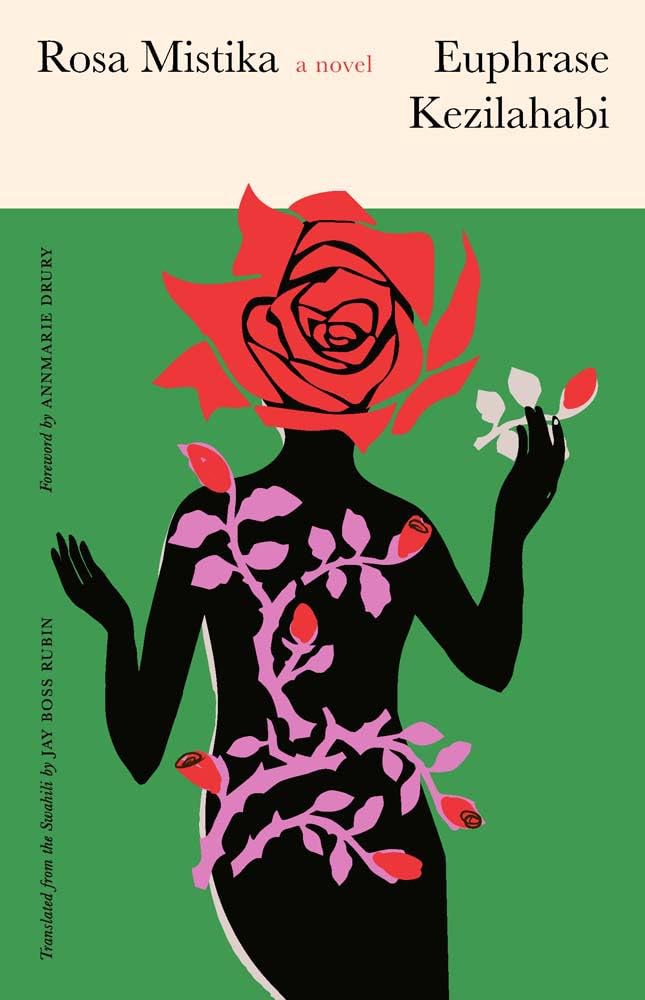
    “A controversial Swahili classic — banned on publication — translated into English, published by Yale, and represented with a cover best described as a gift. A design that belongs in every ‘best of’ list,” I said in the inaugural column for Spine.

    So added.

    Cover design by Josh Durham.

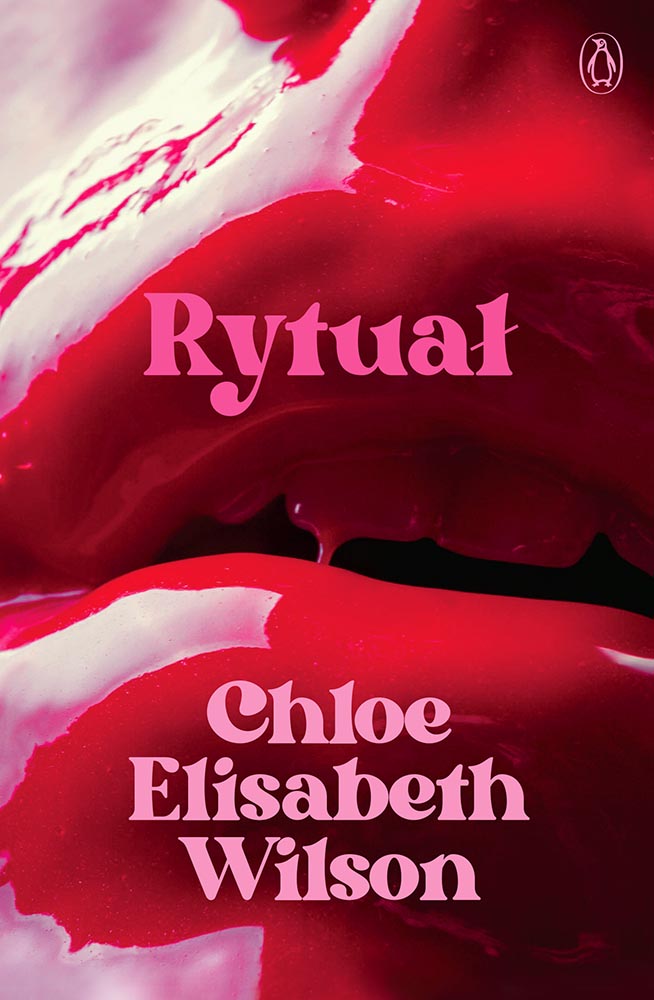
    Close-ups of women’s lips is another trend I’ve been avoiding — except when it positively drips with photographic brilliance: millennial pink, taken to the next level. (Once again, a cover measurably better without the detritus rytuałły added by the publicity department.)

    Cover design by Beth Steidle.

    I don’t know whether Beth did the art for this — presumably — but that art, together with the title treatment, add up to one of those “wow” covers instantly added to the list of year’s best.

    Cover design by Holly Battle.

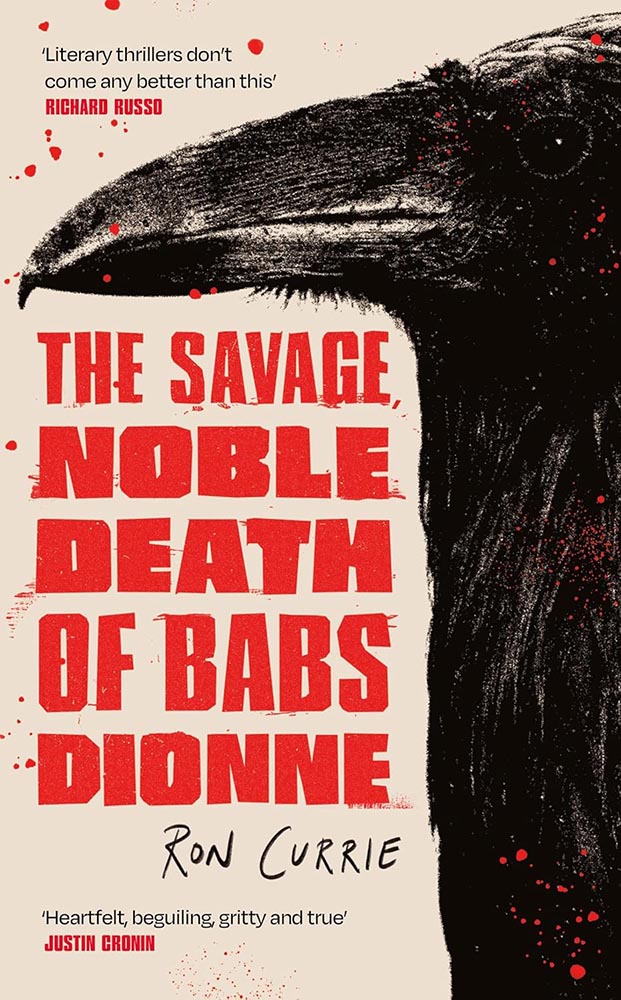
    A “doting grandmother and vicious crime matriarch”: raven mad. This UK cover gets points for illustration style, type style, and, of course, just the right dose of splatter.

    Cover design by Jared Bartman.

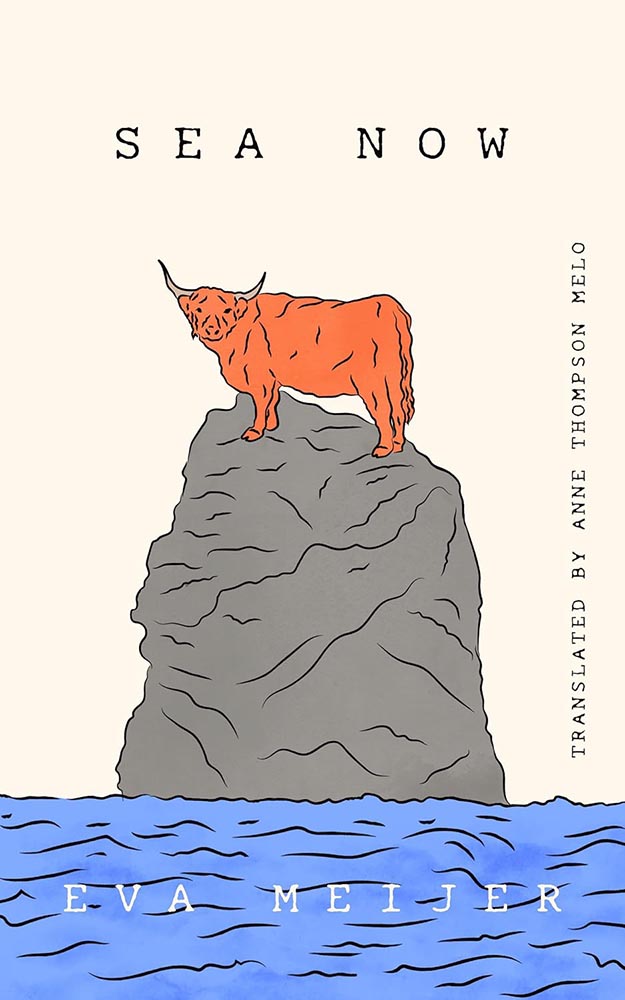
    “The bull’s expression,” he said.

    “The no bulls*** expression of nature,” she retorted.

    Cover design by Jamie Keener.

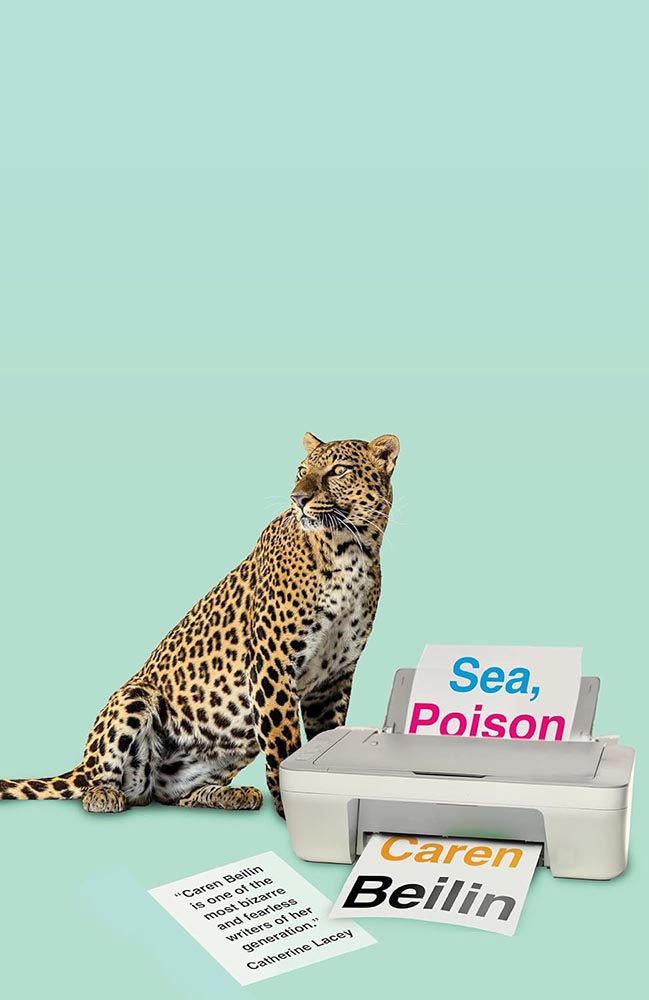
    Never mind the huge negative space: it’s the eyes. (Okay, it’s also the unlikely collection — collision? — of leopard and printer. Plus the loose page/quote. Plus the background color. But still.)

    Cover design by Rodrigo Corral.

    Heroin addiction, AIDS, French doctors, family drama: how do you weave that together into a compelling cover? Well, this.

    Cover design by Gabriele Wilson; collage by Arsh Raziuddin.

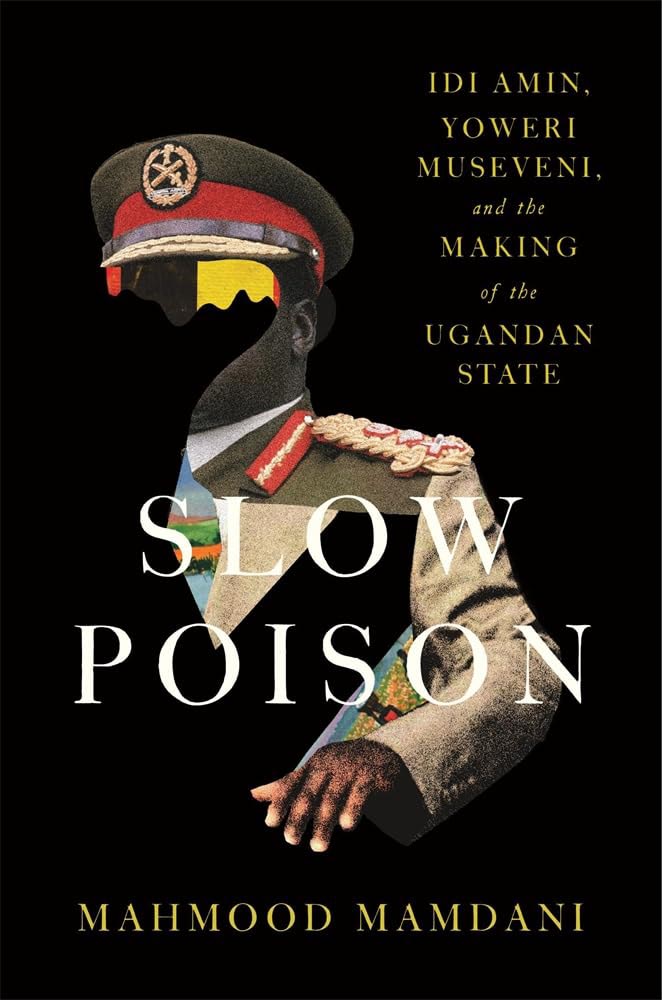
    “Fragmented colonialism in Africa, illustrated incredibly well,” I said in October’s Spine column — then went on to do both designers a disservice by failing to include the appropriate credit. Sheesh. (Apologies.)

    Cover design by Farina Yasmin.

    The US vs. UK “style” has been mentioned, well, possibly too much. Sorry.

    But.

    Here’s a great example of two great covers — both where all eyes are very much on the performer’s … uh, performance — yet in remarkably different ways.

    Cover design by Julia Connolly; photograph by Sandra Casado.

    Even though this kicks serious a**, in this case (and to continue the back-and-forth), I don’t think the US version is any less sophisticated.

    Cover design by Nicole Caputo.

    Beautiful illustration, beautiful type treatment; it’s something that could almost be described as “soothing.”

    (With the possible exception of the text within.)

    Cover design by Steve Attardo.

    An awesome illustration against one of the year’s creamiest backgrounds, yes, but absolutely one of the year’s best title type treatments.

    Cover design by Jaya Miceli.

    From Spine‘s University Press Week special coverage, November 10–14, brought to you in honor of the event help by the Association of University Presses:

    “‘Ebullient’ is used in the description of this title, and quite frankly I can’t think of a better word to describe this text-only treatment: superlative work.

    “(In Miceli’s library, this would be shelved with Milk Fed and Joy of Consent instead of Big Swiss and Victorian Psycho — but it’s telling that she’s great at both styles.)”

    Special bonus — another from that post:

    Cover design by Issac Morris.

    “The ayes have it,” I quipped. “Also, both the title type and color choices are out of this world. (Not sorry.)”

    Cover design by Jack Smyth.

    The word “acerbic” is used several times to describe this tile, but the UK cover just isn’t — the type and treatment are wonderful, and the surrogate egg is perfect.

    Special bonus — the US version, which received a good deal of praise:

    Cover design by Tyler Comrie.
    Cover design by Dana Li.

    As mentioned on And I’ll Take Out Your Eyes, the part-human, part animal thing could possibly be described as “overdone.”

    Here, though, it’s a home run wrapped in a night out: from colors to drips, pose to poise. Awesome.

    Cover design by Michel Vrana.

    A “decades-long earthquake,” indeed: layered, hopeful, wonderful.

    Cover design by Sarah Schulte.

    Another text-in-a-square exception to the rule: framing rarely works so well. (Besides, there’s that illustration.)

    Cover design by Daisy Bates; photograph by Vanessa McKeown.

    Cover photograph of the year, foot hands down.

    Cover design and illustration by Kimberly Glyder.

    “A risqué cross-dressing interpretation of a Shakespeare classic”: I can’t decide if it’s a crown, horns, or teeth. (“Yes,” someone said.)

    But it’s the red overprint that steals the show. Fantastic.

    Parenthetically, the author is “a founding artistic director of The Semitic Root, a collective that supports innovative theatre co-created by Arab and Jewish Americans.” How awesome is that?

    Cover design by Kelly Hill.

    “Canadian text soothes,” some belligerent American said.

    (Another one of those illustrations I’d happily hang on my office wall, by the way.)

    Cover design by Kimberly Glyder.

    Never mind anything else: it’s the scribble. (The title font’s beautiful, too, honestly.)

    I try to reserve “perfect” for occasions that warrant it — this does.

    Cover design by Luke Bird.

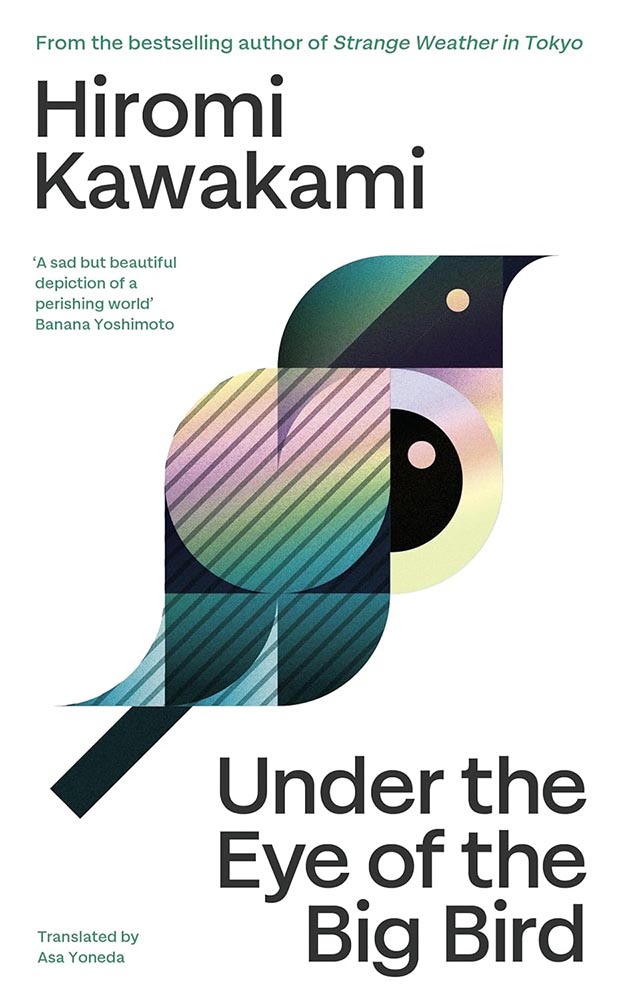
    A geometric, simple triumph of illustration: I suppose if anyone can do a bird well….

    (Sorry.)

    As an aside, this title is not to be confused with Under the Eye of Big Bird, which is in a whole ’nuther category.

    Cover design by Jamie Keenan.

    Entangled in wonder. (Also, the background color is super, and the font — Celtic Hand by Dieter Steffmann — is proof that freebies sometimes work beautifully.)

    2023’s Sublunar was a interesting design, too.

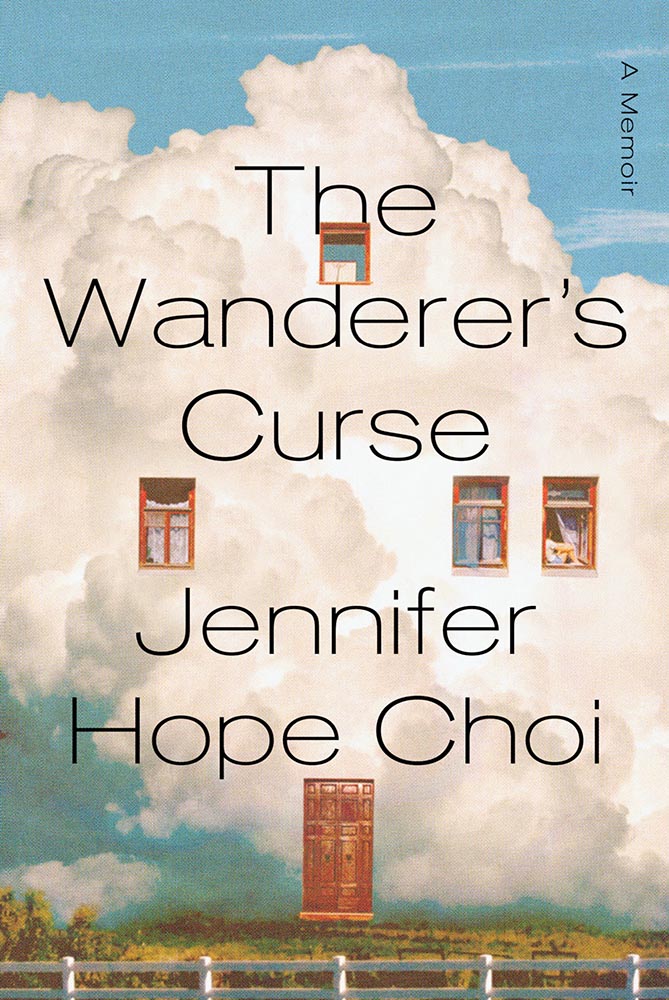
    Cover design by Grace Han.

    Open the window to yeokmasal: awesomeness awaits.

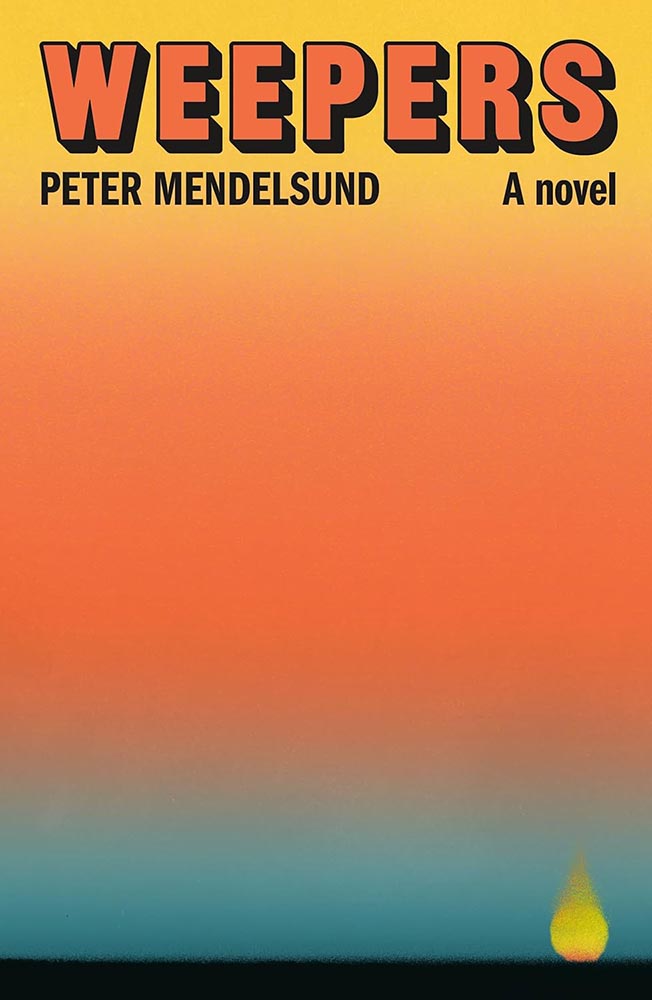
    Cover design by Thomas Colligan.

    A book about a professional weeper, [whose] “services are sorely needed these days, as the town, the region, the country as a whole has become more or less numb.”

    Ummmm….

    (The cover’s fantastic, too.)

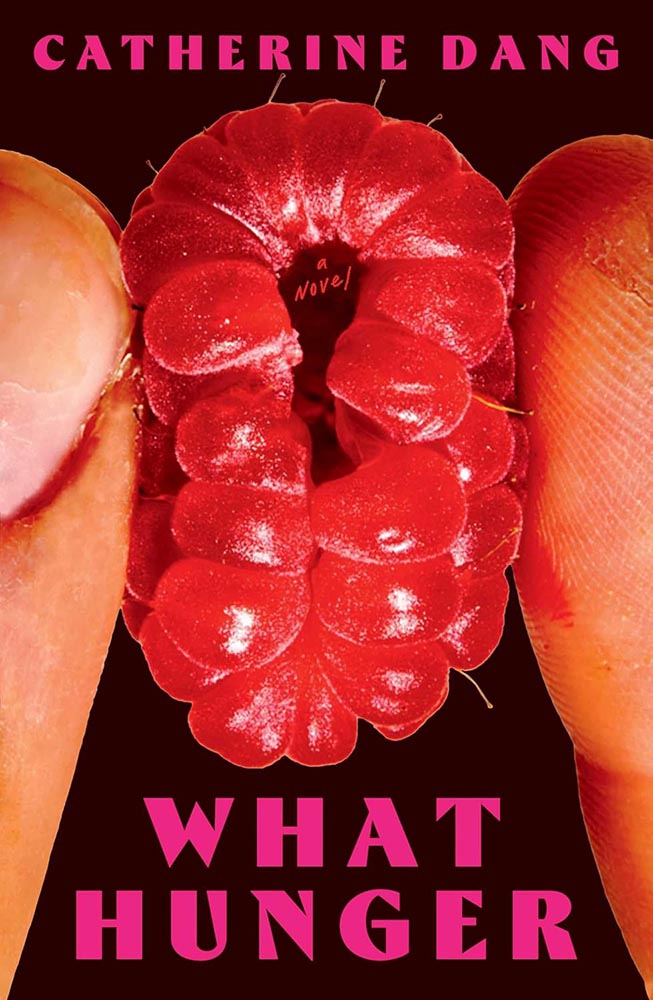
    Cover design by Maddy Angstreich; photograph by Bobby Doherty.

    Dang, that’s not raw meat being squeezed there. (Nor a fruit, for that matter.)

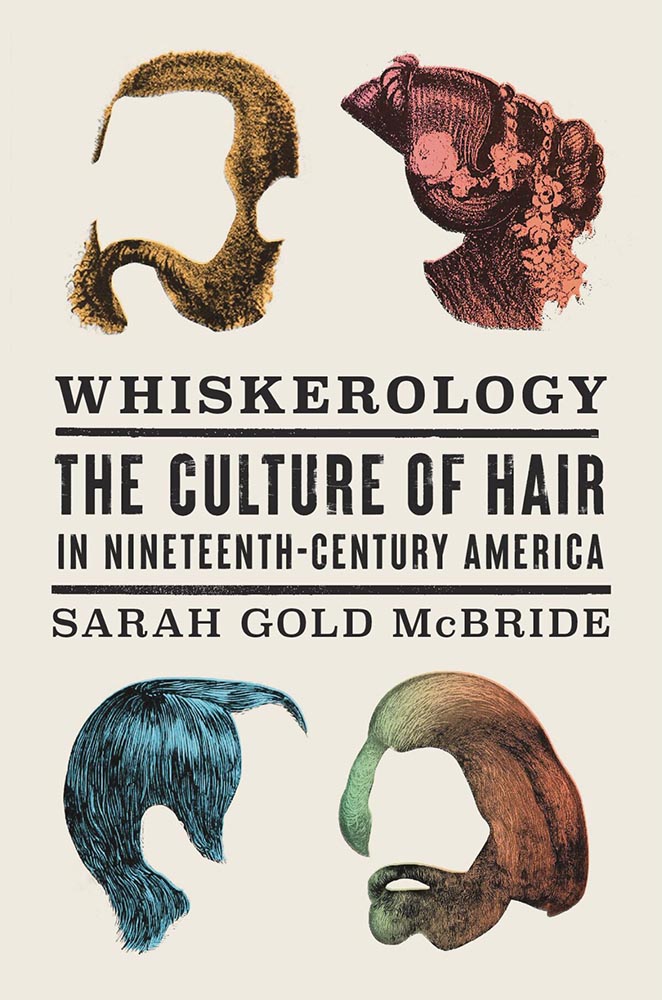
    Cover design by Pablo Delcan.

    From June’s Spine column: “19th-century hair styles: the absolutely fantastic world of university press cover design briefs … absolutely nailed here, with pen-and-ink illustrations and aged type handled perfectly. (Great title, too.)”

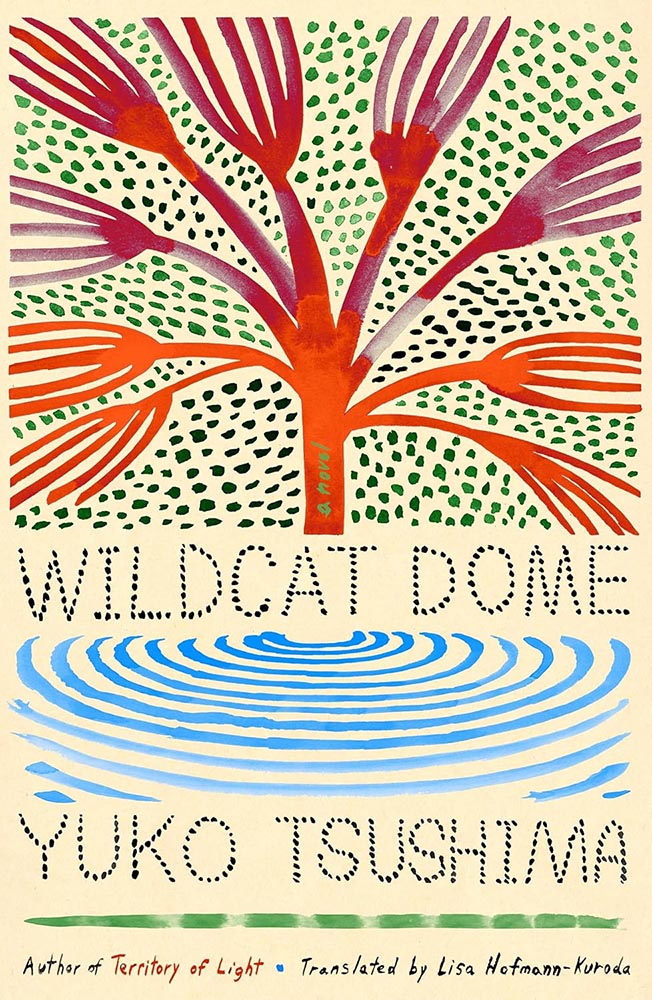
    Cover design by Na Kim.

    To close out, another painting by Na Kim, as visually arresting as Brother Brontë, above, but 180 degrees in the other direction. (Bonus points for the pointillist lettering.)

    Come to think of it, it’s 180 degrees from Dominion, too. Is it possible to have a 540-degree compass? Na apparently does — awesome.

    • • •

    2025’s favorites folder contained more than four hundred examples by the end of the year — a hundred more than 2024 — and represented a huge variety of titles, publishers, and design styles. (Significantly different from last year, too — interesting.)

    It was a huge task to whittle the selections down; 400 to 300 was relatively easy, 300 to 200 more difficult, and those last hundred involved making hard choices between covers I really liked.

    One thing helped: as mentioned in the intro, I worried less this year about highlighting every style, every designer, in every category — given the drama that was 2025, there was, in fact, a smidgen of comfort food involved.

    But oh, that comfort food. Michelin starred.

    Another help: my column at Spine.2Vyki Hendy, Spine‘s publisher, deserves a special thank you for that opportunity. It’s reminded me of the gems that exist in an area that doesn’t get enough attention — outstanding, often great, book covers I’m more than happy to find the time to celebrate. While I enjoyed casually perusing University Press designs in the past, they didn’t live under the same microscope that they did starting last June (and will continue to). Adding more University titles is an ongoing bonus, and several of those titles made it into this list; perhaps egotistically, I’d like to think that the exposure those titles received allowed them to make others’ lists, as well, a benefit for all. Nice.

    Thank you for taking the time to spend a few minutes here today. I wish you a wonderful, successful, and above all, peaceful 2026. See you soon.

    How This List was Compiled

    There were fewer sources for titles in 2025 than in years past; the BBC disappeared behind a paywall, the quality of mainstream publishers continues to decline, and those articles I did read seemed to stress trends and “what’s hot” rather than actual quality. Thankfully, there’s still PRINT, Spine, LitHub, The Casual Optimist, and NPR’s Books We Love. There’s also The Guardian, which does pretty well with books; the New Yorker‘s book reviews are outstanding (although rarely centered on their design); and, of course, there’s the New York Times Book Review (likewise, although Matt Dorfman’s best designs article deserves note). If you haven’t already, when you have a moment, please enjoy some of those links— a great many more outstanding examples of book cover creativity await.

    • 1
      Publishers need to remember that not all of their customers select what to read based on influencers, what they see on Facebook, or by doomscrolling Instagram. Some of us are lifelong learners, have hundred or thousands of books, and discover by … reading. Real articles, by real people, on websites with those people’s real names on them. (Or even, occasionally, this thing called paper.)
    • 2
      Vyki Hendy, Spine‘s publisher, deserves a special thank you for that opportunity. It’s reminded me of the gems that exist in an area that doesn’t get enough attention — outstanding, often great, book covers I’m more than happy to find the time to celebrate.
  • Beautifully Briefed 25.12: Old and New

    Beautifully Briefed 25.12: Old and New

    To close out 2025, a bunch of disparate items for your edification and enjoyment: the usual categories plus some stuff imported from left-field. Get caffeinated, get comfy, and let’s get to it.

    Please note that the photography trip planned for mid-December had to be cancelled at the last minute — circumstances beyond my control — and hasn’t yet been rescheduled. Apologies.

    December’s Spine
    Stanford University Press. Cover design by Jan Šabach; art director, Michele Wetherbee.

    Fourteen great University Press book covers in December’s column, including the genre-bending example above. Check it out.

    December 25th: Designer Holiday Cards
    Charles and Ray Eames, 1940s. (Image credit: © 2025 Eames Office, LLC. All rights reserved. Via Wallpaper*.)

    “Long live the Christmas card — a ritual that feels increasingly endangered in our digital age. The simple act of putting pen to paper and sending wishes inked in black or blue is, in a word of instant messages, profoundly gratifying,” Wallpaper* writes. “In celebrating this venerable tradition, we found ourselves asking: what sort of Christmas card does an architect send?”

    January 1st: Public Domain Day
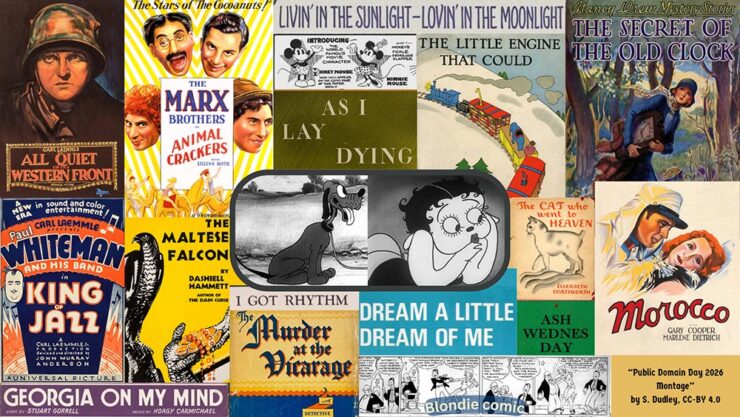
    Image courtesy of the Center for the Study of the Public Domain, Duke Law.

    On January 1, 2026, thousands of copyrighted works from 1930 enter the US public domain, along with sound recordings from 1925. They will be free for all to copy, share, and build upon. The literary highlights range from William Faulkner’s As I Lay Dying to Agatha Christie’s The Murder at the Vicarage and the first four Nancy Drew novels. From cartoons and comic strips, the characters Betty Boop, Pluto (originally named Rover), and Blondie and Dagwood made their first appearances. Films from the year featured Marlene Dietrich, Greta Garbo, the Marx Brothers, and John Wayne in his first leading role. Among the public domain compositions are I Got RhythmGeorgia on My Mind, and Dream a Little Dream of Me. We are also celebrating paintings from Piet Mondrian and Paul Klee. [In this post] you can find lists of some of the most notable books, characters, comics, and cartoons, films, songs, sound recordings, and art entering the public domain. After each of them, we have provided an analysis of their significance.

    — Jennifer Jenkins and James Boyle, Duke Law

    The annual list is, in every manner of speaking, a gift to society. (Via Pluralistic.)

    Has Judging a Book by its Cover Gone Too Far?
    Cover design by David Pearson.

    Excellent question from It’s Nice That, discussed in a post with book designers Na Kim and David Pearson. Book covers these days are driven by trends that are all-too-fleeting — what does that mean for what’s contained within? Is “salability” all that matters?

    Perhaps the question should be, “Where are we as a society, and is this it, in microcosm?”

    Special Bonus #1: 100 Notable Small Press Books of 2025, from LitHub:

    A reminder that press size and cover quality do not necessarily correlate — as noted in the above item, small presses might be willing to bend the “rules” more readily than the big players.

    “Our guiding principles were ‘read a lot, recommend a few’ and ‘seek out a diverse array of authors and publishers,’” they write. “We were especially interested in BIPOC and LGBTQ authors and publishers, who have an even steeper climb to mainstream recognition.” Enjoy.

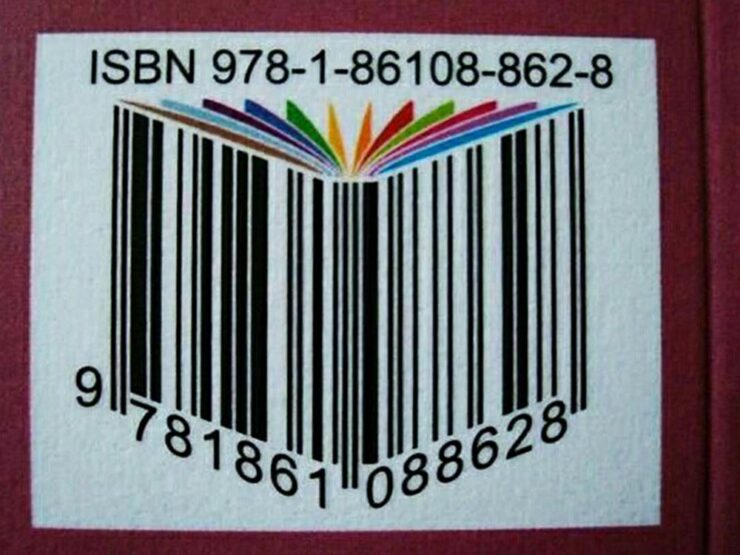
    Special Bonus #2: Bar codes as design objects:

    This short piece from type foundry Pangram Pangram includes several book covers.

    CreativeBoom: Six Surprising Illustration Trends for 2026
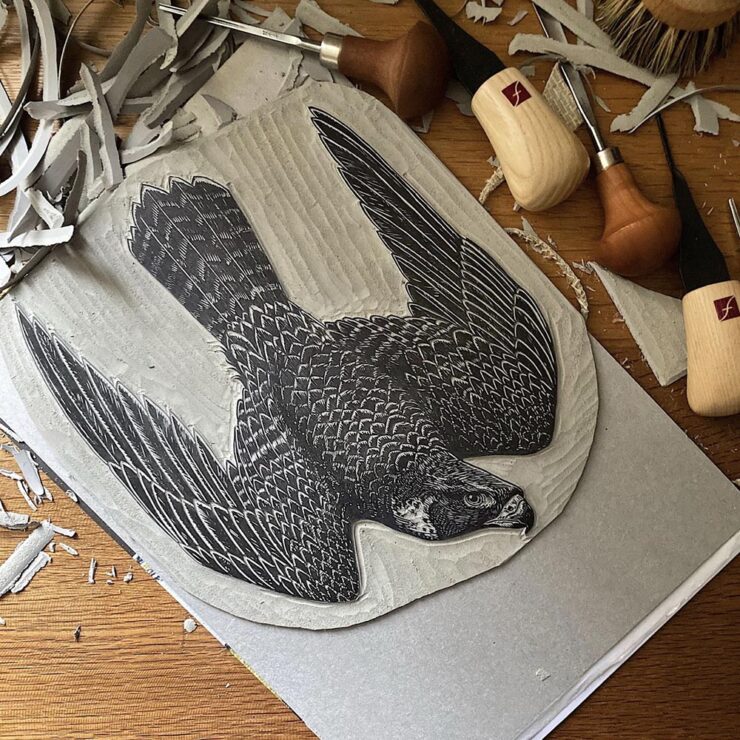
    A linocut by Emily Robertson.

    Contrary to popular belief, illustration — like photography — is not on its deathbed. Despite the temptation for some companies (or budgets) to reach for generative AI, the consensus is that in order to stand out, bringing something unique to the table will be worth the effort. CreativeBoom talked to seven illustration agencies to get an idea what will work in 2026.

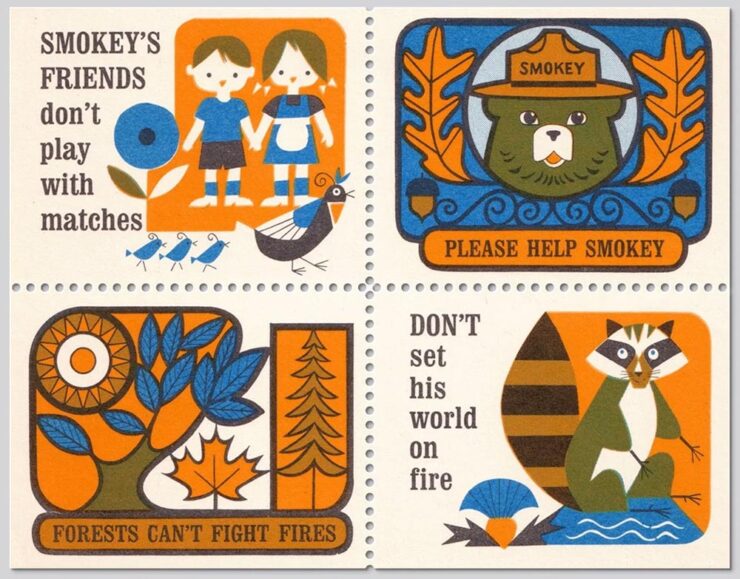
    Special Bonus #3: A repository of mid-20th-century illustration, for research or just enjoyment: “Illustrator Zara Picken has an incredible searchable archive of mid-century modern illustration from c.1950-1975. It’s a goldmine of graphic, type, color, and texture inspiration.”

    Smokey the Bear stamps from 1967.

    Zara’s illustrations are in a cut-paper style and awesome; link via SimpleBits Studio Notes #60. (The entire series of Notebook entries is cool when you have a few extra minutes.)

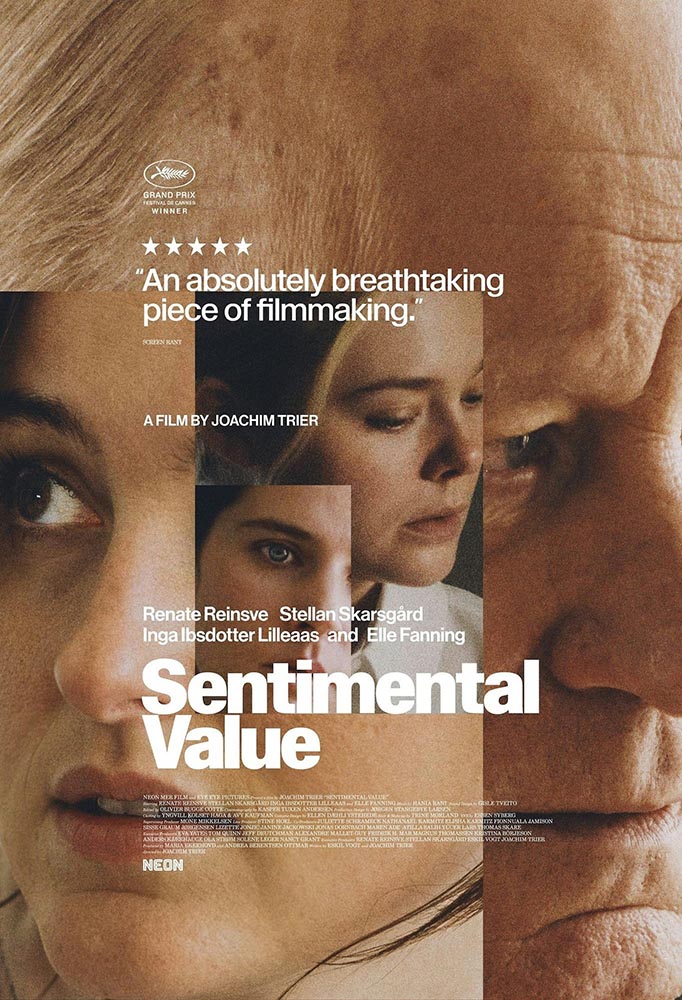
    Creative Review‘s Movie Posters of 2025
    Poster by Empire Design.

    Begonia was mentioned in October. A couple are by Empire Design, including the above — which is a master class in nested photographs. (“Claustrophobic,” CR says.) Great stuff.

    Typefaces, Pt. 1: Notes for December
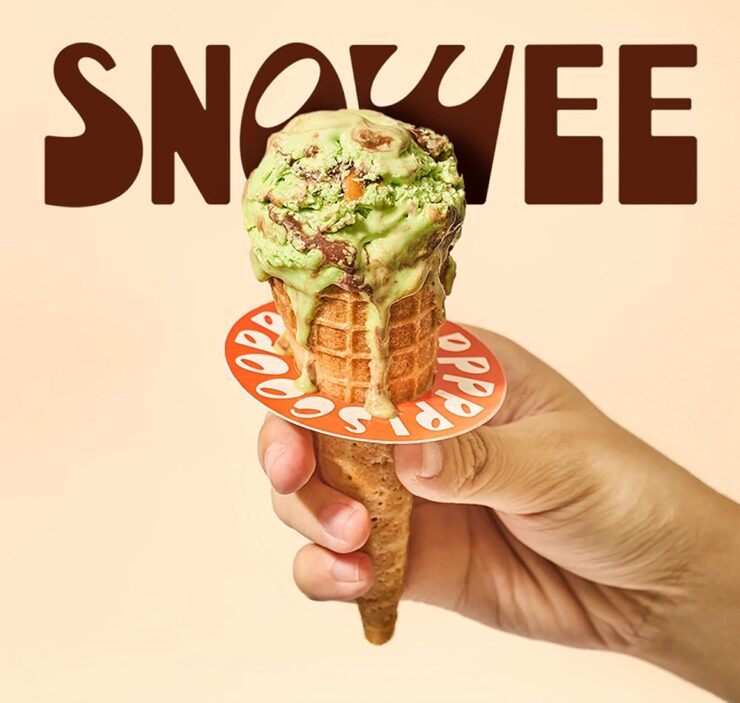
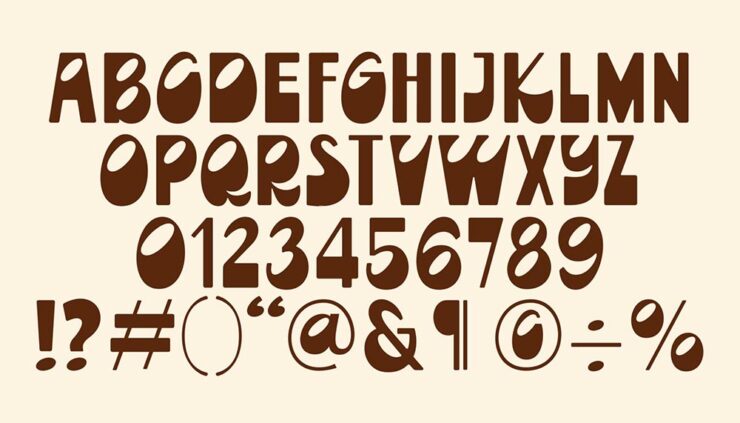
    Snowee

    CreativeBoom‘s new font post for December includes Snowee, which is far and away my favorite: interesting, characterful (heh), and just fun — something lacking amongst the sea of Helvetica wannabes.

    It’s caps-only and not great at small sizes, but given a headline or poster or … whatever, it could be a pleasant, different choice. (I love that the O looks like an olive.)

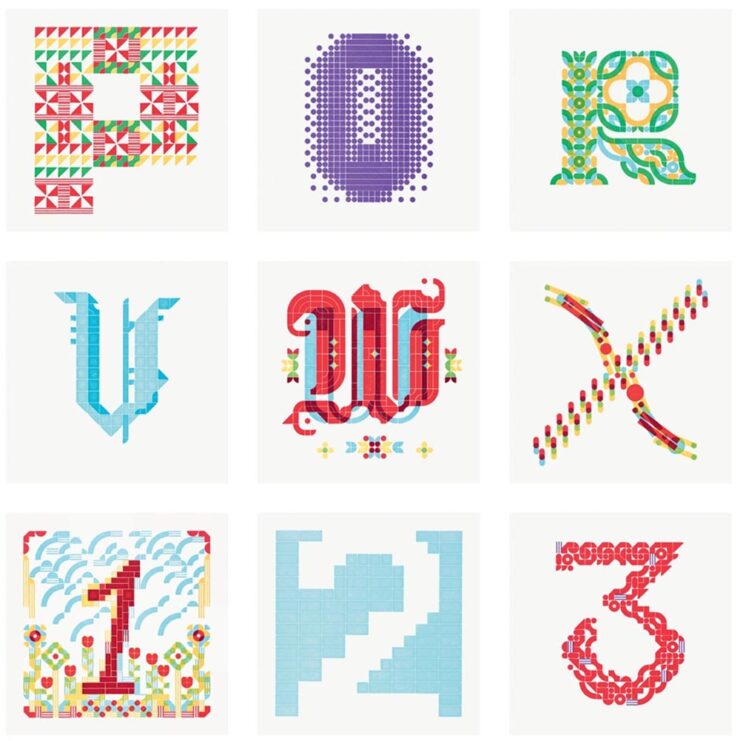
    LEGO’s Letterforms

    Meanwhile, LEGO features in a new project called “A2Z,” an international effort to create letterforms highlighting strength found in limited systems:

    LEGO “offered an ideal blend of fixed constraints and room for playful exploration. Each brick’s scale and form could not be altered, but the grid’s size could be individually defined,” This is Colossal writes of this hand-printed awesomeness.

    Gotham

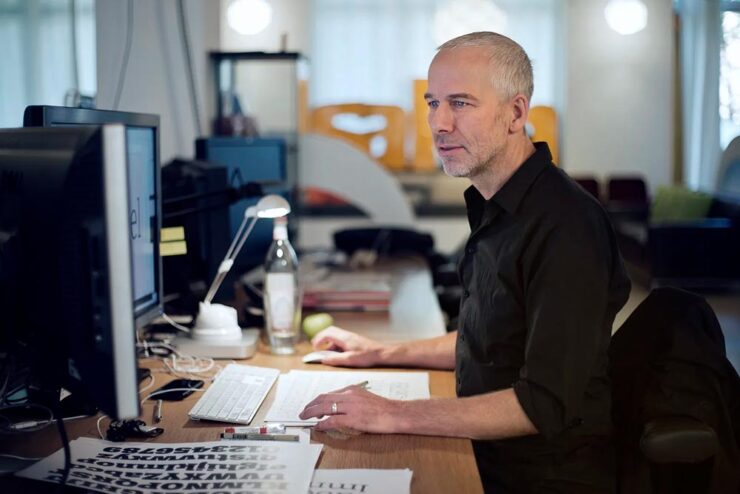
    From Tobias Frere-Jones, the story of how Gotham came to be:

    Tobias Frere-Jones‘ inspiration for Gotham.

    “In 2021, Monotype bought Hoefler & Co, and with it several families that I designed. As these families are now further removed from their origin, I want to ensure that their stories are accurately recorded,” Frere-Jones says. (Part of a series, in fact.)

    The Garamonds

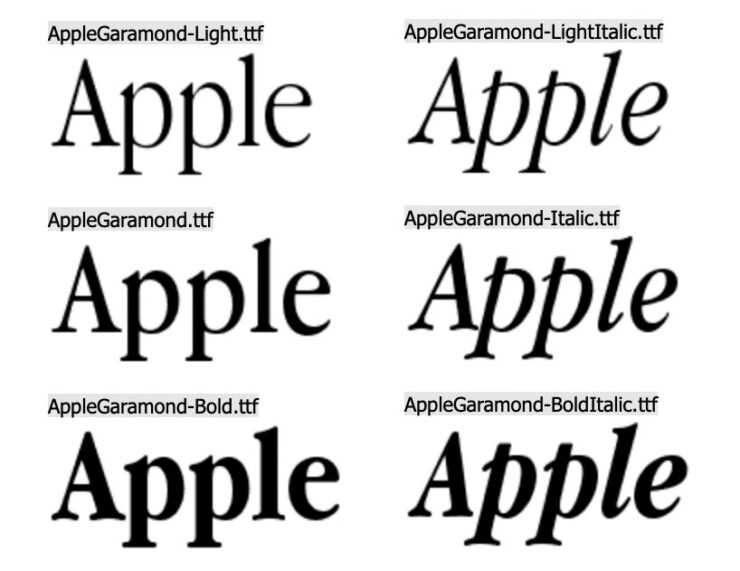
    Lastly (for now), John Gruber’s Daring Fireball is among many who point out that condensed serifs are back in vogue, including — naturally, given the source — Apple Garamond:

    It’s TrueType, but now open source.

    Gruber also reminds us that Apple’s gone through more processor types than typefaces.

    Special Bonus #5: Gruber also has a quick item linking to a brilliant essay arguing that not all Garamonds are created equal — ITC’s version, especially. (Which Apple Garamond was based on, interestingly.)

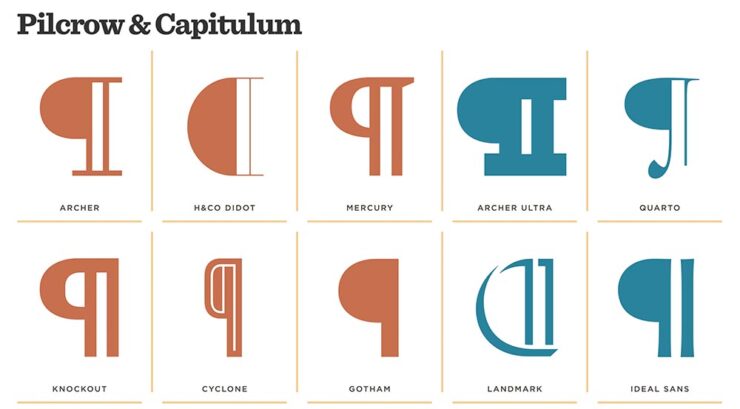
    Special Bonus #6: Who doesn’t love a Pilcrow?

    Hoefler & Co’s brief item is worth it for the varied examples alone.
    Fonts, Pt. 2: The Calibri Flame-Out

    Let’s face it: type rarely generates headlines. But these aren’t “normal” times. Headlines were definitely made when the US State Department decided that its house style rules ditch Calibri, a font chosen to be more readable — more inclusive — and revert to Times New Roman. Because … tradition? Politics? Readability?

    Let’s stipulate for the moment that the memo’s drafters saw choices as limited to the defaults available in Microsoft Word. (Because … you saw that coming.)

    John Gruber was all over it, and argued thus:

    While neither is a good choice, between the two, Times New Roman is clearly better. […] I just think it’s stupid for an institution with the resources of the U.S. State Department to shrug its shoulders at the notion that they should license and install whatever fonts they want on all of their computers. Anyone making excuses that they “can’t” do that should be fired. […]

    Calibri does convey a sense of casualness — and more so, modernity — that is not appropriate for the U.S. State Department. And I do not buy the argument that Calibri is somehow more accessible for those with low vision or reading disabilities. People with actual accessibility needs should be catered to, but they need more than a sans serif typeface, and their needs should not primarily motivate the choice for the default typeface.

    — John Gruber, Daring Fireball

    But he didn’t stop there. He somehow got his hands on the complete memo written by Secretary of State Rubio, and it’s … surprisingly sober. Gruber comments:

    It drives me nuts when news sites in possession of a statement or original document do not make the full original text available, even if only in a link at the bottom, and choose only to quote short excerpts.

    With regard to today’s news regarding Marco Rubio’s directive re-establishing Times New Roman as the default font for U.S. State Department documents (rescinding the Biden administration’s 2023 change to Calibri), I very much wanted to read the original.
    The New York Times broke the news, stated that they had obtained the memo, and quoted phrases and words from it, but they did not provide a copy of the original. 

    The State Department has not made this document publicly available, and to my knowledge, no one else has published it. I have obtained a copy from a source, and have made it available here in plain text format. The only change I’ve made is to replace non-breaking spaces (U+00A0) with regular spaces.

    Please do read it yourself, and do so with an open mind.

    It seems clear to me that
    The New York Times did Rubio dirty in their characterization of the directive. The Times story, credited to reporters Michael Crowley and Hamed Aleaziz, ran under the headline “At State Dept., a Typeface Falls Victim in the War Against Woke.

    — John Gruber, Daring Fireball

    Engagement sells?

    Wallpaper*, a UK publication I generally enjoy (and cite elsewhere in this post), is one of many examples where a chosen narrative framed the piece. However, they did one thing to help: they introduced us to Calibri’s designer:

    Lucas de Groot, font designer.

    His comments, directly quoted (from HackerNews — sorry — but also via DF):

    The decision to abandon Calibri on the grounds of it being a so-called “wasteful diversity font” is both amusing and regrettable. Calibri was specifically designed to enhance readability on modern computer screens and was selected by Microsoft in 2007 to replace Times New Roman as the default font in the Office suite. There were sound reasons for moving away from Times: Calibri performs exceptionally well at small sizes and on standard office monitors, whereas serif fonts like Times New Roman tend to appear more distorted. While serif fonts are well-suited to high-resolution displays, such as those found on modern smartphones, on typical office screens the serifs introduce unnecessary visual noise and can be particularly problematic for users with impaired vision, such as older adults.

    Professional typography can be achieved with both serif and sans-serif fonts. However, Times New Roman—a typeface older than the current president—presents unique challenges. Originally crafted in Great Britain for newspaper printing, Times was optimised for paper, with each letterform meticulously cut and tested for specific sizes. In the digital era, larger size drawings were repurposed as models, resulting in a typeface that appears too thin and sharp when printed at high quality.

    Serif fonts are often perceived as more traditional, but they are also more demanding to use effectively. While a skilled typographer can, in theory, produce excellent results with Times, using it in its default digital form is not considered professional practice.

    — Lucan de Groot, LucasFonts

    I don’t know whether there’s much needed beyond that takedown. Okay, maybe this:

    [Y]ou can still make good typography with system fonts. But choose wisely. And never choose Times New Roman or Arial, as those fonts are favored only by the apathetic and sloppy. Not by typographers. Not by you.

    — Matthew Butterick, “Typography in Ten Minutes

    In case all you encountered were the headlines, now you know there was more to the story.

    See also: The Scourge of Arial, A Brief History of Times New Roman, and Typefaces for Dyslexia, all from Daring Fireball, and The Guardian‘s fun Calibri: Is this Really the World’s Wokest Font?

    While I’m at it: Word of the Year
    Getty stock image, made awesome with brown.

    Merriam-Webster announced that “slop” is its 2025 Word of the Year, reflecting how the term has become shorthand for the flood of low-quality AI-generated content that has spread across social media, search results, and the web at large. The dictionary defines slop as “digital content of low quality that is produced usually in quantity by means of artificial intelligence.”

    “It’s such an illustrative word,” Merriam-Webster President Greg Barlow told The Associated Press. “It’s part of a transformative technology, AI, and it’s something that people have found fascinating, annoying, and a little bit ridiculous.”

    To select its Word of the Year, Merriam-Webster’s editors review data on which words rose in search volume and usage, then reach consensus on which term best captures the year.

    Benj Edwards, Ars Technica

    I’d like to suggest an alternative: “brown.”

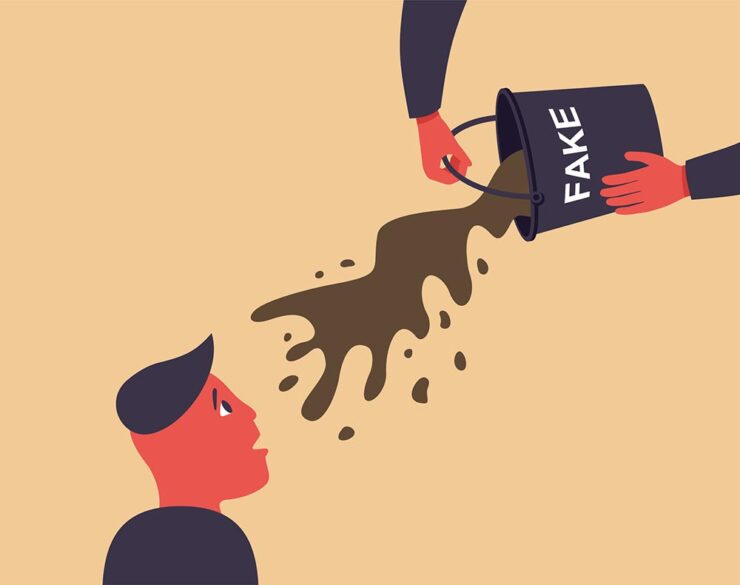
    Brown is the color you don’t want to be in the U.S. right now, lest you face legalized discrimination, illegal arrest — or worse. Brown is the color of the FUD the “Health Department” employs to prevent use of lifesaving treatments and vaccines. Brown is the substance, or lack thereof, the United States exports worldwide in the place of aid, education, fairness, or leadership. Brown is the color of the ink the Supreme Court uses to write opinions stripping people of their rights. Brown is the color of the flag a supine Congress continues to wave, surrendering its authority. Brown is the color of everything that comes from the stool-sample spectacular otherwise known as the U.S. Executive. And, of course, brown is today’s engagement-driven social media, a fecosystem of algorithms and AI built to exploit people for profit.

    Red Scare? Been there, done that. Welcome to the new.

    The Brown Scare.

    [/soapbox]

    Briefly: Jaguar

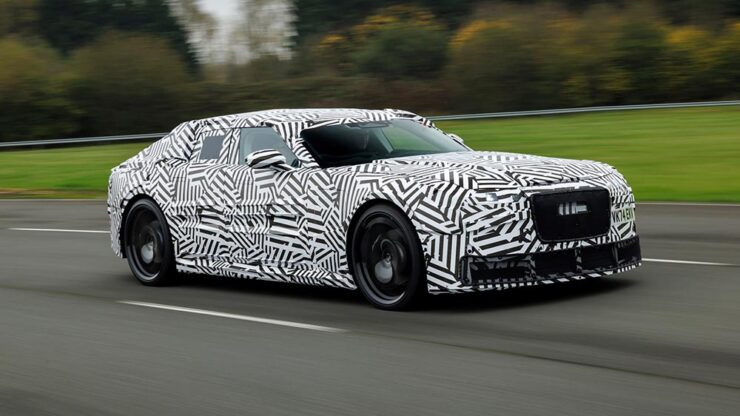
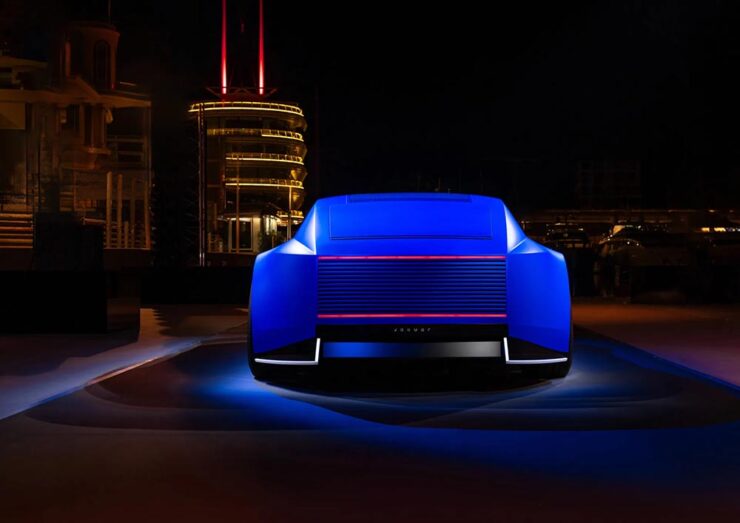
    On multiple occasions, I predicted that JLR might actually succeed at making something interesting out of Jaguar — in the face of, well, the Internet. They’re still working on it:

    The actual new Jaguar previewed by the Type 00 concept.

    Alas, the world has changed around them; EVs are no longer what they were, and basing a new, ultra-high-end product line exclusively around an EV platform might not work out quite the way they’d hoped.

    “Are we seeing the back of Jaguar?” Wallpaper* asks.

    Frankly, the pullback from EVs is beyond stupid — ask anyone who owns one — but then, “stupid” is something to be proud of these days. (I know: soapbox. Sorry.)

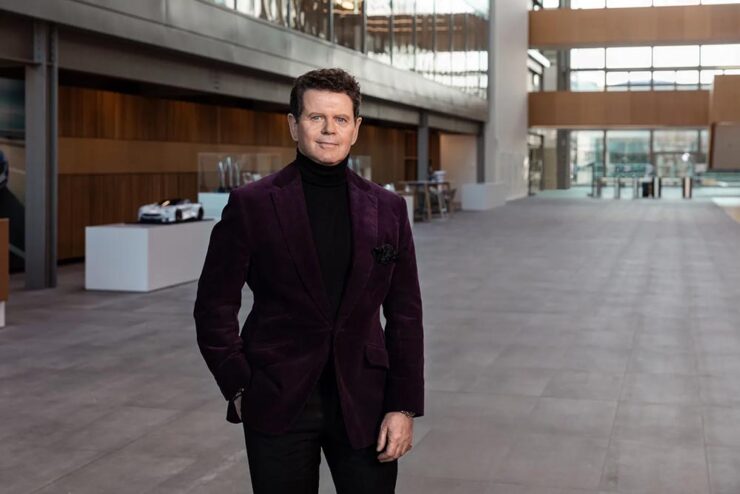
    What’s important regarding Jaguar at this moment in time is, supposedly, the company has pulled so far back that it fired its chief designer, Gerry McGovern.

    Or not. There are questions.

    Professor Gerry McGovern, OBE, in 2021.

    “It’s long been rumoured that McGovern was personally liked by Ratan Tata, who ran JRL’s parent company,” The Drive quotes. “Mr. Tata passed away last year, leaving Autocar India to speculate that ‘key support’ for Mr. McGovern may have waned in the corporate titan’s absence.”

    That was on December 2nd. On the 15th, rumors started circulating that the news stories weren’t correct: Jaguar has reportedly stated it’s “untrue” that McGovern was “terminated.”

    Time will tell.

    Special Bonus #7: How ’bout a mash-up? Cars and type: Volvo has a new corporate font, Centum, designed “with safety in mind.” (Naturally.) Dezeen has the story.

    December’s Photography Round-Up
    A Royal Competition
    Runner-up, “Between Auroras and Dawn — A South Pole Sunrise After the Longest Night on Earth.” Photograph by Aman Chokshi.

    See the winners of the Royal Society Publishing Photography Competition 2025, ten images that showcase “the best scientific photography worldwide across multiple categories, celebrating the overlap between compelling art and influential science.” (Via PetaPixel.)

    Nature’s Best Science Photos of 2025
    “Rings of Fire,” lenticular clouds, Villarrica volcano, Chile. Photography by Francisco Negroni.

    Nature’s annual picks for favorite science photography reflect a diverse range that’s always worth checking out. While it includes the skydiving image covered briefly last month without appropriate comment, the others delight (especially the sloth). Props, too, for the excellent web design on show here.

    International Landscape Photographer of the Year 2025

    Three examples among the twenty winning — and astonishing and inspiring — images:

    “Morning in Dolomites,” Italy. Photography by Martin Morávek.
    “Shiprock,” New Mexico. Photograph by Karol Nienartowicz.
    “Starry Night.” Photograph by Joyce Bealer.

    The rules of the competition state that all images must be taken by the photographer and AI-generated images of any kind are prohibited. Photographers are required to edit the images themselves as the competition “consider[s] this part of the art of landscape photography.” Nice.

    The competition’s website is unfortunately offline as of this writing (Dec 31st), but see more at PetaPixel or This is Colossal.

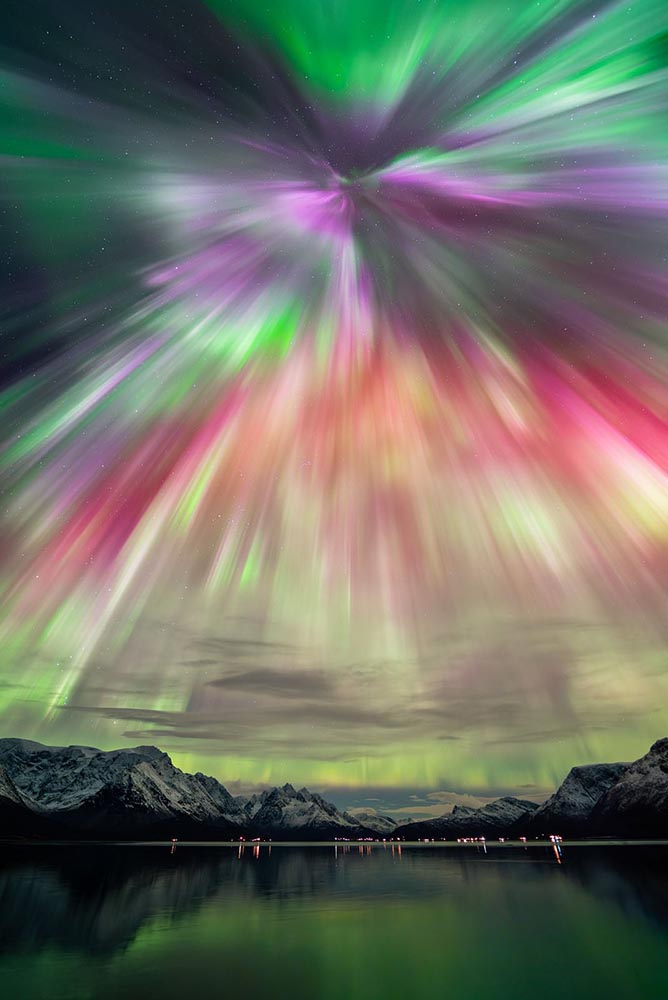
    Northern Lights Photographer of the Year 2025
    “Arctic Rain,” Tromso, Norway. Photograph by Vincent Beudez.

    Capture the Atlas has unveiled the winners of its eighth annual Northern Lights Photographer of the Year contest, and the 15 award-winning photos […] are as beautiful as they are inspiring,” PetaPixel writes.

    I remember lying on my back on the rocks by the Maine beach where I grew up, watching with wonder at the natural display. It’s a pleasure to revisit, however vicariously.

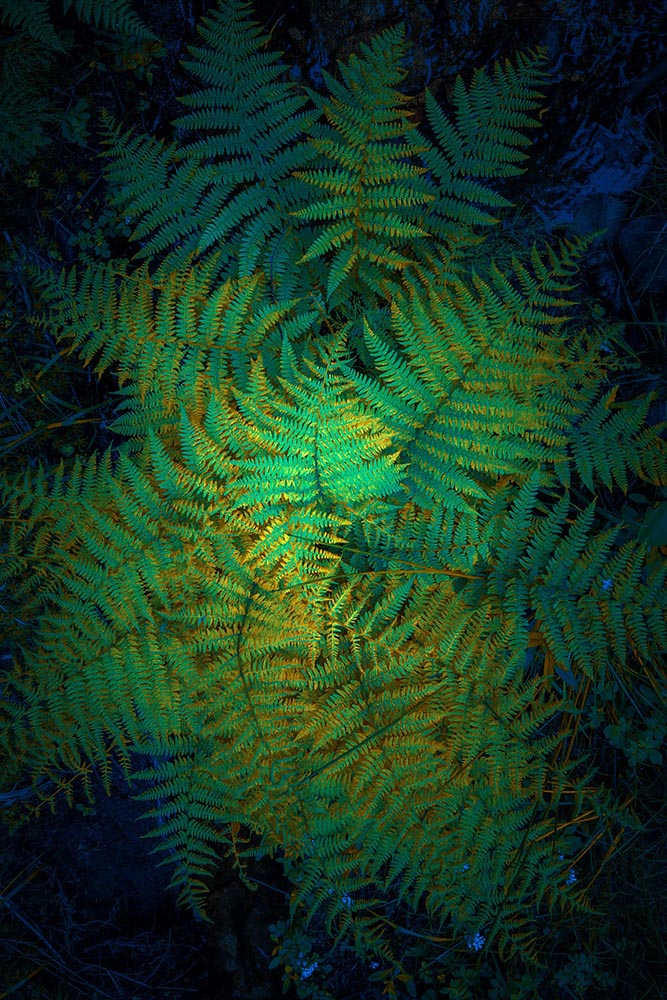
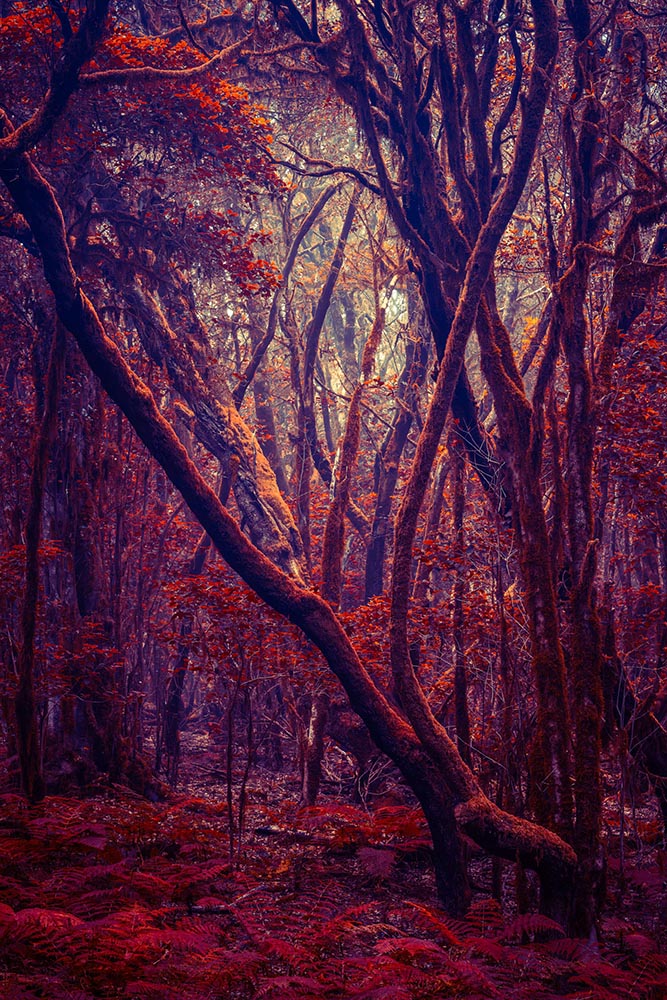
    Otherworldly Forest Photos
    Photograph by Michelle Blancke.
    Photograph by Michelle Blancke.

    “‘I’ve always been fascinated by the idea that our perceived reality is shaped by our minds and reflecting our inner world,’ says artist Michelle Blancke, whose ethereal photographs of trees, glens, and foliage invite us into a familiar yet uncanny world,” writes This is Colossal. Great stuff.

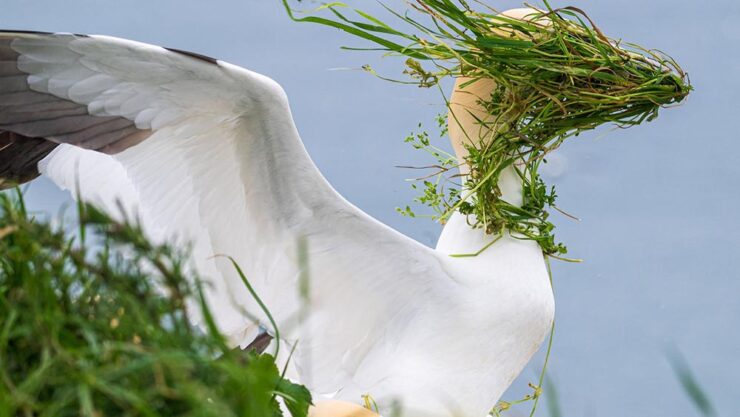
    Nikon Comedy Wildlife Awards 2025
    “Now Which Direction Is My Nest,” United Kingdom. Photograph by Alison Tuck.

    Have yourself a smile.

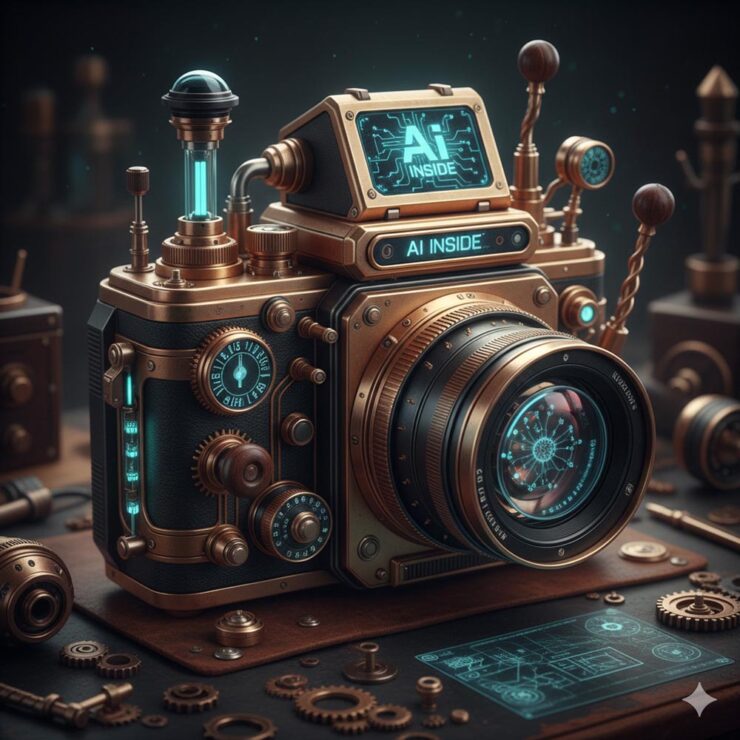
    The “AI-Inside” Camera

    At MacFilos, Andrew has a new piece of kit — an “unexpected trade deal benefit” — that’s capable of making all his images everything he’s ever dreamed of:

    AI image generated by Andrew Owen-Price.

    “May we all remain capable of laughing and smiling through these turbulent times,” he writes. Yes, please!
    Wishing you a safe and happy New Year.

  • 50 Books | 50 Covers (2024 Edition)

    50 Books | 50 Covers (2024 Edition)

    The AIGA’s book design competition has been around for 101 years now — and every year, it’s a pleasure to explore the great work featured within. This year, the jury “had the unique opportunity to view 523 entries from practitioners working in the book design field. It is encouraging that designers continue to be interested in this medium and are currently developing new ways of working with publishers and printers to push our discipline further,” said chair JP Haynie.

    In order to be eligible, submitted designs had to have been published and used in the marketplace in 2024. Like last year, the winners were announced in October.

    I’m sorry to be running late on this coverage, but as always with 50 Books | 50 Covers, it’s absolutely worth taking the time to go through the gallery and appreciate the dedication to craft shown within. (It just took a little longer than usual to share.)

    Twenty titles are highlighted below. Taking a page from my Spine column, I’m including links to each book’s page so you can explore further. The titles are in alphabetical order.

    Note: As with all posts here on Foreword, click the title to get to a dedicated page with a wider text column and, more importantly, bigger images.

    Cover design by Lauren Peters-Collaer.

    Many layers of Flattery deserved here.

    Unfortunately, several of the individual AIGA gallery pages contain nothing other than the book and some rudimentary information. This is one.

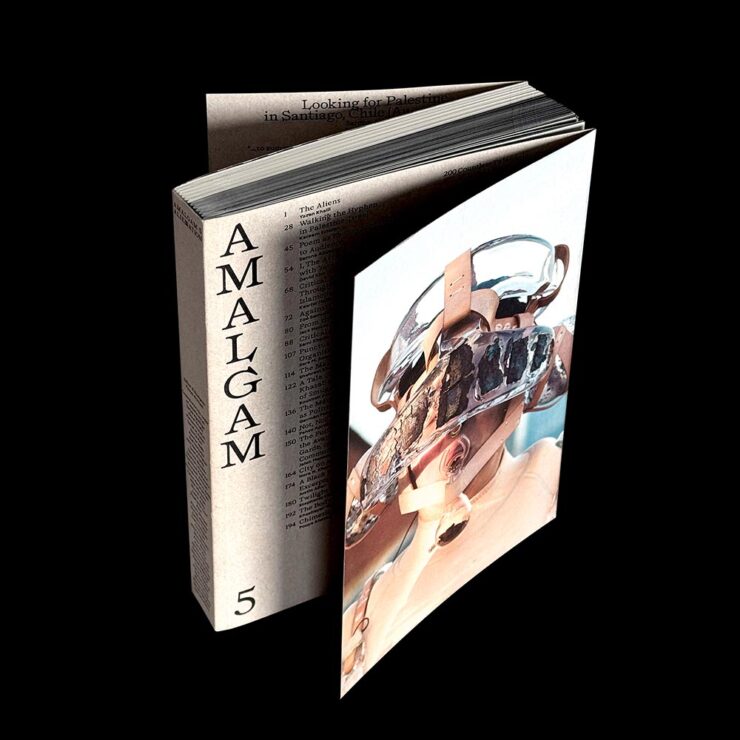
    Cover design by Pouya Ahmadi; art by Tanya Aguiñiga; photography by Gina Clyne.

    Two specific shout-outs here: this issue’s title, AlieNation, and those flaps. It’s not the first time I’ve seen those large reverse flaps, but here done oh-so-well; there’s useful text hidden in those areas and dynamic photography (art, really) on the “surface.”

    It’s fantastic to see journals in these awards, too — an underrepresented category, to be sure.

    See more about this title.

    Book design by John Key.
    Book design by John Key.
    Book design by John Key.

    One of the best things about the 50 Books competition is that it’s about the whole project, not just the cover. We get to see interior designs like this one, designs that are interesting and contributory to the mission of the title — which, when the title is about a designer, a high bar indeed.

    See more about this title.

    Cover design by Chris Allen.

    Wading into this minefield — even as a book designer — could be an issue, to put it mildly. This one’s got just the right character, leaning into the great (and perfectly cropped) image, simple-yet-effective use of color, and large text to, um, score a lot with a small input.

    See more about this title.

    Cover design by Lauren Peters-Collaer.

    Billed by The Washington Post as “riding a unicycle up and down a set of Escher staircases,” this novel deserves a cover design that’s not quite what’s expected.

    Delivered.

    See more about this title.

    Jacket design by Jennifer Griffiths.

    As I mentioned above regarding 50 Books, one of the great things about 50 Covers is that we often get to see not only the cover image but the jacket as a whole.

    Jacket design by Jennifer Griffiths.

    The cover is awesome, a juxtaposition in just the right way. But the jacket as a whole is more complete, more contextual, and in this case, calmly supportive of the more provocative front cover.

    See more about this title.

    Cover design by Mark Thomson.

    I’m surprised that this style of vignetting isn’t used more often, using both the light area to draw the viewer’s attention to the title and the dark areas as a holding area for other necessary text. Falls into what I like to call, “simply, elevated.”

    See more about this title.

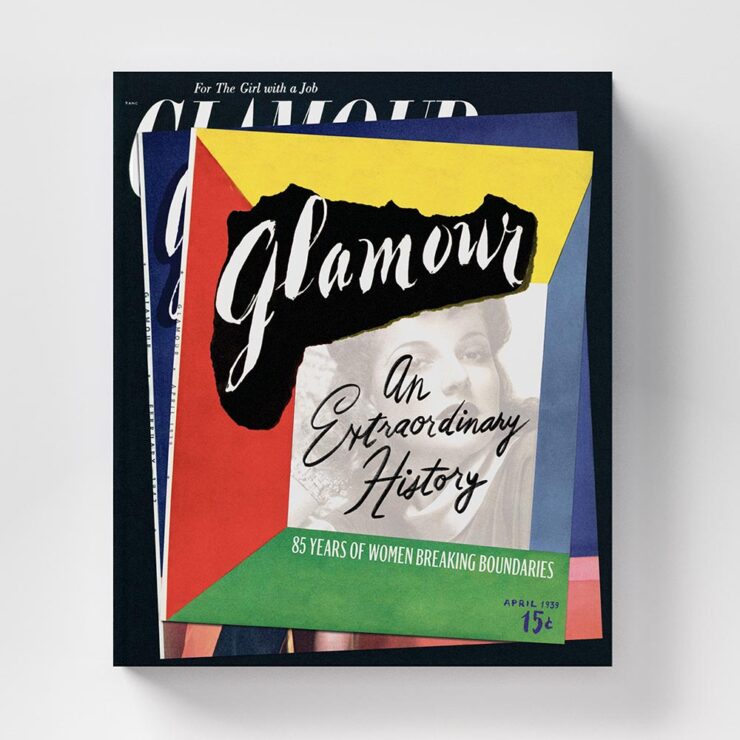
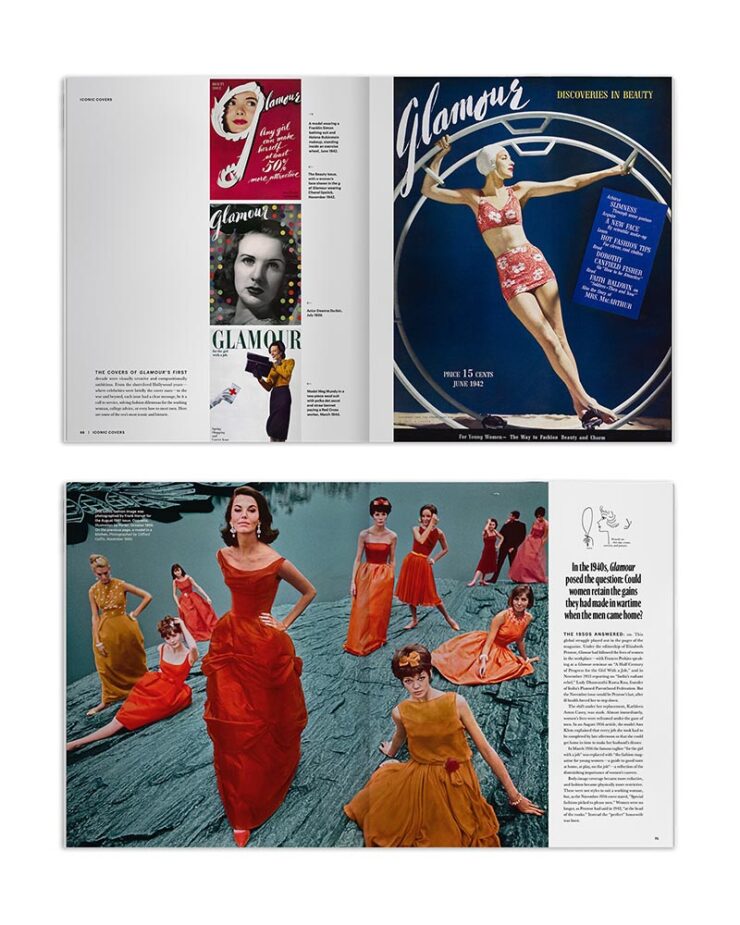
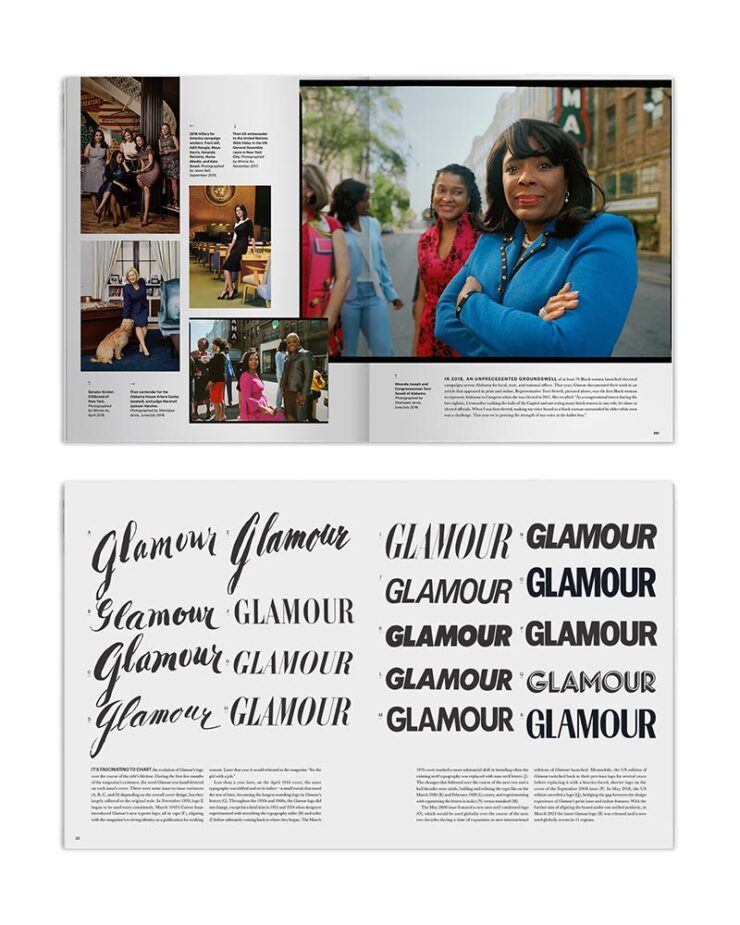
    Cover design by Alexandra Folino.

    This title has an interesting cover, yes, but it’s the highly competent interior design that really caught my eye:

    Book design by Alexandra Folino.
    Book design by Alexandra Folino.

    With the wealth that is Glamour‘s history to pull from, the designer here has wisely used that content to elevate this title beyond simple spreads to something truly compelling. Well done.

    See more about this title.

    Cover design by Clay Smith.

    “The bag of sublime slowly unravels,” none of the reviews said.

    See more about this title.

    Cover design by Lynn Buckley.

    Another great cover — the textures rock, the colors hit hard, the title text just right — backed up with a complimentary jacket:

    Jacket design by Lynn Buckley.

    It was probably tempting to load up the design, possibly even with visual puns as bad as my descriptions, but instead it supports perfectly. Nice.

    There is a link for this title, but it’s another sadly lacking any description.

    Book design by Andy Baron, Robert Williams, and Sarah Moffat.

    The only title to get four images in this post. “Simply right,” taken to the next level.

    Book design by Andy Baron, Robert Williams, and Sarah Moffat.
    Book design by Andy Baron, Robert Williams, and Sarah Moffat.

    Oh, and the interior:

    Book design by Andy Baron, Robert Williams, and Sarah Moffat.

    Books on graphic design can miss the mark surprisingly often, either through trying to hard and thus overwhelming the content or by attempting to let the content be the star in such a hands-off way that the book design winds up detracting. Here, every part of this supports with respect, with style, and with a smile. A real highlight.

    See more about this title.

    Cover design by James Ihira.

    This cover is one of those multi-layer surprise-and-delight things. A closeup:

    Cover design by James Ihira.

    Halftone is the perfect way to handle that overprint. Excellent.

    See more about this title.

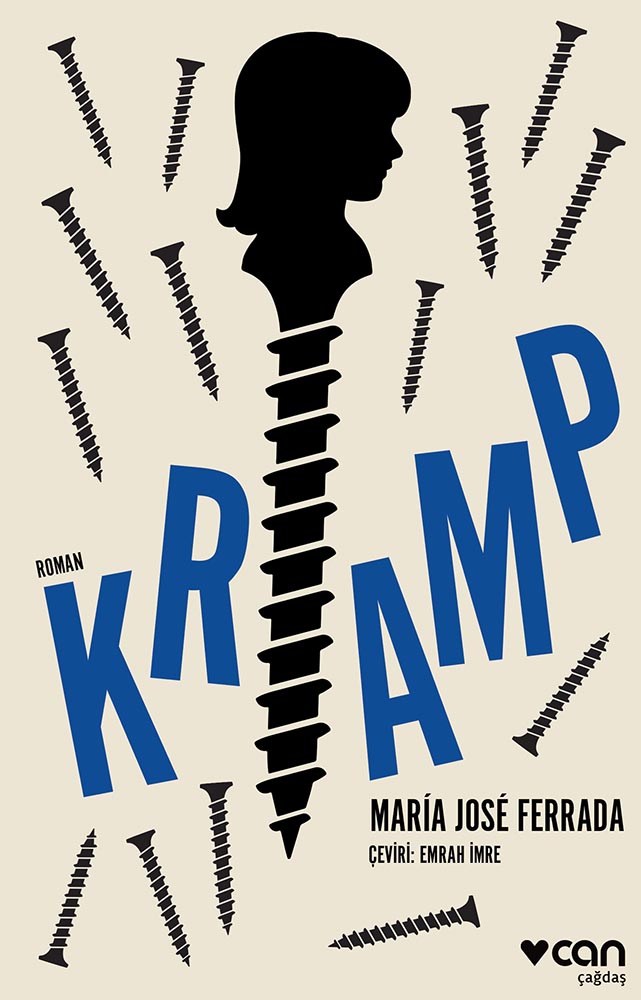
    Cover by Utku Lomlu.

    “Screw it, we’ll just make it awesome.” (The title is Chilean, by the way — and apparently awesomely-written, as it’s the first work to be awarded the three most prestigious Chilean literary awards.)

    See more about this title.

    Book design by Victor Mingovits.

    “‘Unexpected style,’ the Out-In-Left-Field department said. Overall pick, surely,” I said in a terribly-punny moment from my coverage of the 2025 Association of University Presses Show.

    See AIGA’s page on this title.

    Cover design by Leonardo Iaccarino.

    No, he doesn’t look like a New Yorker. Why do you ask?

    Jacket design by Leonardo Iaccarino.

    The secret revealed. Awesome in any language.

    See more about this title.

    Book design by Alison Forner. Typography by Andrew Footit.

    From another time, one of my four favorite cover designs of 2024 — and still fantastically transcendent.

    Another unfortunately-blank AIGA gallery page, but here’s a link in case it’s been temporally teleported somewhere important.

    Cover design by Mike Tully and Cat Wentworth.

    One of those photographs that doesn’t quite do justice. Exploring a little more yields rewards:

    Cover design by Mike Tully and Cat Wentworth.

    “Architecture is the perfect form on camouflage,” the description reads — and the book itself pulls a real varnishing act, inside and out.

    The second journal on this list, by the way. Nice to see.

    Cover design by Allan Espiritu, Kevin Kernan, and Jazel Panagsagan.

    Treating the title (blind embossing and clear matte foil stamping) as reflective of the rising sun background is … genius. It’s also another entry from the awesome-flaps department:

    Cover design by Allan Espiritu, Kevin Kernan, and Jazel Panagsagan.

    See more about this title.

    Cover design by Ben Demzer, Rodrigo Corral Studio.

    It’s not necessary to slow down to appreciate the alternating, repeating covers — even at today’s drive-by speeds, it’s easily appreciated.

    The becoming-familiar not-quite-blank gallery page at AIGA, but here’s a link anyway.

    Cover design by Ben Denzer.

    Two in a row for Ben, and in a completely different direction. Still, a simple concept done exceptionally well. (Rodrigo Corral Studio isn’t listed in the credits, by the way, hence the credit line here.)

    See more about this title.

    • • •

    All of the 2024 winners can be viewed through AIGA’s online gallery, and I’d like to congratulate all for another good year. The 2024 titles will also join the growing AIGA collection at the Rare Book and Manuscript Library at Columbia University’s Butler Library in New York, one of my favorite things about this competition.

    Thanks for taking a moment to share these with me!
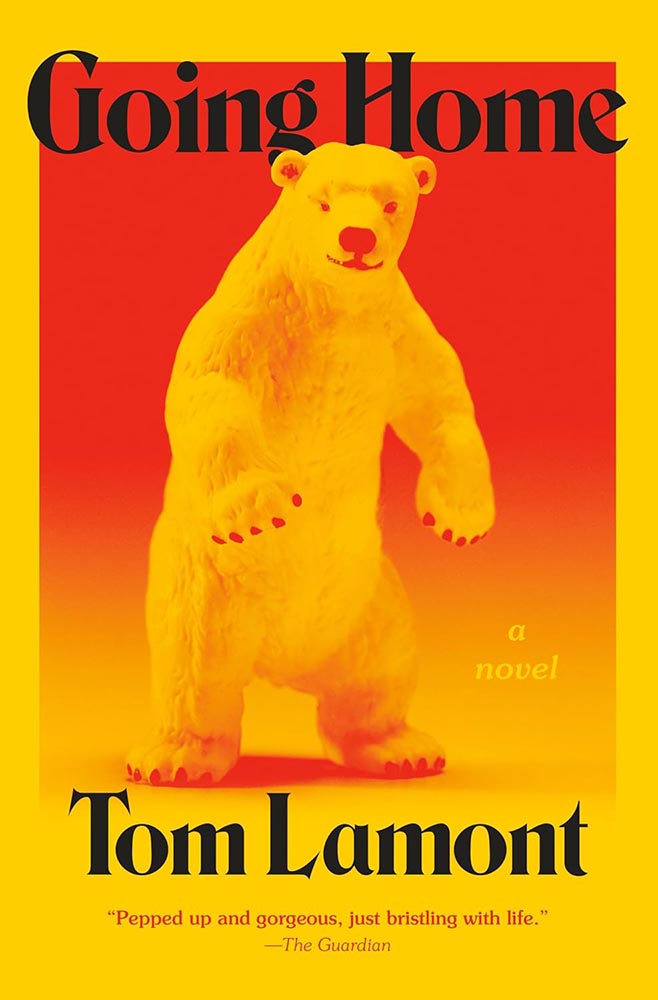
  • AUP – University Press Week

    AUP – University Press Week

    As promised, a special Spine post:

    Every year, the Association of University Presses (AUP) celebrates work from its member presses — and the wider academic publishing world — with University Press Week, this year from November 10–14. There are events, projects and more, all an official part of #TeamUP.

    What we’d like to be part of the official agenda is an emphasis on design, an essential part of any publishing project in this age of visuals.

    Our goal is to help highlight outstanding University press work. Since restarting the University Press Round-Up column this year, we’ve covered dozens of great designs; to contribute to University Press Week, we’re adding a special edition of 25 more great covers, all from 2025.

    Spine’s University Press Week post, 10 November, 2025.

    Check it out.

  • Beautifully Briefed 25.10: [Blank] of the Century

    Beautifully Briefed 25.10: [Blank] of the Century

    In this episode, design whims and wins, fontastic links, a Toyota Century, and the monthly round-up of great photography bracket some thoughts on — what else? — AI, especially as it relates to art. Grab a beverage, brush, or a comfy chair, and let’s dig in.

    This Month’s Spine
    New York University Press. Cover design by Devon Manney, art director, Rachel Perkins.

    One could argue that this cover — and title — could work well even if the word “climate” was removed. See the whole list of University Press goodness.

    And check back for a special, mid-month post in honor of University Press week, Nov. 10–14.

    Good Movies as Old Books, Revisited

    Let’s start with something great: Steven Heller highlights the “talent and imagination” of Matt Stevens (previously) as the paperback version of his book, Good Movies as Old Books, becomes available.

    Cover design by Matt Stevens.
    Cover design by Matt Stevens.

    “My goal with the style was to try new things and create interesting combinations. Oftentimes, I was trying to do something that had not been done for a particular film,” Stevens says. Short and fun, the PRINT interview is worth a few minutes of your time.

    Old-Fashioned Methods, Delightfully Off-Kilter Results

    While we’re on the subject of movies, let’s slip closer to … well, what passes for reality these days: items “steeped in human anxieties and fever dreams.” It’s Nice That highlights poster and title design for films by Greek artist Vasilis Marmatakis.

    Design by Vasilis Marmatakis.

    With design, much like life itself, Vasilis says that his posters are his honest reactions to the films. The same approach runs like a red thread throughout his work, each poster leaning a little too heavily into one of the film’s themes. […] In Bugonia, Vasilis consciously restricts superfluous elements and allows the frames to breathe.

    — Arman Kahn, It’s Nice That
    Design by Vasilis Marmatakis.

    Even the font — and how it’s used — is interesting: the freely-available Churchward Roundsquare, customized with brush and ink. That and much more is discussed in this great article.

    New Vintage Classics Series

    It’s unusual not to relish a new set of reissues from Vintage, and the new editions of Julio Cortázar are no exception:

    Book design by Stephen Smith; art director, Suzanne Dean.

    The always great — and not mentioned often enough — Casual Optimist has more.

    Special Bonus #1: Via Kottke, Na Kim’s self-portrait:

    Fascist Posters, Italian Style

    Also via Kottke are these posters, which evoke a certain … something:

    In a fascist movement inspired by art, how does the fascist government influence the artists living in its grasp? This exhibition explores how Benito Mussolini’s government created a broad-reaching culture that grew with and into the Futurist movement to claw into advertising, propaganda, and the very heart of the nation he commanded.

    — Poster House exhibition The Future Was Then: The Changing Face of Fascist Italy.

    The exhibit features “some of the best posters produced during the worst period in modern Italian history.” See more.

    Special Bonus #2: While we’re perusing the poster department, Archinect‘s ongoing lecture series (previously) has another winner:

    Fontastic Fall
    New for October

    CreativeBoom‘s monthly roundup is out, and while Grundtvig is retrotastic and the three-axis variable Pranzo is accompanied by some great illustrations, it’s Jovie that I’d love to use in print project:

    “Jovie’s character emerges through its soft-serif approach, which tempers traditional serif authority with contemporary approachability. Playful italics, expressive alternates, swashes, and ligatures provide designers with a rich typographic palette, whilst maintaining coherent family relationships across all variations,” they note. (Another variable-width item, too.) Great stuff.

    Custom Type is Everywhere, It Seems

    Meanwhile, custom type for branding is becoming the norm. In another article, CreativeBoom explains why: “Bespoke letterforms are no longer a “nice-to-have” and they are increasingly seen as a strategic necessity[.] Type has become the glue that holds their voice together,” they write.

    Those letters are your brand’s voice. They do the heavy lifting, they carry personality, and they create instant recognition – sometimes without the need for any other distinctive assets. […] Typography is everywhere in a brand system – packaging, products, campaigns, interfaces. When you build your own, you’re not at the mercy of someone else’s design choices, and you get a voice that’s tuned to your values, your audiences, and your long-term ambitions.

    — Frankie Guzi, business director, Studio DRAMA.

    Elizabeth Goodspeed (previously) agrees, mostly. “For most of the 20th century, branding treated typography as background, not backbone,” she writes. But now, brands are recognizing that, “[a]s a primary container for meaning, typography inevitably carries an enormous share of that emotional load.”

    An exception to the rule: a type gem — with legs! — from 1971.

    But, she cautions, “[s]peed also feeds a kind of conceptual shallowness. With so many studios drawing type, the market has been flooded with fonts that solve narrow visual problems but can’t stand up to long-term use. Too often, new brand fonts cling to a single gimmick while leaving the structure of the letters untouched.”

    Read the rest at It’s Nice That.

    AI All the things
    The Oatmeal, penned by Matthew Inman, has some thoughts on AI.

    The new-to-me FlowingData — via Kottke’s rolodex feature — first pointed me to this piece, and it’s gotten a ton of press. In summary, Inman suggests that AI art causes a certain discomfort; that, perhaps, AI art even deserves air quotes around the word art because it’s somehow less than “actual” art.

    Indeed, much of that press has been approving: a pile-on of people (not that such things happen on the internet) saying, “yes, AI art deserves those air quotes. It is less.”

    One of my favorite reactions was from Nick Heer:

    A good question to ask when looking at an artwork is “who made this?”, and learning more about what motivated them and what influences they had. This is a vast opportunity for learning about art of all mediums, and it even applies to commercial projects. Sometimes I look up the portfolios of photographers I find on stock image sites; their non-stock work is often interesting and different. There is potential for asking both questions of A.I.-assisted works in the hands of interesting artists. But it is too often a tool used to circumvent the process entirely, producing work that has nothing to offer beyond its technical accomplishment.

    — Nick Heer, Pixel Envy

    “Who made this?” is the right question — to start. But let’s take that a step further.

    John Gruber, at Daring Fireball, quotes the piece: “[When] I find out that it’s AI art[,] I feel deflated, grossed out, and maybe a little bit bored. This feeling isn’t a choice.” Then says that he fundamentally disagrees with that premise:

    I think it very much is a choice. If your opinion about a work of art changes after you find out which tools were used to make it, or who the artist is or what they’ve done, you’re no longer judging the art. You’re making a choice not to form your opinion based on the work itself, but rather on something else. […] Stanley Kubrick said, “The test of a work of art is, in the end, our affection for it, not our ability to explain why it is good.” If an image, a song, a poem, or video evokes affection in your heart, and then that affection dissipates when you learn what tools were used to create it, that’s not a test of the work of art itself. To me it’s no different than losing affection for a movie only upon learning that special effects were created digitally, not practically. Or whether a movie — or a photograph — was shot using a digital camera or on film. Or whether a novel was written using a computer or with pen and paper.

    — John Gruber, Daring Fireball

    “Good art is being made with AI tools, though, and more — much more — is coming,” he says. Over the next few days, he cited some examples, including David Hockney’s art made with a Xerox machine, and then this:

    Jonathan Hoefler’s ongoing series, called Apocryphal Inventions.

    The objects in the Apocryphal Inventions series are technical chimeras, intentional misdirections coaxed from the generative AI platform Midjourney. Instead of iterating on the system’s early drafts to create ever more accurate renderings of real-world objects, creator Jonathan Hoefler subverted the system to refine and intensify its most intriguing misunderstandings, pushing the software to create beguiling, aestheticized nonsense. Some images have been retouched to make them more plausible; others have been left intact, appearing exactly as generated by the software. The accompanying descriptions, written by the author, offer fictitious backstories rooted in historical fact, which suggest how each of these inventions might have come to be.

    These images represent some of AI’s most intriguing answers to confounding questions — an inversion of the more urgent debate, in which it is humanity that must confront the difficult and existential questions posed by artificial intelligence.

    Jonathan Hoefler

    “This is art,” Gruber says, with no other text. I don’t think any other is needed.

    On a Related Note
    This is AI.

    “The top 200 photographers requested by Midjourney users have been exclusively revealed to PetaPixel — and it’s a world-famous, still active photographer that tops the list.” I bet you can guess who that is.

    This is, in fact, the majority of what Inman was thinking — or at least, feeling — when he drew out an argument on why AI art can be such a let-down, both intellectually and emotionally. The above “photograph” is both awesome and hugely disappointing at the same time.

    Further Reading

    I’m not qualified to speak with any authority on the state or potential future of AI, AGI (artificial general intelligence), or the continuing convergence of AI with … well, all the things. I will say that, to me, there’s a palpable sense of bubble going on; whether financial, material, or resource requirements, it feels like something is going to need to give fairly soon.

    Below are several articles on the intersection of AI with life, culture, or art that I found valuable. If you can set aside a few minutes, the information provided could be helpful in the quest to stay informed:

    Side Note: I’ve dropped the punctuation in “AI.” Not unlike capitalizing “Internet,” I think we’ve crossed that bridge.

    Special Bonus #3: AI apparently overuses em dashes, something that has, frankly, caused me to use them less. Which is a good thing — I overuse them. But then, I am a professional. [That’s only funny if you’ve read the link. —Ed.]

    The Century Coupé Concept

    Toyota (the company) has reorganized: there are now three levels. There’s Toyota (the car line), for the mass market; Lexus, Japan’s first answer to BMW et al from the late ’80s and also very much mass market (if targeted differently); and now, to compete in the ultra-high-end market, Century:

    Long hood, imposing “grille” — trend, recycling, or cliché, depending on outlook.
    The no-rear-window thing continues to grow in popularity. (For “cocooning.”) Hmph.

    Powertrain is yet to be determined; the rumors suggest it’ll be available both with a combustion engine (possibly a V12) and electric drive. In the case of the latter, owners will, of course, be able to send their driver off to get the thing charged while they lunch or plot takeovers — no range anxiety here.

    Century’s logo is a phoenix.

    Car geeks will know that Toyota’s Century sedan model has been around forever. It’s always been badged as a Toyota, and is aimed at Japanese executives and members of state (and will, in fact, still be produced). It was joined a few years ago by a SUV that bears more than a passing resemblance to a Rolls-Royce Cullinan. Both existing Century models available only in Japan and China.

    The 2025 Century SUV. That D-pillar absolutely “borrows” from the Cullinan.

    Toyota has decided to make those three models into a new brand that’s just called, “Century.” It’s going to be set up with exclusive dealers, eventually be available worldwide, and compete with Bentley’s new EXP 15 (previously) and Rolls-Royce’s … everything.

    And, of course, Jaguar. The elephant in the room get a mention here because it’s looking more and more like JLR made the right call in targeting one-percenters with out-there, vaguely coupe-like designs. Because if the Century SUV resembles a Cullinan, the new coupé concept looks like a cross between the Jaguar Type 00 concept and said Bentley:

    The Bentley EXP15, top, with the Jaguar Type 00, bottom.

    Very much unlike the Jag, which is low and could possibly be described as “sleek,” the Toyota has a higher stance; a coupé/sedan and SUV mix seems to be a new answer to the so-called “death of the sedan.” Volvo’s ES 90 might also apply here.

    Bear in mind that I’m not talking about the coupé-style SUVs (BMW’s X6, for instance), which are a different animal — at least for now. It’s possible the whole class of “coupe-like things” might converge in the not-too-distant future.

    That being said, a member of that new class of vehicle being aimed at the chauffeur-driven market is new.

    The glass divider is to allow the chauffeured their privacy.

    One more item: The old-school isn’t going quietly.

    Did someone mention grille? (Lit, naturally.)
    Leaving the hood long behind.

    Mercedes is, arguably, the best (non-American manufacturer) at displaying “gangster” qualities. Oh, and check out the awesomely-retro interior:

    Note the lack of screens amongst that vintage style. And yes, velour is “in.”

    Read more about the Toyota (teaser or intro, both at The Drive) or Mercedes (The Drive, Wallpaper*).

    Special Bonus #4: Audi poached the Type 00’s designer. His first showing is the Concept C, Audi’s return to form, called “radical simplicity.” It’s a cross between their sports-driven R8 and designer-driver TT:

    Love the wheels. The grille less so (there have been dictator comparisons), and the lack of rear window not at all.
    October’s Photography Round-Up
    2x Film
    Grays Fisheries, Bradford (UK), left standing during inner city slum clearance. Photograph by Ian Beesley, 1977.

    From an interesting and moving feature at MacFilos, “Capturing the decline of industries and communities with a Leica M6”:

    At my recent career retrospective exhibition “Life” at Salt’s Mill, Saltaire (a world heritage centre near Bradford, West Yorkshire, England), a man came to talk to me. He said, “You won’t remember me, but I remember you. I worked in a camera shop in Bradford, and you were always coming in to buy rolls of black and white film. It makes me so proud to think that the film I sold you created some of these wonderful photographs.”

    I take this as a great compliment and a very moving one. It is one of the reasons why I decided to donate my entire archive of negatives, prints, notebooks (over 200,000 items) to Bradford City Art Galleries and Museums. I am hanging on to my Leica M6 for a bit longer, but at some point, it will be re-united with all the negatives it created.

    — Ian Beesley, MacFilos
    “Rocky Mountains On Wetplate Collodion,” Canada. Photograph by Bill Hao.

    “The Analog Sparks 2025 International Film Photography Awards celebrate analog photography as a medium and elevate the best film photographers worldwide,” PetaPixel writes. Some excellent reminders that sometimes, the old ways are still the best ways.

    Color and Pano
    “Beholders No. 1.” Photograph by Li Sun.

    All About Photo Magazine unveiled the winners of its latest competition: Colors. The 25 prize-winning photographers demonstrate how powerful color can be in images, whether it’s vibrant, subtle, or minimal,” PetaPixel writes.

    To be honest: at first, I thought this was a coin-operated binocular thing you see at attractions or overlooks, and laughed out loud. Alas, the laughter died away when I realized it was, in fact, CCTV — an overlook of an entirely different kind. I guess there’s a certain irony in the “face.”

    The Mirror, Valencia, Spain. Photograph by Anto Camacho Villaneuva.

    It is possible to recognize a Santiago Calatrava building immediately, with its soaring, often winged structures. (The World Trade Center Transportation Hub in New York springs to mind, for instance.) This panoramic photograph captures two of them — nice.

    A press release from Epson, the contest’s sponsor, notes that this year there was a “prevalence of ultra-wide panoramas and increasingly innovative perspectives, including very low angles, very close-up subjects, and aerial photography,” including the above. PetaPixel has more.

    Birds and Wildlife
    “Snowstorm,” Germany. Bronze Award, Best Portrait. Photograph by Luca Lorenz.

    “The 2025 Bird Photographer of the Year gives a lesson in planning and patience,” This is Colossal writes about this year’s contest winners (specifically, regarding the photo seen at the right in the header image) — but getting the cold shot, above, wasn’t an easy thing either. (See also: PetaPixel‘s plumage article.)

    “Ghost Town Visitor,” Kolmanskop, Namibia. Winner, Urban Wildlife and Wildlife Photographer of the Year 2025. Photograph by Wim van den Heever.

    From PetaPixel‘s coverage of the Wildlife Photographer of the Year 2025 contest: “Capturing the unusual intersection between nature and abandoned urban spaces, Wim’s photograph is a haunting yet captivating image of a brown hyena wandering through the skeletal remains of Kolmanskop, Namibia’s long-deserted diamond mining town. The shot was taken with a camera trap and is the result of a decade-long effort that began when Van den Heever first discovered the animal’s tracks at the site.” [Emphasis mine.] See This is Colossal‘s post, too.

    Comedy and Dogs

    To round out this month’s super-long post — thanks for bearing with me — something from the light-hearted department:

    “It is tough being a duck.” Photograph by John Speirs.
    “Bad Hair Day!” Photograph by Christy Grinton.

    The Nikon Comedy Wildlife Awards, 2025 edition, brings us 40 … um, moments. Awesome. PetaPixel has all the winners.

    “Suppertime,” winner of the Open category. Photograph by Katie Brockman.

    “Good Boys and Girls,” PetaPixel barks, regarding the 2025 Dog Photographer of the Year. (In the name of equal-opportunity pet celebration, I chose one that includes cats.)

    Have a great Halloween. If you’re in the US, be sure to vote, Tuesday, Nov. 4th. And, don’t forget to check back for the special Spine post, Nov. 10th. Thank you!

  • Beautifully Briefed 25.9: Generous

    Beautifully Briefed 25.9: Generous

    It’s fontastic, illustrative, and full of imagery: your beginning-of-fall design round-up here on Foreword. (And A.I., because it’s everywhere.) Enjoy.

    This month on Spine

    A fun and interesting University Press Coverage post on Spine when you have a moment, including this title from the University of Nebraska:

    That was not a simple photograph to set up. Awesome.

    Generative Book Cover Design

    How 2 Shout Media presents a how-to: 20 cover design prompts for ChatGPT. “Creating the perfect book cover starts with the right vision — and that’s where ChatGPT transforms from a writing assistant into your creative design partner.” (Emphasis theirs.)

    There are, for instance, specifics on “the anatomy of an effective prompt” and how to customize the provided templates; they even provide bonus templates to save and reuse, including one to quickly iterate on previous output.

    The article contains some good advice, honestly, but the most relevant suggestion — to “[t]hink of ChatGPT as [a] creative director who provides vision and direction rather than final artwork” — is buried at the bottom of a fairly long page. I’m willing to get there are more than a few (especially in the self-publishing space) who read this as the definitive how-to . . . possibly without judging the output versus what a professional can create.

    This cover sample is far and away the best of the eight illustrated options:

    The prompt: “Design a literary fiction cover for ‘[Title]’ using a single continuous brushstroke that forms both an abstract landscape and a human profile when viewed differently—an optical illusion revealing loneliness and connection. Executed in indigo ink wash on cream paper texture. The brushstroke starts thick and confident, becoming increasingly fragmented and uncertain. Minimal color palette: indigo, cream, with one tiny spot of cadmium red as a focal point (perhaps a bird or flower). Title integrated into the negative space using a classic Garamond variant, appearing to be part of the original artwork. Author name in small, understated caps at bottom. Overall feeling: wistful, sophisticated, gallery-worthy.”

    Take a moment to compare the output with the prompt, and you’ll see the generated output ignores several of the items, but overall, is kinda — sorta — close.

    The other examples not so much. But I’m not going to spoil the whole thing: Go and see for yourself.

    For now, I’d suggest that book design professionals — those that make a living from the art and science that is publishing excellence — are safe. Other professionals in the industry recognize what talent is and how valuable it is, and the designers themselves can take advantage of the power that some of these models offer to help brainstorm.

    That said, today’s A.I. models are gaining quality at a rapid rate. In 5–10 years, at most, publishers (and authors self-publishing) that might not recognize that they’re best served by professionals — or those who don’t have the budget, despite the recognition — will have access to what might very well be “good enough.”

    From Your Intelligence to Artificial Intelligence

    So, where do the A.I. engines get their training material? From you and yours, of course; to quote a source we’ll get to in a moment, “[i]n writing this […] I am acutely aware it will become part of a training data set.” Some sites, such as Wikipedia and the Internet Archive, have seen an exponential upswing in traffic — all from the so-called “bots,” programs sweeping internet content into the never-satisfied regurgitation chamber that is today’s ChatGPT, Claude, and others.1One of the reasons my photography, as presented both here on Foreword and in the galleries, is both relatively lo-res and watermarked is to preserve a sense of ownership; likewise, one of the (many) reasons I no longer participate in social media is due to posts specifically being used to train A.I. — Instagram/Meta, for instance.

    Ars Technica and Pixel Envy both highlight a new program, modeled on Really Simple Syndication (RSS), designed to “block bots that don’t fairly compensate creators for content.”

    To quote Doug Leeds, the founder, “A.I. companies know that they need a constant stream of fresh content to keep their tools relevant and to continually innovate.” The “Really Simple Licensing” (RSL) standard evolves robots.txt instructions by adding an automated licensing layer that’s designed to block bots that don’t fairly compensate creators for content.

    Free for any publisher to use starting today, the RSL standard is an open, decentralized protocol that makes clear to AI crawlers and agents the terms for licensing, usage, and compensation of any content used to train A.I[.]
    The new standard supports “a range of licensing, usage, and royalty models, including free, attribution, subscription, pay-per-crawl (publishers get compensated every time an AI application crawls their content), and pay-per-inference (publishers get compensated every time an AI application uses their content to generate a response).”

    — RSL Press Release

    But — and it’s a big “but” — RSL is only one response to the problem. Another is to wall content off entirely, breaking one of the most valuable qualities of the internet itself: its openness.

    We’re watching the construction of a fundamentally different internet, one where access is controlled by gatekeepers and paywalls rather than governed by open protocols and user choice. And we’re doing it in the name of stopping AI companies, even though the real result will be to concentrate even more power in the hands of those same large tech companies while making the internet less useful for everyone else.

    — Mike Mesnick, TechDirt

    Here’s where Pixel Envy agrees:

    A.I. organizations have not created a bottom-up rebellious exploration of the limits of intellectual property law. They are big businesses with deep pockets exploiting decades of news, blogging, photography, video, and art. Nobody, as near as makes no difference, expected something they published online would one day feed the machines that now produce personalized Facebook slop.

    — Nick Heer, Pixel Envy

    “One thing that might help, not suggested by Masnick, is improving the controls available to publishers,” Heer writes, going on to discuss the new RSL standard proposal and what it might do to help. But, in the end, he’s not optimistic:

    I simply do not know how much control I reclaim now will be relevant in the future, and I am sure the same is true of any real media organization. I write here for you, not for the benefit of building the machines producing a firehose of spam, scams, and slop. The artificial intelligence companies have already violated the expectations of even a public web. Regardless of the benefits they have created — and I do believe there are benefits to these technologies — they have behaved unethically. Defensive action is the only control a publisher can assume right now.

    — Nick Heer, Pixel Envy

    Yeah.

    Special bonus #1: From the you’ve-trained-it-so-enjoy-A.I.-for-fun department,Kottke introduces us to generativ.design. “I wore out the “randomize” button on each of these,” he writes. (Via the new-to-me sidebar.)

    Prefab Design

    Meet fabricá, a new hair care company, whose identity ticks all the boxes: it’s trendy, eco-friendly, and well put-together:

    But there’s a catch: fabricá doesn’t exist — at least not yet. It’s a fully-formed identity, available now at Brands Like These, a new prefab identity outfit from Lyon&Lyon.

    Now I’ll admit: at first, this seemed like a Dewey, Cheetham, and Howe thing,2Yes, I grew up listening to Car Talk. something that we all had a chuckle over before allowing it to shuffle into the background, readily available for use as a pithy line whenever we needed it: “Ha, we got Lyin’ and Lyin’ selling your precious startup canned … stuff.”

    Unfortunately, it’s not a joke.

    When Elizabeth Goodspeed, of It’s Nice That, got thinking about it, she had lots to say. “In a good design engagement, the back-and-forth between company and designer pushes the company itself to sharpen what it is; the ‘friction’ people complain about is also the juice that makes the work exciting.” (I find this true in editorial and publishing work, certainly.) But there’s a warning, too:

    If this cart-before-horse approach takes hold, it won’t just change how companies buy branding, but how designers make it. The skills a designer needs shift from listening and refining to cranking out polished shells that could plausibly fit anything. […] Even if sites like BLT only sell a brand once, the more ambiguous the design, the more it risks echoing a dozen others (and collapsing under trend fatigue).

    These models also threaten to hollow out the middle of the industry. We’ve seen this pattern before: bookstores went from indie shops and regional chains to Amazon or your local holdout; music from affordable CDs to either $50 LPs or all-you-can-stream. Branding may be headed for the same split – prefab kits at the low end, ultra-expensive bespoke at the high end, and little in between. And if prefab becomes the norm, it’s hard not to imagine the next step: why should these kits even be designed by humans? Once clients are trained to buy a look off the shelf, there’s little stopping A.I. from flooding the market with pre-packaged “brands” generated at scale.

    — Elizabeth Goodspeed, It’s Nice That

    This feels like an accurate prediction. Read the rest. (See also: her item on copyright, covered in February.)

    Okay, we’ve dealt with the heavy stuff. Let’s enjoy the rest.

    The New Type in Town

    Several articles to point to if you’re interested in expanding your font collection — including 50 predictions for what’ll be popular 2026. Nice.

    Steven Heller’s Font of the Month

    Over at I Love Typography, industry veteran and designer extraordinaire Steven Heller’s monthly column exalts Ritualist.

    CreativeBoom’s Best o’ September

    They have several, but my favorite is not dissimilar to the above, a new face called Urbolyt, a variable “that represents a clash between geometric rigor and organic forms.”

    Zelow Studio’s Nature

    Pixel Surplus brings us a new — and free! — variable grotesk typeface called Nature, available in a variety of styles.
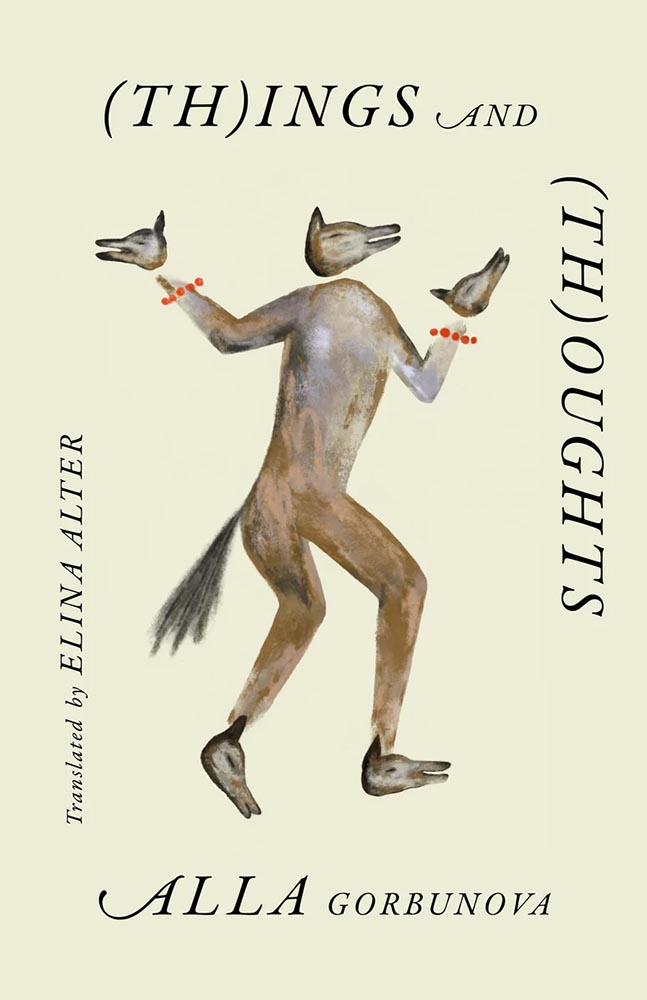
    CreativeBoom’s 50 for 2026

    The vast majority of these are, basically, Helvetica; like Nature, the simple sans serifs are what’s in right now. (Sigh.) However, there are some gems on the list, and I’d like to take a moment to highlight an absolute favorite: Freight.

    Freight is a collection of integrated typefaces ready to add unique style to any design project. What Joshua Darden started as a serif family inspired by the warmth and pragmatism found in 18th-century Dutch typefaces became The Freight Collection and now ranges across multiple weights, widths, and optical sizes — from Big to Display, Text, Micro, Macro, Sans, Neo, and Round — all of which include companion italics. That’s 192 fonts that have the ability to be bold and daring just as easily as they can be quiet and unassuming.

    — freightcollection.com

    I’ve used Freight in a variety of book projects and the breadth of options available always satisfies. It’s referred to as a superfamily: from the standard Text and beyond-excellent Neo (a sans with style), there’s an option for going Big and even two — Micro and Macro — best used at small sizes (readable footnotes!).

    I cannot recommend more highly. Indeed, I could only take one font family with me to a desert island, I’d take Freight.

    Illustrations Open Doors
    Illustration Awards 2025

    CreativeBoom: “From playful packaging to poignant explorations of identity, the World Illustration Awards 2025 showcase the breadth of contemporary illustration. With over 4,700 entries from 85 countries, this year’s winners reveal how artists are shaping how we see, think and connect.”

    One of the overall winners is this great poster:

    Léane Ruggli – RTD’s Cocktail Campaign

    Book covers (adult and children’s):

    Jennifer Dionisio – The Talented Mr Ripley
    Jenya Polosina – The Country of the Blind
    Camila Carrossine – The Girl, the Ghost and the Beetroot Forest

    Site Specific:

    Ren Kyles – Pride mural in Wilsonville, Oregon

    The awards underline “how illustration continues to thrive as a medium of both beauty and urgency”: from packaging that delights to books that challenge taboos, the winning works reveal the versatility of illustrators working today.

    See the whole list of winners and commended artists at the WIA 2025 Online Showcase, including interviews and insights into their creative process.

    Illustration for Branding

    Another CreativeBoom article suggests that, “[f]rom murals to motion, illustration is starting to reassert itself in advertising,” because “illustration still offers unique advantages. Distinctiveness is the obvious one because, in a sea of photography-led campaigns, an illustrated execution can […] cut through precisely because they are unexpected.”

    As this great TfL poster exemplifies:

    “A Riot of Color and Joy”

    Yet another example of illustration done well, this time from — wait for it — 1956:

    A Saab 93 full-car cutaway.

    I still miss Saab. See more at The Autopian.

    Special Bonus #2: These minimalist cat illustrations define brilliant:

    Illustration by ShouXin.
    September’s Photography Highlights
    International Pet Photography Awards

    While we’re on the subject of cats — and dogs, whose entries far outstripped those for cats (and horses, rabbits, pigs, and all the other things folks keep for pets) — this year’s pet photography contest has some pretty spectacular results:

    Photograph by Mirka Koot.
    Photograph by Shandess Griffin.
    Photograph by Janneke De Graaf.

    Getting my dog to stand still long enough for a photograph is nigh-on impossible; some of the accomplishments shown in these winning photographs are fantastic. Kudos.

    Special bonus #3: Cats, book matched.

    Audubon Photography Awards

    The 15 winning entries for 2025 have been announced, including this one:

    “Burrowing Owl.” Photograph by Jean Hall.

    See more at PetaPixel or This is Colossal; explore galleries of this year’s winners and honorable mentions, or grab a copy of the Fall 2025 Audubon Magazine.

    Astronomy Photographer of the Year

    This is Colossal: “The universe’s workings may always remain a mystery. So it’s no surprise that when peering up at the night sky, whether it’s homing in on distant stellar clusters or simply watching the moon rise, photography helps us appreciate its enigmatic beauty.”

    ISS Lunar Flyby.” Photograph by Tom Williams.
    Saturnrise.” Photograph by Tom Williams.

    I didn’t realize until after I’d selected them that these were both from the same photographer, but unlike some that are just (amazing) night sky, these have an almost-science-fiction quality.

    ’Course, that’s only the tip of the iceberg: “The Royal Observatory Greenwich’s ZWO Astronomy Photographer of the Year 17 contest showcases the best astronomical and night sky images of the year, captured by exceptional photographers worldwide,” writes PetaPixel.

    Two more that aren’t quite what you expect:

    “Encounter Across Light-Years.” Photograph by Yurui Gong and Xizhen Ruan.
    “Fourth Dimension.” Photograph by Leonardo Di Maggio.

    See the more winners, from here and beyond, at PetaPixel or This is Colossal.

    Special bonus #4: While we’re on the subject of Earth and sky, PetaPixel profiles Italian photographer Gianluca Rubinacci:

    Photograph by Gianluca Rubinacci.

    Special bonus #5: The UK’s Weather Photographer of the Year 2025 Competition list of finalists has been announced, including this one:

    Photograph by Lukáš Gallo.

    See all of ’em — and vote (until October 16th) — here.

    Natural Landscape Photography Awards

    This one’s a little different, in that there can be no generative AI, no compositing of different photographs, and RAW files are checked by judges to ensure authenticity. (Refreshing, honestly.) “The competition is designed to promote photographers looking to work within the constraints of the natural landscape and traditional bounds of photography.”

    From the Project of the Year, Sápmi (Lapland). Photograph by Hanneke Van Camp.

    See more at Petapixel, or to see all of the contestants head to the Natural Landscape Photography Awards website.

    “Cyberpunk” and “Gotham” vs. “Otherworldly” and “Forgotten”

    To close out this month, I’d like to mention a couple more book projects. Let’s start with Ben Moore, whose new photo book is titled Above & Across London. As the name suggests, he found high-up vantage spots: “I’ve always loved the look of a cool, urban, cyber-futuristic world, and at times I catch glimpses of that in London,” he writes.

    Photograph by Ben Moore.

    Meanwhile, photographer Bryan Sansivero feels a strong pull to document and explore forgotten dwellings; his new book, America the Abandoned, explores deserted homes around the country in 200 striking images — including this one:

    “The Grand Room.” Photograph by Bryan Sansivero.

    Have a great October, everyone.

    • 1
      One of the reasons my photography, as presented both here on Foreword and in the galleries, is both relatively lo-res and watermarked is to preserve a sense of ownership; likewise, one of the (many) reasons I no longer participate in social media is due to posts specifically being used to train A.I. — Instagram/Meta, for instance.
    • 2
      Yes, I grew up listening to Car Talk.
  • Beautifully Briefed 25.8: Calming, Hopefully

    Beautifully Briefed 25.8: Calming, Hopefully

    Type opens up, the best designer you’ve never heard of, and photography to admire and inspire: all this and more for your August edification and enjoyment.

    August University Press Coverage on Spine

    Rather than show my favorite this month, I thought I’d share four of the runners up:

    My favorite of the covers not in the Spine post.

    Clockwise from upper left: Duke University Press, Mercer University Press, and two from the University of Washington. These are all good, but just missed being in the post because another option offered a better design — or story.

    I’m highlighting these to celebrate the strong design in university work; despite limited budgets — or whatever other, shall we say, challenges universities face these days — most have realized that great design is worth the extra. Long live the University Press!
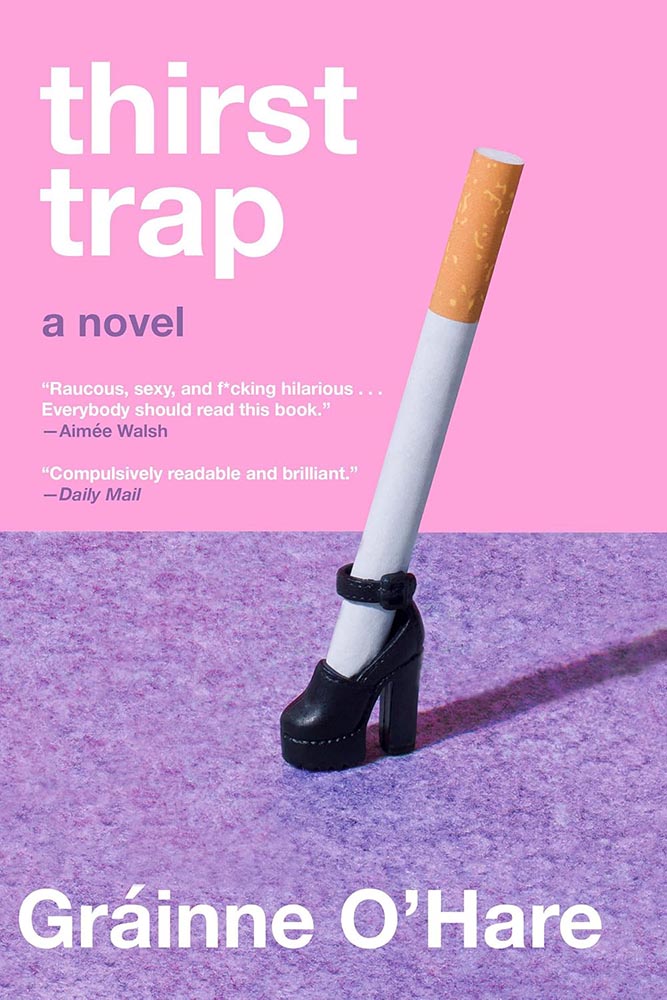
    See the rest at Spine.

    Fontastically usable

    BrandNew points us at a little treasure posted by Smith and Diction: an expert’s take on which among the Google fonts are worth it, helpfully organized by category. Check it out.

    FYI, it’s at Figma, a site I’d heard of but not interacted with (it’s aimed at the collaborative market, aka “teams”); it took me a minute to orient myself. (Use the zoom in the upper right, then drag.)
    In the comments at BrandNew, several folks point to the two Typewolf lists on the subject, one for Google and one for Adobe/Typekit. (Interestingly, I was not familiar with Typewolf — it was good enough to earn an instant bookmark. Stay tuned for more from them.)
    That was on the 7th. On the 8th, BrandNew linked to a Google Design article on “the benefits of brands — for the brands and for users — making their proprietary typefaces open source and available to all to use, modify, and tinker with.” Google Fonts currently has 17 of them.

    Lastly, on the 15th: Keep Calm and Icon. “Bettina Reinemann, Staff Experience Designer, Brand & Icons, at Adobe, offers an interesting and comprehensive deep dive into the evolution of a handful of Adobe’s most iconic, well, icons and how they have changed over the decades in style, meaning, and depiction.”

    BrandNew is subscription, yes, but it’s one of the web’s subscription bargains at less than $25/year and packed with great stuff. I do wish they’d offer a free article or two within a given period of time so new folks can sample before purchasing, but that criticism aside, I can’t recommend them highly enough.

    Many Thanks to … Double-Oh Who?

    Joe Caroff, designer of so many things yet a so completely unknown personality, died on the 17th — one day short of his 104th (!) birthday. The Guardian has a nice obit … with this graphic:

    The 2015 film by Sam Mendes, the 24th James Bond adventure.

    That’s right, he’s the guy who designed that logo. John Gruber, at Daring Fireball, has a nice discussion of the logo and, specifically, its subtle evolution within the Bond franchise. (Did you know it was initially created for use on letterhead? Wow.)

    He also links to a bunch of Bond one-sheet posters, a couple of which I’d like to post:

    The 1962 film by Terence Young, and
    The 1987 film by John Glen, the 15th.

    I’m of the age to have grown up with Roger Moore, and really liked Timothy Dalton’s first film — it’s a shame it crashed and burned with the second — whose portrayal of the character has an edge you don’t see again until Daniel Craig stepped into the role.

    But I digress. Joe Caroff’s poster history covers some greats, including this one:

    Original 1961 U.S. one sheet poster by Joe Caroff.

    But it’s a tidbit on the Wiki entry that warrants my publicly spending a minute remembering Joe Caroff: he designed the original jacket for Norman Mailer’s The Naked and the Dead:

    Jacket design by Joe Caroff. Photograph courtesy of The Norman Mailer Society.

    When I had the privilege of redesigning The Mailer Review in 2017, the first cover paid homage to the above design:

    The illustration is a self-portrait by Norman Mailer. (See Wikipedia for the old design.)

    Read more about Joe Caroff’s many accomplishments at Print (spoiler: Steven Heller hadn’t heard of him before 2016!) or DesignWeek.

    And Now For Something Completely … Wait.

    A quick drive-by here: this is a Buick.

    It’s quite literally out of this world: the Electra Orbit Concept is only for the Chinese market — their biggest. The interior, especially, has more than a few overtones of the Jaguar Type 00 concept. (Which is looking more and more prescient, frankly; see previous coverage.) Read more at Motor1 or the Autopian.

    “Sedans are dead,” someone said. Hmph.
    August’s Photography Faves
    100 Years of the Leica 1
    1925’s Leica 1, the world’s first mass-produced 35mm camera.

    PetaPixel has a nice piece covering all of the many ways the Leica 1 — the first from “a tiny German camera company” — has had such an outsized influence on the huge world that is photography today.

    The 2025 M11 New York Edition. You can absolutely see the family resemblance.
    2025 iPhone Photography Awards

    It’s time for the annual iPhone Photography Awards — along with my annual observation that the camera you have with you is the most powerful of all. And since a substantial percentage of the world carries an iPhone, the possibilities are nearly endless.

    PetaPixel has a round up of the winners, but it’s the honorable mentions I’d like to highlight:

    Architecture: Photograph by Adrian Beasley, United Kingdom.
    Architecture: Photograph by Vladyslav Vasylkevych, Ukraine.
    Cityscapes: A second from Adrian Beasley, United Kingdom. (I didn’t see that until after I’d selected ones to post — and decided to post it anyway.)

    Okay, one photograph that placed (2nd):

    The famed “Other” category: Dominic Martín Dähncke, Tenerife, Canary Islands (Spain).

    See many, many more — nearly all fantastic — at the IPPAwards website: 2025 iPhone Photography Awards Announces Winners of Its 18th Annual Competition.

    Special Bonus #1: “Perhaps no building in the world captures the early 20th-century art deco movement quite like the Chrysler Building, which has been an iconic fixture in the Manhattan skyline since 1930. Its grace and beauty have captivated photographers for decades. For one NYC shooter, the building has become his life’s work. Mitchell Funk has been photographing the Chrysler Building for 50 years; his images are vibrant, eye-catching, and extremely creative.”

    2025 Ocean Photographer of the Year Awards, and Prints for Wildlife

    “Fragility, beauty, and urgency characterize” this competition, with “an emphasis on ocean conservation and the outsize influence humans have on marine life,” This is Colossal says. (More at PetaPixel, too.)

    From the Adventure category: photograph by Ben Thouard.
    Human Connections: photograph by Jianping Li.
    Impact: photograph by Henley Spiers.

    On that last one: “This green turtle was killed by a boat strike, an unnatural and unnecessary death for an endangered species,” says photographer Henley Spiers. “Only recently deceased, it is partly decomposed, with the haunting view of the bare skull in contrast to the skin, which remains on the rest of its body, and the juvenile fish which have adopted the turtle carcass as a form of safe refuge. We came across this turtle by chance, a dispiriting sight at the end of a long and fruitless day at sea. I can only hope that this image acts as a reminder of the enormous human burden placed on turtles and the ocean as a whole.”

    It had the intended effect. Impact, indeed.

    So, you might ask: how can I help? Prints for Wildlife is one way.

    “Lifeboat,” Alaska. Photograph by Casey Cooper. (Sold out, alas.)

    “In 2025, the crisis isn’t a virus — it’s a withdrawal of critical funding for wildlife and conservation,” says program co-founder Pie Aerts. “Prints for Wildlife is more than a fundraiser; it’s a platform for connection, consciousness and hope in a time of crisis.” Browse photos by more than 200 photographers on the fundraiser’s website. The limited-edition prints will be available until September 21.

    “Caracal,” Tanzania. Photograph by Elena Didevska.

    Special Bonus #2: “The Natural History Museum in London unveiled a first look at 15 of the breathtaking photos that are in the running to win the 61st Wildlife Photographer of the Year competition, including a lion staring down a cobra, a pack of Arctic wolves, and bats flying through the dark toward the camera; the 2025 Wildlife Photographer of the Year contest attracted 60,636 total entries, the most ever in the contest’s illustrious history.”

    2025 Capture the Dark Sky Contest

    DarkSky International announced the winners of its fifth annual Capture the Dark photography contest. Winners across eight main categories showcase the best in astrophotography and demonstrate why it is vital to protect dark skies worldwide; PetaPixel has a nice roundup.

    In other words, I’m not going to let you go enjoy your Labor Day weekend (here in the US, at least) without once again closing with a photograph of two of my favorite things: lupines against a beautiful night sky.

    “Celestial Dance over Lupine Fields,” New Zealand. Photograph by Lucy Yunxi Hu.

    Have a great September, everyone.

  • Beautifully Briefed, 25.7: Hot (and Cold)

    Beautifully Briefed, 25.7: Hot (and Cold)

    Take a break from the summer heat with a Mac delight, two interesting typefaces, a discussion of Bentley’s new concept — and updated flying “B,” with a quick mention of the other double-R — and, of course, some great photography. Better still, we close out with a guaranteed smile.

    ’Cause we need more smiles these days.

    July’s Spine Post

    July’s University Press Coverage has already been posted. My personal favorite of the bunch:

    Yale University Press. Cover design by Jonathan Pelham; art direction by Rachael Lonsdale; image is an adaptation of Jacques-Louis David’s Napoleon Crossing the Alps.

    Darn near perfect. Hat tip to Jonathan Pelham.

    Frame of Preference

    While we’re on the subject of darn near perfect, Marcin Wichary — he of the now-sold-out Shift Happens fame, not to mention The Hardest Working Font in Manhattan — has gifted the world with another absolute gem:

    Frame of Preference (Screenshot)

    If you’re a Mac geek, whether a software history buff, or a just grizzled veteran, set aside a few minutes to take this trip down memory lane. There are 150 tasks to complete (!), five extra Easter eggs, great Mac hardware and software, and some of the best web programming extant. Enjoy!

    ATC Identity Program Upgraded

    The Appalachian Trail Conservancy celebrates its hundredth anniversary this year, and took advantage of the occasion to update its logo and identity system for the next hundred years.

    Previous logo (left) and new (right).

    The logo is a combination of a mountain peak, the AT symbol, a trail shovel, leaves (“growth and diversity”), and a holding shape (“protected ecosystem”); while overcomplicated in explanation, in practice it’s warm and friendly at first glance yet has depth for folks who know the Trail.

    The blur and grain, highlighted against the beautiful scenery the AT is known for.
    The new logo against one of grain/blur backgrounds.

    The supporting system works well, too, but I’ll leave that to Amy Borg, whose extensive post on the work is excellent. (Via BrandNew.)

    Indeed. Donate, too, if you can.

    Special Bonus #1: A new Goodreads logo:

    I’ll have to guess as to whether it’s actually “good for BookTok.”
    July’s Font Finds
    Karel, by Typonym

    “Inspired by glyphs on a mid-century Prague plaque, Karel synthesises historical discovery with contemporary invention. Developed for brand messaging and retail identity, it includes alternate figures to vary the level of stylisation,” CreativeBoom writes.

    Details on some of the glyph choices.
    Different versions are available, allowing you to match style with project.

    “A constructivist condensed sans, [that,] in every case stands apart from the multitude of neo-grotesque alternatives,” Typonym writes. (Great company name, by the way.)

    Penguin Inclusive Sans, with Olivia King

    We’ve covered Inclusive Sans before, but to recap, it’s awesome, it’s free, it’s open-source, and as of February, it’s available at Google Fonts for anyone to use. So, guess who has adapted it into something new? (Okay, header spoiler, but still.) No one less than a publishing heavyweight: “A bespoke typeface for Penguin Books, uniting brand heritage, accessibility, and contemporary design to create a versatile typeface for its global publishing house,” creative director Olivia King writes.

    Some historical images, worth including just for the penguin reading in the chair — feet up, natch.

    For 90 years, Penguin has been committed to making books for everyone. Its iconic sixpenny paperbacks revolutionised access to stories and knowledge, making reading more inclusive and affordable. Staying true to this spirit of inclusion, Penguin commissioned a custom version of Inclusive Sans — an accessible typeface — to serve as its primary brand font across its global publishing house.

    — Olivia King, Creative Director
    Another item included “just ’cause” — mostly for the science fiction illustration.
    Included in the character set are glyphs for the Penguin.

    “We transitioned Inclusive Sans from a Grotesque to a Humanist foundation, adding playful flicks and flourishes to create a sense of movement and approachability[;] whether used in a refined, understated way or in strong, confident applications, the typeface offers flexibility and distinctiveness.” Marketing speak, sure, but speaking to the applications rather than past them.

    Penguin’s footprints as arrows: says something positive, I think.

    The entire page is great: well put-together, well illustrated, and approachable. And wander around the site while you’re there — more than “O.K.,” it’s example after example of work the rest of us aspire to. (Via BrandNew.)

    July’s Graphic Design Two-Fer
    The World Illustration Awards 2025 Shortlist
    From the book covers category, Ripples on the Lake by Becca Thorne.

    “The Association of Illustrators has unveiled those in the running for this year’s World Illustration Awards, featuring 200 standout projects from over 4,700 entries worldwide. From editorial brilliance to site-specific design, it’s a showcase of illustration at its most imaginative,” CreativeBoom writes. It’s books and editorial to animation and product design — a cornucopia of illustrative goodness. Check it out.

    Designer as Influencer
    More than slightly NSFW — while actually about work. Read wherever you’re comfortable.

    “As social platforms reward visibility, creatives are increasingly expected to make their practice public. Designers are no longer just making work; they are the work. But what started as promotion now risks swallowing design itself,” It’s Nice That writes.

    Yet another reason to avoid social media … says the old guy who reads web pages published by actual individuals (and sticks to blogging). Still, very much worth a read.

    Special Bonus Two-Fer. #2: From PetaPixel, DuckDuckGo, my search engine of choice, can now filter out AI images from search results. (It’s a simple toggle.) Nice.

    #3: Not so nice is WeTransfer’s predicted face-plant, also via PetaPixel.

    Bentley EXP15 Concept: Buckle Up

    Let’s just get this out of the way: the brutalist automobile is officially a trend.

    The new EXP15 with a 1930 Speed Six.

    Yes, you’ve seen that shape before — and that time, I asked y’all to hang on see what happens. This time, I’m less confident it will turn out well:

    The EXP15, top, with the Jaguar Type 00, bottom.

    The Jaguar is both more compelling and fresh — it’s somehow more, yet with less detail. Interestingly, Jag is trying to reposition itself in the Bentley space (including comparative pricing), preferring to move upmarket rather than compete with the likes of BMW or Mercedes.

    It’d be quite the coup for Jaguar to leap in (sorry) and take charge.

    Update, 31 July (hours after posting, in fact): Jaguar Land Rover’s CEO has unexpectedly announced that it’s time to step aside. It’s apparently not about expectations, but….

    Enough about Jaguar. Some more photographs/renders of the Bentley:

    Arguably the best angle, somewhat hiding the EXP15’s SUV-esque size.
    The interior is better than the exterior, with some Bentley traditions intact. (Yes, the concept is a three-seater: the passenger seat was eliminated in favor of the pampered purebred.)
    The dash is all screens, yes, but not necessarily obviously so — something likely to age better than the iPad-on-dash approach.

    Lastly, from the rear:

    Wait. I’ve seen that look somewhere else.
    Oh, yeah, the Volvo ES90. (Itself riding at SUV height.)

    I apologize for not being more positive on this one; I’ve been down on the Volkswagen Group in general for a while, and it makes me sad that, with their flagship brand, nothing in their new concept suggests they’re trying to reverse the trend.

    Coverage: “This is What the Future of Bentley Will Look Like,” from Motor1; “The Bentley EXP 15 brings the bling and delves into tomorrow’s luxury automotive experience,” from Wallpaper*; and “Bentley Is Showing Jaguar How To Take A Luxury Brand Into The Future With The New EXP 15 (IPSO Fatso),” from The Autopian. (Apologies also for the three differing headline capitalization styles — blame the sources.)

    Also worth reading: The Autopian questions whether the new “Autobrutalist movement” — where I got the term — can be stopped; and Motor1 has not one but two items asking readers to give Jaguar a chance. (Probably unrelated.)

    But wait: there’s another reason I’m down on Bentley right now.

    The New Bentley Logo: Style over Substance
    The five versions of the “winged B” logo, in order: 2025, 2002, 1996, 1931, and 1919.
    BMW called light “the new chrome.” Bentley absolutely gagged on it. At least the infamous Flying B is still there — hood ornaments are few-and-far-between these days.

    When you’re Bentley, you shouldn’t be chasing trends, you should be leading them. Style over substance is nothing less than a mistake.

    Also, because everyone else has one:

    The flat version.

    This new version was done in-house, the wrong choice on every level; this isn’t a time to save money. Another sad moment: the storied history of a brand like Bentley, running on the equivalent of a flat tire. (Perhaps even the rim. Trailing sparks.)

    Dezeen was mostly positive, BrandNew mostly negative. (“[E]verything here feels cheap and overwrought.” Subscription, alas.) The Autopian goes for balance. You can tell where I land.

    Special Bonus #4: Range Rover’s new logo, best described as “not trying very hard” or even perhaps “goofy as hell.”

    Posted without comment.

    Special Bonus #5: In case you’ve never seen it, Paul Rand’s 1966 proposal for a redesign of the now-iconic Ford logo:

    The Autopian has a nice piece on this.
    July’s Photography Faves
    Astronomy Photographer of the Year Shortlist

    “Awe-inspiring scenes of the Milky Way, dancing aurorae, and serene galaxies all feature on the shortlist for this year’s ZWO Astronomy Photographer of the Year,” PetaPixel writes. Indeed:

    “Blood Moon Rising Behind the City Skyscrapers,” Shanghai. Photograph by Tianyao Yang.

    The competition is run by Royal Observatory Greenwich, supported by ZWO and in association with BBC Sky at Night Magazine.

    “The Last Mineral Supermoon of 2024,” Delhi. Photograph by Karthik Easvur.

    See the other 28 on the shortlist here. The winners will be announced in September, so stay tuned.

    Abstract Fireworks

    Every year, photographers across the world flock to fireworks displays, something that’s never interested me — until now:

    Photograph by Bryan Szucs.

    PetaPixel takes a moment to self-congratulate here, and I think they’ve earned it — although it’s good to note that the original post cites This is Colossal. (And that PetaPixel did a poor job with the cite in that original story, using only Colossal’s photography tag rather than an easily-found, specific link. Shame on them.)

    Anyway, photographer Bryan Szucs took the defocusing idea and absolutely ran with it:

    Photograph by Bryan Szucs.

    Great stuff. See more on his website SmugMug.

    Special Bonus #6: Apple filed a fascinating image sensor technology patent last month, which describes a stacked image sensor with vast dynamic range and very low noise. PetaPixel has the story.

    Unbuilt Frank Lloyd Wright

    Okay, officially these are renders, not photographs. Still:

    Trinity Chapel. Image by David Romero.

    Hooked on the Past emerged from the intersection of two personal passions: the history of architecture and the fascinating world of computer-generated imagery,” Romero tells This is Colossal.

    Gordon Strong Automobile Objective. Image by David Romero.

    Wright was ahead of his time in that he pushed material science to make a concept, shape, or cantilever work (often demonstrated in the maintenance and repair bills); his unbuilt projects demonstrate what could have been, and there’s nowhere better to imagine those than in generated imagery.

    Hunftingdon Hardford. Image by David Romero.

    See more at this great Colossal post.

    High-Octane Dogs
    Photograph by Caludio Piccoli.

    “Ultimately, it’s not the equipment that creates the magic. It’s the connection with the dog, the timing, the light, and the intention behind every shot. The gear just helps bring that vision to life,” photographer Caludio Piccoli tells PetaPixel.

    Photograph by Caludio Piccoli.

    I could easily repost every photograph from the story; they’re all great. Just go read it instead.

    City Cats of Istanbul

    To close out this month, well, the title says it all:

    Somehow, they completely fit the location:

    Photograph by Marcel Heijnen.

    The author (supposedly the one in the mirror):

    Photograph by Marcel Heijnen.

    See more at This is Colossal or CreativeBoom — and then go enjoy August with a smile on your face.

    Photograph by Marcel Heijnen.
  • Beautifully Briefed 25.6: Spine

    Beautifully Briefed 25.6: Spine

    It’s hard to believe that 2025 is half over — but at the same time, the amount of water under the bridge in the first half of this year is quite astonishing. For those of us in the United States (indeed, worldwide), this year seems to rival the pandemic for necessary use of the word, “unprecedented.”

    Therefore, your monthly dose of sanity great design and photography awaits. Enjoy.

    University Presses Coverage on Spine

    Spine is a regular stop for book designers everywhere. The site’s interviews with designers, authors and illustrators and especially their monthly book design faves are all items not to be missed; they do, in fact, live up to the tagline, “how books are put together.”

    Unfortunately, their “Uni-Press Round Up” — Uni, of course, being English for University — has been MIA since the columnist left in 2021. So it was a great honor when Spine editor Vyki Hendy accepted my offer to republish my best of the Association of University Presses (AUPresses) Show 2025. (Indeed, Spine republished this year’s Foreword post in its entirety.) But that’s just the beginning: she asked me to take over the column, too.

    I said “yes” without a second thought.

    It’s important to me that I share a word or two about why: simply put, I believe that university presses worldwide deserve celebration. Part of it is the political atmosphere in the US recently, sure, but conservatives have been targeting higher education for a minute now. (See New College of Florida, “where education goes to die.”)

    It’s more that I feel that university presses are the unsung hero of the publishing world. Titles are often complicated and difficult to visualize, and limited budgets often make it difficult to attract talent for great book design. An opportunity to highlight the best is not to be ignored.

    Please head on over to Spine to enjoy the books I gathered for the first post, covering titles published in May and June of this year. But I’d like to call out a couple of favorites here:

    University of Texas Press. Cover design by Lauren Michelle Smith, art director Derek George. Cover image, “Hybrid Paper Gods & Queens,” by Julius Poncelet Manapul.

    Extraordinary artwork, handled extremely well. Also:

    Yale University Press. Cover design and illustration by Sarah Schulte, art director, Dustin Kilgore.

    A difficulty subject — and book design brief, surely — treated with classic style and an illustration showing an uncommon depth of meaning.

    It’ll be an incredible pleasure to keep a closer eye on the university press publications with monthly round-ups of the best new work. I hope you’ll read the column regularly.

    Special mention: Macon’s Mercer University Press:

    It’s fulfilling to become more familiar with a great resource right here in town.

    University Center stairs (2021), Mercer University campus, Macon, Georgia.

    I’ve wandered around Mercer with a camera twice, and have just found an excuse to do it again. Stay tuned.

    The Creative Independent: “On Developing a Solid Foundation,” with Creative Director Arsh Raziuddin

    Book designer extraordinaire Arsh Raziuddin has been featured here before — this year’s Favorite Book Covers post, for instance — but it turns out she wears many hats indeed, as this interview at The Creative Independent proves.

    An insightful highlight:

    Book covers taught me how to pay attention to detail both in terms of the story and the design. What’s different between magazine work and book design is that with a book, you’re often condensing a 300-page story into a single cover; whereas editorial work might involve an 800- or 1,000-word essay that you need to visualize. It’s so difficult to capture the essence of an entire novel in one image — something really has to stand out. […] It feels a bit daunting to fit an entire novel in a 6×9-inch rectangle.

    — Arsh Raziuddin, wearing her book design hat

    Her cover design for Salman Rushdie’s Knife is discussed, an extraordinarily good example of, as she puts it, “not overcomplicating”:

    Book design by Arsh Raziuddin.

    It’s a treat to see some rough drafts:

    Book design by Arsh Raziuddin.

    “We’re [that is, book designers] all trying to make something sexy or loud without a solid foundation,” she says. “We all need to collectively focus on craft.” Perhaps like this fantastic book cover, this time for a Pulitzer prize-winning poet:

    Book design by Arsh Raziuddin.

    The entire interview is a gold mine. Read and enjoy.

    More Great Design Items, Briefly

    “The 2025 PRINT Awards Honorees in Advertising & Editorial Cut Through the Noise,” the headline reads. Yes.

    It’s Nice That asks, “Are social media pile-ons stifling the creative industry?” Yes, I’d argue, and for more than just rebranding exercises. Read the article to see if you agree.

    “Jon McNaught has created more than forty covers for the LRB as well as artwork for books, diaries, posters and campaigns.” Follow his process.

    “Chris Ware, known for his New Yorker magazine covers, is hailed as a master of the comic art form.” Follow his process.

    “Designers needed a book about their history that didn’t exist… so I wrote it myself,” Tom May says at CreativeBoom.

    Archinect covers the best of the spring lecture series posters. (Previously.) Building an intersection of design and architecture: when getting a lecture is a good thing.

    AI: Desctructive to Books — Literally
    Photograph: Alexander Spatari via Google Images.

    Anthropic destroyed millions of print books to build its AI models, Ars Technica reports.

    On Monday, court documents revealed that AI company Anthropic spent millions of dollars physically scanning print books to build Claude, an AI assistant similar to ChatGPT. In the process, the company cut millions of print books from their bindings, scanned them into digital files, and threw away the originals solely for the purpose of training AI[.]

    — Benj Edwards, Ars Technica

    “Buying used physical books sidestepped licensing entirely while providing the high-quality, professionally edited text that AI models need, and destructive scanning was simply the fastest way to digitize millions of volumes,” they continue.

    Sigh.

    Special Bonus #1: While the original reference has — annoyingly — disappeared, this Pixel Envy piece on AI Calvin and Hobbes still stands. Another example of link gold, including:

    “The glove,” he said.

    Special Bonus #2: Quentin Blake illustrates Animal Farm.

    Not sure what made me think to include this.
    Tech Corner: The Mac’s Finder Icon

    Stephen Hackett, 512 Pixels: “Something jumped out at me in the macOS Tahoe segment of the WWDC keynote today: the Finder icon is reversed.”

    Existing MacOS 15 (left), future MacOS 16/26 (right). Note also the change in title location.

    “I know I am going to sound old and fussy, but Apple needs to roll this back,” he writes — but then, being who he is, gives us an illustrated history of the Finder icon. Natch.

    Thankfully, Apple listened. Sort of.

    The icon as of MacOS 16/26 Beta 2 (right). And the title, uh….

    Calling it only “slightly better” — something I agree with — John Gruber’s Daring Fireball makes a strong case for something that sticks closer to tradition, with this specific example:

    “Glasses it up but keeps it true to itself.” — Gruber. (Icon by Michael Flarup.)

    I have a feeling that Apple is going to keep the outline; generally, when it does these redesigns, the rules tend to overrule, if that makes sense.

    In other words: Liquid Glass > tradition.

    Special Bonus #3: In a word, “glasslighting.” (Also via DF.)

    Photographic Goodness
    Theibault Trebles

    This is Colossal: “Architectural Symmetry in Europe’s Subways,” Say no more.

    Richard Wagner station, Berlin. Photograph by Theibault Drutel.

    Brilliant on many levels, but it’s the dual trains-in-motion that takes it over the top. Another:

    Solna Centrum station, Stockholm. Photograph by Theibault Drutel.

    “Each city approaches underground architecture differently, mixing brutalism, futurism, minimalism, or sometimes unexpected touches of ornamentation,” the photographer says. Read the article or visit Theibault’s website.

    Nat Geo Traveler Photo Contest 2025

    PetaPixel covers the National Geographic Traveler (UK) contest, honoring the best travel images by photographers in the United Kingdom and Ireland. My favorite:

    “Tree Tunnel,” Singapore. Photograph by Scott Antcliffe.

    “I found this spot and was struck by the sheer density of the foliage — vines had completely enveloped the supporting walls, but the view of the Yellow Rain Tree at the top was simply stunning and utterly mesmerizing,” the photographer says.

    See more. (NatGeo’s website has an article, but it requires you to enter your email to read. Boo.)

    National Park Foundation Celebrates America the Beautiful

    The National Park Foundation has announced the winners of its 2024 Share the Experience photo contest — the official competition of America’s national parks, for amateurs only. Still:

    History & Heritage category winner, Cape Cod National Seashore. Photograph by Matt Ley.

    See more at PetaPixel.

    Toy Miniatures, Cinematic Worlds
    Batman on a snowboard. Photograph by Alex Gusev.

    Doesn’t really require too much explanation: brilliant stuff. It may be little more than a fluff piece, but the photography makes it worth visiting this PetaPixel post. (Reminds me, on some level, of the tongue-in-cheek mentality of the ’60s TV series.)

    Full Circle: 2.1 Trillion

    Humanity is overflowing with imagery, according to research from Photutorial:

    162 billion photos are taken every month.
    That’s 5.3 billion photos per day.
    Or 221 million photos per hour.
    3.7 million photos per minute.
    61,400 photos per second.

    94 percent of those are taken on smartphones — itself a shocking number — but there’s an important statistic in the data:

    Source: Photutorial

    It doesn’t take much to wonder why the US takes, on average, four times the number of photographs Europeans do.

    Special Bonus #4: An Adobe two-fer: AI-powered culling tools for Lightroom — see last month’s Beautifully Briefed regarding AI and Adobe’s recent price increases — and, because I refuse to leave y’all on a down note, info regarding Project Indigo, Adobe’s promising new computational camera app.