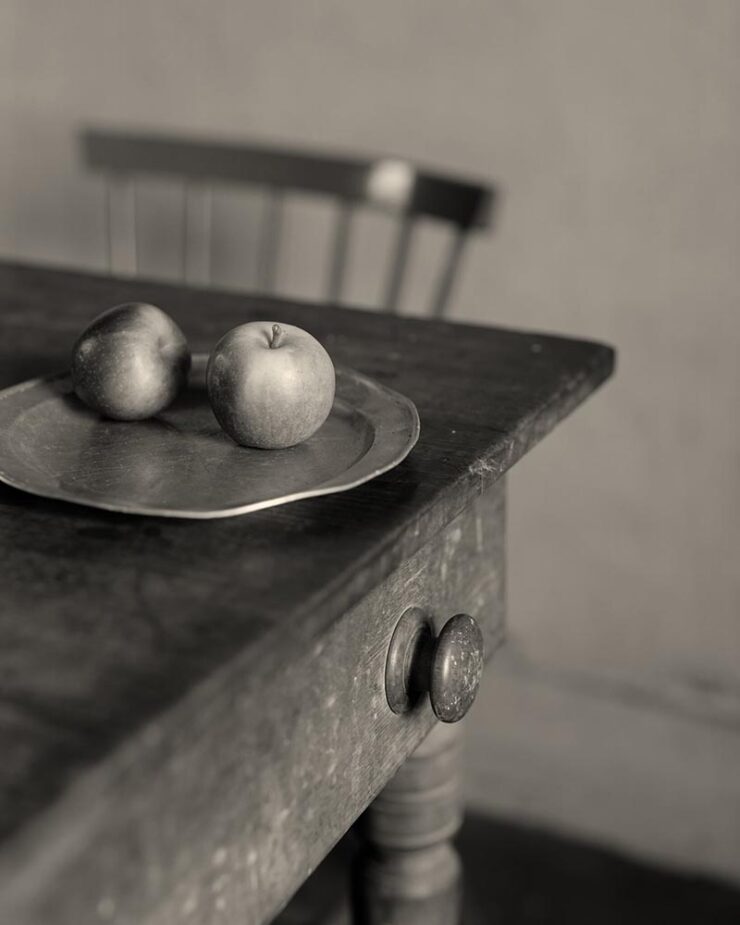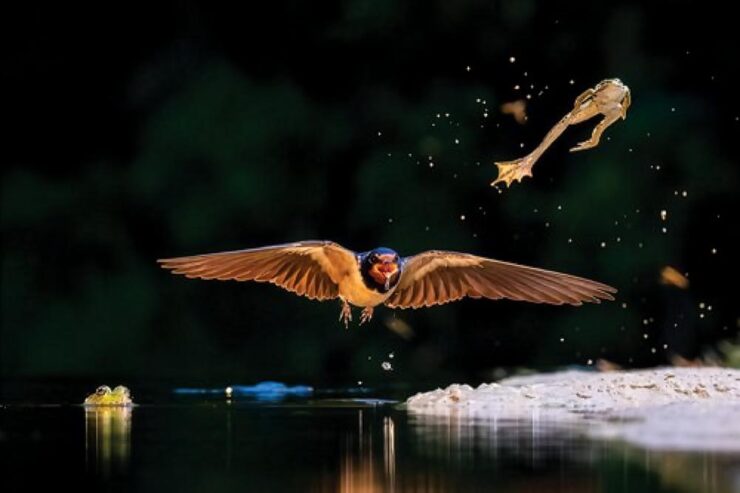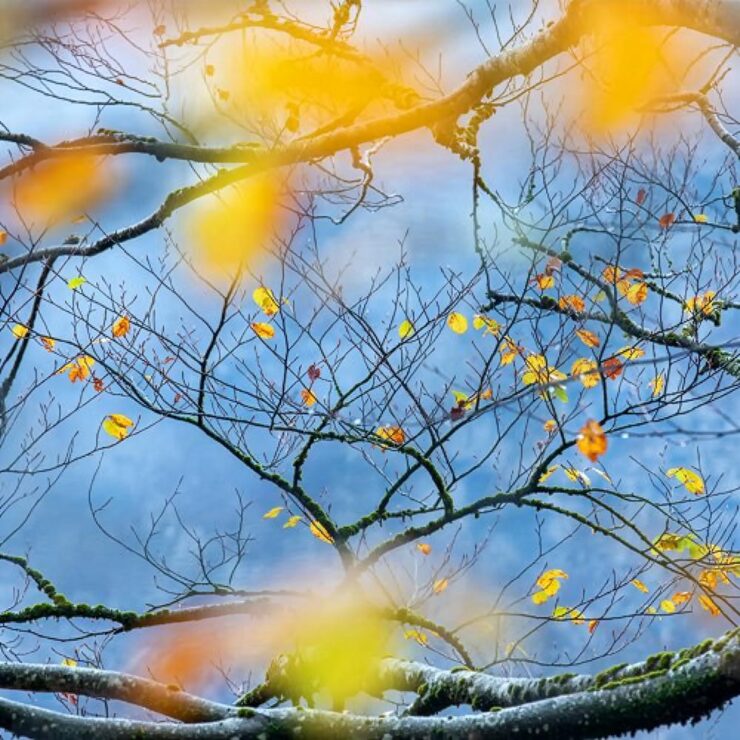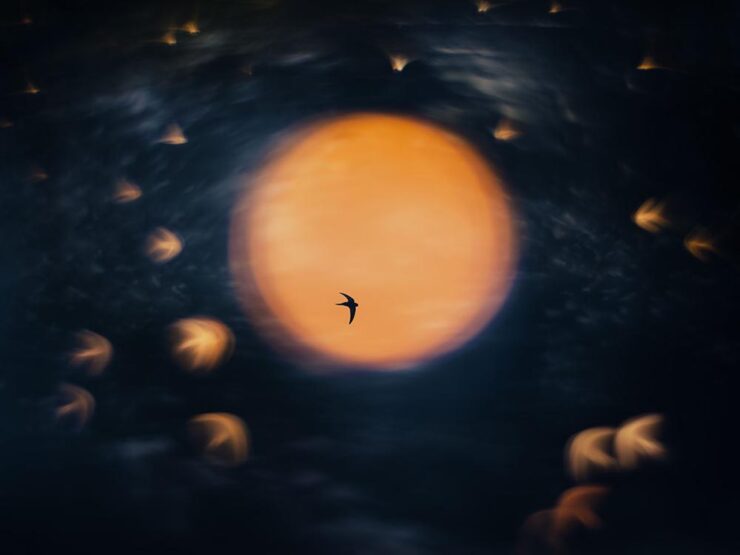
Tag: creativeboom

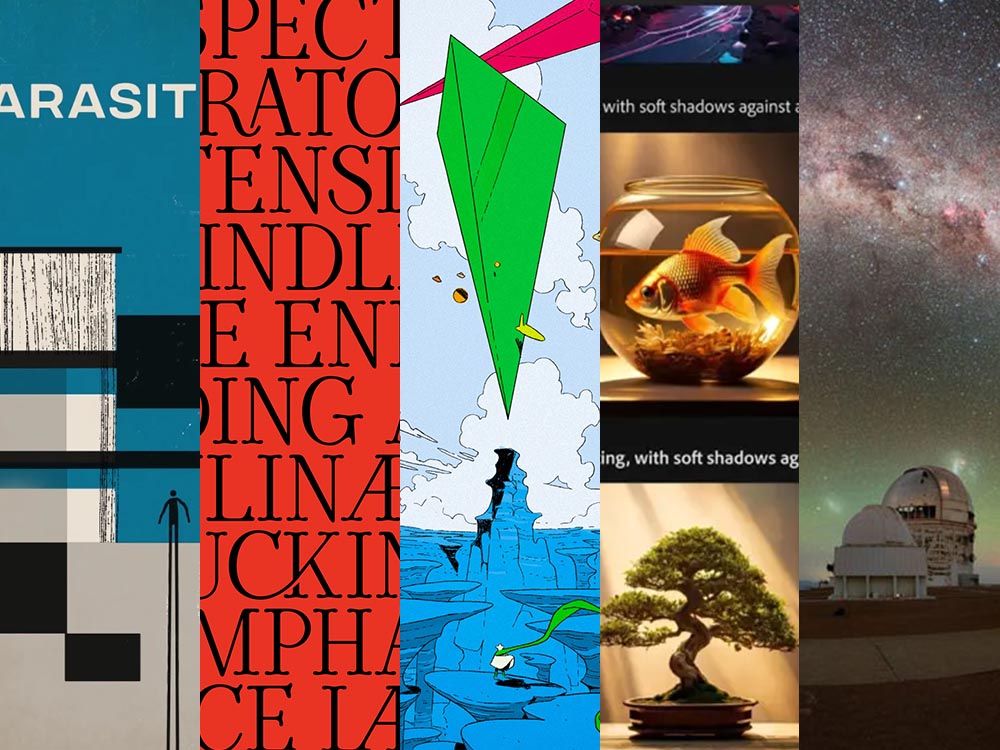
  • Beautifully Briefed 26.3: The Ides of Equal Madness

    Beautifully Briefed 26.3: The Ides of Equal Madness

    This month, some optimism, some interesting books, some creative fonts, and some fantastic photos, and somepositivity — plus a smidgen of pessimism — in the form of Adobe.

    On the whole, it’s mostly optimism, promise. And there’s butter. And a sleeping fox. And duck.

    This Month’s Spine
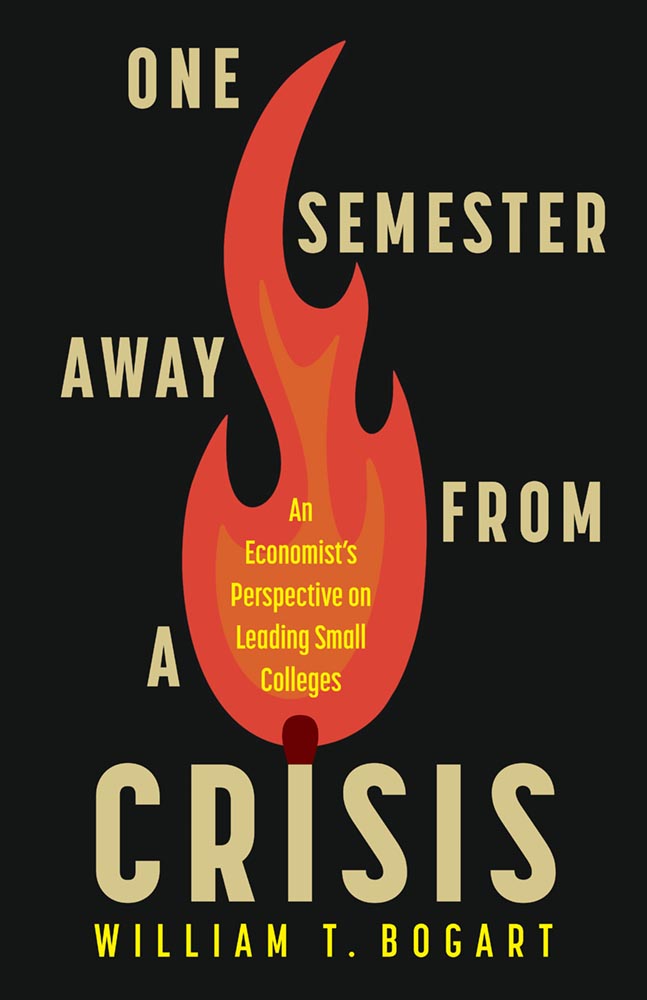
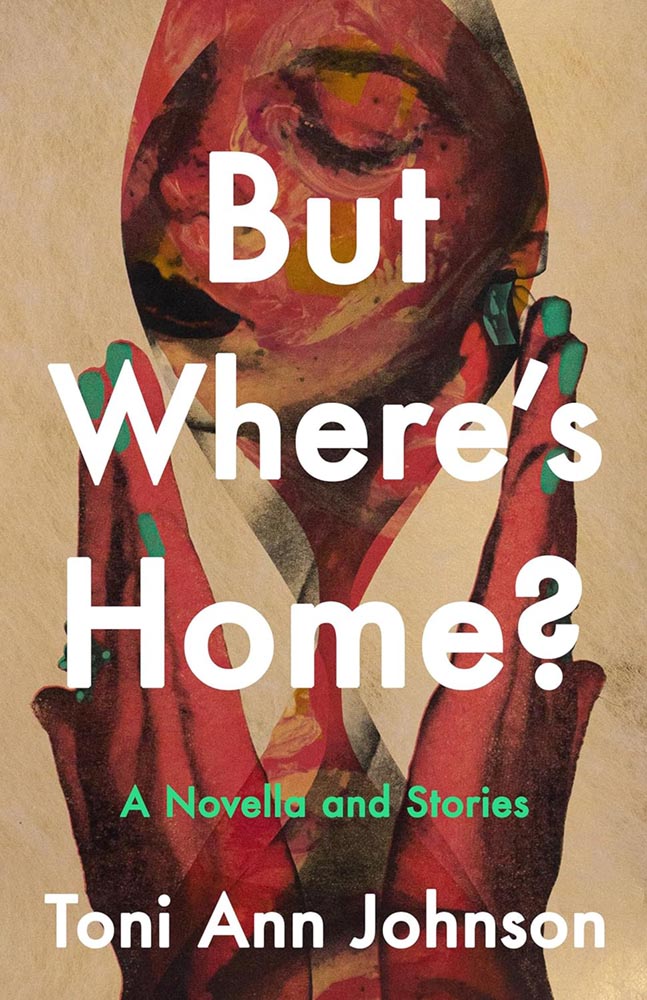
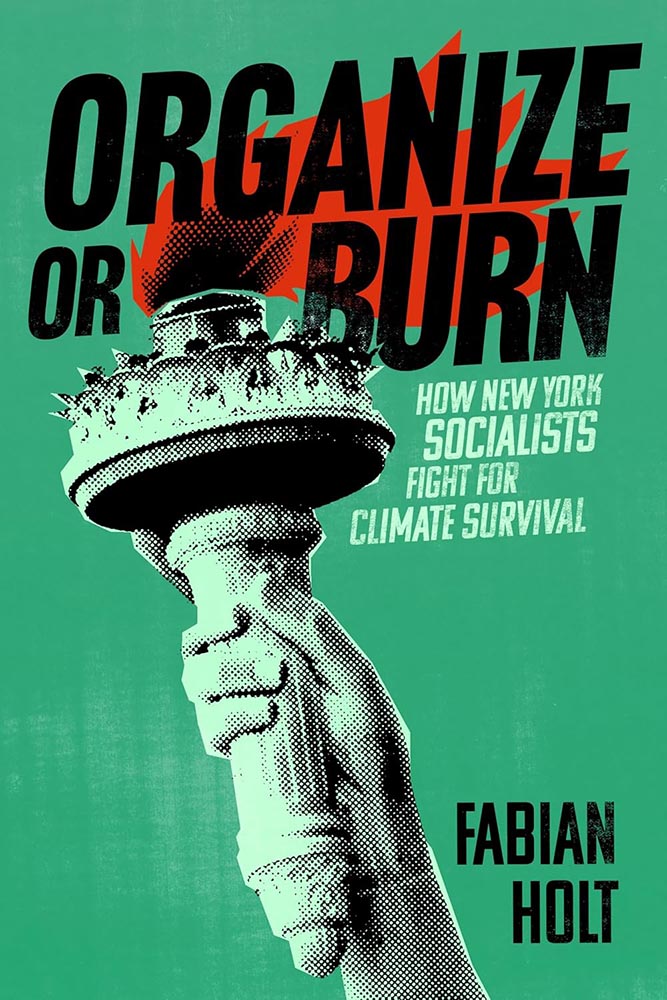
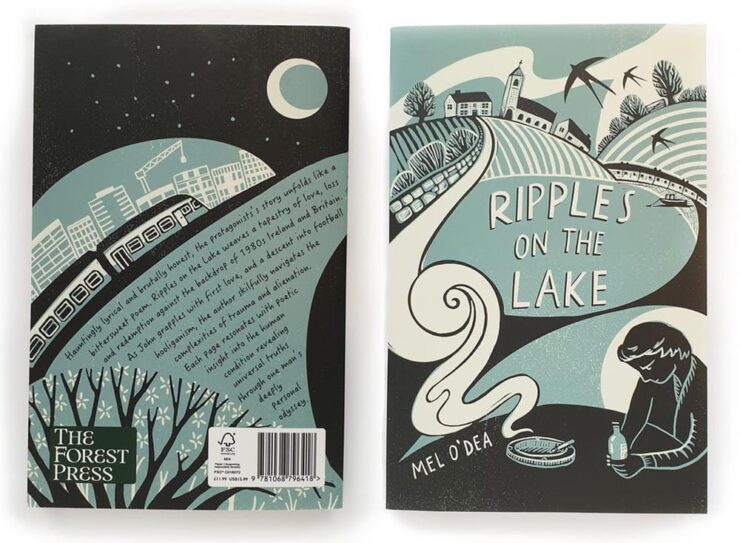
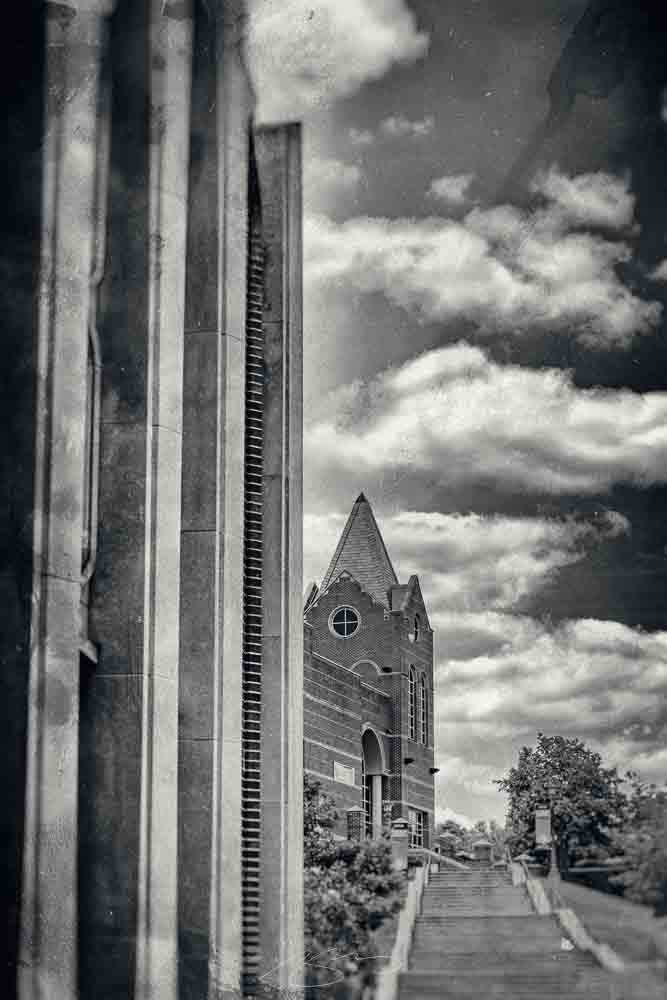
    Rutgers University Press. Cover design by Ashley Muehlbauer; production editor, Vincent Nordhaus.

    “Our initial direction for [the designer] was to create a clean, simple text design that conveyed crisis, dread, or the element of threat,” this title’s production editor said in response to my request for information.

    “To say that someone lit a fire under those directions is an understatement,” I wrote in this title’s commentary. “In today’s American academic reality, where every day could indeed be … shall we say, fraught, this cover takes the brief and runs straight onto the dean’s list.”

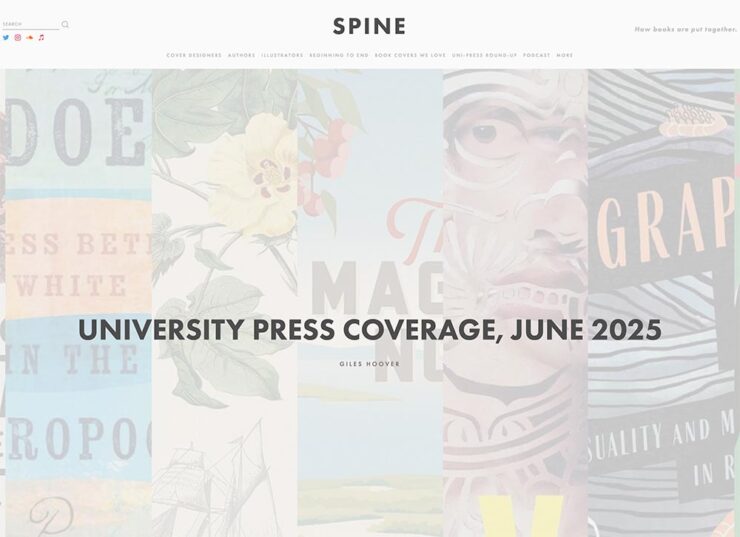
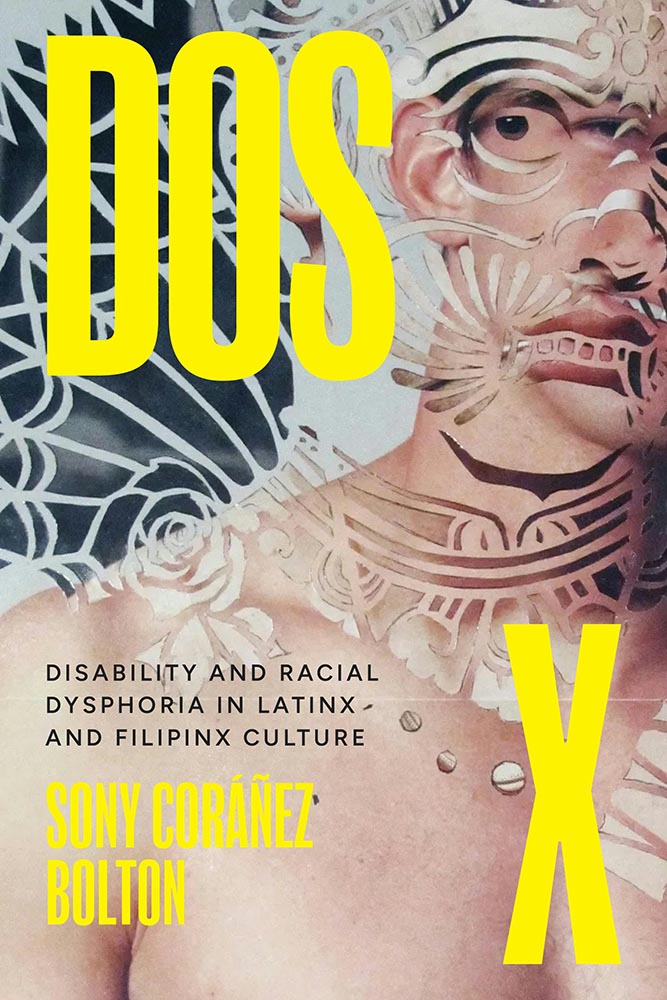
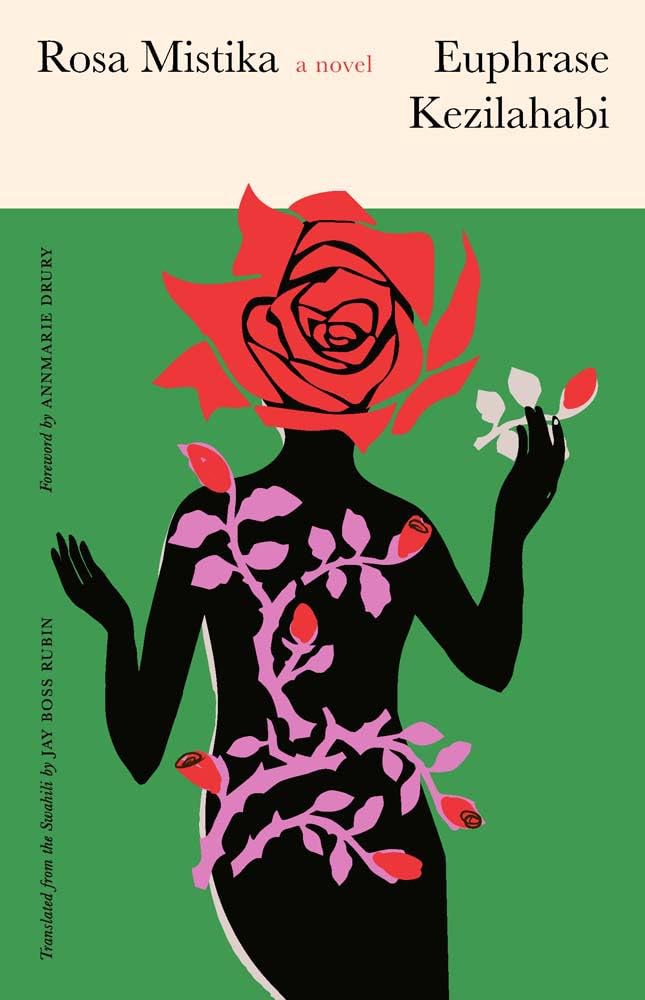
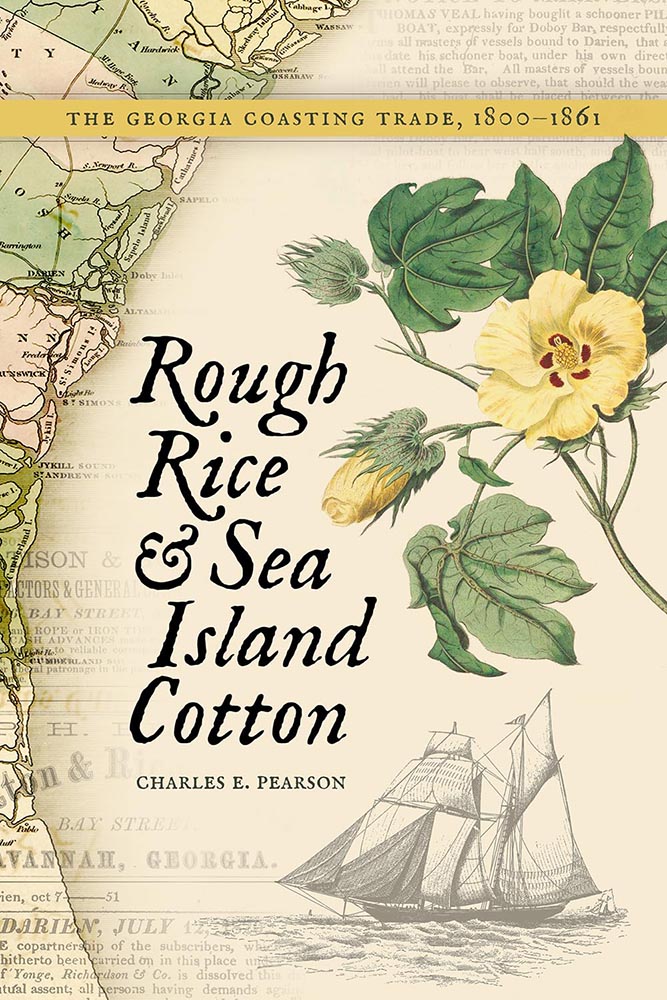
    See the rest of this month’s University Press Coverage at Spine.

    Why She’s an Optimist 
    Joan Westenberg (previously) has another great essay up about the AI doom loop — why it’s easy to believe that the downward spiral is tightening, to roughly paraphrase — and why she believes it just isn’t true:

    In 1810, 81% of the American workforce was employed in agriculture. Two hundred years later, it’s about 1%. If you had shown someone in 1810 a chart of agricultural employment decline and asked them to model the economic consequences, the only rational projection would have been apocalypse. Where would 80% of the population find work? What would they do? How would anyone eat if the farmers were all displaced by machines?

    The answer, of course, is that entirely new categories of work were created that no one in 1810 could have conceived of, and these new jobs paid dramatically more than subsistence farming. Factory work, office work, services, knowledge work, the entire apparatus of modernity: none of it was visible from the vantage point of the pre-industrial economy.
    — Joan Westenberg, “Everything is Awesome”

    “The transition was brutal and uneven. [People] suffered,” she writes. “But the trajectory was real, and the people projecting permanent immiseration […] were, in the fullest sense, catastrophically wrong.”

    The essay isn’t perfect; it’s too long, and the editor failed to catch a few typos (he said, hypocritically). But … it scales. Zoomed out, it applies to more than AI.

    “The doomers may have the best stories. I believe the optimists have the best evidence,” she concludes. I agree. Or, at least, I’d like to. 

    Go read it and see whether you do.

    Great Web Moments X2
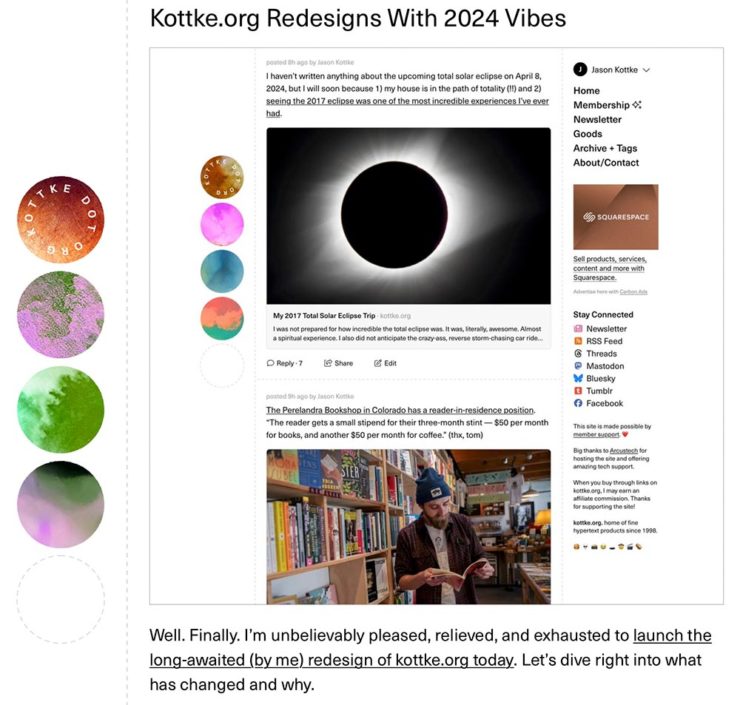
    Kottke.org 

    Kottke Turns 28. There are few websites I nod along with as often as this gem from the late ’90s, still going strong.
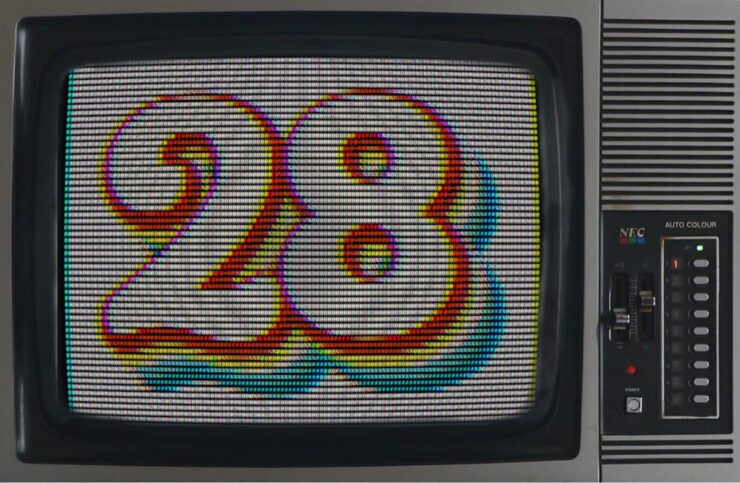
    Kottke.org: 47,300 posts and counting.
    Scripting.com

    Dave Winer shoots for the stars:

    We’re going to try to reboot the web.
    Doing what the social networks do, but only using the web.
    Every part replaceable. 
    — Dave Winer, scripting.com, “Mission Statement”

    Scripting News has been around since ’94 and if you’re even a little interested in a free web, his site is a fine place to start learning how you can contribute to keeping it free.

    Note: scripting.com is, famously, still non-https — which means that if you click on either of the above links you’re likely to get a warning that the site isn’t secure. It’s very much a safe link.

    Book Notes X3
    Oliver Munday, Head of Household
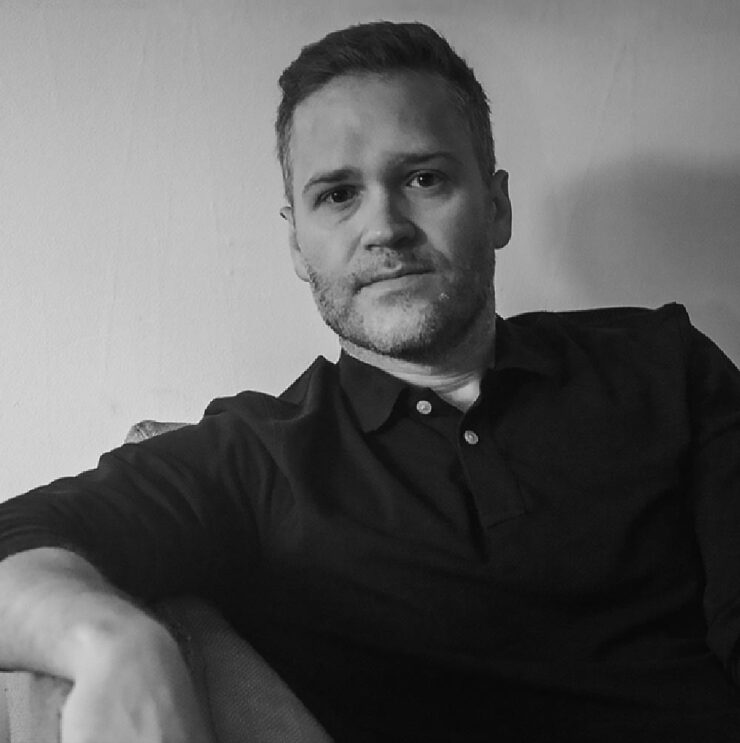
    Somehow, I expected someone older. (Courtesy of Debutful.)

    Nearly every one of his book cover designs could be called an instant favorite. He has a wry, brief expression that often delights.

    So, when he wrote a book, did he do the cover? Well … no, as it turns out — and he preferred it that way.
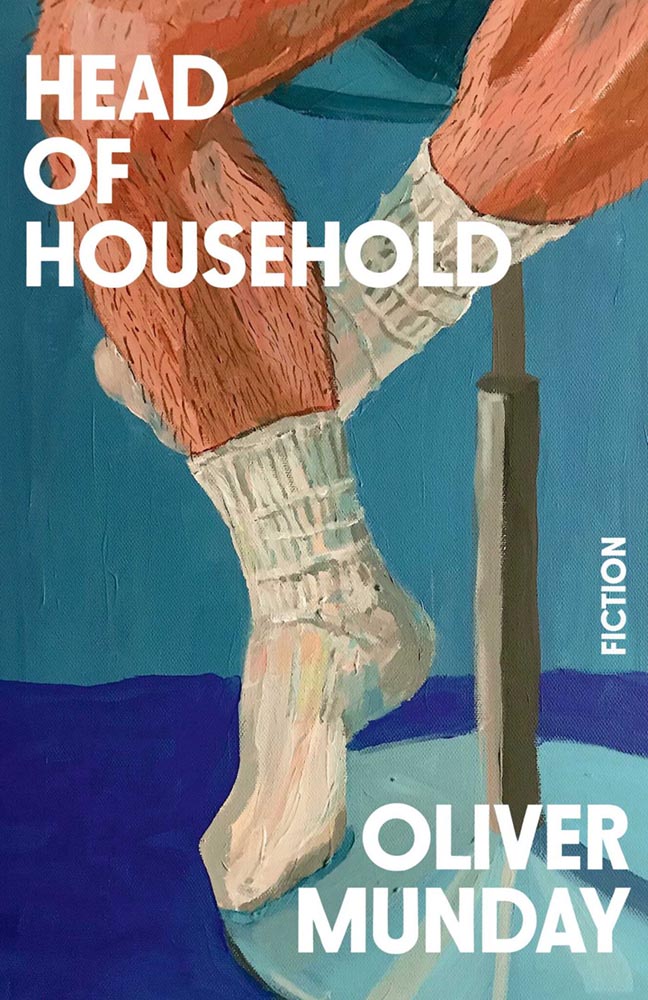
    Cover design by Chris Brand.

    Munday’s collection of stories has an interesting cover by industry veteran Chris Brand, and I like it — although some of the alternatives seem to me like better fits for Munday’s take on life. 

    But, of course, that’s the point: it’s not about him, it’s about his book.

    See the other book cover design drafts Brand designed for Head of Household at LitHub. (And a short Q&A.) Enjoy also this interview with the author/designer at Debutful.

    The Butter Book
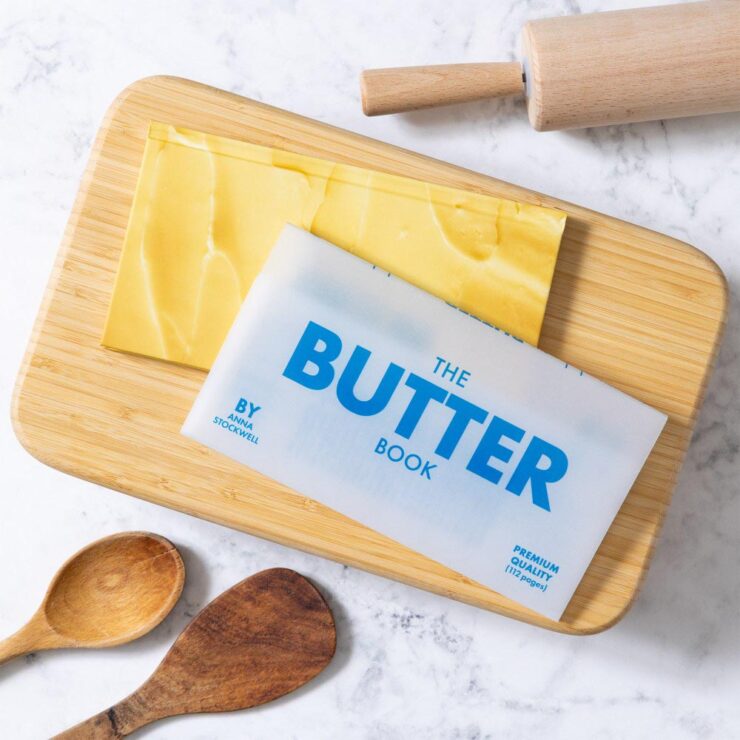
    Book design by Lizzie Vaughan.

    No, it doesn’t soften when left out — or spread any larger meaning. It’s just a great book cover (and jacket).

    Chronicle gets a kick out of “things that look like other things.” We made a notepad called Pad of Butter that has been selling steadily since 2015. So, imaginations did not need to stretch when a butter-focused cookbook with a vellum jacket was proposed. It’s our “bread and butter,” so to speak.— Q&A with author Anna Stockwell and designer Lizzie Vaughan, PRINT

    “It’s important to find joy wherever you can these days and it’s hard to hate on butter,” the article says. Read the rest at PRINT.

    “Naïve” Design
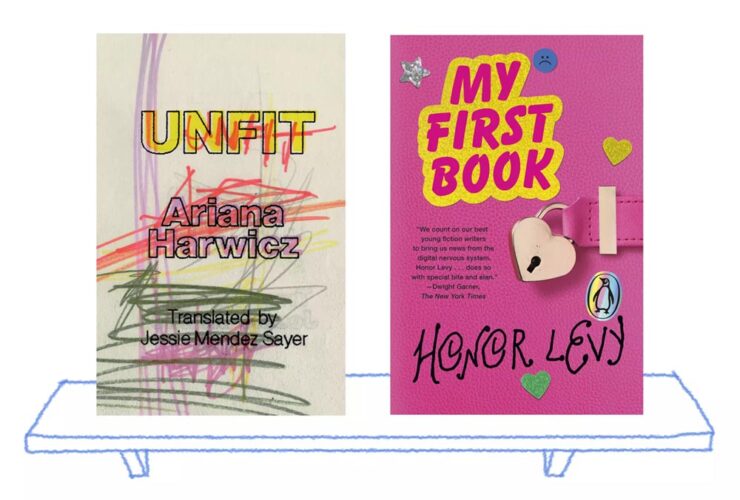
    Image courtesy of the LA Times.

    The LA Times examines the latest book design trend: naïve design. (Yes, I pretentiously style that like the New Yorker does. The LA Times does not.) It’s where serious subjects wear … nostalgic cover designs, to use a phrase. Find out why.

    Parenthetically, of the covers mentioned in that article, only one — by design legend Na Kim — has found its way into my 2026 Favorite Covers folder. It’ll be a minute, but stay tuned to find out which.

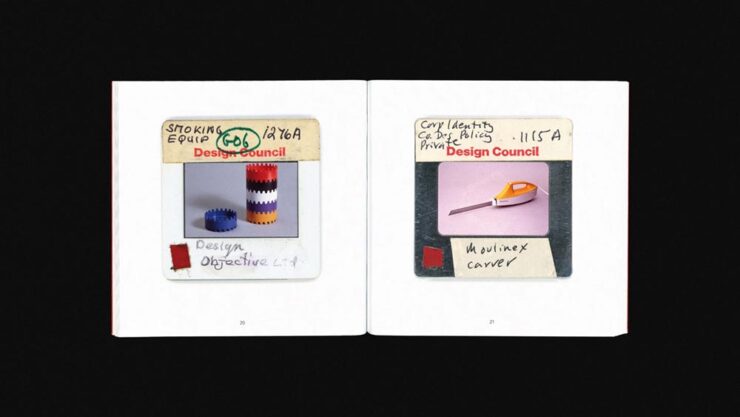
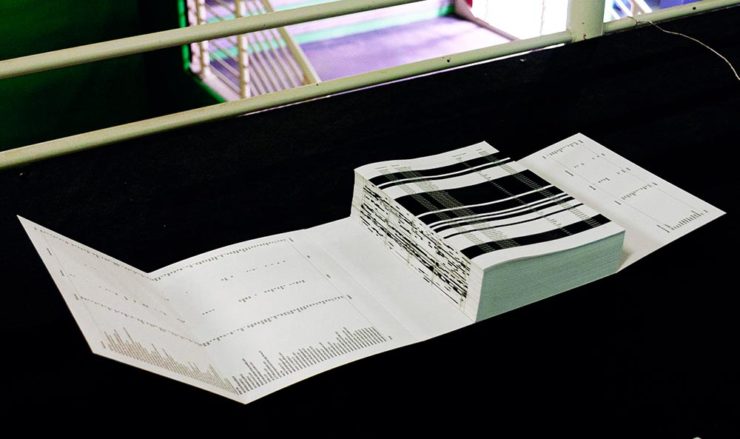
    Special Bonus #1: “You’ll need a magnifying glass to read these,” says This is Colossal:
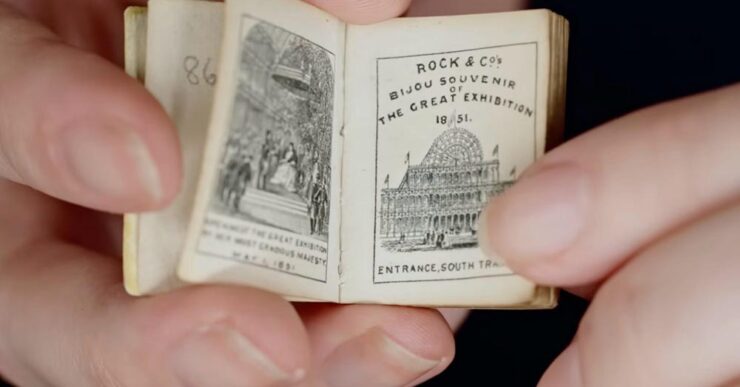
    Courtesy of the V&A Museum.

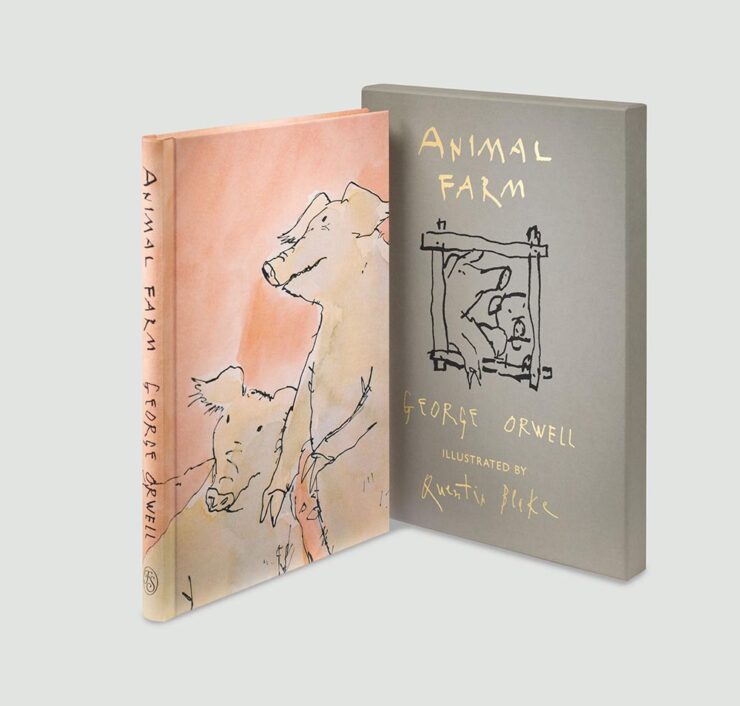
    Special Bonus #2: A favorite collectible (and slight tangent), these books “keep a lost design legacy alight,” says It’s Nice That:
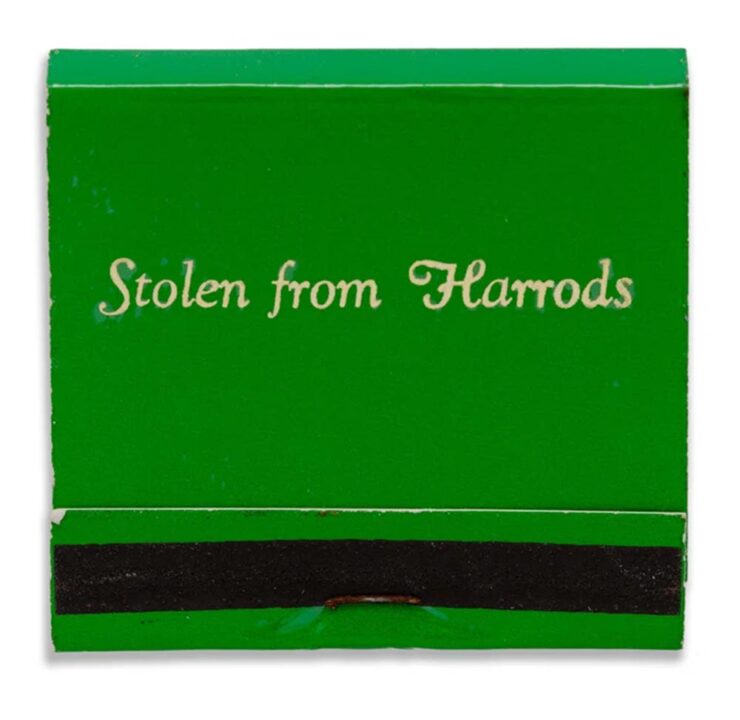
    A sample from The Matchbook Book by CentreCentre. 

    Update, 1 April: CreativeBoom has a nice feature on this title as well, with additional images. Check the slipcover:
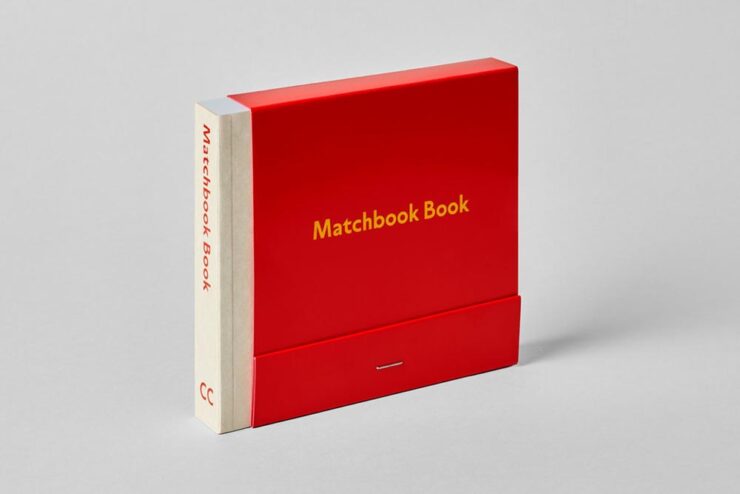
    Awesomeness courtesy of CreativeBoom.
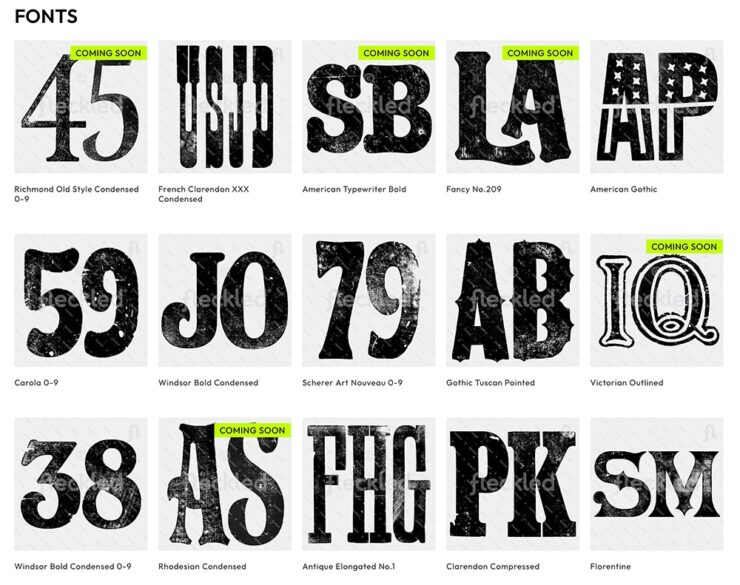
    Fonts March Foreword
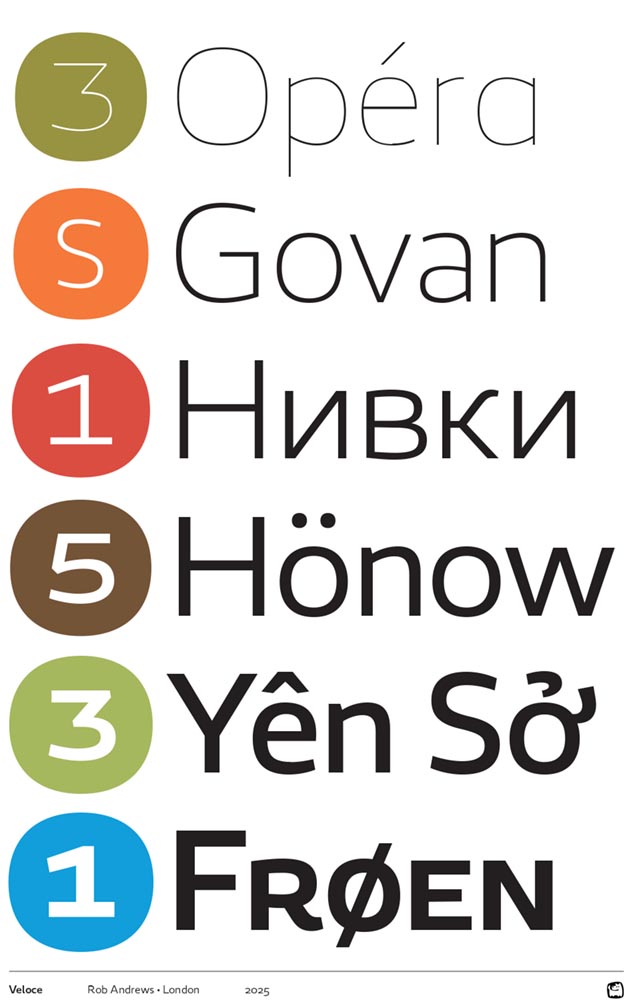
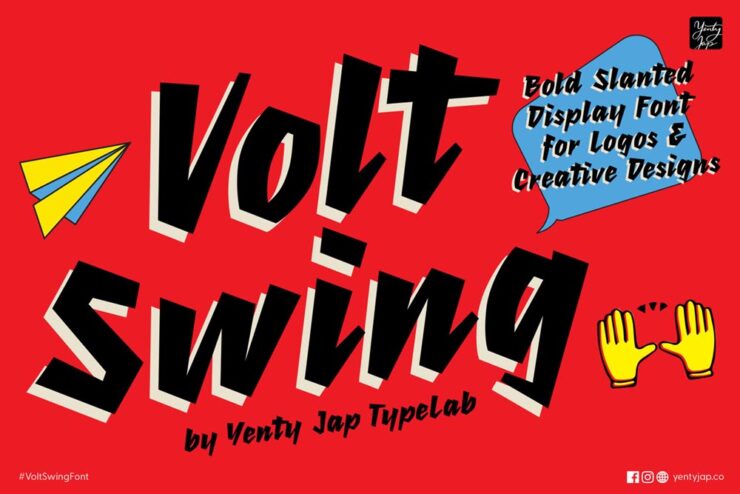
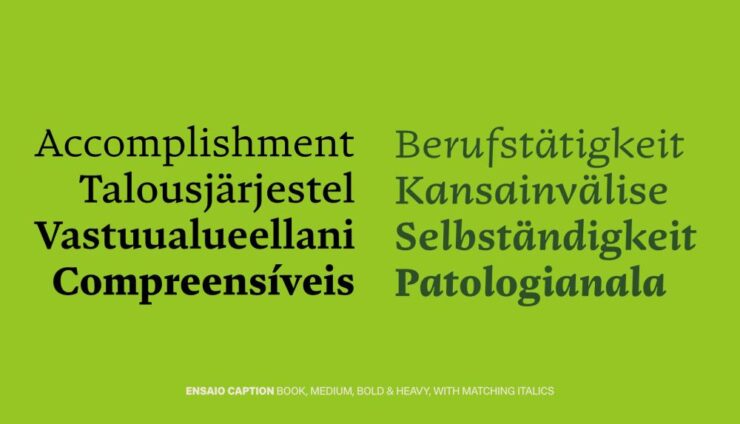
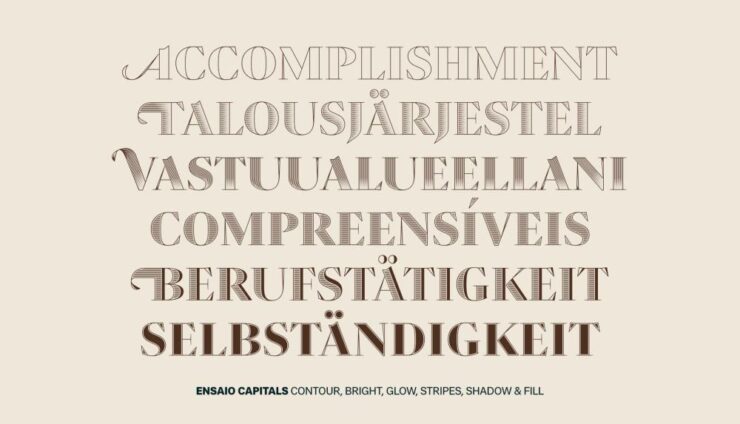
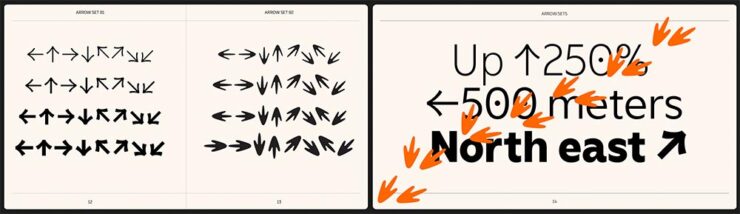
    CreativeBoom’s March Faves

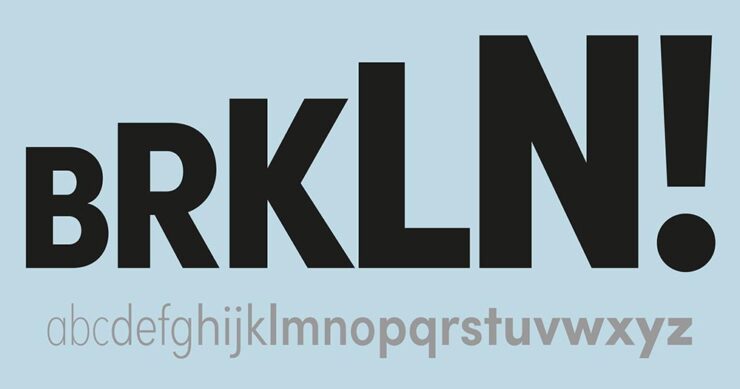
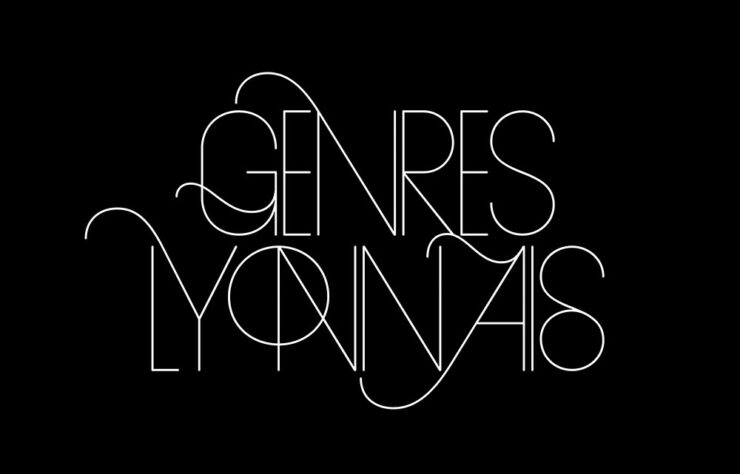
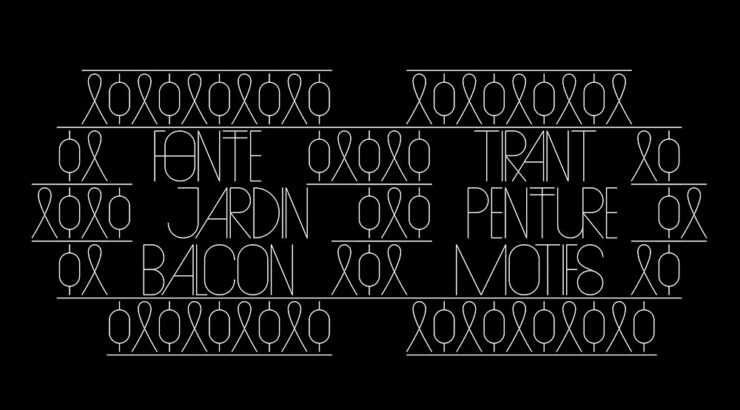
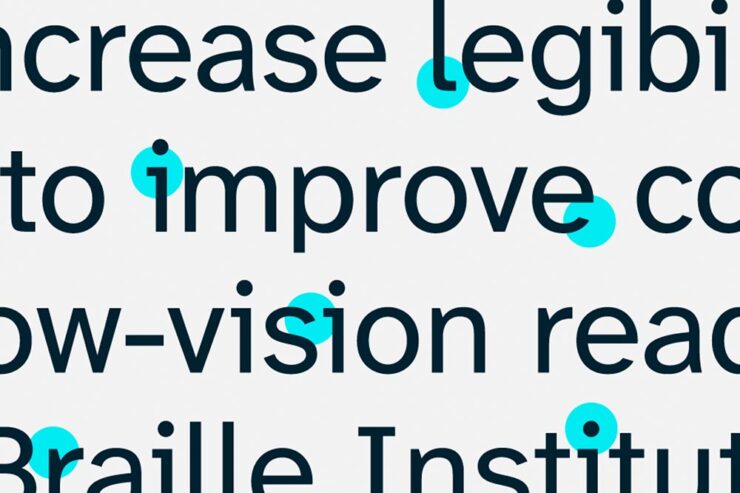
    CreativeBoom‘s regular feature contains sixteen choices this month — awesome! — but I’d like to just highlight my three favorites: 
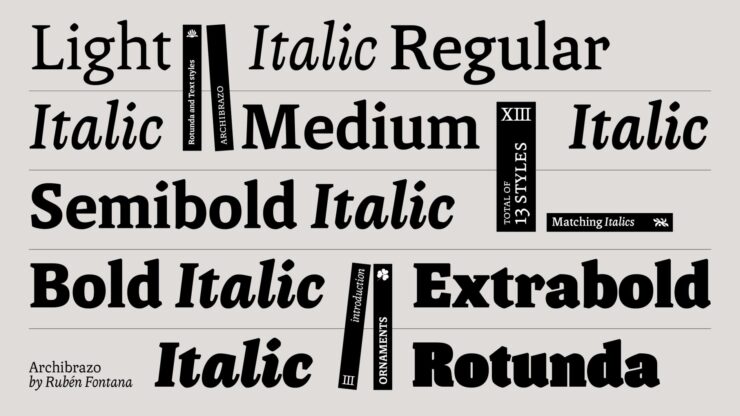
    Archibrazo by Rubén Fontana.

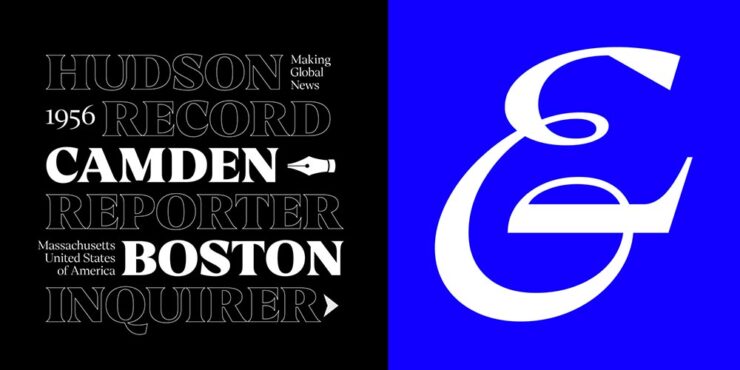
    “Rubén Fontana is one of the most respected figures in Latin American type design, and Archibrazo, released through TypeTogether earlier this year, represents a characteristically considered piece of work. The typeface brings together two traditions that might seem at odds: the fluidity of calligraphic practice and the hardness of sculptural form. The result is a serif family that wears its sources with confidence, without collapsing into historicism or affectation.”
    See more at TypeTogether.

    Djaggety by Alessia Mazzaarella.

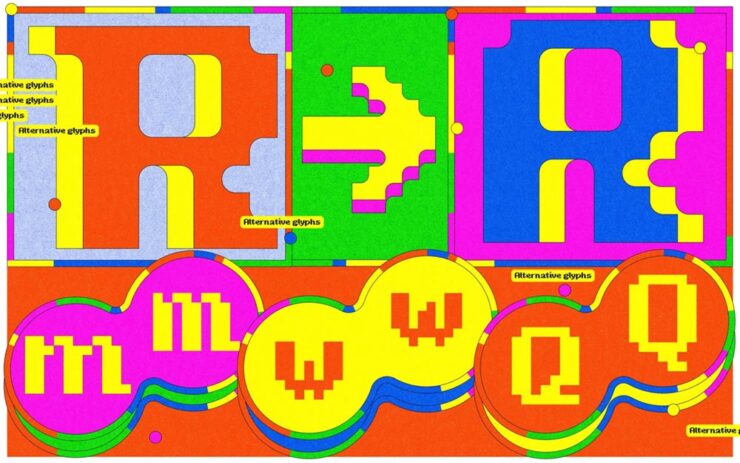
    “Djaggety began in a classroom. Alessia Mazzarella of Typeland, who teaches type design to BA Graphic Design students, uses an 8×8 grid exercise as a standard introduction to letterform construction. The constraint, she explains, strips away the paralysis of infinite choice and forces students to focus on what makes a character recognisable within a tightly defined system. During one iteration of the exercise, she found herself drawn into the process rather than simply demonstrating it. […] Overall, it’s a good lesson in how constraint can generate, rather than foreclose, creative possibilities.”
    See more at Typeland.

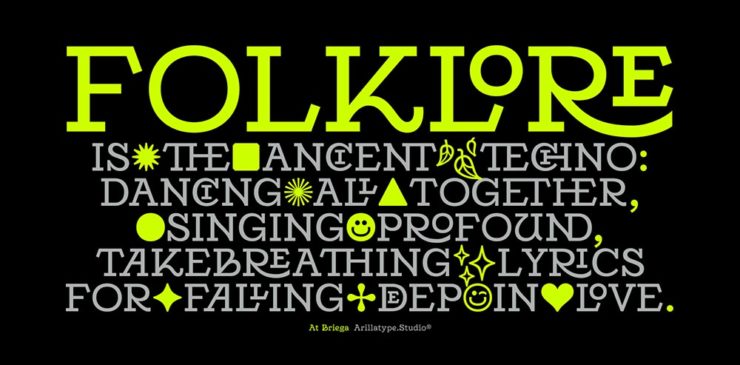
    Musikal by Fred’s Fonts.

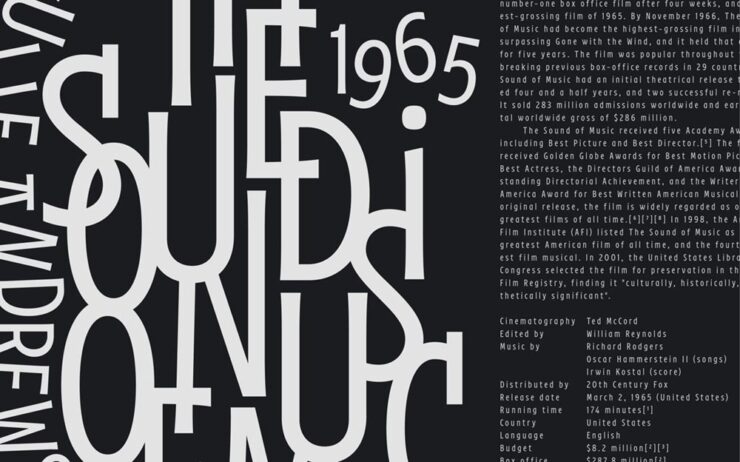
    “After three years in development on Future Fonts, Fred Wiltshire’s Musikal has reached v1.0: a significant milestone for a typeface that began with a conscious act of divergence. Herman Ihlenburg’s Obelisk (1880s) served as the starting point: a high-contrast, ornamental display face of considerable geometric rigour and decorative confidence. Rather than reviving Obelisk directly, Wiltshire took its ‘playful nature’ as a conceptual springboard and built something clearly of the present.”

    See more at Future Fonts.

    Letterform Archives’ New Celebration of Hand-Painted Type
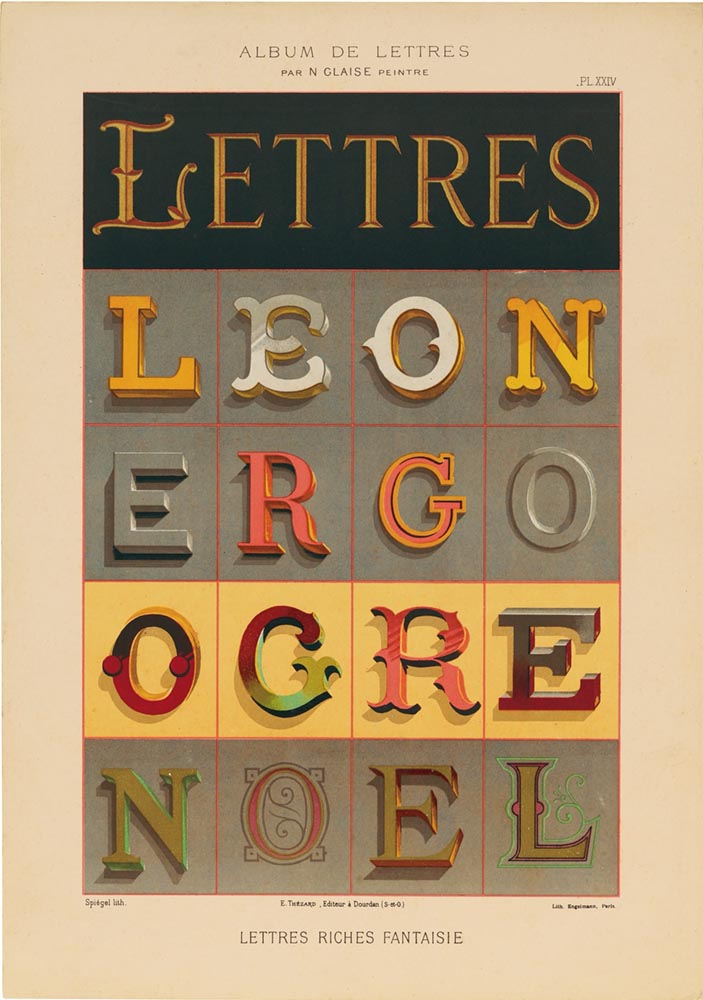
    One example — I mean, who can argue with “Lettres Riches Fantaisie“?

    “A new book published by Letterform ArchiveLettres Décoratives: A Century of French Sign Painters’ Alphabets, celebrates the vivacity and timelessness of French sign painting from the 19th and early 20th centuriesCompiled from lithograph portfolios, which range from 1875 to around 1932, the volume includes more than 150 full-color reproductions of these bold lettering samples. These portfolios once served as catalogue-like albums, providing inspiration for styles and motifs that could be translated onto large billboards and small signage alike.”

    Read more about this great new book at This is Colossal or PRINT.

    Cambridge’s Old Baskerville Punches

    Heavy metal for the type crowd:
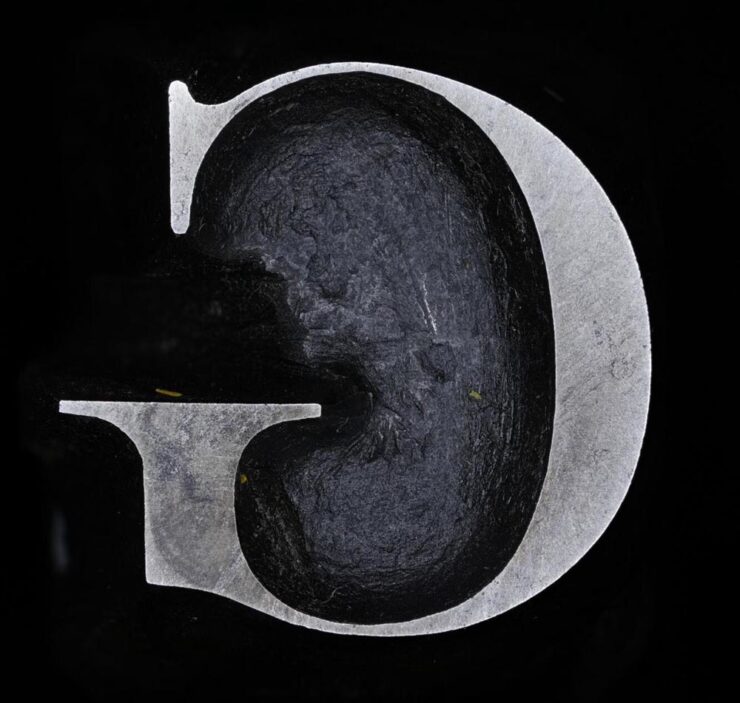
    Image courtesy of Cambridge University.

    “John Baskerville was an influential 18th-century printer and type designer; you’ve probably used (or at least heard of) the Baskerville typeface. Cambridge University has the original punches used to create his signature typeface and has made high-res digital photos of them available online,” Kottke writes. “[S]eeing close-ups of the actual cut & shaped metal from 1757 is something else.”

    In case you’re not familiar:

    The typographic punch is the initial design for the letterform and one of the first of three stages in the manufacturing of metal type: short lengths of steel onto which his letters were cut in reverse and in relief. The punch was ‘tempered’ to increase its toughness and enable its use as a tool. Secondly, the punch was struck into the surface of a softer piece of metal (copper), leaving an impression of the ‘right-reading’ character to be cast. This was called the matrix. Finally, type was manufactured when the matrix was passed to the type-caster and inserted into a mould, into which molten lead-alloy was poured. This produced a cast of the type in relief and in reverse which were then arranged to create a text block and once inked, paper could be pressed against it.

    Not just hi-res photos of punches for various sizes of type, either: some have 3D versions. Very cool.

    Special Bonus #3: The menu that never was:

    World Class Female Singers.

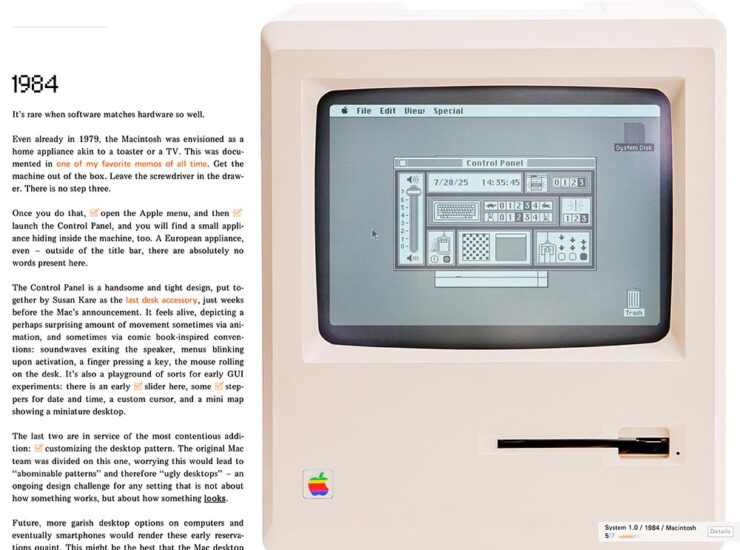
    Okay, okay, that’s not actually an unused menu from before Apple’s Macintosh was released in 1984, but how it came about isn’t something I’m going to quote. Instead, I’m just going to ask you to read it in full — it’s fantastic.

    Courtesy of Unsung, Marcin Wichary’s awesome blog. (Yes, he of Shift Happens fame.)

    Great Graphic Items X2
    The Tenth Muse
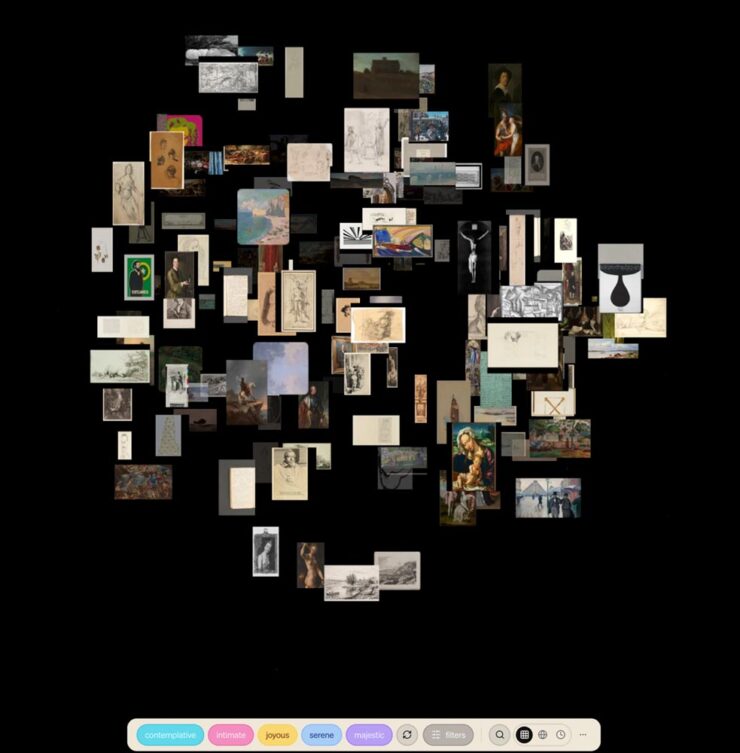
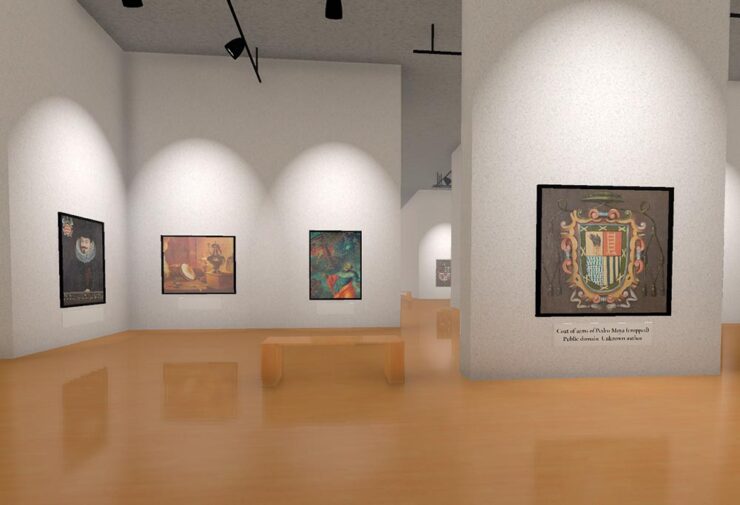
    Screenshot of the Tenth Muse home page.

    The Tenth Muse is an art discovery engine. Over 120,000 artworks from museums and institutions — searchable by feeling, mood, atmosphere, era, and medium.”

    (Via Kottke.)

    AIGA NY: 50 Years of Posters
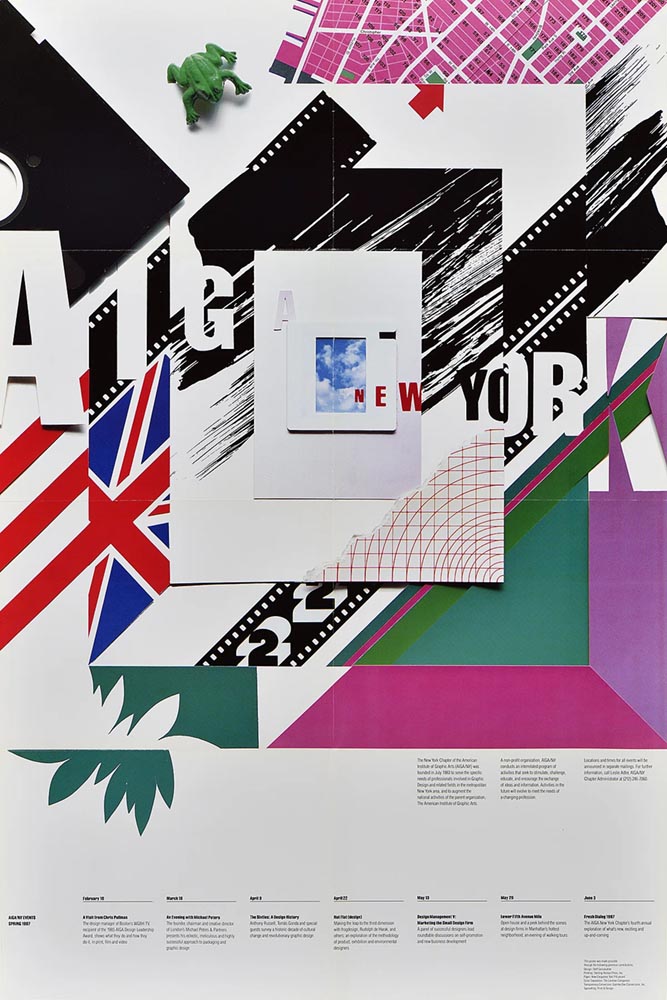
    Just one example of the many posters now available for your persual.

    “A 50-year goldmine of design: AIGA New York unveils its poster archive to the public,” It’s Nice That reports. “A newly opened window into its design archive, this unique visual library provides the public with an inside view of the design, art and activism that’s emerged from the city’s recent history. AIGA NY has ambitions for the collection to become physically accessible with an accompanying book that will showcase the posters in more depth.”

    Adobe, Yet Again
    DNG Now Standard

    Let’s start with the positive:
    “In March 2004, Australian photographer Robert Edwards asked a simple but meaningful question on Rob Galbraith’s now-defunct photography forums: ‘Could Adobe make a RAW format?’ The answer was very much ‘yes,’ and Adobe announced the DNG format, or Digital Negative, later that same year. Now, more than two decades later, DNG is now the official standard under the International Organization for Standardization (ISO),” PetaPixel writes.
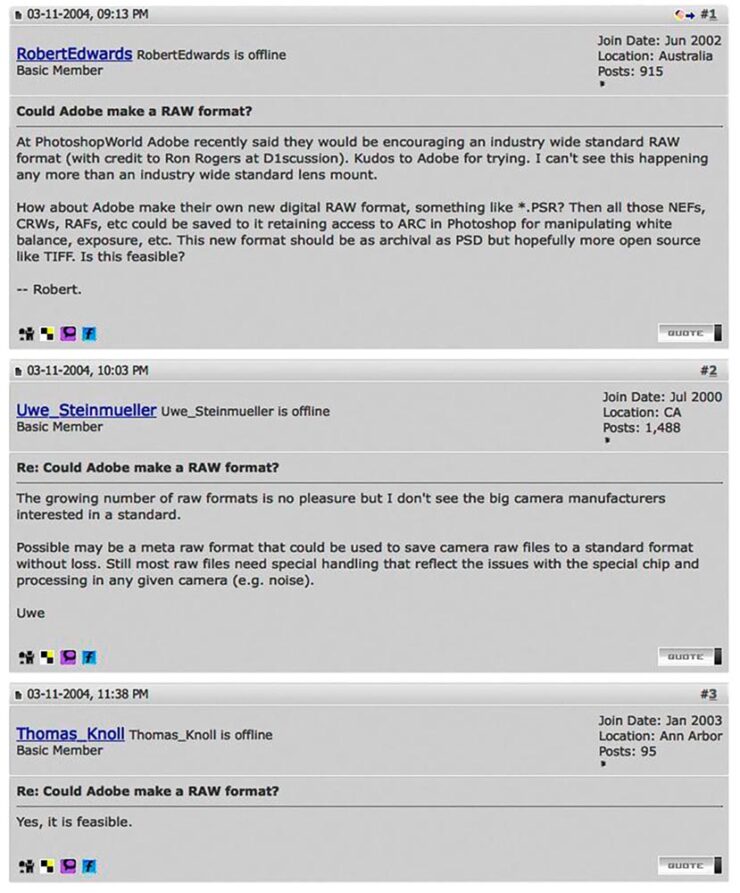
    From back in the day.

    I remember lurking on Rob Galbraith site. Such were the importance of his forums — and, for that matter, the overall size and condition of the ’net in the early Aughties — that Thomas Knoll himself, one of the creators of Photoshop, would post there.

    In case you’re not familiar, a camera’s RAW file is what the sensor sees at the moment of exposure, stored in a format for later editing. It’s completely different from a JPG file, which has all the camera’s choices baked in to the final image. Sports or journalism photographers usually shoot JPG, due to the need to post immediately; social media photography is, of course, its own animal.

    Most fine photographers — that is, folks who shoot for art or pleasure, including your author — only shoot RAW, because it gives you maximum flexibility in “look.”

    I’m honestly not sure how much of a difference this will make, but it’s nice to see DNG accepted as a standard — and it’s an example of Adobe meaningfully contributing to the bigger picture. 

    Train Adobe’s AI on Your Style

    From the “mixed” department:
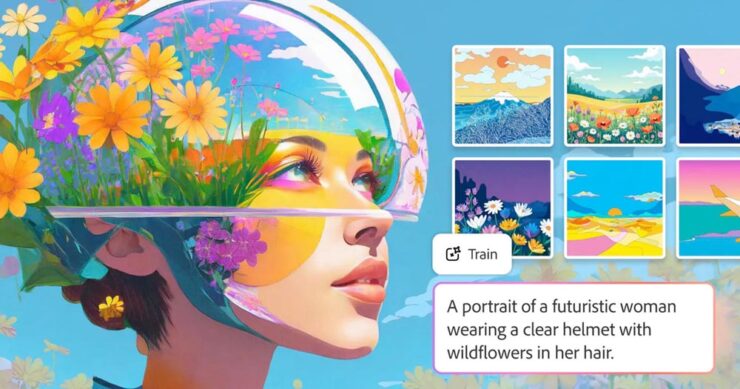
    It’s not tin foil.

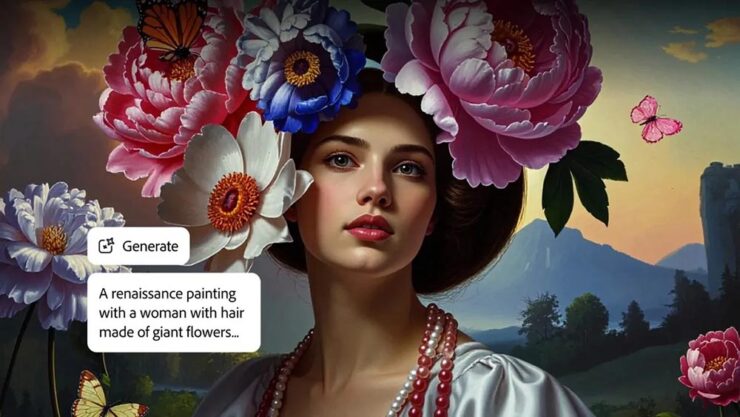
    Adobe has launched Firefly Custom Models, “allowing artists to generate image variations that ‘more consistently reflect’ their own style, subject, or characters. 

    Adobe’s Deepa Subramaniam says, “Today, we’re expanding access to Firefly custom models, which let you turn your creative style into a reusable model trained on your own images. In this public beta release, custom models are optimized for ideation in character, illustration and photographic style.” 

    The goal of Custom Models, according to PetaPixel, is to “allow artists to train Adobe’s Firefly AI specifically to unique workflows so that when it generates content, it is more aligned with their specific style.”

    Hmmm. How ’bout practical effects? Seriously, this might turn out to be useful. Time will tell. Helmet of tin flowers and all.

    CEO Retires. Stock … Down?

    Here’s where the attitude sneaks in: most of us, present company included, are sick of Adobe’s attitude towards its customers.

    “Adobe’s longtime CEO, Shantanu Narayen, announced this week that he is stepping down after 18 years as CEO and nearly 30 years at the company. If you ask shareholders, Narayen was, for a long time, among the very best in the biz. If you ask Adobe’s core customers, the artists who were once indispensable to the company’s success, it’s a different story,” writes Jeremy Gray in an opinion piece for PetaPixel.

    Adobe made more than $7 billion in net profit last year, a clear win for shareholders. This is due to their choice to treat creatives as a profit center. But their stock is down because their AI efforts have fallen flat — Firefly is way behind Midjourney or Gemini — and the planned additional profit center has failed to materialize. 

    And by “down,” I mean significantly. During Narayen’s tenure, Adobe’s share price increased from around $40 in late 2007 when he took over to an all-time high of $688.37 in 2021. But as of this writing, it’s $243. “Although Adobe and Narayen are painting his departure as entirely the outgoing CEO’s decision,” Gray continues, “it’s easy to wonder whether tumbling share prices had something to do with the transition, or at least sped up existing plans.

    “I respect the sheer scale of what he achieved. I admire that he grew Adobe so that it could hire more great workers to build better software. But for me, Narayen’s legacy is ultimately one of treating [creatives] like an afterthought […] using our passion and love for art to boost his brand.”

    I understand that Adobe has become one the Internet’s favorite punching bags of late, and I try to distance myself from that sport (no matter the subject). But I can’t help but agree with many of the things expressed in that piece.

    Let’s hope that the future bring change, one way or another. For many professionals, Adobe essentially holds a monopoly. 

    But then, so did Microsoft.

    Special Bonus #4: Unsung asks, “Why wouldn’t everyone deserve the gift of focus?” He’s talking about the tragically-short-lived focus mode in Photoshop, wherein the user isn’t automatically shown pop-ups or blaring (bleating?) buttons regarding new features.

    I mention this because I just uninstalled Acrobat, Adobe’s PDF management program, because I couldn’t turn off the pop-ups, sharing invitations, or requests to add comments. All I wanted was to proof documents, but what I was gifted with was frustration — even anger, on days where a deadline was involved. 

    Special Bonus #5: “A slap on the wrist” is understatement writ large:

    “Canceling a software subscription is supposed to be easy — that’s what US law dictates. Adobe, however, has played fast and loose with its Creative Cloud subscriptions in the past. The company was sued by the Department of Justice in 2024 due to its practice of hiding hefty termination fees when customers signed up. The case has now been settled, with Adobe agreeing to a $75 million fine and matching free services to users of its products,” Ars Technica writes.

    The company doesn’t admit to violating the law. “While we disagree ⁠with the government’s claims and deny any wrongdoing, we are pleased to resolve this matter,” Adobe said in a statement.

    March Photo Round-Up

    Okay, let’s switch gear and end with inspiration — even happiness.

    International Garden Photographer of the Year 2026

    Yes, you read that right: there’s an international contest for the best garden photograph. (If you want hard-hitting stuff, see Sony’s awards. There’s enough “news” in the world, so….)
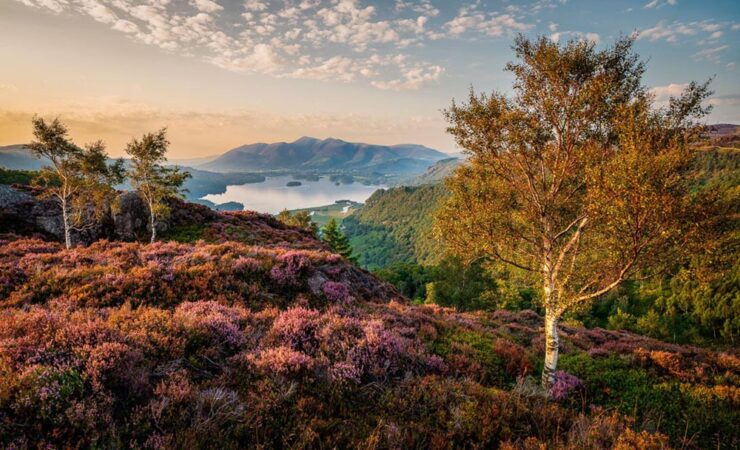
    Grange Fell Last Light. Overall Winner. Photograph by Mark Hetherington.

    Soothing. The image also earned first place in the Breathing Spaces — more soothing —category, and was captured in Borrowdale in England’s Lake District; the “photograph shows heather, silver birch trees, and the warm light of sunset viewed from Grange Fell,” PetaPixel writes.

    See all the winning photographs at the contest website.

    British Wildlife

    Asleep at the Wheel. Winner, Urban Wildlife. Photograph by Simon Withyman.

    It’s a shame these are still photographs. Hearing a red fox bark in a British accent is a hoot.
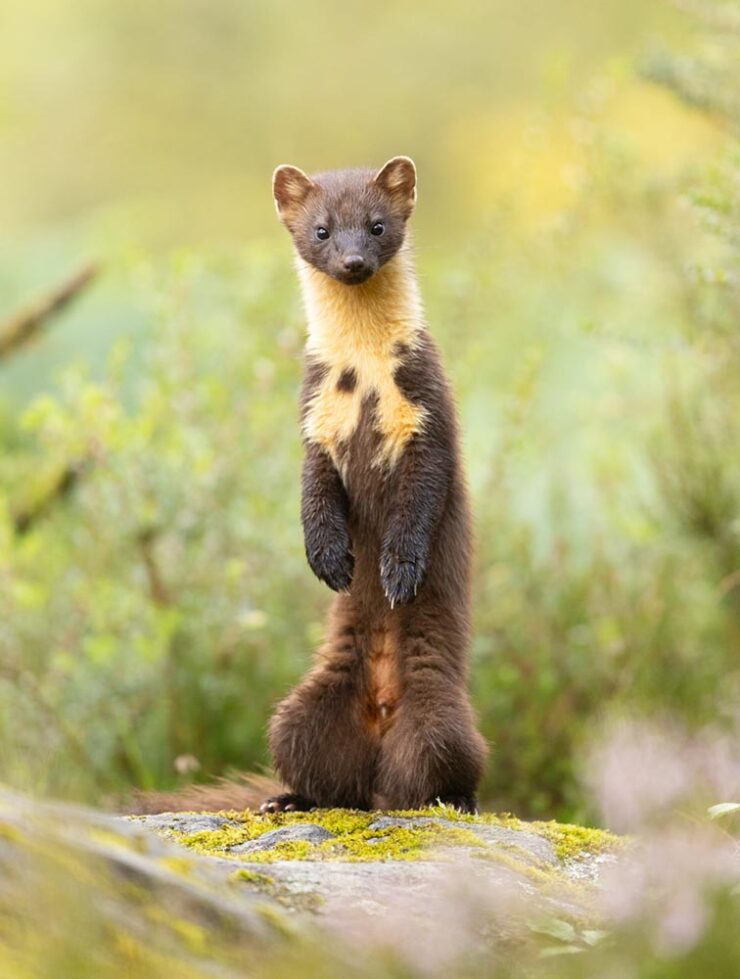
    Standing Tall. Winner, Animal Portrait. Photograph by Alastair Marsh.

    Proof that excellence in photography extends to all parts of the realm. See all twenty-one winners at This is Colossal or PetaPixel.

    London Camera Exchange Photographer of the Year 2026

    Last of the items originating in the UK this month, although the excellent photographs within aren’t limited to just those countries. Some examples:
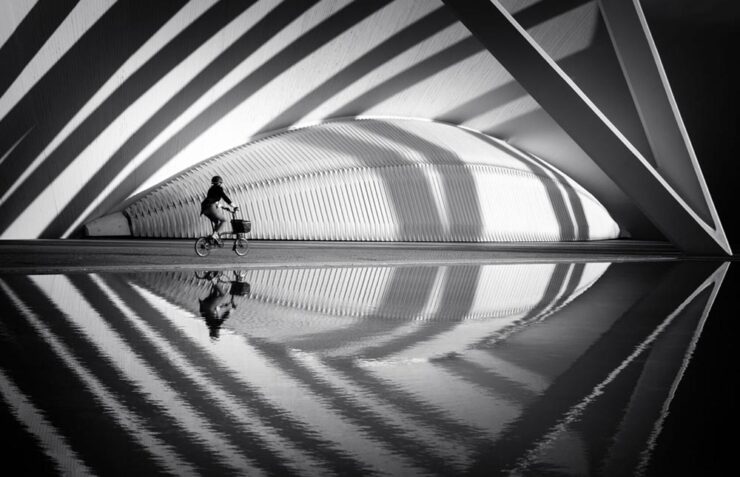
    Crossing the Curves. Winner, Street. Photograph by Helen Trust.

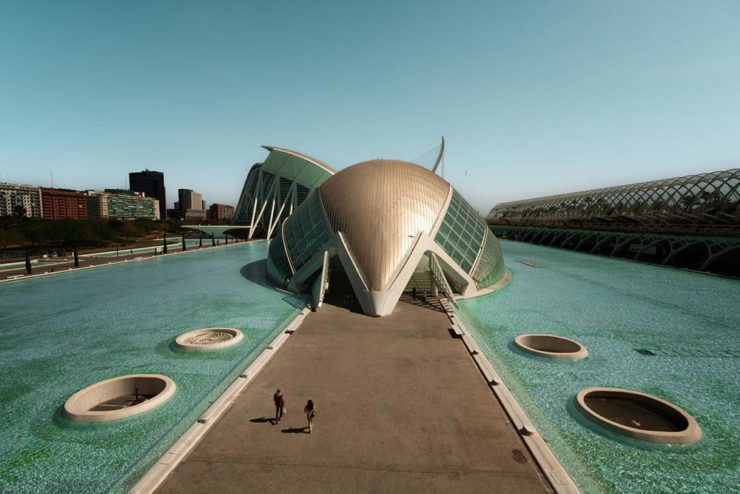
    “A lone cyclist moves through sweeping arcs of light and shadow at the City of Arts and Sciences. Reflections echo the architecture’s rhythm, momentarily aligning human motion with structure, symmetry, and space.”
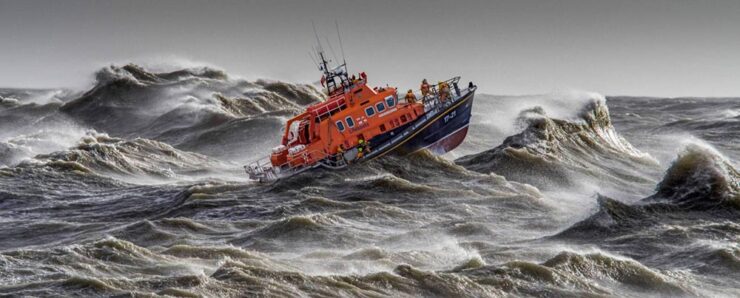
    Saving Lives at Sea. Winner, Action. Photograph by David Lyon.

    “Captured from the shore, during a regular Newhaven training exercise.”
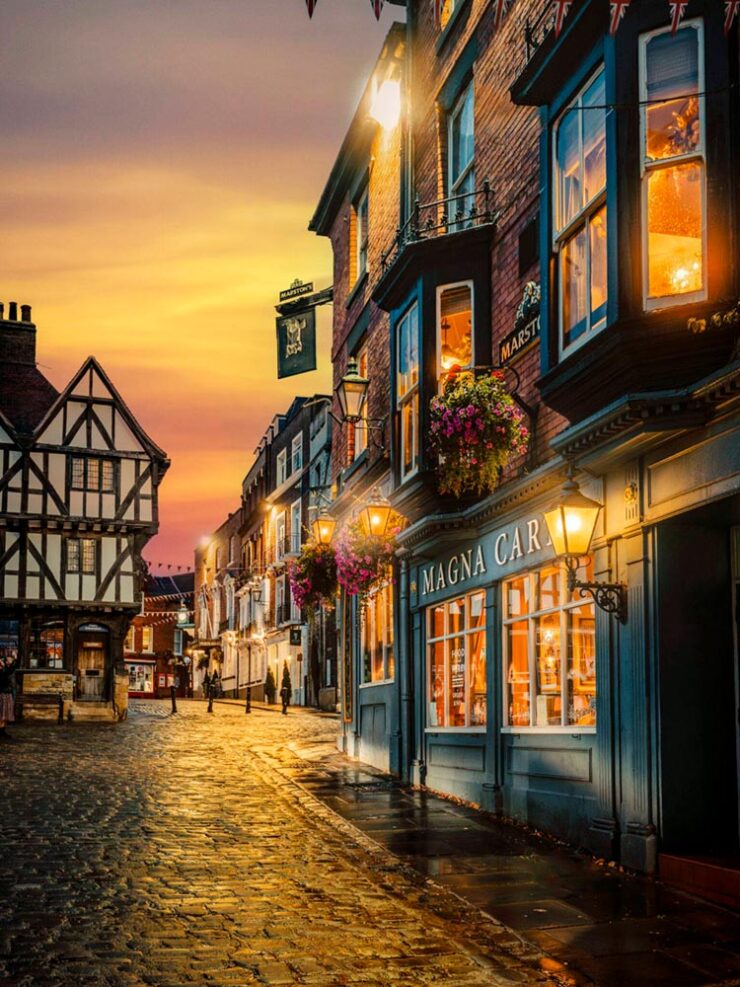
    Magical Uphill Lincoln. Winner, People’s Choice. Photograph by Andrew Scott.

    “This image was taken during golden hour in Lincoln. The image captures the historic streets and architecture of Lincoln as a golden sunset sets in. […] The golden glow of the sky, cobbles and light from the window add that extra dimension in terms of how the overall image works as a result.” (The description somehow missed “soothing.”)

    See all the winners at the London Camera Exchange website. Via Macfilos.

    Andrew Moore: Theater

    “Known for his atmospheric photographs of landscapes, interiors, and urban centers that feel mysteriously locked in a not-so-distant past, Andrew Moore’s enigmatic images invite us into a slippage of time,” This is Colossal writes.
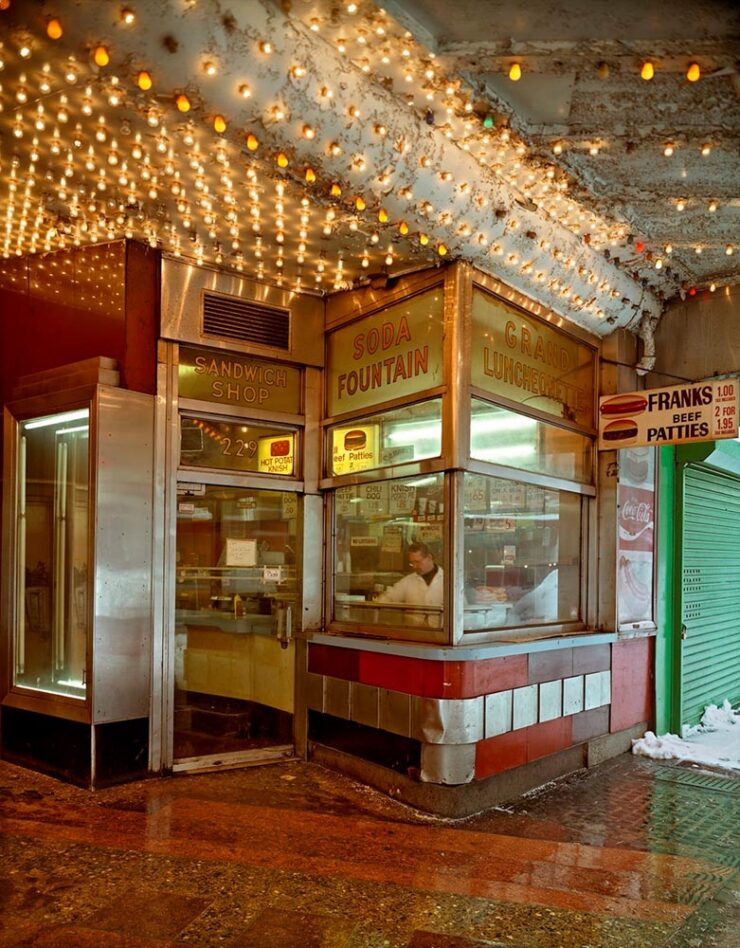
    Grand Luncheonette, New York, 1996. Photograph by Andrew Moore.

    Not only great, but currently on display: Moore has a solo show running at Atlanta’s Jackson Fine Art. (Update: The show ended March 21st, darned it. I’d have gone if I’d read that properly.)

    Cinematic Plastic

    No, not current events — something better:
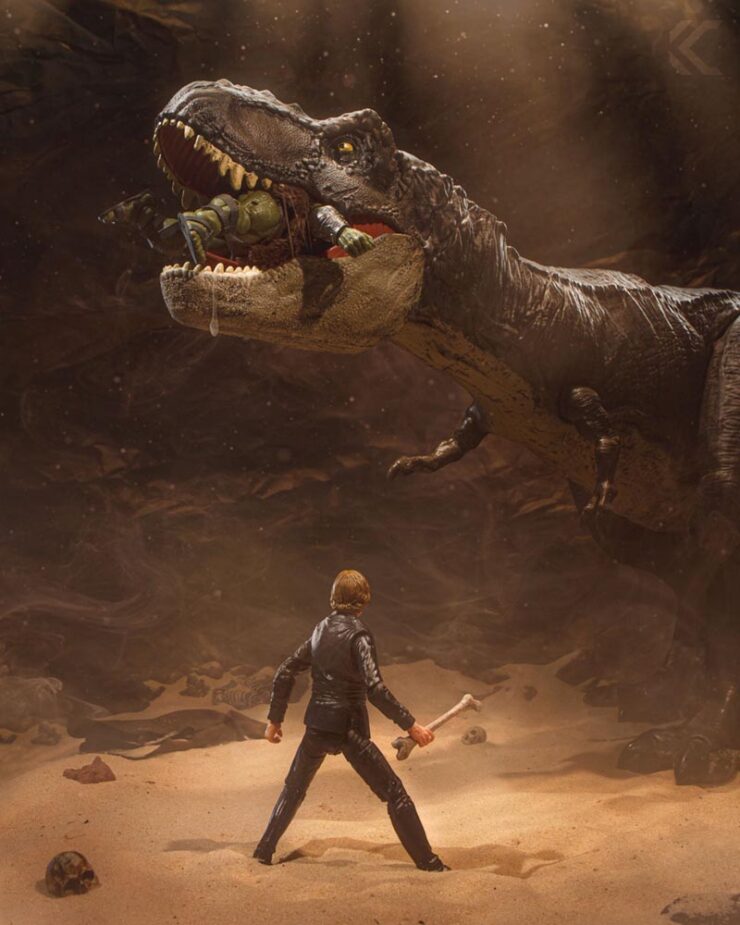
    Jurassic Pit. Photograph by Chuck Eiler.

    “Chicago-based photographer Chuck Eiler transforms action figures into cinematic, story-driven miniature worlds that blur the line between toy photography and film. Through meticulously crafted sets, practical effects, and careful lighting, he creates immersive scenes that bring nostalgia and storytelling to life,” PetaPixel writes.
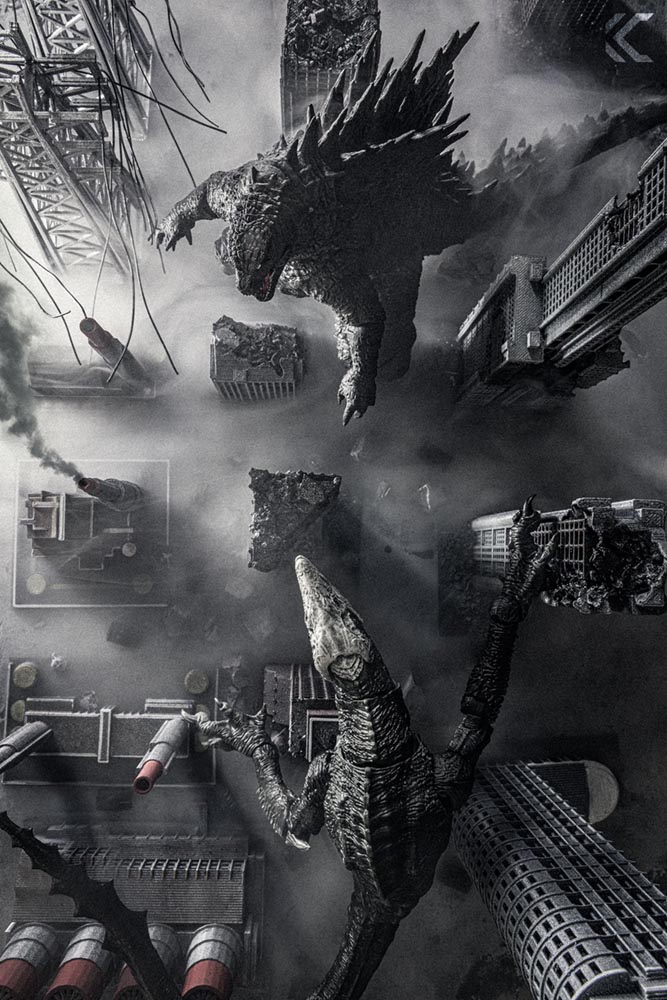
    Apex Predators. Photograph by Chuck Eiler.

    Awesome. (And available as prints, in case you want for your sandbox walls.)

    Finally: Duck This

    Last month saw the incredible fresh pasta camera. Well, in case you think I only recommend a vegetarian lifestyle, there’s…:
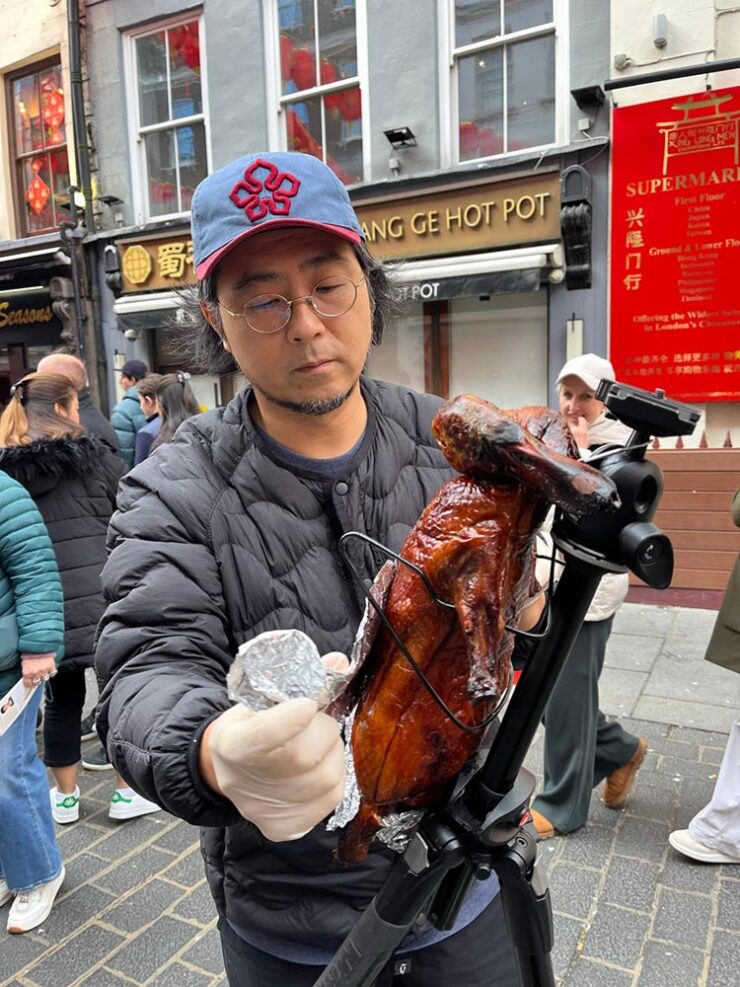
    Four Minutes in London.

    Martin Cheung’s Chinese roast duckcam

    Presumably, he throws a fresh camera into the oven every time he needs one: “I will continue making Duckcam while I travel, so next time when you see a person with a roasted duck on a tripod, please say hello to me.”

    Enjoy your spring, everyone!
  • Beautifully Briefed 26.1: Finding What’s Needed

    Beautifully Briefed 26.1: Finding What’s Needed

    We’re setting into our third snow of the season here in Georgia, an extraordinary event even in a world where “normal” doesn’t seem to happen all that often any more. Thankfully, there are still gems, waiting to be discovered. Hopefully you’ll find several in the links below.

    Note: The site was offline for several hours mid-month due entirely to my mismanaging an update; the backups took a minute and didn’t restore the plug-ins, so it wound up being rough around the edges for a couple of days. If you visited — or tried to — during that time, apologies.

    FAVORITE BOOK COVERS OF 2025, AND MORE

    If you’ve not seen, set aside a few minutes to enjoy:

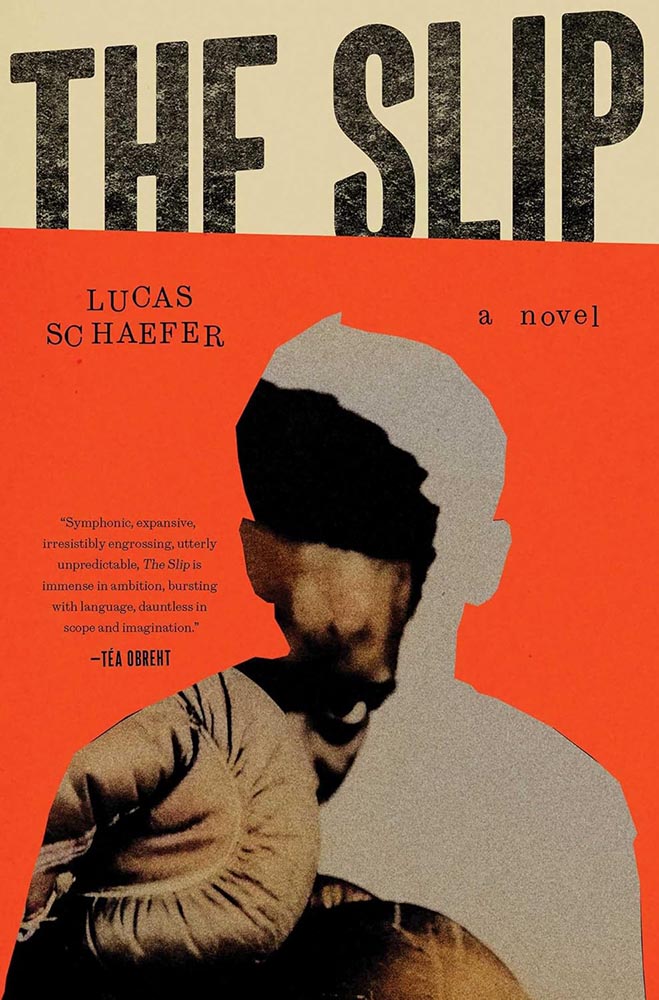
    This image has an empty alt attribute; its file name is 25fave_slip-the_jack-smyth.jpg
    Cover design by Jack Smyth.

    More than a hundred examples of book design greatness, with commentary, for the fifth year in a row. Bring a beverage.

    But wait, there’s more:

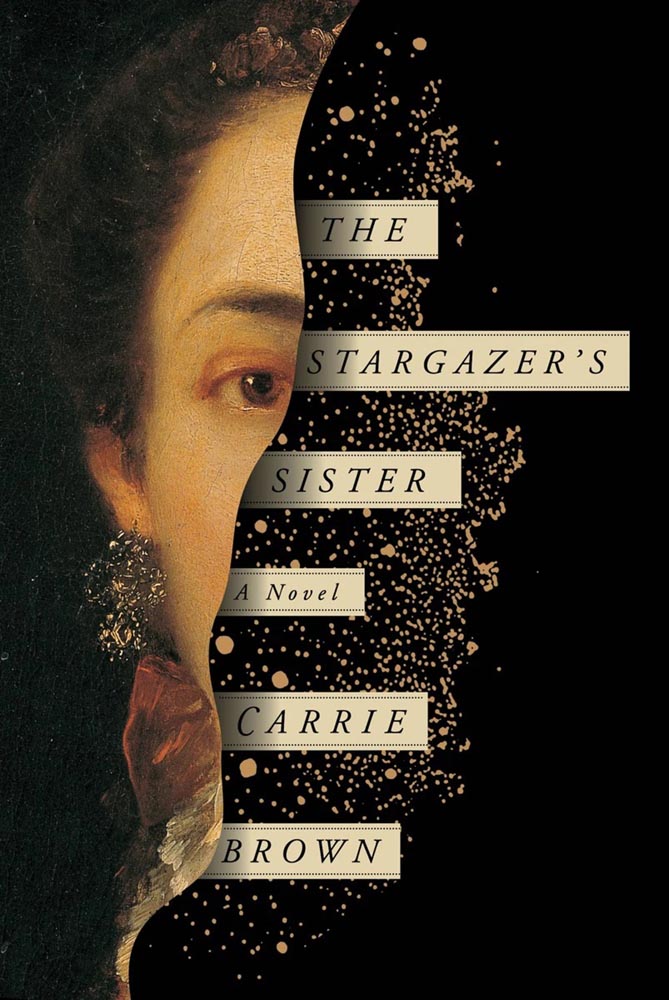
    This image has an empty alt attribute; its file name is books_the-stargazers-sister_2016_oliver-munday_lithub.jpg
    Cover design by Oliver Munday.

    LitHub has posted a summary of the last decade of their favorites, too. Whew!

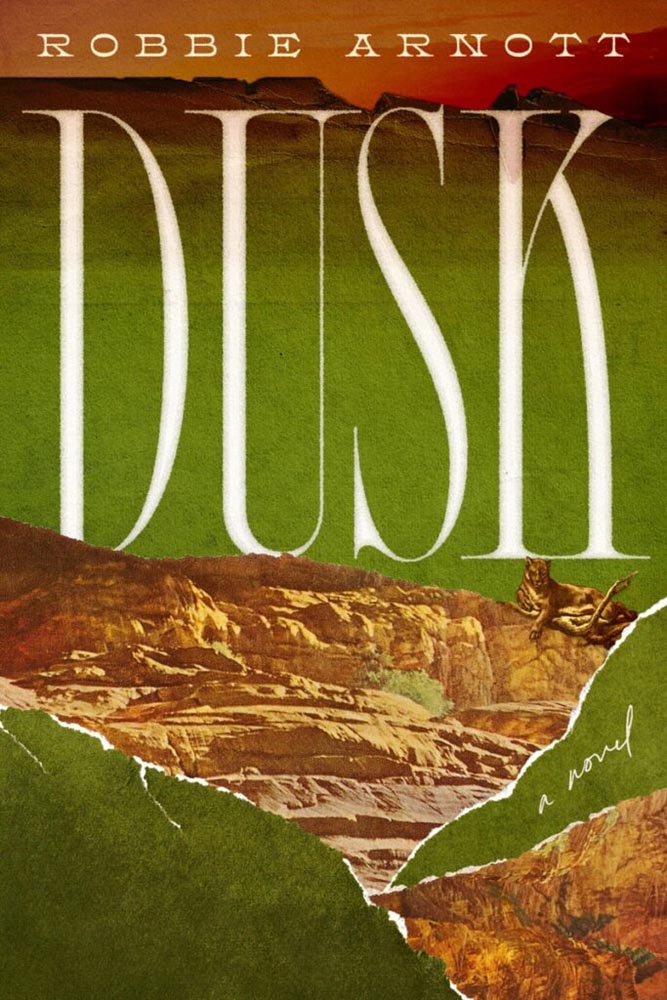
    This image has an empty alt attribute; its file name is books_dusk_alica-tatone_ourculturemag.jpg
    Cover design by Alicia Tatone.

    Special Bonus #1: Our Culture has a feature on seven book designers to watch in 2026. None will be a surprise to regular readers, although Alicia Tatone hasn’t been highlighted here as much as she deserves (she had three cover designs, including Dusk, in the runners-up folder for my ’25 favorites, but didn’t appear in the final list).

    THIS MONTH’S SPINE

    Meanwhile, over at Spine, my monthly column on University Press goodness has been posted, including this:

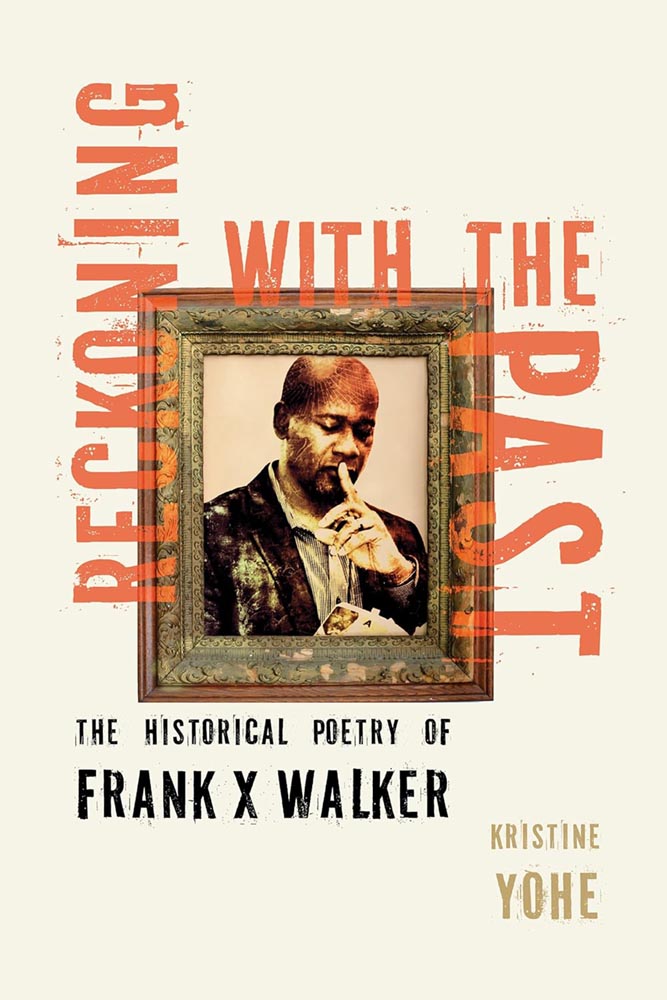
    This image has an empty alt attribute; its file name is spine_kentucky_reckoning-with-the-past_jan26_kat-lynch.jpg
    Cover design by Kat Lynch for the University Press of Kentucky.

    Walker, FYI, was the first Black person to be named Kentucky Poet Laureate and coined the term, “Affrilachia.”

    MORE FROM THE DESIGN DEPARTMENT
    Heller on Roy Kuhlman

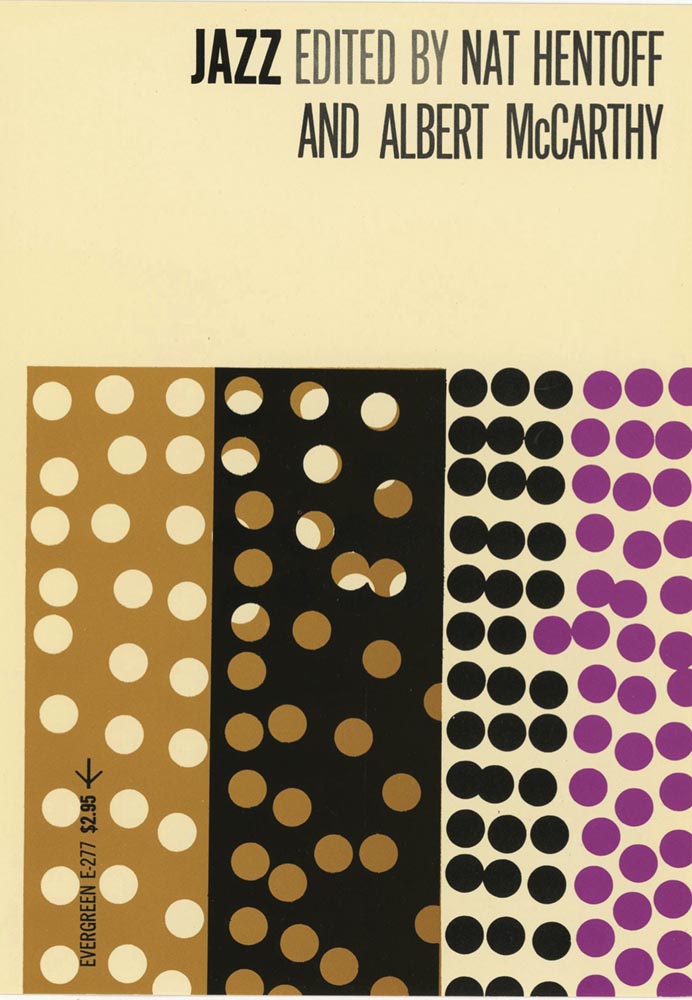
    Steven Heller’s column in PRINT is always fantastic, but some introduce designers more of us should know by name — this time, Roy Kuhlman:

    This image has an empty alt attribute; its file name is books_jazz_roy-kuhlman_print.jpg
    Cover design by Roy Kulhman.

    “He designed almost exclusively for the edgy indie Grove Press, defining its list of literary, critical, philosophical and politically radical nonfiction titles,” Heller writes, discussing a new retrospective (that he wrote the introduction for):

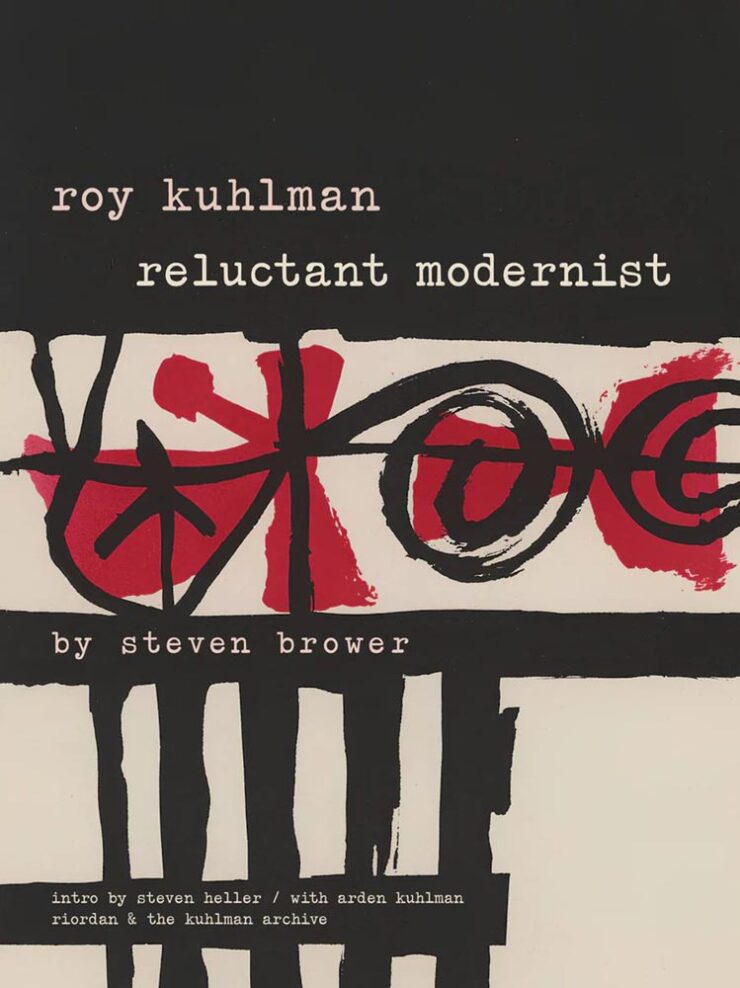
    This image has an empty alt attribute; its file name is books_roy-kulman-reluctant-modernist_print-740x988.jpg

    Many of his abstractions tested the reader’s perception. His lexicon of kinetic, morphing shapes was usually rendered in flat colors with painterly and collage randomness. They could stand on their own. But usually, to make them functional, he used simple sans serif or elegant classic serif typefaces; fitting the abstract nature of his manner, he’d frequently draw or paint hand-scrawled titles and subsidiary texts. Much of his work employed two or three colors, as opposed to four-color process — and he was more than adept with limitations.— Steven Heller, PRINT

    Very cool. See the rest.

    January Typeface Favorites

    Speaking of CreativeBoom, their regular feature on new typefaces has several that I like. Let’s start with the elegant Appeal, by new foundry We Type:

    This image has an empty alt attribute; its file name is fonts_appeal_creativeboom-740x400.jpg

    Next up, the old-style, almost-evokes-needlepoint Bárur, by MNDT Type:

    This image has an empty alt attribute; its file name is fonts_barur_creativeboom.jpg

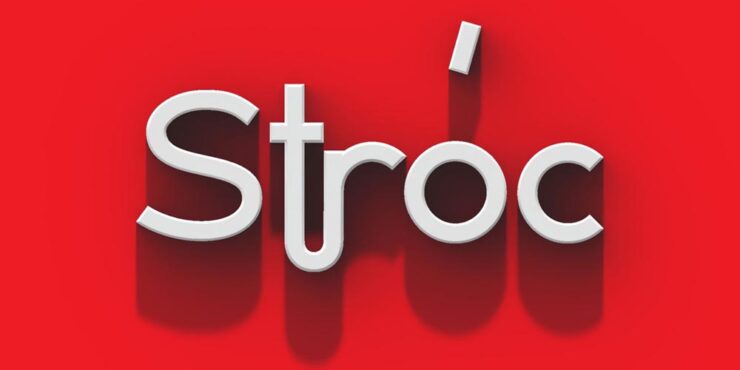
    Another new foundry, Designomatt, brings us the neat and “unpretentiously functional” Stróc:

    This image has an empty alt attribute; its file name is fonts_stroc_creativeboom-740x370.jpg

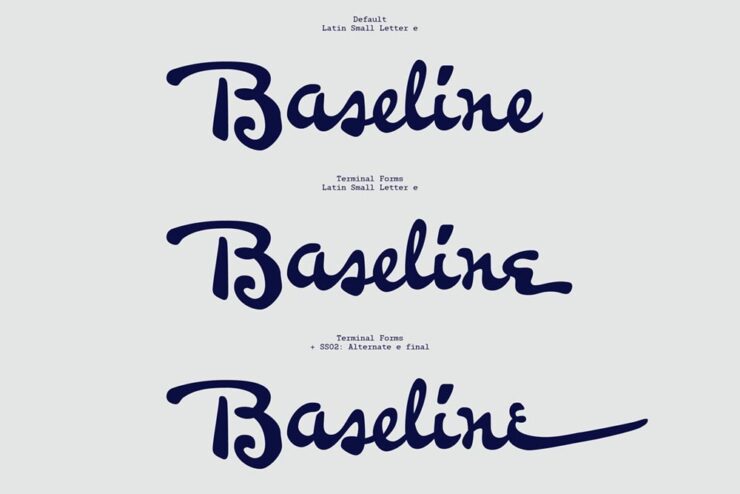
    The last to highlight is probably my favorite of the bunch, this cool and well-executed script called Pennline, from The Northern Block. It’s a “meticulous resurrection of Bulletin — a script first cast in 1899 by Philadelphia’s Keystone Type Foundry — demonstrat[ing] how historical preservation and contemporary utility can coexist when approached with respect and imagination.”

    This image has an empty alt attribute; its file name is fonts_pennline_creativeboom-740x494.jpg

    See ’em all — type joke intended — at CreativeBoom.

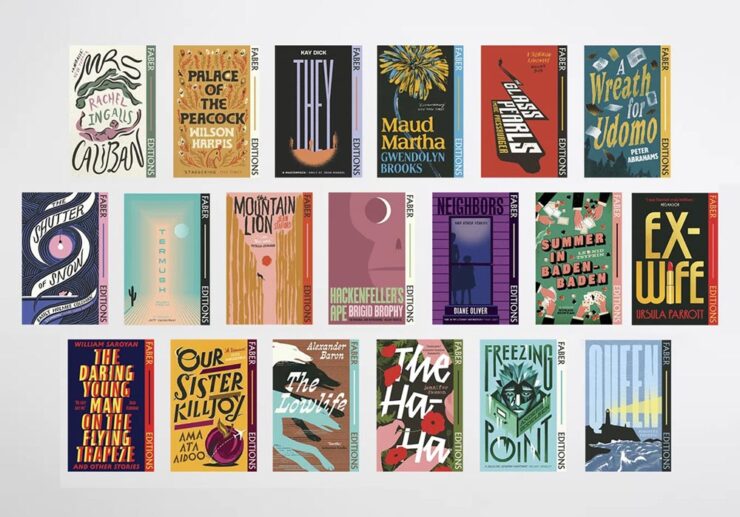
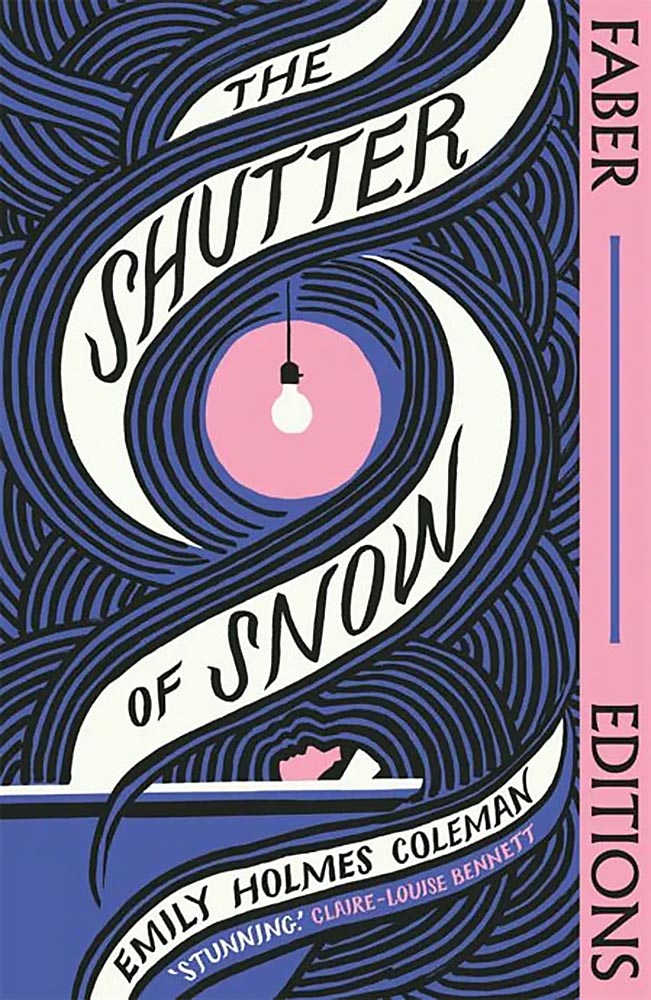
    Faber Editions: Just My Type

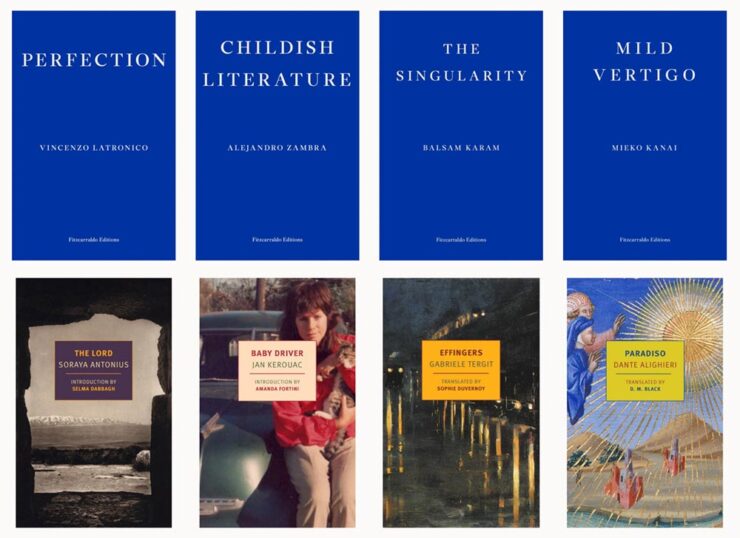
    It’s Nice That has a great feature on the new — actually, newly-revisited — Faber Edition titles, with their primarily type-driven cover designs:

    This image has an empty alt attribute; its file name is books_collected-faber-editions_various_its-nice-that-740x517.jpg

    “In an industry that can often be focused on newness, Faber Editions is a great reminder of the groundbreaking literature that’s come before us, and a clear indicator of the importance of the artwork the words sit within,” writes Olivia Hingley.

    This image has an empty alt attribute; its file name is books_the-shutter-of-snow_bill-bragg_its-nice-that.jpg
    Cover design by Bill Bragg.

    Faber is a UK publisher, so while these covers could be excellent because they’re British — see several examples of the US vs. UK titles in the favorites post — I’m just going to call the style interesting, the “look” of the complete series compelling, and the resulting work excellent. Read on.

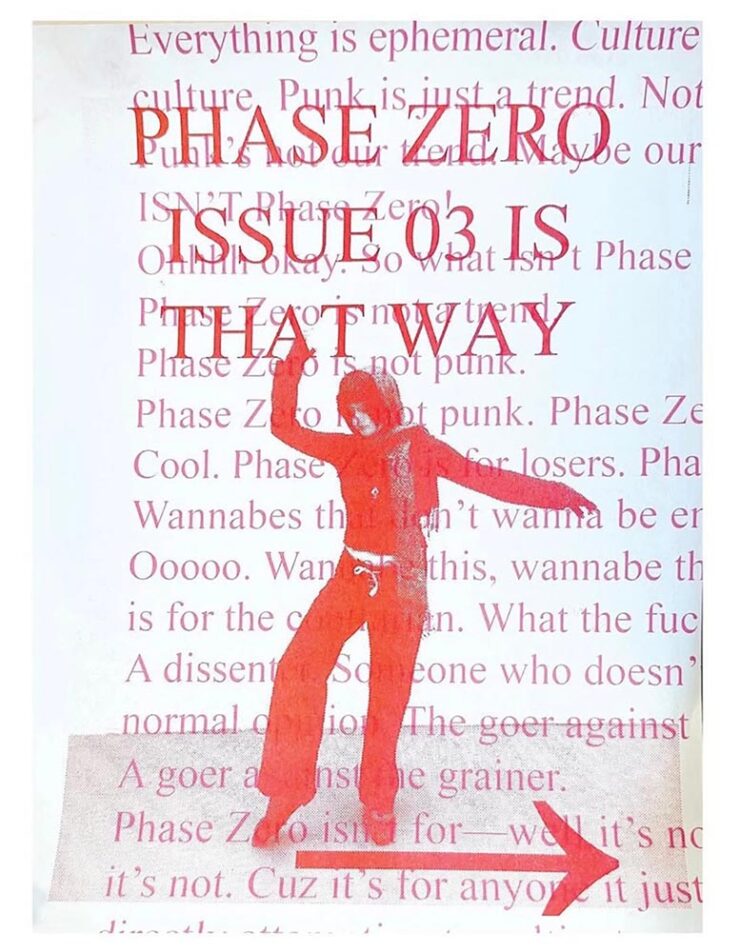
    Special Bonus #2: “The graphic trends you’ll want to bookmark for 2026,” also from It’s Nice That. In short: lo-fi, anti-trends continue:

    This image has an empty alt attribute; its file name is design_phase-zero-flyer_its-nice-that-740x952.jpg
    © Maya Valencia & Sydney Maggin, Phase Zero NYC, via It’s Nice That.

    In other words, if AI struggles with it — if it’s authentic — it could be a winner. See the specifics.

    Special Bonus #3: “AI isn’t the enemy. Our lack of nuance is,” Liz Seabrook writes at CreativeBoom. “The most powerful response is being more human.”

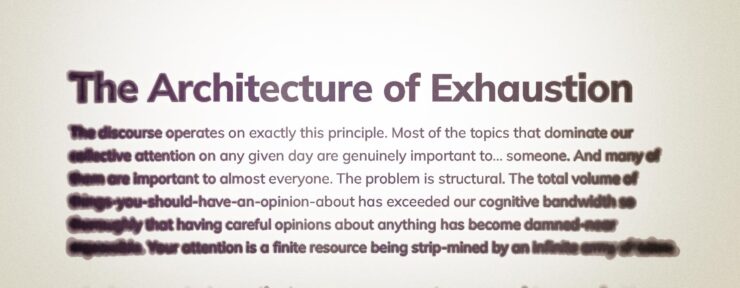
    LIFE IN ’26: DDOS? OR JUST VELOCITY?
    This image has an empty alt attribute; its file name is discussion_discourse-is-a-ddos_westernberg-740x288.jpg

    A few days apart, two new essays caught my attention and wound up feeling relevant enough — significant enough — that I wanted to share. They’re new takes on where we’re at, or, the specifics of “how.”

    The first is from new-to-me author Joan Westenberg, discussing a computer term called the Distributed Denial of Service (DDOS) attack:

    [The] attack works by exhausting resources. It doesn’t need to be clever. It just needs to be overwhelming. The target’s defenses are simply overrun. The server can’t distinguish between legitimate requests and attack traffic because, in a sense, all the traffic is legitimate. The attack succeeds when the system has spent so much energy processing requests that it can no longer serve its actual function.— Joan Westenberg, “The Discourse is a DDOS”

    Does that sound like it might apply to life in the ’Twenties? Yeah.

    The old media ecosystem had gatekeepers, and those gatekeepers were often stupid or corrupt, but at least the stupidity and corruption were bounded. There were only so many column inches in the New York Times, only so many minutes of evening news. A finite supply of attention-worthy items existed, and someone had to decide which ones made the cut. That selection process was biased and imperfect, but it performed an important function: it told you, implicitly, that you didn’t have to have an opinion about everything. Most things that happened in the world weren’t important enough to make it into your awareness at all. Local political disputes in New South Wales? Nobody in Washington DC gave a [crap], and vice-versa. This was as close to optimal as we’ve ever got.

    But the gatekeeping function has now been distributed across millions of individual users, each of whom can boost any piece of content into viral prominence if it happens to resonate with the right combination of tribal anxieties and engagement incentives. The feed is infinite, and every slot in the feed is optimized to make you feel something strongly enough that you’ll engage with it. Outrage works, and so does fear. Disgust works, and righteousness
    really[…] works. Nuance and careful reasoning don’t work at all, because by the time you’ve finished a thought that begins with “Well, it’s complicated…” someone else has already posted a much simpler take that makes people feel validated, and the algorithm has moved on.— Joan Westenberg, “The Discourse is a DDOS”

    Om Malik, long-time in-the-trenches tech nerd (and fellow Leica enthusiast), completely agrees:

    Authority used to be the organizing principle of information, and thus the media. You earned attention by being right, by being first in discovery, or by being big enough to be the default. That world is gone. The new and current organizing principle of information is velocity.

    What matters now is how fast something moves through the network: how quickly it is clicked, shared, quoted, replied to, remixed, and replaced. In a system tuned for speed, authority is ornamental. The network rewards motion first and judgment later, if ever. Perhaps that’s why you feel you can’t discern between truths, half-truths, and lies.
    — Om Malik, “Velocity Is the New Authority. Here’s Why.”

    Westenberg has a suggestion I wholeheartedly recommend:

    What I do know is that the feeling of being overwhelmed, of never being able to keep up, of having strong opinions about everything and confident understanding of nothing, is not a personal failing. It’s a predictable response to an impossible situation. Your brain is being DDoS’d, and the fact that you’re struggling to think clearly under that onslaught is evidence that your brain is working normally. The servers aren’t broken. They’re overloaded. And until we figure out how to reduce the load or increase the bandwidth, the best any of us can do is recognize what’s happening and try, when possible, to step away from the flood long enough to do some actual thinking.— Joan Westenberg, “The Discourse is a DDOS”

    “Find one topic,” she says, and start there. Get with experts, get evidence, get uncomfortable, actually get into it … but just get into that one.

    And stay true to the idea that it shouldn’t — can’t — get away from you.

    I get some feedback for my lack of participation in social media. I don’t hate social media; if anything, the past few weeks of mayhem organized resistance in Minneapolis proves it has a place. But I long ago heeded advice to narrow my focus. Instead of burying my head in the sand — tempting though it may be at times — I choose to concentrate on those things that a) really hold interest and b) things I actually want to be part of my life.

    Both of these essays summarize the situation well, and both offer insights on how we got here. Westenberg’s offers good advice. When you have a spare few minutes, read both.

    (DDOS article via Doc Searls, whom I don’t link to often enough. Om’s article via Daring Fireball.)

    WIKIPEDIA TURNS 25

    Let’s please turn to something that the Internet does right.

    Whenever I worry about where the Internet is headed, I remember that this example of the collective generosity and goodness of people still exists. There are so many folks just working away, every day, to make something good and valuable for strangers out there, simply from the goodness of their hearts. They have no way of ever knowing who they’ve helped. But they believe in the simple power of doing a little bit of good using some of the most basic technologies of the internet.— Anil Dash, “Wikipedia At 25: What The Web Can Be”

    “When Wikipedia launched 25 years ago today, I heard about it almost immediately, because the Internet was small back then, and I thought ‘Well… good luck to those guys,’” Dash writes.1I, too, remember those days of a small Internet — not a young person anymore. While I miss the community it felt like, the resources available today, of which Wiki might be at the fore, are without parallel. But it’s grown into something something amazing: the encyclopedia that’s free in every sense of the word.

    This image has an empty alt attribute; its file name is wiki25_youtube-740x861.jpg
    One of the YouTube shorts published by Wikimedia Foundation.

    Like countless others, I value being a contributor, in an incredibly small way, to the collective effort that is Wikipedia. Indeed, editors “span continents, professions and motivations,” a CreativeBoom article writes. “Together, their stories underline that, even in an age of AI, knowledge is still human and it still needs humans.”

    “The site is still amongst the most popular sites on the web,” Dash agrees. “[B]igger than almost every commercial website or app that has ever existed. There’s never been a single ad promoting it. It has unlocked trillions of dollars in value for the business world, and unmeasurable educational value for multiple generations of children.”

    Of course, all is not perfect. Like Universities, DEI, and whatever else, Wikipedia has become a target; Grokipedia, for instance, exists specifically to undermine Wiki’s centrality and success. (And, it’s important to note, Groki used Wiki as a basis … because it’s open and freely available. No hypocrisy.)

    In fact, so many rely on Wikipedia that access has become a thing. Luckily, some large enterprise users of the site have recognized that the trillions they’ve earned as a result of having access to Wiki’s collective knowledge is worth paying for:

    [T]he Wikimedia Foundation announced API access deals with Microsoft, Meta, Amazon, Perplexity, and Mistral AI, expanding its effort to get major tech companies to pay for high-volume API access to Wikipedia content, which these companies use to train AI models like Microsoft Copilot and ChatGPT. […] In April 2025, the foundation reported that bandwidth used for downloading multimedia content had grown 50 percent since January 2024, with bots accounting for 65 percent of the most expensive requests to core infrastructure despite making up just 35 percent of total pageviews.— Benj Edwards, Ars Technica (15 Jan 2026)

    Anil Dash best finishes up: “Twenty-five years later, all of the evidence has shown that they really have changed the world.” I couldn’t agree more.

    Happy 25 to Wikipedia. May there be countless more.

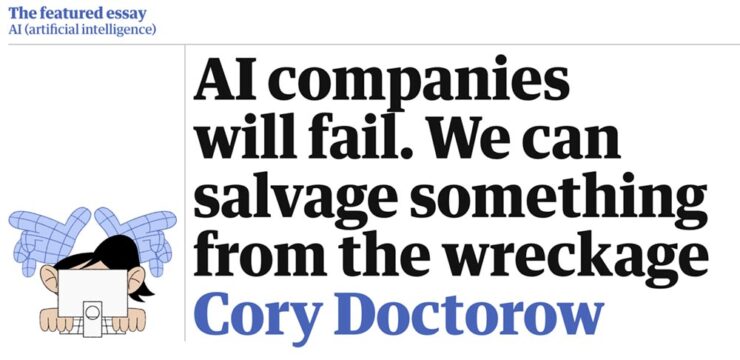
    Special Bonus #4: In an excellent article, Ars calls 2025 “the year AI came back down to Earth.” And while we’re on the subject of excellence, Cory Doctorow’s essay for The Guardian applies.

    This image has an empty alt attribute; its file name is ai_ai-companies-will-fail_guardian-740x360.jpg
    Cory Doctorow in The Guardian.
    FOLLOW-UP: BMW ALPINA AND HONDA FORMALIZE LOGOS

    Alpina, for formerly-independent tuner of BMW cars (and SUVs), has, as of the first of this year, officially become a division of BMW, akin to MINI or Rolls-Royce. With it comes a new logo — well, at least, this:

    This image has an empty alt attribute; its file name is cars_new-bmw-alpina-logo_dezeen-740x416.jpg
    Conservative, cool, collected. Definitely part of a bigger corporation now.

    That’s slightly different that what I covered back in June of 2023; the “A” is less dramatic, probably for the better. BMW calls the new logo “calm and confident,” saying the upcoming models will “master performance and comfort.”

    [Alpina] recently entered into an agreement to be purchased by BMW itself, not unlike AMG becoming part of Mercedes-Benz; starting in 2026, they are scheduled to represent the middle ground between BMW and Rolls-Royce — hopefully continuing the comfort, power, and style. It seems that the new ground will be the upmarket models only (that is, no 3-series-based items, and possibly even no 5-series), so think of items $200,000 and up.— Beautifully Briefed, June 2023

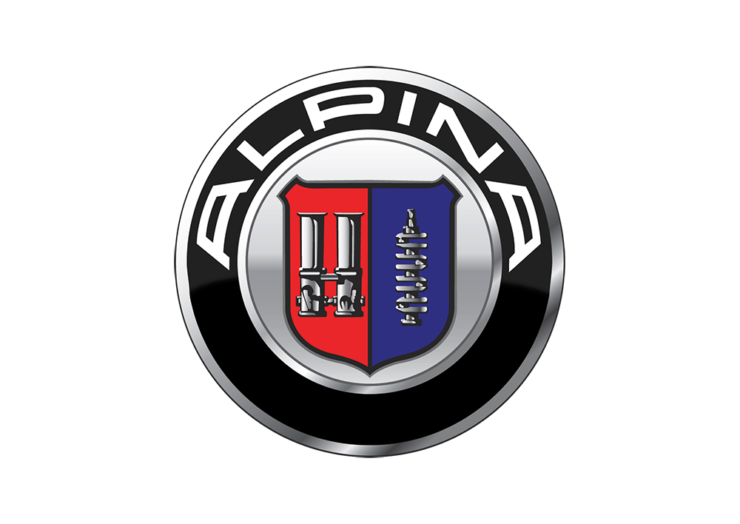
    Here’s the old logo, for reference:

    This image has an empty alt attribute; its file name is alpina-1962-20220-logo-740x524.png
    Alpina’s now-old logo: exhaust and crankshaft, sir. Nuthin’ like it.

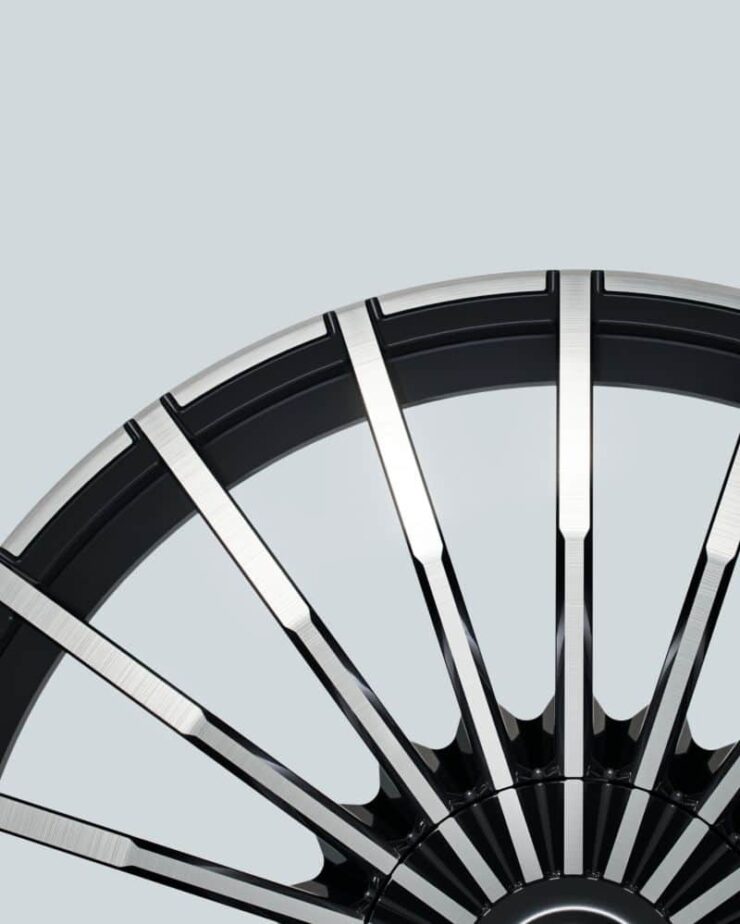
    And: they’re going to update the wheels!

    This image has an empty alt attribute; its file name is cars_new-20-spoke-alpina_bmwblog-1-740x924.jpg
    Photo via BMW Blog.

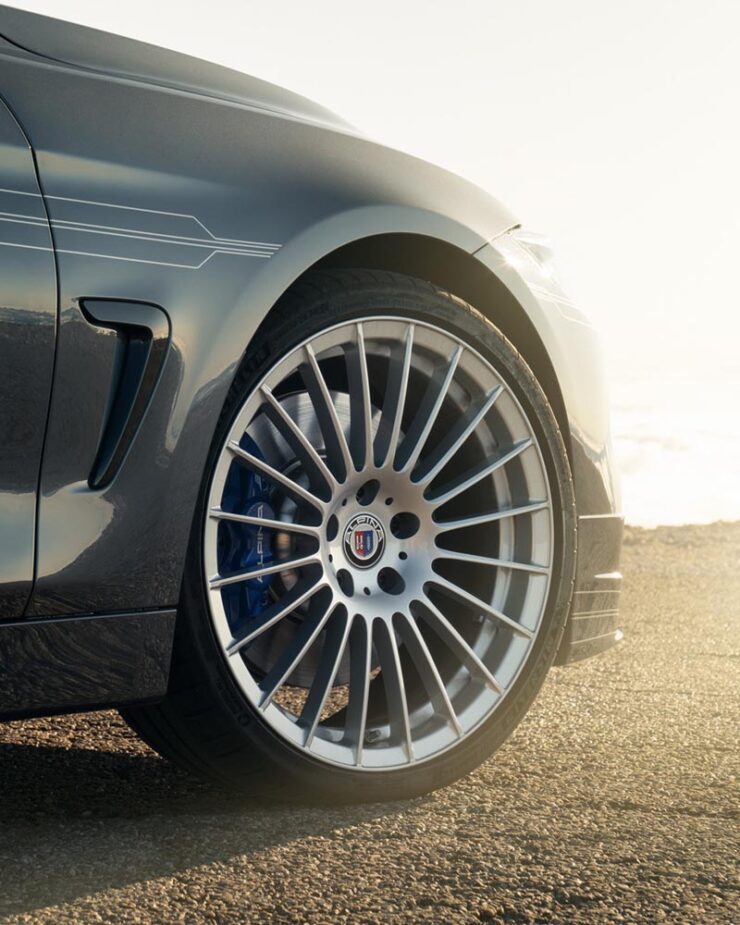
    As someone who’s become much more familiar with Alpina in the ten years I’ve owned BMWs, these wheels are iconic. Here’s the existing version, on one of my favorite pieces of unobtainium:

    This image has an empty alt attribute; its file name is cars_old-20-spoke-alpina_bmwblog-740x925.jpg
    Photo via BMW Blog.

    That’s a 2016 Aplina B4 BiTurbo Coupé, by the way. Not quite my favorite B3 Touring, but in either case, “drool” doesn’t quite cover it. (Neither were available in the States.)

    Curious to see whether this is successful. Expectations are high.

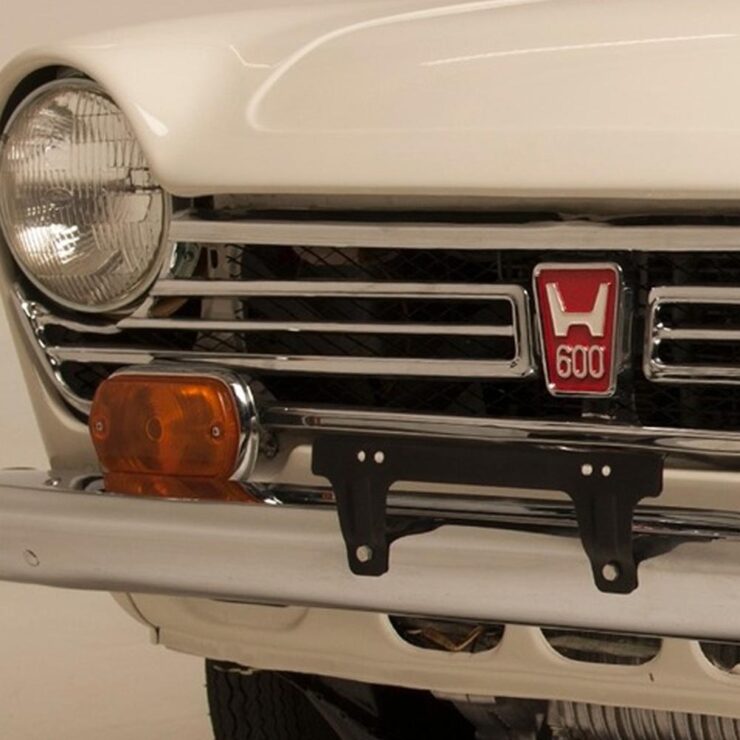
    This image has an empty alt attribute; its file name is cars_honda600-badge_autopian-740x740.jpg
    The “old” H logo, shown on a 1971 600. (See wiki for more info.)

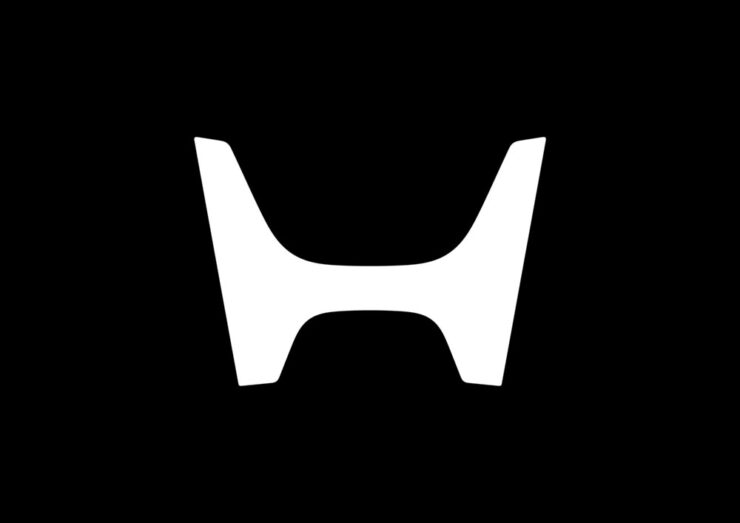
    Meanwhile, Honda initially said — and I reported, two years ago — that their new, slightly-retro “H” logo would be limited to electric cars. Of course, electric as a strategy has changed; they decided this month to make it official for all their cars.

    This image has an empty alt attribute; its file name is cars_honda-new-logo_the-drive-740x523.jpg

    Motorsports, too. Here’s their F1 engine with the new logo:

    This image has an empty alt attribute; its file name is cars_honda-logo-f1_the-drive-740x925.jpg
    Photo via The Drive.

    I love that both Honda and BMW are, at their heart, engineering companies.

    Get the full story on BMW Alpina at Dezeen or BMW Blog (logo, wheels). Honda’s details are available at The Drive (logo, F1) or The Autopian, where you can enjoy some sharp commentary on Honda’s press release.

    JANUARY PHOTOGRAPHY ROUND-UP
    2025 Architecture Master Prize
    This image has an empty alt attribute; its file name is photo_arch-arbour-by-younes-bounhar_archinect.jpg
    “Arbour House.” Photograph by Younes Bounhar (Interior Architecture).

    I suppose it’s no surprise that an architectural photography selection tops this round-up, but the annual Architecture Photography MasterPrize highlights “compelling perspectives on buildings, cities, landscapes, and interior spaces, revealing the rich visual language of the built environment.”

    In other words, “catnip.”

    This image has an empty alt attribute; its file name is photo_arch-details-by-guanhong-chen_petapixel.jpg
    “Details (Series).” Photograph by Guanhong Chen (Other Architecture).
    This image has an empty alt attribute; its file name is photo_arch-details2-by-guanhong-chen_petapixel.jpg
    “Details (Series).” Photograph by Guanhong Chen (Other Architecture).

    There’s a huge variety of winning photographs, from professionals, amateurs, and students alike — all excellent. (They have awards for designs, firms, and products, as well.)

    This image has an empty alt attribute; its file name is photo_arch-sardinia-by-barbara-corsico_archinect.jpg
    “Mustras,” Sardinia. Photograph by Barbara Corsico (Exterior Architecture).

    I can’t possibly cover them all, but can provide links: photography winners, honorable mentions, student winners, and winners by country. Both Archinect and PetaPixel have stories. Enjoy!

    Two Photographers, Highlighted
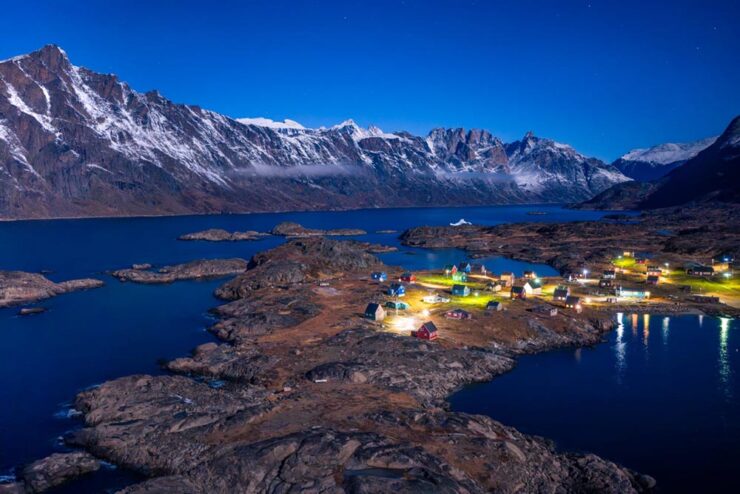
    This image has an empty alt attribute; its file name is photo_greenland-lehtonen-by-dennis-lehtonen_colossal-740x494.jpg
    Photography by Dennis Lehtonen.

    Neither drone images nor folks who primarily post to social media usually get featured here, but these images of Greenland are both timely and excellent. This is Colossal has a great selection of items from photographer Dennis Lehtonen.

    This image has an empty alt attribute; its file name is photo_alps-to-andromeda_tom-rae_petapixel-740x437.jpg
    “From Alps to Andromeda.” Photograph by Tom Rae.

    “My photography style is rooted in landscape and night photography, with an emphasis on atmosphere, scale, and a strong sense of place. I’m drawn to environments that feel raw, remote, and otherworldly,” Tom Rae relates to PetaPixel. Otherworldly feels just right: good stuff.

    Society of Photographers’ Photographer of the Year 2025
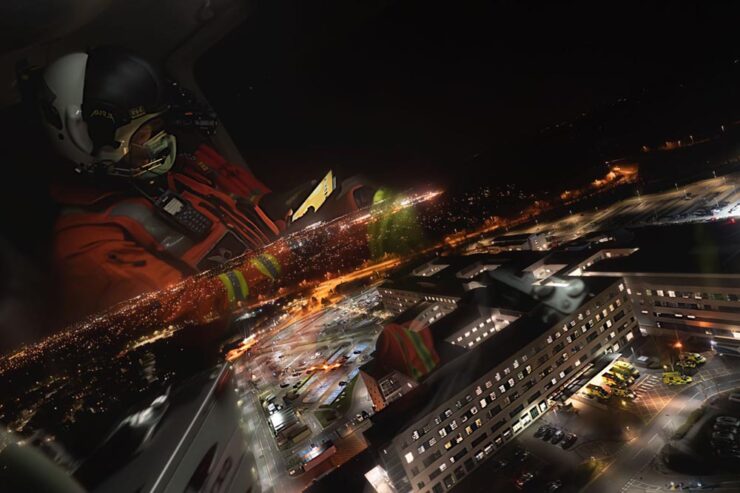
    This image has an empty alt attribute; its file name is photo_soc-of-photographers_documentary-by-terry-donnelly_petapixel-740x493.jpg
    Photograph by Terry Donnelly.

    I also usually don’t cover documentary-style photography — see narrow focus, discussed above — but there were several documentary-style photographs in this set of award winners that were excellent, including this Medivac flight from the UK.

    However — thankfully — there were more categories:

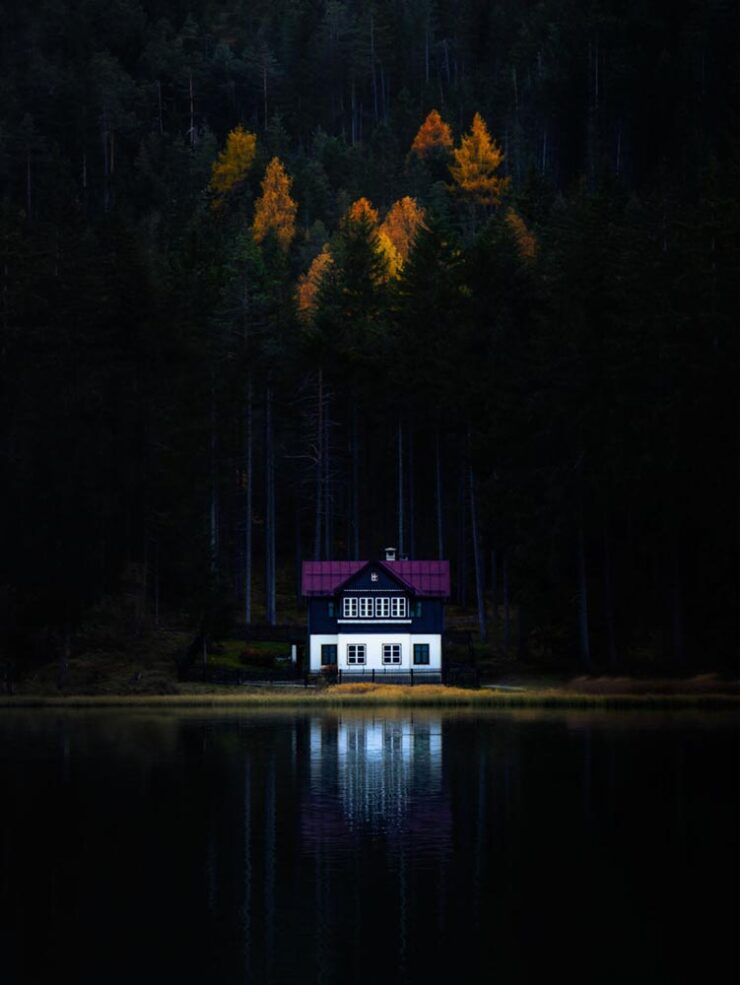
    This image has an empty alt attribute; its file name is photo_soc-of-photographers_travel-by-mark-scicluna_petapixel-740x985.jpg
    Photograph by Mark Scicluna.

    It’s the winner in the “travel” category, because apparently they don’t have one called “dramatically soothing.” No matter the labelling, see the rest of the winners at PetaPixel or head over to the Society’s website for more.

    Finally: Some Cats

    Speaking of catnip, let’s close out with something that purrs — in soprano:

    This image has an empty alt attribute; its file name is photo_phaidon-cat2_colossal-740x972.jpg

    Let’s not go ’round and ’round: that deserves framing. Or at least publication. Thankfully, Phiadon has you covered:

    This image has an empty alt attribute; its file name is photo_phaidon-cat_colossal-740x423.jpg

    A “whimsical visual survey of the house cat in art and popular culture, exploring humanity’s enduring connection to one of our most loved animal companions.” Awesome. (Via This is Colossal.)

    Have a great February, everyone!
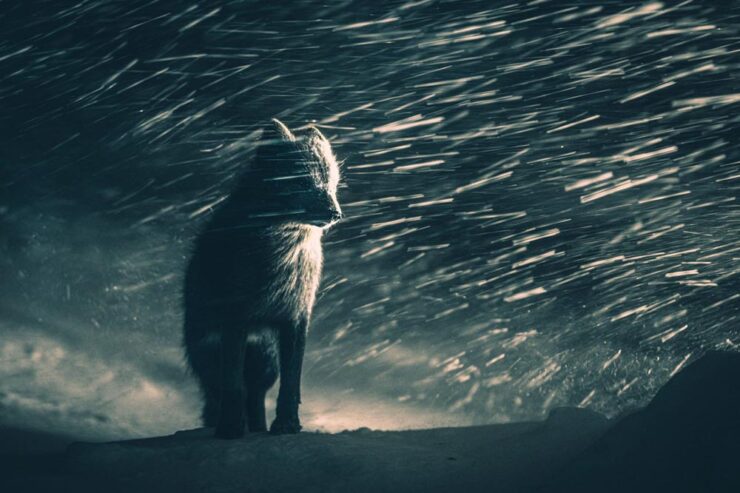
    • 1
      I, too, remember those days of a small Internet — not a young person anymore. While I miss the community it felt like, the resources available today, of which Wiki might be at the fore, are without parallel.
  • Beautifully Briefed, 25.11: More than Turkey Here

    Beautifully Briefed, 25.11: More than Turkey Here

    This month, the usual fontastic newness and photographic excellence. and I veer into nostalgia — maybe, perhaps, soapboxing — for the web’s “old days.” Also, for those in the U.S., I hope you had a wonderful Thanksgiving holiday. Pack up your leftovers and settle in.

    University Press Coverage on Spine

    This month’s column has some good stuff — On Gaslighting has been a favorite for a minute, and Post-Weird is pretty much guaranteed to make an appearance in January — but I thought I’d give the first of two shout-outs to the University of Georgia:

    Cover design by Erin Kirk.

    Check out my regular column at Spine. Meanwhile, keep an eye out for the other UGA mention below.

    50, Mega: It’s all Auld Neue
    CreativeBoom: 50 Fonts for 2025
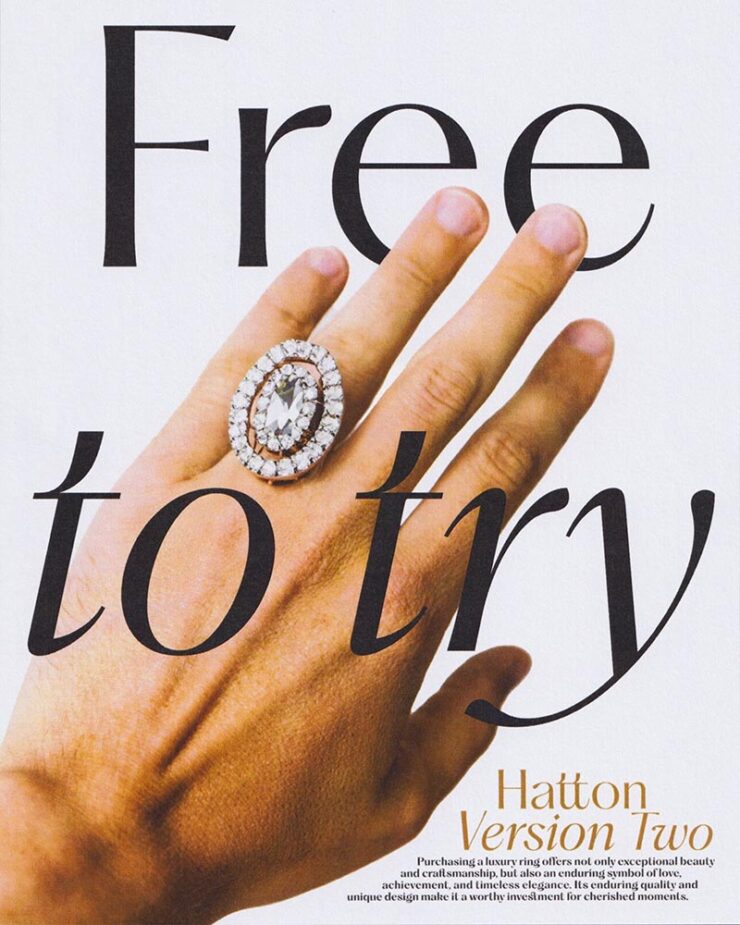
    Hatton by Pengram Pengram.

    In their annual feature (previously), CreativeBoom lists fifty fonts that “will be popular with designers in 2025.” Most are paid, a few are free, and several are awesome.

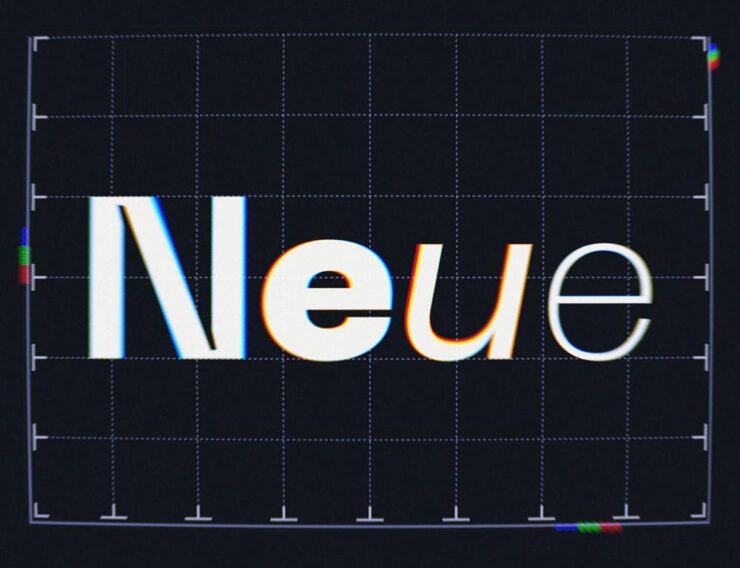
    Neue Machina by Pengram Pengram.

    It’s sometimes hard to see — yes, a new website is on the radar — but there are links in the captions if you’re interested. (Just to the website; I don’t do affiliate links, full stop.)

    RST Thermal by Reset.

    See the whole list.

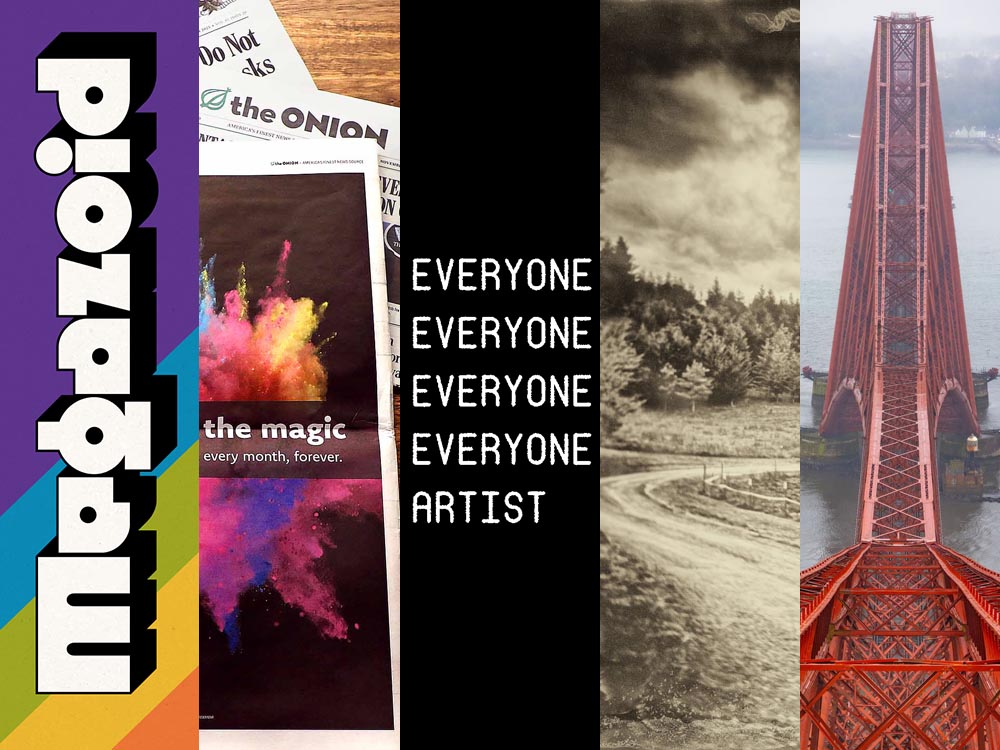
    Megazoid
    DJR’s mega effort. The website is cool, too.

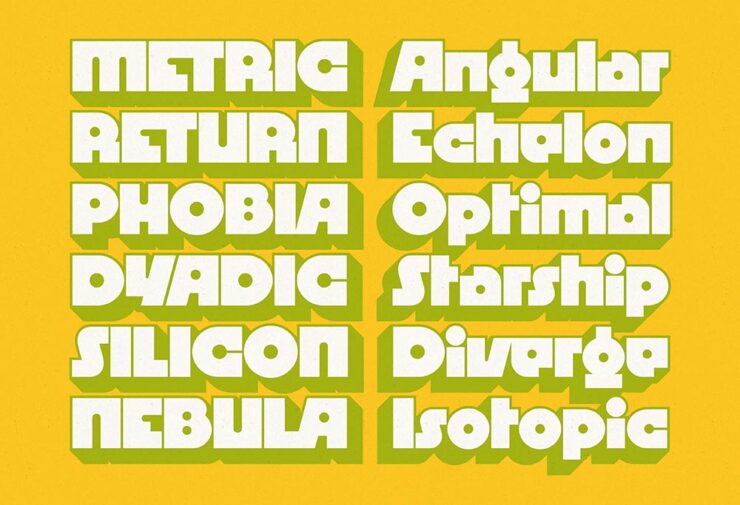
    Described by Kottke as having “Radio Shack vibes,” David Jonathan Ross — DJR — brings us this retro-futuristic fantastic-ness, to coin a term.

    Auld English
    A “playful experiment” that is, in fact, quite a bit more.

    In addition to the “Mock Tutor” long-s character (optional), it’ll even (temporarily) change your spelling to proper English, none of this American stuff. Oh, and it looks properly auld school. Free for personal use, with licensing for professional use.

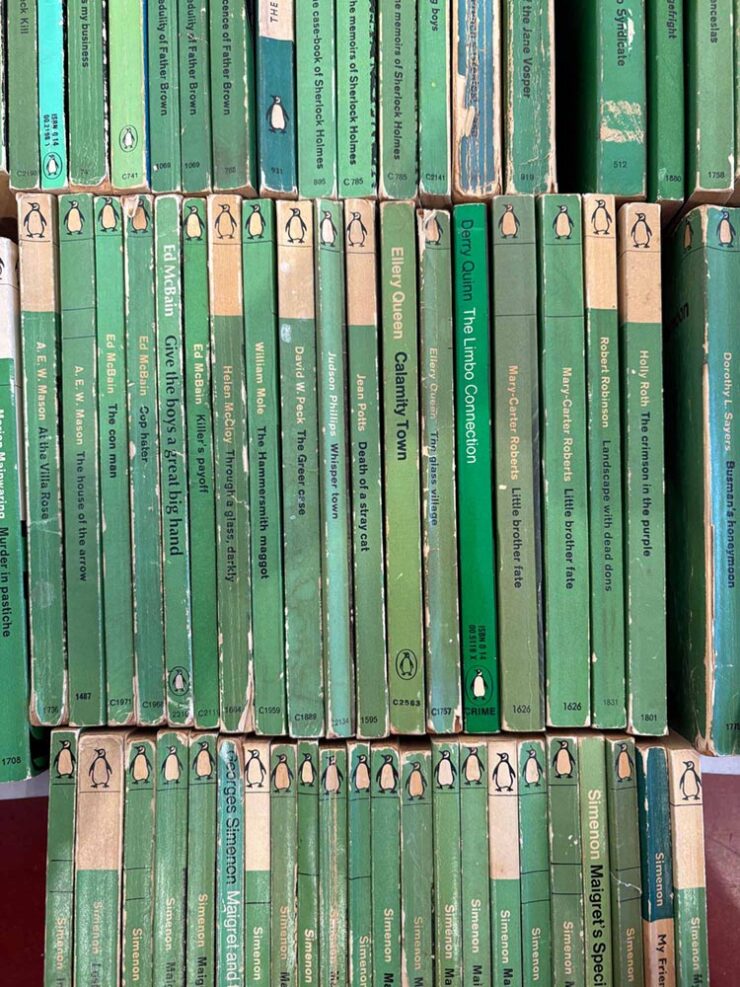
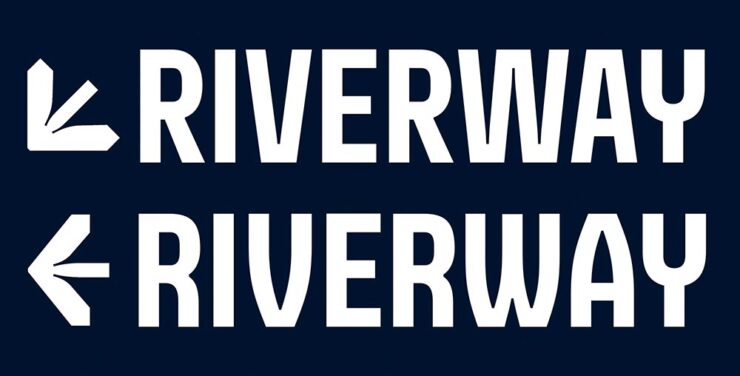
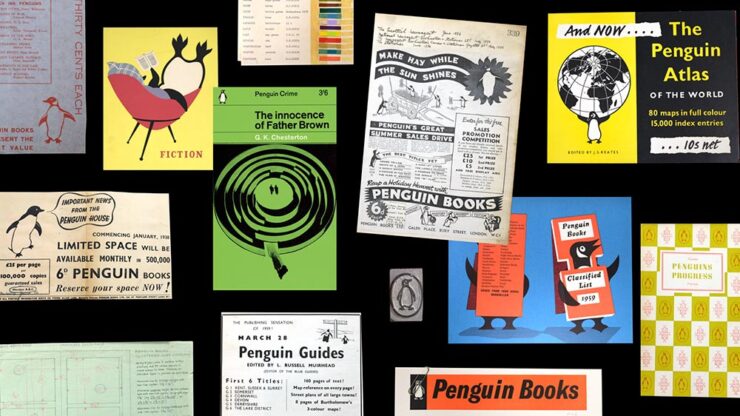
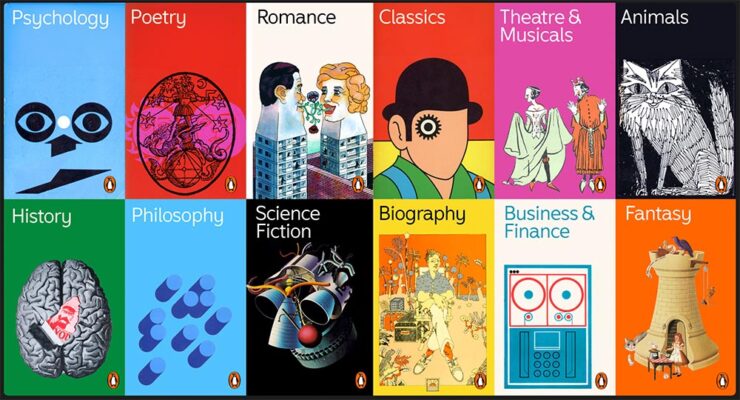
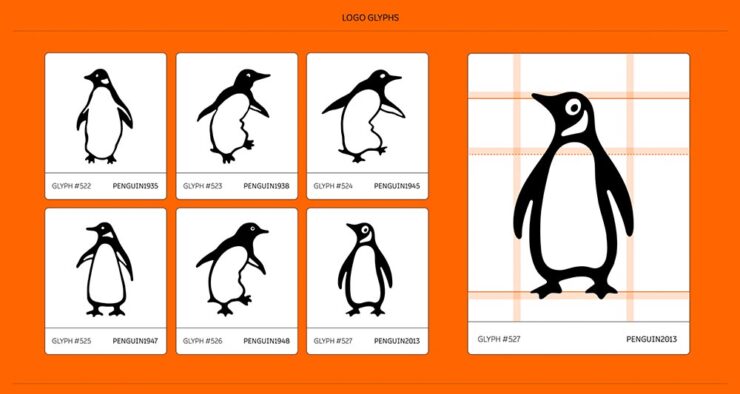
    Special Bonus #1: 90 years of Penguin type, brought to you by CreativeBoom.

    I must be getting old, Part One: Griping
    Needy Software
    A detail of the advertisement in the print edition (!) of The Onion.

    The Onion is the world’s leading news publication, offering highly acclaimed, universally revered coverage of breaking national, international, and local news events. Rising from its humble beginnings as a print newspaper in 1756, The Onion now enjoys a daily readership of 4.3 trillion and has grown into the single most powerful and influential organization in human history.

    — About Us page, theonion.com

    “It is an incredibly competitive market for Creative Software. Adobe knows the best way to stay relevant in a space with so many options is to provide their customers with incremental adjustments and AI-powered conveniences to improve their birthday invitations on a monthly basis, all at a fluctuating yearly price point,” The Onion tells PetaPixel in an email. “This is the kind of ingenuity and integrity we are proud to advertise in America’s Finest News Source.”

    Meanwhile, Pixel Envy points us to a post by Nakita Prokopov — no, I’ve never heard of him either — with an incredibly salient point: that software has gone from something we need … to something that needs us.

    The company needs to announce a new feature and makes a popup window about it. Read this again: The company. Needs. It’s not even about the user. Never has been.

    Both of those are worth a read — but it’s the notation after the quote that makes the Pixel Envy post special: mention of Photoshop’s “Quiet Mode.”

    Wait. What?

    That’s right: Adobe actually recognizes that it’s gone so overboard with it’s notifications, blue dots, pop-ups, and helpful “feature introductions” that it’s invented a preference setting to reduce — not eliminate, ’cause — interruptions to your workflow.

    Now all they need to do is bring it to InDesign, Lightroom, Illustrator, ….

    Cracker Barrel: Falsehoods, Cheesy Falsehoods, and Statistics

    CreativeBoom usually works for me: more content than not, if you know what I mean. (The article on typography and Penguin linked above, for instance.) Alas, their recent article on Cracker Barrel — “The Cracker Barrel rebrand: a $100M masterclass in brand value” — so widely missed the mark that it’s shameful.

    All because the author is speaking to a fixed narrative instead of the facts.

    “When Cracker Barrel’s shiny new look caused its stock to drop by almost $200 million, the internet laughed. But buried in the chaos was a golden lesson: what happens when you forget that brand isn’t just visuals—it’s value, emotion, and culture, all rolled into one,” writes Cat How, a founder and executive creative director of How&How branding agency and, apparently, her real name. (“A former journalist and design critic, she leads climate and mentorship initiatives including GetSet and GetEven, and […] an Ambassador for UN Women,” her bio reads.)

    The thing is: her journalism is at issue here. But what gives me, basically a nobody, the right to say that? Well, thank Brand New.

    That website is subscription, so I’ll have to summarize their brief post. No, to heck with that, I’ll quote it in its entirety:

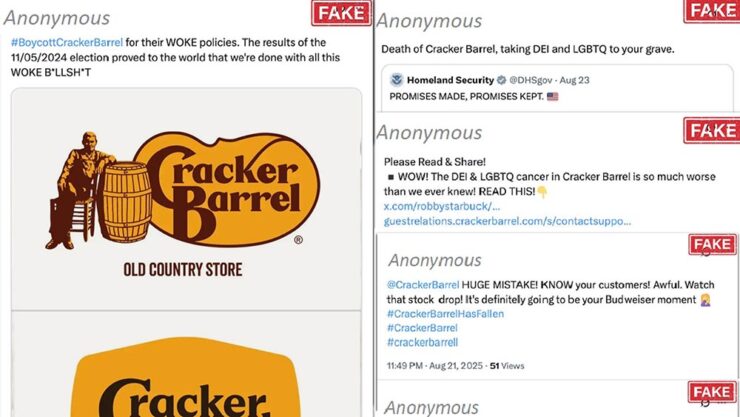
    Cyabra, which offers an AI platform that shields companies and governments by uncovering fake profiles, harmful narratives, GenAI content, deepfakes, and other digital misinformation, analyzed the Cracker Barrel backlash and found that 21% of profiles discussing its logo change were fake accounts orchestrating a coordinated disinformation campaign that, in turn, triggered thousands of direct engagements from real profiles, which is when things start to snowball. This, apparently, is a full-fledged business known as Rage Farms, deploying bots to purposely harm brands. 

    — Armin Vit, Brand New

    Those twenty-one percent of profiles discussing Cracker Barrel’s logo change were identified “as fake accounts orchestrating a coordinated disinformation campaign, whose […] content reached over 4.4 million potential views and thousands of authentic profiles’ engagements, [and that] manufactured outrage correlated with a 10.5% stock price drop,” and, viola, $100M in market value, Cyabra writes.

    “Disinformation-as-a-Service” has become a profitable, global criminal enterprise: low-cost, high-impact bot networks hired to attack and destroy businesses and individuals … like you. And the social media platforms that could stop them won’t, because chaos is profitable. Propelled by AI, these strikes are targeting brands big and small. And the financial consequences are real — sliding stock prices, damaged brand equity, ruined careers.

    — Mark Schaefer, businessgrow.com

    That second quote, a follow-up to Cyabra’s post, is worth reading.

    Now, to be clear: without complete information, Cat How’s post at CreativeBoom seems legit. But with that information, published almost a week before, it’s exactly what those fake profiles were after: justifying something when it shouldn’t be — and damaging reputations, including Cat How’s.

    “One wonders how often this occurs,” he said … without a trace of snark.

    Special Bonus #2: Investigating a Possible Scammer in Journalism’s AI Era. “This is likely not the first story you have read about a freelancer managing to land bylines in prestigious publications thanks to dependency on A.I. tools,” Pixel Envy‘s Nick Heer writes, “but it is one told very well.”

    Special Bonus #3: Things do not necessarily need to be an outright fake to contribute to the problem. Many of you might have seen this image:

    Accomplished, complicated, and … not quite what it seems.

    PetaPixel speaks glowingly of the process, the coordination, and laps up the marketing. But: it’s a composite. Interesting parts made with a good deal of effort — but made into something implied to be awesome when, in fact, it’s Photoshop.

    I must be getting old, Part Two: Those Were the Days

    Elizabeth Spiers, “Requiem for Early Blogging”:

    The growth of social media in particular has wiped out a particular kind of blogging that I sometimes miss: a text-based dialogue between bloggers that required more thought and care than dashing off 180 or 240 characters and calling it a day. In order to participate in the dialogue, you had to invest some effort in what media professionals now call “building an audience” and you couldn’t do that simply by shitposting or responding in facile ways to real arguments.

    There’s a part of me that hopes that the most toxic social media platforms will quietly implode because they’re not conducive to it, but that is wishcasting; as long as there are capitalist incentives behind them, they probably won’t. I still look for people with early blogger energy, though — people willing to make an effort to understand the world and engage in a way that isn’t a performance, or trolling, or outright grifting. Enough of them, collectively, can be agents of change.

    — Elizabeth Spiers

    A progressive columnist, Spiers makes the argument that it is possible to work against the rage that so dominates at the moment; if you’ve not heard of her, she says, “Whether I like it or not, the first line of my obituary will probably be that I was the founding editor of Gawker.com.”

    As a reminder, I don’t participate in social media. What I have to say is said here, on the record, under my own name, with all the consequences that entails. (Especially this month.) I’m old school enough — I’ve been blogging since the ’90s — to expect want any responses to be posted in a similar venue: a conversation between people rather than a fight between usernames.

    Special Bonus #4: Doc Searls, old school emeritus, suggests that it is, in fact, appropriate to capitalize: Internet and Web, even if there’s a “the” involved. On the other hand, Dave Winer, arguably the most emeritus of the old school, doesn’t. Section 7.85 of the Chicago Manual of Style says no — but Doc’s argument is a strong one.

    While We’re On the Subject of Social Media…

    Short-form video platforms such as TikTok, Instagram Reels, and YouTube Shorts are now a major part of daily life for many people. Our synthesis of 71 studies revealed that greater engagement with these platforms is associated with poorer cognitive and mental health in both youths and adults.

    — 2025 American Psychological Association study

    One fix? Art. According to The Guardian:

    The research clearly shows the stress-reducing properties of viewing original art and its ability to simultaneously excite, engage and arouse us. Stress hormones and inflammatory markers […] are linked to a wide range of health problems, from heart disease and diabetes to anxiety and depression. The fact that viewing original art lowered these markers suggests that cultural experiences may play a real role in protecting both mind and body.

    — Dr Tony Woods, researcher, King’s College London

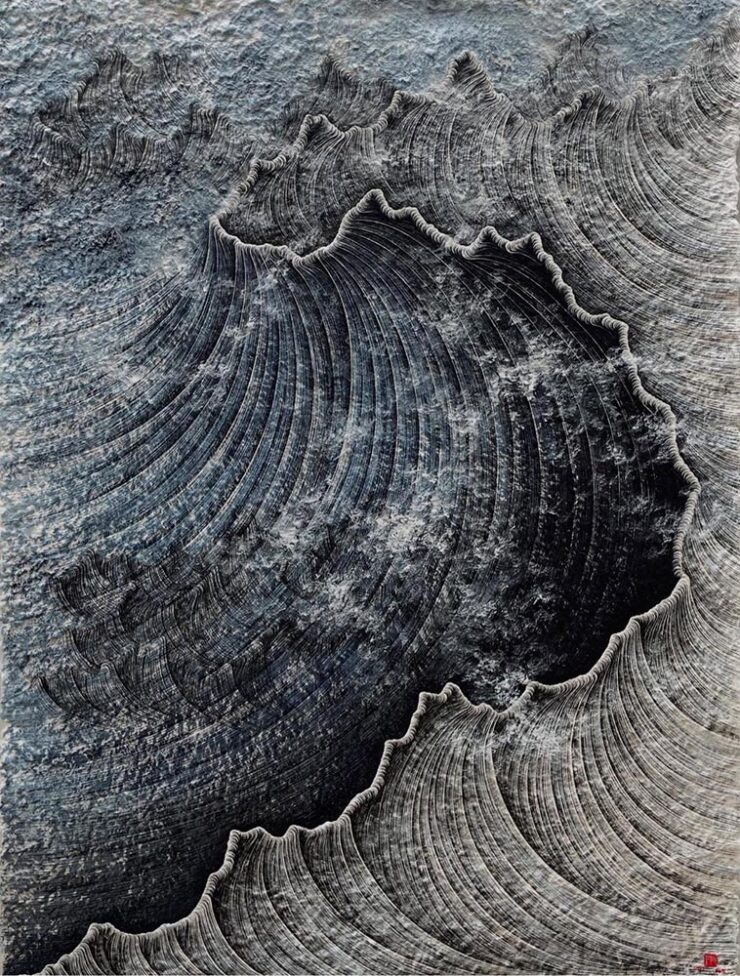
    “It’s always a good time to look at art,” Kottke writes, pointing to Korean artist Lee Hyun-Joung’s work, Poetic Texture:

    Artwork by Lee Hyun-Joung.

    We all need museum breaks — make time whenever you can. Even if it’s from home.

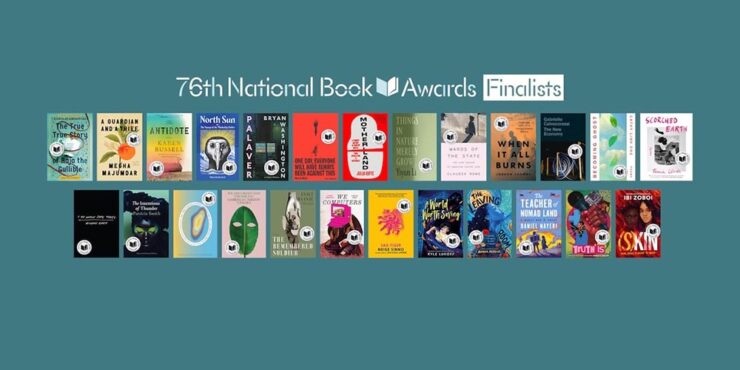
    Special Bonus #5: I would argue that the average reader of this blog would suggest books, too; check out LitHub‘s interviews with National Book Awards Finalists for some worthwhile titles.

    November’s Photography Round-Up
    UGA: Rural Churches

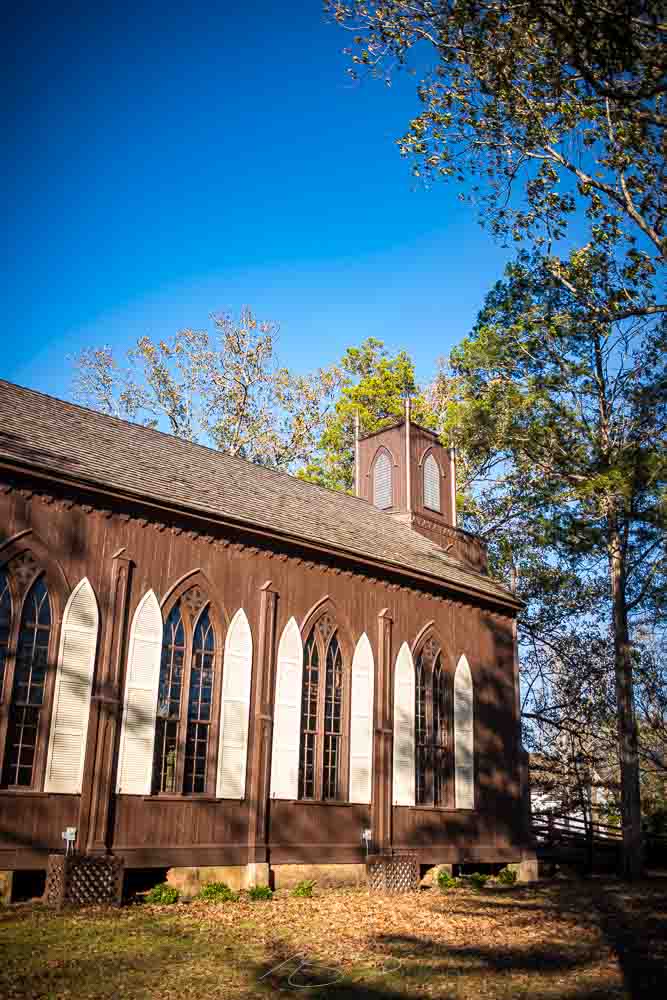
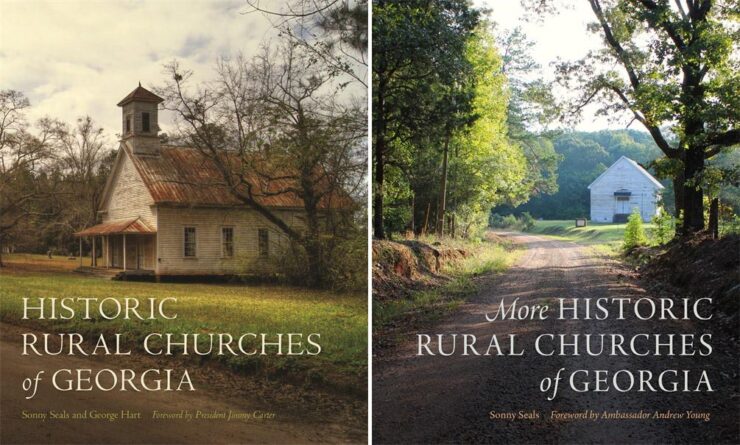
    For a while, I had it on my list to do a photographic tour of rural and abandoned churches across Georgia. There are a ton, and some of them are quite photogenic.

    This one in Talbotton,1I took the opportunity to remaster these photographs to both correct an unnoticed error and for better consistency between the photographs taken in 2022 and those in 2025. for instance:

    Historic Zion Episcopal Church, Circa 1848, Talbotton, Georgia
    Zion Episcopal Church (Detail #3), Talbotton, Georgia

    Alas, that project faded in importance, partially because I learned of the first volume of … you guessed it, Historic Rural Churches of Georgia, from UGA Press.

    Now there’s a second volume — and a bundle — available. Check ’em out.

    Oregon’s Trail of Tears, Photographed

    While we’re on the subject of interesting photography projects, this one is worth notice: retracing one of America’s (all-too-many) Trail of Tears:

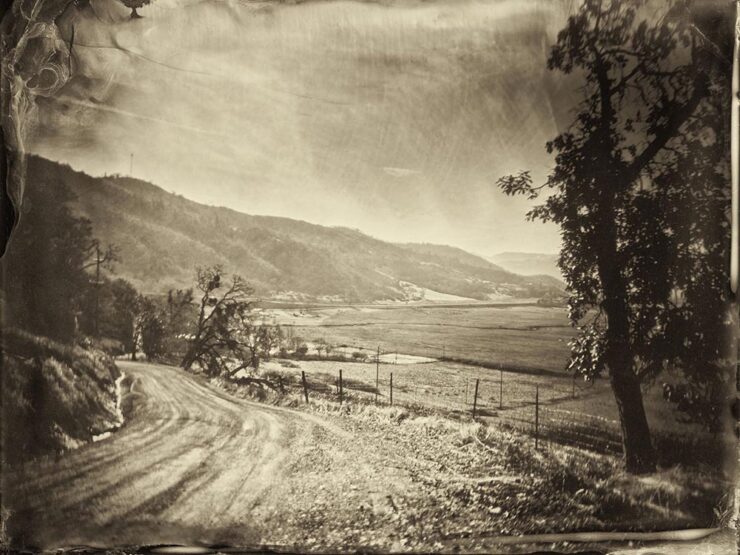
    Photography by Nolan Streitberger.

    By any measure, photographer Nolan Streitberger has built a practice that bridges art, history, and the profoundly personal. His work, particularly his acclaimed project Oregon’s Trail of Tears, transforms beautiful photography into both historical document and dialogue, a means of reclaiming memory and giving voice to stories long overlooked.

    — Kate Garibaldi, PetaPixel

    Done manually, using a wet-plate, Eastman No. 33A large-format camera from 1935, he’s done something extraordinary. Take a moment and explore this great work.

    Where George Orwell Wrote 1984

    Another large-format discovery:

    Jura Stream, Scotland. Photograph by Craig Easton.

    “Easton’s interior photographs of household items perfectly capture the simplicity of Orwell’s life[.] Collectively, they create an atmospheric vision of Orwell’s time on the island and the mood, desire and hope he experienced,” PetaPixel writes.

    Table Still Life, Scotland. Photograph by Craig Easton.

    Get the story.

    Close-Up Photographer of the Year Shortlist, 2025
    Fatal Jump. Photograph by Bence Mate.

    Some great stuff to peruse — admittedly, most long-list than shortlist — in multiple categories of natural subjects at the website. The winners will be announced in January.

    Farewell to Autumn. Photograph by Catherine Illsley.

    Via This is Colossal.

    Nature Photographer of the Year, 2025
    Overall Winner: Sundance. Photograph by Åsmund Keilen.

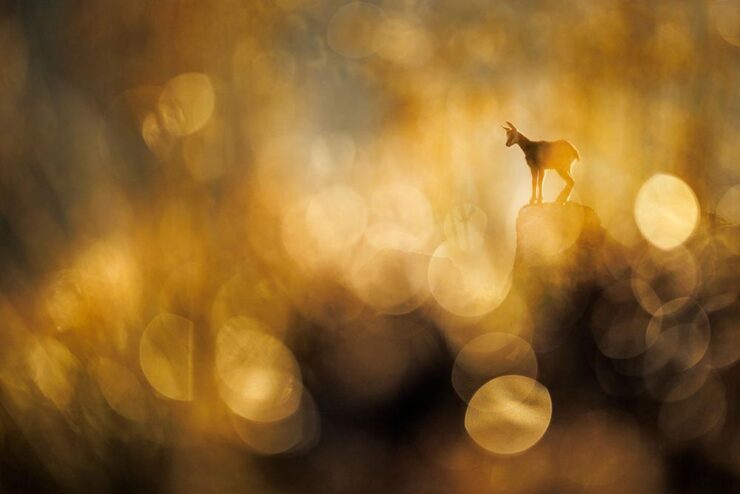
    Another in the “annual treat” category, this European contest features some incredibly accomplished work.

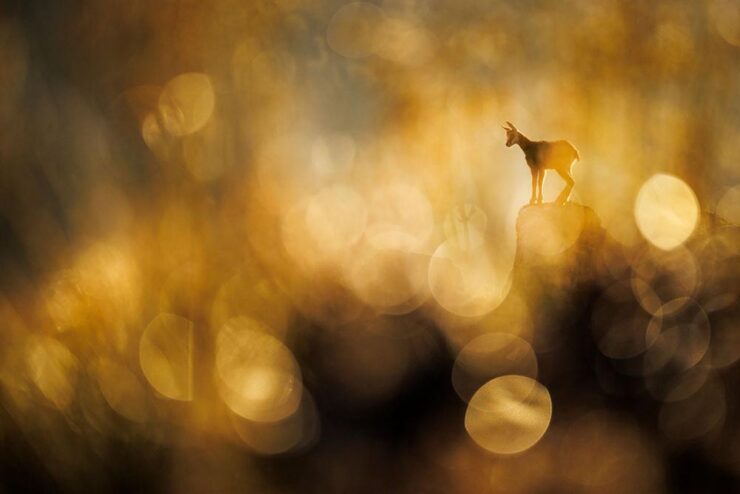
    Chamois. Photograph by Jakubowski Radomir.

    See a round-up at PetaPixel or visit the contest’s website.

    British Photography Awards, 2025

    Standard photography contest, perhaps, but I swear there’s a bit of that uniquely British humor showing.

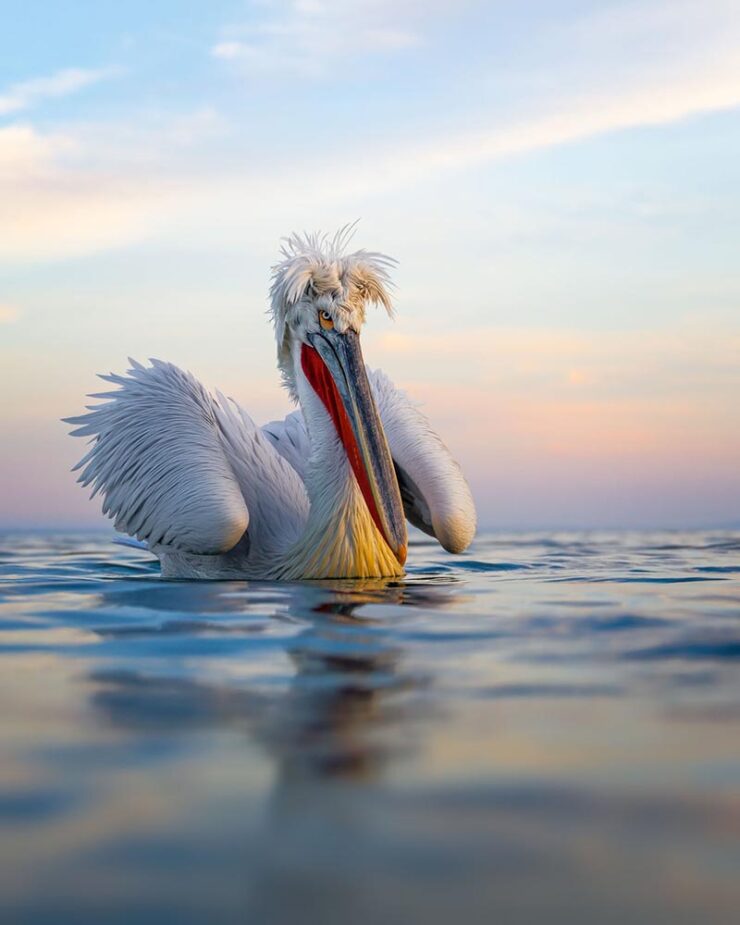
    Bar Hair Day. Photograph by Jayne Bond.

    If you’ve ever been close up to a pelican, you’ll know that they’re neither small nor particularly friendly; this great shot ably demonstrates both.

    While we’re on the subject of neither small nor particulately (sic) friendly:

    Shadows of Industry. Photograph by Harvey Tomlinson.

    Imagine living there. No, don’t: go enjoy the other winners instead. (Via PetaPixel.)

    Royal Photographic Society Awards, 2025

    The Royal Photographic Society Awards began 147 years ago — the world’s oldest — celebrating photography as an art form.

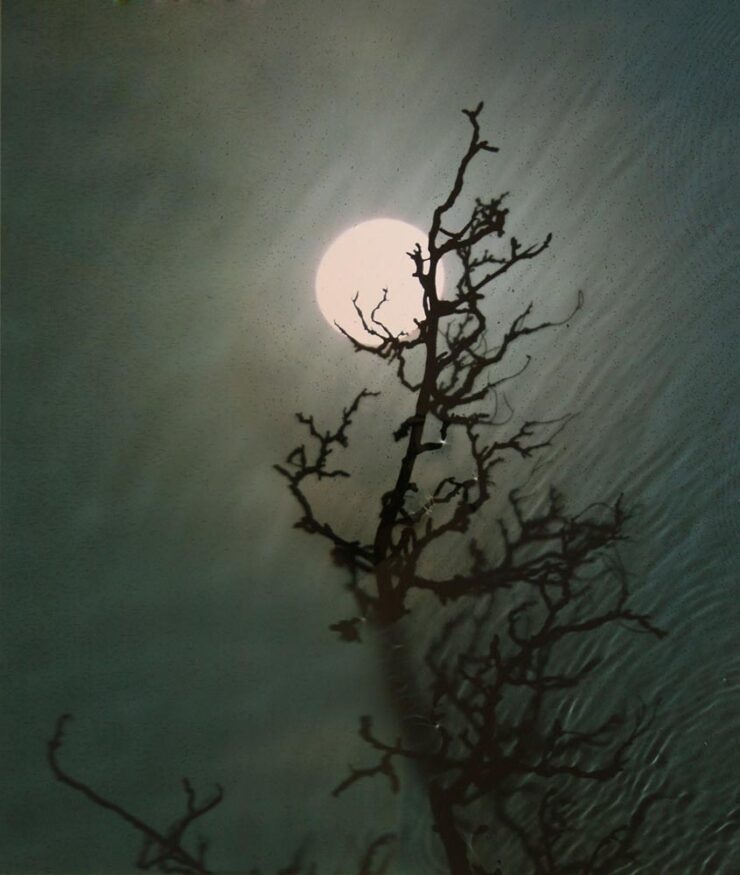
    This shot, for instance, taken without a camera:

    Full Moon, Hawthorn. Artwork by Susan Derges.

    The RPS notes that Derges’ photographic work explores humanity’s relationship to the natural world, often by bringing natural phenomena to life in the photographic medium in new and exciting ways. For example, Derges has exposed the physical movement of rivers and oceans onto photosensitive materials at night using moonlight, carefully composing plants and other natural matter in front of photosensitive paper, and then exposing it to light, and exposing photosensitive materials to sound waves, letting the frequencies create the final prints.

    — Jeremy Gray, PetaPixel

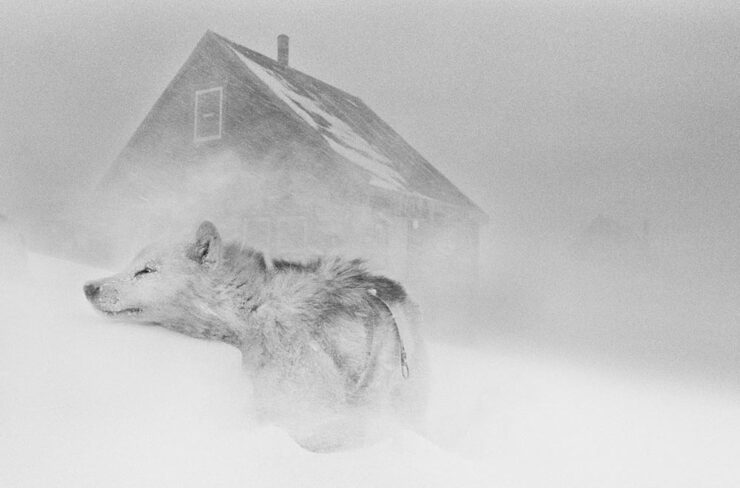
    Plenty of other deserving artists, as well, but they use cameras:

    Artic Heroes, Ittoqqortoomiit Storm. Photograph by Ragnar Axelsson.

    See the website for all the honorees. (Via PetaPixel.)

    Best Nature Photography, 2026 Showcase

    No, you read that right: the first winners of next year, from the North American Nature Photography Association:

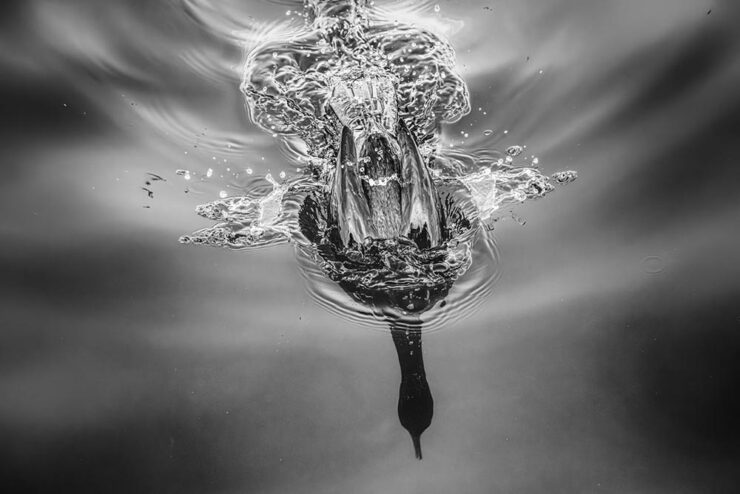
    Cormorant Diving. Photograph by Kevin Lohman.

    Most of these contain detail best seen at larger sizes. (See the website.) Well, okay, except maybe this one, which is cute at any size:

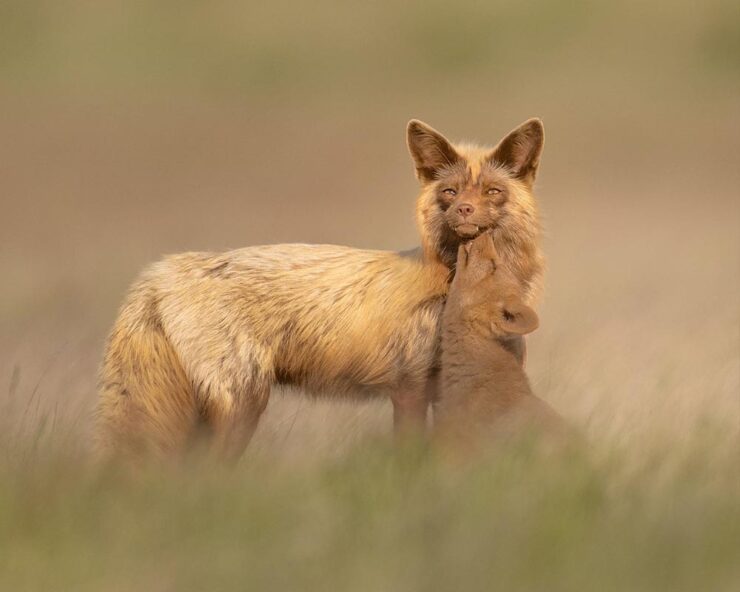
    Fox Kit with Helper. Photograph by Marcia Walters.
    Thank You for Visiting

    That’s it from here for November. I still owe you coverage of AIGA’s 50 Books|50 Covers (update: posted); weather permitting, there will be a new photography gallery mid-month; there will, of course, another Beautifully Briefed at the turn of 2026; and, don’t forget my annual Favorite Book Covers post mid-January. Please have a happy and healthy holiday season.

    • 1
      I took the opportunity to remaster these photographs to both correct an unnoticed error and for better consistency between the photographs taken in 2022 and those in 2025.
  • Beautifully Briefed 25.10: [Blank] of the Century

    Beautifully Briefed 25.10: [Blank] of the Century

    In this episode, design whims and wins, fontastic links, a Toyota Century, and the monthly round-up of great photography bracket some thoughts on — what else? — AI, especially as it relates to art. Grab a beverage, brush, or a comfy chair, and let’s dig in.

    This Month’s Spine
    New York University Press. Cover design by Devon Manney, art director, Rachel Perkins.

    One could argue that this cover — and title — could work well even if the word “climate” was removed. See the whole list of University Press goodness.

    And check back for a special, mid-month post in honor of University Press week, Nov. 10–14.

    Good Movies as Old Books, Revisited

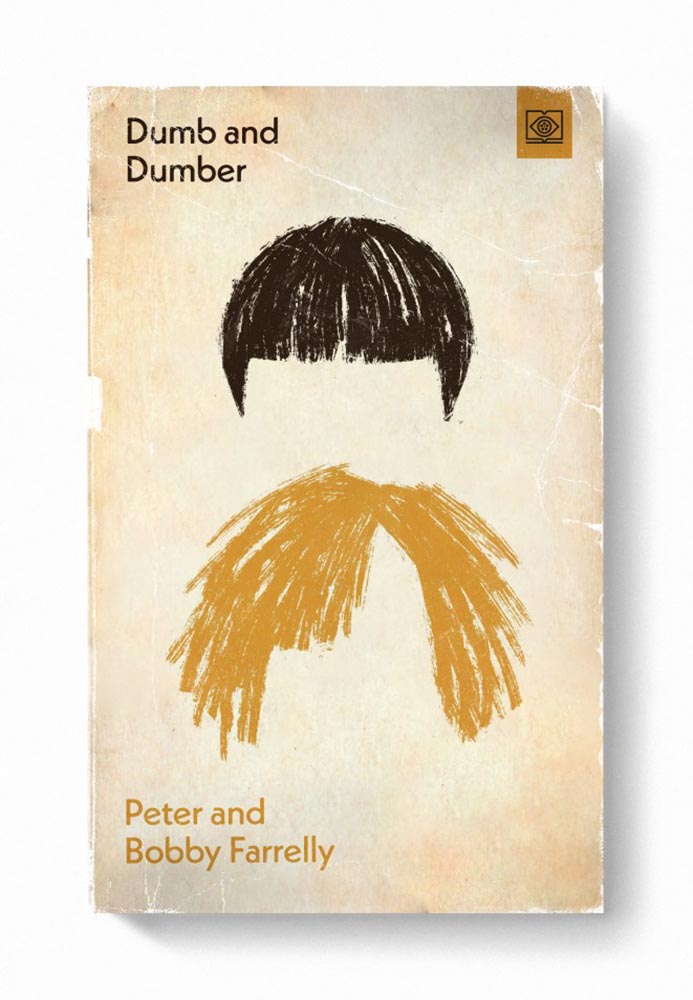
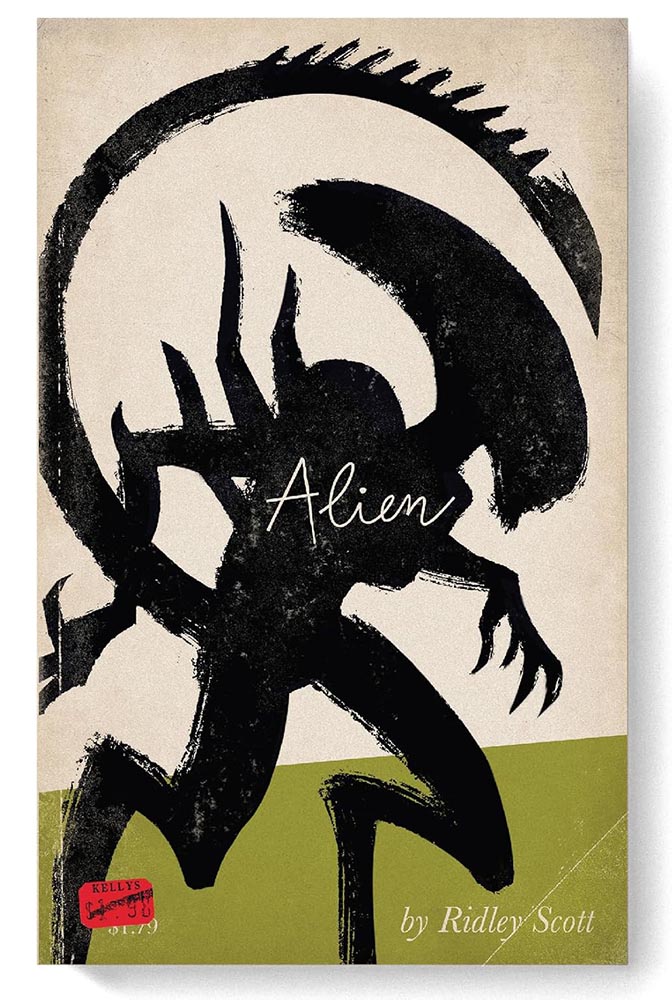
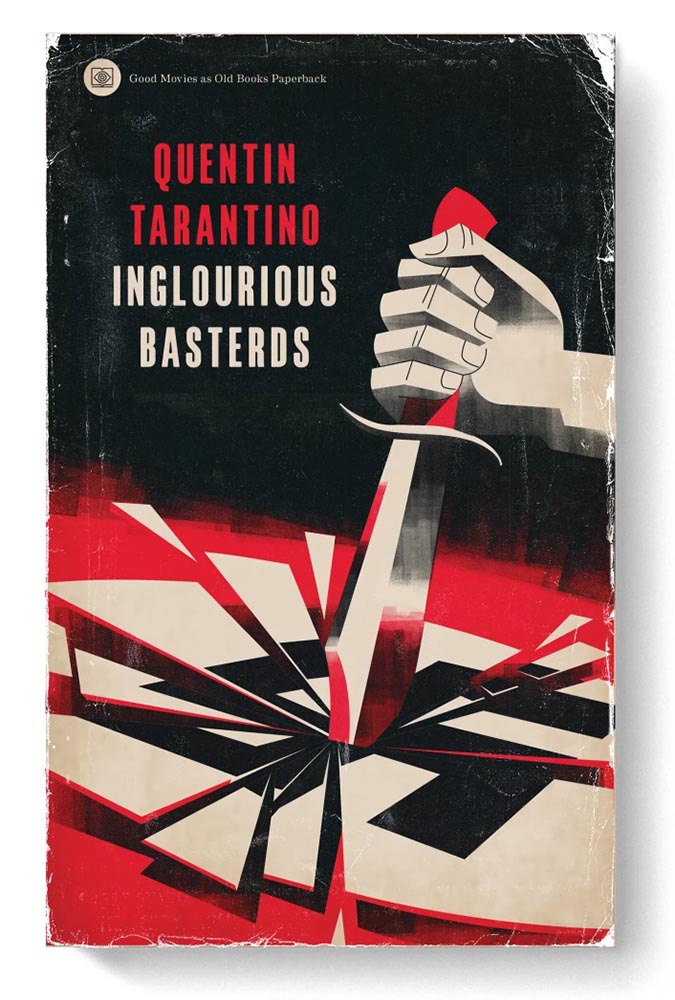
    Let’s start with something great: Steven Heller highlights the “talent and imagination” of Matt Stevens (previously) as the paperback version of his book, Good Movies as Old Books, becomes available.

    Cover design by Matt Stevens.
    Cover design by Matt Stevens.

    “My goal with the style was to try new things and create interesting combinations. Oftentimes, I was trying to do something that had not been done for a particular film,” Stevens says. Short and fun, the PRINT interview is worth a few minutes of your time.

    Old-Fashioned Methods, Delightfully Off-Kilter Results

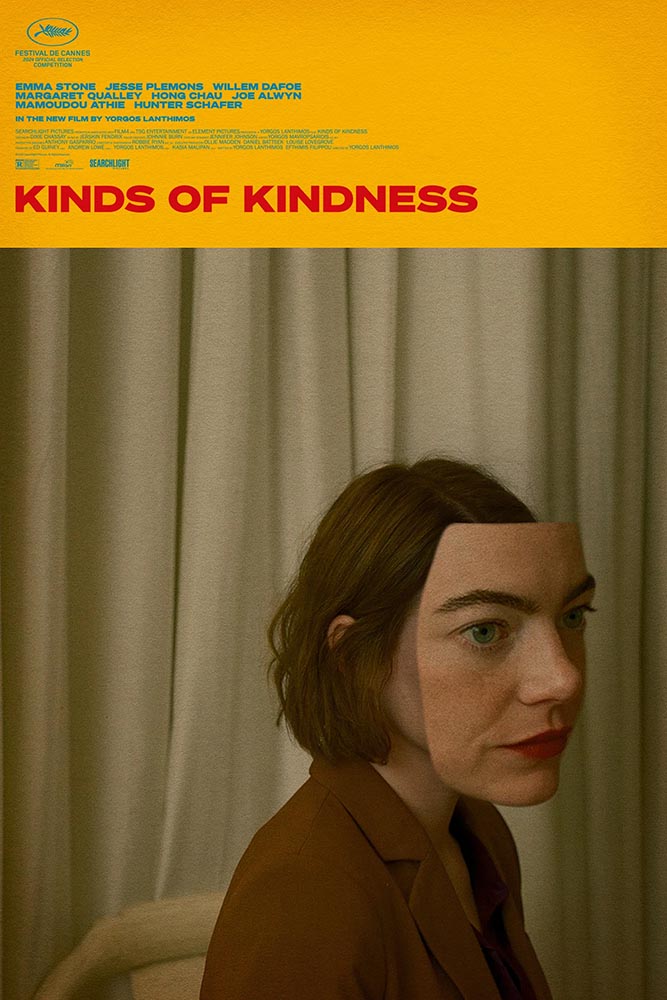
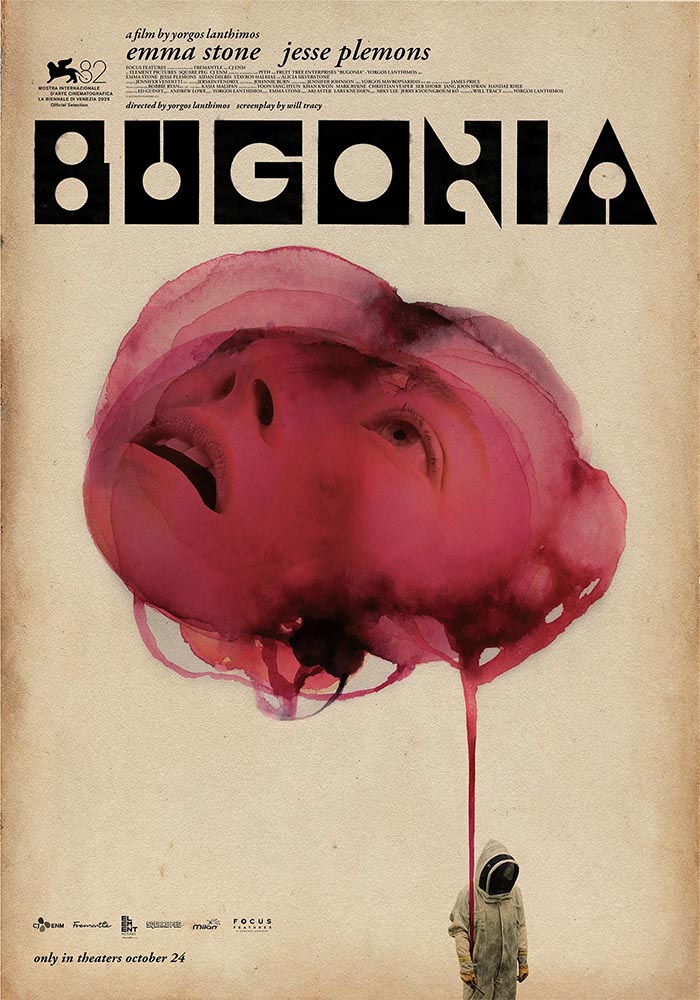
    While we’re on the subject of movies, let’s slip closer to … well, what passes for reality these days: items “steeped in human anxieties and fever dreams.” It’s Nice That highlights poster and title design for films by Greek artist Vasilis Marmatakis.

    Design by Vasilis Marmatakis.

    With design, much like life itself, Vasilis says that his posters are his honest reactions to the films. The same approach runs like a red thread throughout his work, each poster leaning a little too heavily into one of the film’s themes. […] In Bugonia, Vasilis consciously restricts superfluous elements and allows the frames to breathe.

    — Arman Kahn, It’s Nice That
    Design by Vasilis Marmatakis.

    Even the font — and how it’s used — is interesting: the freely-available Churchward Roundsquare, customized with brush and ink. That and much more is discussed in this great article.

    New Vintage Classics Series

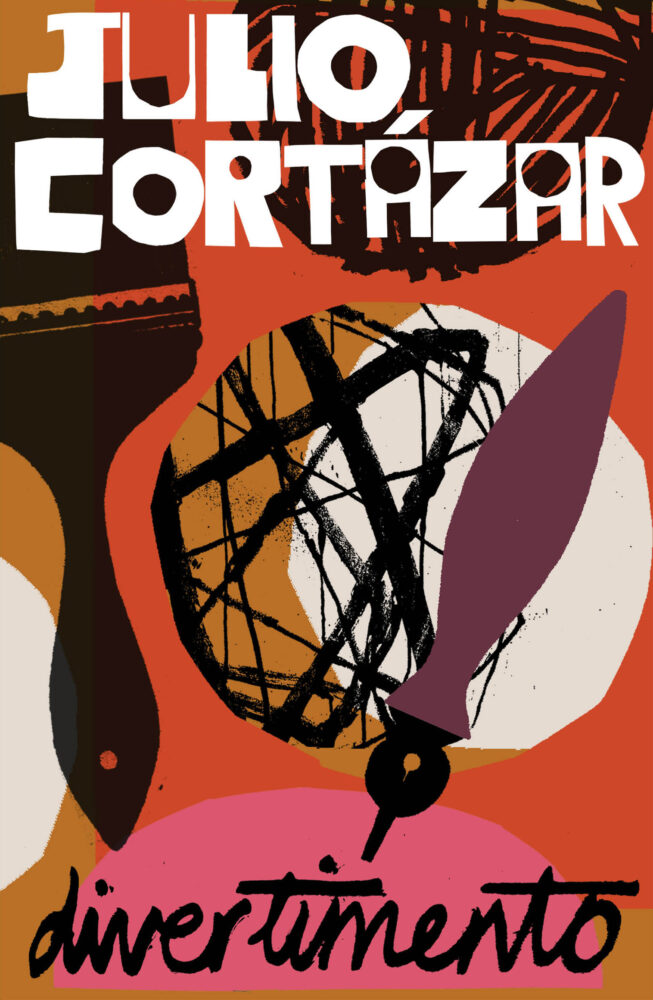
    It’s unusual not to relish a new set of reissues from Vintage, and the new editions of Julio Cortázar are no exception:

    Book design by Stephen Smith; art director, Suzanne Dean.

    The always great — and not mentioned often enough — Casual Optimist has more.

    Special Bonus #1: Via Kottke, Na Kim’s self-portrait:

    Fascist Posters, Italian Style

    Also via Kottke are these posters, which evoke a certain … something:

    In a fascist movement inspired by art, how does the fascist government influence the artists living in its grasp? This exhibition explores how Benito Mussolini’s government created a broad-reaching culture that grew with and into the Futurist movement to claw into advertising, propaganda, and the very heart of the nation he commanded.

    — Poster House exhibition The Future Was Then: The Changing Face of Fascist Italy.

    The exhibit features “some of the best posters produced during the worst period in modern Italian history.” See more.

    Special Bonus #2: While we’re perusing the poster department, Archinect‘s ongoing lecture series (previously) has another winner:

    Fontastic Fall
    New for October

    CreativeBoom‘s monthly roundup is out, and while Grundtvig is retrotastic and the three-axis variable Pranzo is accompanied by some great illustrations, it’s Jovie that I’d love to use in print project:

    “Jovie’s character emerges through its soft-serif approach, which tempers traditional serif authority with contemporary approachability. Playful italics, expressive alternates, swashes, and ligatures provide designers with a rich typographic palette, whilst maintaining coherent family relationships across all variations,” they note. (Another variable-width item, too.) Great stuff.

    Custom Type is Everywhere, It Seems

    Meanwhile, custom type for branding is becoming the norm. In another article, CreativeBoom explains why: “Bespoke letterforms are no longer a “nice-to-have” and they are increasingly seen as a strategic necessity[.] Type has become the glue that holds their voice together,” they write.

    Those letters are your brand’s voice. They do the heavy lifting, they carry personality, and they create instant recognition – sometimes without the need for any other distinctive assets. […] Typography is everywhere in a brand system – packaging, products, campaigns, interfaces. When you build your own, you’re not at the mercy of someone else’s design choices, and you get a voice that’s tuned to your values, your audiences, and your long-term ambitions.

    — Frankie Guzi, business director, Studio DRAMA.

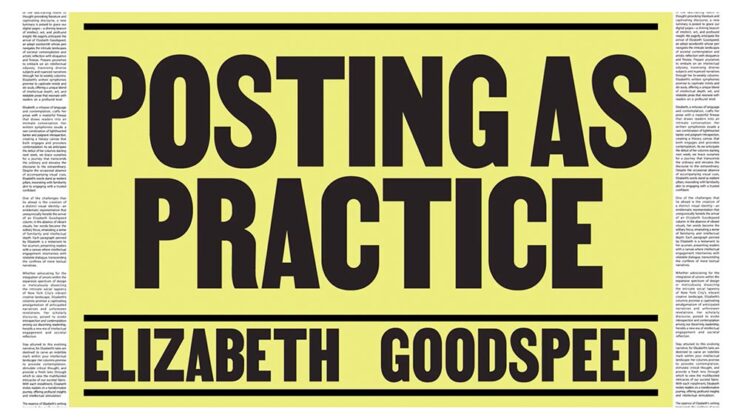
    Elizabeth Goodspeed (previously) agrees, mostly. “For most of the 20th century, branding treated typography as background, not backbone,” she writes. But now, brands are recognizing that, “[a]s a primary container for meaning, typography inevitably carries an enormous share of that emotional load.”

    An exception to the rule: a type gem — with legs! — from 1971.
    But, she cautions, “[s]peed also feeds a kind of conceptual shallowness. With so many studios drawing type, the market has been flooded with fonts that solve narrow visual problems but can’t stand up to long-term use. Too often, new brand fonts cling to a single gimmick while leaving the structure of the letters untouched.”

    Read the rest at It’s Nice That.

    AI All the things
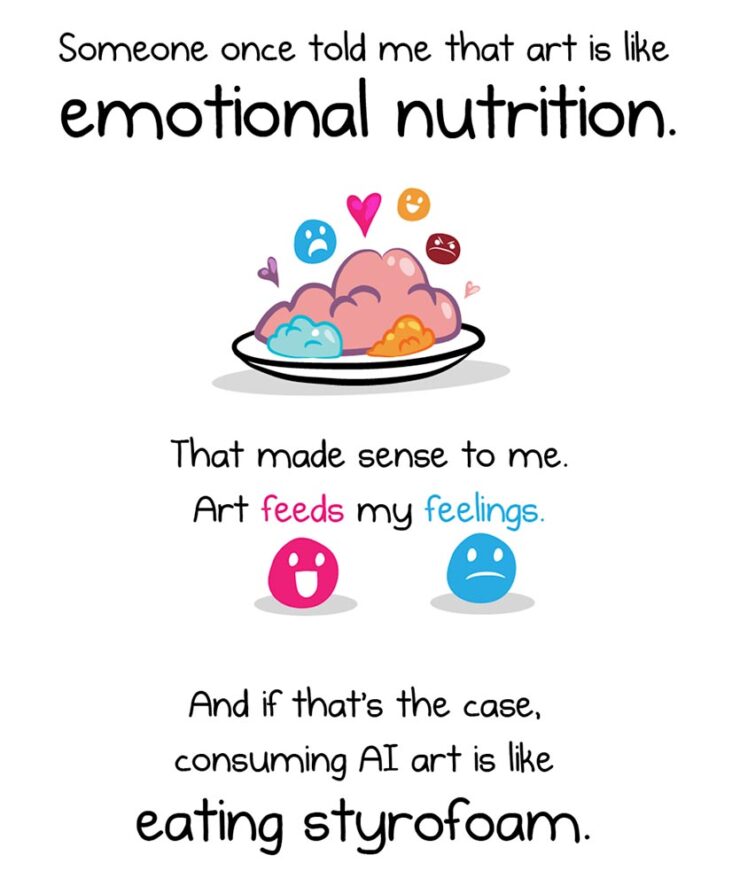
    The Oatmeal, penned by Matthew Inman, has some thoughts on AI.

    The new-to-me FlowingData — via Kottke’s rolodex feature — first pointed me to this piece, and it’s gotten a ton of press. In summary, Inman suggests that AI art causes a certain discomfort; that, perhaps, AI art even deserves air quotes around the word art because it’s somehow less than “actual” art.

    Indeed, much of that press has been approving: a pile-on of people (not that such things happen on the internet) saying, “yes, AI art deserves those air quotes. It is less.”
    One of my favorite reactions was from Nick Heer:

    A good question to ask when looking at an artwork is “who made this?”, and learning more about what motivated them and what influences they had. This is a vast opportunity for learning about art of all mediums, and it even applies to commercial projects. Sometimes I look up the portfolios of photographers I find on stock image sites; their non-stock work is often interesting and different. There is potential for asking both questions of A.I.-assisted works in the hands of interesting artists. But it is too often a tool used to circumvent the process entirely, producing work that has nothing to offer beyond its technical accomplishment.

    — Nick Heer, Pixel Envy

    “Who made this?” is the right question — to start. But let’s take that a step further.

    John Gruber, at Daring Fireball, quotes the piece: “[When] I find out that it’s AI art[,] I feel deflated, grossed out, and maybe a little bit bored. This feeling isn’t a choice.” Then says that he fundamentally disagrees with that premise:

    I think it very much is a choice. If your opinion about a work of art changes after you find out which tools were used to make it, or who the artist is or what they’ve done, you’re no longer judging the art. You’re making a choice not to form your opinion based on the work itself, but rather on something else. […] Stanley Kubrick said, “The test of a work of art is, in the end, our affection for it, not our ability to explain why it is good.” If an image, a song, a poem, or video evokes affection in your heart, and then that affection dissipates when you learn what tools were used to create it, that’s not a test of the work of art itself. To me it’s no different than losing affection for a movie only upon learning that special effects were created digitally, not practically. Or whether a movie — or a photograph — was shot using a digital camera or on film. Or whether a novel was written using a computer or with pen and paper.

    — John Gruber, Daring Fireball

    “Good art is being made with AI tools, though, and more — much more — is coming,” he says. Over the next few days, he cited some examples, including David Hockney’s art made with a Xerox machine, and then this:

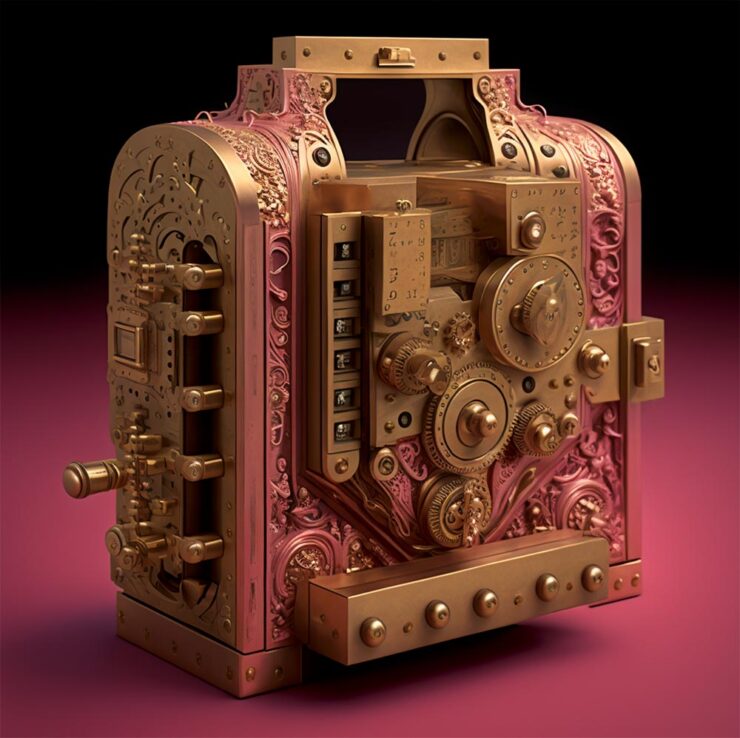
    Jonathan Hoefler’s ongoing series, called Apocryphal Inventions.

    The objects in the Apocryphal Inventions series are technical chimeras, intentional misdirections coaxed from the generative AI platform Midjourney. Instead of iterating on the system’s early drafts to create ever more accurate renderings of real-world objects, creator Jonathan Hoefler subverted the system to refine and intensify its most intriguing misunderstandings, pushing the software to create beguiling, aestheticized nonsense. Some images have been retouched to make them more plausible; others have been left intact, appearing exactly as generated by the software. The accompanying descriptions, written by the author, offer fictitious backstories rooted in historical fact, which suggest how each of these inventions might have come to be.

    These images represent some of AI’s most intriguing answers to confounding questions — an inversion of the more urgent debate, in which it is humanity that must confront the difficult and existential questions posed by artificial intelligence.

    Jonathan Hoefler

    “This is art,” Gruber says, with no other text. I don’t think any other is needed.

    On a Related Note
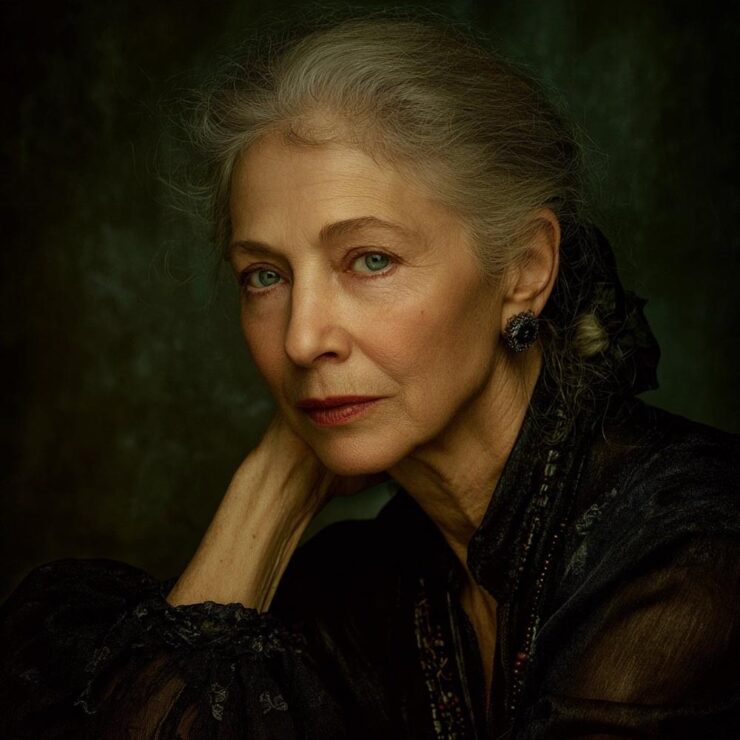
    This is AI.

    “The top 200 photographers requested by Midjourney users have been exclusively revealed to PetaPixel — and it’s a world-famous, still active photographer that tops the list.” I bet you can guess who that is.

    This is, in fact, the majority of what Inman was thinking — or at least, feeling — when he drew out an argument on why AI art can be such a let-down, both intellectually and emotionally. The above “photograph” is both awesome and hugely disappointing at the same time.

    Further Reading

    I’m not qualified to speak with any authority on the state or potential future of AI, AGI (artificial general intelligence), or the continuing convergence of AI with … well, all the things. I will say that, to me, there’s a palpable sense of bubble going on; whether financial, material, or resource requirements, it feels like something is going to need to give fairly soon.

    Below are several articles on the intersection of AI with life, culture, or art that I found valuable. If you can set aside a few minutes, the information provided could be helpful in the quest to stay informed:

    Side Note: I’ve dropped the punctuation in “AI.” Not unlike capitalizing “Internet,” I think we’ve crossed that bridge.

    Special Bonus #3: AI apparently overuses em dashes, something that has, frankly, caused me to use them less. Which is a good thing — I overuse them. But then, I am a professional. [That’s only funny if you’ve read the link. —Ed.]

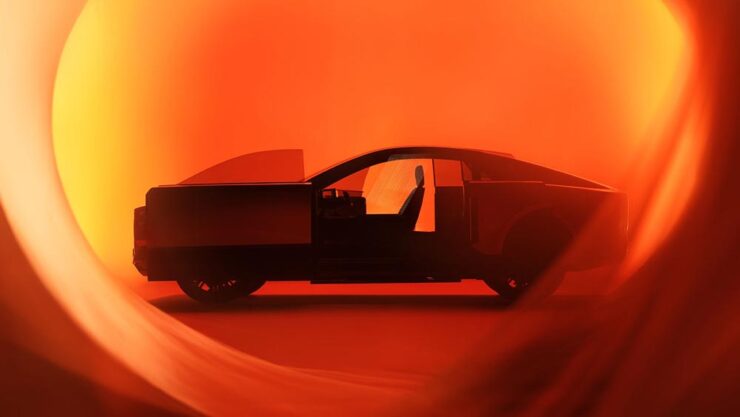
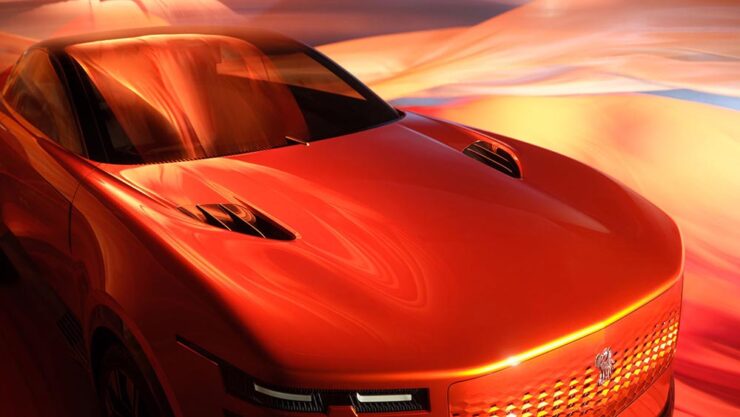
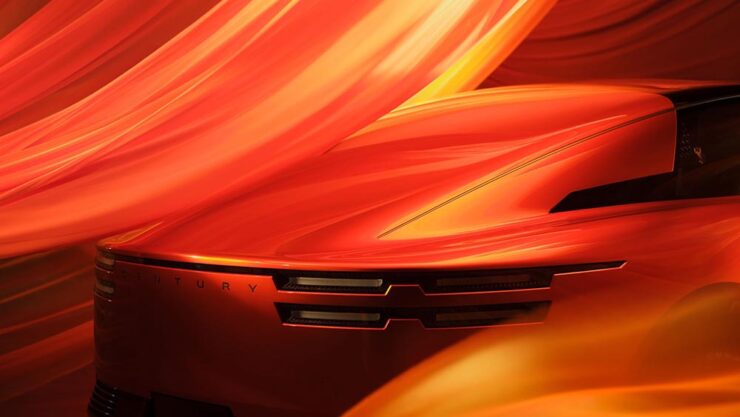
    The Century Coupé Concept

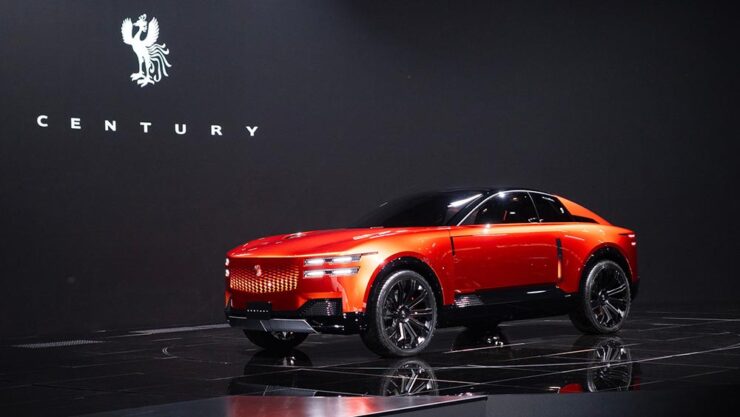
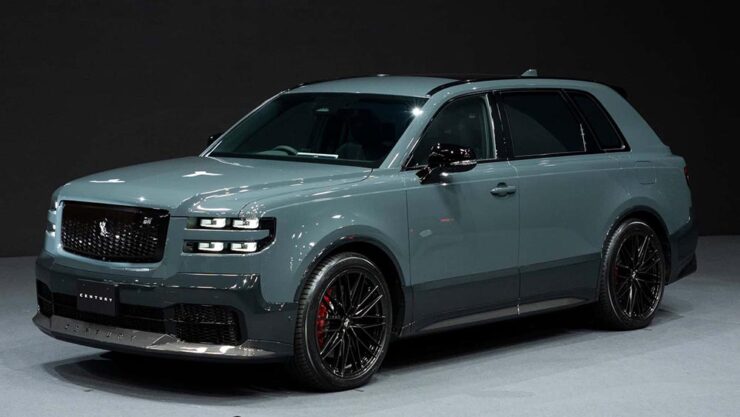
    Toyota (the company) has reorganized: there are now three levels. There’s Toyota (the car line), for the mass market; Lexus, Japan’s first answer to BMW et al from the late ’80s and also very much mass market (if targeted differently); and now, to compete in the ultra-high-end market, Century:
    Long hood, imposing “grille” — trend, recycling, or cliché, depending on outlook.
    The no-rear-window thing continues to grow in popularity. (For “cocooning.”) Hmph.

    Powertrain is yet to be determined; the rumors suggest it’ll be available both with a combustion engine (possibly a V12) and electric drive. In the case of the latter, owners will, of course, be able to send their driver off to get the thing charged while they lunch or plot takeovers — no range anxiety here.

    Century’s logo is a phoenix.

    Car geeks will know that Toyota’s Century sedan model has been around forever. It’s always been badged as a Toyota, and is aimed at Japanese executives and members of state (and will, in fact, still be produced). It was joined a few years ago by a SUV that bears more than a passing resemblance to a Rolls-Royce Cullinan. Both existing Century models available only in Japan and China.

    The 2025 Century SUV. That D-pillar absolutely “borrows” from the Cullinan.

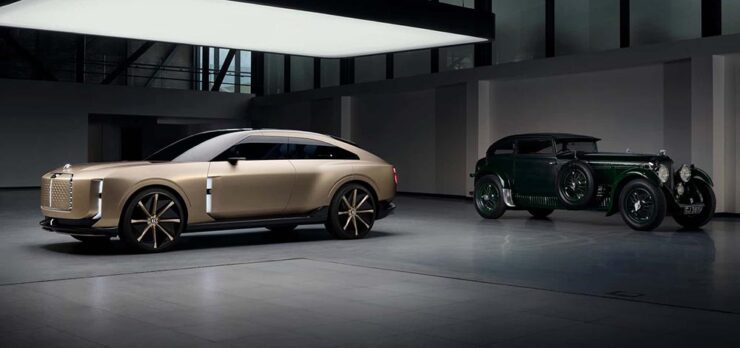
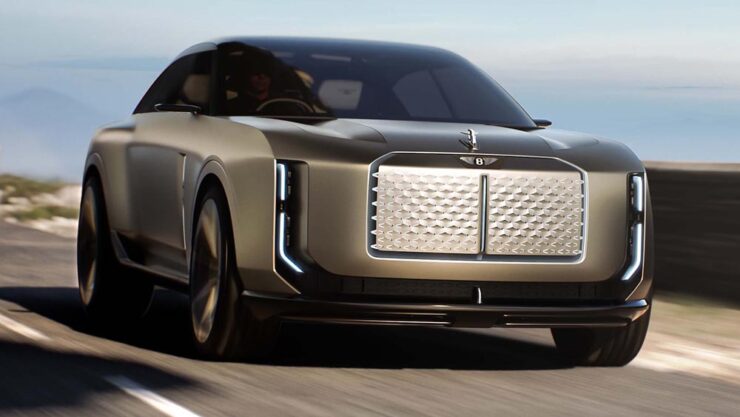
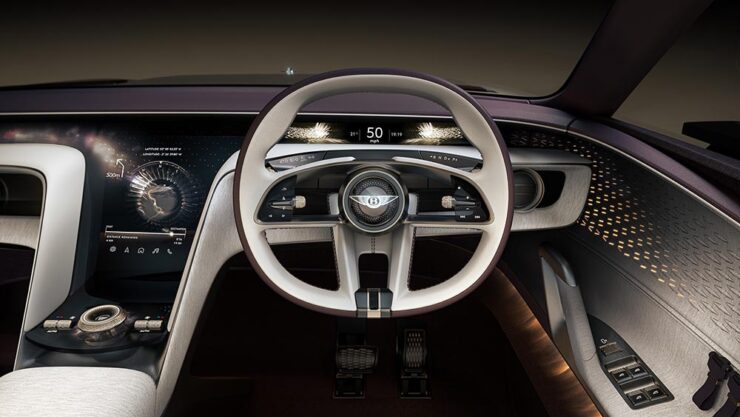
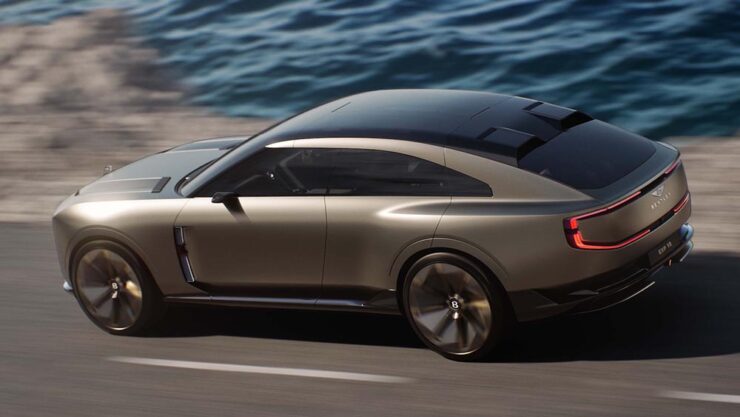
    Toyota has decided to make those three models into a new brand that’s just called, “Century.” It’s going to be set up with exclusive dealers, eventually be available worldwide, and compete with Bentley’s new EXP 15 (previously) and Rolls-Royce’s … everything.

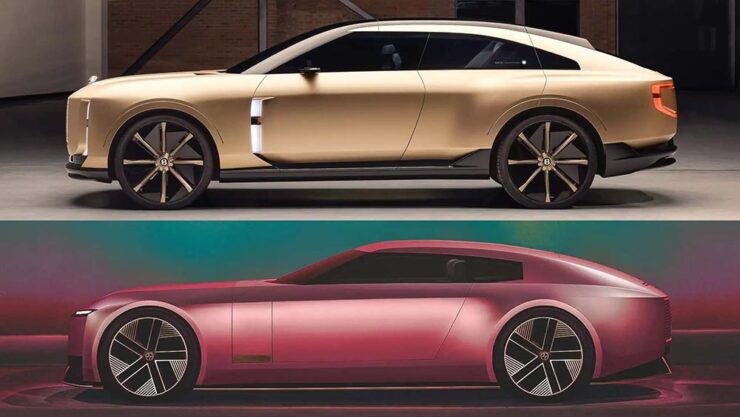
    And, of course, Jaguar. The elephant in the room get a mention here because it’s looking more and more like JLR made the right call in targeting one-percenters with out-there, vaguely coupe-like designs. Because if the Century SUV resembles a Cullinan, the new coupé concept looks like a cross between the Jaguar Type 00 concept and said Bentley:

    The Bentley EXP15, top, with the Jaguar Type 00, bottom.

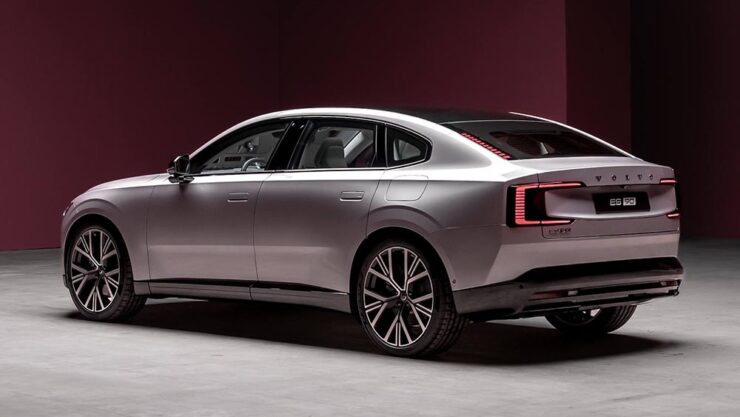
    Very much unlike the Jag, which is low and could possibly be described as “sleek,” the Toyota has a higher stance; a coupé/sedan and SUV mix seems to be a new answer to the so-called “death of the sedan.” Volvo’s ES 90 might also apply here.

    Bear in mind that I’m not talking about the coupé-style SUVs (BMW’s X6, for instance), which are a different animal — at least for now. It’s possible the whole class of “coupe-like things” might converge in the not-too-distant future.

    That being said, a member of that new class of vehicle being aimed at the chauffeur-driven market is new.

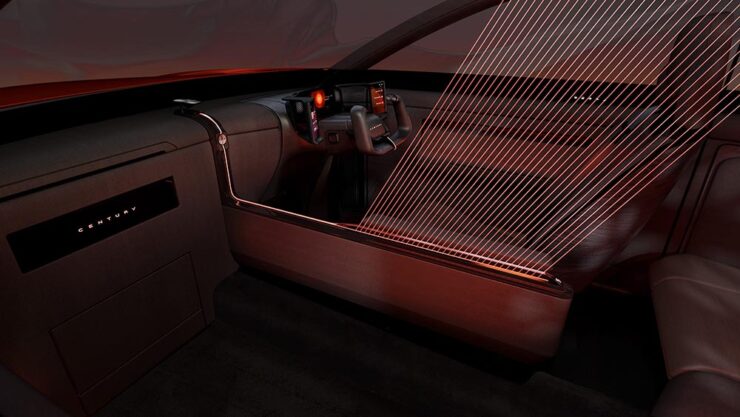
    The glass divider is to allow the chauffeured their privacy.

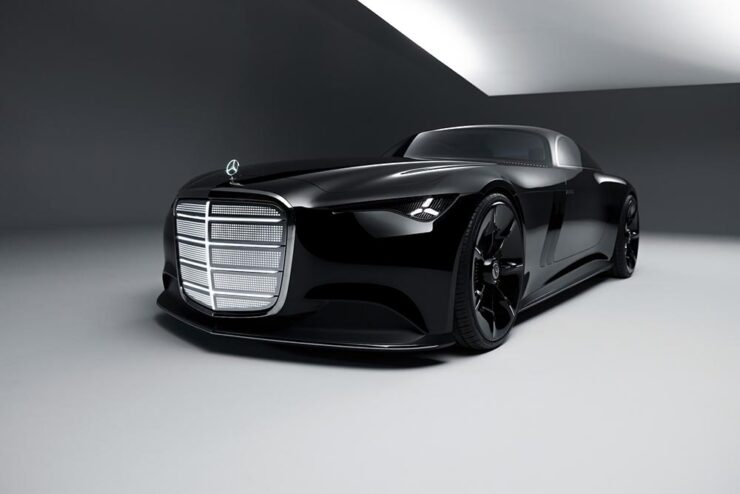
    One more item: The old-school isn’t going quietly.

    Did someone mention grille? (Lit, naturally.)
    Leaving the hood long behind.

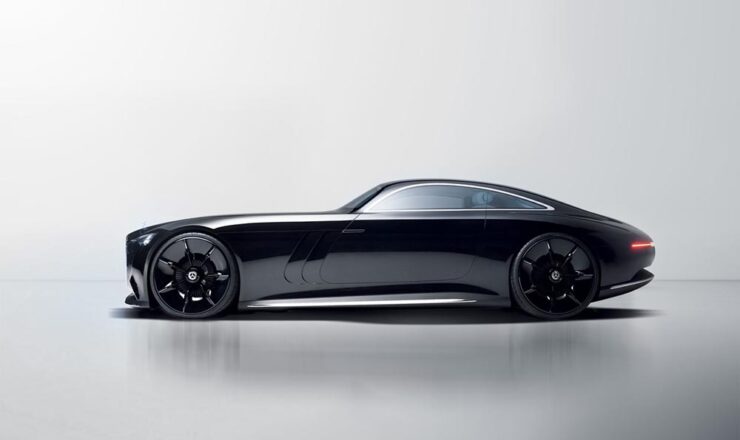
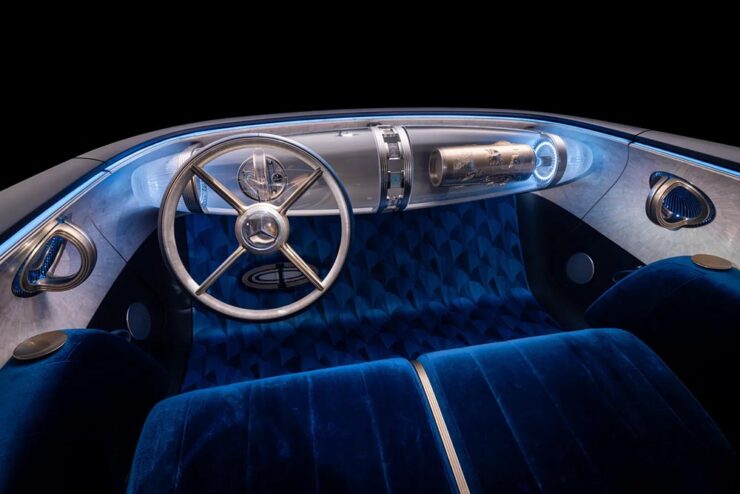
    Mercedes is, arguably, the best (non-American manufacturer) at displaying “gangster” qualities. Oh, and check out the awesomely-retro interior:

    Note the lack of screens amongst that vintage style. And yes, velour is “in.”

    Read more about the Toyota (teaser or intro, both at The Drive) or Mercedes (The Drive, Wallpaper*).

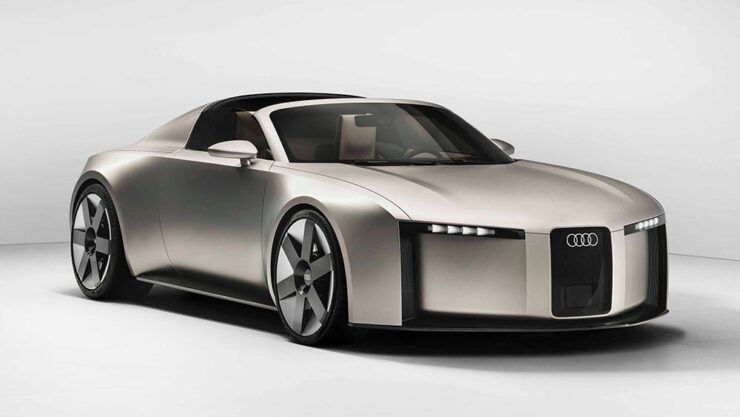
    Special Bonus #4: Audi poached the Type 00’s designer. His first showing is the Concept C, Audi’s return to form, called “radical simplicity.” It’s a cross between their sports-driven R8 and designer-driver TT:

    Love the wheels. The grille less so (there have been dictator comparisons), and the lack of rear window not at all.
    October’s Photography Round-Up
    2x Film
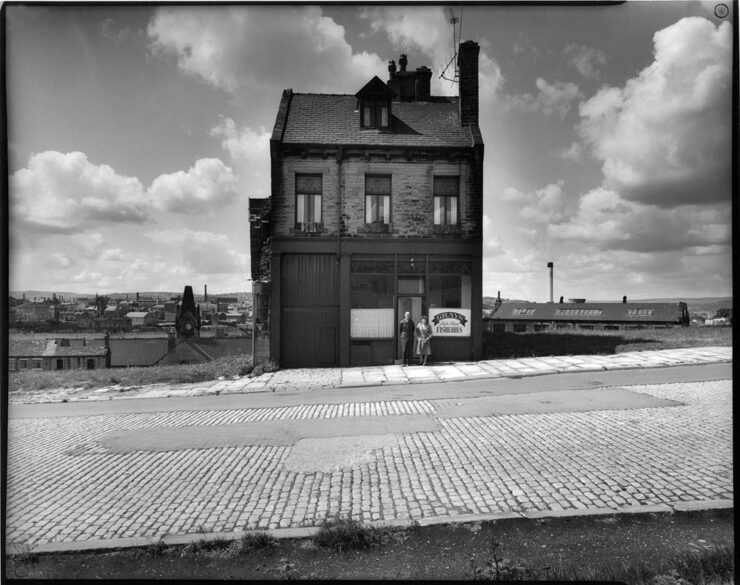
    Grays Fisheries, Bradford (UK), left standing during inner city slum clearance. Photograph by Ian Beesley, 1977.

    From an interesting and moving feature at MacFilos, “Capturing the decline of industries and communities with a Leica M6”:

    At my recent career retrospective exhibition “Life” at Salt’s Mill, Saltaire (a world heritage centre near Bradford, West Yorkshire, England), a man came to talk to me. He said, “You won’t remember me, but I remember you. I worked in a camera shop in Bradford, and you were always coming in to buy rolls of black and white film. It makes me so proud to think that the film I sold you created some of these wonderful photographs.”

    I take this as a great compliment and a very moving one. It is one of the reasons why I decided to donate my entire archive of negatives, prints, notebooks (over 200,000 items) to Bradford City Art Galleries and Museums. I am hanging on to my Leica M6 for a bit longer, but at some point, it will be re-united with all the negatives it created.

    — Ian Beesley, MacFilos
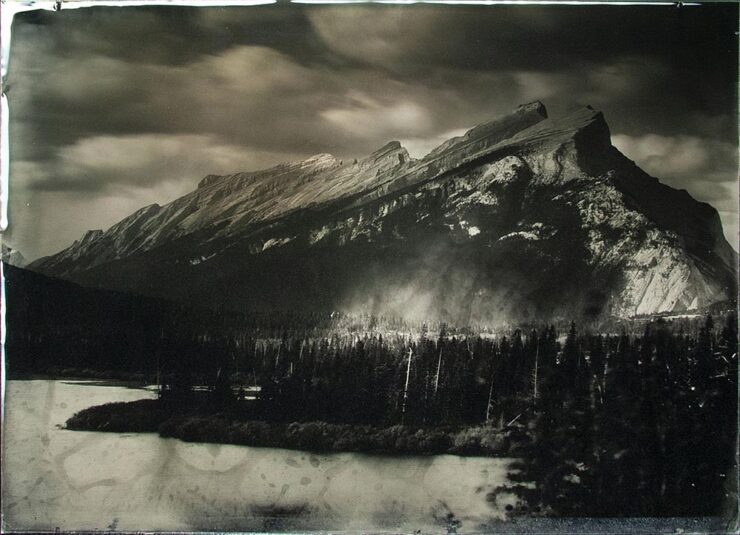
    “Rocky Mountains On Wetplate Collodion,” Canada. Photograph by Bill Hao.

    “The Analog Sparks 2025 International Film Photography Awards celebrate analog photography as a medium and elevate the best film photographers worldwide,” PetaPixel writes. Some excellent reminders that sometimes, the old ways are still the best ways.

    Color and Pano
    “Beholders No. 1.” Photograph by Li Sun.

    All About Photo Magazine unveiled the winners of its latest competition: Colors. The 25 prize-winning photographers demonstrate how powerful color can be in images, whether it’s vibrant, subtle, or minimal,” PetaPixel writes.

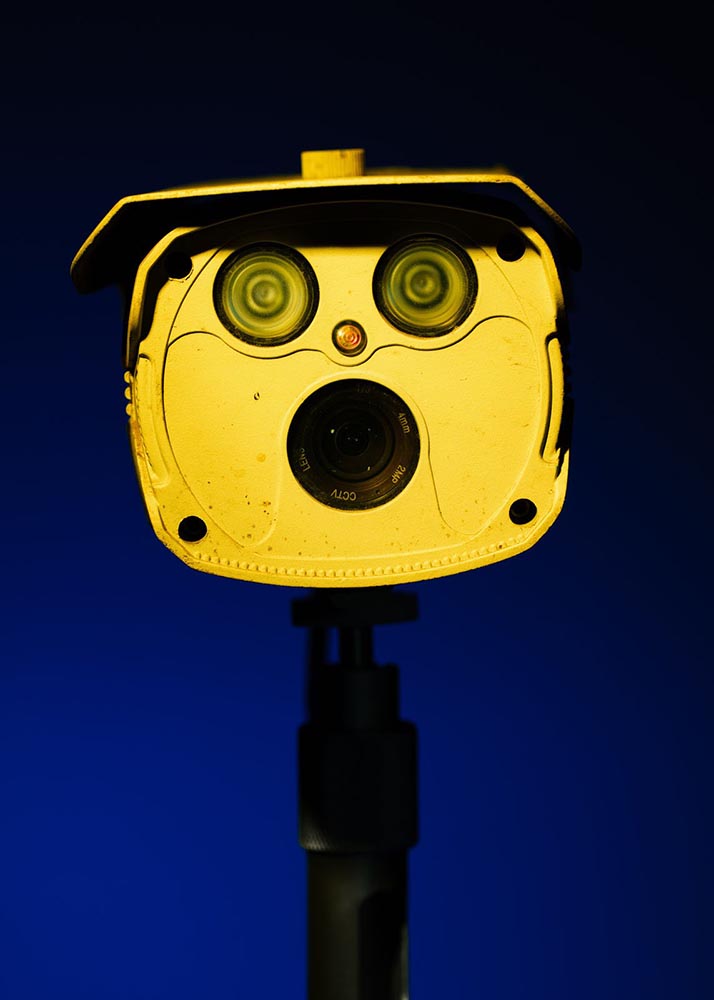
    To be honest: at first, I thought this was a coin-operated binocular thing you see at attractions or overlooks, and laughed out loud. Alas, the laughter died away when I realized it was, in fact, CCTV — an overlook of an entirely different kind. I guess there’s a certain irony in the “face.”

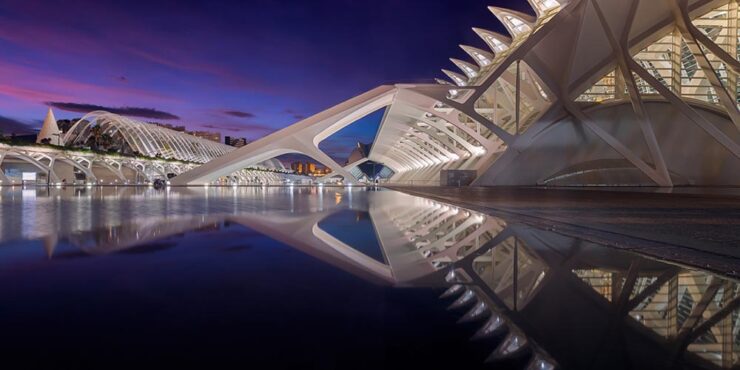
    The Mirror, Valencia, Spain. Photograph by Anto Camacho Villaneuva.

    It is possible to recognize a Santiago Calatrava building immediately, with its soaring, often winged structures. (The World Trade Center Transportation Hub in New York springs to mind, for instance.) This panoramic photograph captures two of them — nice.

    A press release from Epson, the contest’s sponsor, notes that this year there was a “prevalence of ultra-wide panoramas and increasingly innovative perspectives, including very low angles, very close-up subjects, and aerial photography,” including the above. PetaPixel has more.

    Birds and Wildlife
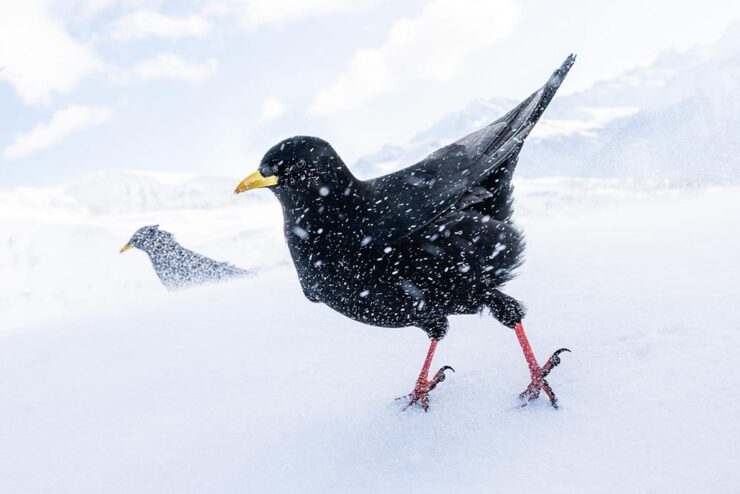
    “Snowstorm,” Germany. Bronze Award, Best Portrait. Photograph by Luca Lorenz.

    “The 2025 Bird Photographer of the Year gives a lesson in planning and patience,” This is Colossal writes about this year’s contest winners (specifically, regarding the photo seen at the right in the header image) — but getting the cold shot, above, wasn’t an easy thing either. (See also: PetaPixel‘s plumage article.)

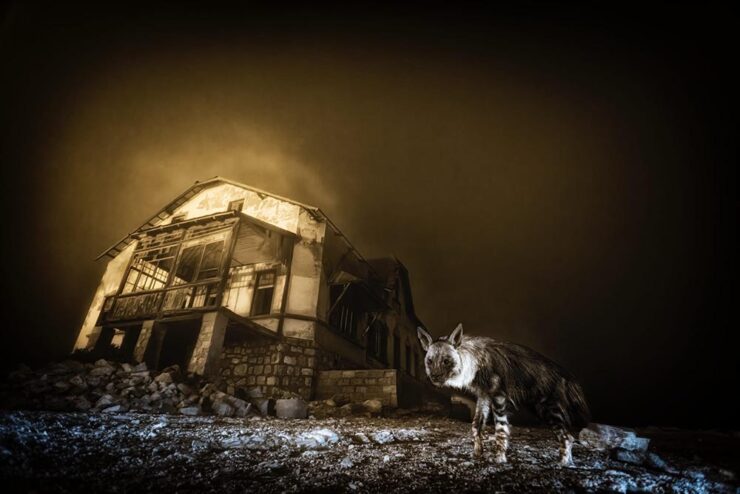
    “Ghost Town Visitor,” Kolmanskop, Namibia. Winner, Urban Wildlife and Wildlife Photographer of the Year 2025. Photograph by Wim van den Heever.

    From PetaPixel‘s coverage of the Wildlife Photographer of the Year 2025 contest: “Capturing the unusual intersection between nature and abandoned urban spaces, Wim’s photograph is a haunting yet captivating image of a brown hyena wandering through the skeletal remains of Kolmanskop, Namibia’s long-deserted diamond mining town. The shot was taken with a camera trap and is the result of a decade-long effort that began when Van den Heever first discovered the animal’s tracks at the site.” [Emphasis mine.] See This is Colossal‘s post, too.

    Comedy and Dogs

    To round out this month’s super-long post — thanks for bearing with me — something from the light-hearted department:

    “It is tough being a duck.” Photograph by John Speirs.
    “Bad Hair Day!” Photograph by Christy Grinton.

    The Nikon Comedy Wildlife Awards, 2025 edition, brings us 40 … um, moments. Awesome. PetaPixel has all the winners.

    “Suppertime,” winner of the Open category. Photograph by Katie Brockman.

    “Good Boys and Girls,” PetaPixel barks, regarding the 2025 Dog Photographer of the Year. (In the name of equal-opportunity pet celebration, I chose one that includes cats.)

    Have a great Halloween. If you’re in the US, be sure to vote, Tuesday, Nov. 4th. And, don’t forget to check back for the special Spine post, Nov. 10th. Thank you!

  • Beautifully Briefed, 25.7: Hot (and Cold)

    Beautifully Briefed, 25.7: Hot (and Cold)

    Take a break from the summer heat with a Mac delight, two interesting typefaces, a discussion of Bentley’s new concept — and updated flying “B,” with a quick mention of the other double-R — and, of course, some great photography. Better still, we close out with a guaranteed smile.

    ’Cause we need more smiles these days.

    July’s Spine Post

    July’s University Press Coverage has already been posted. My personal favorite of the bunch:

    Yale University Press. Cover design by Jonathan Pelham; art direction by Rachael Lonsdale; image is an adaptation of Jacques-Louis David’s Napoleon Crossing the Alps.

    Darn near perfect. Hat tip to Jonathan Pelham.

    Frame of Preference

    While we’re on the subject of darn near perfect, Marcin Wichary — he of the now-sold-out Shift Happens fame, not to mention The Hardest Working Font in Manhattan — has gifted the world with another absolute gem:

    Frame of Preference (Screenshot)

    If you’re a Mac geek, whether a software history buff, or a just grizzled veteran, set aside a few minutes to take this trip down memory lane. There are 150 tasks to complete (!), five extra Easter eggs, great Mac hardware and software, and some of the best web programming extant. Enjoy!

    ATC Identity Program Upgraded

    The Appalachian Trail Conservancy celebrates its hundredth anniversary this year, and took advantage of the occasion to update its logo and identity system for the next hundred years.

    Previous logo (left) and new (right).

    The logo is a combination of a mountain peak, the AT symbol, a trail shovel, leaves (“growth and diversity”), and a holding shape (“protected ecosystem”); while overcomplicated in explanation, in practice it’s warm and friendly at first glance yet has depth for folks who know the Trail.

    The blur and grain, highlighted against the beautiful scenery the AT is known for.
    The new logo against one of grain/blur backgrounds.

    The supporting system works well, too, but I’ll leave that to Amy Borg, whose extensive post on the work is excellent. (Via BrandNew.)

    Indeed. Donate, too, if you can.

    Special Bonus #1: A new Goodreads logo:

    I’ll have to guess as to whether it’s actually “good for BookTok.”
    July’s Font Finds
    Karel, by Typonym

    “Inspired by glyphs on a mid-century Prague plaque, Karel synthesises historical discovery with contemporary invention. Developed for brand messaging and retail identity, it includes alternate figures to vary the level of stylisation,” CreativeBoom writes.

    Details on some of the glyph choices.
    Different versions are available, allowing you to match style with project.

    “A constructivist condensed sans, [that,] in every case stands apart from the multitude of neo-grotesque alternatives,” Typonym writes. (Great company name, by the way.)

    Penguin Inclusive Sans, with Olivia King

    We’ve covered Inclusive Sans before, but to recap, it’s awesome, it’s free, it’s open-source, and as of February, it’s available at Google Fonts for anyone to use. So, guess who has adapted it into something new? (Okay, header spoiler, but still.) No one less than a publishing heavyweight: “A bespoke typeface for Penguin Books, uniting brand heritage, accessibility, and contemporary design to create a versatile typeface for its global publishing house,” creative director Olivia King writes.

    Some historical images, worth including just for the penguin reading in the chair — feet up, natch.

    For 90 years, Penguin has been committed to making books for everyone. Its iconic sixpenny paperbacks revolutionised access to stories and knowledge, making reading more inclusive and affordable. Staying true to this spirit of inclusion, Penguin commissioned a custom version of Inclusive Sans — an accessible typeface — to serve as its primary brand font across its global publishing house.

    — Olivia King, Creative Director
    Another item included “just ’cause” — mostly for the science fiction illustration.
    Included in the character set are glyphs for the Penguin.

    “We transitioned Inclusive Sans from a Grotesque to a Humanist foundation, adding playful flicks and flourishes to create a sense of movement and approachability[;] whether used in a refined, understated way or in strong, confident applications, the typeface offers flexibility and distinctiveness.” Marketing speak, sure, but speaking to the applications rather than past them.

    Penguin’s footprints as arrows: says something positive, I think.

    The entire page is great: well put-together, well illustrated, and approachable. And wander around the site while you’re there — more than “O.K.,” it’s example after example of work the rest of us aspire to. (Via BrandNew.)

    July’s Graphic Design Two-Fer
    The World Illustration Awards 2025 Shortlist
    From the book covers category, Ripples on the Lake by Becca Thorne.

    “The Association of Illustrators has unveiled those in the running for this year’s World Illustration Awards, featuring 200 standout projects from over 4,700 entries worldwide. From editorial brilliance to site-specific design, it’s a showcase of illustration at its most imaginative,” CreativeBoom writes. It’s books and editorial to animation and product design — a cornucopia of illustrative goodness. Check it out.

    Designer as Influencer
    More than slightly NSFW — while actually about work. Read wherever you’re comfortable.

    “As social platforms reward visibility, creatives are increasingly expected to make their practice public. Designers are no longer just making work; they are the work. But what started as promotion now risks swallowing design itself,” It’s Nice That writes.

    Yet another reason to avoid social media … says the old guy who reads web pages published by actual individuals (and sticks to blogging). Still, very much worth a read.

    Special Bonus Two-Fer. #2: From PetaPixel, DuckDuckGo, my search engine of choice, can now filter out AI images from search results. (It’s a simple toggle.) Nice.

    #3: Not so nice is WeTransfer’s predicted face-plant, also via PetaPixel.

    Bentley EXP15 Concept: Buckle Up

    Let’s just get this out of the way: the brutalist automobile is officially a trend.

    The new EXP15 with a 1930 Speed Six.

    Yes, you’ve seen that shape before — and that time, I asked y’all to hang on see what happens. This time, I’m less confident it will turn out well:

    The EXP15, top, with the Jaguar Type 00, bottom.

    The Jaguar is both more compelling and fresh — it’s somehow more, yet with less detail. Interestingly, Jag is trying to reposition itself in the Bentley space (including comparative pricing), preferring to move upmarket rather than compete with the likes of BMW or Mercedes.

    It’d be quite the coup for Jaguar to leap in (sorry) and take charge.

    Update, 31 July (hours after posting, in fact): Jaguar Land Rover’s CEO has unexpectedly announced that it’s time to step aside. It’s apparently not about expectations, but….

    Enough about Jaguar. Some more photographs/renders of the Bentley:

    Arguably the best angle, somewhat hiding the EXP15’s SUV-esque size.
    The interior is better than the exterior, with some Bentley traditions intact. (Yes, the concept is a three-seater: the passenger seat was eliminated in favor of the pampered purebred.)
    The dash is all screens, yes, but not necessarily obviously so — something likely to age better than the iPad-on-dash approach.

    Lastly, from the rear:

    Wait. I’ve seen that look somewhere else.
    Oh, yeah, the Volvo ES90. (Itself riding at SUV height.)

    I apologize for not being more positive on this one; I’ve been down on the Volkswagen Group in general for a while, and it makes me sad that, with their flagship brand, nothing in their new concept suggests they’re trying to reverse the trend.

    Coverage: “This is What the Future of Bentley Will Look Like,” from Motor1; “The Bentley EXP 15 brings the bling and delves into tomorrow’s luxury automotive experience,” from Wallpaper*; and “Bentley Is Showing Jaguar How To Take A Luxury Brand Into The Future With The New EXP 15 (IPSO Fatso),” from The Autopian. (Apologies also for the three differing headline capitalization styles — blame the sources.)

    Also worth reading: The Autopian questions whether the new “Autobrutalist movement” — where I got the term — can be stopped; and Motor1 has not one but two items asking readers to give Jaguar a chance. (Probably unrelated.)

    But wait: there’s another reason I’m down on Bentley right now.

    The New Bentley Logo: Style over Substance
    The five versions of the “winged B” logo, in order: 2025, 2002, 1996, 1931, and 1919.
    BMW called light “the new chrome.” Bentley absolutely gagged on it. At least the infamous Flying B is still there — hood ornaments are few-and-far-between these days.

    When you’re Bentley, you shouldn’t be chasing trends, you should be leading them. Style over substance is nothing less than a mistake.

    Also, because everyone else has one:

    The flat version.

    This new version was done in-house, the wrong choice on every level; this isn’t a time to save money. Another sad moment: the storied history of a brand like Bentley, running on the equivalent of a flat tire. (Perhaps even the rim. Trailing sparks.)

    Dezeen was mostly positive, BrandNew mostly negative. (“[E]verything here feels cheap and overwrought.” Subscription, alas.) The Autopian goes for balance. You can tell where I land.

    Special Bonus #4: Range Rover’s new logo, best described as “not trying very hard” or even perhaps “goofy as hell.”

    Posted without comment.

    Special Bonus #5: In case you’ve never seen it, Paul Rand’s 1966 proposal for a redesign of the now-iconic Ford logo:

    The Autopian has a nice piece on this.
    July’s Photography Faves
    Astronomy Photographer of the Year Shortlist

    “Awe-inspiring scenes of the Milky Way, dancing aurorae, and serene galaxies all feature on the shortlist for this year’s ZWO Astronomy Photographer of the Year,” PetaPixel writes. Indeed:

    “Blood Moon Rising Behind the City Skyscrapers,” Shanghai. Photograph by Tianyao Yang.

    The competition is run by Royal Observatory Greenwich, supported by ZWO and in association with BBC Sky at Night Magazine.

    “The Last Mineral Supermoon of 2024,” Delhi. Photograph by Karthik Easvur.

    See the other 28 on the shortlist here. The winners will be announced in September, so stay tuned.

    Abstract Fireworks

    Every year, photographers across the world flock to fireworks displays, something that’s never interested me — until now:

    Photograph by Bryan Szucs.

    PetaPixel takes a moment to self-congratulate here, and I think they’ve earned it — although it’s good to note that the original post cites This is Colossal. (And that PetaPixel did a poor job with the cite in that original story, using only Colossal’s photography tag rather than an easily-found, specific link. Shame on them.)

    Anyway, photographer Bryan Szucs took the defocusing idea and absolutely ran with it:

    Photograph by Bryan Szucs.

    Great stuff. See more on his website SmugMug.

    Special Bonus #6: Apple filed a fascinating image sensor technology patent last month, which describes a stacked image sensor with vast dynamic range and very low noise. PetaPixel has the story.

    Unbuilt Frank Lloyd Wright

    Okay, officially these are renders, not photographs. Still:

    Trinity Chapel. Image by David Romero.

    Hooked on the Past emerged from the intersection of two personal passions: the history of architecture and the fascinating world of computer-generated imagery,” Romero tells This is Colossal.

    Gordon Strong Automobile Objective. Image by David Romero.

    Wright was ahead of his time in that he pushed material science to make a concept, shape, or cantilever work (often demonstrated in the maintenance and repair bills); his unbuilt projects demonstrate what could have been, and there’s nowhere better to imagine those than in generated imagery.

    Hunftingdon Hardford. Image by David Romero.

    See more at this great Colossal post.

    High-Octane Dogs
    Photograph by Caludio Piccoli.

    “Ultimately, it’s not the equipment that creates the magic. It’s the connection with the dog, the timing, the light, and the intention behind every shot. The gear just helps bring that vision to life,” photographer Caludio Piccoli tells PetaPixel.

    Photograph by Caludio Piccoli.

    I could easily repost every photograph from the story; they’re all great. Just go read it instead.

    City Cats of Istanbul

    To close out this month, well, the title says it all:

    Somehow, they completely fit the location:

    Photograph by Marcel Heijnen.

    The author (supposedly the one in the mirror):

    Photograph by Marcel Heijnen.

    See more at This is Colossal or CreativeBoom — and then go enjoy August with a smile on your face.

    Photograph by Marcel Heijnen.
  • Beautifully Briefed 25.6: Spine

    Beautifully Briefed 25.6: Spine

    It’s hard to believe that 2025 is half over — but at the same time, the amount of water under the bridge in the first half of this year is quite astonishing. For those of us in the United States (indeed, worldwide), this year seems to rival the pandemic for necessary use of the word, “unprecedented.”

    Therefore, your monthly dose of sanity great design and photography awaits. Enjoy.

    University Presses Coverage on Spine

    Spine is a regular stop for book designers everywhere. The site’s interviews with designers, authors and illustrators and especially their monthly book design faves are all items not to be missed; they do, in fact, live up to the tagline, “how books are put together.”

    Unfortunately, their “Uni-Press Round Up” — Uni, of course, being English for University — has been MIA since the columnist left in 2021. So it was a great honor when Spine editor Vyki Hendy accepted my offer to republish my best of the Association of University Presses (AUPresses) Show 2025. (Indeed, Spine republished this year’s Foreword post in its entirety.) But that’s just the beginning: she asked me to take over the column, too.

    I said “yes” without a second thought.

    It’s important to me that I share a word or two about why: simply put, I believe that university presses worldwide deserve celebration. Part of it is the political atmosphere in the US recently, sure, but conservatives have been targeting higher education for a minute now. (See New College of Florida, “where education goes to die.”)

    It’s more that I feel that university presses are the unsung hero of the publishing world. Titles are often complicated and difficult to visualize, and limited budgets often make it difficult to attract talent for great book design. An opportunity to highlight the best is not to be ignored.

    Please head on over to Spine to enjoy the books I gathered for the first post, covering titles published in May and June of this year. But I’d like to call out a couple of favorites here:

    University of Texas Press. Cover design by Lauren Michelle Smith, art director Derek George. Cover image, “Hybrid Paper Gods & Queens,” by Julius Poncelet Manapul.

    Extraordinary artwork, handled extremely well. Also:

    Yale University Press. Cover design and illustration by Sarah Schulte, art director, Dustin Kilgore.

    A difficulty subject — and book design brief, surely — treated with classic style and an illustration showing an uncommon depth of meaning.

    It’ll be an incredible pleasure to keep a closer eye on the university press publications with monthly round-ups of the best new work. I hope you’ll read the column regularly.

    Special mention: Macon’s Mercer University Press:

    It’s fulfilling to become more familiar with a great resource right here in town.

    University Center stairs (2021), Mercer University campus, Macon, Georgia.

    I’ve wandered around Mercer with a camera twice, and have just found an excuse to do it again. Stay tuned.

    The Creative Independent: “On Developing a Solid Foundation,” with Creative Director Arsh Raziuddin

    Book designer extraordinaire Arsh Raziuddin has been featured here before — this year’s Favorite Book Covers post, for instance — but it turns out she wears many hats indeed, as this interview at The Creative Independent proves.

    An insightful highlight:

    Book covers taught me how to pay attention to detail both in terms of the story and the design. What’s different between magazine work and book design is that with a book, you’re often condensing a 300-page story into a single cover; whereas editorial work might involve an 800- or 1,000-word essay that you need to visualize. It’s so difficult to capture the essence of an entire novel in one image — something really has to stand out. […] It feels a bit daunting to fit an entire novel in a 6×9-inch rectangle.

    — Arsh Raziuddin, wearing her book design hat

    Her cover design for Salman Rushdie’s Knife is discussed, an extraordinarily good example of, as she puts it, “not overcomplicating”:

    Book design by Arsh Raziuddin.

    It’s a treat to see some rough drafts:

    Book design by Arsh Raziuddin.

    “We’re [that is, book designers] all trying to make something sexy or loud without a solid foundation,” she says. “We all need to collectively focus on craft.” Perhaps like this fantastic book cover, this time for a Pulitzer prize-winning poet:

    Book design by Arsh Raziuddin.

    The entire interview is a gold mine. Read and enjoy.

    More Great Design Items, Briefly

    “The 2025 PRINT Awards Honorees in Advertising & Editorial Cut Through the Noise,” the headline reads. Yes.

    It’s Nice That asks, “Are social media pile-ons stifling the creative industry?” Yes, I’d argue, and for more than just rebranding exercises. Read the article to see if you agree.

    “Jon McNaught has created more than forty covers for the LRB as well as artwork for books, diaries, posters and campaigns.” Follow his process.

    “Chris Ware, known for his New Yorker magazine covers, is hailed as a master of the comic art form.” Follow his process.

    “Designers needed a book about their history that didn’t exist… so I wrote it myself,” Tom May says at CreativeBoom.

    Archinect covers the best of the spring lecture series posters. (Previously.) Building an intersection of design and architecture: when getting a lecture is a good thing.

    AI: Desctructive to Books — Literally
    Photograph: Alexander Spatari via Google Images.

    Anthropic destroyed millions of print books to build its AI models, Ars Technica reports.

    On Monday, court documents revealed that AI company Anthropic spent millions of dollars physically scanning print books to build Claude, an AI assistant similar to ChatGPT. In the process, the company cut millions of print books from their bindings, scanned them into digital files, and threw away the originals solely for the purpose of training AI[.]

    — Benj Edwards, Ars Technica

    “Buying used physical books sidestepped licensing entirely while providing the high-quality, professionally edited text that AI models need, and destructive scanning was simply the fastest way to digitize millions of volumes,” they continue.

    Sigh.

    Special Bonus #1: While the original reference has — annoyingly — disappeared, this Pixel Envy piece on AI Calvin and Hobbes still stands. Another example of link gold, including:

    “The glove,” he said.

    Special Bonus #2: Quentin Blake illustrates Animal Farm.

    Not sure what made me think to include this.
    Tech Corner: The Mac’s Finder Icon

    Stephen Hackett, 512 Pixels: “Something jumped out at me in the macOS Tahoe segment of the WWDC keynote today: the Finder icon is reversed.”

    Existing MacOS 15 (left), future MacOS 16/26 (right). Note also the change in title location.

    “I know I am going to sound old and fussy, but Apple needs to roll this back,” he writes — but then, being who he is, gives us an illustrated history of the Finder icon. Natch.

    Thankfully, Apple listened. Sort of.

    The icon as of MacOS 16/26 Beta 2 (right). And the title, uh….

    Calling it only “slightly better” — something I agree with — John Gruber’s Daring Fireball makes a strong case for something that sticks closer to tradition, with this specific example:

    “Glasses it up but keeps it true to itself.” — Gruber. (Icon by Michael Flarup.)

    I have a feeling that Apple is going to keep the outline; generally, when it does these redesigns, the rules tend to overrule, if that makes sense.

    In other words: Liquid Glass > tradition.

    Special Bonus #3: In a word, “glasslighting.” (Also via DF.)

    Photographic Goodness
    Theibault Trebles

    This is Colossal: “Architectural Symmetry in Europe’s Subways,” Say no more.

    Richard Wagner station, Berlin. Photograph by Theibault Drutel.

    Brilliant on many levels, but it’s the dual trains-in-motion that takes it over the top. Another:

    Solna Centrum station, Stockholm. Photograph by Theibault Drutel.

    “Each city approaches underground architecture differently, mixing brutalism, futurism, minimalism, or sometimes unexpected touches of ornamentation,” the photographer says. Read the article or visit Theibault’s website.

    Nat Geo Traveler Photo Contest 2025

    PetaPixel covers the National Geographic Traveler (UK) contest, honoring the best travel images by photographers in the United Kingdom and Ireland. My favorite:

    “Tree Tunnel,” Singapore. Photograph by Scott Antcliffe.

    “I found this spot and was struck by the sheer density of the foliage — vines had completely enveloped the supporting walls, but the view of the Yellow Rain Tree at the top was simply stunning and utterly mesmerizing,” the photographer says.

    See more. (NatGeo’s website has an article, but it requires you to enter your email to read. Boo.)

    National Park Foundation Celebrates America the Beautiful

    The National Park Foundation has announced the winners of its 2024 Share the Experience photo contest — the official competition of America’s national parks, for amateurs only. Still:

    History & Heritage category winner, Cape Cod National Seashore. Photograph by Matt Ley.

    See more at PetaPixel.

    Toy Miniatures, Cinematic Worlds
    Batman on a snowboard. Photograph by Alex Gusev.

    Doesn’t really require too much explanation: brilliant stuff. It may be little more than a fluff piece, but the photography makes it worth visiting this PetaPixel post. (Reminds me, on some level, of the tongue-in-cheek mentality of the ’60s TV series.)

    Full Circle: 2.1 Trillion

    Humanity is overflowing with imagery, according to research from Photutorial:

    162 billion photos are taken every month.
    That’s 5.3 billion photos per day.
    Or 221 million photos per hour.
    3.7 million photos per minute.
    61,400 photos per second.

    94 percent of those are taken on smartphones — itself a shocking number — but there’s an important statistic in the data:

    Source: Photutorial

    It doesn’t take much to wonder why the US takes, on average, four times the number of photographs Europeans do.

    Special Bonus #4: An Adobe two-fer: AI-powered culling tools for Lightroom — see last month’s Beautifully Briefed regarding AI and Adobe’s recent price increases — and, because I refuse to leave y’all on a down note, info regarding Project Indigo, Adobe’s promising new computational camera app.

  • Beautifully Briefed 25.5: Cool

    Beautifully Briefed 25.5: Cool

    It’s been a lovely, cool spring here in Middle Georgia; it seems that in the 2020s, springtime has had more rain and less of the dive from winter into hot that’s featured in years past. (Not to fear: we’ll be into summer soon enough.) Open window weather, we call it, to be enjoyed while we can.

    That said, there’s been plenty of goodness gathering for this month’s posting: more movie/books, more album art, more typefaces, and more great photography. There’s also an excellent observation regarding design trends and a bit on Adobe.

    Also posted this month: The annual University Presses Show roundup, now also available on SPINE, and an updated photography gallery from Forsyth, Georgia.

    But First: A Bit o’ Nostalgia
    Foreword, May 31st, 2019.

    This is the 200th post on the new Foreword, which I restarted six years ago today. It’s taken a bit to get back into regular blogging, but I’ve once again found my sea legs, really enjoy it and hope to continue for a long while yet.

    Thanks very much for stopping by — genuinely appreciated.

    “Good Movies as Old Books,” Again

    I’ve featured the work of designer Matt Stevens before, but there’s an update to his fantastic personal project to make vintage paperback covers from movies.

    Perfect — and still available as prints. They’re also now available in new book, which combines the best of the first two books (published via Kickstarter) and adds a few more … or as a set of 100 postcards, perfect for framing and scattering about on walls near you.

    Better still, Stevens’ work has led to actual book cover design jobs, and his work for North Carolina tourism is awesome. Read this Fast Company post for the full story.

    Special Bonus #1: Heading to Europe? It’s Nice That has “Where to book hunt in Amsterdam, a playground for contemporary book design,” listing “why the city is so known for its publishing prowess, and shares a comprehensive list of places for designers, printers, publishers, and enthusiasts alike, to check out.”

    The History of Album Art

    Album art didn’t always exist, Matt Ström-Awn reminds us. Utilitarian at first, it evolved.

    Alex Steinweiss’ cover art for Columbia’s recording of Bartók’s Concerto No. 3.

    The invention of album art can get lost in the story of technological mastery. But among all the factors that contributed to the rise of recorded music, it stands as one of the few that was wholly driven by creators themselves. Album art — first as marketing material, then as pure creative expression — turned an audio-only medium into a multi-sensory experience.

    This is the story of the people who made music visible.

    Matt Ström-Awn
    Reid Miles’ cover for Art Blakey’s The Freedom Rider

    Well-written and informative. If, like me, you’re old enough to remember music on vinyl — or you’re one of the new generation of devotees — take a minute this weekend to appreciate the particular goodness that is album art.

    There May be Typefaces Here

    CreativeBoom continues its monthly roundup of new fonts, and I wanted to highlight a couple:

    The Sita Collection, from Order

    I’m a sucker for fonts that have both serif and sans together in the same family — they’re incredibly flexible and perfectly complimentary in design projects. “Order Type Foundry’s first superfamily is a thoughtful homage to 19th-century Scottish typographic traditions, reimagined for contemporary design needs,” CreativeBoom writes. See more at Order.

    Nadrey means “My Heart” in Bété, the designer’s mother tongue. Artworks by Ivorian artist Obou Gbais.

    Described by its creator as a “typographical rendition of love,” the beautiful letterforms “draw inspiration from 90s poster fonts, combining narrow-ish, rounded letterforms with a contemporary sensibility. Its gentle curves and subtle serifs create a sophisticated softness while maintaining refined elegance.” Côte d’Ivoire-based type designer O’Plérou does the world a favor, as far as I’m concerned. See more at ALT.

    Sofia Pro by Mostardesign.

    Up there with Futura, from which it’s descended (see what I did there?), Sofia is one of those faces you see everywhere: “a familiar presence in contemporary visual communication, even for those who can’t identify it by name,” CreativeBoom writes. Sofia’s been updated and expanded, now available in a variable format. Spread the Mostard.

    Special Bonus #2: It’s not over the top: “[r]ather than uber-pragmatic, sterile fonts, Ornamental & Title Type (OTT) is dedicated to expressive display typefaces,” It’s Nice That writes in a profile of Eliott Grunewald’s foundry. Check it out.

    “Fun Fatigue”
    Branding agency Collins’ approach for RobinHood, an online investing and stock trading company.

    DesignWeek asks, “Is formality returning in branding?” An article by Mother Design’s Alec Mezzetti covers how we got to casual in the first place — and why we might be turning a corner away from it.

    Casual vs. not-so-much — and, of course, once corporate trends become a “new direction…..”

    “In a landscape of homogenous casualised branding, widespread disillusion with the idealism that birthed it, and a growing sense of insecurity, these old codes hold power,” Mezzetti writes. The RobinHood investing/trading example, shown above, now looks like this:

    RobinHood, as rebranded by Porto Rocha.

    The money quote, if you’ll forgive the expression: “The extreme end of this trend towards symbols of old luxury, hierarchy and tradition has been labelled […] as ‘Boom Boom’ aesthetics, which overtly embrace past eras of excess such as the roaring 1920s or, the boom years of the 1980s.”

    See if you agree. (Via BrandNew.)

    Let’s Talk about Adobe, again

    A two-parter, here. First, let’s start with more from Mother Design:1Oddly, Mother Design’s page on Adobe, mentioned in Google Search results, now nets a 404 error. I wonder what that’s about.

    That’s right, Adobe has a new logo and branding. ’Course, some of us have been using Adobe’s software for a minute — and clearly remember this:

    In any case, Adobe is ignoring the trend mentioned above and heavily embracing the current-thinking, very corporate-casual approach:

    And hyping the value:

    This leads directly to the second part: Adobe is, once again, both flouting its record profits and raising its prices. Why? AI, of course. (We’ll save the potential monopoly position for another discussion.)

    Adobe has rewritten pretty much all of their apps to include AI, making it so that many functions are better; retouching power lines in Lightroom, for example, is now a one-click affair. Others seem to be there because Adobe believes the general public somehow demands it. (The AI “summaries” of the PDFs in Acrobat, for example, are being pushed so hard it’s actually annoying, although to be fair, that’s not unique to Adobe.)

    In retrospect, it’s obvious that the new AI functions have been written in such a way that we’d get used to having them … and then be forced to pay extra to keep them. In other words, you’d think that, as customers of the Adobe ecosystem for decades now, we’d somehow get to the other side of the fishbowl and not be surprised at the wall.

    Adobe has introduced a new “Standard” tier that’s actually slightly less pricy, but with the AI stuff — along with iPad functionality, online access, and other features — turned off. No one who already has a subscription and gotten used to what’s available is going to want that.

    Firefly, shown above, is new, and AI from the ground up, and the generative fill options in Lightroom, Photoshop, and Illustrator, plus the always-useful access to the Adobe Font collection, mean that I’m going to continue to argue that the yearly subscription actually represents a value.

    That said, it’s an increasing cost that has to get passed along. I don’t like it, and I’m going to continue to say — in public, on the record — that Adobe is putting profits before people. But this is 2025, and these days, sport contains blood.

    Read more at Ars Technica, see the handy chart at PetaPixel, or read Adobe’s marketing for the new Creative Suite Pro.

    Special Bonus #3: Apple, the most beloved of all motherships, is also taking fire these days. Longtime fans will know the name John Siracusa — and, thus, know instinctively what this essay represents.

    Update, 9 June, 2025: Nick Heer, Pixel Envy: “It is hard to see how one could be a fan of a multi-trillion-dollar company. I am just a customer, like a billion-plus others.”

    Special Bonus #4: The Onion, May 16. “[Today, we] announced today the launch of its in-house advertising venture, America’s Finest Creative Agency.Chef’s kiss.

    May Photography Round-up

    As has become the norm, let’s end with some awesome photography posted around the ’net in May.

    Just a little bit “off,” in the best way
    Putting the “fun” in funeral services. Photograph by Frank Kunert.

    No, it’s not AI: it’s a fabulous series of miniatures, meticulously constructed and photographed for our viewing pleasure. This is Colossal has more. (The behind-the-scenes photo shows all: lots of work.)

    The German Society of Nature Photographers

    This annual competition is a members-only affair, but in no way, shape, or form is that a compromise:

    1st Place, Mammals: “Chamois.” Photograph by Radomir Jakubowski.
    1st Place, Landscape: “Deforestation.” Photograph by Hanneke Van Camp.

    See many more — including a bird bursting through a waterfall (!) — at PetaPixel or head straight to the competition’s website.

    From Norway to Hong Kong

    “Like a love letter to nature, Arild Heitman weaves images together as letters into words to create a visual narrative,” PetaPixel writes of the Norwegian photographer.

    Photograph by Arild Heitman.

    A style that’s “more fine art than sweeping vistas,” they argue; I agree. Of course, there are some vistas, too, but with an interesting quality:

    Photograph by Arild Heitman.

    Architecture is another where details and point of view matter. French photographer Romain Jacquet-Lagrèze moved to Hong Kong in 2009, partially because of what he describes as “verticality,” something the Chinese city certainly has in abundance.

    “44.” Photograph by Romain Jacquet-Lagrèze.

    “I am especially proud of my latest body of work, Echoing Above. I started it by shooting trees growing wildly on residential buildings in the middle of the city. While looking up to find the trees, I spotted the men building scaffolding. And by looking for the men, I discovered the variety of birds that live in the heights of the city,” PetaPixel quotes.

    “Flock Over Mong Kok.” Photograph by Romain Jacquet-Lagrèze.

    “I find it beautiful to see how the presence of trees, men, and birds are taking turns above our heads, like an echo in a concrete canyon,” he tells This is Colossal. His latest collection has been gathered into a book, available on his website.

    Paris in Color

    Jason Kottke brings us an incredible before-and-after, which I hope he won’t mind my reposting:

    Photograph by Albert Kahn, 1914. (Color in original.)

    “That photo is of the entrance to the Passage du Caire at the corner of Rue d’Alexandrie and Rue Sainte-Foy in the 2nd arrondissement.” he writes. Here’s what it looks like today:

    Google Street View, undated.

    Is it just me, or is the photograph from 1914 infinitely more compelling? Click through for more.

    Looking Up

    In its sixth year, Nature‘s Scientist at Work competition invites readers to submit their best photos that show the “diverse, interesting, challenging, striking, and colorful work that scientists do around the world.”

    Photograph by Aman Chokshi.

    For scale, look closely: there are two people at the bottom of that dish. Awesome.

    “Winter Fairy Tale,” Austria. Photograph by Uros Fink.

    We finish up this month with one of the most beautiful sights in the night sky: the Milky Way. Travel photography blog Capture the Atlas has announced the winners of its annual Milky Way Photographer of the Year competition. (And getting these isn’t easy: the photographer shown above, Uros Fink, hiked through the snow for hours with a 22-kilogram backpack and sled.)

    “It bridges the gap between science and art, giving us an awe-inspiring look at the galaxy that surrounds us — from both Earth and orbit,” Capture the Atlas explains, via PetaPixel. The competition site includes the winning photographs, a bit about each, and camera data. Using the word “awesome” somehow falls a little short here….

    My favorite gets both the sky and, implausibly, my favorite flower — in an amazing location:

    “A Sea of Lupines,” New Zealand. Photograph by Max Inwood.

    Have a great weekend!

  • Beautifully Briefed 25.3: March Madness

    Beautifully Briefed 25.3: March Madness

    A huge stack of items for the March wrap-up, from libraries and type to a bunch of photography items, with a brief stop in the land of Jaguar that is … Paris. (Yes, the world’s gone all wonky. But you knew that already.) However, first, a quick discussion of what we’re not going to usually talk about.

    On Seriousness

    I’m going to keep my coverage of current events to a minimum; this is not the place, and I am not qualified to write about it with any authority (other than as a concerned citizen). But there are some items I think are worth sharing.

    Techdirt, for instance — like Kottke and others — have posted extensively on the political and culture shift in the United States, but in this case, specifically how it intersects with technology.

    TechDirt, March 2025.

    We’ve always covered the intersection of technology, innovation, and policy (27+ years and counting). Sometimes that meant writing about patents or copyright, sometimes about content moderation, sometimes about privacy. […] But there’s more to it than that. […] When you’ve spent years watching how some tech bros break the rules in pursuit of personal and economic power at the expense of safety and user protections, all while wrapping themselves in the flag of “innovation,” you get pretty good at spotting the pattern.

    — Mike Masnick, Techdirt

    “Connecting these dots is basically what we do here at Techdirt,” they argue, and I find it convincing. As some of us struggle with how to source actual news these days, Techdirt has earned a spot in my list of daily reads.

    Of course, it’s not just the United States. Arguably, the United Kingdom led with Brexit:

    “Boris Johnson, Liar.” Image by POW.

    ArchDaily brings us the story of Led by Donkeys, which started out “as a witty response to Brexit” and morphed into a visual tour de force. (Their name is a historical reference to World War I, where German commanders reportedly described British soldiers as “lions led by donkeys,” a critique of incompetent leadership — and not at all a reference to the U.S. Democratic party as it currently, uh, stands.)

    Rupert Murdoch, NYC. Photo by Fionn Guilfoyle.

    Light Matters, a column on light and space, is a regular item at ArchDaily.

    Then there’s AI and its current leap to the fore. While it’s been discussed here before, what hasn’t been is the effect on “the free.” What about the Wikis and free-as-in-beer intellect that isn’t property?

    From Citation Needed:

    But the trouble with trying to continually narrow the definitions of “free” is that it is impossible to write a license that will perfectly prohibit each possibility that makes a person go “wait, no, not like that” while retaining the benefits of free and open access. If that is truly what a creator wants, then they are likely better served by a traditional, all rights reserved model in which any prospective reuser must individually negotiate terms with them; but this undermines the purpose of free, and restricts permitted reuse only to those with the time, means, and bargaining power to negotiate on a case by case basis. […] The true threat from AI models training on open access material is not that more people may access knowledge thanks to new modalities. It’s that those models may stifle Wikipedia and other free knowledge repositories, benefiting from the labor, money, and care that goes into supporting them while also bleeding them dry. It’s that trillion dollar companies become the sole arbiters of access to knowledge after subsuming the painstaking work of those who made knowledge free to all, killing those projects in the process.

    — Molly White, Citation Needed

    The whole essay is excellent and absolutely worth a read. (Via Pixel Envy.)

    Update, 2 April 2025: ArsTechnica reports on a 50% rise in Wikimedia bandwidth usage as LLMs “vacuum up” terabytes of data for AI training purposes. “Wikimedia found that bots account for 65 percent of the most expensive requests to its core infrastructure despite making up just 35 percent of total pageviews.”

    Update, 10 April 2025: Nick Heer:

    Given the sheer volume of stuff scraped by A.I. companies, it is hard to say how much value any single source has in generating material in response to an arbitrary request. Wikimedia might be the exception, however. It is so central and its contents so expansive that it is hard to imagine many of these products would be nearly so successful without it.

    I do not see the names of any of the most well-known A.I. companies among the foundation’s largest donors. Perhaps they are the seven anonymous donors in the $50,000-and-up group. I suggest they, at the very least, give more generously and openly.

    Let’s assume it’s okay to say, “Heer, Heer!”

    Special Bonus #1: David Opdykes vintage postcard paintings, described at This is Colossal as “[o]ccasionally darkly humorous yet steeped in a sense of foreboding.”

    David Opdyke, “Main Stage” (2015-2020), gouache on vintage postcard, 6 x 4 inches.
    On Libraries, Type, and Type Libraries
    Museums and Libraries

    Kottke isn’t just about politics, though; he’s tried to keep up with some of the things necessary in today’s world — the projects that bring light or even delight. So, while we’re on the subject of Wikipedia, let’s highlight his link to the Museum of All Things:

    A “nearly-infinite virtual museum generated from Wikipedia,” this program is made possible by the images associated with an article. Better still, there are exits from the galleries that follow the links in those articles, leading to … well, lots to see.

    Meanwhile, Cultured magazine brings us a great article on four great libraries in the U.S. — I mean, a slide!? Awesome:

    The North Boulder library. Photograph by Bruce Damonte.

    Visit Seattle, Scottsdale (AZ), Eastham (MA), and, as shown above, North Boulder, Colorado, and read a brief item with the architect that designed them.

    Print magazine brings us an article the New York Public Library’s celebration of 100 years of the New Yorker magazine — another institution continuing to do great work in the face of today’s realities:

    Photograph by Amelia Nash.

    The exhibition, which “charts the magazine’s evolution from the roaring twenties to the digital age, drawing from NYPL’s vast archives and supplemented by treasures from The New Yorker itself,” is up through February 21st, 2026. Or, if you’re not able to make it to the Big Apple, check out the film on Vimeo.

    Type and Typography

    Feckled offers “150+ hand-orinted letterpress fonts for digital download,” This is Colossal highlights, mentioning creative director Jason Pattinson’s new venture. It’s not perfect — those letterpress fonts are JPG files, not installable typefaces — but nonetheless, worth a look if you need something unique for a Photoshop project:

    Some of the typefaces offered at Feckled.

    CreativeBoom brings us their monthly feature on type, with two I’d like to highlight. Naancy, new from French foundry 205tf, is Art Nouveau in all the right ways:

    “Inspired by the French city of Nancy and its school of art and design,” 205tf says.

    But it’s Aktinson Hyperlegible Next that gets the prize from me:

    “The Atkinson Hyperlegible font uses special design principles to differentiate characters and make each one unique,” helping low-vision readers everywhere.

    First introduced in 2019, it’s now been expanded to different weights and styles, with new glyphs (individual characters, that is) for different languages and situations. As before, it’s free from the Braille Institute. Fantastic.

    On A Wild Jaguar

    Back in December, Jaguar made a huge splash — not necessarily the graceful skipping stone we think of from the glory days, but lots of waves nonetheless — with its Type 00 concept, highlighted here on Foreword (along with literally everywhere else).

    The satin blue finish is only one of the striking things in this photograph.

    On March 10th, it was, um, spotted in the wild, in what was certainly a choreographed event — given the huge influencer paparazzi presence — but not gained a ton of traction (sorry) in the mainstream press. (Motor1 caught a whiff, and decided it “doesn’t even look real….”)

    However, I mentioned in December that it’s too early to call a strike — a position The Autopian‘s Jason Torchinsky almost agrees with: “Holy crap, I think I like it.” Shown in Paris, and described as “gliding around and looking like it somehow doesn’t exactly fully exist as part of our reality,” it might be starting to bring people around.

    There’s no rear window, but at least now we know how the trunk is accessed on the car.

    The sedan this concept previews will debut this year. Let’s see how it shakes out.

    On Wild Photography
    Leica Turns 100
    The Leica I was unveiled 100 years ago: March 1, 1925. (Photo by Kameraprojekt Graz 2015. CC-BY-SA 4.0.)

    “The Leica I, the first mass-produced 35mm Leica camera, is widely celebrated for its influence on photography,” PetaPixel notes with dry understatement. (Thankfully, they use the word “revolutionary” farther down in the article.)

    “I hereby decide: we will take the risk,” Ernst Leitz II said in 1925 when he decided to mass-produce the famed Oskar Barnack’s Ur-Leica invention, and modern photography was born. From the front in World War II to the weblog you’re reading and literally everything in between, Leica has led in ways large and small.

    Their M system is a direct descendant of that Leica I and still produced today, to great acclaim; the Q all-in-one cameras are huge hits despite the luxury price tags; and even their missteps seem to find their place, as MacFolios highlights in “Two Leica digital cameras with legacies that defied initial criticism.

    Some of Leica’s APS-C camera systems: from left, the T, the CL, and the X-E.

    One of those, the CL, is my camera of choice — and despite being six years old and discontinued, is still getting software updates and a growing selection of lenses thanks to the L-Mount lens system. (Another is the T/TL mentioned last month when Sigma introduced the BF.) May it live for a good long while yet, as Leicas tend to do.

    Special Bonus #2: PetaPixel bring us another interview with Sigma’s personable CEO, Kazuto Yamaki, on why he is “so passionate and driven for the success of his family business.”

    Nature and Wildlife Photography Awards

    Highlighting the “endless wonders of our planet,” This is Colossal brings us the fantastic results of the 2025 World Nature Photography Awards, a contest whose photography can “influence people to see the world from a different perspective and change their own habits for the good of the planet.”

    Fireworks, Brazil. Photograph by Marcio Esteves Cabral.
    Feathers, Sri Lanka. Photograph by Pandula Bandara.
    Devghali Beach, India. Photograph by Mantanu Majumder.

    Of course, it’s impossible to mention today’s wildlife without mentioning the “vulnerability of the earth’s inhabitants and juxtapositions between nature and the human-built environment,” as Colossal notes.

    Ankle Bracelets, United States. Photograph by Charlotte Keast.

    Meanwhile, there’s also the (unrelated) 2024 Nature Photography Awards, as highlighted by PetaPixel:

    Polar Bear Amid Fireweed Blooms, unlisted Arctic location. Photograph by Christopher Paetkau.

    There are also the 2025 British Wildlife Photography Awards, as noted by This is Colossal:

    Street Cleaners, London. Photograph by Ben Lucas.

    We do, in fact, run into too many of these contests; while I can’t argue with that, I can suggest that nature and wildlife are worthy subjects. Even in fun:

    Declaration of Love. Photograph by Roland Kranitz.

    Crooning, almost — Squirrel Sinatra. See more of the Nikon Comedy Wildlife Awards at PetaPixel.

    2025 Sony Photography Awards

    Another contest, yes, but one that’s gained a stature — almost a half a million entries this year — and one that covers a huge variety of subjects:

    The Colours of the Andes, Peru. Photograph by Kunal Gupta.

    Naturally, I gravitate towards the architecture category:

    Monochrome Majesty: Cuatro Torres Business Area, Spain. Photograph by Robert Fülöp.
    The Guard, Netherlands. Photograph by Max van Son.
    Centre of the Cosmos, China. Photograph by Xuecheng Liu.

    Read More at This is Colossal and Archinect or visit the World Photography Organisation.

    The Darkest Skies

    PetaPixel also brings us photography from Mihail Minkov, who spent nearly six months traveling to “dark sky” locations — those not suffering from the ever-increasing effects of artificial light — and brought home some spectacular results:

    A Moai on Râpă Nui, or Easter Island, in the South Pacific. Photograph by Mihail Minkov.

    Special Bonus #3: Lego F1 action photography!

    Great stuff from Hungarian photographer Benedek Lampert. (See his Star Wars Lego photographs, too.)

  • Beautifully Briefed 24.3: Bloomin’ Breadth

    Beautifully Briefed 24.3: Bloomin’ Breadth

    The end of March here in Middle Georgia means flowers aplenty, and usually with that, some photography — but I’ve not yet had a chance. (Stay tuned.) I have, however, been saving up links o’ interest: fonts, books, photography, and new(ish) car logos. Let’s go!

    Kottke Meets 2024

    Starting with one of the very few places that is still around from Foreword’s old days, the always-interesting Jason Kottke:

    2024 marks Kottke.org’s 26th year on the ’net.

    Great new looks for great content, with better Quick Links — the previews are ace — and incredibly-appreciated gift links to places like The New York Times and The Atlantic. If you haven’t been in a while, click and enjoy.

    Fab Spring Type

    With “a plethora of captivating new typefaces,” CreativeBoom celebrates spring with 11 new faces to tempt, inspire, and bring joy:

    Arillatype.Studio brings us a thousand glyphs of greatness.

    Zanco, with its bell-bottom style; Seabirds, inspired by 1930s book covers; Module, a “fluke side hustle;” and Graffeur, improvised from gaffer tape and glimpsed in this post’s header image, are all great. My far-and-away favorite, though, is At Briega, “inspired by the concept of hybridisation” and shown above.

    See ’em all here.

    Literary Three-Fer
    M.C. Escher’s Lesser-Known Works
    “The Drowned Cathedral,” a 1929 woodcut.

    “Unique perspective” never does justice to someone whose name defines the term. See some never-before-seen images alongside old favorites in a new Escher book highlighted at Hyperallergic.

    Multidimensional Libri

    “Experimental books are flourishing, [a]nd the evidence is seen” in this Daily Heller from PRINT: a traveling exhibition on three-dimensional books, all published titles.

    Oh, those Italians. Read on.

    Book Design Snobbery
    Hoover vs. Atwood — no joke.

    “Don’t get held back from the simple pleasures of reading,” argues Natalie Fear at CreativeBloq, “not everything needs to be minimalist.” Justification for commercialism or a common-sense explanation for the bookshelves’ current look? You decide.

    Photography Three-Fer
    Winners of Monochromatic Minimalism
    “Black Pearl” by Sascha Kohne. An honorable mention for the magazine, but a winner for me.

    Some incredibly good stuff here — but perhaps more importantly, did you know of Black & White Minimalism Magazine? There’s no end to today’s continued diversification, methinks.

    “Traveling through Costa da Morte, Galicia. 600m above sea level where the mountains separate the Cantabria sea from the Atlantic Ocean,” explains third-place winner Alexandre Caetano.
    Aging Facades of France

    “Shuttered blinds, peeling paint, and aging doors don’t usually indicate an invitation, but for French photographer Thibaut Derien, the fading facades of long-closed shops are well worth a stop,” This is Colossal says.

    Sony Photography Awards: Architecture
    The Ciudad de las Artes y las Ciencias (City of Arts and Sciences) in Valencia, Spain: “Hemispheric,” by Eng Tong Tan, Malaysia.

    ArchDaily‘s coverage of the annual Sony awards shortlist announcement was an insta-click.

    New Bull: Now Flat. (And a BMW.)

    Lamborghini practically defines flamboyant. So it’s worth a link when their logo gets less interesting:

    Old logo, left, new, right.

    Late at following the industry trend of flat-is-better, because, well, Volkswagen. (Okay, I undersell. Perhaps.) Read the lack of news at Motor11Motor1 also has a decent roundup of new car logos, from 2016-present, which underscores the “flatness” trend. or The Drive, where they manage to convey the brand’s use of the phrase “digital touchpoints.”

    I don’t know whether this will make any more sense in a few or even many months — which is relevant because of BMW. Four years ago, one of the industry’s design leaders expressed strong this new style, and I didn’t get it. But it’s worn better than most, and superlatively on occasion — check out the logo’s use on the Vision Neue Klasse X:

    Rather than a standalone, plastic part sitting on the paint, it’s etched into the finish. Man, I hope that makes it into production.

    Neue Klasse: do like. Bull? No so much.

    Update, 2 April: BrandNew, itself sporting a new look, has weighed in on the new Lambo style, calling it “not good.” (FYI, BrandNew is a subscription, quite possibly the best $20/year someone interested in design can spend.)

    • 1
      Motor1 also has a decent roundup of new car logos, from 2016-present, which underscores the “flatness” trend.