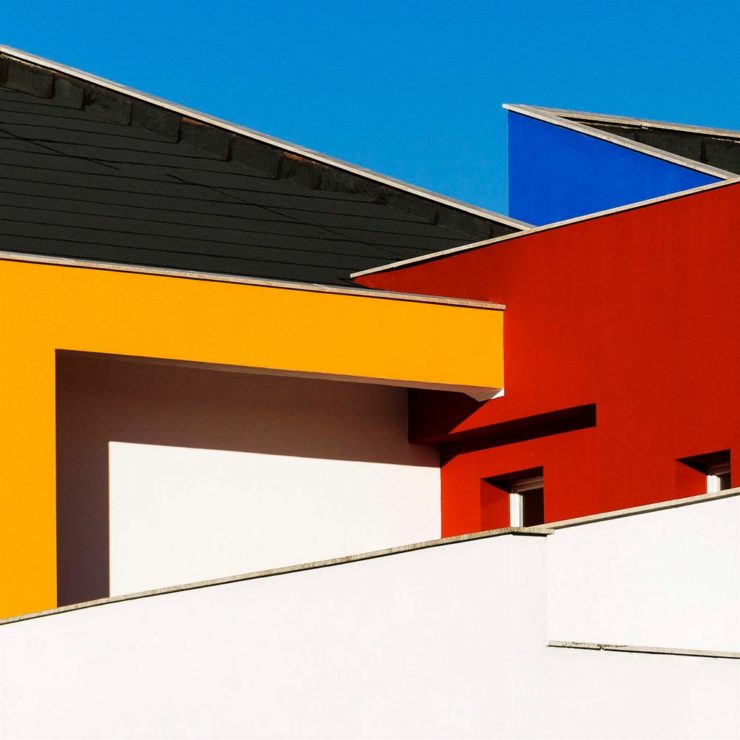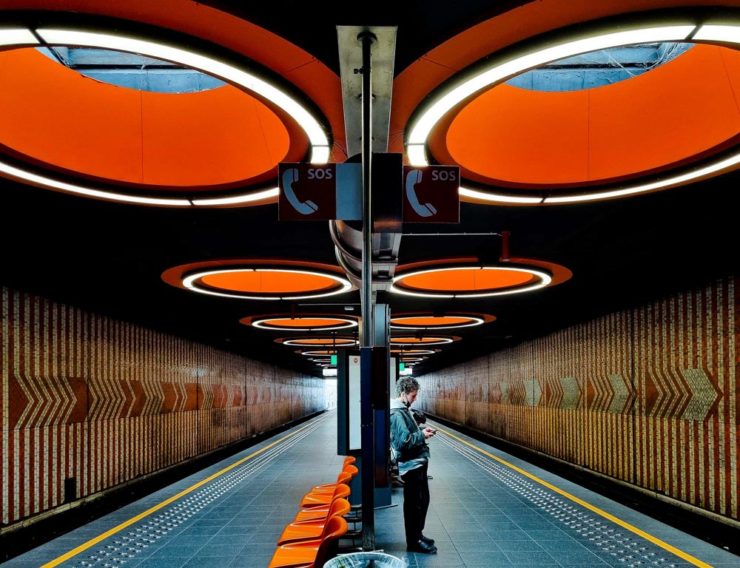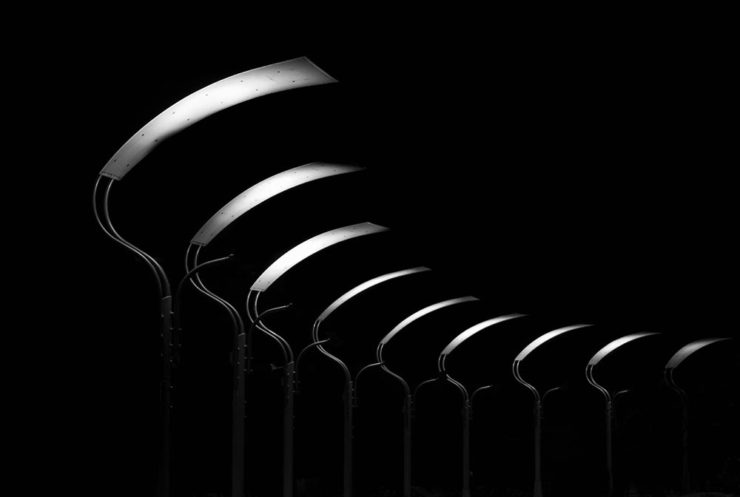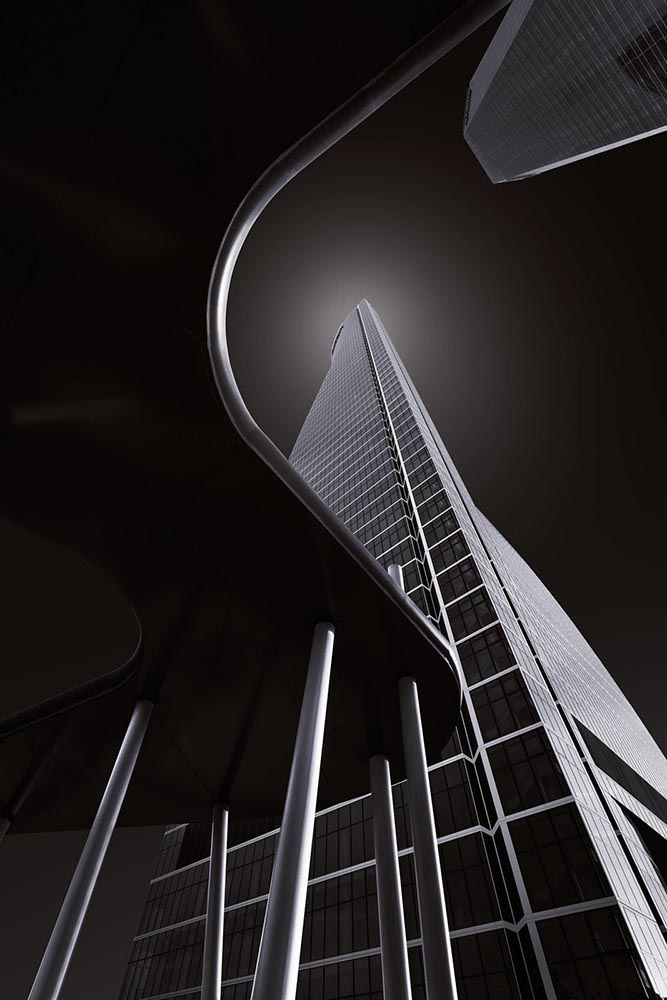
Tag: architecture

  • Beautifully Briefed 26.1: Finding What’s Needed

    Beautifully Briefed 26.1: Finding What’s Needed

    We’re setting into our third snow of the season here in Georgia, an extraordinary event even in a world where “normal” doesn’t seem to happen all that often any more. Thankfully, there are still gems, waiting to be discovered. Hopefully you’ll find several in the links below.

    Note: The site was offline for several hours mid-month due entirely to my mismanaging an update; the backups took a minute and didn’t restore the plug-ins, so it wound up being rough around the edges for a couple of days. If you visited — or tried to — during that time, apologies.

    FAVORITE BOOK COVERS OF 2025, AND MORE

    If you’ve not seen, set aside a few minutes to enjoy:

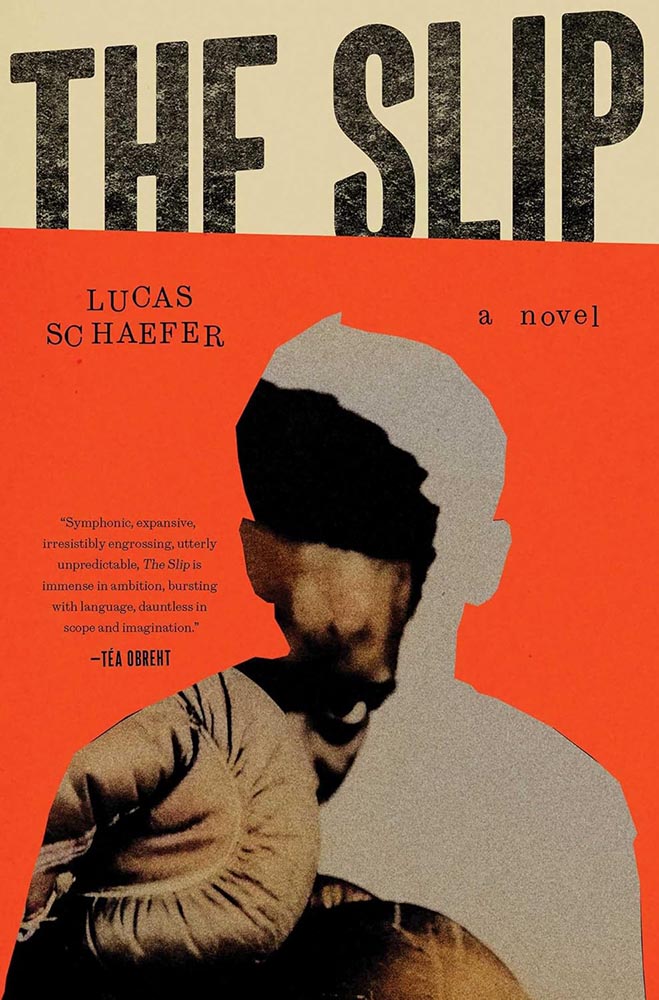
    This image has an empty alt attribute; its file name is 25fave_slip-the_jack-smyth.jpg
    Cover design by Jack Smyth.

    More than a hundred examples of book design greatness, with commentary, for the fifth year in a row. Bring a beverage.

    But wait, there’s more:

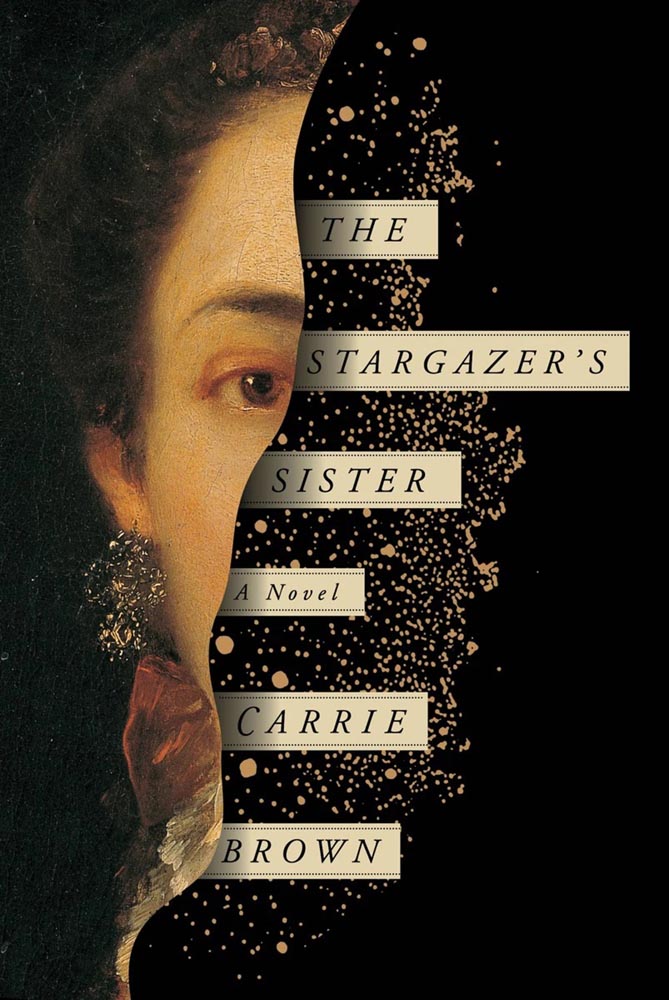
    This image has an empty alt attribute; its file name is books_the-stargazers-sister_2016_oliver-munday_lithub.jpg
    Cover design by Oliver Munday.

    LitHub has posted a summary of the last decade of their favorites, too. Whew!

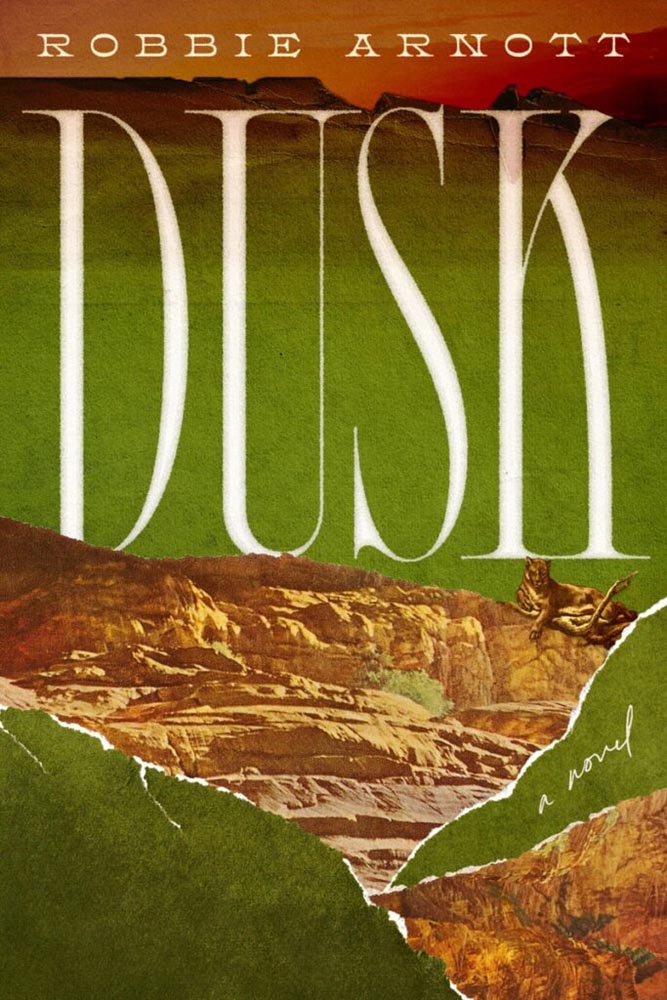
    This image has an empty alt attribute; its file name is books_dusk_alica-tatone_ourculturemag.jpg
    Cover design by Alicia Tatone.

    Special Bonus #1: Our Culture has a feature on seven book designers to watch in 2026. None will be a surprise to regular readers, although Alicia Tatone hasn’t been highlighted here as much as she deserves (she had three cover designs, including Dusk, in the runners-up folder for my ’25 favorites, but didn’t appear in the final list).

    THIS MONTH’S SPINE

    Meanwhile, over at Spine, my monthly column on University Press goodness has been posted, including this:

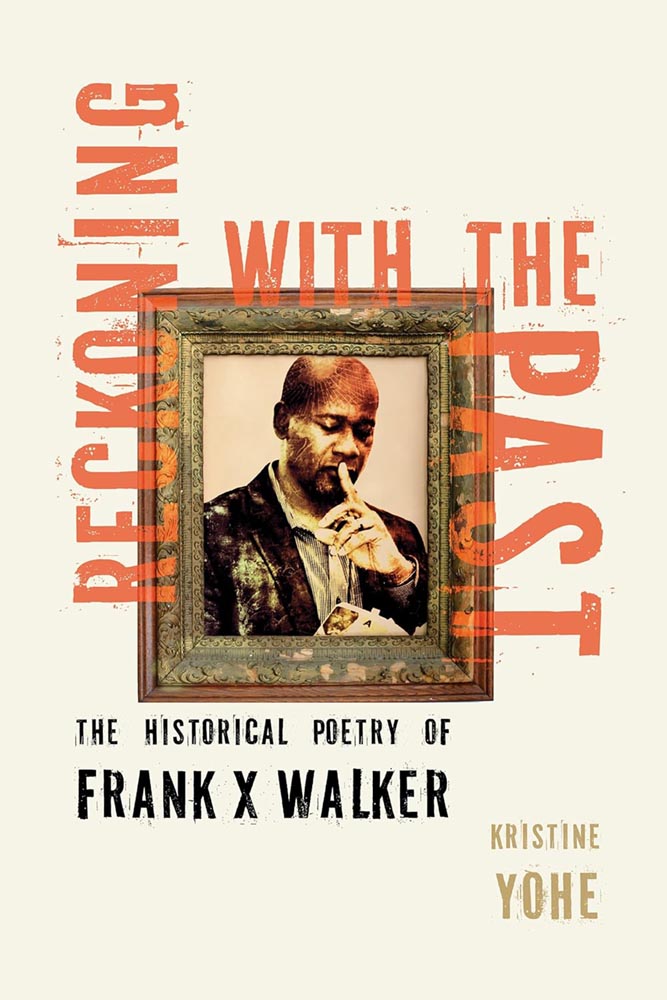
    This image has an empty alt attribute; its file name is spine_kentucky_reckoning-with-the-past_jan26_kat-lynch.jpg
    Cover design by Kat Lynch for the University Press of Kentucky.

    Walker, FYI, was the first Black person to be named Kentucky Poet Laureate and coined the term, “Affrilachia.”

    MORE FROM THE DESIGN DEPARTMENT
    Heller on Roy Kuhlman

    Steven Heller’s column in PRINT is always fantastic, but some introduce designers more of us should know by name — this time, Roy Kuhlman:

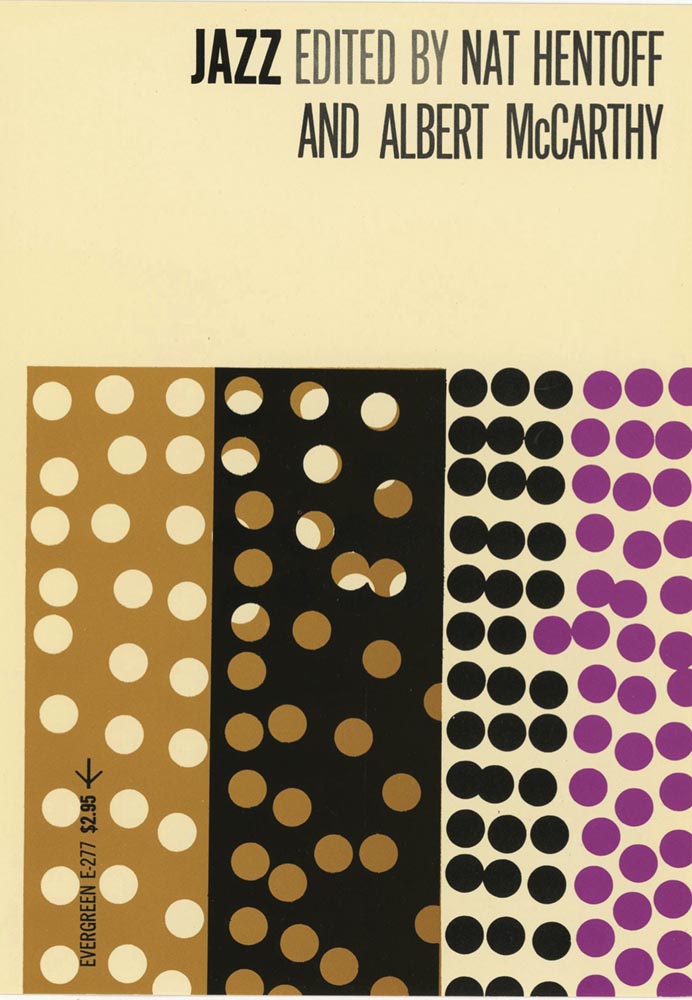
    This image has an empty alt attribute; its file name is books_jazz_roy-kuhlman_print.jpg
    Cover design by Roy Kulhman.

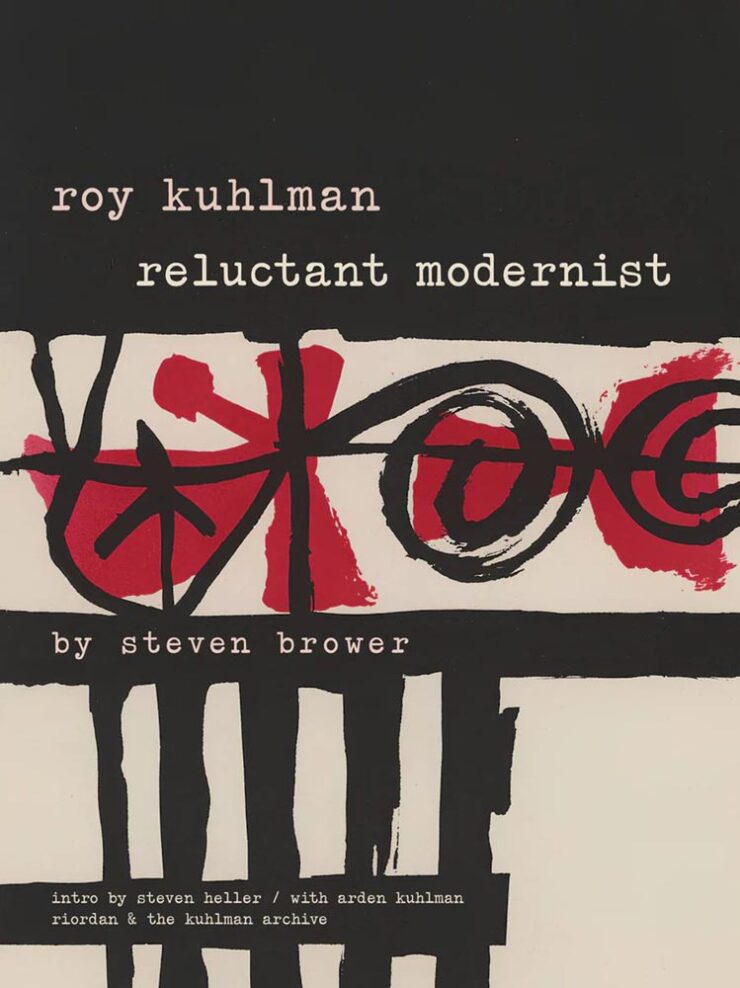
    “He designed almost exclusively for the edgy indie Grove Press, defining its list of literary, critical, philosophical and politically radical nonfiction titles,” Heller writes, discussing a new retrospective (that he wrote the introduction for):

    This image has an empty alt attribute; its file name is books_roy-kulman-reluctant-modernist_print-740x988.jpg

    Many of his abstractions tested the reader’s perception. His lexicon of kinetic, morphing shapes was usually rendered in flat colors with painterly and collage randomness. They could stand on their own. But usually, to make them functional, he used simple sans serif or elegant classic serif typefaces; fitting the abstract nature of his manner, he’d frequently draw or paint hand-scrawled titles and subsidiary texts. Much of his work employed two or three colors, as opposed to four-color process — and he was more than adept with limitations.— Steven Heller, PRINT
    Very cool. See the rest.

    January Typeface Favorites

    Speaking of CreativeBoom, their regular feature on new typefaces has several that I like. Let’s start with the elegant Appeal, by new foundry We Type:

    This image has an empty alt attribute; its file name is fonts_appeal_creativeboom-740x400.jpg

    Next up, the old-style, almost-evokes-needlepoint Bárur, by MNDT Type:

    This image has an empty alt attribute; its file name is fonts_barur_creativeboom.jpg

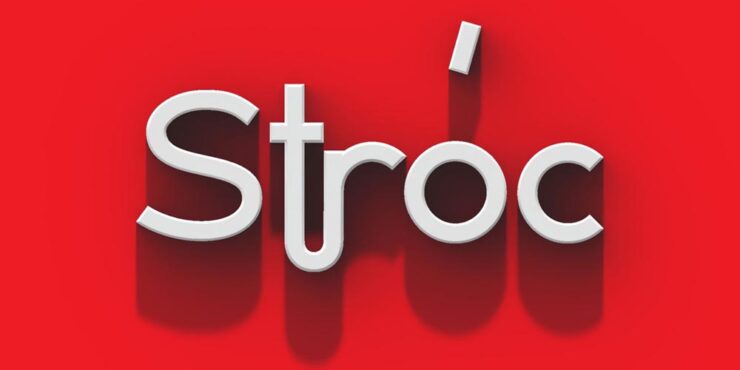
    Another new foundry, Designomatt, brings us the neat and “unpretentiously functional” Stróc:

    This image has an empty alt attribute; its file name is fonts_stroc_creativeboom-740x370.jpg

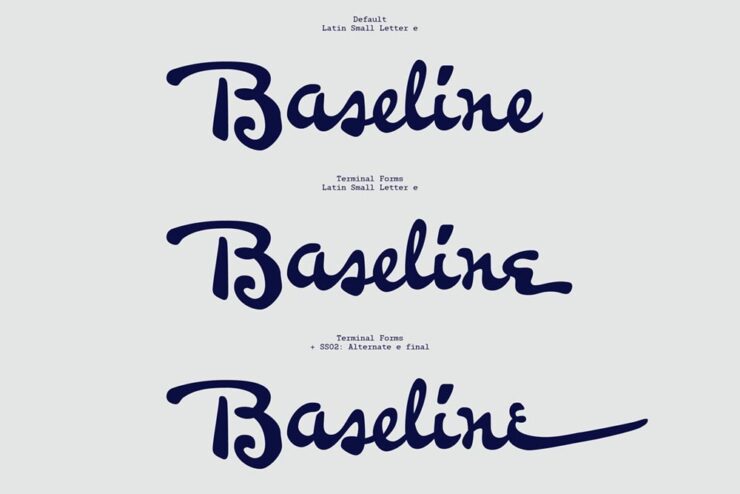
    The last to highlight is probably my favorite of the bunch, this cool and well-executed script called Pennline, from The Northern Block. It’s a “meticulous resurrection of Bulletin — a script first cast in 1899 by Philadelphia’s Keystone Type Foundry — demonstrat[ing] how historical preservation and contemporary utility can coexist when approached with respect and imagination.”

    This image has an empty alt attribute; its file name is fonts_pennline_creativeboom-740x494.jpg

    See ’em all — type joke intended — at CreativeBoom.

    Faber Editions: Just My Type

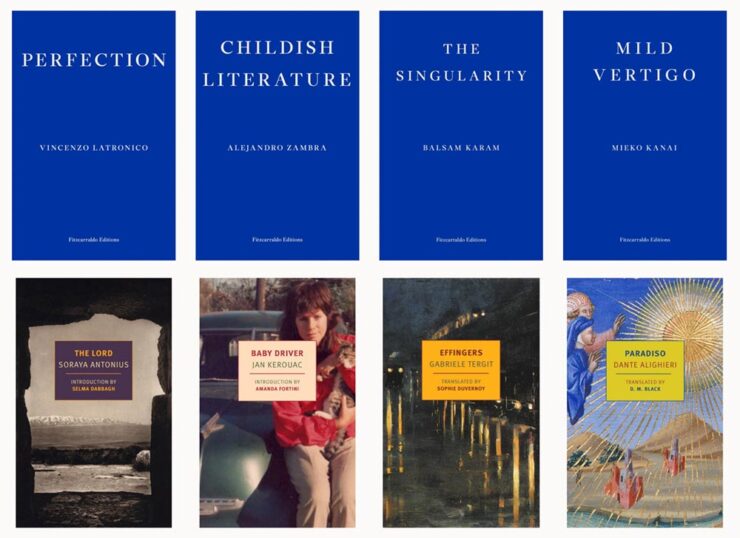
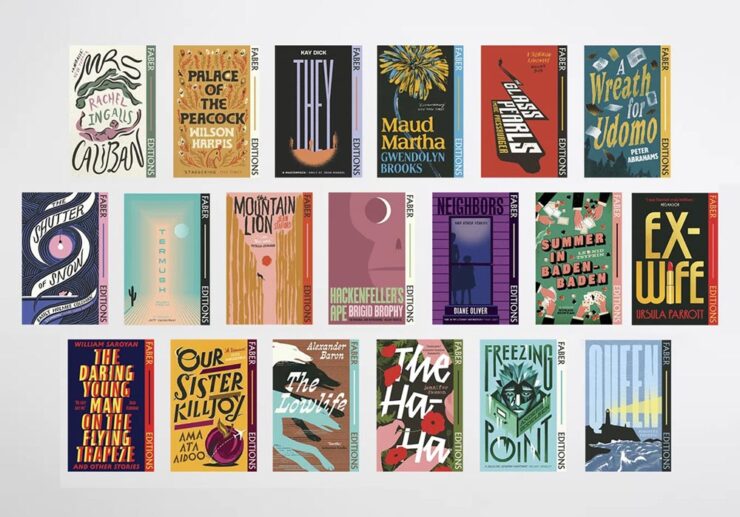
    It’s Nice That has a great feature on the new — actually, newly-revisited — Faber Edition titles, with their primarily type-driven cover designs:

    This image has an empty alt attribute; its file name is books_collected-faber-editions_various_its-nice-that-740x517.jpg

    “In an industry that can often be focused on newness, Faber Editions is a great reminder of the groundbreaking literature that’s come before us, and a clear indicator of the importance of the artwork the words sit within,” writes Olivia Hingley.

    This image has an empty alt attribute; its file name is books_the-shutter-of-snow_bill-bragg_its-nice-that.jpg
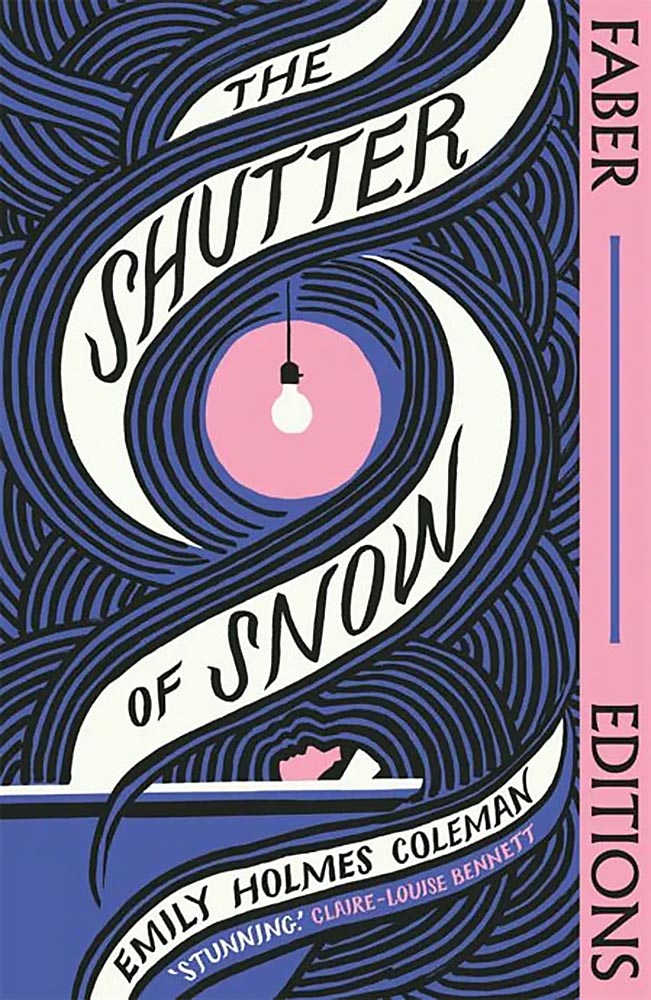
    Cover design by Bill Bragg.

    Faber is a UK publisher, so while these covers could be excellent because they’re British — see several examples of the US vs. UK titles in the favorites post — I’m just going to call the style interesting, the “look” of the complete series compelling, and the resulting work excellent. Read on.
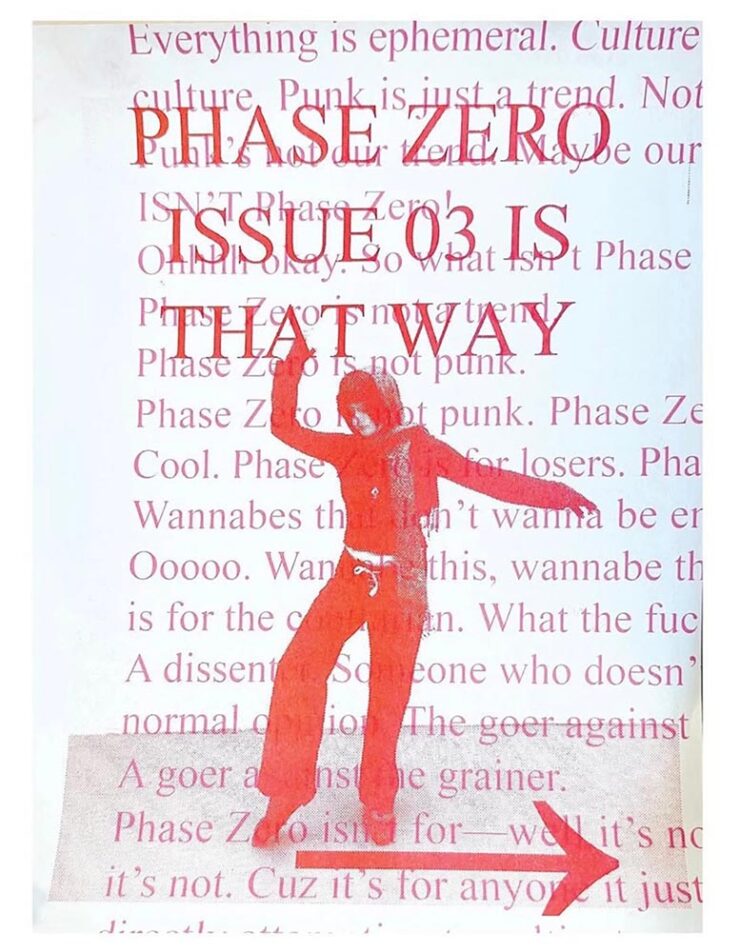
    Special Bonus #2: “The graphic trends you’ll want to bookmark for 2026,” also from It’s Nice That. In short: lo-fi, anti-trends continue:

    This image has an empty alt attribute; its file name is design_phase-zero-flyer_its-nice-that-740x952.jpg
    © Maya Valencia & Sydney Maggin, Phase Zero NYC, via It’s Nice That.

    In other words, if AI struggles with it — if it’s authentic — it could be a winner. See the specifics.

    Special Bonus #3: “AI isn’t the enemy. Our lack of nuance is,” Liz Seabrook writes at CreativeBoom. “The most powerful response is being more human.”

    LIFE IN ’26: DDOS? OR JUST VELOCITY?
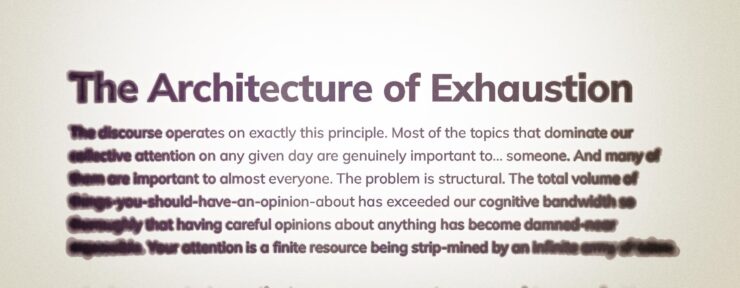
    This image has an empty alt attribute; its file name is discussion_discourse-is-a-ddos_westernberg-740x288.jpg

    A few days apart, two new essays caught my attention and wound up feeling relevant enough — significant enough — that I wanted to share. They’re new takes on where we’re at, or, the specifics of “how.”

    The first is from new-to-me author Joan Westenberg, discussing a computer term called the Distributed Denial of Service (DDOS) attack:

    [The] attack works by exhausting resources. It doesn’t need to be clever. It just needs to be overwhelming. The target’s defenses are simply overrun. The server can’t distinguish between legitimate requests and attack traffic because, in a sense, all the traffic is legitimate. The attack succeeds when the system has spent so much energy processing requests that it can no longer serve its actual function.— Joan Westenberg, “The Discourse is a DDOS”
    Does that sound like it might apply to life in the ’Twenties? Yeah.

    The old media ecosystem had gatekeepers, and those gatekeepers were often stupid or corrupt, but at least the stupidity and corruption were bounded. There were only so many column inches in the New York Times, only so many minutes of evening news. A finite supply of attention-worthy items existed, and someone had to decide which ones made the cut. That selection process was biased and imperfect, but it performed an important function: it told you, implicitly, that you didn’t have to have an opinion about everything. Most things that happened in the world weren’t important enough to make it into your awareness at all. Local political disputes in New South Wales? Nobody in Washington DC gave a [crap], and vice-versa. This was as close to optimal as we’ve ever got.

    But the gatekeeping function has now been distributed across millions of individual users, each of whom can boost any piece of content into viral prominence if it happens to resonate with the right combination of tribal anxieties and engagement incentives. The feed is infinite, and every slot in the feed is optimized to make you feel something strongly enough that you’ll engage with it. Outrage works, and so does fear. Disgust works, and righteousness
    really[…] works. Nuance and careful reasoning don’t work at all, because by the time you’ve finished a thought that begins with “Well, it’s complicated…” someone else has already posted a much simpler take that makes people feel validated, and the algorithm has moved on.— Joan Westenberg, “The Discourse is a DDOS”

    Om Malik, long-time in-the-trenches tech nerd (and fellow Leica enthusiast), completely agrees:

    Authority used to be the organizing principle of information, and thus the media. You earned attention by being right, by being first in discovery, or by being big enough to be the default. That world is gone. The new and current organizing principle of information is velocity.

    What matters now is how fast something moves through the network: how quickly it is clicked, shared, quoted, replied to, remixed, and replaced. In a system tuned for speed, authority is ornamental. The network rewards motion first and judgment later, if ever. Perhaps that’s why you feel you can’t discern between truths, half-truths, and lies.
    — Om Malik, “Velocity Is the New Authority. Here’s Why.”

    Westenberg has a suggestion I wholeheartedly recommend:

    What I do know is that the feeling of being overwhelmed, of never being able to keep up, of having strong opinions about everything and confident understanding of nothing, is not a personal failing. It’s a predictable response to an impossible situation. Your brain is being DDoS’d, and the fact that you’re struggling to think clearly under that onslaught is evidence that your brain is working normally. The servers aren’t broken. They’re overloaded. And until we figure out how to reduce the load or increase the bandwidth, the best any of us can do is recognize what’s happening and try, when possible, to step away from the flood long enough to do some actual thinking.— Joan Westenberg, “The Discourse is a DDOS”

    “Find one topic,” she says, and start there. Get with experts, get evidence, get uncomfortable, actually get into it … but just get into that one.

    And stay true to the idea that it shouldn’t — can’t — get away from you.

    I get some feedback for my lack of participation in social media. I don’t hate social media; if anything, the past few weeks of mayhem organized resistance in Minneapolis proves it has a place. But I long ago heeded advice to narrow my focus. Instead of burying my head in the sand — tempting though it may be at times — I choose to concentrate on those things that a) really hold interest and b) things I actually want to be part of my life.

    Both of these essays summarize the situation well, and both offer insights on how we got here. Westenberg’s offers good advice. When you have a spare few minutes, read both.

    (DDOS article via Doc Searls, whom I don’t link to often enough. Om’s article via Daring Fireball.)

    WIKIPEDIA TURNS 25

    Let’s please turn to something that the Internet does right.

    Whenever I worry about where the Internet is headed, I remember that this example of the collective generosity and goodness of people still exists. There are so many folks just working away, every day, to make something good and valuable for strangers out there, simply from the goodness of their hearts. They have no way of ever knowing who they’ve helped. But they believe in the simple power of doing a little bit of good using some of the most basic technologies of the internet.— Anil Dash, “Wikipedia At 25: What The Web Can Be”

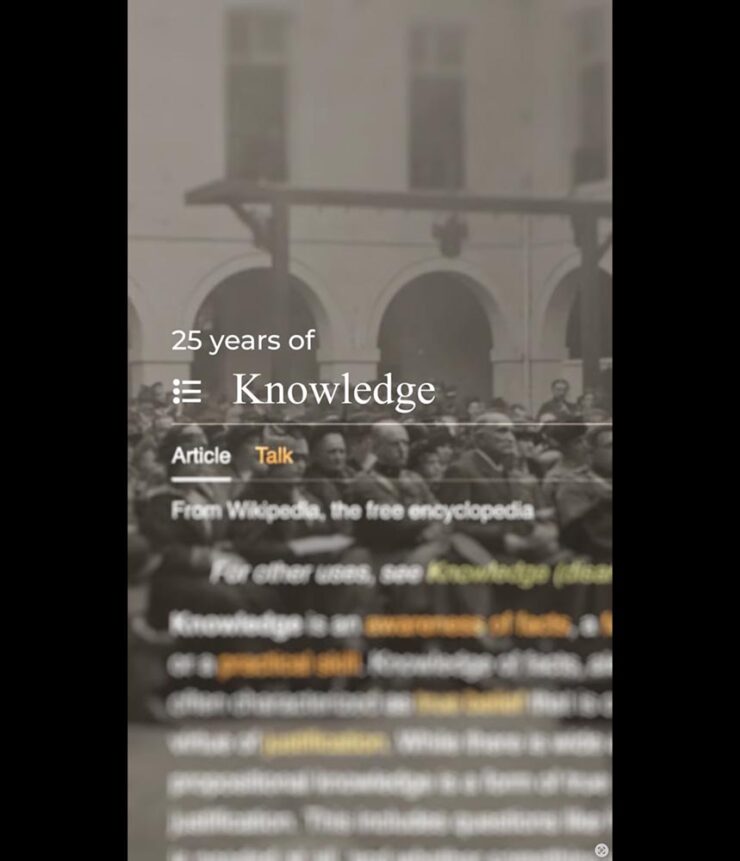
    “When Wikipedia launched 25 years ago today, I heard about it almost immediately, because the Internet was small back then, and I thought ‘Well… good luck to those guys,’” Dash writes.1I, too, remember those days of a small Internet — not a young person anymore. While I miss the community it felt like, the resources available today, of which Wiki might be at the fore, are without parallel. But it’s grown into something something amazing: the encyclopedia that’s free in every sense of the word.

    This image has an empty alt attribute; its file name is wiki25_youtube-740x861.jpg
    One of the YouTube shorts published by Wikimedia Foundation.

    Like countless others, I value being a contributor, in an incredibly small way, to the collective effort that is Wikipedia. Indeed, editors “span continents, professions and motivations,” a CreativeBoom article writes. “Together, their stories underline that, even in an age of AI, knowledge is still human and it still needs humans.”

    “The site is still amongst the most popular sites on the web,” Dash agrees. “[B]igger than almost every commercial website or app that has ever existed. There’s never been a single ad promoting it. It has unlocked trillions of dollars in value for the business world, and unmeasurable educational value for multiple generations of children.”

    Of course, all is not perfect. Like Universities, DEI, and whatever else, Wikipedia has become a target; Grokipedia, for instance, exists specifically to undermine Wiki’s centrality and success. (And, it’s important to note, Groki used Wiki as a basis … because it’s open and freely available. No hypocrisy.)

    In fact, so many rely on Wikipedia that access has become a thing. Luckily, some large enterprise users of the site have recognized that the trillions they’ve earned as a result of having access to Wiki’s collective knowledge is worth paying for:

    [T]he Wikimedia Foundation announced API access deals with Microsoft, Meta, Amazon, Perplexity, and Mistral AI, expanding its effort to get major tech companies to pay for high-volume API access to Wikipedia content, which these companies use to train AI models like Microsoft Copilot and ChatGPT. […] In April 2025, the foundation reported that bandwidth used for downloading multimedia content had grown 50 percent since January 2024, with bots accounting for 65 percent of the most expensive requests to core infrastructure despite making up just 35 percent of total pageviews.— Benj Edwards, Ars Technica (15 Jan 2026)

    Anil Dash best finishes up: “Twenty-five years later, all of the evidence has shown that they really have changed the world.” I couldn’t agree more.

    Happy 25 to Wikipedia. May there be countless more.

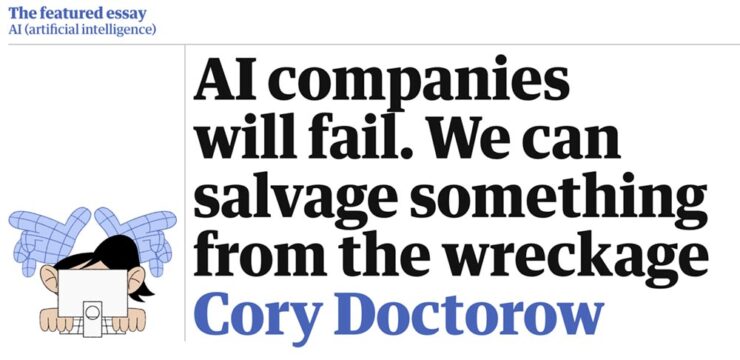
    Special Bonus #4: In an excellent article, Ars calls 2025 “the year AI came back down to Earth.” And while we’re on the subject of excellence, Cory Doctorow’s essay for The Guardian applies.

    This image has an empty alt attribute; its file name is ai_ai-companies-will-fail_guardian-740x360.jpg
    Cory Doctorow in The Guardian.
    FOLLOW-UP: BMW ALPINA AND HONDA FORMALIZE LOGOS

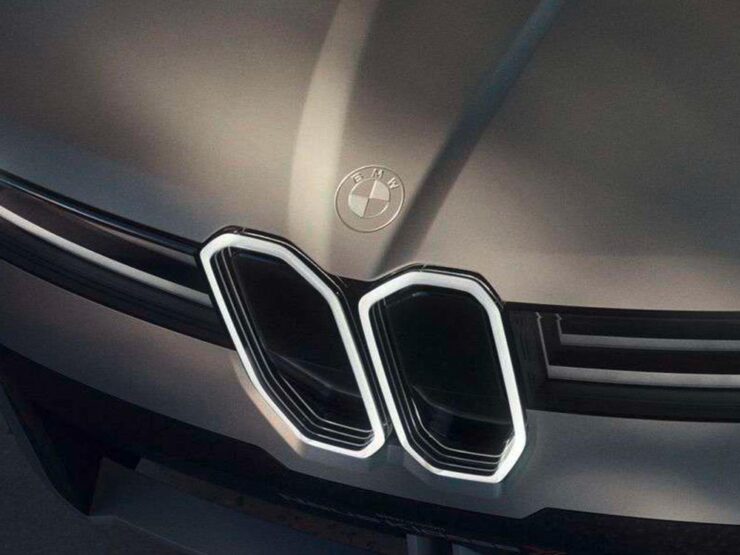
    Alpina, for formerly-independent tuner of BMW cars (and SUVs), has, as of the first of this year, officially become a division of BMW, akin to MINI or Rolls-Royce. With it comes a new logo — well, at least, this:

    This image has an empty alt attribute; its file name is cars_new-bmw-alpina-logo_dezeen-740x416.jpg
    Conservative, cool, collected. Definitely part of a bigger corporation now.

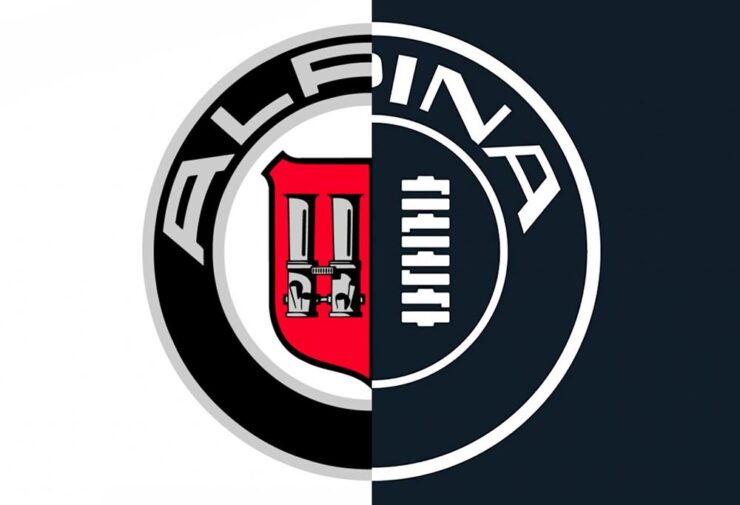
    That’s slightly different that what I covered back in June of 2023; the “A” is less dramatic, probably for the better. BMW calls the new logo “calm and confident,” saying the upcoming models will “master performance and comfort.”

    [Alpina] recently entered into an agreement to be purchased by BMW itself, not unlike AMG becoming part of Mercedes-Benz; starting in 2026, they are scheduled to represent the middle ground between BMW and Rolls-Royce — hopefully continuing the comfort, power, and style. It seems that the new ground will be the upmarket models only (that is, no 3-series-based items, and possibly even no 5-series), so think of items $200,000 and up.— Beautifully Briefed, June 2023

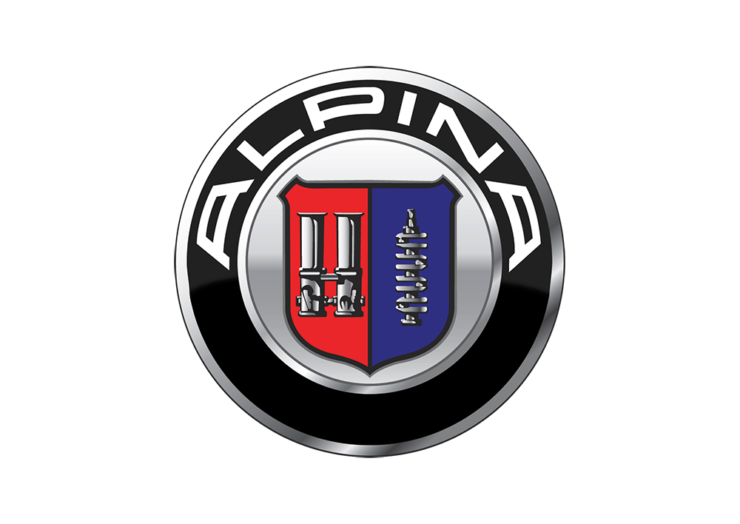
    Here’s the old logo, for reference:

    This image has an empty alt attribute; its file name is alpina-1962-20220-logo-740x524.png
    Alpina’s now-old logo: exhaust and crankshaft, sir. Nuthin’ like it.

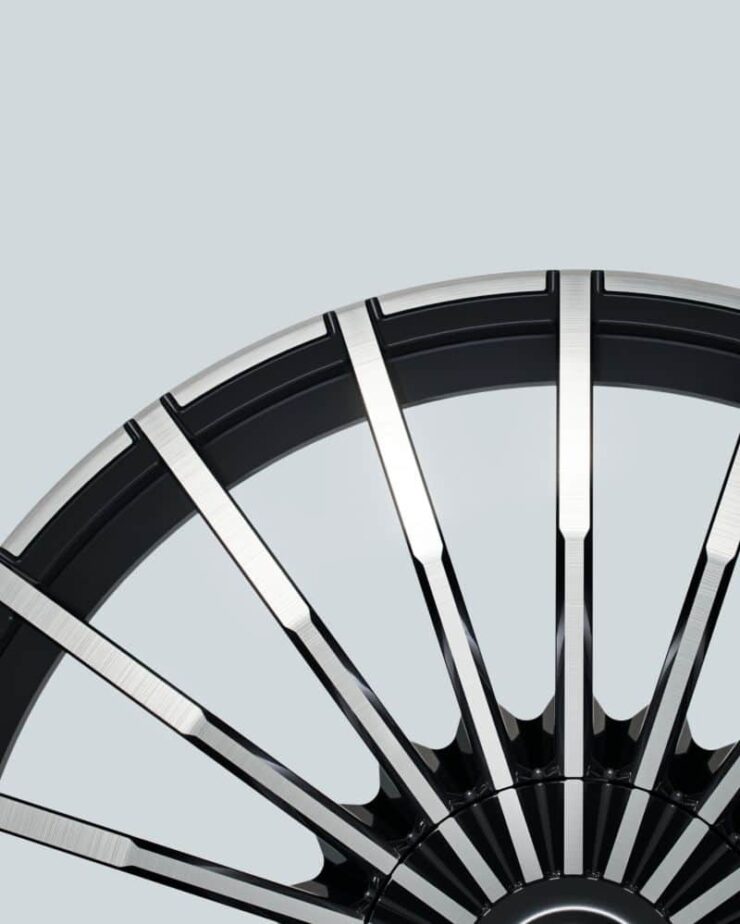
    And: they’re going to update the wheels!

    This image has an empty alt attribute; its file name is cars_new-20-spoke-alpina_bmwblog-1-740x924.jpg
    Photo via BMW Blog.

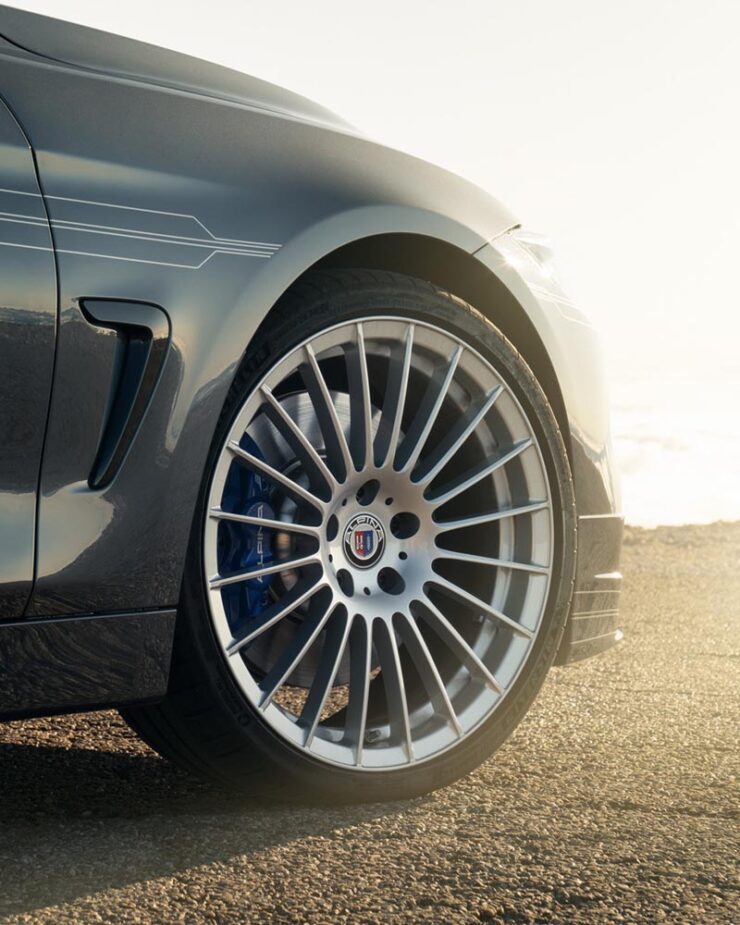
    As someone who’s become much more familiar with Alpina in the ten years I’ve owned BMWs, these wheels are iconic. Here’s the existing version, on one of my favorite pieces of unobtainium:

    This image has an empty alt attribute; its file name is cars_old-20-spoke-alpina_bmwblog-740x925.jpg
    Photo via BMW Blog.

    That’s a 2016 Aplina B4 BiTurbo Coupé, by the way. Not quite my favorite B3 Touring, but in either case, “drool” doesn’t quite cover it. (Neither were available in the States.)

    Curious to see whether this is successful. Expectations are high.

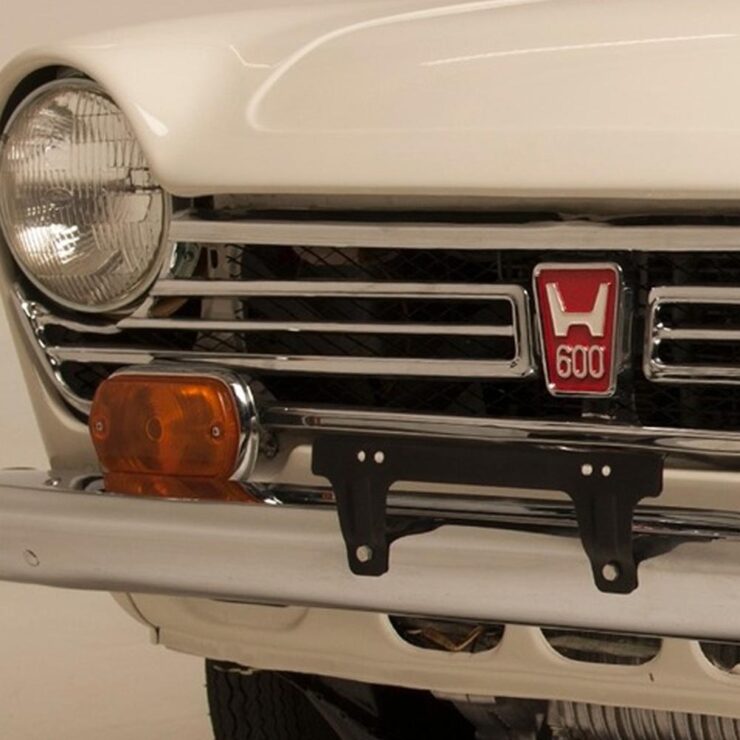
    This image has an empty alt attribute; its file name is cars_honda600-badge_autopian-740x740.jpg
    The “old” H logo, shown on a 1971 600. (See wiki for more info.)

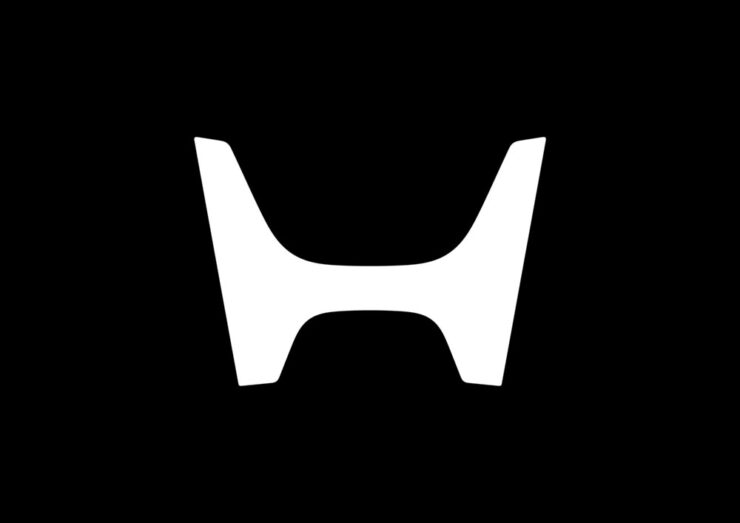
    Meanwhile, Honda initially said — and I reported, two years ago — that their new, slightly-retro “H” logo would be limited to electric cars. Of course, electric as a strategy has changed; they decided this month to make it official for all their cars.

    This image has an empty alt attribute; its file name is cars_honda-new-logo_the-drive-740x523.jpg

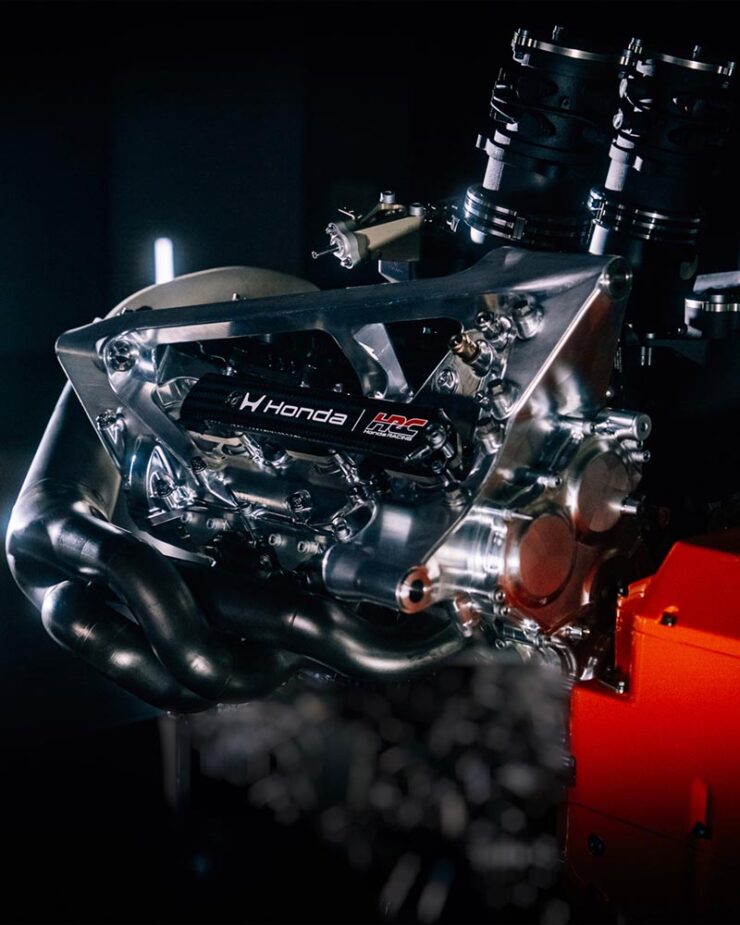
    Motorsports, too. Here’s their F1 engine with the new logo:

    This image has an empty alt attribute; its file name is cars_honda-logo-f1_the-drive-740x925.jpg
    Photo via The Drive.

    I love that both Honda and BMW are, at their heart, engineering companies.

    Get the full story on BMW Alpina at Dezeen or BMW Blog (logo, wheels). Honda’s details are available at The Drive (logo, F1) or The Autopian, where you can enjoy some sharp commentary on Honda’s press release.

    JANUARY PHOTOGRAPHY ROUND-UP
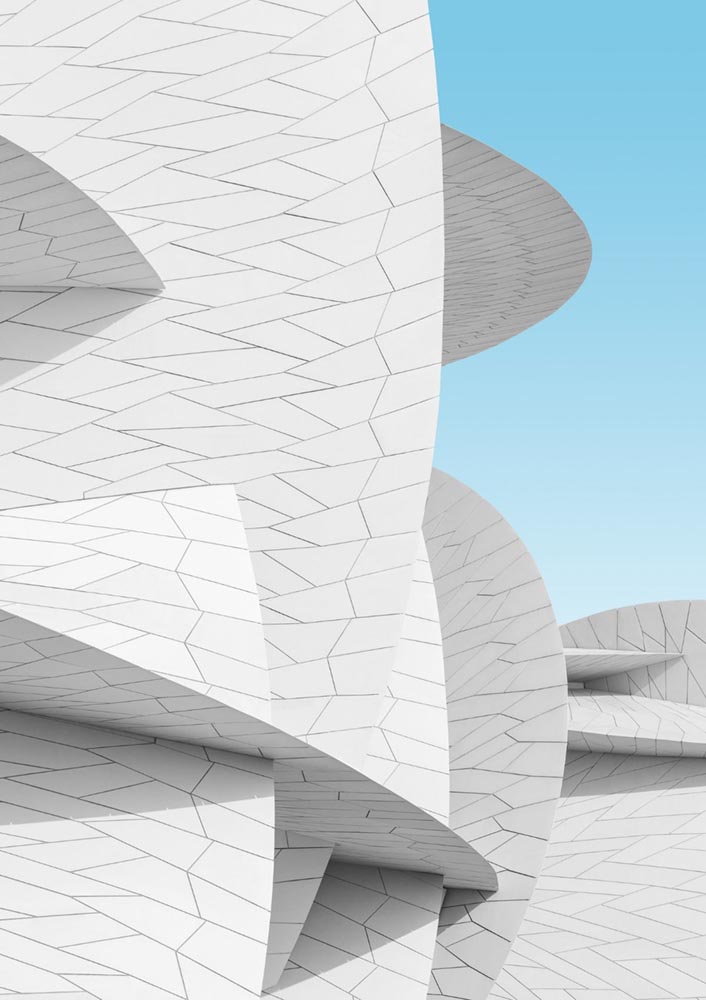
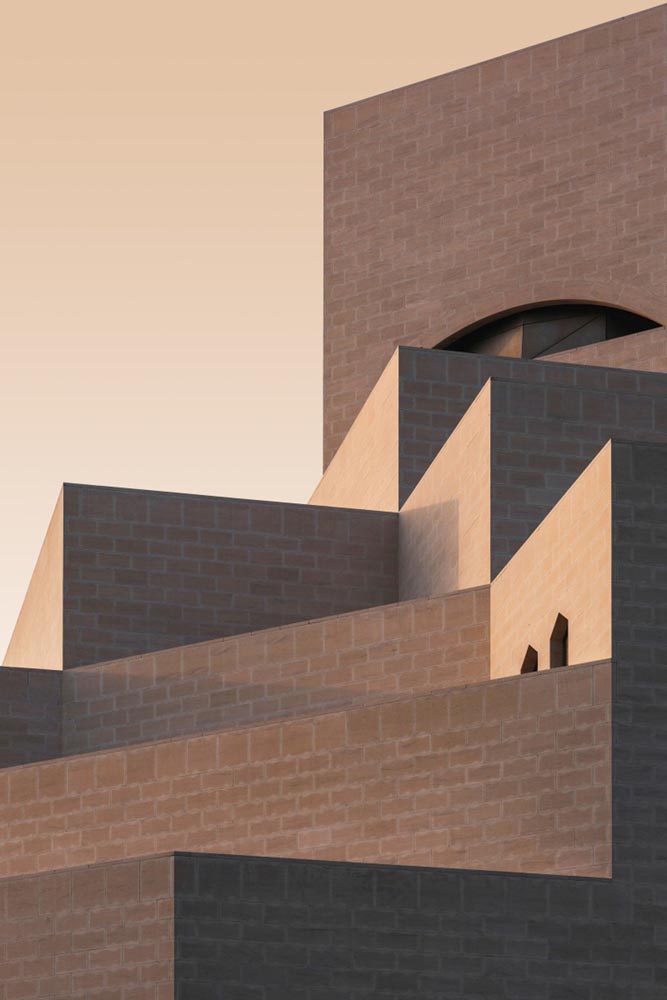
    2025 Architecture Master Prize
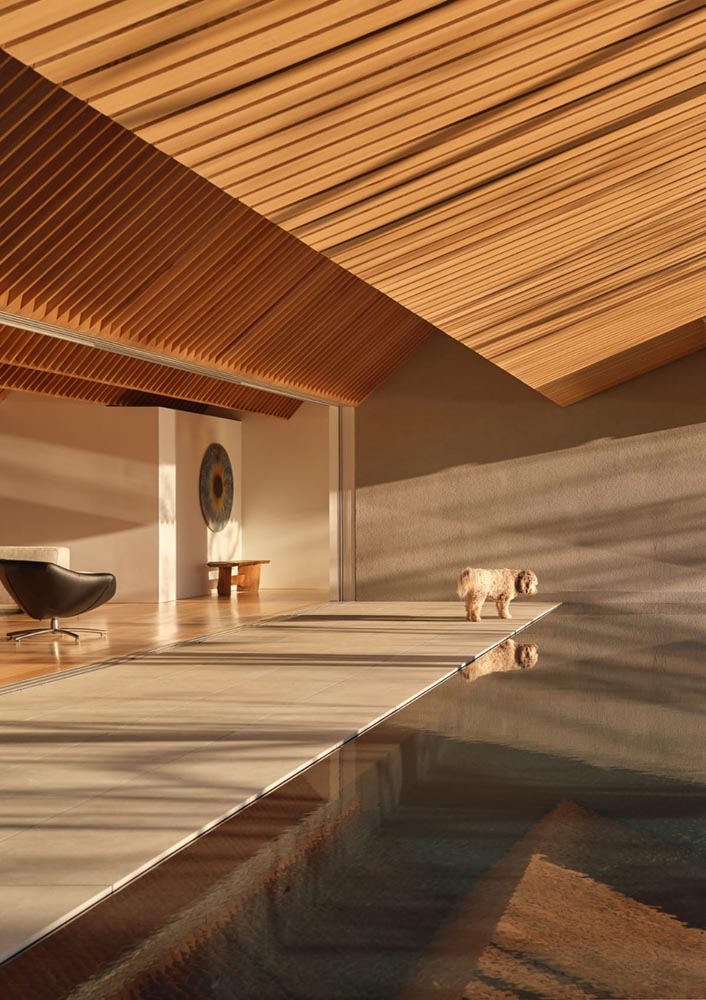
    This image has an empty alt attribute; its file name is photo_arch-arbour-by-younes-bounhar_archinect.jpg
    “Arbour House.” Photograph by Younes Bounhar (Interior Architecture).

    I suppose it’s no surprise that an architectural photography selection tops this round-up, but the annual Architecture Photography MasterPrize highlights “compelling perspectives on buildings, cities, landscapes, and interior spaces, revealing the rich visual language of the built environment.”

    In other words, “catnip.”

    This image has an empty alt attribute; its file name is photo_arch-details-by-guanhong-chen_petapixel.jpg
    “Details (Series).” Photograph by Guanhong Chen (Other Architecture).
    This image has an empty alt attribute; its file name is photo_arch-details2-by-guanhong-chen_petapixel.jpg
    “Details (Series).” Photograph by Guanhong Chen (Other Architecture).

    There’s a huge variety of winning photographs, from professionals, amateurs, and students alike — all excellent. (They have awards for designs, firms, and products, as well.)

    This image has an empty alt attribute; its file name is photo_arch-sardinia-by-barbara-corsico_archinect.jpg
    “Mustras,” Sardinia. Photograph by Barbara Corsico (Exterior Architecture).

    I can’t possibly cover them all, but can provide links: photography winners, honorable mentions, student winners, and winners by country. Both Archinect and PetaPixel have stories. Enjoy!

    Two Photographers, Highlighted
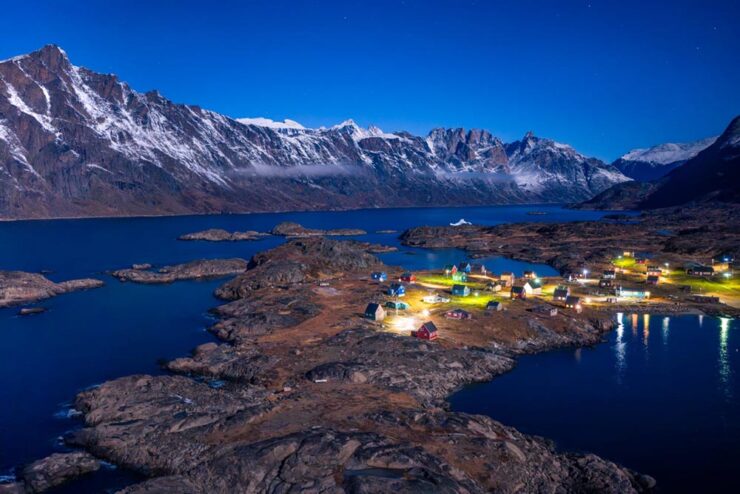
    This image has an empty alt attribute; its file name is photo_greenland-lehtonen-by-dennis-lehtonen_colossal-740x494.jpg
    Photography by Dennis Lehtonen.

    Neither drone images nor folks who primarily post to social media usually get featured here, but these images of Greenland are both timely and excellent. This is Colossal has a great selection of items from photographer Dennis Lehtonen.

    This image has an empty alt attribute; its file name is photo_alps-to-andromeda_tom-rae_petapixel-740x437.jpg
    “From Alps to Andromeda.” Photograph by Tom Rae.

    “My photography style is rooted in landscape and night photography, with an emphasis on atmosphere, scale, and a strong sense of place. I’m drawn to environments that feel raw, remote, and otherworldly,” Tom Rae relates to PetaPixel. Otherworldly feels just right: good stuff.

    Society of Photographers’ Photographer of the Year 2025
    This image has an empty alt attribute; its file name is photo_soc-of-photographers_documentary-by-terry-donnelly_petapixel-740x493.jpg
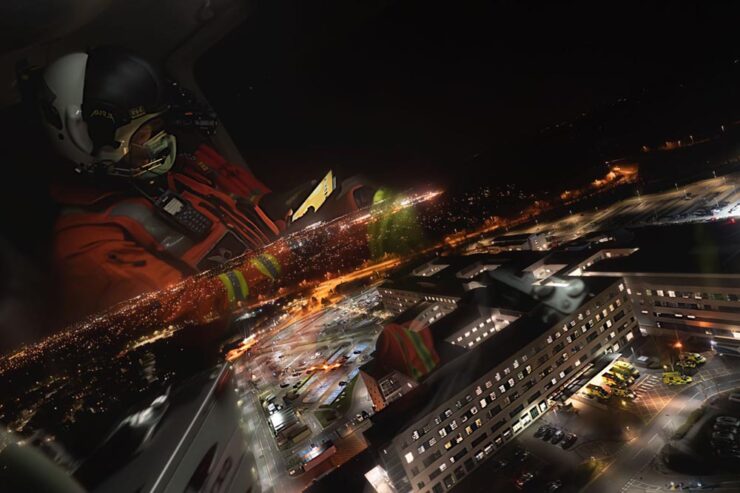
    Photograph by Terry Donnelly.

    I also usually don’t cover documentary-style photography — see narrow focus, discussed above — but there were several documentary-style photographs in this set of award winners that were excellent, including this Medivac flight from the UK.

    However — thankfully — there were more categories:

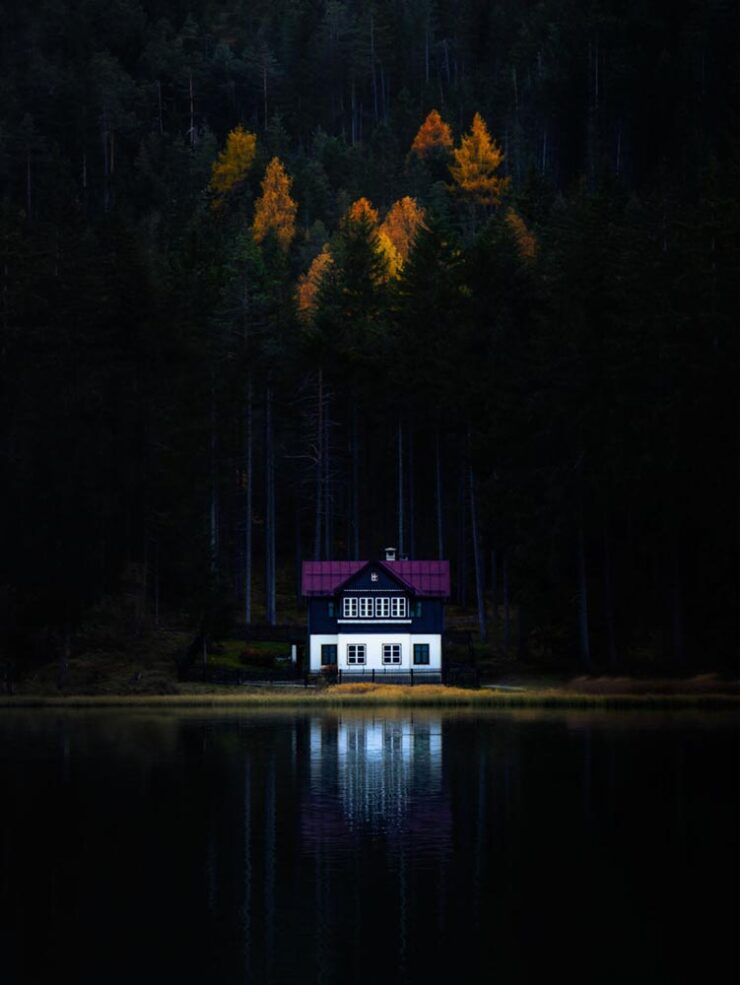
    This image has an empty alt attribute; its file name is photo_soc-of-photographers_travel-by-mark-scicluna_petapixel-740x985.jpg
    Photograph by Mark Scicluna.

    It’s the winner in the “travel” category, because apparently they don’t have one called “dramatically soothing.” No matter the labelling, see the rest of the winners at PetaPixel or head over to the Society’s website for more.

    Finally: Some Cats

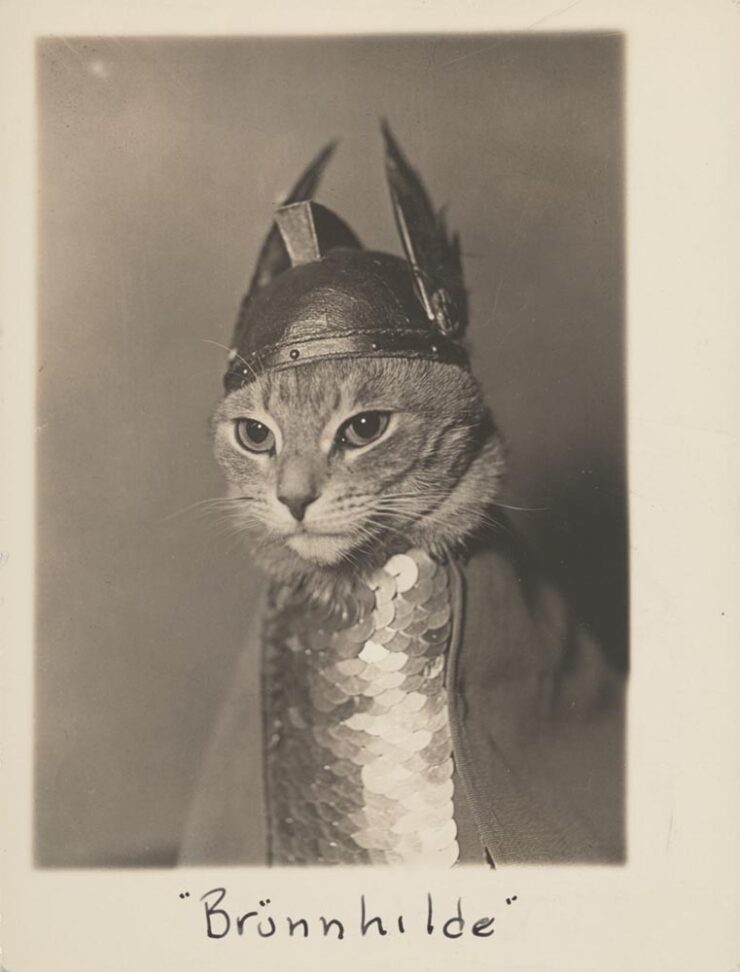
    Speaking of catnip, let’s close out with something that purrs — in soprano:

    This image has an empty alt attribute; its file name is photo_phaidon-cat2_colossal-740x972.jpg

    Let’s not go ’round and ’round: that deserves framing. Or at least publication. Thankfully, Phiadon has you covered:

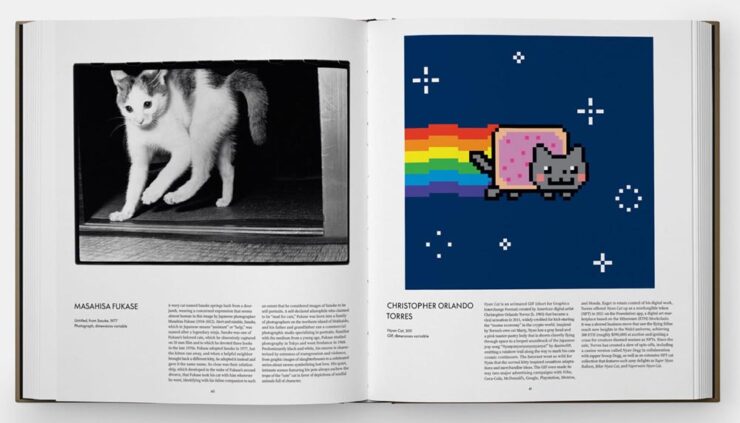
    This image has an empty alt attribute; its file name is photo_phaidon-cat_colossal-740x423.jpg

    A “whimsical visual survey of the house cat in art and popular culture, exploring humanity’s enduring connection to one of our most loved animal companions.” Awesome. (Via This is Colossal.)

    Have a great February, everyone!

    • 1
      I, too, remember those days of a small Internet — not a young person anymore. While I miss the community it felt like, the resources available today, of which Wiki might be at the fore, are without parallel.
  • Beautifully Briefed 25.1: A Different Year

    Beautifully Briefed 25.1: A Different Year

    This edition discusses new type, mergers and items set free, and visits with both some photo contest winners and winning poster designs. (And if you haven’t seen my annual Favorite Book Covers post, keep scrolling.) But first…:

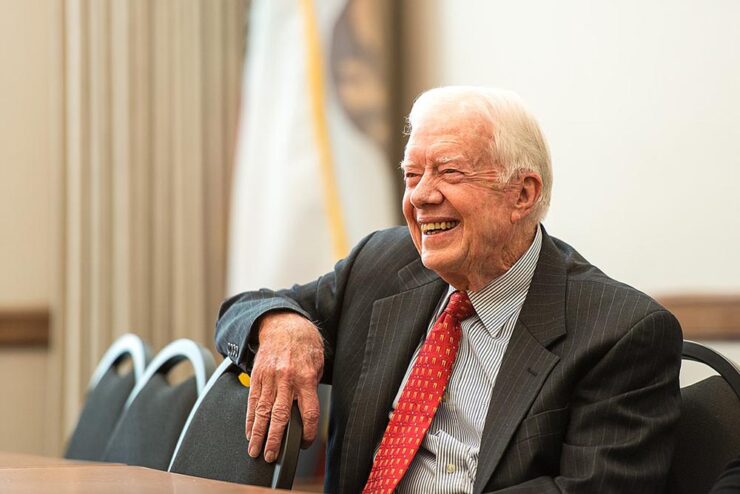
    Former President Carter
    Commonwealth Club, San Francisco, 2013. Photograph by Ed Ritger. (CC 2.0.)

    One of the strongest voices of reason left us on December 29th, 2024: former President Jimmy Carter. He’s the first president I actually remember, and one of the things I’ve appreciated about recent years is the growth of his stature from undeserved fill-in-label-here to treasured humanitarian.

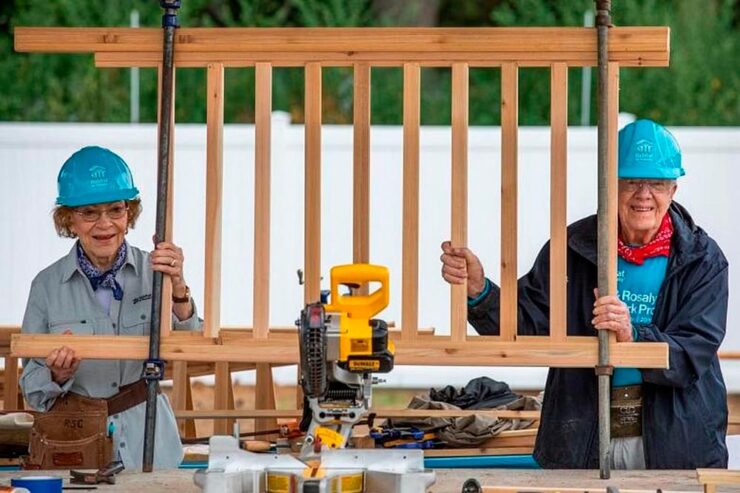
    I’d like to share a couple of items that are meaningful to me. First is his commitment to Habitat for Humanity — and not only as a speaker and fundraiser, but someone who contributed by actually swinging a hammer:

    Former President Jimmy Carter and former First Lady Rosalynn Carter. Photo via Habitat for Humanity.

    Into their 90s and still working. Take it from David Letterman:

    While we’re on the subject of David Letterman, this September, 1993 appearance shows both humanity and humor:

    Another quick item is this 60 Minutes tour of his office — something that always speaks volumes about a person:

    Plains, Carter’s lifelong residence, is a frequent sojourn for me, and a recommended way to both experience rural Georgia and learn more about his roots. (I had always intended to attend one of his regular Sunday school lessons and regret not having made the time.) Visit when you have the opportunity.

    Water Mill, Carter Farm, 2021. (Adobe Content Credentials applied.)

    May your influence of peace continue for another lifetime, Mr. President.

    New Type of Year

    Creative Boom brings us their roundup of new typefaces for January, and a couple caught my attention:

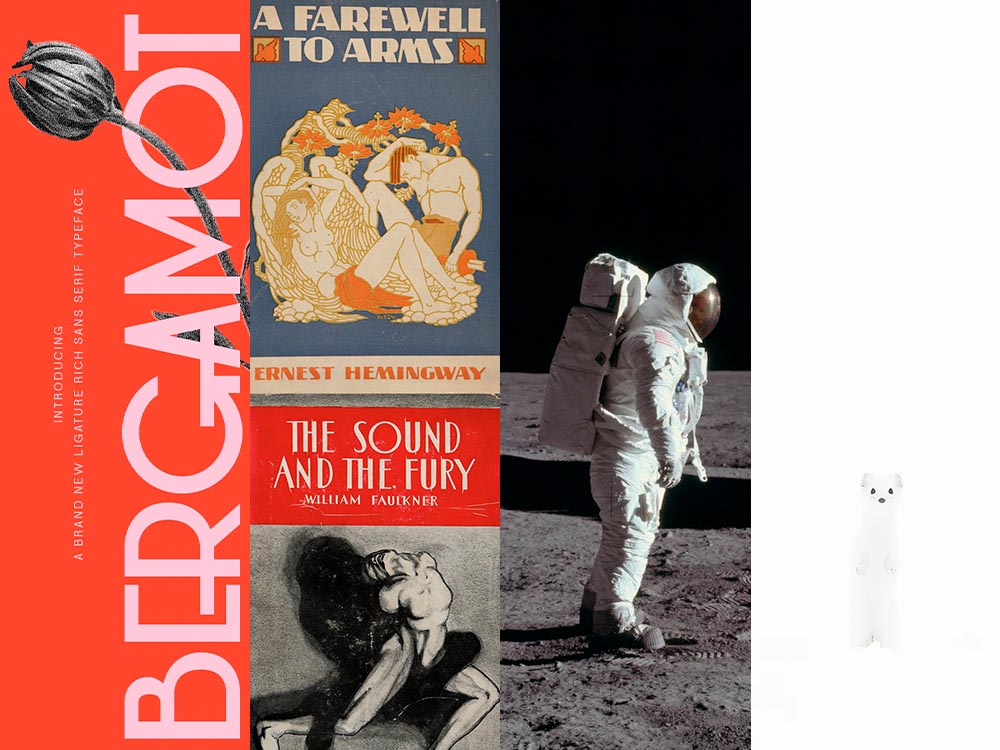
    Bergamot Grotesk.

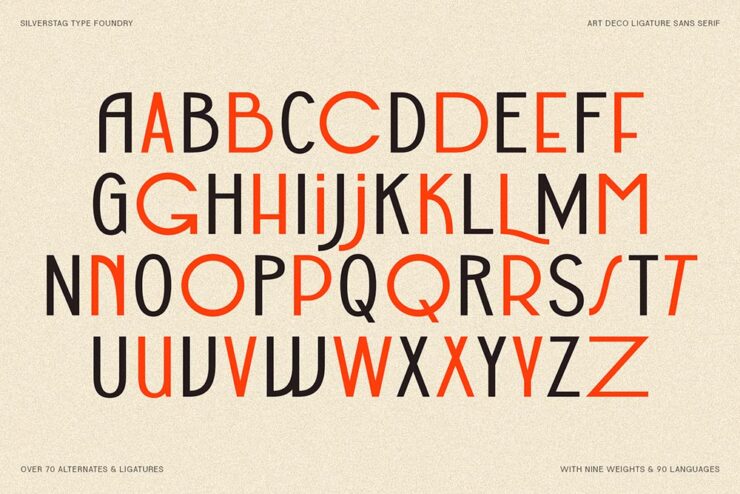
    SLTF Bergamot Grotesk, an Art Deco-style, all caps headline face is a striking new option from Silverstag. This is trendy, of course — Art Deco is in — but timeless at the same time, and something I hope I have an opportunity to use.

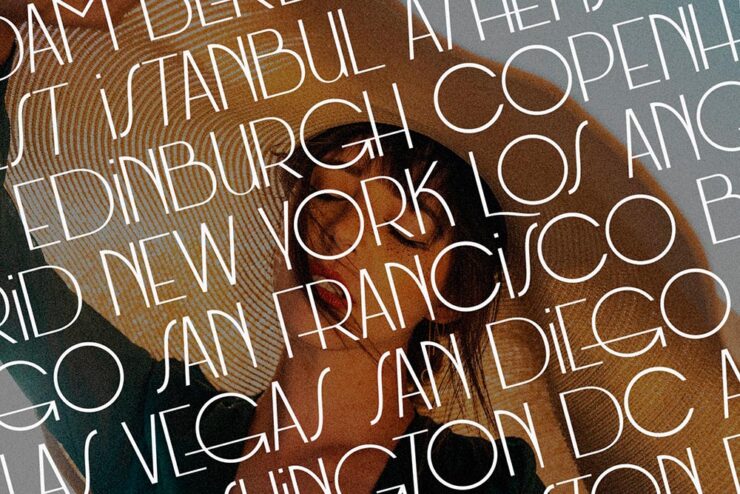
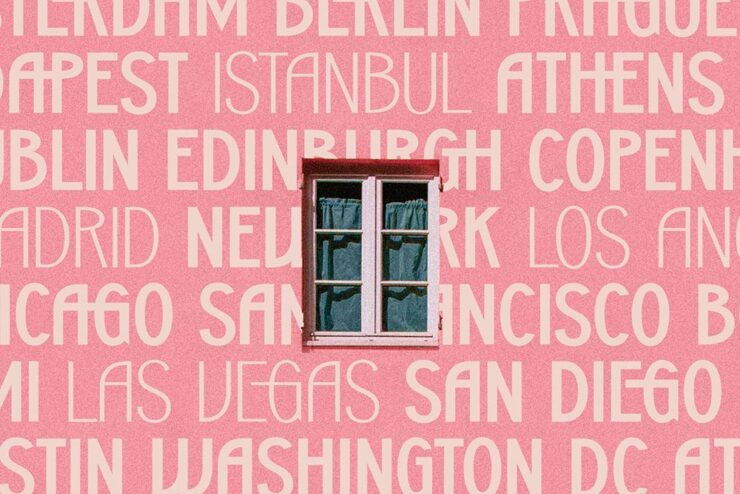
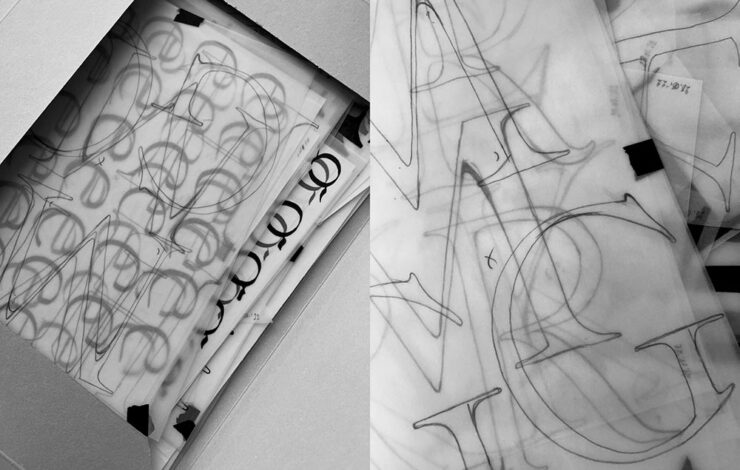
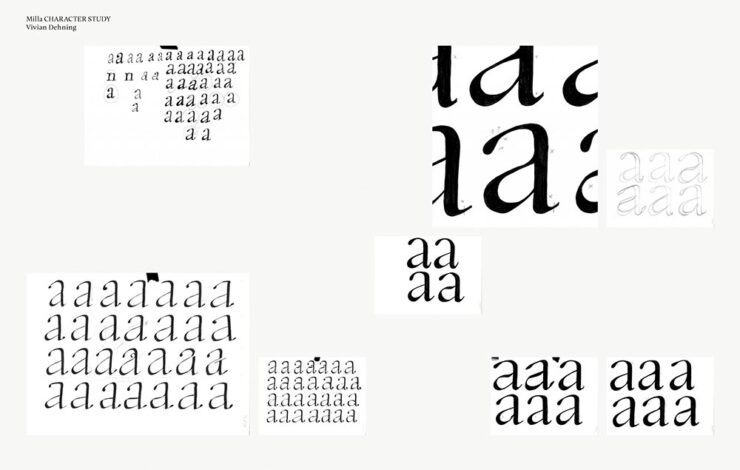
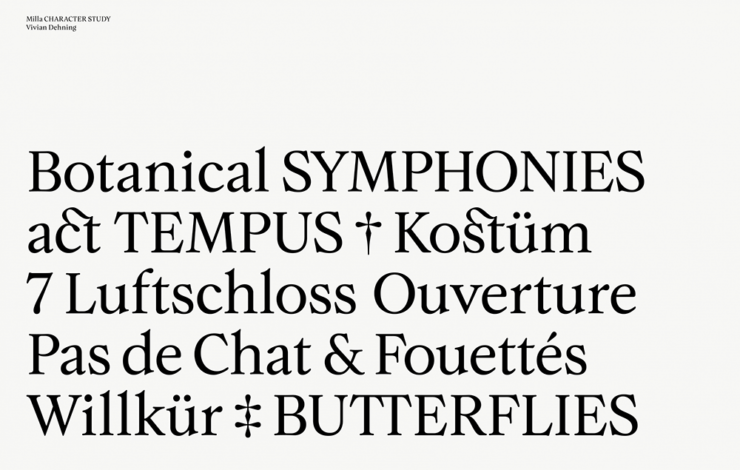
    Another is a new version that’s instantly a beautiful classic, Milla, hand-developed and a joy to look at:

    Hoping for the perfect book project for this one.

    Mergers … and Freedom

    If you’ve not heard, Getty and Shutterstock have proposed a merger. This is, put simply, both understandable and … not good.

    PetaPixel covers both the announcement, with the usual words from the greedy types CEOs, and a history of both companies and their role in how we got here. This is perhaps the most relevant, however:

    The rise of artificial intelligence has likely played a role in the merger; the combined assets of Shutterstock and Getty are a treasure trove of training data for AI companies. However, while AI licensing deals are an opportunity, it could also be an issue for stock photo companies as customers may decide to use AI image generators like Midjourney or DALL-E rather than pay for individual pictures.

    — Matt Growcoot, PetaPixel

    For the record, I completely agree with PetaPixel‘s Jason Schneider when he opines that it’s “yet another step in a race to the bottom.” The deal could possibly attract antitrust notice from the U.S. government; here’s hoping.

    But it’s also hopeful — and slightly wonderful — that it’s new year, which means a new crop of items are now freed from the constraints of copyright. Kottke lists some of his favorites, and points us to a fantastic post from Duke University’s Center for the Public Domain, which has lists and links aplenty. (My favorite: Tintin.)

    Image via This is Colossal.

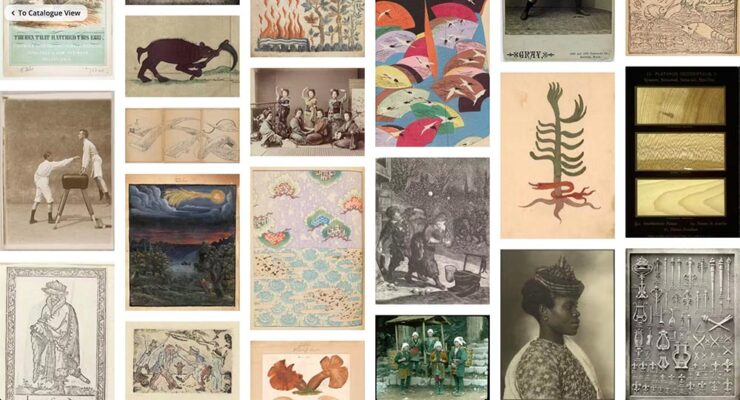
    But there’s more: This is Colossal points us to a new resource for items in the public domain: the Public Domain Image Archive, from the Public Domain Review, which hosts more than 10,000 images freely available to use, reuse, mix, or whatever. Awesome.

    Couple of faves:

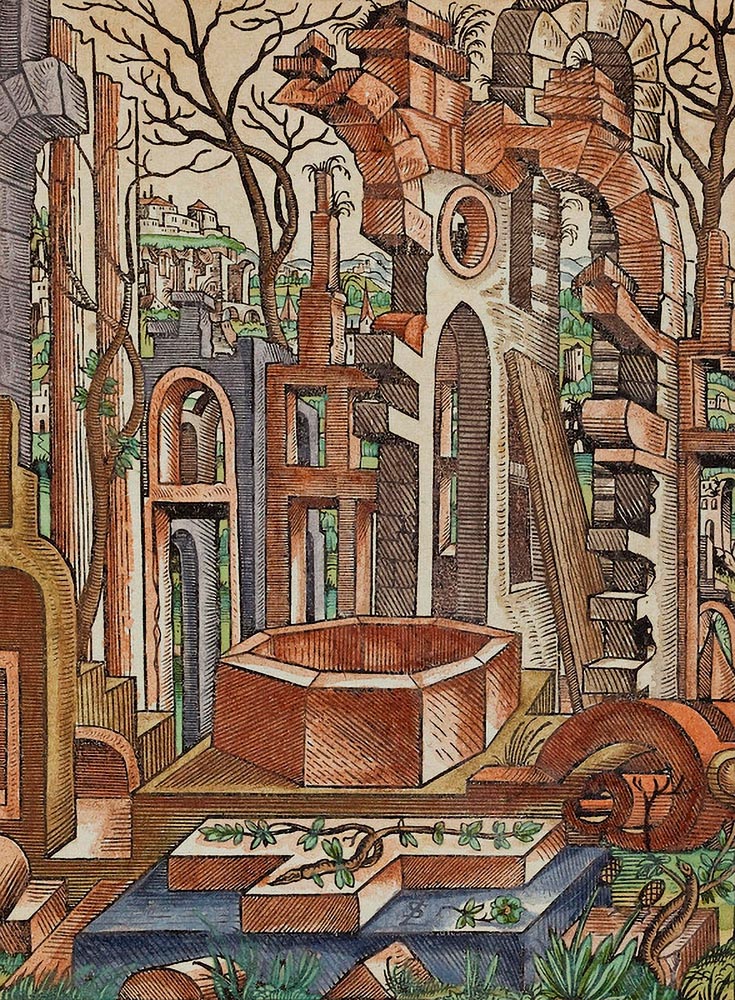
    Lorena Stoer, Geometric Landscapes, from 1567. (Yes, you read that right.)
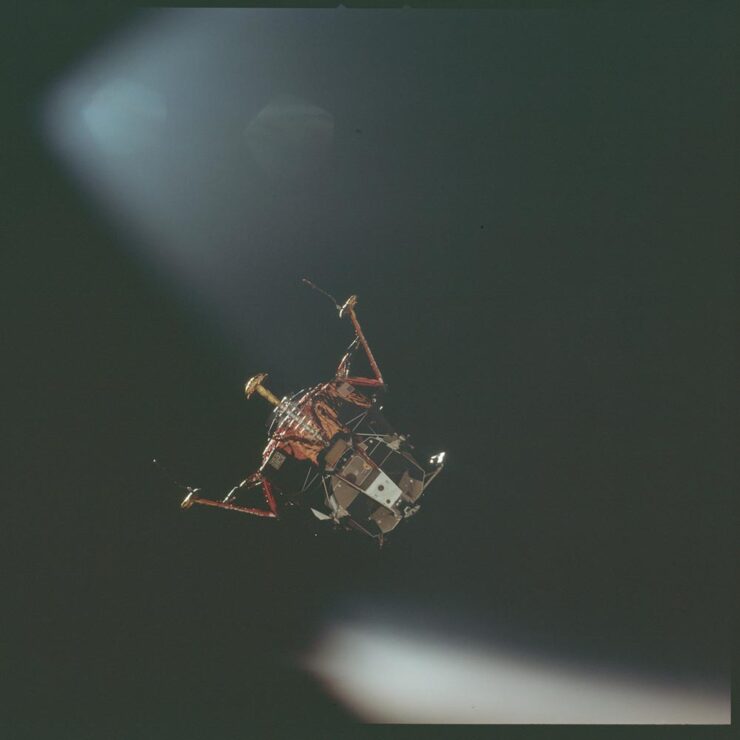
    Apollo 11, 1969, from NASA.

    Another NASA image is in the header, and we’ll see another from them in a minute.

    Meanwhile, Public Domain Review also has a list of items copyright-free as of the new year; check both resources — and use some newly-available items to your heart’s content.

    Special Bonus #1: This is Colossal, in 2016, also pointed us to another collection of freely-available items, this time from the New York Public Library. Great stuff.

    Special Bonus #2: In a three-fer for This is Colossal, they also highlight a new campaign from the U.S. National Archives asking those who can read cursive — no longer a requirement in school, a completely daft decision we’ll leave for another time — to contribute some time translating historical items. (And that’s not all you can do.) Become a Citizen Archivist today.

    Get Lectured

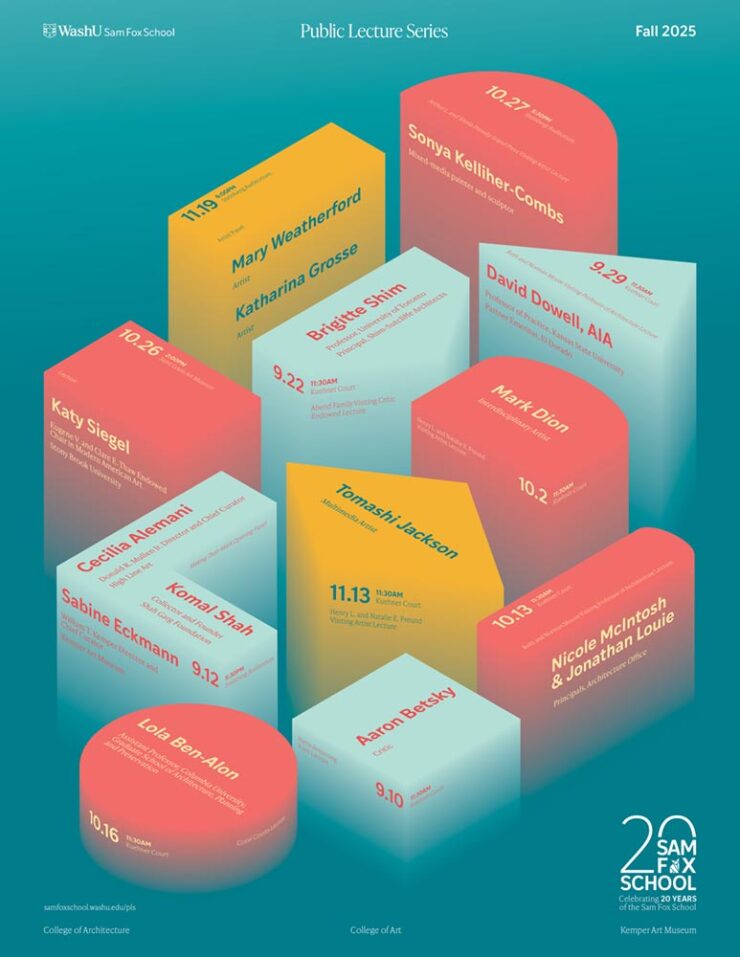
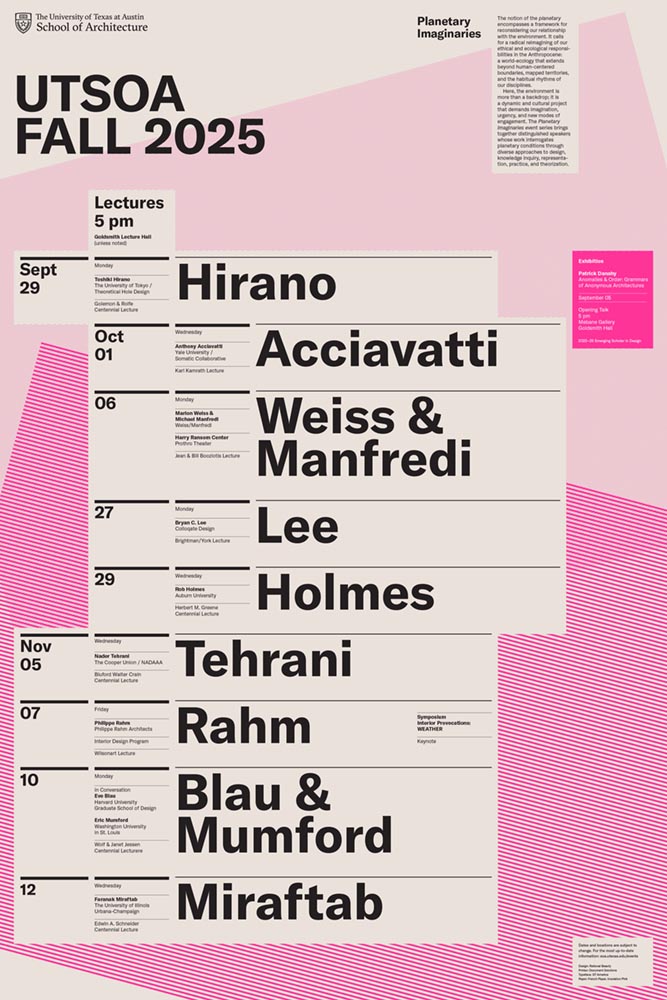
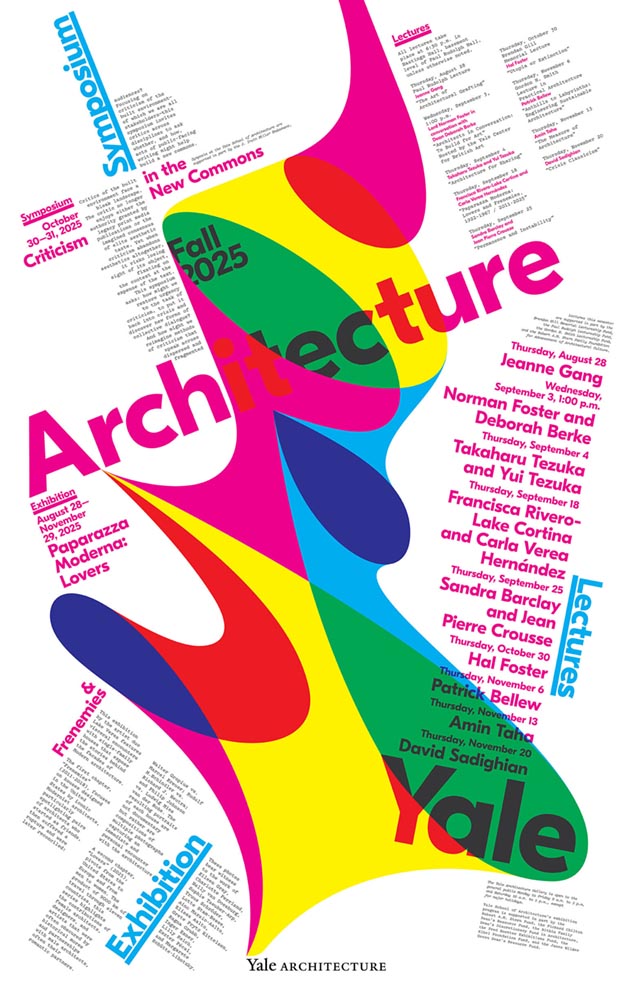
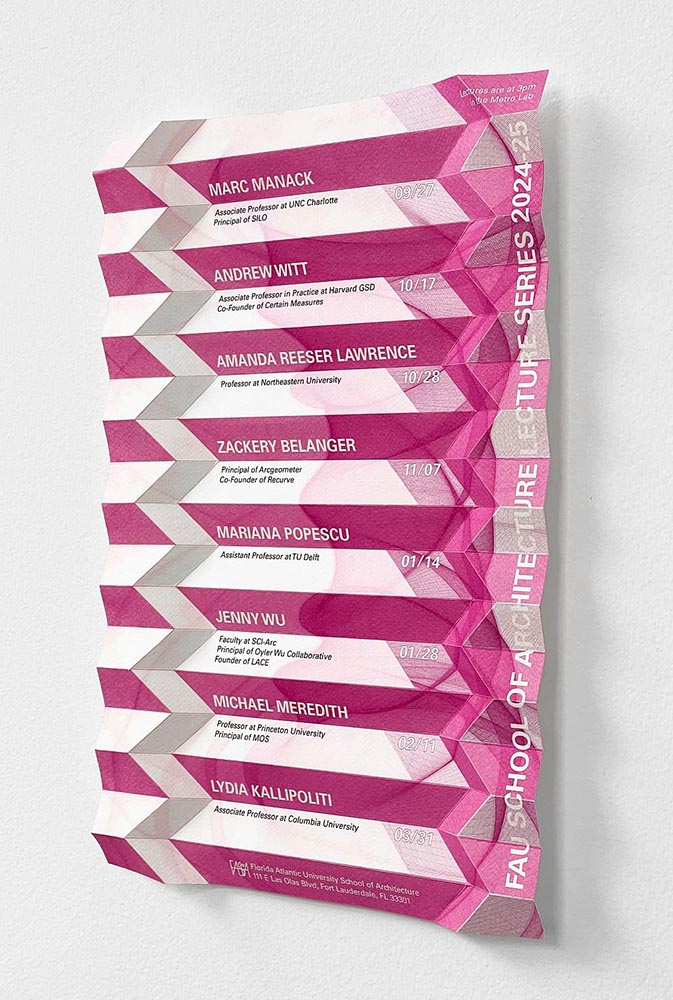
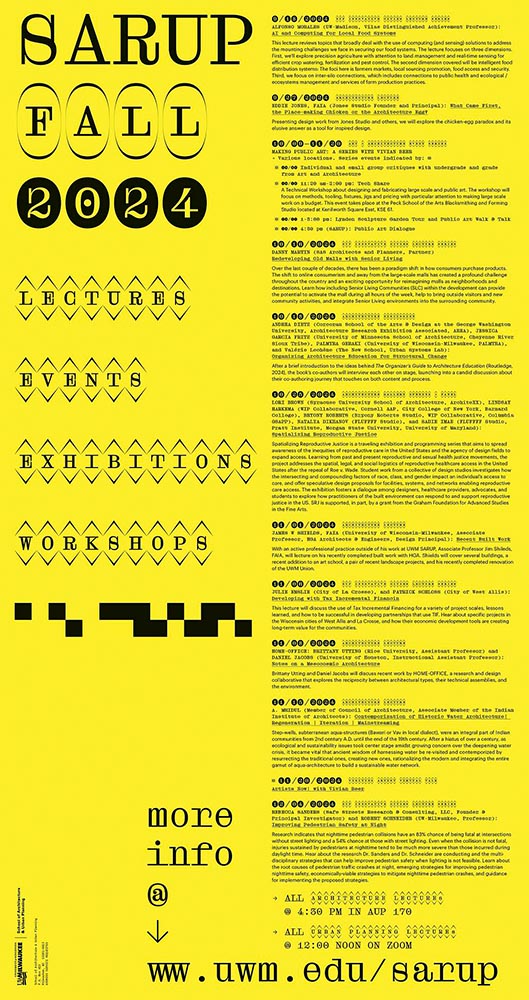
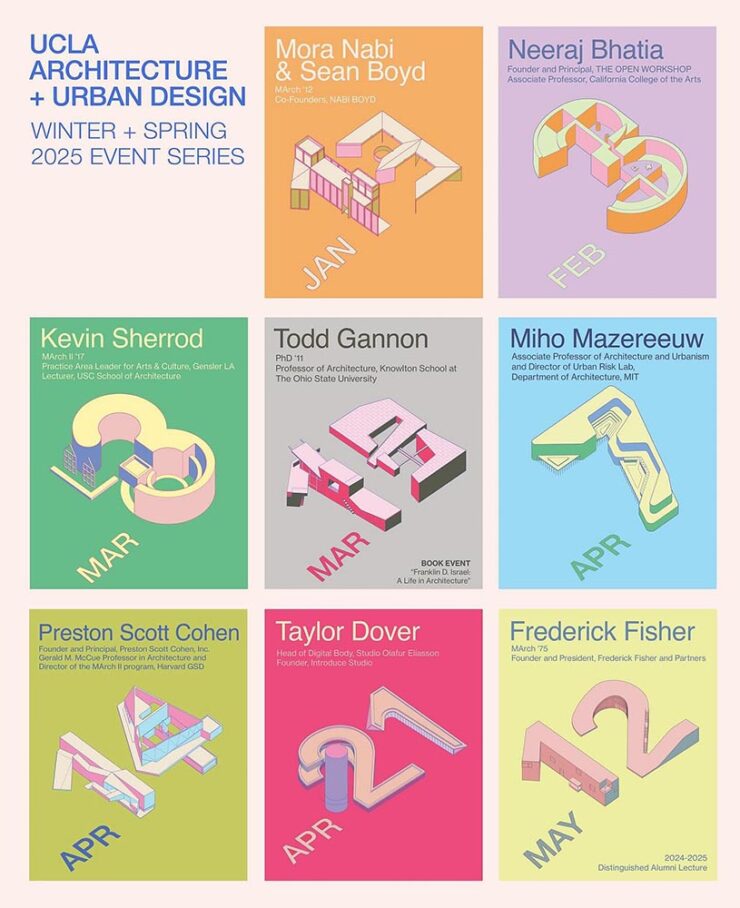
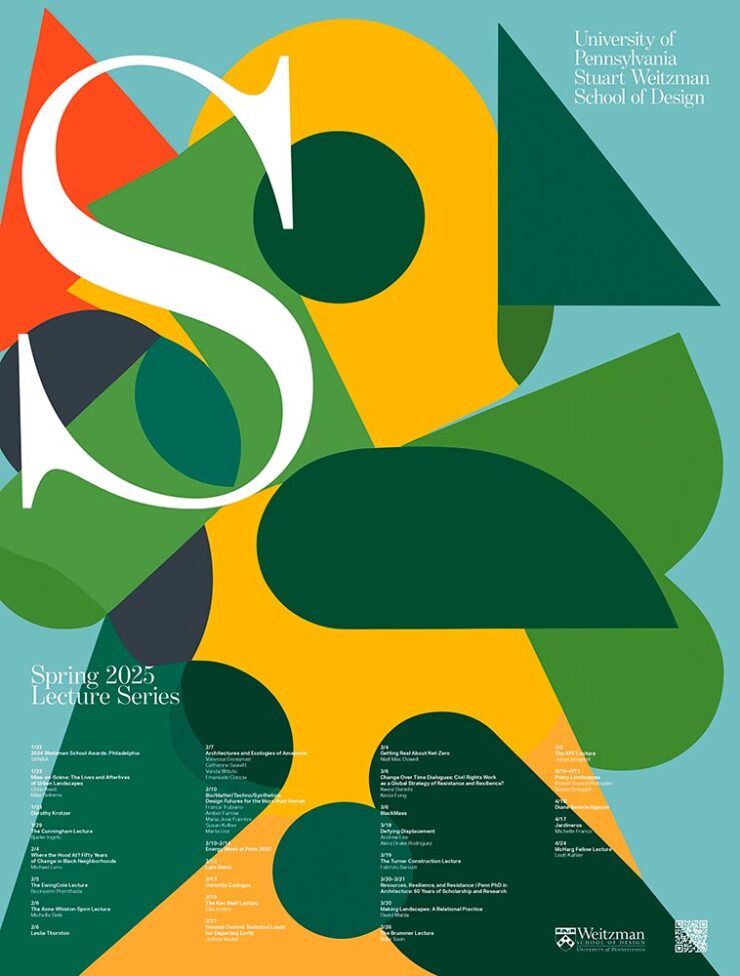
    No, not me: Archinect (previously) highlights their favorite architecture school lecture posters from Fall ’24, which I somehow didn’t mention. A couple of favorites:

    Florida Atlantic University.
    University of Wisconsin at Madison.

    The new year is off to a good start, too:

    UCLA.
    UPenn.

    UPenn’s fall ’24 poster is in the same vein and also rocks. Check out all the winners — and watch this space for more.

    Winning Photography

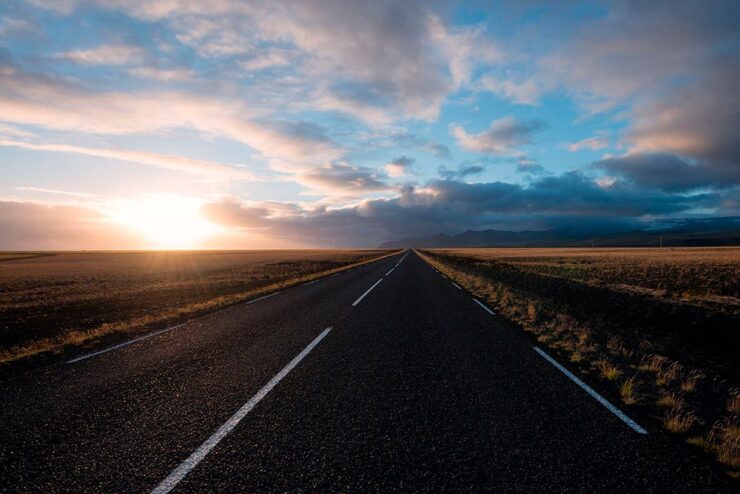
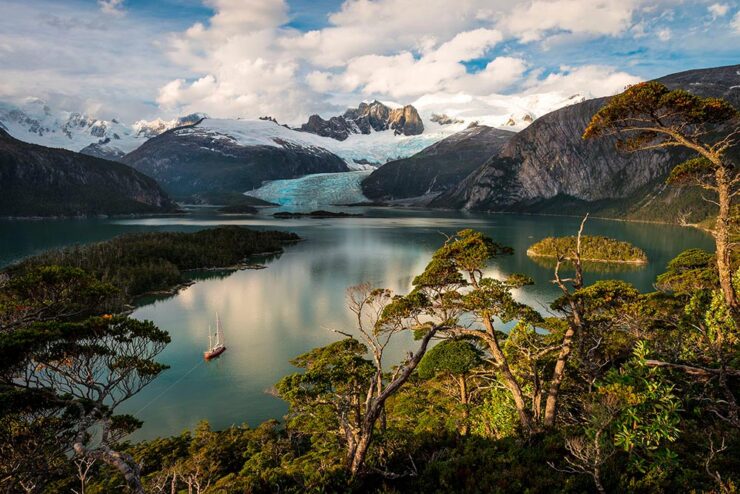
    I’m threatening to get a Raspberry Pi — the ol’ fashioned ad-blocker route is less and less effective, and a more robust alternative may be added — and was interested in this PetaPixel story about the desktop photos the system uses as standard: “[w]alking through a train station in New Zealand, Greg Annandale looks up to see his photo on an information screen. The Raspberry Pi computer powering the board has gone back to the desktop wallpaper which Annandale shot of a road in Iceland.”

    That would be this one:

    Road, Sólheimasandur, Iceland. Photo by Greg Annandale.

    Couple of others:

    Pia Fjord, Patagonia. Photo by Greg Annandale.
    Cordillera Darwin, Patagonia. Photo by Greg Annandale.

    Good stuff. Check out his website for more, and see the whole Pi here.

    Next, I promised NASA would put in another appearance. How’s this:

    Photo by Don Petit/NASA.

    In what Ars Technica senior space editor calls “the best picture ever taken from the International Space Station,” we have something special indeed. “In this image, one can see the core of the Milky Way galaxy, zodiacal light (sunlight diffused by interplanetary dust), streaks of SpaceX Starlink satellites, individual stars, an edge-on view of the atmosphere that appears in burnt umber due to hydroxide emissions, a near-sunrise just over the horizon, and nighttime cities appearing as streaks.”

    Wow.

    To round things out for January, we have a couple of photo contests whose winners caught my eye. We’ll start with The Society of Photographers and their photographer of the year 2024. My faves:

    Architectural Photographer of the Year award. Photograph by Andre Boto.
    Events Photographer of the Year award. Photograph by Mark Lynham.

    While I wish their selections were more extensively labeled and/or titled, it’s still awesome to see the raw talent highlighted with well-deserved accolades. See the PetaPixel story or the contests’ website for more.

    Lastly, some life in the wild, courtesy of the UK’s Natural History Museum People’s Choice Award:

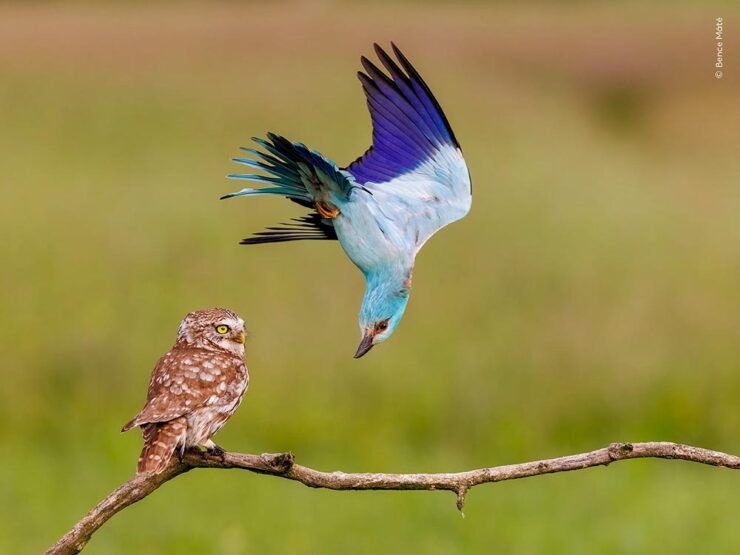
    Annoying Neighbour, Kiskunság National Park, Hungary. Photograph by Bence Máté.

    “Eyeing one another” fails to do this one justice. And then there’s the Villarrica volcano:

    Earth and Sky, Pucón, Chile. Photograph by Francisco Negroni.

    But it’s the patience of this shot that wins it for me:

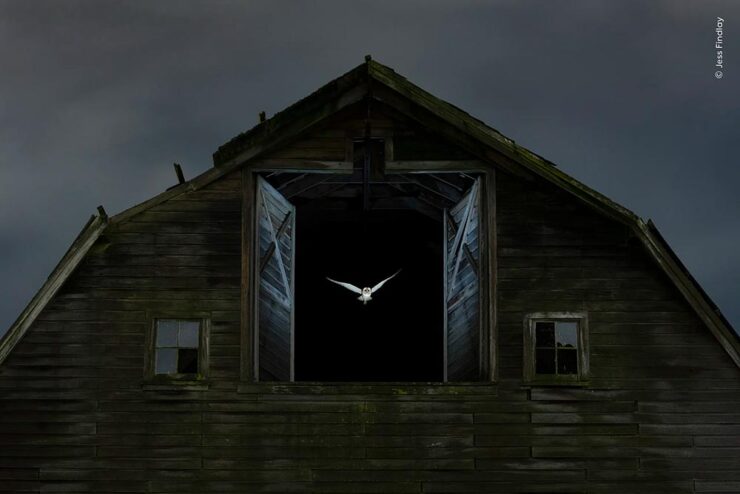
    Edge of Night, near Vancouver, BC, Canada. Photograph by Jess Findley.

    “Jess quietly watched the owl for several nights to understand its habits.

    “He set up an invisible beam that would trigger a flash when the owl flew out of the barn. Simultaneously, a slow shutter speed gathered ambient light cast on the clouds and barn.

    “On the tenth night, all the moving parts came together as the owl left to begin its hunt.”

    The winner of this contest will be announced on February 5th. Check the website. (Via This is Colossal.)

    See y’all in February.

  • Beautifully Briefed 24.7: Generated

    Beautifully Briefed 24.7: Generated

    This time, another automaker logo, some automotive and architecture photography, and the special bonuses that have all become a regular part of the Beautifully Briefed standard. But we’re going to start with some generated content.

    AI Book “Design”

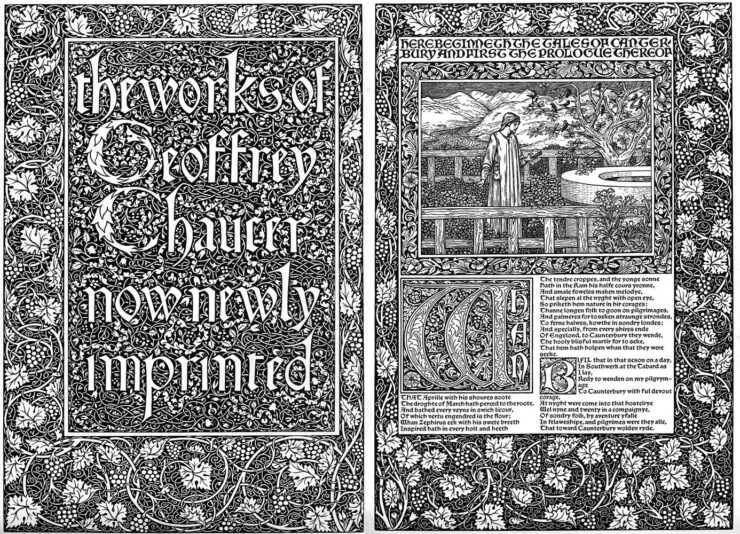
    From the “We knew this was going to happen” category, we have the first — that I’ve seen, anyway — “let AI do the work” research paper suggesting that book design is something that can be automated.

    We have presented a novel approach to computationally design books. The presented system implements a generative design process which takes advantage of the scripting capabilities of Adobe InDesign to procedurally typeset books from content provided by the user. We have shown the ability of the system to (i) create book designs that consistently comply with a series of typographic rules, styles and principles identified in the literature; (ii) produce visually diversified books from the same input content; and (iii) produce visually coherent books with different contents.

    Design by “AI.”

    Let’s please remember that “AI” as the term is currently used is actually “applied machine learning;” in this case, specific rules within specific containers in a specific application. It’s a first step towards something, as most “AI” is in 2024.

    But it’s absolutely not the only step. It’s inevitable that the necessary subsequent steps will be taken, probably sooner than later.

    As usual where someone is seriously discussing replacing a human worker with a computer, there’s a pitch for the upside:

    The work presented in the paper may challenge the typical roles of both the tool and the designer. First, by automatically creating and suggesting design alternatives, the tool ends up playing a more active role in the design process. Then, by modifying and developing custom tools, the designer is no longer a mere tool user and becomes the author of tools tailored to specific needs. We believe this shift can be fruitful since it enables the exploration and discovery of new technical and creative possibilities.

    In other words, the designer is now responsible for creatively writing the rules then policing the output — like so many things in the machine-learning, or “AI” space — rather than the actual drudgery of directly designing the output. “Design great rules, get great design.”

    And there is room for this. Amazon, especially, is going to jump on book design generated this way; never mind those folks in China or India earning (a paltry few) dollars a day, the computer can do it better for less . . . . Poof! With no human interaction whatsoever, your book is ready to publish. Indeed, for some, the bar to publish has just been lowered made easier. Perhaps even Adobe, who trumpets “AI” at every turn these days, they may choose to take this up. (Probably for a surcharge to the already-high subscription pricing.)

    Let’s not even speculate about the major publishing houses for now.

    But like AI-generated anything, getting actual art requires hand-tuning the input by an artist. For what amounts to “slop” — see this fantastic PixelEnvy discussion — the generated approach to book design might even be appropriate. But for book design that’s artistic, cared-for, or even “just” thoughtful, you’re going to need a human for a long time yet to come.

    The paper is available on Cornell University’s arxiv under CC BY-NC-SA 4.0 DEED license. (Via Hackernoon.)

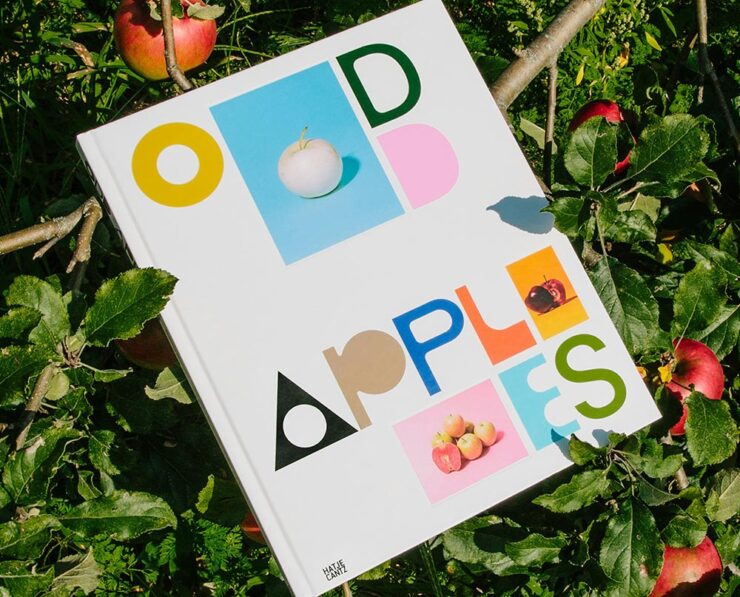
    The excellent Odd Apples, which I’m sure I’ve highlighted before — but in a very human way, can’t find.

    Special Bonus #1: I had the occasion to recently flip through Pentagram’s book design section. Some seriously interesting, seriously artistic work. (See the Odd Apples listing specifically.)

    It could probably be argued that computers took book design jobs away, but….

    Special Bonus #2: CreativeBoom links to three free archives on Victorian illustration to inspire — or perhaps use creatively in a book.

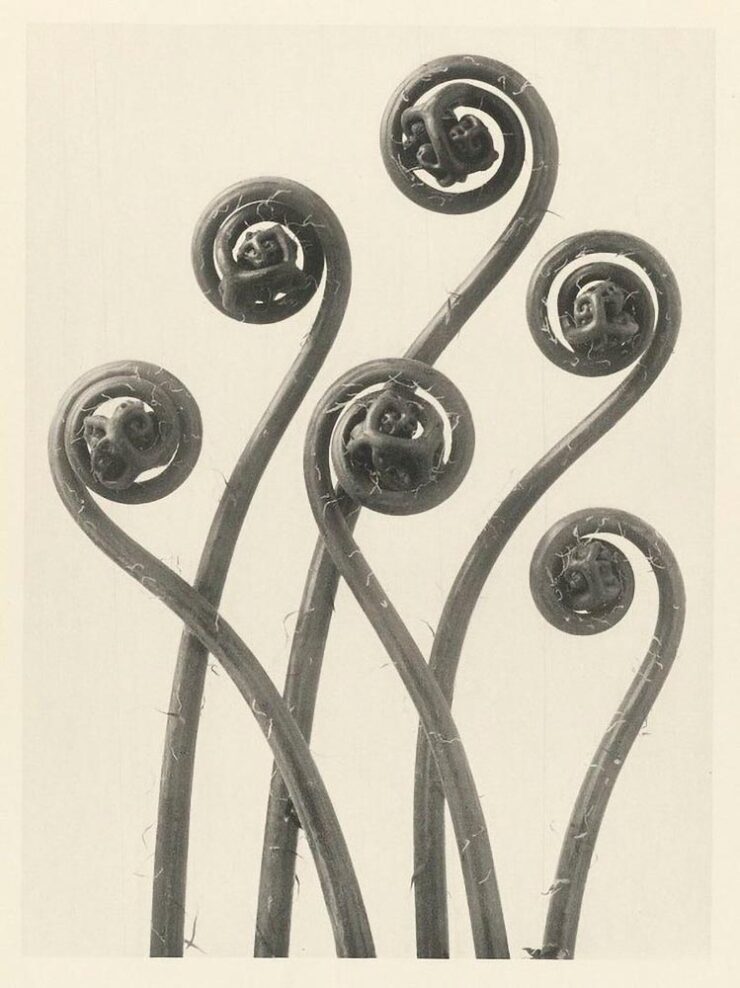
    Untitled (Fiddleheads), 1928. Photo by Karl Blossfeldt.

    Special Bonus #3: The ever-great Kottke.org. points us at Public Work, “an image search engine that boasts 100,000 “copyright-free” images from institutions like the NYPL, the Met, etc. It’s fast with a relatively simple interface and uses AI to auto-categorize and suggest possibly related images (both visually and content-wise).” As Jason Kottke points out, not great in the attribution department, but good stuff nonetheless.

    Mazda’s New Logo
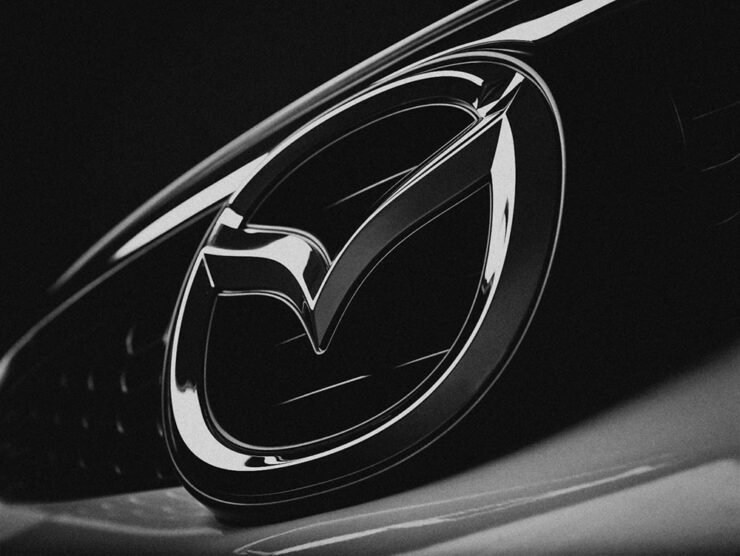
    Mazda’s logo as of 2023, seen on one of its cars.

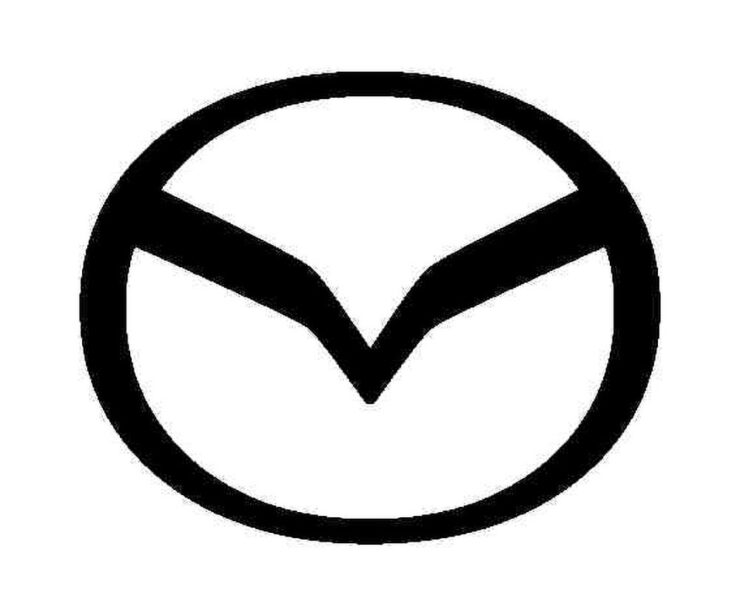
    From the automotive logo thread (previously), we have to note Mazda’s new look, reduced from the current 3D-style grayscale to flat and black and white. This one gets some criticism from me: it lacks grace, pace, or space. (Hmph. That might be someone else.)

    Angry Bird, anyone? (Pardon the artifacts — this image is enlarged from a Japanese trademark post.)

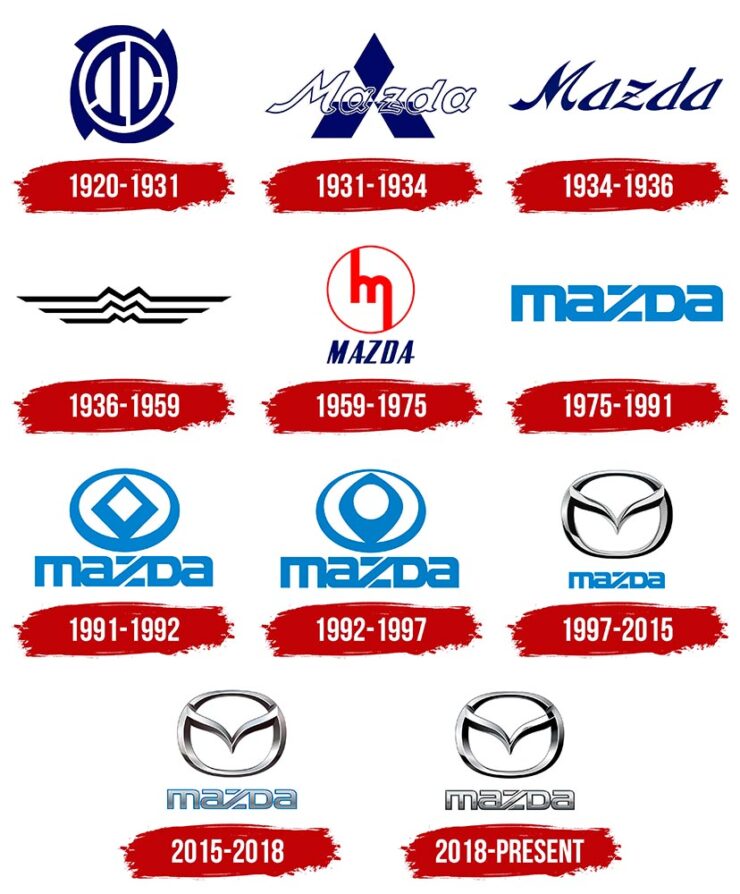
    Then again, Mazda has not always been successful with logos. Anyone remember the 1991–1997 version?

    Mazda’s complete logo history.

    The 1931–1934 version lays the name over Mitsubishi’s logo, which was responsible for sales. The 1975–1991 version is the one I remember best, but that’s likely a youth/rose-colored glasses sort of thing. See Wiki for more information.

    Meanwhile, Mazda is trying to move upmarket right now, and the new “look” isn’t really in keeping with that. Curious to see where this goes. (Via The Autopian.)

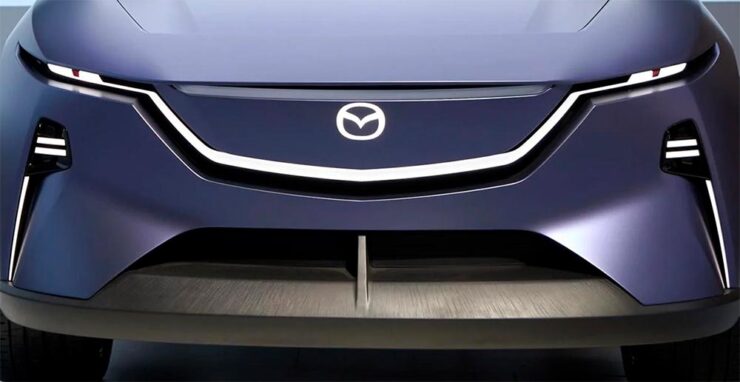
    Mazda’s new electric concept, the Errata, sporting an interim, flattened version of the current logo. Wait, might have gotten something wrong there, too….

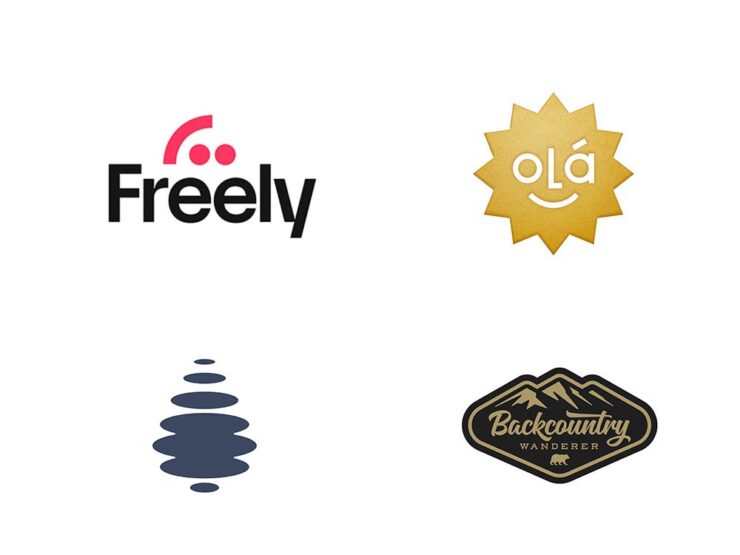
    Special Bonus #3: BrandNew points us at the 2024 Logo Trends report, the annual fun item from Logo Lounge that looks at what’s hot in this year’s crop of — you guessed it!

    Freely (Smiley category) and Droplet (Elliptic category), left, and Olá and Backcountry Wanderer, right, from the Sticker category. (Olá could be in the Smiley category, too.)

    Some of my favorites are above, but the whole report is worth a look. (Spoiler: more than flattening is on trend.)

    Auto, Auto+Arch, Arch
    Auto Photo Manual

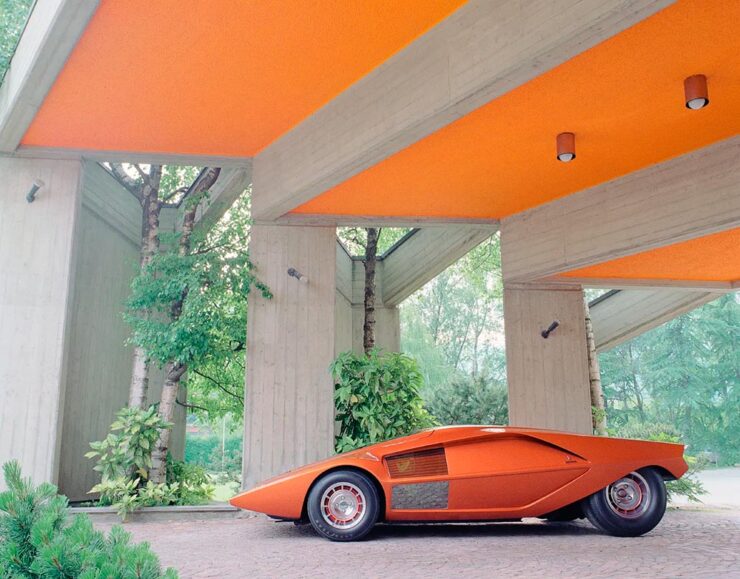
    Via Wallpaper*, we have Auto Photo Manual, a new monograph from Benedict Redgrove that “explores the art and science of photographing the world’s most striking cars:”

    A very orange Lambo. Photo by Benedict Redgrove.

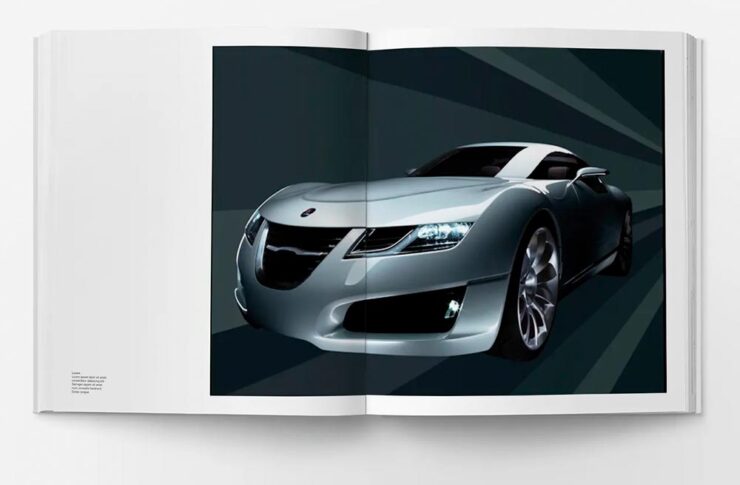
    Always a sucker for a Saab, especially this concept:

    The 2006 Saab Aero-X concept. Photo by Benedict Redgrove.

    Auto Photo Manual is a Kickstarter item that could use some love — stop by if you can. Wallpaper* has the full story.

    A Time • A Place (Vol. 1)

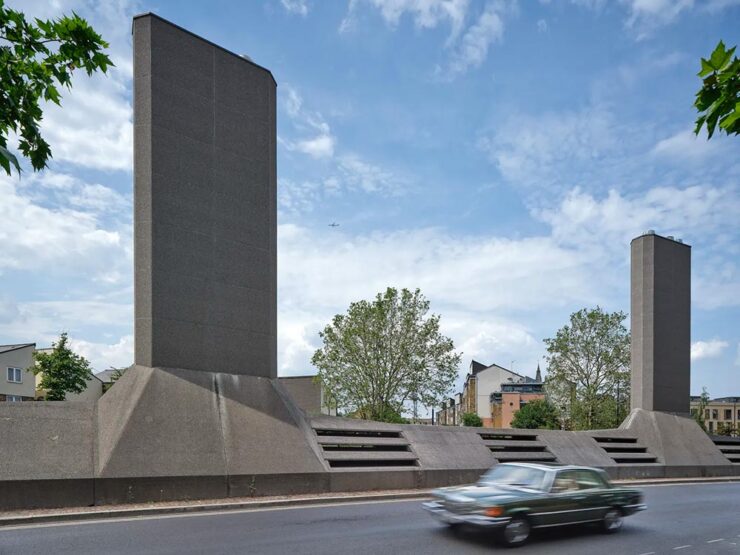
    Also via Wallpaper*, we have a “celebration of the European Car of the Year and changing perceptions of modern design, pairing the best buildings of the age with their automotive contemporaries:”

    London’s Camberwell Subamarine and the Mercedes W116. Photo by Daniel Hopkinson.

    “Through the lens of time, both [cars and buildings] have become highly symbolic of their eras and hindsight will allow us to trace the roots of each design to determine how it is viewed from a 21st century perspective,” says Holroyd, noting that over this period architecture underwent a stylistic retreat, just as car design became emboldened and more avant-garde.

    Great stuff in this new title, available now from The Modernist. Read more at Wallpaper*.

    World Architecture Festival 2024 Shortlist

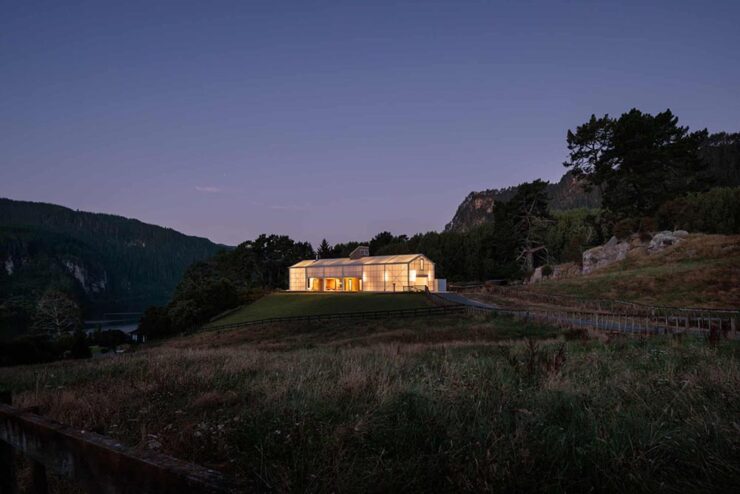
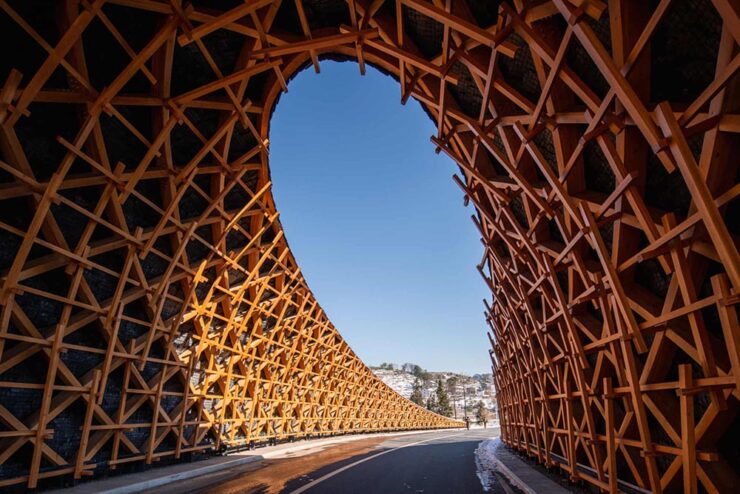
    Via The Guardian, we have The World Architecture Festival’s 2024 shortlist, revealing projects from around the world spanning categories such as childcare, energy, transport and science. A couple of faves:

    The Chodge by DCA Architects of Transformation — interesting name(s), surely — in Whakamaru, New Zealand. Photograph by Simon Devitt.

    The live awards event will take place in Singapore from November 6-8. This year’s finalists represent 71 countries.

    Woven Passage to Cloudy Peaks by line+ studio in Shaoxing, China. Photograph by line+studio.

    See more at The Guardian, or the complete shortlist at The World Architect Festival.

    Special Bonus #4: This is Colossal brings us the drone photography of Eric Waider, shot in Iceland:

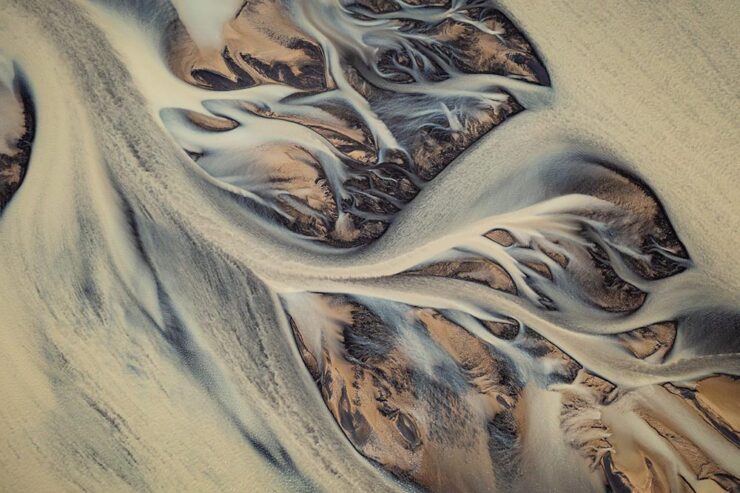
    As glaciers expand and recede, they have the capacity to grind rock so fine that geologists refer to the pulverized material as glacial flour. It slips down rivers and into lakes, carrying the otherworldly turquoise hue through a unique and resilient ecosystem. In Iceland, the blue-green color is complemented by rivers that flow yellow, thanks to sulfur from nearby volcanoes, or red from dissolved ferrous iron—also known as bog iron. Coursing over rock and black sand, the streams take on dazzling, rhythmic patterns.

    Photograph by Erik Waider.

    Brilliant. See his website (“Abstract Landscapes of the distant North”) and enjoy that series and more — including faves such as Ocean Blues and Glacial Macro.

  • Beautifully Briefed 24.6: Summer of Win (Mostly)

    Beautifully Briefed 24.6: Summer of Win (Mostly)

    In this installment of Beautifully Briefed, let’s take a look at some great posters, great print items, and great photography. Plus, an update from Adobe’s continued campaign to lose friends and attract government attention. Fun stuff!

    GET LECTURED (ON ARCHITECTURE)

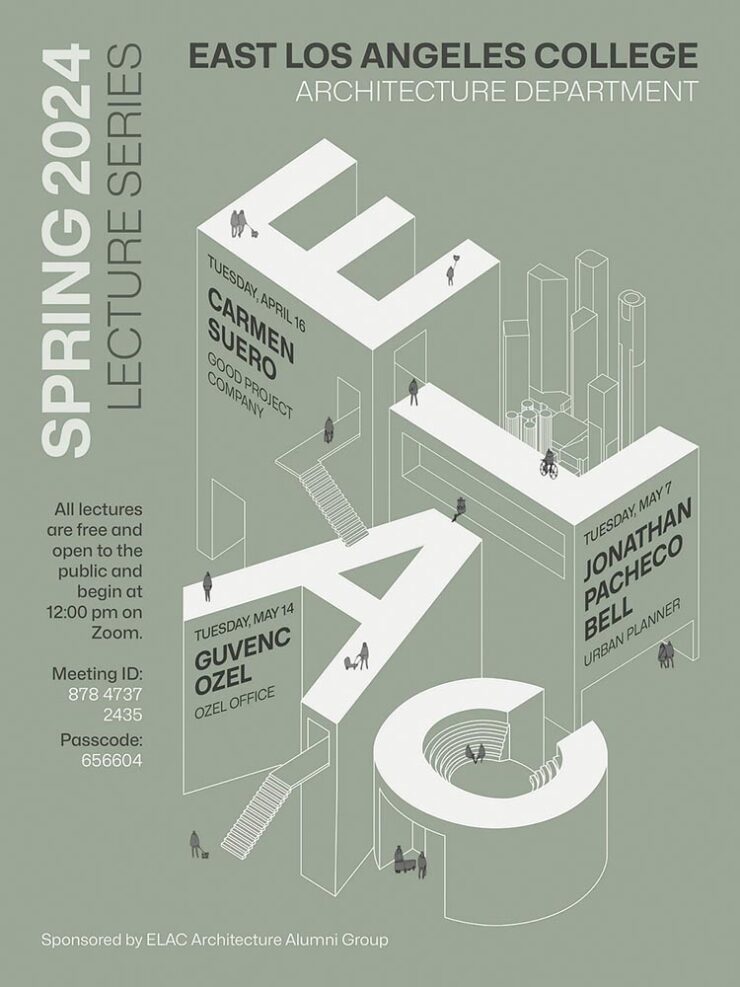
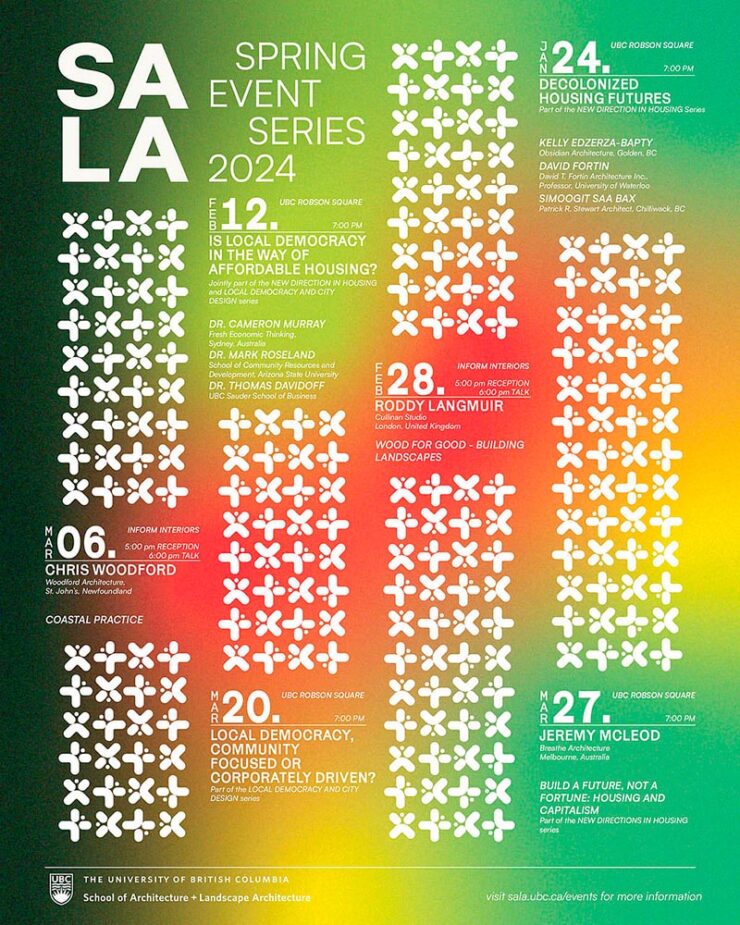
    Back in September, I mentioned Archinect’s Get Lectured poster series. They’re back with the Spring 2024 winners, including these two faves:

    ELAC lecture poster design by Tashfiah Ahmed.
    Lecture poster from the University of British Columbia; designer not listed.

    Great examples of design in a often difficult category. See the rest.

    Architecture Photographs by Hélène Binet

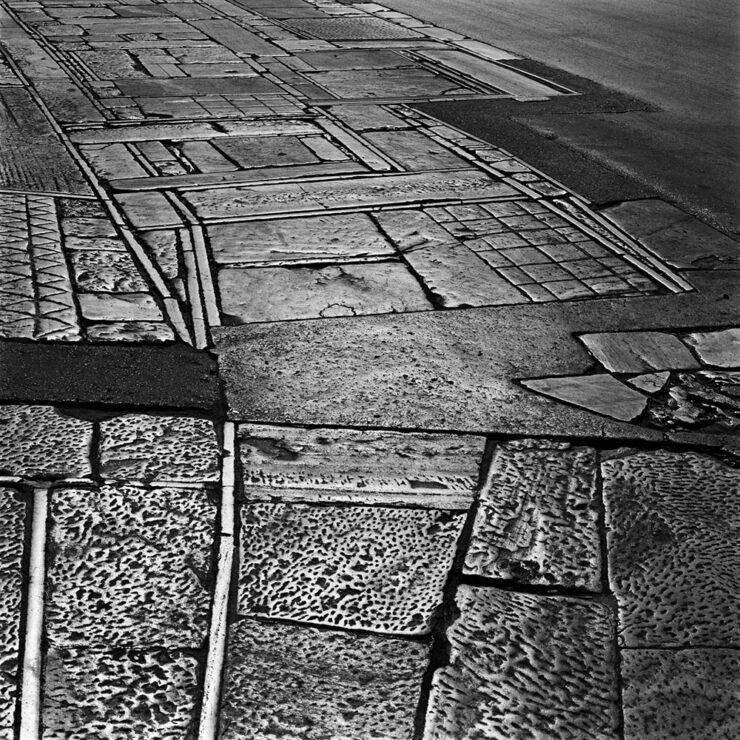
    While we’re discussing architecture, let’s talk about a Dezeen post that caught my eye: photographer Hélène Binet has a new book out, adding to her long career capturing the old-school way — using film.

    “A Sentimental Topography by Dimitris Pikionis, landscaping of the Acropolis, Athens, Greece.”

    This series captures shadows and light with exceptional talent, including the above, where she’s praised for “captur[ing] in a single image the tactile and textured presence of tectonic form, both in built and natural environments.”

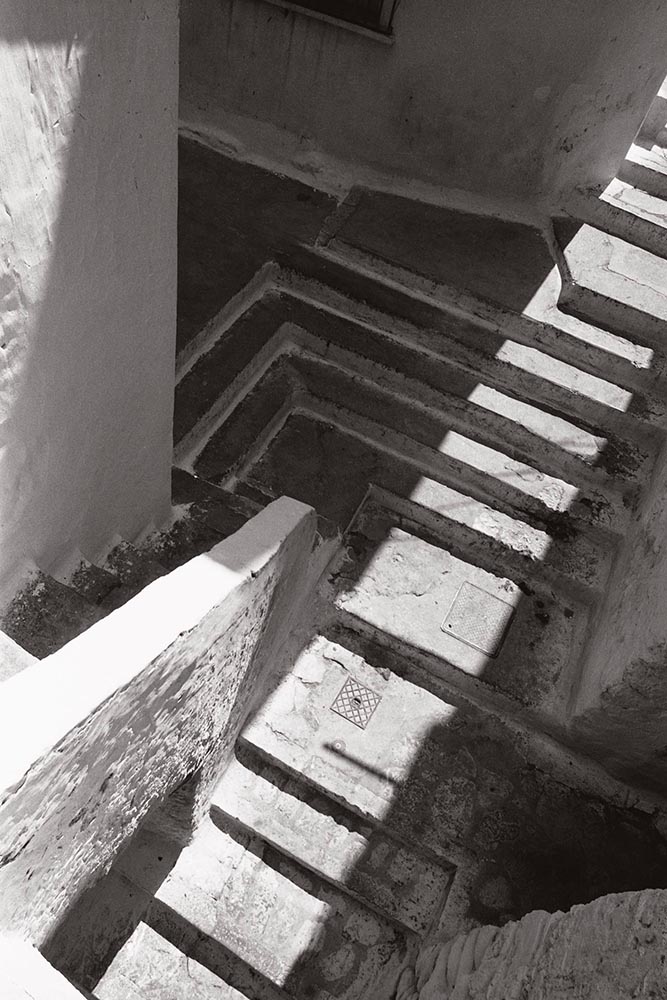
    “Staircases in Sperlonga, Latina, Italy.”

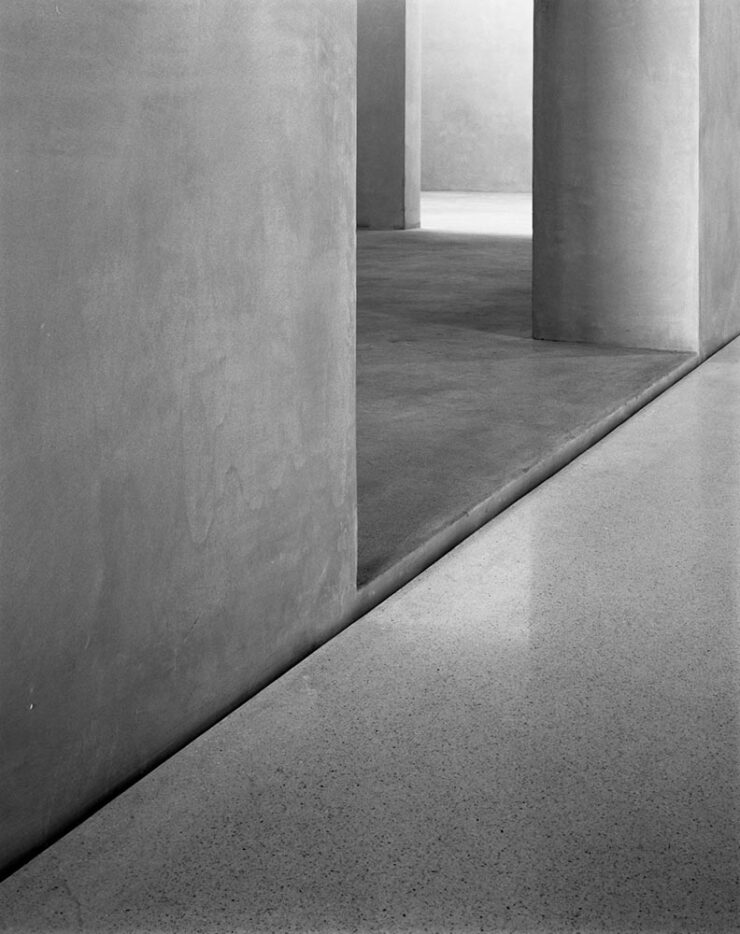
    I love the softer shades of gray than shown in the previous image, and both this and the image below demonstrate a deep understanding of architectural expression.

    “Kolumba Museum, Cologne, Germany, by Peter Zumthor.”

    Read the post from Dezeen, see more examples of outstanding work on her website, or buy the book with 170 photographs, essays, and more.

    2024 Audubon Photography Winners

    This is Colossal posted about this a day before my Audubon magazine showed up with these prominently featured, and they’re all winners.

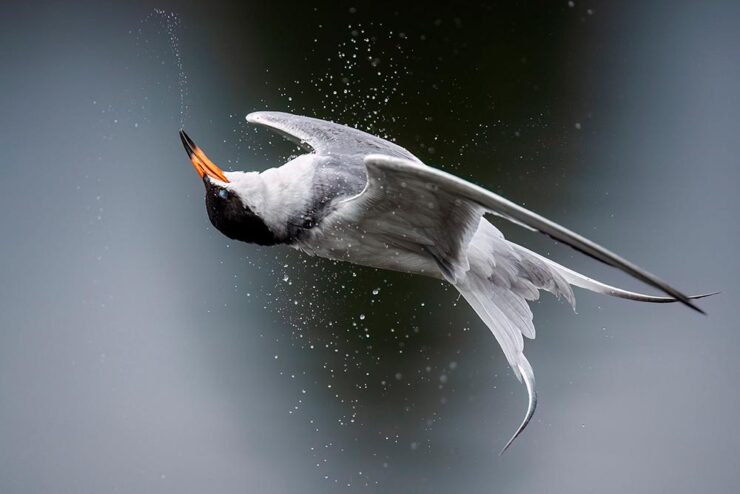
    Wild Turkey, Female Bird Prize Winner, by Travis Potter.

    Bird photography is a difficult skill requiring patience, perseverance, and specialized gear; those who excel at it deserve recognition. Plus, there’s this:

    Audubon’s climate science report Survival by Degrees reveals that two-thirds of North American birds are threatened by extinction from climate change, including species featured in this year’s Audubon Photography Awards like the Blackburnian Warbler, California Quail, and Sedge Wren.

    Forster’s Tern, Professional Honorable Mention, by Kevin Lohman.

    Check out the Colossal post, or see the full story at the Audubon website.

    Special Bonus #1: Kottke points us towards the Siena 2024 Drone Photography Awards. “Look! Up in the sky! It’s … another contest!” Good stuff nonetheless:

    “Jiashao Bridge” by Sheng Jiang, China.
    PRINT 2024 Awards

    The annual PRINT awards are out, featuring — natch — great items in print, including items like the Smithsonian’s annual report and a Naked Trails brochure. Here are a couple of items from the book design category:

    Jacket design by Robin Bilardello.

    Author sketch and lettering by the author. Also, let’s get the . . . :

    Cover design by Milan Bozic, with illustration and typography by Lauren Tamaki.

    Fantastic.

    Special Bonus #2: Hoefler & Co. brings us Typographic Doubletakes: “While good typefaces have prodigious families of carefully related styles, some of the best typography builds unexpected relationships between unrelated fonts.”

    Left: Chronicle Hairline + Landmark. Right: Vitesse + Gotham.

    Their blog refreshes as you scroll in more ways than one — enjoy.

    Left: Mercury Text + Ideal Sans SSm. Right: Whitney + Operator and Operator Mono.

    Special Bonus #3: Kottke points us to a LitHub post arguing for adding full credit pages to books acknowledging everyone who worked on them. “How lovely it is to be seen and appreciated.”

    Adobe “Too Easy to Hate,” Say Users, Employees

    Adobe continues to score big with the public — in the best Boeing style, a formerly-great company has put profits before users and employees. While successful from the shareholders’ point of view (record profits, again), some are . . . upset. PetaPixel:

    Just over a month ago, an Adobe exec called AI the “new digital camera.” Simultaneously, an Adobe marketing campaign chucked photographers under the bus, and not for the first time, which caught the attention of the American Society of Media Photographers (ASMP). At the very top of Adobe, there is a concerning and frustrating lack of understanding about art and the people who make it.

    Even “exasperated employees implored leadership to not let it be the “evil” company customers think it is;” while that might be a stretch — “ignorant greed” is a better description — either is not a winning look.

    The latest was a terms-of-service update that many saw as a rights grab, allowing the company to use users’ work to train its AI services. While those have been amended, the seemingly clear language — “We’ve never trained generative AI on customer content, taken ownership of a customer’s work, or allowed access to customer content beyond legal requirements” — comes from a company that has lost the trust of users, making those words just that — words. Time will tell if they are truth.

    But there’s more: Adobe’s just been sued by the FTC (via PetaPixel, Pixel Envy) for hidden fees and difficult cancellations:

    “For years, Adobe has harmed consumers by enrolling them in its default, most lucrative subscription plan without clearly disclosing important plan terms,” the lawsuit alleges. “Adobe fails to adequately disclose to consumers that by signing up for the ‘Annual, Paid Monthly’ subscription plan, they are agreeing to a yearlong commitment and a hefty early termination fee that can amount to hundreds of dollars. Adobe clearly discloses the early termination fee only when subscribers attempt to cancel, turning the stealth early termination fee into a powerful retention too that [redacted] by trapping consumers in subscriptions they no longer want.”

    I’m actually glad for this, as I wasn’t aware that my $60+ monthly fee is a payment on an annual plan. (Ug.) Not too big an issue — I actually feel like there’s decent value in the plan and will continue to subscribe for the foreseeable future.

    But I’d also be lying if I said I’m completely satisfied with our business arrangement: alternatives are few and far between. While Adobe does not have a monopoly legally or technically, in the publishing industry at least, they are, for all intents and purposes, the only game in town. It would be nice if they would at least demonstrate a modicum of respect for their users.

    Update, 25 July 2024: “Adobe Exec Says Early Termination Fees Are ‘Like Heroin’ for the Company,” according to PetaPixel. Hmph.

  • Beautifully Briefed 23.9: Falling into Brilliance

    Beautifully Briefed 23.9: Falling into Brilliance

    As summer turns to fall, let’s take a look at Type 1 fonts, a library index, revolutionary posters, posters for “get lectured,” and two different photography contests. Let’s get right into it.

    Adobe discontinues a standard: The Type 1 font

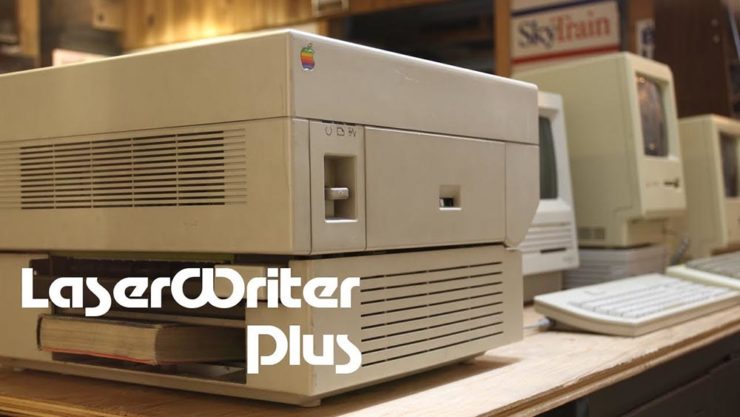
    Back in the early days of desktop publishing — up to about the turn of the century, give or take — everything typographic used PostScript, a programming language by Adobe. (Other stuff, too, like Adobe’s vector program, Illustrator.) PostScript fonts were the so-called “Type 1” variety, made up of a bitmapped “suitcase” that housed the standard display sizes and an outline file used by the output device to print clean, what-you-see-is-what-you-get beauty.

    The Apple LaserWriter Plus and some vintage Macs: nostalgia! (Note the book — heh.) Image: YouTube.

    Companies from Apple to Microsoft didn’t want Adobe to hold a monopoly on output tech, so later fonts evolved into TrueType and then OpenType, the latter of which is the standard today.

    So much so that Adobe has now discontinued Type 1, and they, along with Microsoft, have stopped being supported. Which is understandable and yet a shame: some of us still have hundreds of them.

    Ars Technica has the best roundup.

    Meanwhile, I’m going to investigate a conversion utility. Will report back.

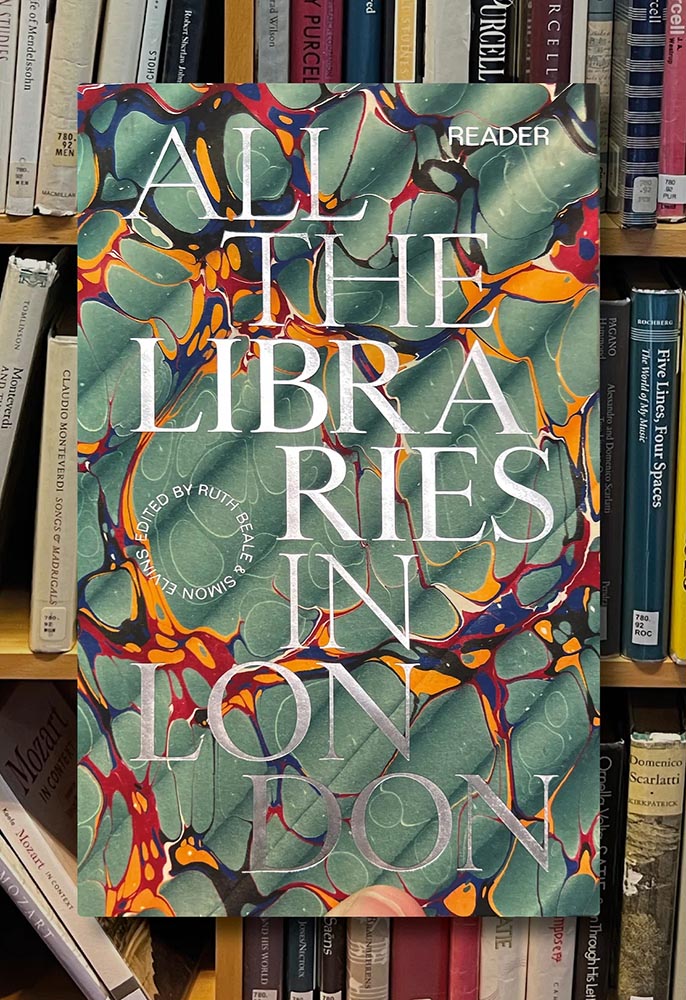
    All the Libraries in London

    It’s Nice That has a post that reminds us of a library’s central purpose: to leave knowing more than you did when you entered. “The library, in our shared public imagination, is a special place,” the author argues — reminding us of what libraries were established to do, often distinctly different from the modern reality (especially in the United States).

    In the library you begin to be convinced that language matters, that words have the power to clarify, to rouse, to make us feel something, to help us understand the political and cultural features of historical and contemporary moments.

    Lola Olufemi, It’s Nice That
    All the Libraries in London. Cover design: unknown. Image via It’s Nice That.

    All the Libraries in London does something artistic with a simple listing, elevating it, reminding us how compelling the ideal that libraries represent really is:

    This is a political and artistic listing, one that invites the reader to rediscover their own memories of their local library as a site of discovery. The book’s authors invite us to reflect on our personal relationship to libraries as well as the necessity of collectively securing their future existence.

    Lola Olufemi, It’s Nice That
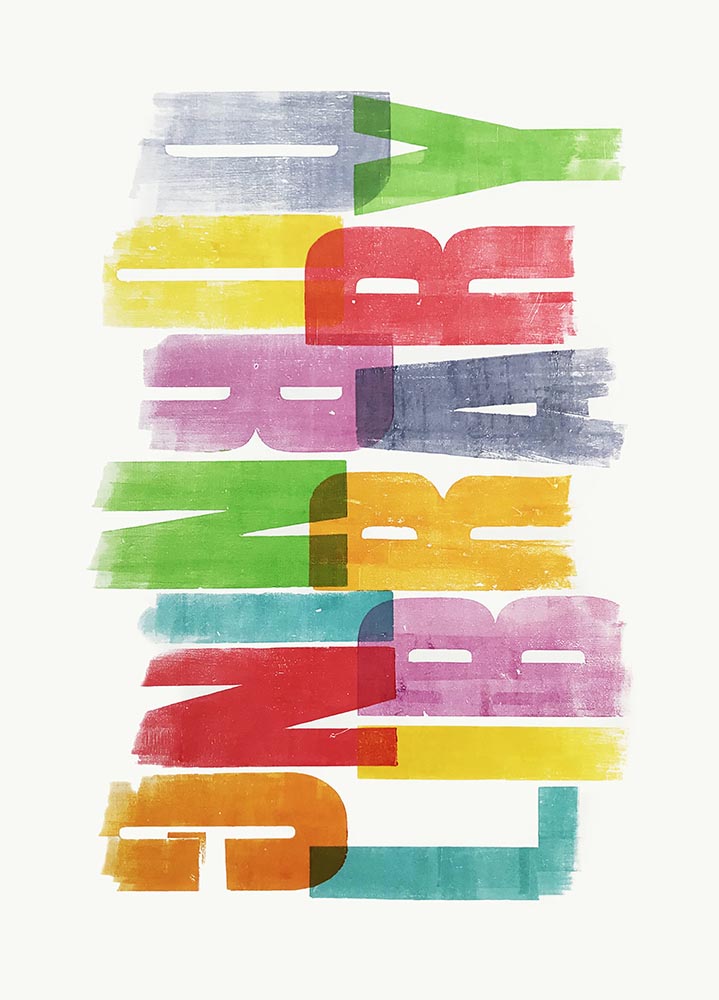
    Alan Kitching, Durning Library. Image via It’s Nice That.

    We need more of this everywhere, but especially here in the States. Meanwhile, check out this great item at It’s Nice That.

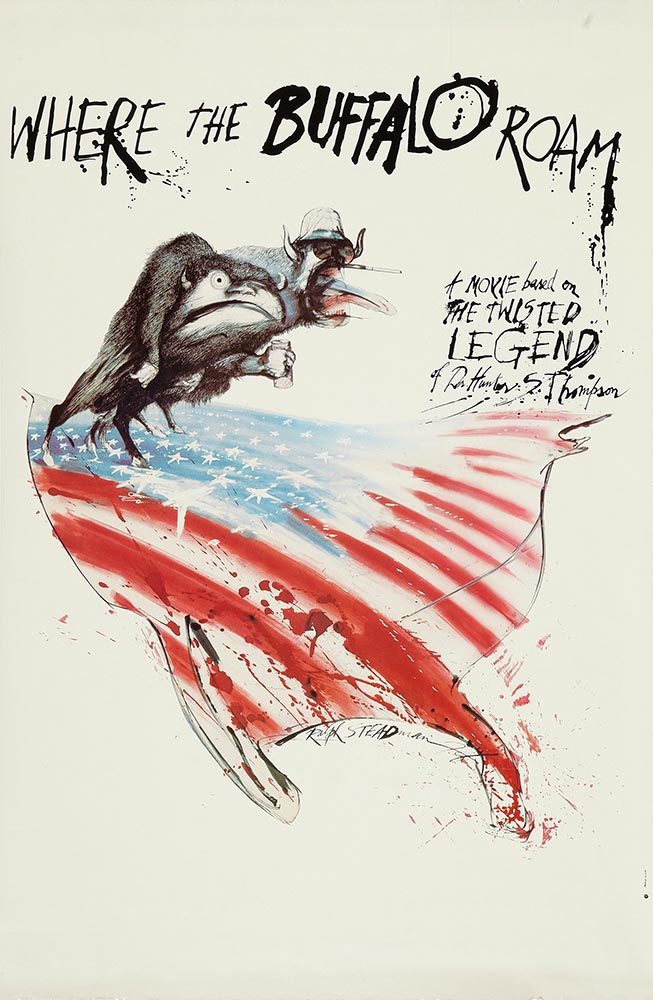
    Special Bonus #1: Another British treasure, via the very British Antiques Roadshow (a British original, natch): this incredible poster by Ralph Steadman.

    Ralph Steadman’s Where the Buffalo Roam (1980) poster. Image via Wikipedia.

    Special Bonus #2: British book designer Steve Leard has launched a new book design podcast, Cover Meeting, featuring interviews between Leard and fellow book designers on the work, the industry, and more. The Bookseller has more.

    Cuban Movie Posters. No, Really.

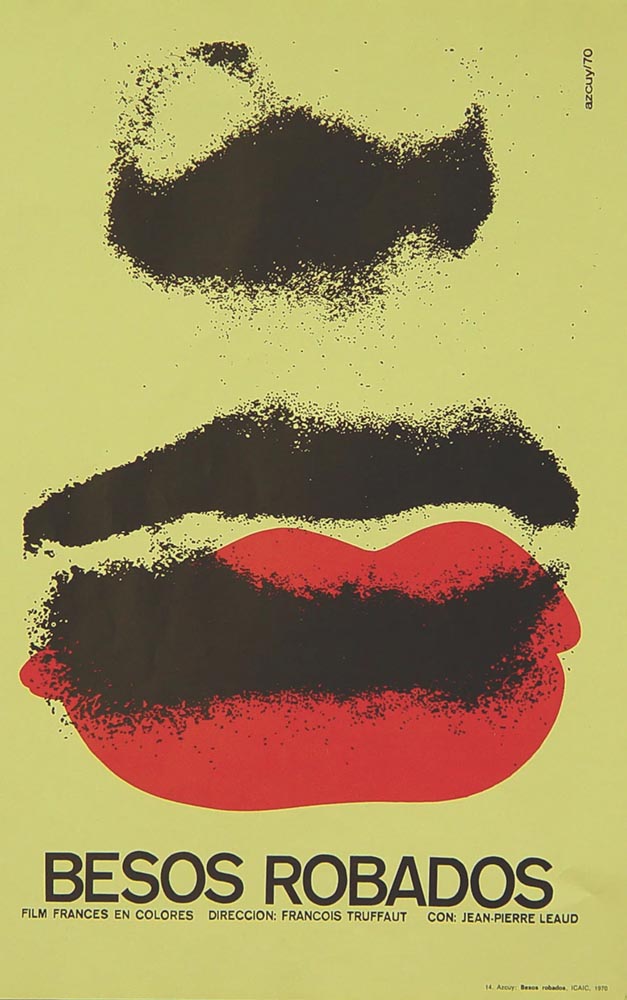
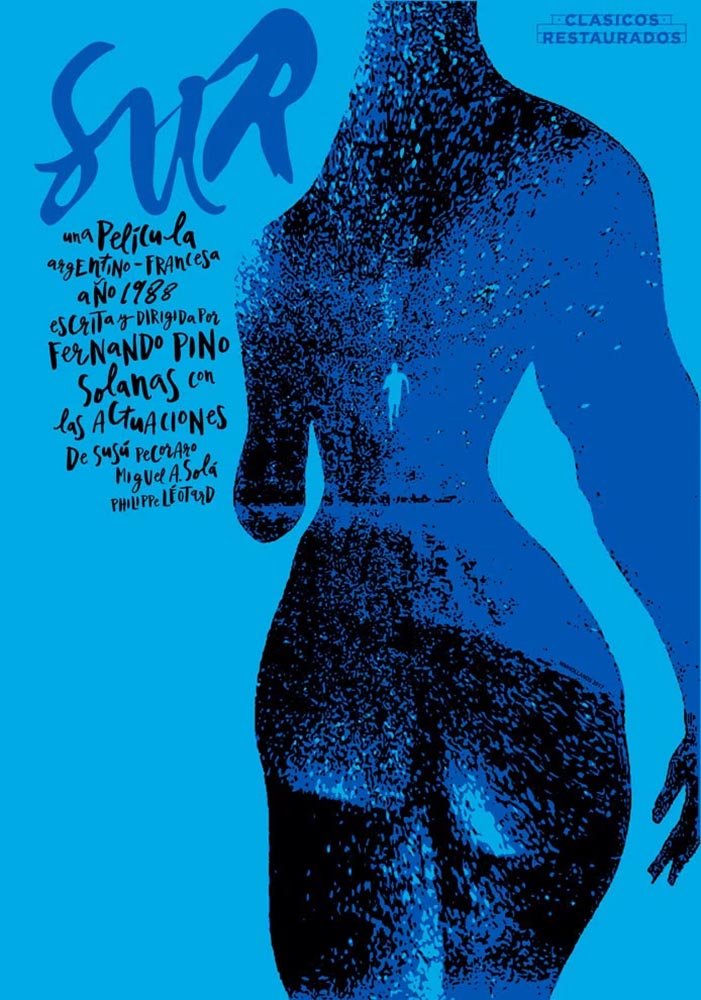
    While we’re on the subject of great posters — and It’s Nice That — let’s talk about how Cuba’s revolution-era political posters transformed their poster design for films. Appropriately enough, a new film, El Cartel Cubano, highlights these amazing (and, likely, never seen before) items.

    Besos Robados, ICAIC, by Sotolongo & Carole Goodman. Image via It’s Nice That.

    How come our posters in the US aren’t this beautiful? What did this say about the priorities of the revolution? What did the medium or choices in the scarcity of materials used say about the economic situation in Cuba?” It’s these questions which form the bedrock of El Cartel Cubano, a fascinating and tender tribute to the artists on the island.

    Adrienne Hall, co-director, El Cartel Cubano
    Sur, by Michael Myiares Holland. Image via It’s Nice That.

    I have to admit: this isn’t a subject I would have leapt at, but It’s Nice That sold it. Awesome.

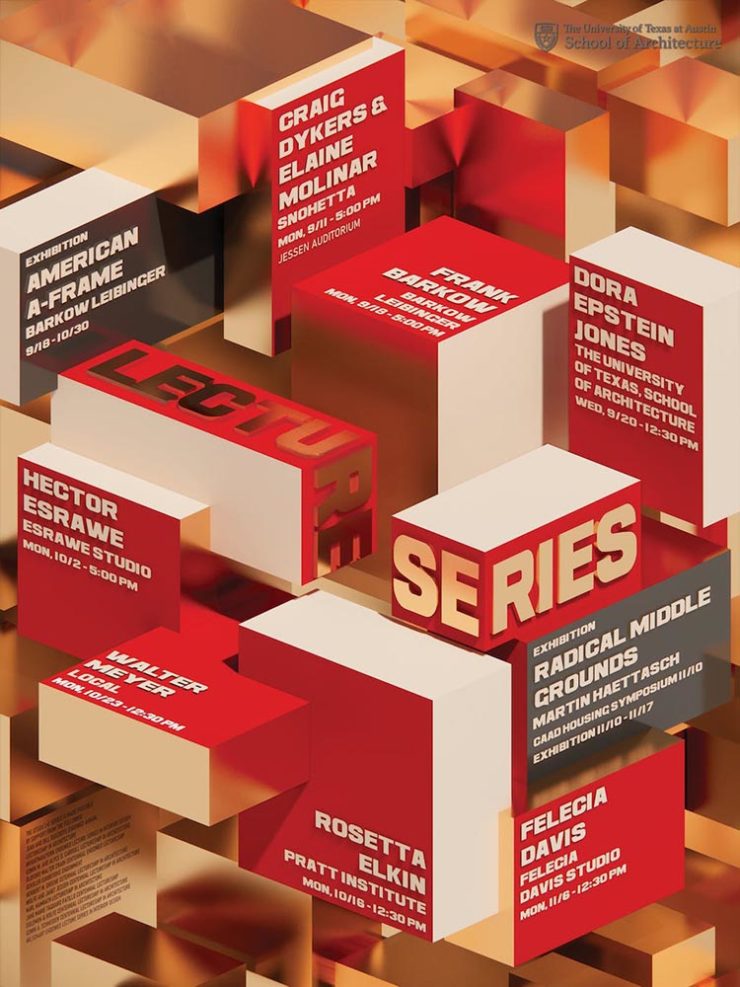
    Get Lectured (on Architecture)

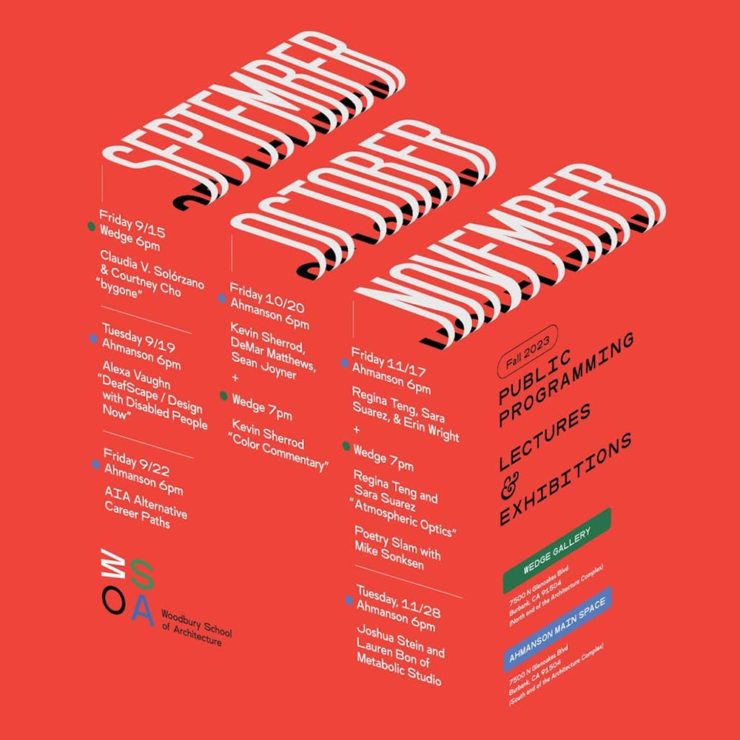
    Closing out our trifecta of great posters, Archinect‘s Get Lectured series brings us these fantastic items from their Fall 2023 series:

    Woodbury University School of Architecture’s Fall 2023 lecture series.
    The University of Texas at Austin School of Architecture’s Fall 2023 lecture series

    Some real gems: see more.

    Finalists of the 2023 Urban Photography Awards

    Going to soapbox a little here: pay-to-enter photo contests aren’t usually something I want to spread the word about. So ArchDaily‘s basically-a-press-release, “URBAN Photo Awards 2023 has announced its list of Finalist Photographers, marking the penultimate stage of the international contest,” was guaranteed a pass.

    But there’s a problem: some of the photographs are really compelling.

    Untitled, by Claudia Costantino

    This one’s my fave:

    Back to the 70s, by Stephane Navailles

    See the contest website, or ArchDaily‘s post.

    Winners of the 2023 Black and White Photography Awards

    Another contest, yes. They’re everywhere. But … wow.

    Street Lights – Ottawa, by Gareth Jones, category winner, architecture
    Another mushroom? By Hector Ballester Ballester. Silver mention, architecture.
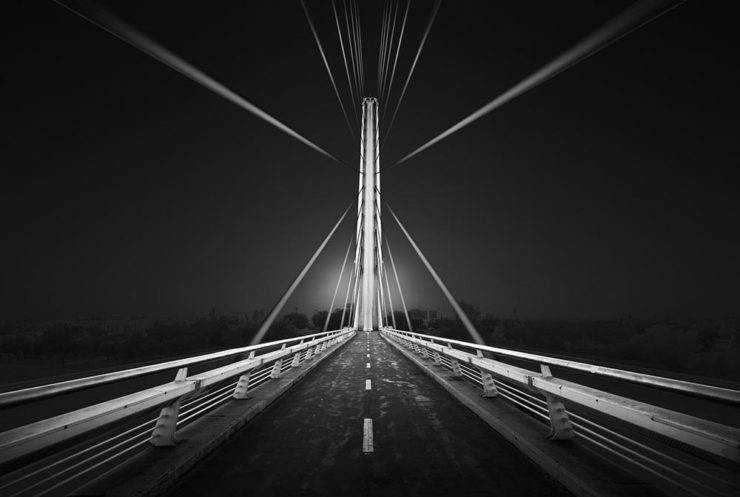
    Alamillo bridge, by Manuel Ponce Luque. Finalist.
    The concert, by Helena García Huertas. Finalist.
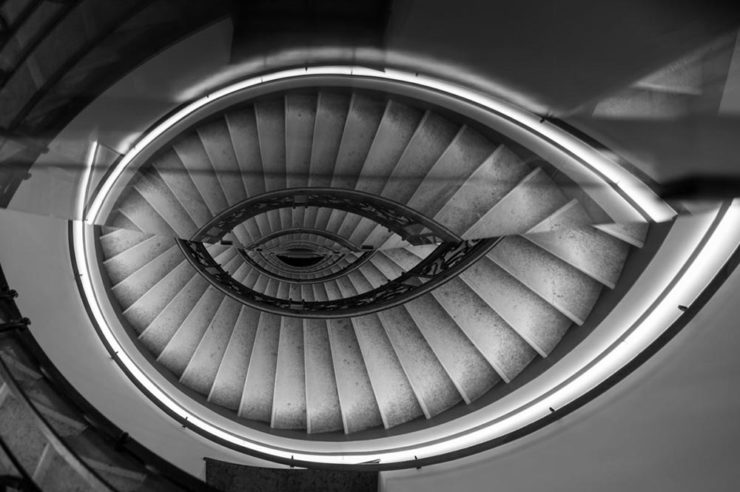
    Reflections on the stairwell, by Max Dobens. Finalist.

    And that’s just the buildings/architecture — there are portraits, street photography, landscapes, and more. A reminder to aspire, every day, with every image.

    The Black and White Photo Awards (2023). (Via PetaPixel.)

  • Beautifully Briefed 23.2: Book Cover Portals, Lorem Ipsum, Favorite Fonts, and Building Photography

    Beautifully Briefed 23.2: Book Cover Portals, Lorem Ipsum, Favorite Fonts, and Building Photography

    Look out, look up, look forward, and look through in this edition of brief, link-filled goodness.

    “You May Now Enter”

    PRINT covers, uh, covers:

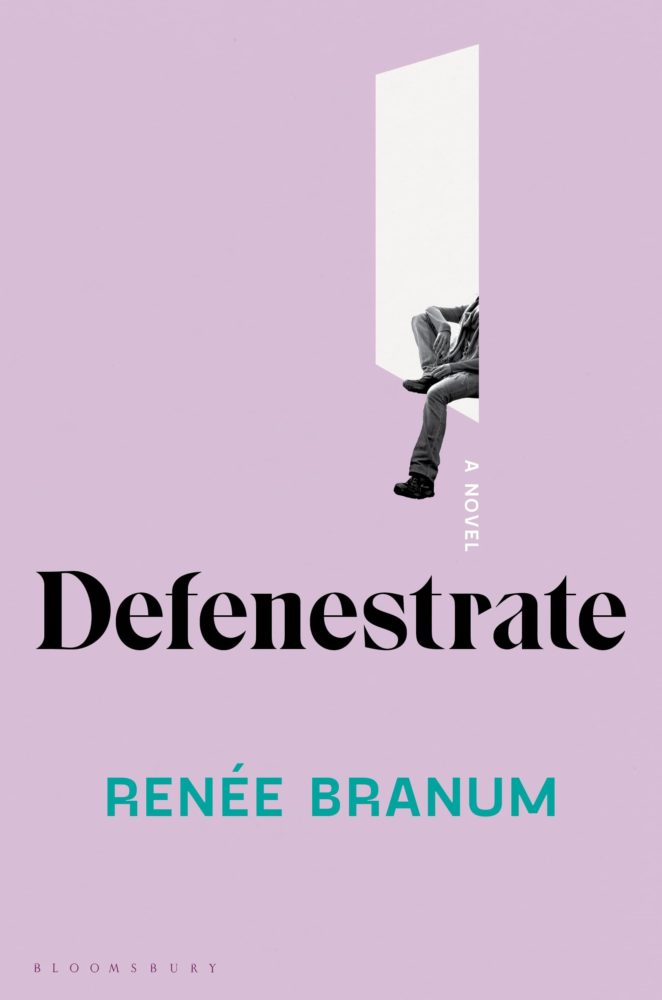
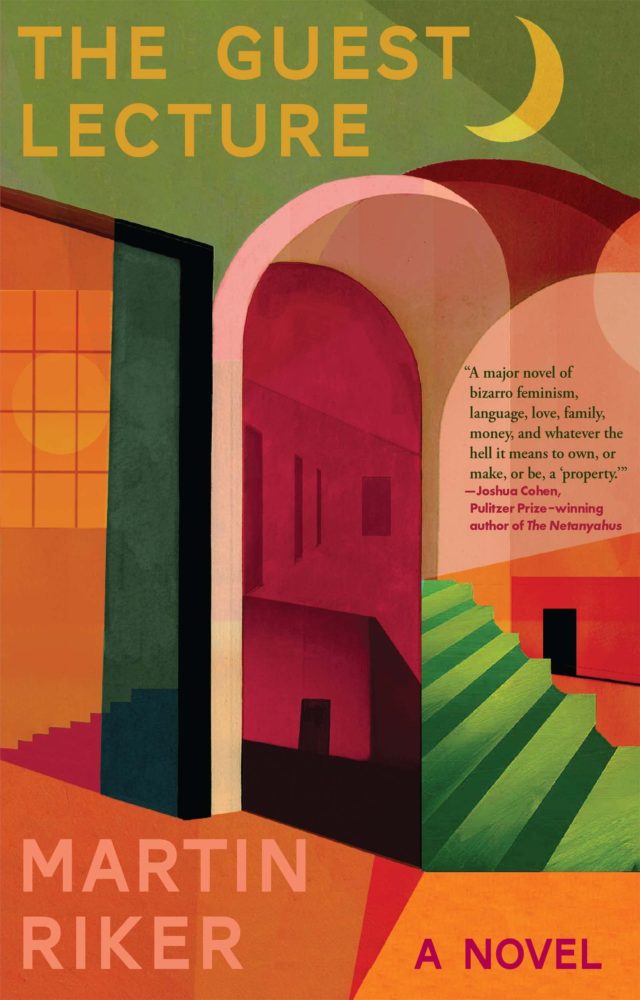
    While the book blob dominated the discourse for the last few years, we’ve recently identified another trend splashing its way across new releases: the recurring symbol of doorways, open windows, and mysterious portals.

    —Charlotte Beach and Chloe Gordon, PRINT

    A couple of the examples they cite:

    Not only a portal but a shelf. Cool.
    Not only a portal but also stairs. Nice.

    Unlike the blob, I’m in favor of this one — the hint of the unknown is appealing in a visceral way that offers more while simultaneously offering more sales by asking potential readers to speculate and, thus, engage. Nice call, PRINT.

    See more: Several of the covers on my Favorite Book Covers of 2022 follow this trend. (Some very enjoyable blobs, too.) Or, for another trend….

    Dummy Text?

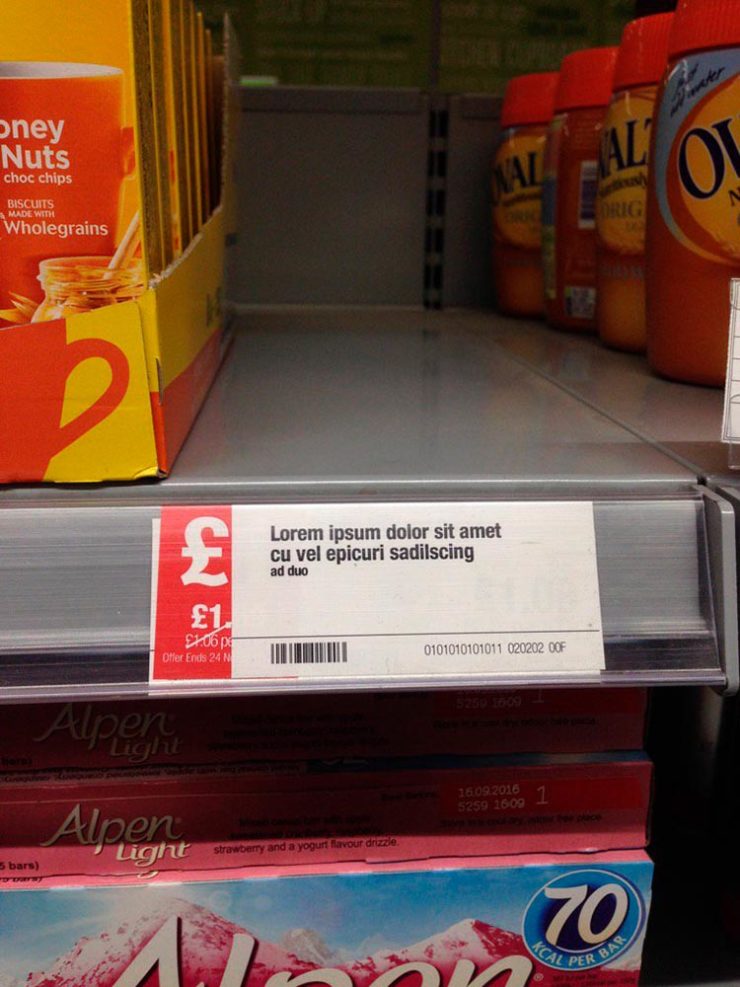
    Here’s a question you’ve been absolutely asking yourself: what are the origins of the infamous Lorem Ipsum?

    The lack of placeholders on the shelf is remarkably appropriate. (Photo: Scott Keir.)

    Turns out it’s not as simple as Aldus [known as Adobe these days —Ed.] — or the even-more-infamous annonymous. Tim Carmody, the very capable guest chair at Kottke.org, fills it in: it’s Cicero. No kidding: Slate says so.

    De finibus, indeed.

    Fourteen Fonts to Follow

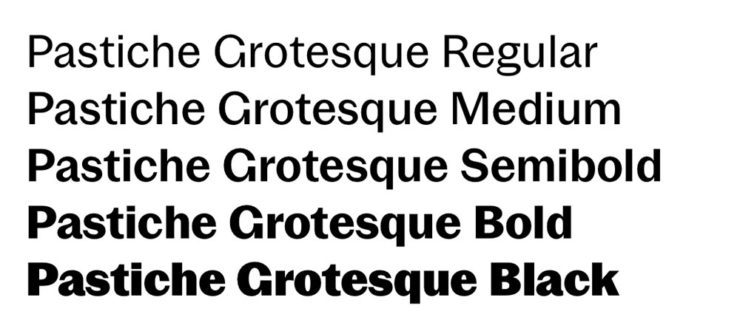
    Creative Boom, where having eyes on you is actually fun, celebrates “14 Fonts to Fall in Love With” for Valentine’s Day. While Foreword may be late to the party, a couple of the type choices are first rate:

    Irregardless1I absolutely want to steal their website design: the menu system is brilliant. and Pastiche, in order. (And no, I didn’t put those two together to be funny.) Read the article and pick your faves.

    Art of Building Photography

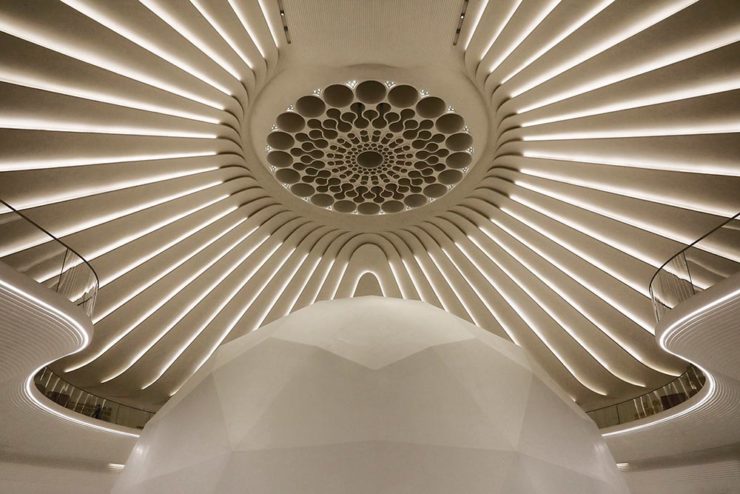
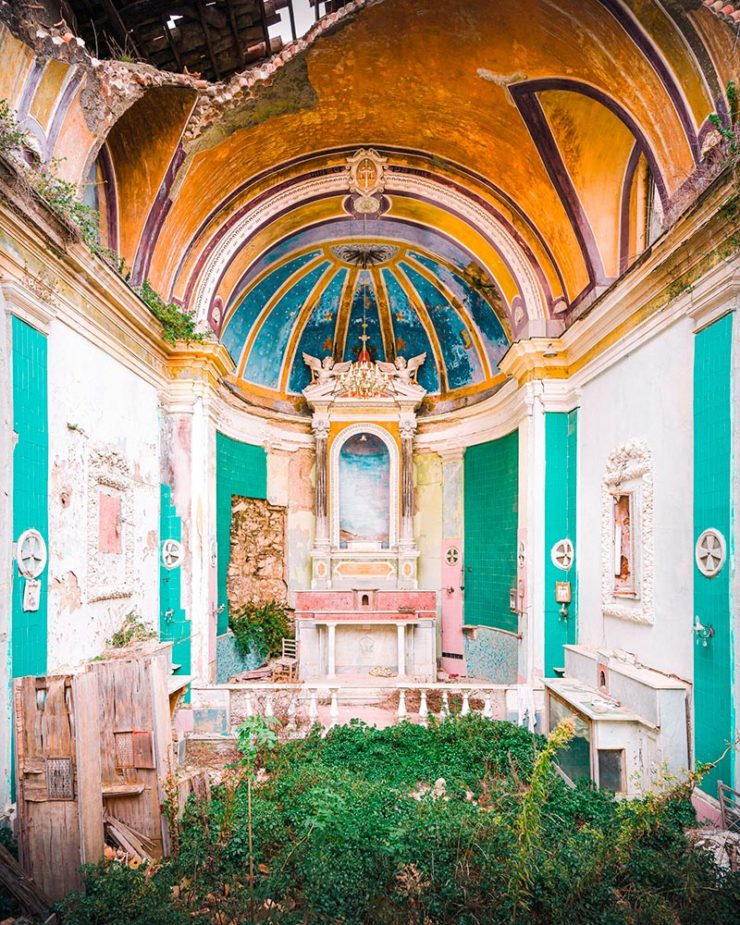
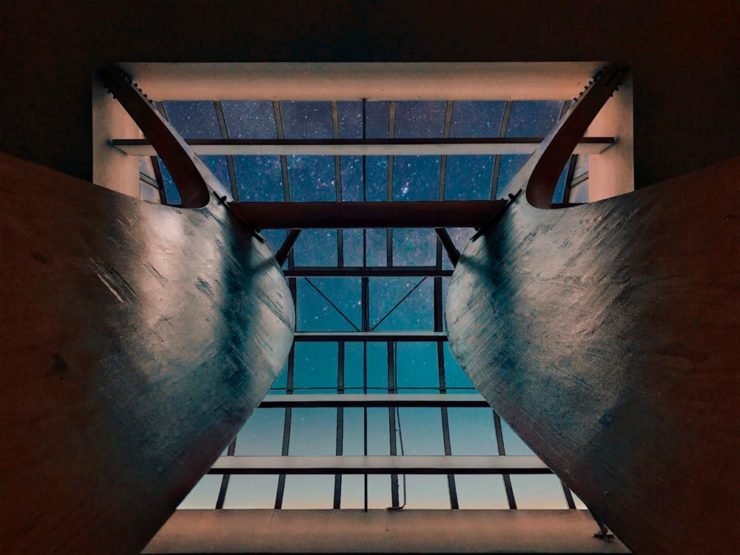
    I wasn’t aware of the Chartered Institute of Building, or their Art of Building photography contest:2Their terms are good, too — something remarkably rare in contests.

    “White Constellation,” by Francesca Pompei.

    Since architecture and photography very much intersect in my camera, brain, and work, I’m glad to have found this great source of inspiration:

    “House of God,” by Roman Robroek.
    “My own little cosmos within reach,” by Pati John.

    See many more, read some press coverage, and “celebrate the built environment,” as they put it. (Thanks to Archinect for the tip.)

    Then, go outside, find some nature, and celebrate spring. See you in March.

    • 1
      I absolutely want to steal their website design: the menu system is brilliant.
    • 2
      Their terms are good, too — something remarkably rare in contests.
  • Architectural Photography 2022 Awards Shortlist

    Architectural Photography 2022 Awards Shortlist

    As most of you know, I’m not a huge fan of photography competitions. Like I did last year, though, there’s an exception for this one: not because it’s better than some — there’s still the problem with rights, methods of compensation, etc. — but because it’s so up my alley. (Pun intended.)

    If you’ll pardon the cliché, great architectural photography is more than the sum of the building’s parts. These great shots show just that:

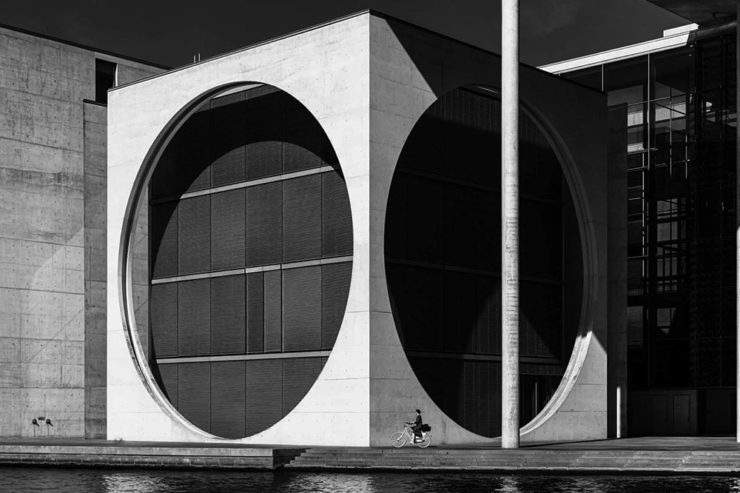
    Cycling Under the Circles, Berlin, Germany, by Marco Tagliarino (Exterior)
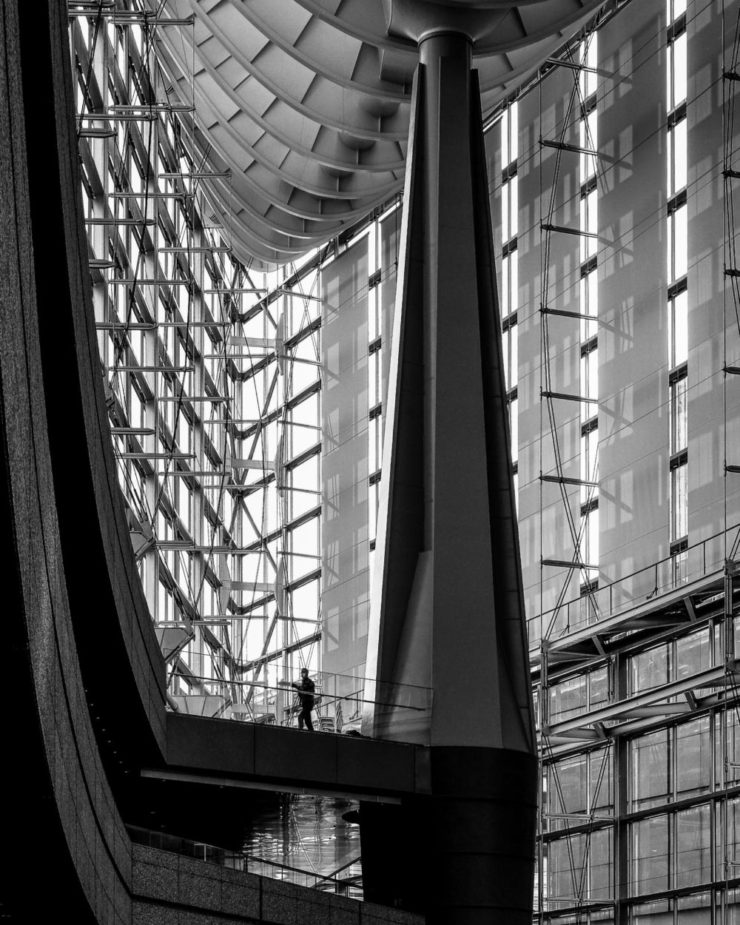
    Shapes of Soul, Milan, Italy, also by Marco Tagliarino (Interior)

    Entry photographs are divided into six categories: Exterior, Interior, Sense of Place, Buildings in Use, Mobile (with Bridges being this year’s theme), and Portfolio (focusing on the theme of Transport Hubs).

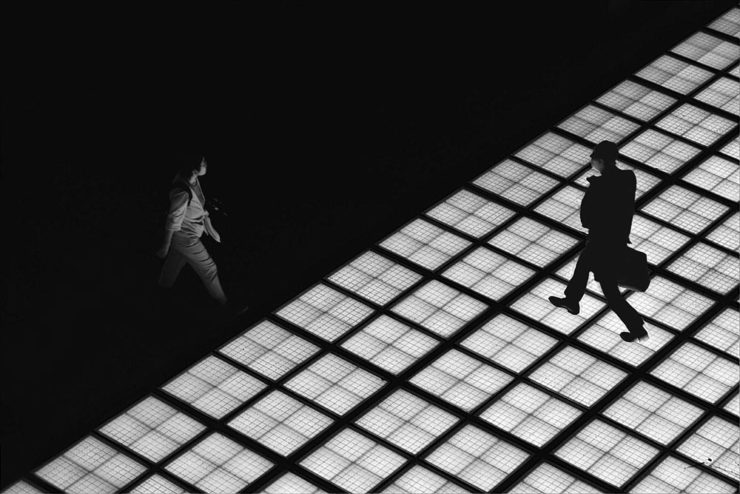
    Glass Floor, Tokyo, Japan, by Tom Ponessa (Buildings in Use)
    Architecture 1, location not listed (but pretty cool, IMHO), by Stephane Navailles (Bridges)
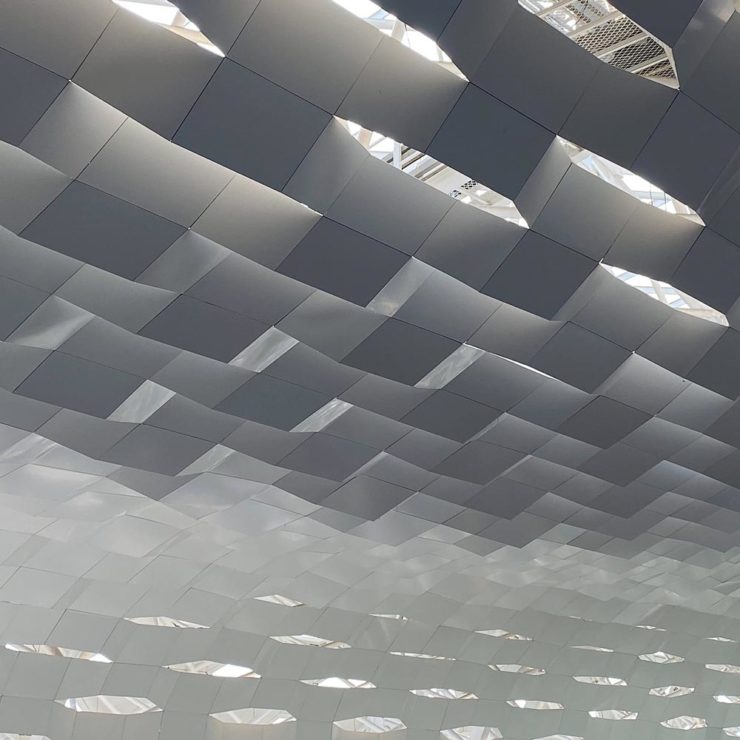
    Shenzhen Bao’an International Airport, China, by Kangyu Hu (Transport Hubs)

    There are many more to be enjoyed: ArchDaily has an article and gallery up, and the Guardian has a gallery, too. Enjoy.

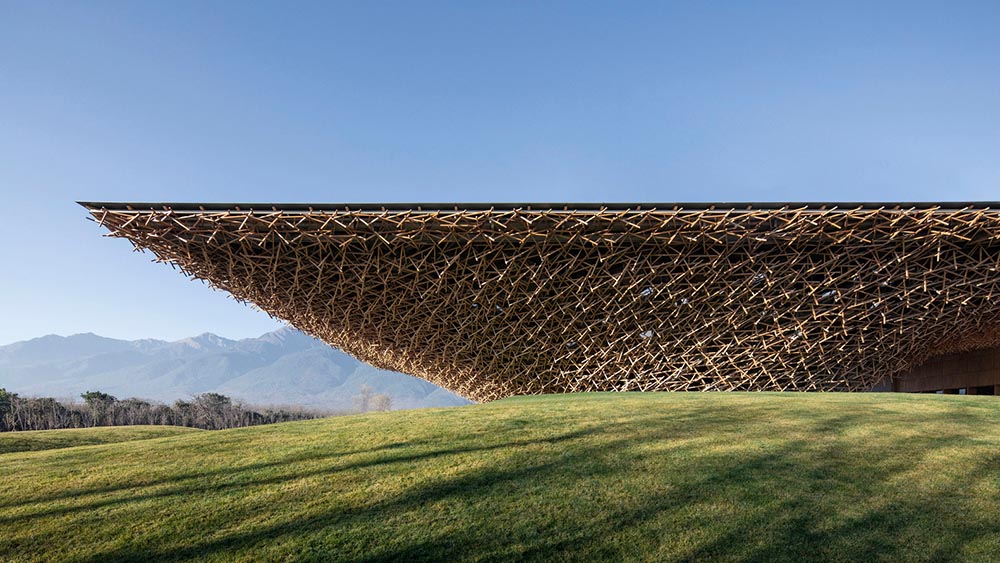
    The post’s featured photograph, top, is Nest, Dali, China, by Alex Chan, from the Exterior category.

  • Beautifully Briefed, Early July 2022: The Autopian, The Ford Heritage Vault, and an Eames Follow-Up

    Beautifully Briefed, Early July 2022: The Autopian, The Ford Heritage Vault, and an Eames Follow-Up

    Car site The Autopian scores with book design, Ford posts old marketing material gold mine, and more on the Eames Institute of Infinite Curiosity in this edition of Beautifully Briefed.

    Autopian suggests book design

    The Autopian, founded by a couple of former Jalopnik writers, is a new automotive gem: in these days of more-of-the-sameism sites trying to make money of others’ ideas, the Autopian has a retro style and interesting, original content.

    Including this short post from their Cold Start column:

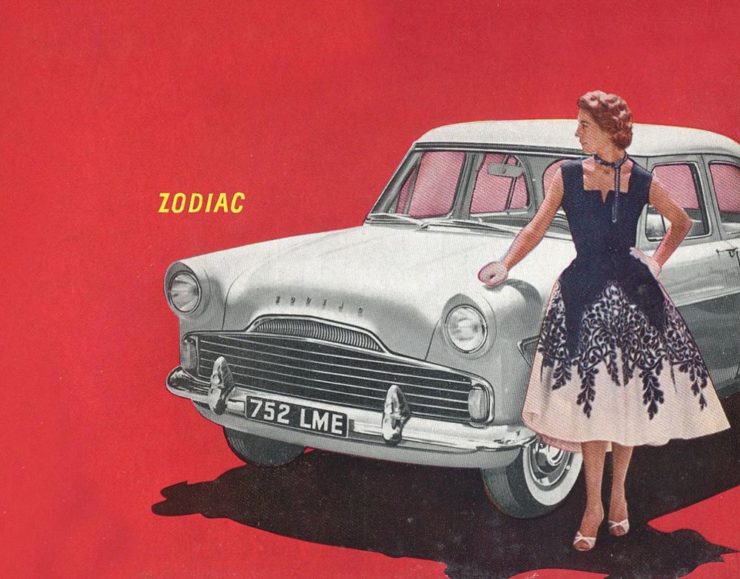
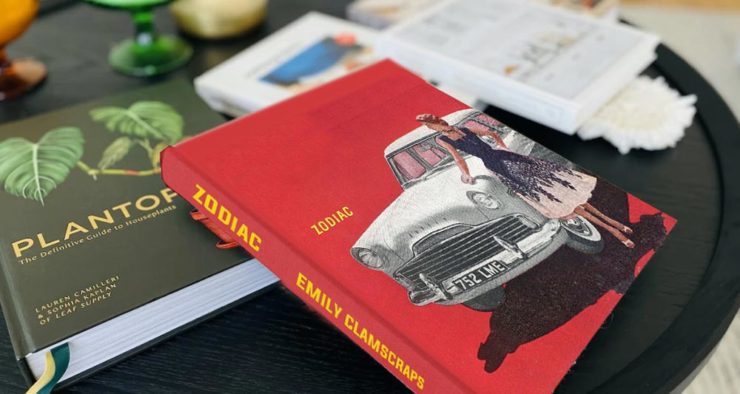
    Sometimes you may encounter an old car ad and realize that the design of it could lend itself very well to something completely different. In this case, this 1958 Ford Zodiac ad, with its rich, saturated colors, striking dress on the model, and evocative name with understated typography just feel like something you’d see on modern book cover design.

    Jason Torchinsky, Autopian Founder

    The ad:

    A 1958 Ford Zodiac (European)

    His book design idea “realized”:

    Jason’s book cover mock-up. Love the author name.

    Nice.

    The Ford Heritage Vault

    Ford has taken the unusual step of posting a good chunk of their old — 1903 to 2003, their first 100 years — marketing materials online: “promotional materials, photographs, and all kinds of other historical goodies,” according to CarScoops.

    “Our archives were established 70 years ago, and for the first time, we’re opening the vault for the public to see. This is just a first step for all that will come in the future,” says Ted Ryan, Ford archive and heritage brand manager.

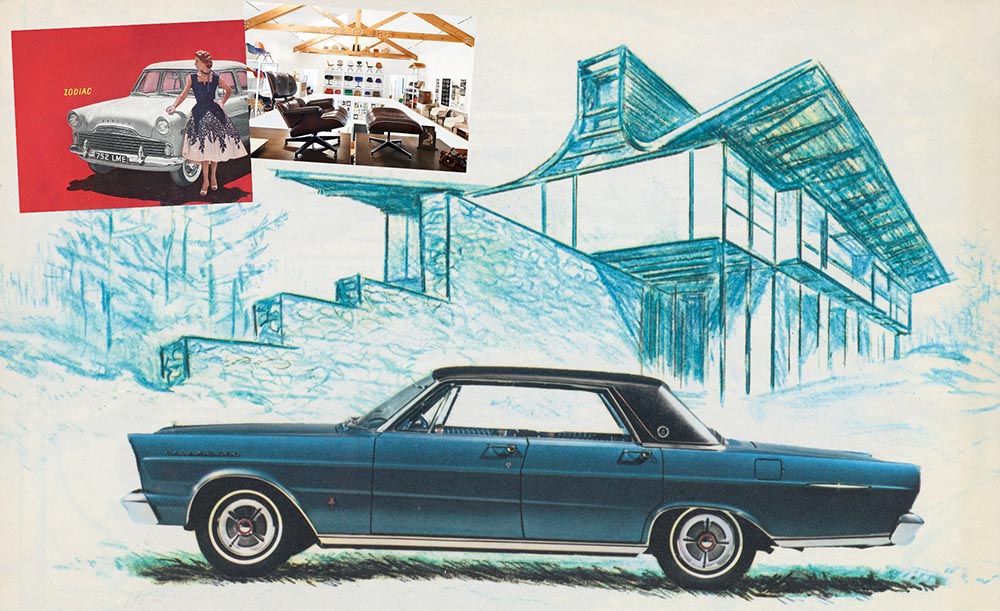
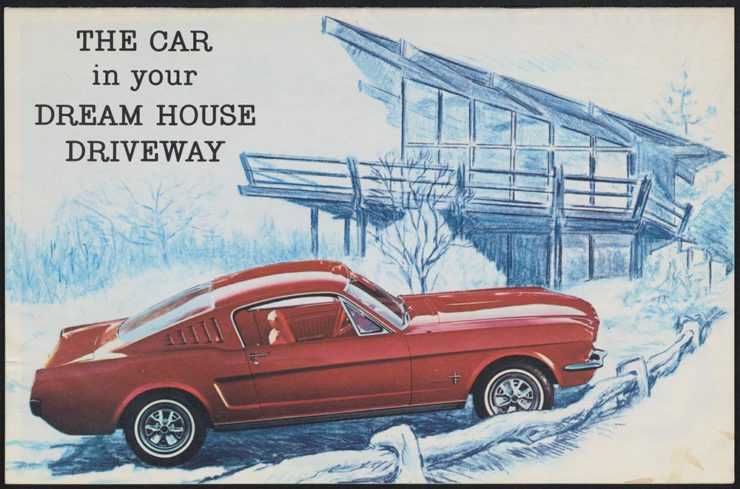
    Here’s a personal favorite: the 1965 full line brochure, showing the cars set in architectural drawings — presumably, matching the car to the house:

    The 1965 Ford Family of Cars brochure

    Fancy a drive down memory lane?

    More from the Eames Institute

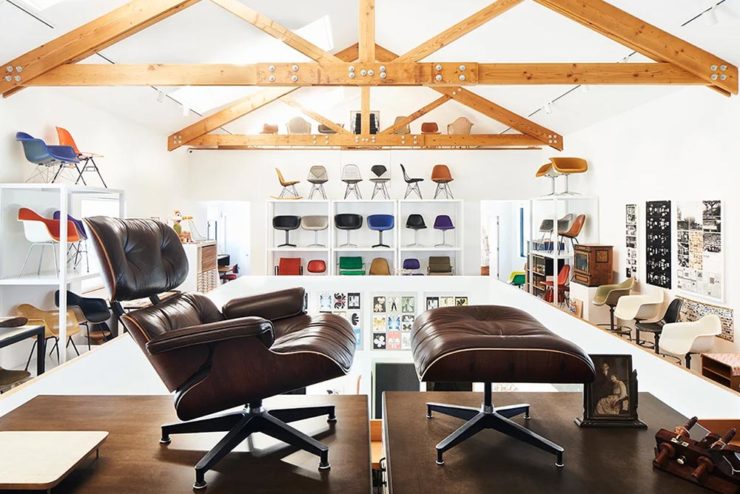
    We discussed the Eames Institute of Infinite Curiosity back in April, but Metropolis magazine has published an extensive article covering a visit to the Institute.

    Modernism has largely been diluted from a series of ideas rooted in social change to one of just style—Instagram moments, if you will. The Eameses insisted that they did not have a style or even an “ism.” […] Modernism was an idea, not a style. With the establishment of the Eames Institute, I hope Charles and Ray will be remembered most of all for their ideas and processes.

    Kenneth Caldwell, Metropolis
    An exhibit at the Eames Institute of Infinite Curiosity.

    With our ongoing struggle to use materials more efficiently, many of the Eameses’ ideas and ideals need to be taken for the solutions that they are: style with incredible substance.

    Read the whole article at Metropolis. (Via ArchDaily.)

  • Beautifully Briefed, Late June 2022: AIA’s Best Architectural Photography, 2022 Logo Trends, and … Buick!

    Beautifully Briefed, Late June 2022: AIA’s Best Architectural Photography, 2022 Logo Trends, and … Buick!

    Three items for the end of June, 2022: AIA Los Angeles announces photography awards, the 2022 edition of the Logo Lounge logo trends report is out, and Buick makes its new logo official. Let’s get into the details.

    AIALA Photography Awards

    The Los Angeles chapter of the American Institute of Architects (AIA|LA) has announced this year’s winners of the annual Architectural Photography Awards, and there’s some pretty great stuff:

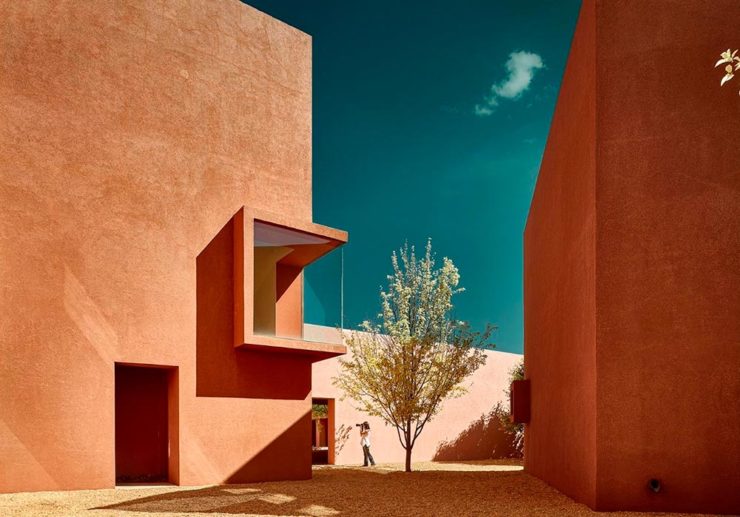
    Ryan Gobuty: Santa Fe (Santa Fe, NM)
    Taiyo Watanabe: C-Glass House (Dillon Beach, CA)
    Tim Griffith: Mission Bay (San Francisco, CA)

    See more at AIA|LA. (Via Archinect.)

    2022 Logo Trends Report

    The always-excellent Brand New points us at Logo Lounge’s 2022 Logo Trends report, it’s 20th annual look at what logos and branding, as a group, are looking like this year.

    Logo Lounge 2022 Logo Trends Report

    [W]hile there are still corporate-looking marks being crafted there is a stronger effort to find ways to identify products that are artisanal and handcrafted.

    Bill Gardner, Logo Lounge

    Corporations trying to be more human. (News at 11.) But then, my use of that particular phrase perhaps betrays my lack of being in touch with the modern corporate world; I think publishing is a different animal, and prefer being part of that world despite the regular influence of corporate entities there, too.

    Nonetheless, following logo trends is, from a purely graphic design perspective, worthwhile — and this report summarizes beautifully. Read on.

    Buick’s New Logo, Officially

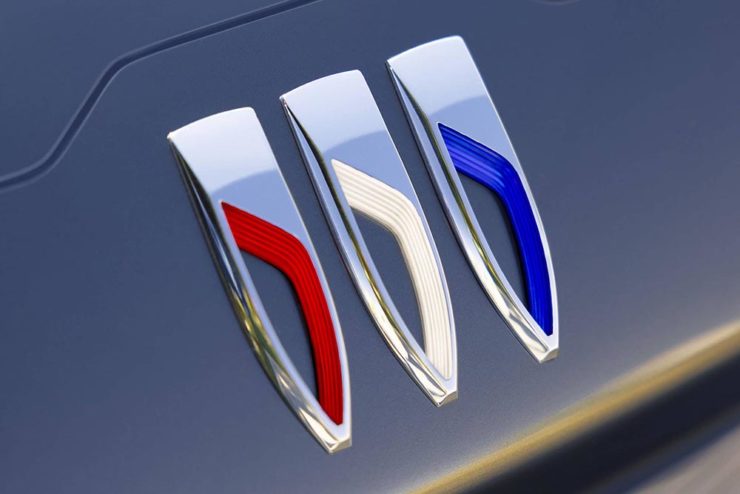
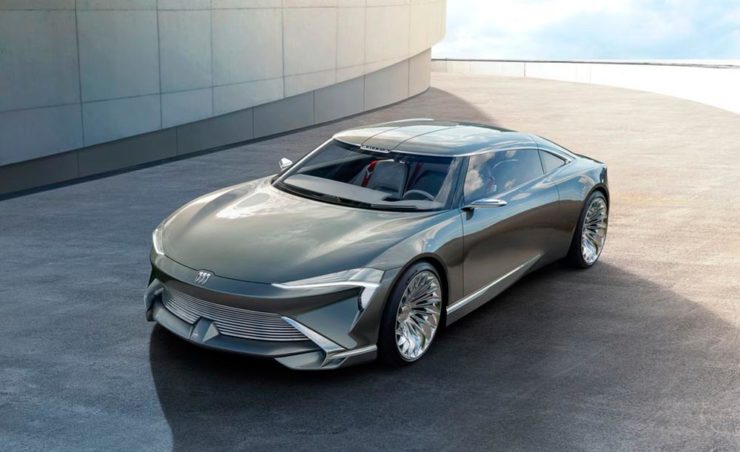
    We’ve touched upon it before, but Buick has, with the release of the Electra Wildcat concept, officially updated its logo:

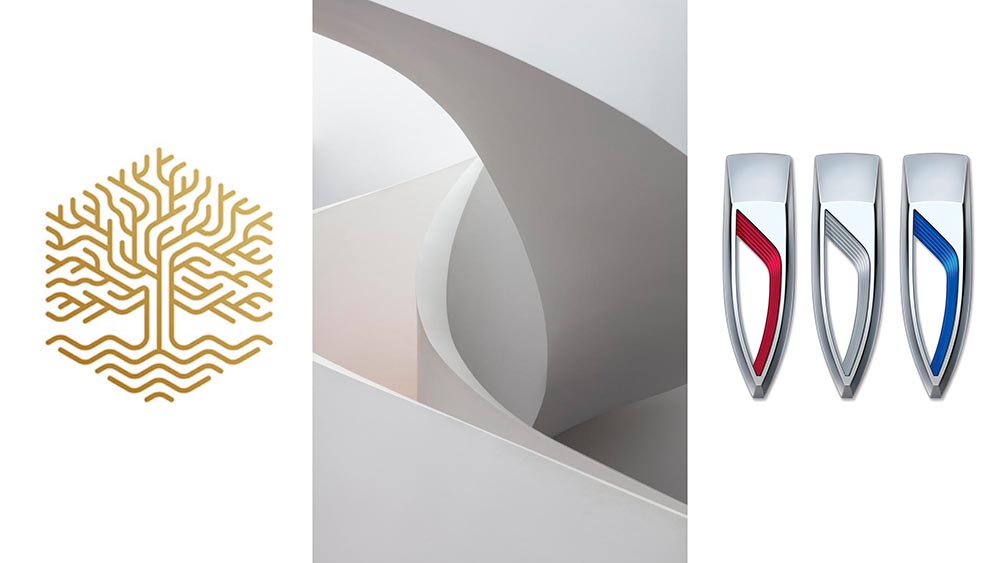
    Official: Buick’s new logo

    Electra is Buick’s name for electric cars, simultaneously stating the obvious while giving a big nod to past models — and the Wildcat concept is, dare I say it, borderline cool:

    Scandinavian, American, Futuristic, Retro … Buick!

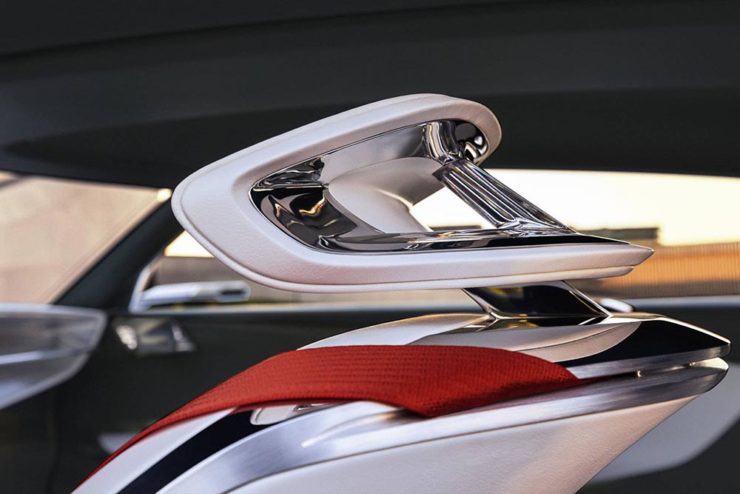
    Both Buick and Cadillac have hinted at more Art Deco in their upcoming products, perhaps best illustrated on this concept’s interior:

    It’s a head rest, folks.

    Nice. (Not even remotely possible on a production model, but still.) Read more on Buick’s new logo and transition to an electric car brand at Car and Driver or The Drive.

    See you in July!

    Update, 12 August 2022: Brand New weighs in: A New Point of View… ick